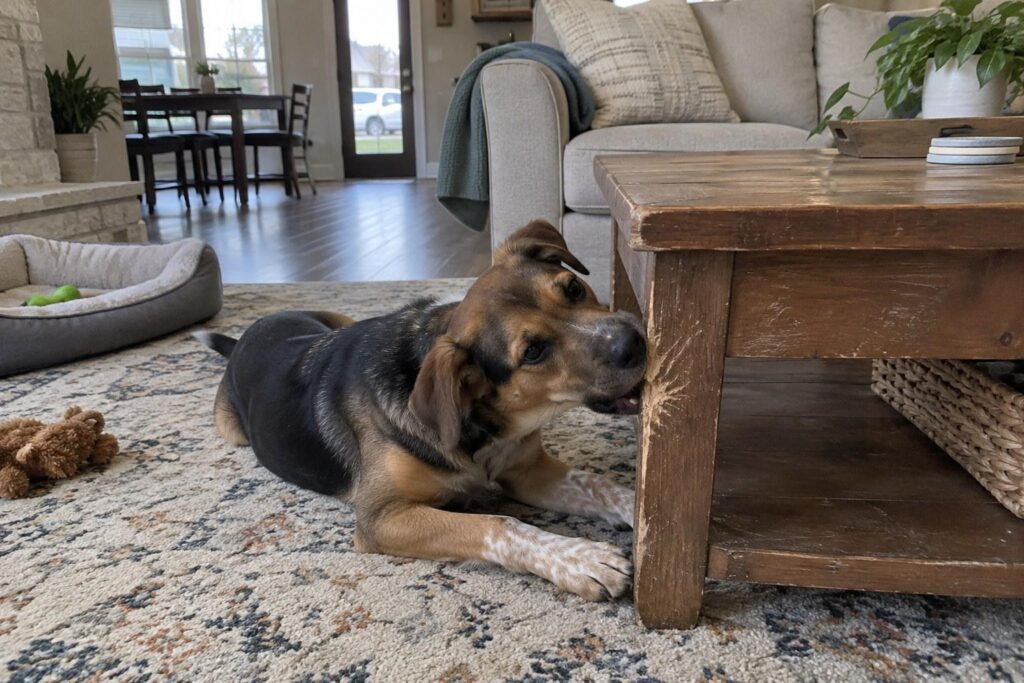

If you are searching for how to stop a dog from digging, you are probably staring at a yard full of craters, a ruined flower bed, or a fresh tunnel under the fence. In Central Texas, digging is one of the most common backyard complaints, and it rarely happens for just one reason. Heat, boredom, critters under the grass, and the urge to explore all play a part.
At All Dogs Unleashed Dog Training Austin, we help owners look past the holes and figure out what is driving the behavior. Once you know why your dog digs, you can combine smart yard management, a legal place to dig, and real training so the habit fades instead of moving to a new corner of the yard.
Tired of filling holes every weekend? Tell our Austin team what is happening in your yard and we will help you find the right plan.
Key Takeaways
- Dogs dig for clear reasons, including seeking cool soil, burning off boredom, chasing critters, building a den, and trying to escape, so the fix starts with finding the cause.
- Austin’s long hot season makes cool, shaded dirt very appealing, so shade, water, and indoor time during the hottest hours reduce heat-driven digging.
- Supervision and yard management stop most digging faster than scolding, because a dog cannot practice a habit it never gets the chance to repeat.
- A dedicated digging zone gives instinctive diggers a legal outlet, which the AKC suggests is often fairer than trying to stop the behavior completely.
- Training skills like “leave it,” a reliable recall, and calm settling, built through our two-week Board and Train program or in-home lessons, help the change last.
Why Dogs Dig in the First Place
Digging is not spite, and it is not your dog trying to make you angry. It is a natural canine behavior that serves a purpose for the dog. According to the AKC’s overview of why dogs dig, the common drivers include genetics and prey, stress and boredom, escape, and the instinct to seek out a den for comfort and shelter.
Before you try any fix, spend a few days watching. When does your dog dig, where, and what happens right before? The answers usually point straight to the cause.
Instinct and Breed
Some dogs were bred to dig. The AKC notes that many hunting dogs, such as terriers and small hounds, were developed to dig quarry out of dens. Northern breeds like Siberian Huskies are also known diggers. If you share your home with one of these dogs, digging is wired in, and your goal is to channel it rather than erase it.
Boredom and Pent-Up Energy
Digging is fun, and it relieves stress. A dog left alone in the yard for long stretches with nothing to do will often invent its own job, and the dirt is right there. Young, athletic dogs that do not get enough physical and mental exercise are the most likely to turn the lawn into a project.
Anxiety and Being Left Alone
The AKC also points out that dogs with separation anxiety may dig as a way to cope with stress. If the digging happens mainly when you leave, near doors or gates, or alongside howling, chewing, or pacing, anxiety may be part of the picture. Our post on separation anxiety for Austin pet owners covers the warning signs.
| Digging Pattern | Likely Cause | Where You Usually See It |
|---|---|---|
| Shallow pits in shady spots | Seeking cool soil | Under trees, beside the house, under decks |
| Random holes all over the yard | Boredom or excess energy | Open lawn and flower beds |
| Trenches following a path | Hunting critters underground | Along roots, beds, and garden edges |
| Holes along the fence line | Escape or chasing something outside | Fence base, gates, corners |
| Digging when left alone | Stress or separation anxiety | Near doors, gates, and windows |
What Makes Austin Yards So Tempting
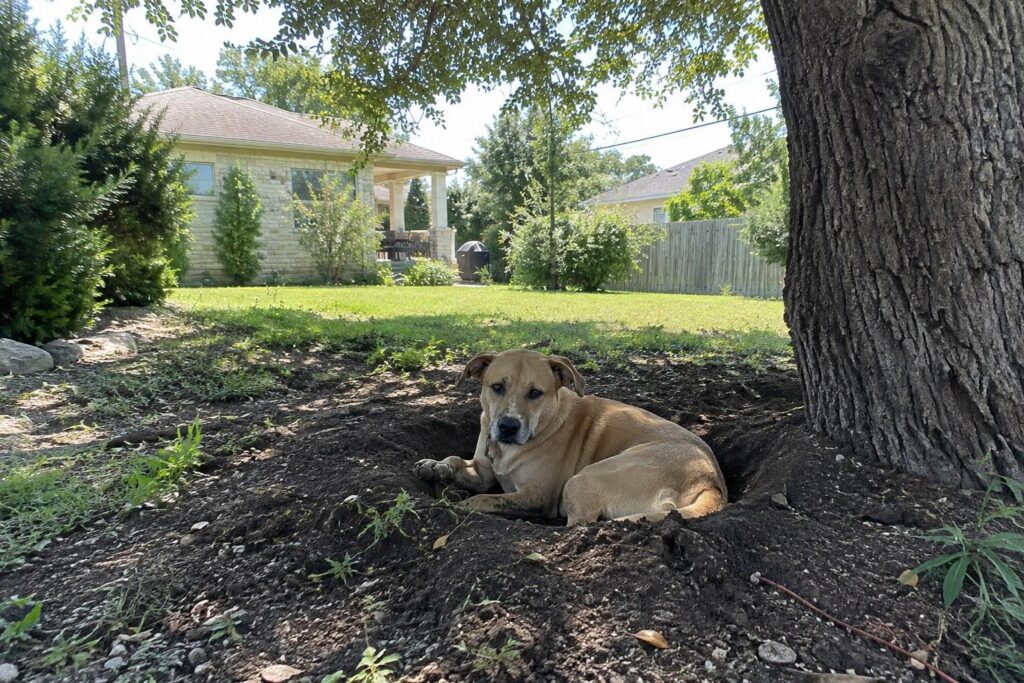
Every dog can dig, but Central Texas adds a few local reasons.
Heat Seeking and the Search for Cool Dirt
Austin stays hot for a long stretch of the year, and warm afternoons often linger well into fall. The AKC explains that dens are cooler in hot weather, which is part of why dogs dig. A dog lying in a freshly dug pit under a live oak is often doing exactly that, scraping away the hot top layer to reach cooler soil underneath.
If your dog digs shallow beds in shade and then lies in them, heat is likely the main driver. That is a signal to change your dog’s routine, not just fill the hole. The AVMA’s warm weather pet safety guidance stresses shade, fresh water, and limiting time outside in high heat, and those same steps reduce the urge to dig for relief.
Critters Under the Grass
Many yards are home to small animals and insects that a dog can hear and smell long before you notice them. The AKC notes that if you have gophers or other small animals in your yard, there is a good chance your dog will dig to catch them. Trenches that zigzag along a bed or follow a root line are a classic sign of a dog on the hunt.
Soil, Mulch, and Fresh Landscaping
Central Texas yards range from thin soil over limestone to soft beds of mulch and new plantings. Freshly turned dirt, potting soil, and mulch smell interesting and are easy to move, so new landscaping often attracts digging right after it goes in. Keep new beds fenced off or supervised until your dog’s habits are under control.
For more on how the local climate affects behavior in general, read our post on how Austin’s climate and lifestyle affect your dog’s behavior and training.
How to Stop a Dog From Digging With Smart Management
Management means setting up your home and yard so your dog does not get the chance to practice digging. Every successful dig is rewarding to the dog, so cutting off those reps is the fastest first step.
Supervise Yard Time
The simplest rule is also the most effective: do not leave a digger alone in the yard for long periods. The AKC recommends never leaving digging dogs unsupervised as part of managing the behavior. Go outside with your dog, keep yard trips purposeful, and bring your dog inside when you cannot watch.
If you catch your dog starting to dig, calmly interrupt with a cue or a sound, then redirect to something better, such as a toy or the approved digging zone. Avoid yelling or punishing after the fact. A dog cannot connect a scolding to a hole it dug an hour ago.
Beat the Heat
Because heat-seeking is such a common trigger here, give your dog plenty of cool options. Provide shade and fresh water whenever your dog is outside, and keep your dog indoors with air conditioning during the hottest part of the day. A cool, comfortable dog has less reason to excavate a pit under the shrubs.
Protect the Hot Spots
Block access to favorite digging areas while you train. Temporary garden fencing around beds, large flat stones over popular holes, and keeping the fence line clear can all help. Walk your fence regularly and look for soft spots, gaps, or starter holes, especially near gates and corners.
| Trigger | Management Step | Training Step |
|---|---|---|
| Heat | Shade, water, indoor time in the afternoon | Teach “place” for calm indoor resting |
| Boredom | Shorter, supervised yard trips | Daily exercise plus mental work |
| Critters | Block access to hunting areas | Build a strong “leave it” |
| Escape | Check and reinforce the fence base | Reliable recall and door manners |
| Anxiety | Avoid long stretches alone outside | Calm alone-time practice with a plan |
Want a trainer to handle the heavy lifting? Our two-week program gives your dog daily structure and practice with an experienced team.
Build a Digging Zone Your Dog Will Actually Use
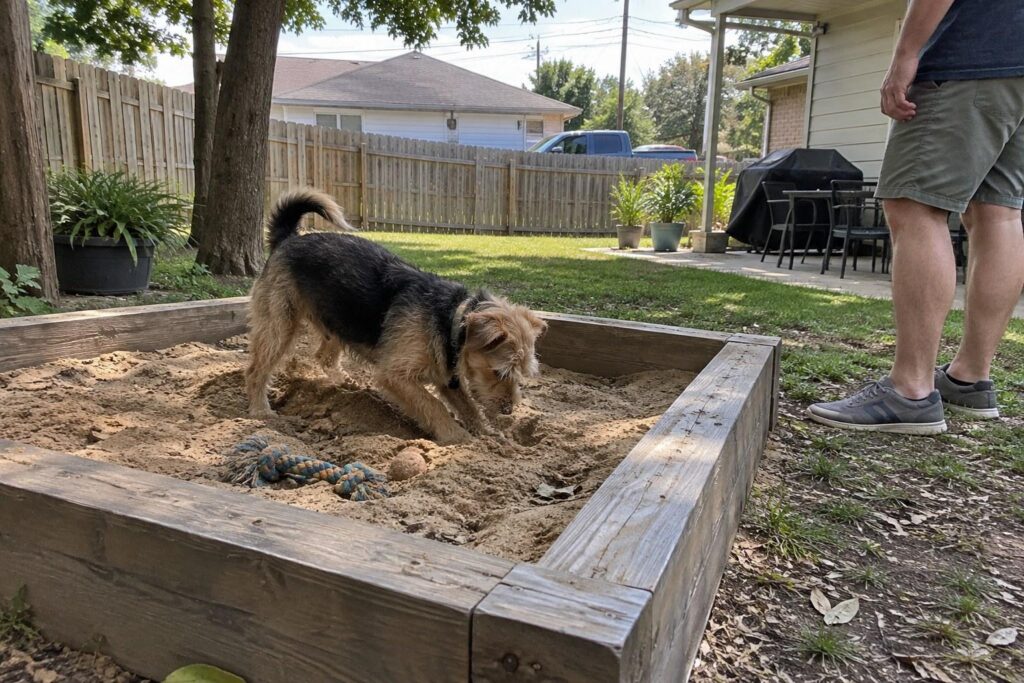
For many dogs, especially terriers, hounds, and northern breeds, the most realistic way to handle digging is to give it a home. The AKC notes that when the instinct is strong, it is often unfair to ask the dog to stop completely, and suggests offering an approved place to dig instead.
Choose the Right Spot
Pick a shaded area of the yard so your dog is not drawn back to other cool spots. A sandbox or a clearly marked patch of loose soil works well. The edges should be obvious, using timbers, stones, or a frame, so your dog learns where digging is allowed.
Make It More Rewarding Than the Lawn
Bury a favorite toy or a few treats just under the surface and let your dog discover them. Praise and cheer when your dog digs there.
Redirect Every Time
When your dog starts digging somewhere else, interrupt calmly and walk your dog to the zone. Reward digging in the right place every time. Consistency is what turns the zone into a habit, so everyone in the household should follow the same rule.
Training Skills That Reduce Digging for Good
Management controls the problem, but training changes the dog. A dog that has better outlets, clear communication, and practice settling calmly has far less reason to dig. Knowing how to stop a dog from digging long term means pairing a tidy yard with real skills.
Exercise the Body and the Brain
Plan walks and active play for the early morning and after sunset, when Austin’s heat eases. Then add mental work: short obedience sessions, puzzle feeders, and sniffing games. Ten focused minutes of training can tire a dog in a way a long, aimless afternoon in the yard never will.
Teach “Leave It” and a Strong Recall
A dog that will “leave it” on cue can be pulled away from a critter trail before the first scoop of dirt. A reliable “come” lets you call your dog away from the fence line or a favorite hole. Our tips for teaching your Austin dog to come when called every time walk through the progression.
Practice Calm Settling
Teaching “place” or a relaxed “down” gives your dog a default behavior that is the opposite of busy, frantic digging. Practice it indoors during the hottest part of the day, then build duration.
Stay Consistent
Mixed messages keep digging alive. If one person lets the dog dig in the flower bed and another scolds it, the dog never learns the rule. Our post on building the consistency that gets real results explains how to get the whole household on the same page.
When Digging Turns Into Escaping
Holes along the fence line deserve extra attention. The AKC describes some dogs as dedicated escape artists that will go under when they cannot go over or through.
Find Out Why Your Dog Wants Out
The AKC suggests considering why your dog is trying to get out. Is there a dog, cat, or wildlife on the other side? Is your dog bored, anxious, or under-exercised? The answer shapes the fix. Reinforcing the fence helps, but a dog with a strong reason to leave will keep looking for a way.
Secure the Fence Line
Check the base of your fence often, fill starter holes right away, and pay attention to gates, corners, and areas behind sheds where your dog can work unseen. Supervision matters most here, because escape digging can happen quickly.
Build Door and Gate Manners
Many escapes happen at a door or gate rather than under the fence. Teach a solid “wait” at every exit and reward your dog for holding it while the door opens.
How Board and Train Helps Diggers Change Their Habits
Daily Practice in a Structured Setting
Our two-week Board and Train program is a fixed program where your dog stays with us and trains every day. Dogs are housed individually in secure, climate-controlled kennels. Each enrollment begins with an evaluation, and daily sessions build obedience such as “sit,” “stay,” “down,” and recall, plus the impulse control that helps a dog make better choices in the yard.
Turnover Session and Lasting Support
We do not offer observation of training sessions, because a focused setting helps your dog learn. The program ends with a turnover session where you learn how to handle your dog and keep progress going at home, along with written instructions. Board and Train comes with guaranteed results and lifetime support at no additional charge.
In-Home Lessons for Yard-Specific Problems
Digging happens in your yard, so some owners like coaching right where the problem lives. Our in-home dog training and private lessons let you practice redirection, “leave it,” and settling in your own space. You can compare options on our dog training programs page.
| Option | Best For | What You Get |
|---|---|---|
| Two-week Board and Train | Dogs needing daily structure, impulse control, and recall | Daily training, turnover session, written instructions, guaranteed results, lifetime support |
| In-home private lessons | Owners who want hands-on coaching in their own yard | Training in your home and neighborhood |
Questions about your digger? Call our Austin team at (512) 963-6017 and we will help you choose the right next step.
About All Dogs Unleashed Dog Training Austin
All Dogs Unleashed Dog Training Austin helps Central Texas owners turn frustrating habits like digging, bolting, and ignoring commands into calm, reliable behavior. Our fixed two-week Board and Train program gives dogs daily structure in secure, climate-controlled kennels, followed by a turnover session and written instructions, with guaranteed results and lifetime support. We also offer in-home private lessons, boarding, and refresh training, so you can keep your yard intact and your dog happy in the Austin heat.
Frequently Asked Questions
Why does my dog dig holes and lie in them?
A dog that digs a shallow pit and then lies in it is usually trying to get cool or comfortable. The AKC notes that dens are cooler in hot weather, and in Austin’s long hot season, the soil under the surface can feel better than the grass. Provide shade, fresh water, and indoor time during the hottest hours.
Will my dog grow out of digging?
Some puppies dig less as they mature and get better outlets, but many dogs do not simply grow out of it, especially breeds developed to dig. If digging is rewarding, it tends to stick. Supervision, plenty of exercise, a digging zone, and consistent training give you a much better chance than waiting and hoping it fades.
Should I punish my dog for digging?
Punishing a dog after the fact does not work, because your dog cannot connect a scolding to a hole it dug earlier. It can also create stress, which may lead to more digging. Instead, supervise, calmly interrupt digging when you see it start, and redirect your dog to an approved spot or activity, then reward the better choice.
What breeds are most likely to dig?
The AKC points to terriers and small hounds, which were bred to dig quarry out of dens, and northern breeds like Siberian Huskies, which dig to create cool or warm resting spots. Any dog can dig, though. Boredom, heat, critters, and stress can turn almost any breed into a backyard digger without the right outlets.
How do I keep my dog from digging under the fence?
Start by checking the fence base often and filling starter holes immediately. Supervise yard time so your dog cannot work on a tunnel unseen. Then look at why your dog wants out, such as boredom, anxiety, or animals outside. Exercise, a digging zone, and a reliable recall reduce the urge, while door and gate manners prevent other escapes.
Can Board and Train help with digging?
Our fixed two-week Board and Train program builds obedience, recall, impulse control, and calm settling through daily practice, which supports better choices in the yard. It begins with an evaluation and ends with a turnover session where you learn to handle your dog, plus written instructions. Board and Train includes guaranteed results and lifetime support at no additional charge.
Learning how to stop a dog from digging comes down to finding the cause, managing the yard, giving your dog a legal place to dig, and building skills that last. If you want expert help, call us at (512) 963-6017 or reach out online. You can also visit either of our Austin locations, at 111 Congress Ave. #201 downtown or at 3704 Mountain View Ave.
Ready to Get Started with All Dogs Unleashed Dog Training Austin?
Give your dog better outlets and your yard a break. Call (512) 963-6017 to talk with our team about Board and Train or in-home lessons. You can also visit All Dogs Unleashed Dog Training Austin at 111 Congress Ave. #201, Austin, TX 78701, or at our second Austin location at 3704 Mountain View Ave, Austin, TX 78734, (512) 253-8819.