
Starting puppy obedience classes at the right age makes everything easier, for you and your dog. Bossier City families trust All Dogs Unleashed to get puppies on the right track fast, with well-balanced, customizable programs. We train ANY dog, ANY problem, and our results speak for themselves on our Wall of Fame.
Based in Bossier City at 4500 Benton Rd Suite 200, we serve families across Bossier City and the surrounding Red River area. Ready to get your puppy started? Book a visit and see what real off-leash control looks like.
Key Takeaways
- Puppies can start basic obedience work as early as 8 weeks old, the sooner the better.
- Puppy obedience classes in Bossier City should cover sit, stay, come, leash manners, and controlled greetings.
- Choosing a certified trainer over a big-box pet store class means your puppy gets individual attention and real results.
- The mild fall and winter months in northwest Louisiana are the ideal time to start a puppy program before summer heat arrives.
- Board and Train is a strong option for military families who need fast, reliable results.
Why Timing Matters More Than Most Owners Realize
Most families in the 71111 and 71112 zip codes wait too long to start puppy training. By the time full vaccination clearance comes, the critical 7-to-16-week socialization window is already closing. That window does not come back.
Early classes are not just about sit and stay. They shape how your dog handles strangers, other dogs, new environments, and stress for the rest of its life. Get it right early and everything else gets easier.
We cover four things below: the right age to start, what a good class looks like week by week, how to pick the right trainer, and what behavior problems early training prevents. Our team maintains a strong reputation across the region. Check out our full training programs to see what we offer your puppy.
What Is the Right Age to Start Puppy Obedience Classes?
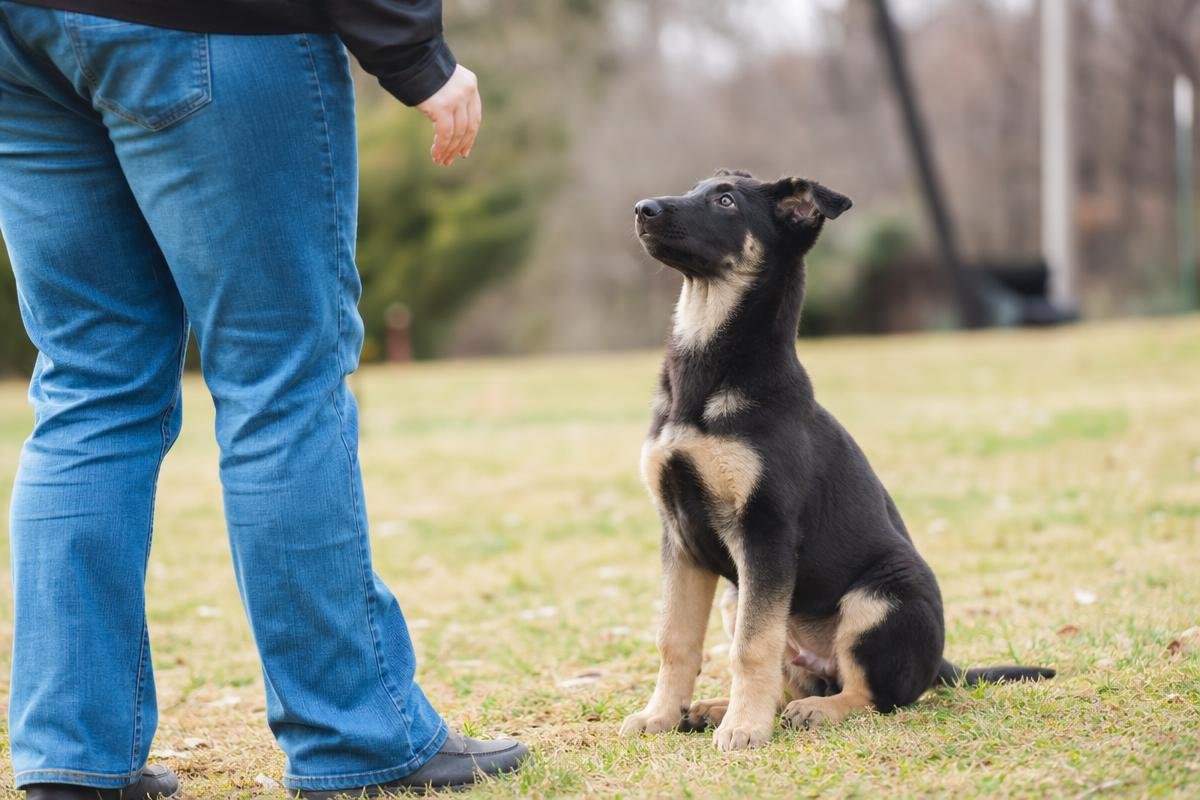
Begin foundational skills at 7 to 8 weeks old, as soon as they have at least one round of vaccines. That is the AKC-recommended starting point, and it is the window we work with every day.
The 7-to-16-Week Socialization Window
Veterinary behaviorists have identified a critical period between 7 and 16 weeks. During this window, puppies absorb new experiences faster than at any other point in their lives. The habits and responses they form right now tend to stick. Missing this window does not make training impossible, but it does make it harder.
Here is a simple age breakdown for the best age to start:
- 7 to 16 weeks: Prime time. Best window for socialization and first commands. This is where lasting behavioral patterns form.
- 4 to 6 months: Still excellent for building an obedience foundation. Do not wait longer than this if you can help it.
- 6 months and up: Obedience is absolutely teachable, but some behavior-specific work may be needed alongside basic skills.
What Vets Say About Vaccination and Class Enrollment
Some families near Barksdale Air Force Base and across the area hear conflicting advice. A common one: “Wait until all shots are done.” The American Veterinary Society of Animal Behavior (AVSAB) disagrees. Their position is clear. The behavioral risk of missing the socialization window outweighs the disease risk in a clean, well-managed training facility. One round of vaccines plus a reputable facility is enough to get started safely.
Can Older Puppies Still Benefit?
Yes. A 5-month-old puppy is not too late. A 9-month-old is not too late either. Our trainers tailor each program to your dog by adjusting the pace, the reward schedule, and the distraction level to match your puppy’s temperament and current skill level. That means a shy pup gets confidence-building drills while a bold, high-energy pup gets more impulse control work. Starting sooner just gives you more to build on. Explore our training programs to see how we adapt.
Group Classes vs. Private Training: Which Is Right for Your Puppy?
The format you choose shapes what your puppy actually learns to do. Group classes build a dog that holds a sit while another dog walks past. Private sessions fix specific problems fast. Both get results. The question is which fits your puppy and your schedule.
What Group Puppy Classes Offer
Group classes are typically the most affordable entry point for families in the Pierre Bossier area. More importantly, they teach your puppy to perform around real-world distractions, not just in your living room.
A good group class covers:
- Sit, down, and stay with distractions present
- Come when called, even with other dogs nearby
- Loose-leash walking and controlled greetings
- Leave it and impulse control
These are the exact skills your puppy needs before you take them out on the Airline Drive corridor or any busy public area.
When One-on-One Training Makes More Sense
Private training is the right call in specific situations. If your puppy shows early fear, reactivity, or resource guarding, a group setting can make those problems worse before they get better.
Private sessions also work well for households with unpredictable schedules. A fixed weekly class time does not always fit a deployment-affected home. Our in-home dog training in Bossier City gives you that flexibility without sacrificing results.
Choose private training if your puppy:
- Shows fear or aggression toward other dogs or people
- Has a behavior problem that needs immediate attention
- Belongs to a household with a schedule that changes week to week
Board and Train as a Third Option
Our dog board and train program is the fastest path to a trained puppy. Your dog lives with a professional trainer, works on skills daily, and comes home with the foundation already built. You then learn the maintenance side so the training sticks. It is a strong fit for busy owners who want real results without waiting weeks for a class to finish.
Not sure which program fits your puppy? Get a free consultation and we will match your dog to the right format.
What Happens in a Puppy Obedience Class? A Week-by-Week Look
Six weeks of structured work produces a real, visible change. Your puppy goes from ignoring you completely to responding to commands around other dogs, strangers, and distractions. Here is exactly what that looks like, week by week.
Week 1-2: Foundation Commands and Name Recognition
Your puppy learns its name and makes eye contact on cue. By the end of week two, it will sit and begin a down on command. We introduce marker training right away, using a verbal “yes” or a clicker so your puppy understands the exact second it gets something right. That clarity is what makes everything else stick.
- Responds to its name consistently
- Holds a sit on command
- Understands the marker signal that tells it “that’s the behavior I want”
Week 3-4: Leash Manners and Impulse Control
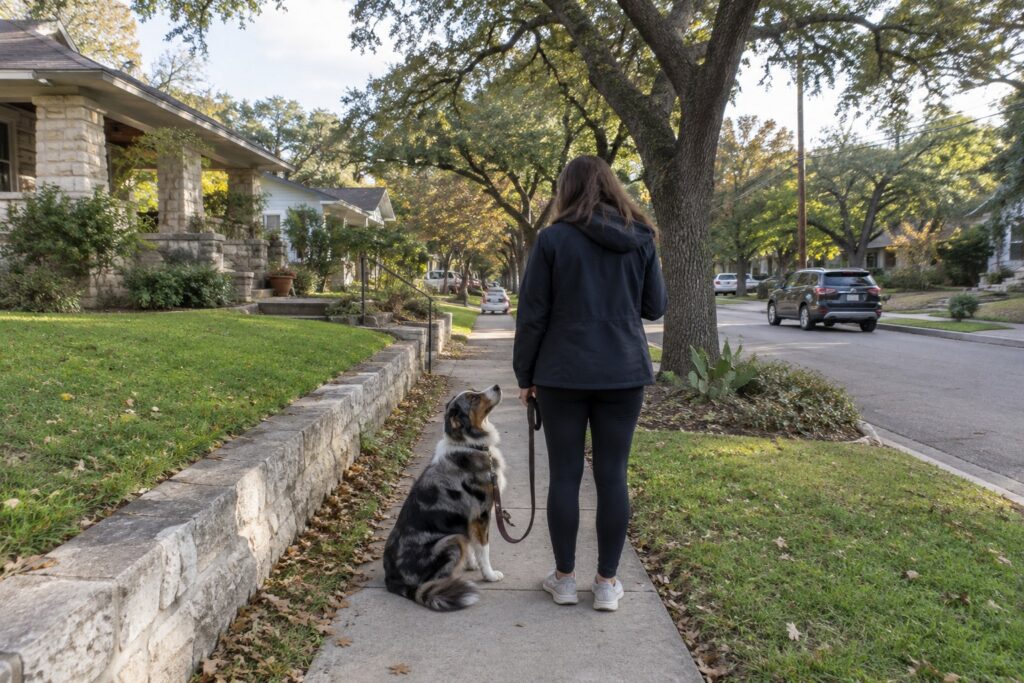
This is the phase most owners notice first. The puppy that was dragging you down the sidewalk starts walking beside you. We add “leave it” and the beginning of a stay. These are the skills that make real-world walks possible, whether that is along a busy avenue or the trails near the Red River District. If you want to get your dog ready for those outdoor environments, our training programs build exactly that foundation.
- Walks on a loose leash without pulling
- Ignores dropped food or distractions on cue
- Holds a stay for several seconds
Week 5-6: Distraction Training and Real-World Skills
This is where classes prove their value over training at home alone. Your puppy must perform with other dogs nearby, strangers walking past, and real noise. By week six, your dog will come when called around other dogs, hold a stay while someone walks by, and greet a stranger without jumping.
- Reliable recall around other dogs
- Controlled greetings with no jumping
- Stays focused on you in a busy environment
That public-setting performance is the whole point. A dog that only listens at home is not a trained dog. Check out what local owners say after their puppies complete the program.
How to Choose the Right Puppy Obedience Trainer in Bossier City
Not every trainer in the area is the same. Picking the wrong one wastes your time and can set your puppy back. Here is what to look for before you sign up anywhere nearby.
Credentials and Training Methods to Look For
Third-party credentials matter. Look for trainers who hold a CPDT-KA (Certified Professional Dog Trainer) designation, or who run programs aligned with AKC Star Puppy and AKC Canine Good Citizen standards. These are not just titles. They signal that a trainer meets a defined, tested standard.
Positive reinforcement is the method most supported by behavioral science for puppies. The best trainers adapt their approach to your individual dog. They do not use one-size-fits-all tactics. See what Bossier City dog owners are saying about results they have seen firsthand.
Questions to Ask Before You Enroll
Before you commit, ask these directly:
- What is the class size limit?
- What age range do you accept?
- What methods do you use, and why?
- What happens if we miss a session?
- What comes after basic obedience?
A trainer who answers these clearly and confidently is worth your time. One who gets defensive is not.
Red Flags That Should Make You Walk Away
Some warning signs are hard to miss. Others are easy to overlook when you are eager to get your puppy enrolled. Watch for these:
- Trainers who rely on fear or pain as primary tools
- No clear curriculum or week-by-week plan
- Refusal to explain or discuss their methods
- No reviews, references, or verifiable track record
A good trainer welcomes your questions. They have nothing to hide. If something feels off during a visit or a phone call, trust that instinct. Ready to find the right fit for your puppy? Call us at (318) 562-6536 and we will walk you through our programs and answer every question you have.
Common Puppy Behavior Problems Obedience Classes Actually Fix
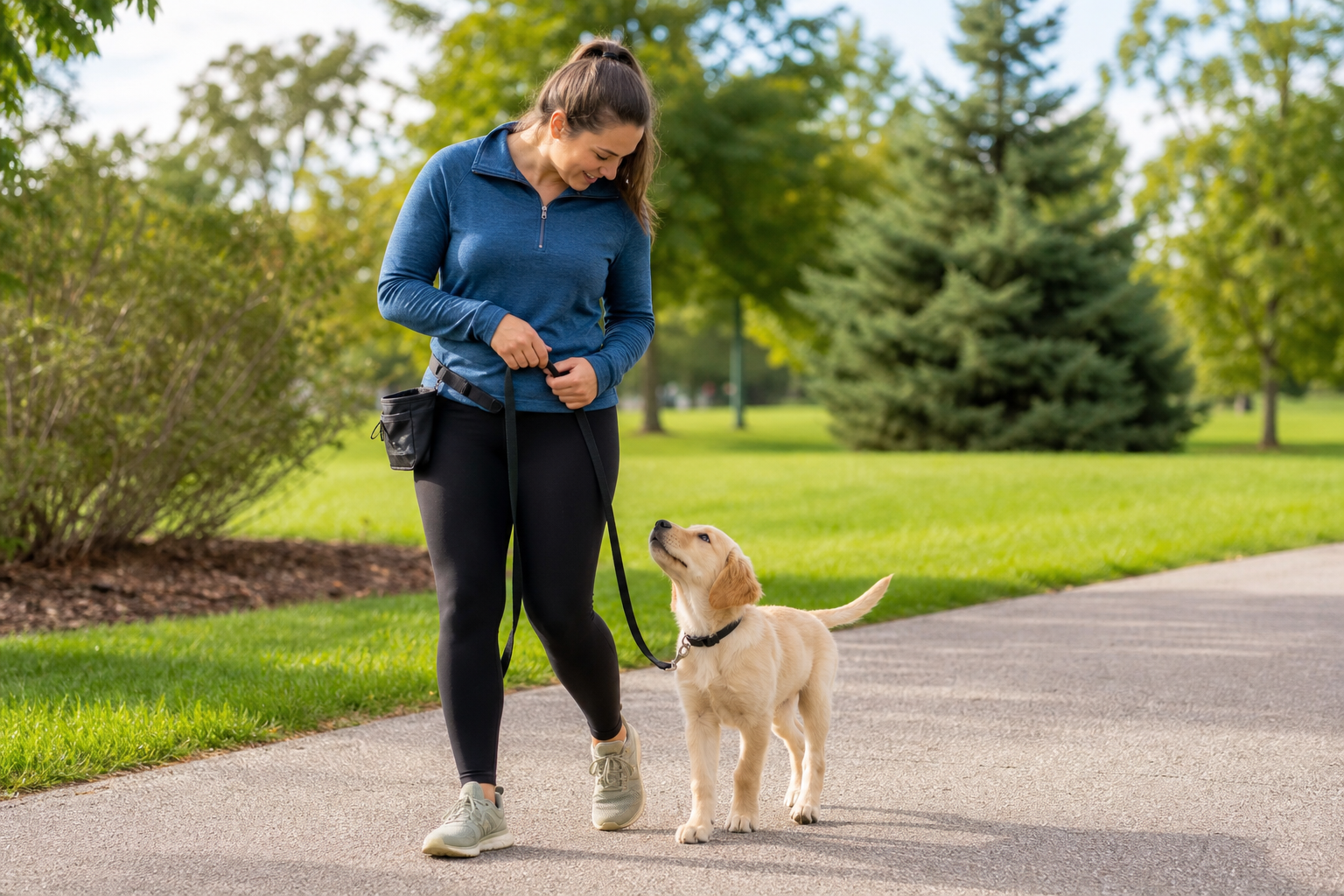
Most puppy problems are not personality flaws. They are impulse control failures. And impulse control is exactly what a structured program builds from day one.
Jumping, Biting, and Leash Pulling
Jumping feels cute at 10 pounds. At 60 pounds, it knocks over kids and embarrasses you in front of guests. Structured work replaces jumping with a four-on-the-floor greeting. Your dog learns that calm behavior earns attention, not chaos.
Play biting is normal puppy behavior. We redirect it to appropriate chew toys and teach real impulse control exercises. Leash pulling does not get better on its own. Loose-leash walking is a teachable skill, and once your puppy has it, walks around the neighborhood actually become enjoyable.
- Jumping on guests: stopped with consistent greeting rules
- Play biting: redirected through impulse control work
- Leash pulling: replaced with loose-leash walking skills
Barking, Ignoring Commands, and Bolting Out the Door
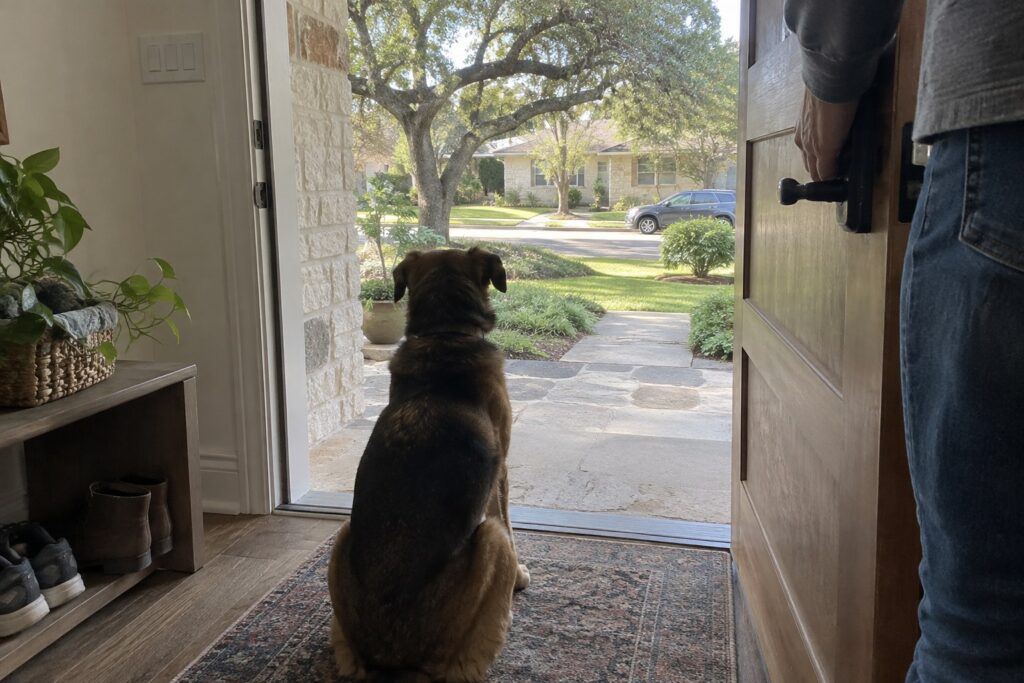
Demand barking, selective hearing, and door-bolting are all the same problem: your puppy has not learned to control its own impulses. Door-bolting is especially dangerous near busy corridors where traffic is constant. A puppy that bolts out the front door does not get a second chance.
Structured obedience builds the “wait,” “stay,” and recall skills that stop bolting cold.
One of our clients brought in a four-year-old Catahoula mix for leash pulling, jumping, and aggressive barking. All three problems were addressed with a consistent, staged plan. Starting earlier just makes it faster.
Why Bossier City Puppy Owners Choose All Dogs Unleashed
Families across zip codes 71111 and 71112 come to us because our approach is built around the individual dog, not a one-size template. Our team brings years of hands-on experience helping local owners turn unruly puppies into calm, responsive companions, and that track record shows in our reviews.
Real Results, Real Reviews
Customers describe our team as professional, patient, and genuinely invested in each dog. Trainers Laurel and Keldon are named repeatedly in real reviews for their hands-on approach. One owner reported that her dog Ziva came back from training still performing every skill she learned months later. That is the kind of result that matters.
Military families relocating to the region trust us to get their dogs settled fast. We know how to train dogs that need to adapt to new homes, new people, and new routines quickly. See what local dog owners are saying about the results they got on our testimonials page.
Programs Built for Any Dog, Any Problem
Our well-balanced, customizable programs are shaped around your dog’s temperament, age, and specific challenges. Whether you need entry-level obedience or something more advanced, we have a format that fits.
- Puppy obedience and basic commands
- In-home dog training for puppies who need one-on-one focus
- Board and Train for faster, deeper results
- Advanced and off-leash control
We are based at 4500 Benton Rd Suite 200, Bossier City, LA 71111 and serve families across both Bossier City and Shreveport. Call us to Unleash Your Dog’s Potential.
Puppy Training in Bossier City: What Local Owners Need to Know
The Climate and What It Means for Training
Northwest Louisiana summers are no joke. From June through September, temperatures regularly push past 95 degrees, with humidity that makes it feel even hotter. Young puppies overheat fast, and hot pavement can burn paw pads within seconds. Outdoor sessions during those months need to happen before 9 AM or after 6 PM, and always on grass or shade. No exceptions.
Here is the good news. Fall and winter here are mild. January lows average around 35 degrees, which is perfectly comfortable for outdoor work. Starting a program in the fall means your dog is trained and under control before summer heat arrives. That timing matters, because a heat-limited puppy misses valuable practice reps right when it needs them most.
Where to Practice After Class
Class builds the skills. Real life is where they stick. Local parks and the Airline corridor give your dog exposure to new people, other dogs, and distractions in a controlled setting. That is exactly what good leash manners and controlled greetings require.
Families who move frequently have a specific need here. Frequent relocations mean your dog faces new environments, new people, and changing routines constantly. A solid obedience foundation builds exactly the adaptability your dog needs to handle those transitions without falling apart.
Our full training programs are built to meet those real-world demands, not just classroom commands.
Frequently Asked Questions
What age can my puppy start classes?
Most puppies can start foundational work as early as 7 to 8 weeks old, with at least one round of vaccines on board. The 7-to-16-week window is the single most important developmental period in your dog’s life. Families near Barksdale Air Force Base especially benefit from starting early. Military relocations happen fast, and a well-socialized puppy adapts to new environments much more easily than one who missed that window.
How much do puppy obedience classes cost?
Cost depends on the format you choose. Group classes are the most affordable entry point for early obedience. Private sessions cost more but give you a fully customized program built around your dog’s specific needs. Our Board and Train program delivers foundational results in a shorter, concentrated period. Contact our team directly for current pricing on each option.
What is the difference between a trainer and a behaviorist?
A trainer teaches commands and obedience skills. A veterinary behaviorist diagnoses and treats serious behavioral disorders, often alongside medication. Most puppy owners in the 71111 and 71112 zip codes need a trainer, not a behaviorist. If your vet has flagged a medical concern, we can coordinate. Otherwise, structured classes handle the vast majority of problems families actually face.
Can I just train my puppy at home?
Home training misses the most critical element: real-world socialization. A puppy that only performs at home will fall apart at the park or on a busy street. Home practice is a great supplement, but pair it with structured class time for lasting results.
What should I bring to the first class?
- Vaccination records
- A 4-to-6-foot leash (no retractable leads)
- A well-fitted collar or harness
- Small, high-value treats
- An empty stomach for your pup (skip the full meal before class)
Arrive a few minutes early. Give your puppy a chance to settle before training begins.
Your puppy’s best window for learning is open right now, and every week you wait is a week of that window closing. Call our team at (318) 562-6536 or visit our All Dogs Unleashed training programs page to find the format that fits your schedule and your dog. Unleash Your Dog’s Potential.
Ready to Get Started with All Dogs Unleashed?
Call (318) 562-6536 to speak with our team directly. We’re ready to answer your questions, walk you through your options, and help you find the right solution for your needs. Whether you’re just starting to plan or ready to move forward, we’ll make the process simple and stress-free.
Reach out today and let’s talk about how we can help.