
Just signed on to a new place in Bossier City? Moving with a dog adds a layer of stress most folks don’t plan for, from the truck ride across the Red River to that first nervous night in an unfamiliar yard. At All Dogs Unleashed Bossier, we help Bossier City families settle their dogs into new homes with calm, confident behavior, not chaos. Our trainers work with ANY dog and ANY problem, so whether your pup is anxious, territorial, or just confused by the new smells, we have a plan that fits.
Need help getting your dog adjusted to your new Bossier City home? Call us today at (318) 562-6536.
Key Takeaways
- Moving with a dog goes smoother when you keep feeding, walking, and sleep routines steady through the transition.
- Dogs read your stress, so calm handling during the move prevents anxiety and territorial behavior in the new home.
- Short leashed tours of your new Bossier City neighborhood help your dog map safe boundaries fast.
- Obedience reinforcement in the first two weeks locks in good habits before bad ones start.
What Moving Day Really Looks Like Through Your Dog's Eyes
So the boxes are stacked in the living room, the keys are in your hand, and your dog is standing in the middle of a house that smells like nothing they recognize. Moving with a dog is one of the most disorienting things you can put a pet through, and most folks do not realize it until their normally chill dog starts pacing at 2 a.m. or pottying in the hallway.
Whether you crossed the Red River from Shreveport, landed in a neighborhood off Barksdale Blvd, or bought a place near the Pierre Bossier area or Airline Drive, your dog is reading every new sound, smell, and shadow as a possible threat. That is normal. It is also fixable.
This guide walks you through what we tell our Bossier City clients every week: how to settle your dog room by room, the stress signals to watch for, how nosework and mental exercise speed up the adjustment, and when it is time to call a trainer instead of waiting it out. If you want to see the full list of options ahead of time, ourdog training programs page covers every type of support we offer.
Why Dogs Struggle When You Move to a New Home
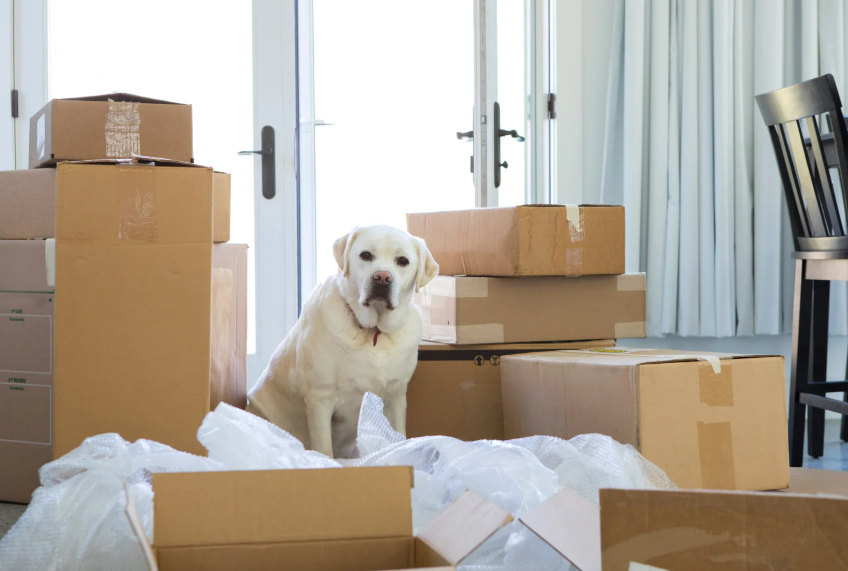
Dogs struggle after a move because their entire scent map just got erased. Every smell they used to know, your old carpet, the backyard grass, the neighbor’s dog two doors down, is gone. That confusion shows up as anxiety, clinginess, or weird behavior in the first week.
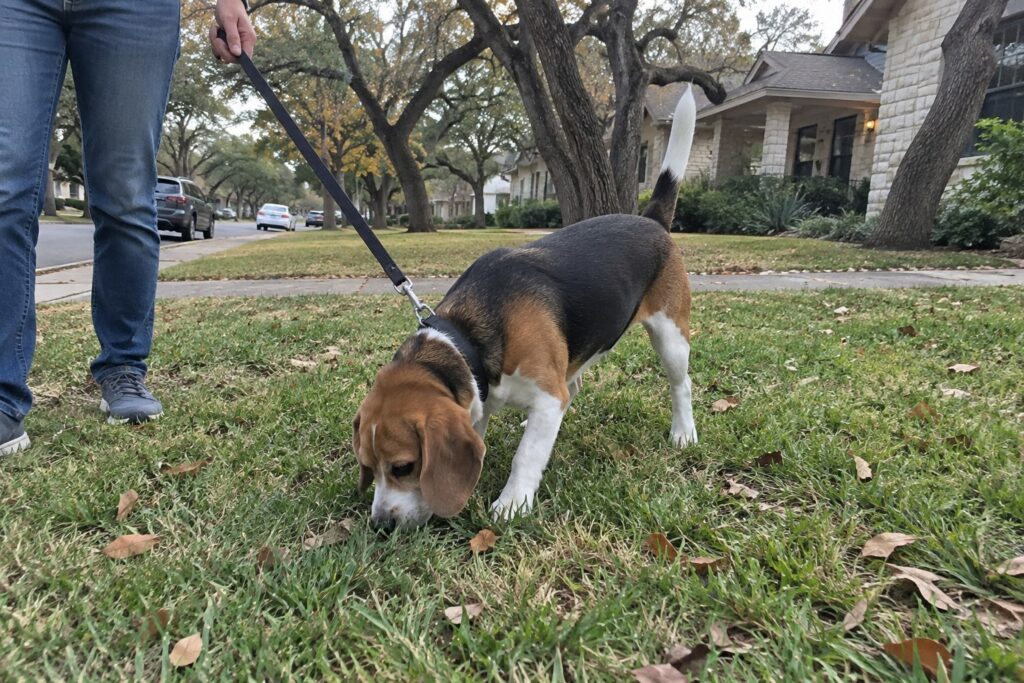
Dogs Navigate by Scent, Not by Address
Your dog does not care about the zip code. They care about what the floor smells like. A new Bossier City yard smells like strange grass, different soil, and unfamiliar dogs that walk past on Viking Drive every morning.
Use scent anchoring to speed up the adjustment:
- Put their bed in the first room they will use, unwashed
- Drop a worn T-shirt on the floor near their crate
- Use the same food bowl and water dish from the old house
- Hold off on deep-cleaning the carpets for a few days
Basic nosework helps too. Hide a few treats around one room and let your dog find them. This turns the new space into a place where good things happen.
Common Stress Signals to Watch for the First Week
Dog behavior after moving usually looks like one or more of these:
- Hiding under furniture or in closets
- Refusing food for a meal or two
- Excessive panting with no exercise
- Pacing, especially at night
- Barking at normal sounds like the AC or ice maker
- Destructive chewing
- House-soiling indoors
- Glueing themselves to you, or hiding from you
Most of this passes in 3 to 7 days. Dog anxiety after moving that lasts longer is a different story. Call a trainer if you see house-soiling past a week, food refusal past 48 hours, or new reactivity toward people or other dogs.
The First 48 Hours in Your Bossier City Home: A Room-by-Room Plan
The first two days set the tone. Your dog reads your energy and the new smells before they trust the new walls. Work room by room, slow and on leash. This is exactly the kind of work we coach owners through duringin-home dog training sessions, since the new house itself is the training environment.
Choose One Safe Room and Work Outward
Pick a quiet bedroom or back room as base camp. Put the crate, bed, water, and two or three familiar toys inside. Shut the door during heavy move-in traffic so movers, dollies, and open exterior doors do not turn into a bolt risk.
Once the truck pulls away, clip on the leash and walk every room together. Let your dog sniff baseboards, closets, and corners at their own pace. This slow tour is the core of how to help a dog adjust to a new home without flooding them.
The First Backyard Introduction
Keep the leash on for the first backyard visit, even if the fence looks solid. Bossier City yards vary a lot. Open lots off the Benton Road corridor feel huge to a dog used to a small space, and fenced yards near Plantation or Stockwell Road often have neighbor dogs barking through the pickets.
Walk the perimeter first. Let your dog sniff every post, gate, and corner with you leading. For more on checking gaps, latches, and weak spots before you ever drop the leash, read our yard safety tips on the main site.
Setting Up a Feeding Spot Your Dog Will Accept
Pick one consistent feeding spot in a lower-traffic corner of the kitchen. Same food, same bowl, same schedule you used at the old house. Consistency on meals is one of the fastest ways to settle stress.
If your dog skips two meals in a row, stir in a spoon of wet food for smell and palatability. Still nothing after 48 hours? Call your vet, and reach out to our team so we can rule out a behavior issue versus a medical one.
How to Use Walks and Nosework to Help Your Dog Claim the New Neighborhood
Walks and sniffing games are the fastest way to help your dog feel ownership over a new place. Your dog reads the world through their nose. Give them a structured way to map the neighborhood and the stress drops quickly.
Building a Walking Routine Around Bossier City's Parks and Paths
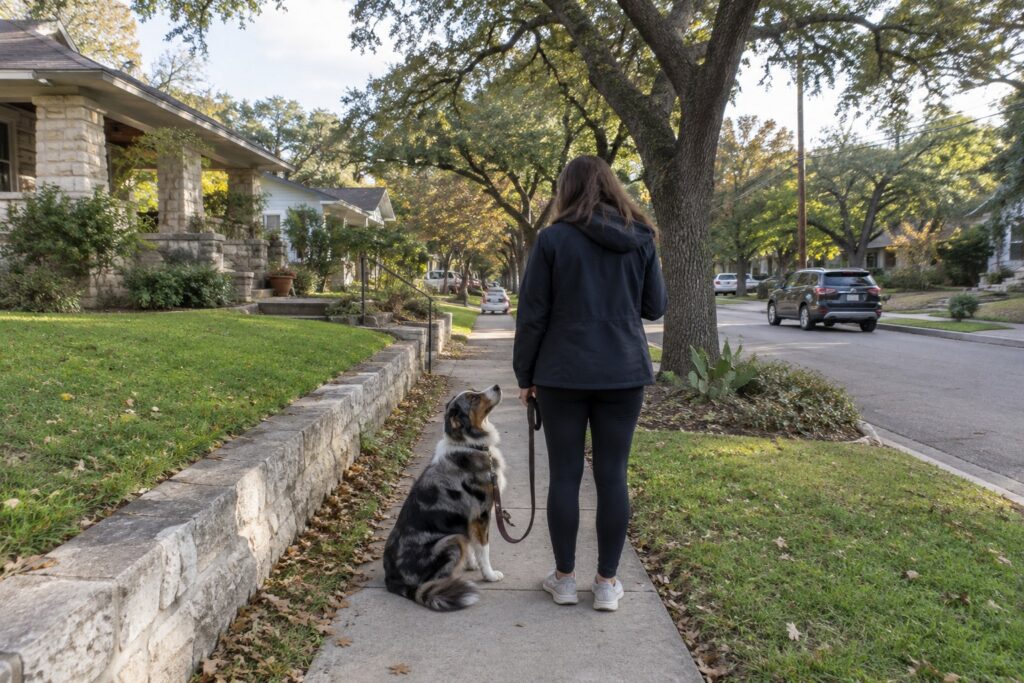
Where should you walk your dog first? Start small and stay close to the house. Pick one 15 to 20 minute loop and walk it for 5 to 7 days straight before adding new routes. Consistency builds a scent map faster than variety.
Good early options:
- The sidewalk corridors near Barksdale Blvd for predictable foot traffic
- Dogwood Park off Shed Road for open grass and low pressure
- The Red River Waterway trails once your dog has settled for a week
Heat matters here. From May through September, the humidity is rough on dogs. Walk before sunrise or after 7 PM. Take a break every 5 to 7 minutes on those first outings. Let your dog stand and sniff. This is a decompression walk, not a workout.
Simple Nosework Games for a Dog in an Unfamiliar Space
How do you mentally tire out a stressed dog stuck inside? You make them use their nose. Five minutes of searching beats an hour of pacing.
Start easy:
- Hide a treat under a hand towel in the living room. Let your dog find it.
- Add two more towels as decoys.
- Move the game to the hallway, then the backyard.
Dogs that know basic obedience adjust faster because familiar cues give them structure in a strange place. Sit, place, and recall all carry over from the old house and remind your dog who they are. That is how to help a dog adjust to a new home without a meltdown.
Need a hand building a routine that actually sticks? Call our team at (318) 562-6536 and we will walk you through it.
When Moving Stress Becomes a Behavior Problem Worth Addressing
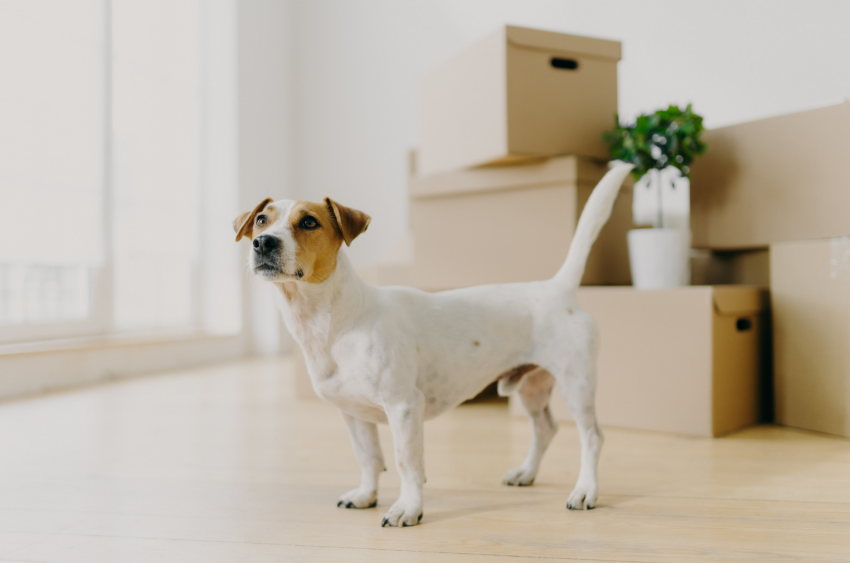
Most move-related stress fades in 2 to 4 weeks. Routine, patience, and short daily walks usually do the heavy lifting. But if you hit the three week mark and your dog is still hiding, refusing food, having accidents, or snapping at people, the move did not cause the problem. It exposed one.
Stress vs. a Deeper Training Gap: How to Tell the Difference
Dog anxiety after moving looks like clinginess, a few skipped meals, and some pacing the first week or two. That is normal. What is not normal is dog behavior after moving that gets worse instead of better.
Watch for these red flags past week three:
- Leash reactivity toward Bossier City neighborhood dogs on every walk
- Resource guarding of a new bed, couch, or doorway
- Separation anxiety that got louder after the move, not quieter
- Growling at guests in the new home
- House training that fell apart and will not come back
If you see two or more of these, call a trainer. Waiting longer just lets the habit set deeper.
How Board and Train Can Reset a Dog That Is Struggling
Board and Train is simple. Your dog stays at our Benton Road facility, works one-on-one with a trainer every day on the specific problems you are dealing with, and comes home with new habits already built in. You get handoff sessions so you know how to keep it going.
Trainers like Kelden and Kelvin handle the reactive walkers, the guarders, the anxious shadows. Owners tell us the same thing on pickup day: their dog came back like a different animal, in the best way.
If the move pulled the lid off something bigger, do not wait it out. Reach out through our dog trainer page and we will talk through what your dog actually needs.
Bossier City Details Every Dog Owner Should Know Before Settling In
A few local rules and quirks will make moving with a dog to a new home a lot smoother. Here’s what we tell every client who lands in Bossier City.
Local Leash Laws and Off-Leash Rules
Bossier City requires dogs to be leashed in all public areas. Bossier Parish Animal Control enforces the ordinance, and a loose dog can mean a citation plus an impound fee.
Here’s the part owners miss: a dog that was rock-solid off-leash at the old house is NOT reliable here yet. New smells, new sounds, new escape routes. Keep your dog leashed outside the fenced yard for at least two weeks while they map the area. If you want help rebuilding that off-leash recall in the new environment, reach out through our contact page and we’ll set up an evaluation.
Heat, Humidity, and Paws on Hot Pavement
It’s too hot to walk your dog when the pavement burns your hand. Bossier City sits in USDA Plant Hardiness Zone 8b. Summer highs run 95 to 100F, and asphalt on Airline Drive or East Texas Street can hit 150F by mid-afternoon.
Use the 5-second hand test:
- Press your palm flat on the pavement.
- If you can't hold it for 5 seconds, your dog's paws can't either.
- Walk on grass, or move walks to early morning and after sunset.
Finding a Vet and Groomer in the Bossier City Area
Get a local vet set up in your first two weeks, not when something goes wrong. Call your previous clinic and have records transferred. That way the new vet already knows your dog’s vaccine history, allergies, and any meds.
Grooming matters too. Calm, professional handling teaches your dog that new people and new places in town are safe. Ourgrooming services at the Benton Road facility are a good first low-pressure outing. If you have travel coming up before your dog is fully settled, ourboarding option keeps the new routine intact while you are away.
If your dog is still struggling two or three weeks in, or the move surfaced a behavior issue you didn’t see before, call us at (318) 562-6536 or stop by the Benton Road location. We’ll talk through what you’re seeing and help you decide whether Board and Train, private lessons, or a few targeted sessions make the most sense for your dog.
Frequently Asked Questions
How Long Does It Typically Take a Dog to Adjust to a New Home?
Most dogs begin to show visible signs of settling within two to three weeks, though full behavioral adjustment can take two to three months depending on the individual dog and the consistency of the owner’s routine. High-energy breeds or dogs with prior anxiety histories often need more time. All Dogs Unleashed Dog Training Bossier recommends tracking your dog’s stress signals week by week so you can spot improvement or catch backsliding early.
Should I Board My Dog During the Moving Day Itself?
Boarding your dog on moving day is strongly recommended if you have the option. The constant foot traffic, open doors, loud equipment, and general chaos create a perfect storm for an escape attempt or an anxiety spike. Even a trusted friend’s house for the day can prevent a stressful incident that sets back your dog’s adjustment once you arrive at the new home.
Can Moving Trigger Separation Anxiety Even in a Dog That Never Had It Before?
Yes, relocation is one of the most common events that surfaces latent separation anxiety or creates it from scratch. When the entire environment changes, a dog can become hyper-attached to the owner as the one familiar anchor, and distress spikes the moment that anchor leaves. If your dog begins barking, destroying items, or eliminating indoors only when left alone after the move, contact All Dogs Unleashed Dog Training Bossier for an evaluation before the pattern becomes entrenched.
Is It Safe to Use Calming Supplements or Anxiety Wraps During a Move?
Calming supplements such as melatonin or L-theanine blends and pressure wraps like anxiety shirts are generally safe for most healthy dogs and can take the edge off mild stress. They are not a substitute for structure and routine, and they will not resolve a genuine training gap. Always consult your vet before starting any supplement, especially if your dog takes other medications or has an underlying health condition.
Will My Dog Stop Responding to Commands After a Move?
A temporary dip in obedience is common and normal. Stress and sensory overload reduce a dog’s ability to focus, so a dog that reliably sat or came on command at your old home may seem to forget those skills entirely for the first week or two. Practicing short, low-pressure training sessions in the new environment helps rebuild that focus faster, and the team at All Dogs Unleashed Dog Training Bossier can work with you if responsiveness does not return within a few weeks.
How Do I Help a Multi-Dog Household Stay Stable During a Move?
Resource tension between dogs often increases during a move because stress lowers impulse control across the whole pack. Feed dogs separately, provide individual resting spots in the new home, and avoid forcing interaction in confined spaces during the first several days. Watch for stiff body language, resource guarding, or snapping that did not occur before, as those are signs the dogs need more structured management while they acclimate.
Do I Need to Update My Dog's ID Tags and Microchip Information Right Away?
Updating your dog’s ID tags and microchip registry should happen before or on the day of the move, not after you are settled. The window between leaving the old address and fully securing the new one is exactly when escape risk is highest, and an outdated address on the chip makes recovery far harder. Louisiana microchip registries can typically be updated online in minutes, and new tags with your Shreveport or Bossier City address can be ordered before you even pack the first box.
Ready to Get Started with All Dogs Unleashed Dog Training Bossier?
Call (318) 562-6536 to speak with our team directly. Reach out today and let’s talk about how we can help.