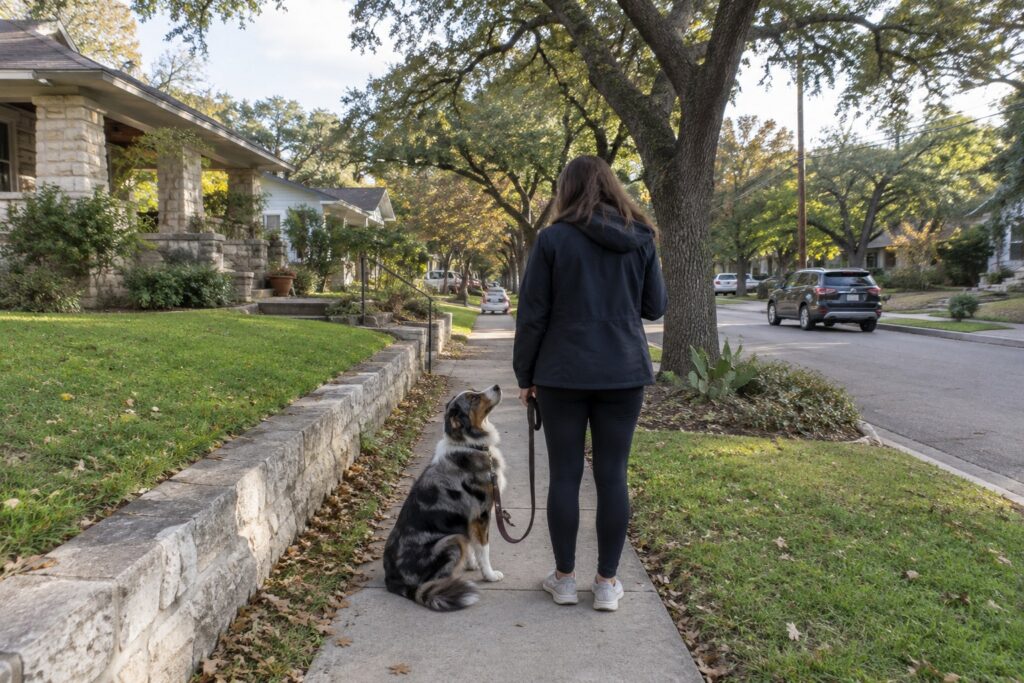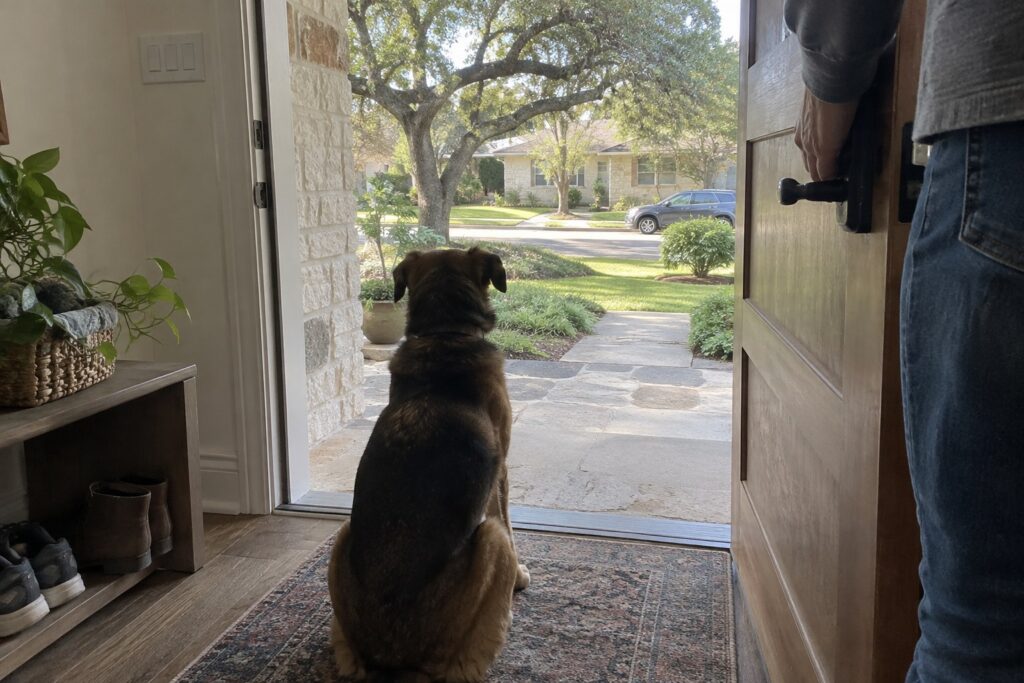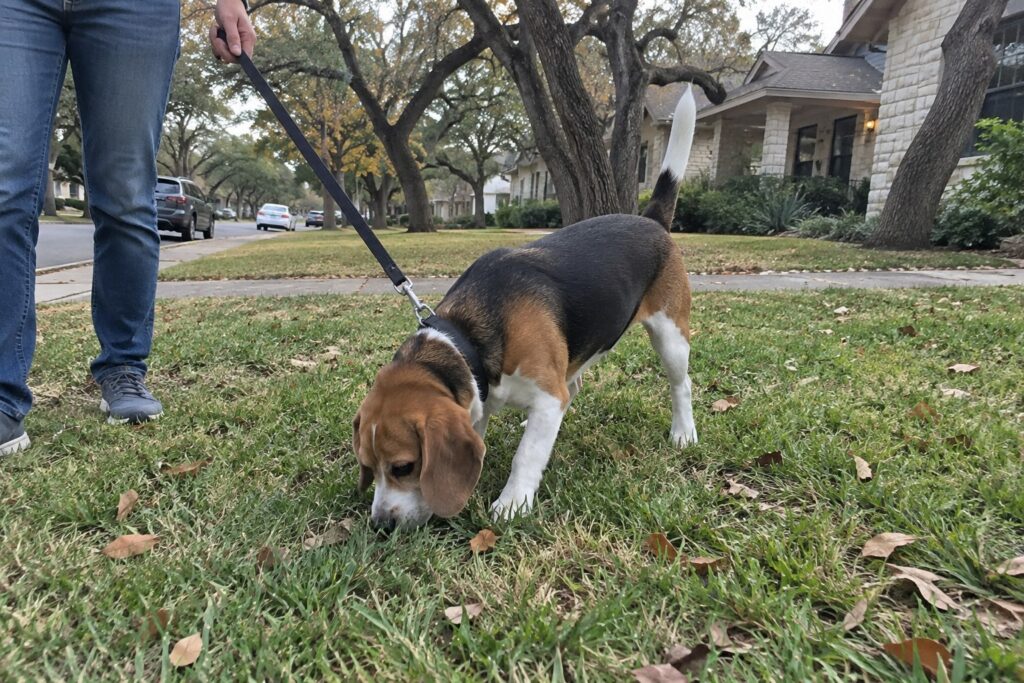

You brought home your new puppy and within an hour, they peed on the rug. Welcome to potty training. The good news is that every Bossier City puppy owner has been right where you are, and the process is much more manageable than the first week makes it feel. The bad news is that potty training takes longer than most people expect, requires more consistency than most people anticipate, and there’s no real way to skip the work.
This guide walks you through exactly what to do, when to do it, and why some of the most common shortcuts (puppy pads, scolding, locking them in the laundry room) actually slow the process down. Follow this protocol, stay consistent, and your puppy will be reliably potty-trained on a realistic timeline.
What Realistic Expectations Look Like for Bossier City Puppy Owners
Most puppies are mostly potty trained by 4 to 6 months of age. That means accidents become rare but still happen occasionally. Full reliability, where you can trust your puppy alone in the house for hours without an accident, typically comes at 6 to 12 months.
A few important truths to set expectations:
- Accidents are part of the process. Even a well-trained puppy will have occasional accidents during their first year.
- Smaller breeds typically take longer. Yorkies, Chihuahuas, and other small breeds have small bladders and high metabolisms. Plan for an extra month or two.
- Consistency matters more than intensity. A schedule you can actually follow every day beats an aggressive plan you abandon after a week.
- There’s no such thing as 7-day potty training. Some puppies establish strong habits in a week, but full house training takes months. Be skeptical of any claim otherwise.
- Setbacks are normal. Most puppies have a regression around the adolescent phase (6–12 months) where they “forget” their training briefly.
If you’re realistic about the timeline, the process becomes much less stressful for everyone, including the puppy.
The Bladder Math: How Long Your Puppy Can Actually Hold It
There’s a useful rule of thumb known as the N+1 rule: a puppy’s age in months plus one equals the maximum number of hours they can reasonably hold their bladder. A 2-month-old puppy can hold it for about 3 hours max. A 4-month-old puppy can hold it for about 5 hours.
Here’s a more practical breakdown:
| Puppy Age | Max Bladder Hold | Recommended Potty Frequency (Awake) |
|---|---|---|
| 8–10 weeks | 1–2 hours | Every 60 minutes |
| 10–12 weeks | 2–3 hours | Every 90 minutes |
| 12–16 weeks | 3–4 hours | Every 2 hours |
| 4–5 months | 4–5 hours | Every 3 hours |
| 5–6 months | 5–6 hours | Every 4 hours |
| 6+ months | 6–8 hours | Every 4–6 hours |
A few notes on this table:
- The “max hold” is a ceiling, not a target. Forcing a puppy to hit their max regularly can cause urinary tract issues.
- Overnight, puppies can typically hold it slightly longer than during waking hours because they’re inactive.
- Small breeds often hold less than these numbers suggest.
- A puppy who just drank a bowl of water doesn’t get the standard interval. Take them out within 10–15 minutes.
Set Up for Success Before Training Starts
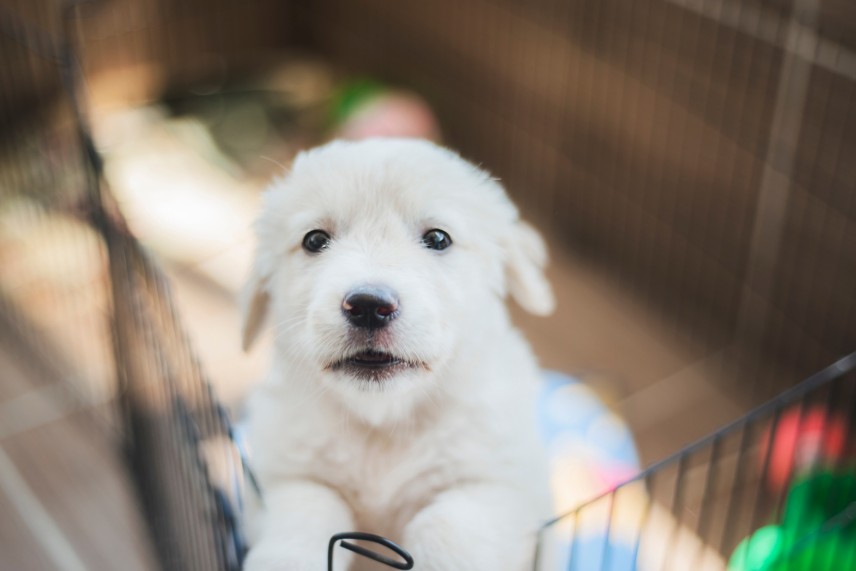
Before your puppy comes home (or right when they do), have these in place:
- A properly sized crate. Big enough for them to stand, turn around, and lie down comfortably. Not bigger. Too much space encourages crate accidents because they can pee in one corner and sleep in the other.
- A short leash. Even in a fenced yard, leash up your puppy for potty trips. It keeps them focused and lets you confirm they actually went.
- High-value treats. Small, soft, easy to eat outside. Plain kibble is too low-value for this work.
- A designated potty spot. Pick one spot in your yard and use it every time. Familiar scent encourages elimination.
- An enzymatic cleaner. Regular cleaners don’t break down the proteins in urine that signal “this is a potty spot.” Get a true enzymatic cleaner specifically designed for pet messes. Brands like Nature’s Miracle work well.
- A consistent feeding schedule. Predictable input means predictable output. Free-feeding makes potty training much harder.
- A baby gate or playpen. For confined access during early training so you can supervise without 24/7 attention.
The 7 Predictable Times Your Puppy Will Need to Go
Puppy potty needs are remarkably predictable. Take your puppy out at every one of these moments:
- First thing in the morning. Before coffee, before email, before anything. Carry them outside if needed to prevent stops along the way.
- After every meal. Food triggers the digestive tract. Most puppies need to go within 10–30 minutes of eating.
- After drinking water. Within 15–20 minutes typically. Watch for it.
- After every nap. A waking puppy needs to go almost immediately. Don’t let them roam the house first.
- After playtime. Excitement and movement stimulate elimination. Take a potty break before play moves indoors.
- Right before bed. The last thing before crating for the night. Some puppies need this twice if they don’t fully empty the first time.
- Throughout the day, on a schedule. Even when none of the above triggers apply, take your puppy out at the intervals from the bladder math table. Setting a phone timer helps.
The Step-by-Step Potty Training Protocol
Here’s the actual moment-by-moment process for taking your puppy out:
- Leash up. Even in a fenced yard. This keeps them focused and prevents them from wandering off without going.
- Walk directly to the designated potty spot. No detours, no exploring, no playing. The trip is for one purpose.
- Use a verbal cue. “Go potty,” “do your business,” whatever you pick, use it consistently. Say it once when you arrive at the spot, then go quiet.
- Stand still and wait. Do not talk, play, or interact. Be boring on purpose. You want your puppy to associate this spot with the act of eliminating, not with social time.
- Wait up to 10 minutes. Most puppies will go within a few minutes. If they haven’t gone after 10 minutes, take them back inside, crate or supervise closely for 10–15 minutes, then try again.
- Mark the moment they go. As they’re finishing, calmly say “yes!” or “good potty!” Don’t shout, which can interrupt them mid-stream.
- Reward immediately after. The instant they finish, deliver a high-value treat right there in the yard. Praise generously. Make this the best moment of their day.
- Then play, walk, or return inside. Now and only now is it time for any other activity. The reward comes after the job is done.
The most common mistake here is rewarding inside the house after returning from outside. Your puppy doesn’t connect the indoor reward to the outdoor act. The treat has to happen at the potty spot, immediately.
A Sample Daily Schedule by Age
A predictable schedule is the single most powerful potty training tool. Here’s what daily life can look like at two key stages.
8–12 weeks (Newly home):
| Time | Activity |
|---|---|
| 6:30 a.m. | Wake up, immediate potty break |
| 7:00 a.m. | Breakfast |
| 7:15 a.m. | Potty break |
| 7:30–9:00 a.m. | Supervised play and brief training |
| 9:00 a.m. | Potty break, then nap in crate |
| 11:00 a.m. | Wake up, potty break |
| 11:30 a.m. | Lunch |
| 11:45 a.m. | Potty break |
| 12:00–1:30 p.m. | Supervised play |
| 1:30 p.m. | Potty break, then nap in crate |
| 3:30 p.m. | Wake up, potty break |
| 4:00–5:30 p.m. | Supervised play and training |
| 5:30 p.m. | Dinner |
| 5:45 p.m. | Potty break |
| 6:00–9:00 p.m. | Family time, occasional potty breaks every 90 minutes |
| 9:30 p.m. | Final potty break |
| 10:00 p.m. | Bedtime in crate |
| 2:00–3:00 a.m. | One overnight potty break (typical for under 12 weeks) |
12–16 weeks (More independence):
| Time | Activity |
|---|---|
| 7:00 a.m. | Wake up, potty break |
| 7:15 a.m. | Breakfast |
| 7:30 a.m. | Potty break |
| 7:30–10:00 a.m. | Play and training, potty break every 2 hours |
| 12:00 p.m. | Lunch and potty break |
| 12:30–3:30 p.m. | Activity, potty break every 2 hours |
| 5:30 p.m. | Dinner and potty break |
| 6:00–9:30 p.m. | Family time, potty breaks every 2–3 hours |
| 10:00 p.m. | Final potty break, bedtime |
By 16 weeks, most puppies can sleep through the night without needing an overnight break. For more on managing the broader sleep schedule, our blog on dealing with a puppy sleep schedule covers what to expect.
How to Use a Crate for Potty Training (the Right Way)
Crate training is the single most effective tool for potty training. Dogs have an instinct to keep their sleeping area clean, which means a properly sized crate teaches them to hold their bladder rather than soil where they sleep.
The right way to use a crate:
- Size it correctly. Just big enough for your puppy to stand, turn around, and lie down. A divider that grows with the puppy is ideal for fast-growing breeds.
- Make it positive. Feed meals in the crate. Drop high-value treats inside randomly. Never use the crate as punishment.
- Match crate time to bladder hold time. If your 10-week-old can hold 2 hours, that’s the maximum crate time. Stretching beyond that creates a puppy who learns to soil the crate, which is hard to undo.
- Always potty break before AND after crate time. This is non-negotiable.
- Don’t let them out while they’re whining. Let them settle first, then release. Otherwise you teach them whining = freedom.
For deeper coverage of the crate training process, our guide on puppy crate training walks through the full setup.
What to Do When Accidents Happen
Accidents are guaranteed. How you handle them determines whether they slow training or contribute to it.
If you catch your puppy mid-accident:
- Calmly interrupt. A clap or a short “ah-ah” is enough. Don’t yell. You’re not trying to punish, you’re trying to interrupt.
- Pick them up and carry them outside immediately. Even if they’re still going. Get them to the designated spot.
- Reward if they finish outside. This reinforces that outside is where the reward happens.
- Clean the indoor spot thoroughly. Use enzymatic cleaner. Regular cleaners leave a scent signal that says “this is the bathroom.”
If you find an accident after the fact:
- Don’t scold the puppy. They have no idea why you’re upset. The window for connecting cause and effect closed within seconds of the accident.
- Clean it up calmly with enzymatic cleaner.
- Make a note of when it happened. Patterns reveal training gaps. If accidents always happen at the same time, your schedule is off.
- Adjust your schedule or supervision. More frequent potty breaks, less unsupervised freedom, or better signal-watching.
If accidents are happening with a previously trained adult dog, that’s a different issue. Our post on help, my dog is having accidents inside covers regression and what to do about it.
Common Potty Training Mistakes Bossier City Owners Make
These mistakes are the most common reason potty training drags on:
- Punishing accidents. Yelling, rubbing the puppy’s nose in it, or any other form of punishment teaches your puppy to fear eliminating in front of you, not to go outside. They’ll start hiding to potty (under the bed, behind furniture) instead.
- Free-roaming too soon. Giving a 12-week-old puppy access to the whole house is asking for accidents. Confine to one supervised area until they’re consistently going outside.
- Inconsistent schedule. A schedule that varies by hours each day confuses the puppy’s bladder. Try to keep meals and potty breaks within a 30-minute window each day.
- Mixing potty pads with outdoor training. Some puppies adapt fine. Many get confused: “Sometimes the bathroom is here, sometimes it’s outside?” If you can avoid pads entirely, training goes faster.
- Missing the signals. Sniffing the floor, circling, sudden stillness, walking toward the door, suddenly leaving the room. Learn your puppy’s specific signals and respond instantly.
- Not enough supervision. “Out of sight, out of bladder control.” Until your puppy is reliable, they’re either being watched, on a leash attached to you, or in their crate.
- Using the wrong cleaner. Standard cleaners don’t break down the urine proteins. Your puppy can still smell where they went and is drawn back to the same spot.
- Inconsistent verbal cues. Pick one word or phrase and stick with it. “Go potty” today and “do your business” tomorrow makes no sense to your puppy.
For more on what to avoid in puppy training broadly, our post on puppy training: what not to do is worth reading.
Should You Use Puppy Pads?
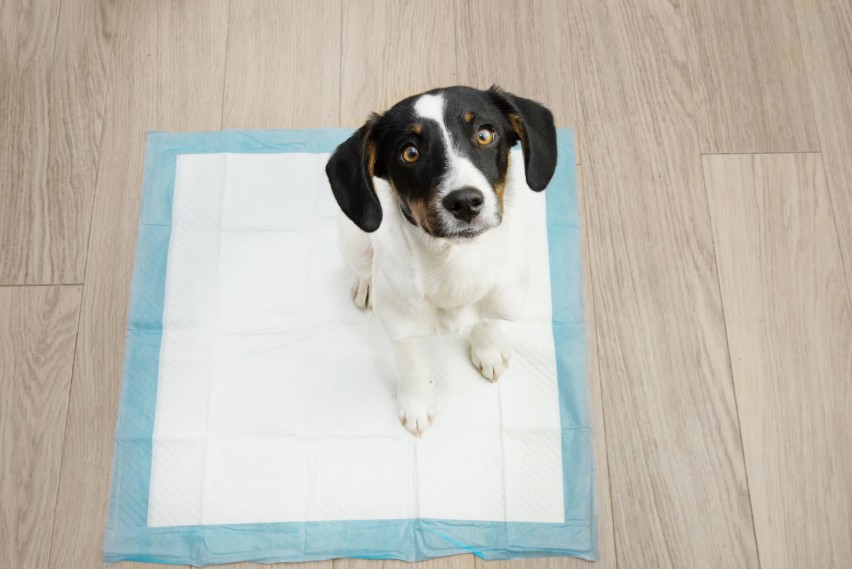
In most cases, no. Here’s why:
Puppy pads teach your puppy that it’s OK to potty inside the house in certain spots. That’s the opposite of what most owners want. The transition from “go on the pad” to “go outside” requires a separate retraining process that often confuses the puppy and adds weeks to the timeline.
When pads might make sense:
- High-rise apartment living where outdoor access is genuinely impractical
- Severe weather windows where outdoor trips aren’t safe
- Owners with mobility issues who can’t reliably take a puppy out
- Very small breeds whose bladders simply can’t make it through the night
When to avoid them:
- You have a yard
- You’re physically able to take the puppy out on schedule
- You want the fastest path to outdoor-only training
- You have a larger breed
If you do use pads, plan a deliberate transition phase: gradually move the pad closer to the door, then outside the door, then phase it out entirely. This usually adds 4–8 weeks to the overall timeline.
Bossier City Climate Considerations
The local climate creates a few specific challenges worth planning for:
- Heavy rain stretches. Louisiana spring rain can last days. A small covered area or porch space for emergency potty breaks helps. Don’t skip outdoor trips because of rain. Use an umbrella, pop a raincoat on the puppy, and stay consistent.
- Summer heat. Pavement temperatures can scorch puppy paws by mid-morning in July. Move potty breaks to grass and earlier in the day. Pre-dawn and post-sunset windows are safer for outdoor time during peak summer.
- Cold snaps in winter. Bossier City winters are mild but occasionally drop into the 30s. Small or short-coated puppies may resist going outside. A puppy coat or a short stretch of dry pavement near the door helps.
- Heavy pollen seasons. During spring tree pollen peaks, your puppy may track significant amounts of pollen back inside. Keep paw wipes near the door.
- Mud. Frequent rain plus a yard equals mud. A designated gravel or pavement potty spot away from grass solves this.
When to Call a Vet (and When to Call a Trainer)
Most potty training issues are training issues. Some are medical. Here’s how to tell:
Call a vet if:
- Your puppy is straining or appears to be in pain when urinating
- There’s blood in the urine
- Your puppy is suddenly going much more frequently than expected
- Accidents start happening after weeks of clean behavior
- Your puppy is drinking far more water than usual
- There’s any discharge or odor from the urinary area
Call a trainer if:
- You’ve been consistent for weeks and aren’t seeing progress
- Your puppy seems to “get it” and then regresses for no clear reason
- Specific situations (visitors, certain rooms) trigger accidents
- You’re seeing submissive or excitement urination that you can’t manage
- Anxiety-related accidents are happening when you leave
For dogs heading into adolescence with lingering issues, our post on the teenage phase covers the regression period that catches many owners off-guard.
Frequently Asked Questions
How long does potty training actually take?
Most puppies are mostly trained by 4–6 months and fully reliable by 6–12 months. Smaller breeds typically take longer. Consistency, supervision, and the right schedule shorten the timeline. Inconsistency, punishment, and too much freedom too early extend it.
Why does my puppy come back inside and immediately pee?
Usually one of three reasons: they didn’t actually go outside (just sniffed around), they didn’t fully empty their bladder, or you came back inside before they had a chance to. Stay outside longer, use the verbal cue consistently, and don’t reward returning to the house until you’ve confirmed they’ve gone.
Can I make it through the night without taking my puppy out?
Most puppies under 12 weeks need at least one overnight break. By 12–16 weeks, most can make it through the night, although small breeds may need longer. Keep the crate near your bedroom so you can hear them when they need to go. Don’t make overnight breaks fun: leash up, go to the spot, brief verbal cue, no play, back to the crate.
My puppy is going in the crate. What am I doing wrong?
Three possibilities: the crate is too big (they can pee on one side and sleep on the other), they’re being crated longer than their bladder can hold, or they came from a kennel/pet store environment where they had no choice but to soil their sleeping space. Address whichever applies. The first two are easy fixes. The third takes more time and patience.
Should I use a potty bell?
Bells can work well for some puppies. Hang a small bell or set of windchimes by the door. Encourage your puppy to nudge it with their nose or paw before you open the door. Reward heavily when they do. Within a few weeks, many puppies start ringing the bell on their own to signal they need out. Just be aware that some puppies start ringing it for fun, which becomes its own training problem.
Do potty training sprays or scent attractants work?
Some products are designed to attract your puppy to a specific potty spot. They work for some puppies and have no effect on others. They’re optional, not essential. The same effect happens naturally once your puppy has gone in the designated spot a few times because the residual scent attracts them back. Save your money unless you’ve struggled to establish a consistent potty spot.
About All Dogs Unleashed
All Dogs Unleashed is a professional dog training facility serving Bossier City, Shreveport, and the surrounding communities. Located at 4500 Benton Rd, Suite 200, Bossier City, LA 71111, our team helps families build the foundation that potty training depends on: clear communication, consistent structure, and confident handling. All Dogs Unleashed works with puppies from their first weeks home through adolescence and beyond.
Stuck on Potty Training?
If you’re following the protocol, staying consistent, and still seeing too many accidents, the issue is rarely effort. It’s usually a small detail in the approach that needs adjusting. Our team can evaluate your specific puppy and your specific household, and we can identify what’s getting in the way.
Our dog training programs include foundational puppy work that addresses potty training alongside socialization, manners, and confidence building. In-home dog training is often the best fit for potty training specifically because we work in your actual environment. For families who want a structured head start, board and train can lay the foundation in a controlled setting.
Call us at (318) 562-6536 or visit our contact page to schedule a consultation. Let’s get your puppy potty trained the right way.