
Labrador Retrievers are one of the most common breeds in Frisco households, and one of the most frequently undertrained. High energy, persistent mouthiness, and an almost complete absence of impulse control make labrador retriever training a structured, breed-specific process, not a general obedience course. At All Dogs Unleashed Dog Training Frisco, our team works with dogs across North Texas from a facility at 6136 Frisco Square Blvd, #400.
We apply protocols designed around the Lab's specific drives, and every program is backed by our lifetime support commitment, which means you keep access to our trainers long after the initial training ends. Ready to put structure behind all that Lab energy? Contact our team to discuss the right first step.
Key Takeaways
- Labrador retriever training requires breed-specific protocols that address impulse control, leash pulling, and mouthiness systematically.
- Labs are high-energy dogs that need distraction-proofed obedience skills to behave reliably in public spaces and active family environments.
- The North Texas summer compresses outdoor training windows, making structured indoor and early-morning sessions especially important for Frisco owners.
- Behavioral issues like jumping and leash pulling have identifiable causes that generic training programs rarely address at the breed level.
- Lifetime support after training is completed is what separates lasting behavioral change from temporary compliance.
What Makes Labrador Retrievers Different to Train
Labrador Retrievers are not difficult to train because they lack intelligence. They are difficult because their genetic programming prioritizes environmental engagement over owner compliance. Understanding that distinction is the first step toward effective labrador retriever training.
What Is the Breed's Genetic Drive and Why Does It Matter?
Labs were selectively bred for sustained retrieving work in unpredictable field environments, and that breeding shapes almost everything about how they behave today. That heritage produced a dog with high arousal, high environmental orientation, and a powerful retrieving drive that does not switch off between sessions. The behavioral expressions of that drive are specific and consistent: mouthiness in young dogs, obsessive fetching, leash pulling toward stimuli, and difficulty disengaging from distractions.
These are not signs of a training failure. They are breed-level traits that require targeted intervention rather than standard obedience repetition. Teaching a Labrador to walk politely without first addressing the underlying retrieving drive produces temporary compliance at best. A well-designed program has to account for the cause of the behavior, not just the surface symptom.
How Much Energy Does a Labrador Really Need?
A Labrador carries above-average energy demands, and an under-exercised one reaches elevated arousal thresholds faster than a physically satisfied dog. As arousal climbs, compliance training loses effectiveness. This is not a temperament problem. It is a physiological ceiling that owners must manage before each training session.
The North Texas summer compounds this directly. Temperatures in the area regularly exceed 100°F from June through September, compressing outdoor exercise windows to early morning and evening hours. A Lab that cannot discharge energy during those windows accumulates behavioral pressure that surfaces indoors as destructive behavior and reduced responsiveness.
Owners looking to maintain consistent exercise can review options in our guide to the best dog parks and trails in Frisco to identify early-morning routes that stay viable through the hottest months. Impulse control work is measurably harder to establish when unspent energy is a daily variable.
The Most Common Labrador Training and Behavior Problems
Labrador behavior problems follow predictable patterns rooted in breed genetics, not owner failure. Identifying the specific mechanism behind each behavior is the first step toward applying the correct training approach.
Why Do Labradors Pull So Hard on the Leash?
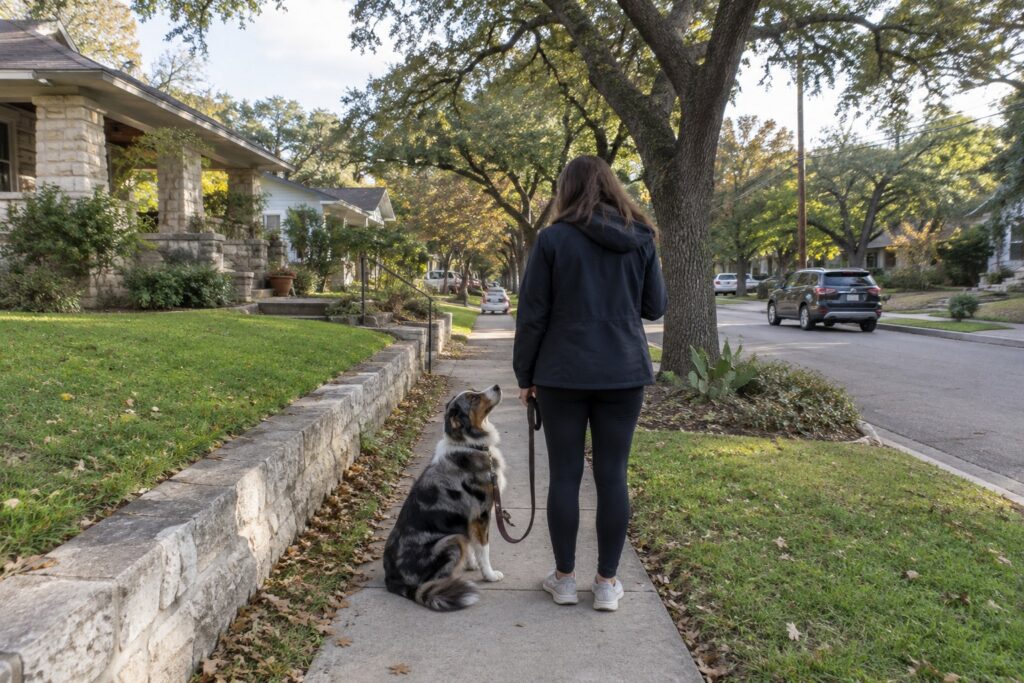
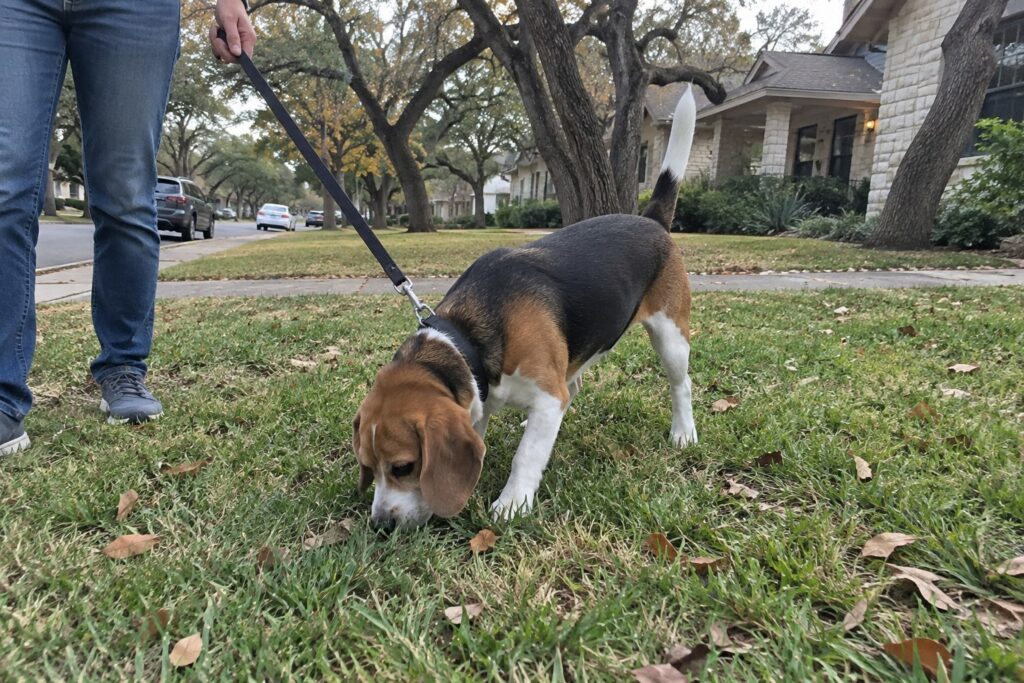
Labradors pull because retrieving drive and high arousal make forward momentum self-rewarding for the dog. Stopping and waiting, the most common owner response, does not address the underlying arousal state and produces minimal lasting change. Effective loose-leash conditioning requires systematic practice with progressive distraction exposure, building compliance at low-distraction thresholds before advancing to crowded environments like the shared trails around Frisco Square. Inconsistent leash handling across household members compounds the problem and can produce more reactive dogs over time.
How Do You Stop a Lab Puppy from Biting?
You stop a Lab puppy from biting with systematic bite-inhibition work paired with impulse-control exercises, not redirection alone. Puppy mouthiness is a direct expression of retrieving drive, and the underlying issue is an undeveloped impulse-control system, not aggression. The exercises teach the dog to defer to the owner before engaging objects or hands.
For a broader look at early behavioral foundations, the puppy training tips for Frisco dog owners resource covers these protocols in detail. Chewing in adolescent Labradors follows the same pattern and responds to the same structured intervention.
Why Does My Lab Keep Jumping on People?
Jumping is maintained by historical social reward, specifically attention, eye contact, and physical contact delivered inconsistently by owners and visitors. The correction approach combines extinction of the social reward with a trained incompatible behavior, typically a reliable sit or four-on-floor response. Demand barking and persistent nudging come from the same learned owner compliance, and both respond to the same targeted intervention.
In neighborhoods with high foot traffic and shared outdoor spaces, uncontrolled jumping creates real safety risks, particularly for children and older adults in the household.
Impulse Control: The Foundation of Every Labrador Training Program
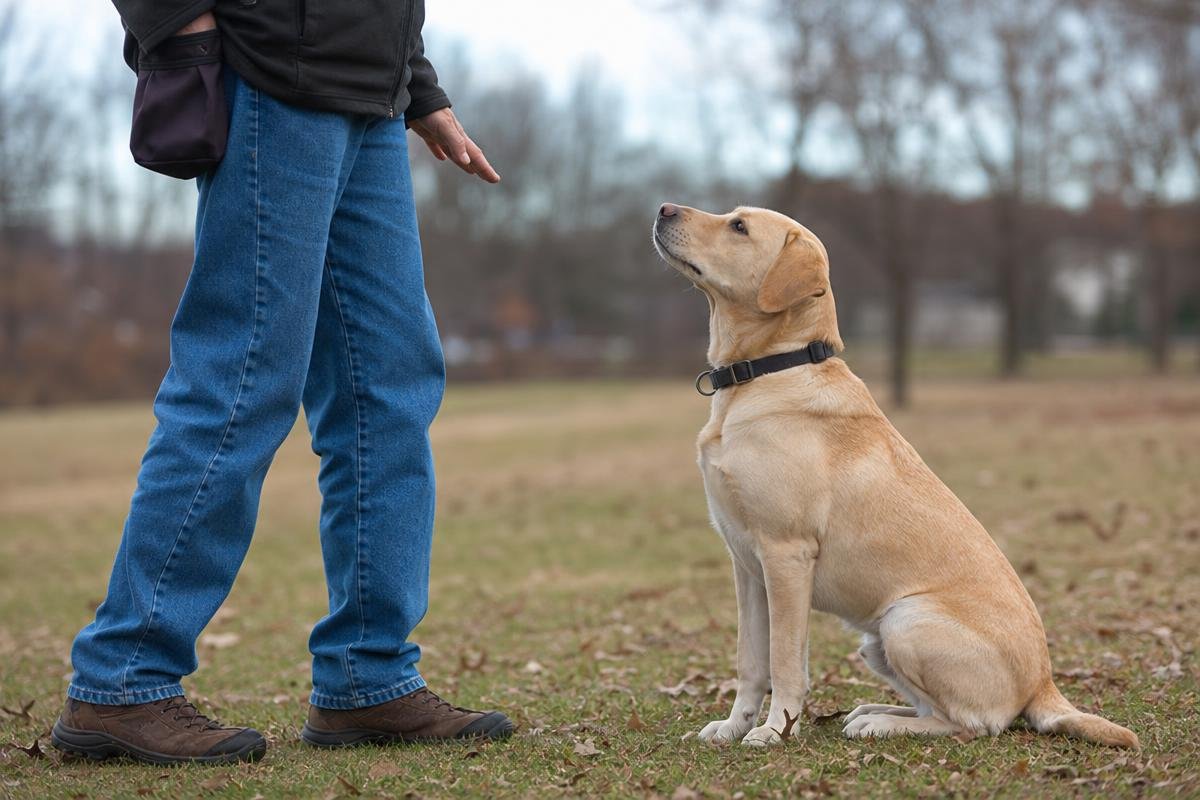
Impulse control is not a supplementary skill for Labrador Retrievers. It is the foundational compliance layer on which every other behavior is built. Without it, commands are conditional. Your dog responds when the environment is calm and the stakes are low. The moment arousal spikes, compliance collapses.
What Is Impulse Control Training for Dogs?
Impulse control training teaches a dog to pause and defer to you before acting on an urge, which is the missing layer in most stalled obedience programs. Dogs trained in sit, stay, and heel without it perform reliably in the living room because nothing there competes with your attention. Move that same dog to a busy athletic complex or the trails near Frisco Square, and the behavioral picture changes entirely. The dog has not been distraction-proofed. It has simply never been tested.
Our board and train programs address impulse control as the first priority, before any advanced obedience work begins. This sequencing is deliberate. A dog that cannot regulate arousal cannot be reliably trained in real-world conditions.
Practical Impulse Control Exercises
Three exercises form the core of any labrador retriever training protocol targeting impulse control. Each should be introduced in a low-distraction environment, then progressively moved into higher-distraction contexts as reliability increases.
- Leave It Protocol: Begin with low-value items on the floor. Progressively increase item value and duration before the release cue is given. The dog learns that deferring to you produces a better outcome than self-rewarding.
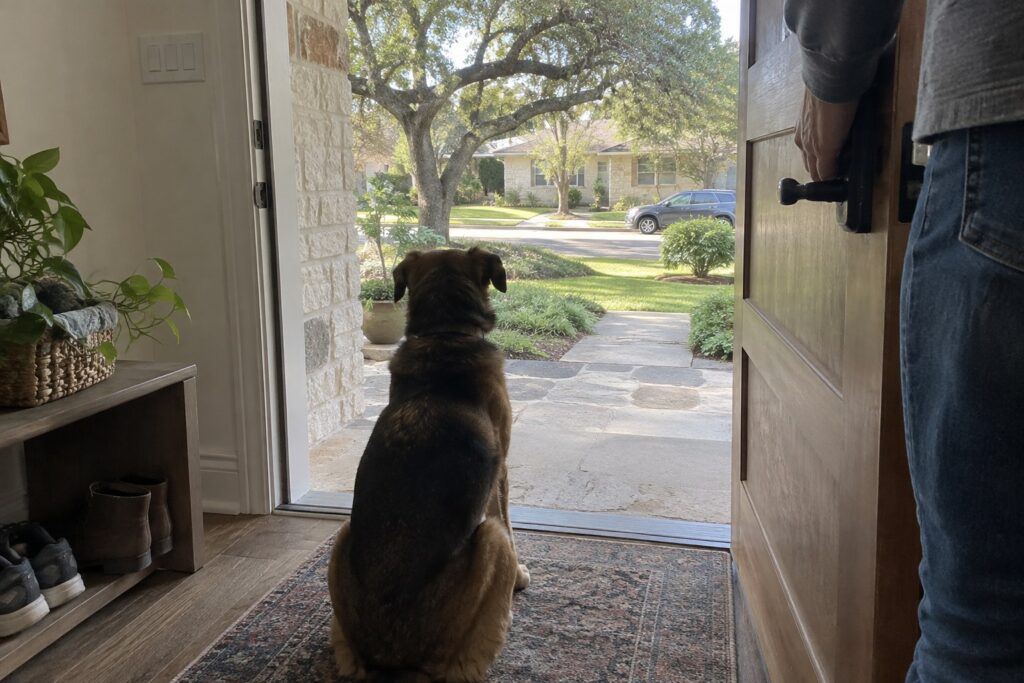
- Threshold Work: Practice controlled exits at doorways, gates, and car doors. Your dog does not move through any threshold until released. This directly addresses the bolting and lunging patterns most owners report in public spaces.
- Place and Mat Training: A sustained down-stay on a designated mat functions as both a calm-state exercise and a behavioral reset tool. Duration is built progressively, with distractions introduced only after the behavior is stable.
If your dog listens at home but ignores you at the park, an impulse control assessment is the fastest way to find the gap. Book your Lab's behavioral assessment and one of our trainers will evaluate where the program broke down.
Our in-home dog training services can introduce these protocols in your dog's actual environment, where the behavioral patterns first need to be established.
Common Mistakes Lab Owners Make During Training
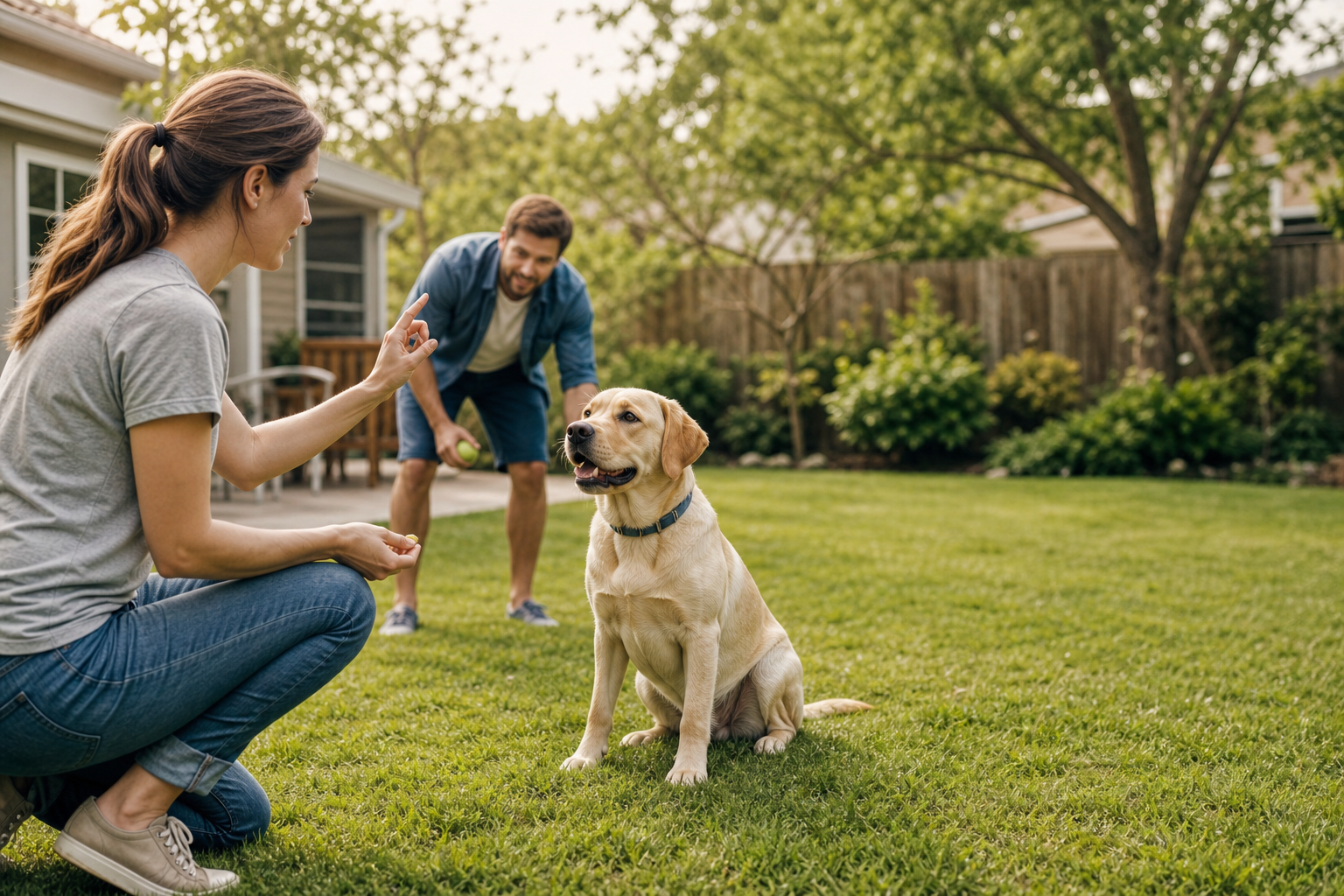
The most persistent Labrador behavior problems are not caused by the dog's temperament. They are caused by systematic errors in how training is applied, often across multiple people in the same household. Identifying these errors is the first step toward reliable obedience results.
Inconsistent Reinforcement
Labrador Retrievers learn from patterns with exceptional speed. When jumping is rewarded by one family member, ignored by another, and corrected by a third, the behavior lands on an intermittent reinforcement schedule. Behavioral science identifies intermittent reinforcement as the most durable schedule in existence, meaning the behavior becomes significantly harder to extinguish, not easier.
Active family households with multiple adults and children are a natural setting for this dynamic. Different rules applied by different people produce a dog who tests every interaction for a possible reward. Household-wide consistency is non-negotiable. Our in-home dog training services in Frisco address this directly by training the entire household, not just the dog.
Skipping Foundational Steps
A common pattern involves moving to off-leash recall or advanced commands before the dog has reliable impulse control and leash compliance. The result is a dog who recognizes a command but cannot execute it under real-world conditions, such as a crowded trail or a busy public space.
Step-by-step progression, applied systematically, determines long-term compliance. Speed does not. Each behavioral layer must be stable before the next is introduced. Skipping steps does not accelerate training; it produces gaps that surface as failure under distraction.
A Note on Frisco Neighborhoods and Community Rules
Labs are especially common in the family-oriented communities around Frisco, from Starwood and Stonebriar to The Hills of Kingswood, where large lots and active households make the breed a natural fit. Many of these neighborhoods sit under HOA rules that require dogs to be leashed in common areas and prohibit nuisance barking, which turns reliable recall and quiet, controlled behavior into practical necessities rather than nice-to-haves.
Knowing your community's specific leash and pet conduct standards before you begin training helps you set realistic goals, and coordinating with your regular Frisco veterinarian on exercise limits during the hot months keeps your dog safe while you build those skills. If your Labrador's training has stalled, our team can identify the protocol gaps and correct them. Call us at (972) 573-1715 to schedule a visit.
Puppy vs. Adult Labrador Training: What Changes and What Stays the Same
The training approach for a young Labrador differs from that of an adult dog in timing, method emphasis, and behavioral expectations. The foundational principles, consistency, progressive distraction exposure, and impulse control, apply to both. What changes is the starting point and the depth of behavioral change required to produce reliable obedience results.
Training the Young Labrador
The socialization window closes at approximately 16 weeks. During this period, a young Labrador's exposure to varied environments, surfaces, sounds, and people shapes behavioral patterns that persist into adulthood. This window cannot be recovered once it closes, which makes early puppy training a priority, not an optional step.
Young Labs are highly receptive to impulse control and bite-inhibition work during these early weeks. Structured repetition at this stage produces faster compliance than the same work attempted at 18 months. For a complete first-week plan, see our new puppy checklist for Frisco owners covering environment setup, early commands, and socialization priorities.
Retraining Adult Labs
Adult Labradors with established problem behaviors require targeted behavioral work rather than basic obedience training. The cause of each behavior must be identified before an effective intervention can be designed. Jumping, leash pulling, and reactivity in an adult dog each carry a different behavioral history, and that history determines the approach.
Adult Labs are fully capable of learning new behavioral patterns. They require more repetitions and a more structured distraction-proofing sequence than puppy training demands. Our in-home dog training services in Frisco address adult retraining in the environment where problem behaviors are most likely to occur, which accelerates the process. It is not too late to retrain your adult Labrador. The timeline is different, not the outcome.
Training Your Labrador in Frisco: Local Conditions That Affect Your Program
Generic obedience guides are written for no specific place. Frisco's climate and public spaces create distinct training challenges that require a locally informed approach.
Heat, Humidity, and Training Session Timing
Summer temperatures in Frisco routinely exceed 100°F from June through September, and that heat directly undermines your dog's ability to focus. Popular routes such as the exposed sections of the Cottonwood Creek trail turn into radiant heat sinks by midday, which is why local Lab owners shift outdoor work to before 9 a.m. or after 7 p.m. and favor the shaded stretches near community greenbelts. High ambient temperature elevates arousal and reduces cognitive stamina, compressing effective training windows to narrow parts of the day.
A Labrador exercised in midday heat will enter a training session in an already-elevated arousal state. That arousal state, covered in the breed characteristics section of this article, makes impulse control and compliance work significantly harder. If outdoor sessions are not practical in summer, in-home dog training in Frisco provides a climate-controlled alternative that keeps your program on schedule year-round.
High-Distraction Environments in Frisco
Busy trail corridors and the athletic areas surrounding local sports complexes are ideal environments for progressive distraction training, but only after foundational compliance is established. Introduce these locations systematically. Start at low-traffic times, then progressively increase exposure as your dog's leash skills and distraction-proofed responses solidify.
For a detailed breakdown of where to practice advanced obedience work in real-world conditions, see our guide to the best dog parks and trails in Frisco for high-energy Labs. Our facility at 6136 Frisco Square Blvd, #400, Frisco, TX 75034 is centrally accessible to owners across zip codes 75034, 75035, and 75033, and we also serve neighboring communities including Prosper, McKinney, and Allen. Call (972) 573-1715 to schedule an evaluation.
Frequently Asked Questions
How Long Does It Take to Train a Labrador Retriever?
Basic obedience compliance typically requires 4 to 8 weeks of consistent daily work. Distraction-proofed reliability in real-world environments, such as trail corridors and busy public spaces, takes 3 to 6 months of systematic, progressive training. Age, prior training history, and owner consistency are the primary variables.
What Is the First Command I Should Teach My Lab?
Impulse control work, specifically "leave it" and threshold exercises, should precede formal obedience commands. Without this foundation, commands like "sit" and "stay" will fail the moment arousal increases. Establishing the dog's capacity to defer before responding is what makes every subsequent command reliable.
Are Board and Train Programs Effective for Labs?
Yes. The immersive, structured environment of a board and train program removes the inconsistency variables that undermine home training. Our board and train programs provide a structured environment and owner guidance to support follow-through at home.
Can an Adult Labrador Be Retrained?
Adult Labrador retrievers can be trained at any age. Behavioral work for established habits requires more structured repetition than labrador retriever training started in puppyhood, but produces durable results when applied consistently across environments.
What Is the Best Way to Stop My Lab From Pulling on the Leash?
Start in a zero-distraction environment. Reward the dog for maintaining a loose leash, and apply a direction-change technique the moment tension occurs. Once the behavior is consistent indoors or in quiet areas, progressively move sessions into higher-distraction spaces, such as busy sidewalks and community trails during peak hours.
How Do I Choose the Right Dog Trainer in Frisco for My Lab?
Look for trainers who offer breed-specific behavioral assessment, transparent program structures, and post-training owner education. Ask prospective trainers which credentials they hold and how those credentials are maintained before making a decision. We serve owners across the 75034, 75035, and 75033 zip codes as well as neighboring communities including Prosper, McKinney, and Allen.
Training a Labrador in Frisco produces genuinely manageable dogs when the program is breed-specific and consistently applied. If your Labrador is pulling, mouthing, jumping, or failing under distraction, the problem is addressable. Call our team at (972) 573-1715 or visit us at 6136 Frisco Square Blvd, #400, Frisco, TX 75034 to schedule a behavioral assessment. We work with Labrador retrievers at every age and every stage of training history.
Ready to Get Started with All Dogs Unleashed Dog Training Frisco?
Call (972) 573-1715 to speak with our team directly. We're ready to answer your questions, walk you through your options, and help you find the right solution for your needs. Whether you're just starting to plan or ready to move forward, we'll make the process simple and stress-free. Reach out today and let's talk about how we can help.