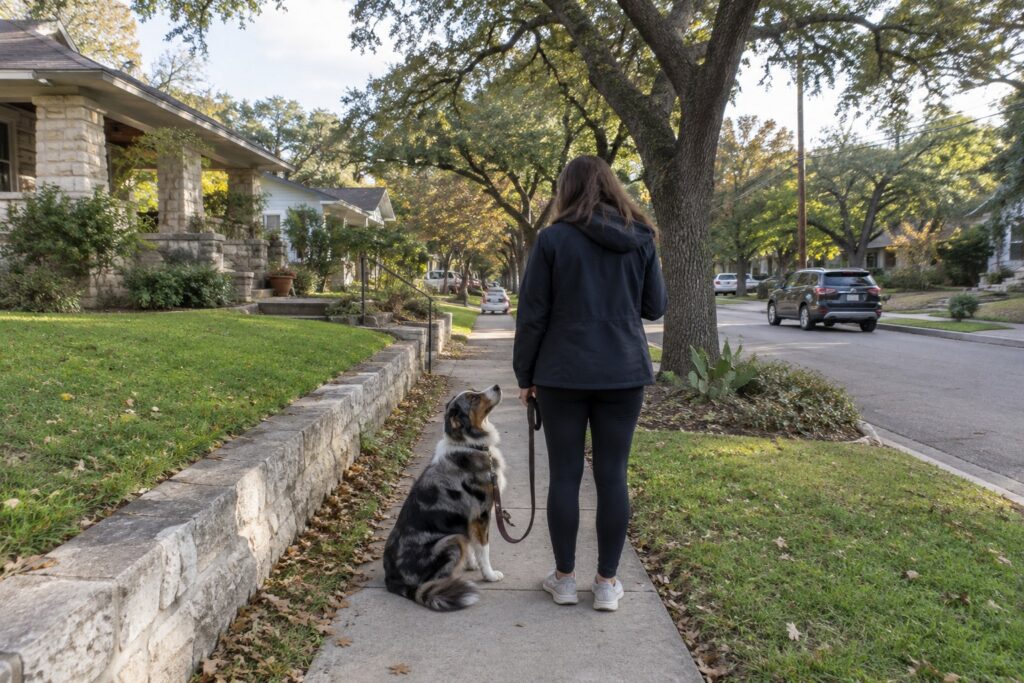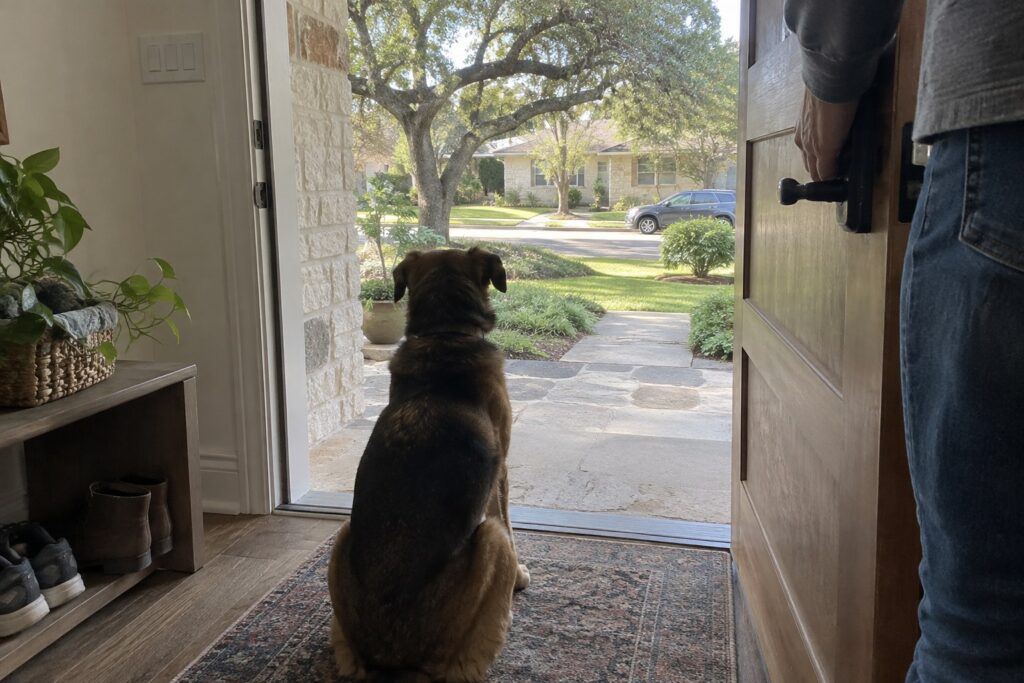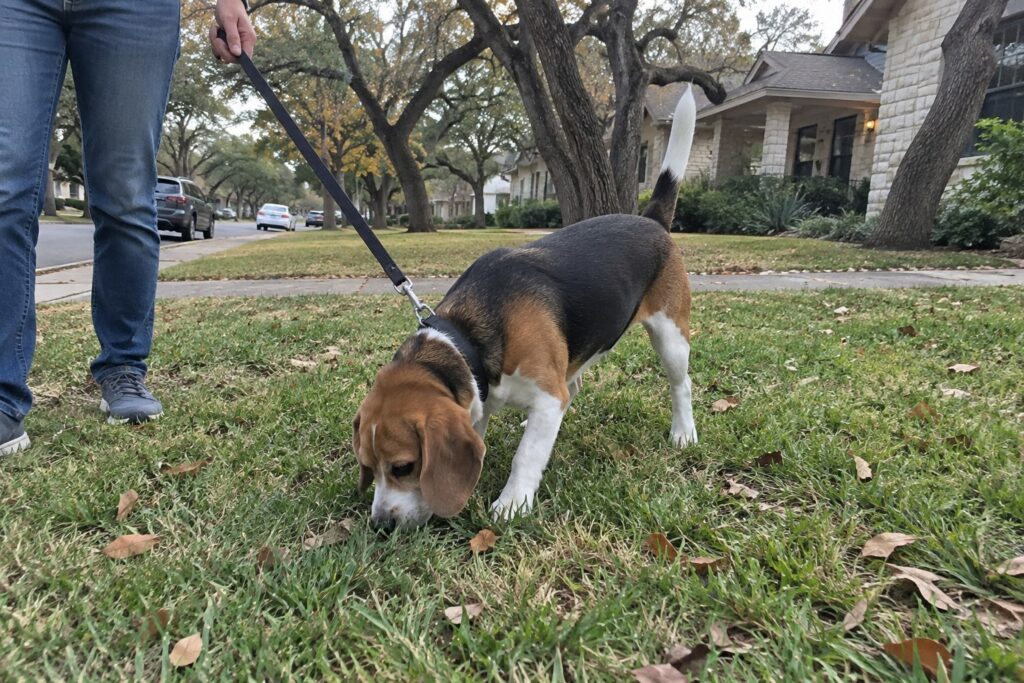

Frisco is one of the fastest-growing cities in Texas, and with that growth comes a lot of noise, traffic, and new dogs on every block. That’s a lot for a young puppy to handle. All Dogs Unleashed Dog Training Frisco works with puppies every day, and these puppy training tips are the same ones we share with local owners to build good habits fast. Start early, stay consistent, and your dog will be set up for life. For hands-on help, see our dog training in Frisco programs.
Key Takeaways
- The best puppy training tips focus on consistency, timing, and starting during the critical 8 to 16 week socialization window.
- With so many dogs per square mile in Frisco neighborhoods, your puppy will meet other dogs often, so early leash manners matter more here than in most cities.
- Crate training, house training, and nipping are the three behavior problems Frisco owners ask us about most.
- Summer heat in Frisco makes early morning and late evening the safest times for outdoor training and potty trips.
- Structured Board and Train programs can solve multiple puppy behavior problems at once, often faster than solo training at home.
Ready to give your Frisco puppy the best possible start? Call our Frisco team today at (972) 573-1715.
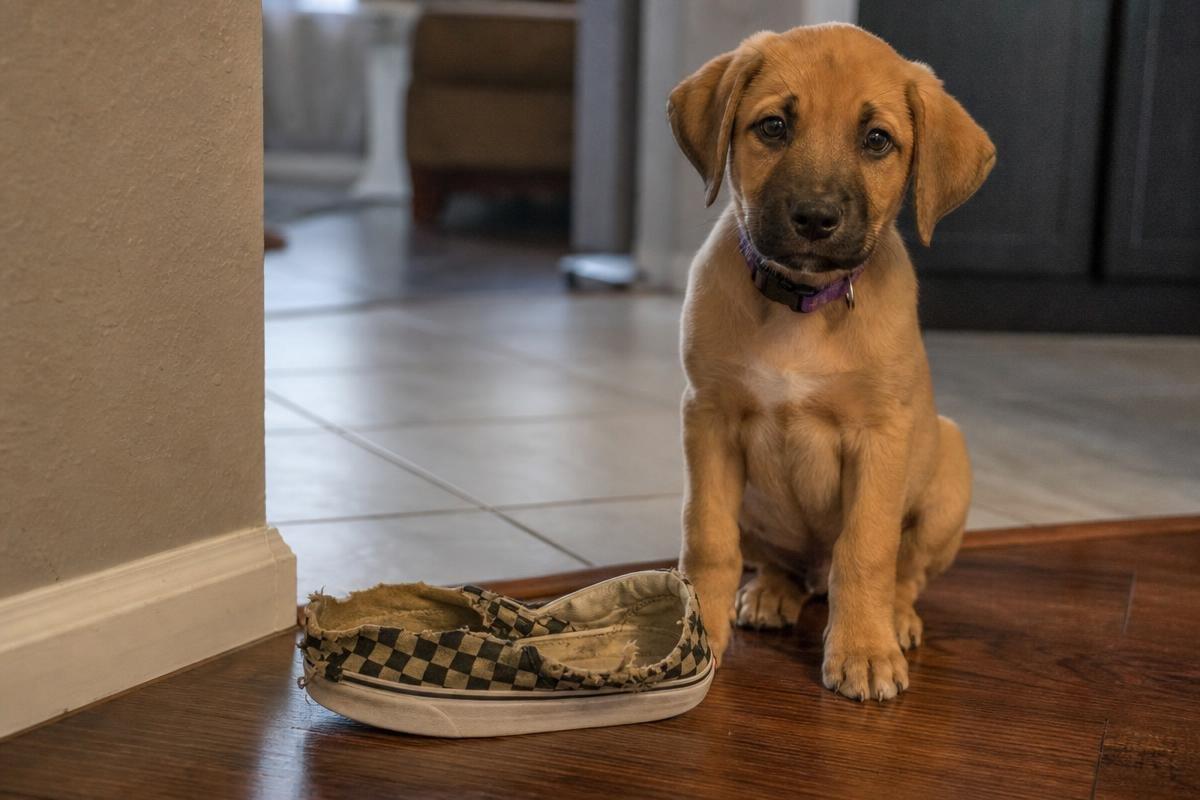
You brought your new puppy home and within 48 hours there was a puddle on the floor, a chewed shoe by the door, and a tiny furball that would not stop biting your hands. Sound familiar? You are not alone. We hear this story every week.
Our team has helped hundreds of local families get through that first chaotic week and come out the other side with a dog they actually enjoy. We work with puppies from our Frisco location and serve the surrounding North Dallas area, and we carry a 5.0-star rating backed by 297 customer reviews. That trust was earned one puppy at a time, by trainers who work daily on balanced, obedience-focused methods with dogs of every breed and temperament.
This guide covers the five topics that matter most: crate training, house training, socialization, nipping and jumping, and basic commands. Read it, use it, and see what our puppy training programs in Frisco can do for your dog.
Why Does Early Puppy Training Make Everything Easier?
Starting training early is the single biggest advantage you can give your puppy. The first few months of a dog’s life shape how they respond to the world for years. Get it right early, and everything else gets easier.
What Is the Critical Socialization Window for Puppies?
Between 8 and 16 weeks, your puppy’s brain is wired to absorb new experiences with very little fear. Sights, sounds, people, and other dogs register as normal during this window. After 16 weeks, that same novelty is far more likely to trigger anxiety or reactivity.
In the Dallas North Tollway corridor, construction noise is constant. Game nights near Riders Field bring crowds and sounds that most dogs never experience. Exposing your puppy to those real-world situations now, during this window, builds a dog that stays calm later. That is exactly what smart socialization looks like in practice.
Knowing how to train a puppy during this window is not complicated. Short, positive exposures. New surfaces. Different people. Busy parking lots. Keep sessions brief and upbeat, and your puppy builds confidence fast.
What Happens When Training Starts Too Late?
Skipping early training does not mean you get a blank slate later. It usually means you inherit a set of problems that are much harder to fix. Puppies who miss the socialization window are more likely to develop separation anxiety and leash reactivity as they grow.
Here are the four most common behavior problems we see in dogs whose owners waited:
- Jumping on guests and family members
- Nipping and mouthing that escalates into real biting
- Leash pulling that makes every walk a battle
- Barking and lunging at other dogs during neighborhood walks
With so many dogs packed into Frisco neighborhoods, your puppy will encounter other dogs constantly. Without early socialization tips put into practice, those encounters become flashpoints instead of non-events.
If your puppy is already past 16 weeks, you still have options. Our Board and Train program is built for exactly this situation. We meet your dog where they are and build from there, no matter the breed or the behavior.
Crate Training and House Training: The Foundation Every Frisco Puppy Needs

These two skills are not optional. They set the tone for everything else you teach your puppy. Get them right early and basic puppy obedience becomes much easier to build on top of.
How Do You Crate Train a Puppy Without the Drama?
Crate size matters more than most owners realize. Your puppy needs enough room to stand up, turn around, and lie down. That is it. If your dog will grow past 50 pounds, use a divider panel to block off extra space. A puppy with too much room will pick a corner as a bathroom. That defeats the whole point.
Here is the three-step introduction that actually works:
- Set the crate up with the door open. Toss a treat inside and let your puppy walk in and out freely. No pressure.
- Feed all meals inside the crate for two to three days, with the door still open. Your puppy starts connecting the crate with good things.
- Close the door for five-minute intervals while you stay in the room. Extend the time gradually over several days.
Do not rush step three. Puppies under 12 weeks should not be crated more than one to two hours at a stretch during the day. A simple rule: one hour per month of age. A three-month-old puppy can hold it for about three hours. Plan around that number and you will have far fewer accidents.
Here is something we have learned from our own client work that most articles will not tell you: the single most common mistake we see Frisco owners make in the first week is letting the puppy out of the crate the moment it starts crying. That one habit teaches the puppy that noise equals freedom, and it is the number one reason crate training stalls. Wait for a pause in the whining, even a two-second one, before you open the door. Reward the quiet, not the fuss.
What Is the Best House Training Schedule for Puppies?
Puppies thrive on a predictable schedule. Feed at the same times every day. Puppies typically need to eliminate 10 to 20 minutes after eating. Consistent meal times make potty breaks easy to predict.
Follow this daily potty rhythm:
- Out immediately after waking up
- Out 15 minutes after every meal
- Out after any play session
- Out before going into the crate
On correction timing: if more than two seconds have passed since the accident, do not punish. Your puppy cannot connect the correction to what happened. Instead, interrupt with a firm “outside” and take them out immediately.
One thing North Texas owners deal with that others do not: summer heat. Pavement in parking lots and streets can reach dangerous temperatures during midday in July and August. Keep outdoor potty trips short during the middle of the day. Early morning before 8 a.m. and late evening after 7 p.m. are your best windows. Brief trips, quick reward, back inside.
Learning how to train a puppy on a schedule is straightforward once the routine clicks. Our In-Home Dog Training option lets our team work with you and your puppy inside your actual home, building the routine in the environment where it needs to stick.
How Do You Stop Puppy Nipping and Jumping Before They Become Real Problems?
These two behaviors are the ones we hear about most from new puppy owners across the DFW area. The good news: nipping and jumping are easy to fix early. The bad news: most owners accidentally make them worse.
Why Do Puppies Nip and What Is the Right Way to Respond?
Your puppy is not being aggressive. Nipping is how puppies explored everything in the litter. Mouths are their hands. The problem starts when you react in a way that feels like play to them. Yelping, pulling your hand away fast, or laughing all read as exciting feedback. Your puppy thinks the game is working.
Here is the three-step response that actually works:
- Go completely still and quiet for three full seconds the moment teeth touch skin
- Redirect immediately to an appropriate chew toy
- Resume play only after your puppy engages with the toy
The number one reason nipping sticks around is inconsistency. If one person in your house corrects it and another laughs it off, your puppy learns nothing. Everyone in the home has to follow the same rule, every single time. This is one of the first things we address in our dog training programs, because family consistency is what closes the loop.
How Do You Teach a Puppy to Keep Four Paws on the Floor?
Jumping is almost always something owners created without knowing it. Any attention, including pushing your puppy down or saying “no” while making eye contact, reads as a reward. Your puppy jumped, you looked at them and touched them. That is a win in their mind.
The correct response is simple but takes discipline. Turn your back completely. Cross your arms. Give zero eye contact. The moment all four paws hit the floor, reward with calm praise or a treat delivered at knee level, not overhead. Reaching over their head triggers the jump again.
Three jumping triggers to get ahead of early:
- Guests arriving at the front door
- Mealtime excitement before the bowl goes down
- You returning home after any absence
Brief every guest before they walk in. Every single person your puppy greets has to follow the same rule. In neighborhoods with heavy dog and visitor traffic, consistent greeting manners matter from the very first week.
The 5 Basic Commands Every Frisco Puppy Should Learn First
Basic puppy obedience starts with five commands. Get these right and you build a foundation that makes everything else easier. Keep sessions under five minutes. Puppies under 16 weeks lose focus fast, and a short win beats a long frustrating session every time.
One rule applies to all five commands: every person in your house uses the same word, the same hand signal, every single time. Consistency is what actually works.
How Do You Teach Sit, Stay, and Come?
Start with sit. Hold a treat at your puppy’s nose. Slowly move it back over their head. The moment their hindquarters drop, say “sit” and reward. Five reps, two or three times a day. That’s it. Do not drag sessions out.
Stay comes next, but build duration before you ever add distance. Start with a two-second stay. Reward. Release with “okay” or “free.” Add one second at a time. Your puppy should hold a solid 10-second stay before you ever take a step back. Most owners rush this and then wonder why their dog breaks.
Come is the command that can save your dog’s life. Make coming to you the best thing that ever happens to your puppy. Never call them for a bath, nail trim, or anything unpleasant. If you need to do something they dislike, go get them. Recall training built on positive associations holds up under real-world pressure, including the busy neighborhoods and frequent dog traffic you deal with around the Prosper and Celina corridors.
What Are the Leave It and Place Commands For?
Start ‘leave it’ with a treat in a closed fist. Your puppy will sniff and paw at it. The moment they back off, open your fist and reward. Progress to a treat on the floor covered by your foot, then uncovered. This command prevents dangerous ingestion on walks, which matters when you’re out on sidewalks that can reach extreme temperatures and you need your puppy’s full attention on you.
Place means go to a specific mat or bed and stay there until released. This is the single most useful command for managing a puppy during meals, guests, and busy moments at home. Our dog training programs put serious emphasis on place for exactly this reason. See what local owners say about the results in our Frisco dog training reviews.
- Reward within two seconds of correct behavior
- End every session on a success, even if you have to make it easy
- Proof commands in new environments gradually, adding distractions slowly
- Never repeat a command more than twice before resetting
- Same word, same signal, every family member, every time
Want hands-on help teaching these commands the right way? Call us at (972) 573-1715 and ask about our puppy training options in the Frisco area.
When Are DIY Tips Not Enough for Professional Puppy Training in Frisco?
Sometimes YouTube videos and Reddit threads only get you so far. If your puppy is ignoring commands, nipping hard, or turning every walk into a battle, it is time to bring in real help. Our team works with puppies of every breed and size, solving stubborn behavior problems with well-balanced, customizable programs built for real results.
Our neighbors across the DFW area trust us for a reason. Read what local dog owners say about our team and you will see phrases like “went above and beyond,” “great guidance,” and “tools and training that will last her lifetime.” That kind of feedback is not an accident. It comes from trainers like Randall and Jake who treat every puppy like it matters.
What to Expect From Our Puppy Programs
Our puppy training programs cover the full picture. Basic obedience, leash manners, socialization, and behavior fixes are all included. We also offer group classes, which are especially valuable during the 8-to-16-week socialization window when your puppy needs exposure to other dogs and people.
Every program comes with unlimited follow-up support for your dog’s life. That is not a marketing line. It means you can call us six months from now with a new problem and we will be there.
Should You Choose Board and Train or Private Lessons?
A stay-and-train program is ideal for busy owners who want fast, reliable results. Your puppy stays with us for the program period. Commands get installed by our trainers daily. When your dog comes home, we spend dedicated time with you explaining everything, including how to maintain what your puppy learned. Trainer Randall once spent two hours with an owner at handoff. That is the standard we hold ourselves to.
Private In-Home Training is a great fit if you want to learn right alongside your dog. Our trainer works with both of you together, in your home or at our facility. You build the skills. Your puppy builds the habits. It is hands-on from day one.
Not sure which option fits your situation? Contact our dog training team in the Frisco area and we will point you in the right direction.
Puppy Training in Frisco: What Local Owners Deal With That Others Do Not
Training a puppy in this area comes with challenges you just do not find in slower-growing cities. The rapid development along Preston Road and the Dallas North Tollway means construction noise is constant. Nail guns, heavy equipment, and backup beepers are everyday sounds here, and they can be real fear triggers for puppies in their critical 8-to-16-week socialization window.
The good news: exposure is the fix. Walk your puppy near active job sites at a safe distance. Let them hear the noise without being overwhelmed. Pair it with treats and calm praise. Do this consistently and your dog learns the world is not a threat.
How Do Heat and Fast-Growing Neighborhoods Affect Training?
Summer pavement here can hit 150 degrees or more at midday. Stick to early morning or evening walks from June through September to protect your puppy’s paws. We covered the full heat schedule in the crate training section, so keep that routine in mind as you add outdoor training sessions.
The sheer number of dogs on each street means your puppy will meet other dogs constantly on neighborhood walks. That makes leash manners and a solid recall command especially important here. If your pup already shows signs of reactivity toward other dogs, our training programs address that directly before it becomes a bigger problem.
Also practice the principle of proofing. Start commands in your backyard. Move to a quiet sidewalk. Then a busier street. Then a dog-friendly public space. Each step up in distraction builds a more reliable dog.
The Best Local Spots to Practice Your Puppy’s Skills
Once your puppy completes core vaccinations around 16 weeks, the real world becomes your training ground. This area has great options for putting socialization tips into action. For a full list of spots worth visiting, read our guide to dog-friendly training environments and programs we recommend for building real-world skills.
Start with low-traffic areas, then work up to busier spots as your puppy’s confidence grows. Consistent reps in real environments are what turn a backyard-trained puppy into a well-rounded canine companion anywhere you go.
Frequently Asked Questions
What age should I start training my puppy?
Start the day you bring your puppy home, typically around 8 weeks old. Sit, name recognition, and basic recall can all begin immediately. Early habits are far easier to build than bad ones are to fix later.
Is crate training actually okay for my puppy?
Yes, and it is one of the best things you can do. Dogs are naturally den animals. A properly sized crate gives your puppy a calm, safe space of its own. Never use it as punishment, and build up crate time gradually so your puppy sees it as a good place to be.
How long does house training take?
Most puppies develop reliable house training within 4 to 6 months with a consistent routine. Smaller breeds may take closer to a year because of smaller bladder capacity. The biggest factor is consistency from every person in the household, every single time.
What is the difference between Board and Train and Private Lessons?
With a stay-and-train program, your puppy stays with our training team and comes home with commands already installed. Private Lessons put you in the room with the trainer so you learn alongside your dog. Both include unlimited follow-up support. The right choice depends on your schedule and how hands-on you want to be.
How do I stop nipping when my kids are involved?
Go completely still the moment your puppy nips, then redirect to a chew toy. Every person in the house must respond the same way every time. Inconsistency is the main reason nipping continues. If the behavior is persistent, a professional trainer can solve it quickly.
Do you actually serve my area?
All Dogs Unleashed Dog Training Frisco is located right here in Frisco, TX and serves the surrounding North Dallas area. We offer Puppy Training, Board and Train, Private Lessons, Group Classes, and In-Home Training. Visit our contact page to get started.
Your puppy is learning something every single day, whether you are teaching it or not. The habits that form in the first few months are the ones that stick. Stop guessing and start getting real results. Call (972) 573-1715 or reach out through our contact page. Our team is ready to help you and your puppy get it right from the start.
Ready to Get Started with All Dogs Unleashed Dog Training Frisco?
Call (972) 573-1715 to speak with our team directly. We’re ready to answer your questions, walk you through your options, and help you find the right solution for your needs. Whether you’re just starting to plan or ready to move forward, we’ll make the process simple and stress-free.
Reach out today and let’s talk about how we can help.