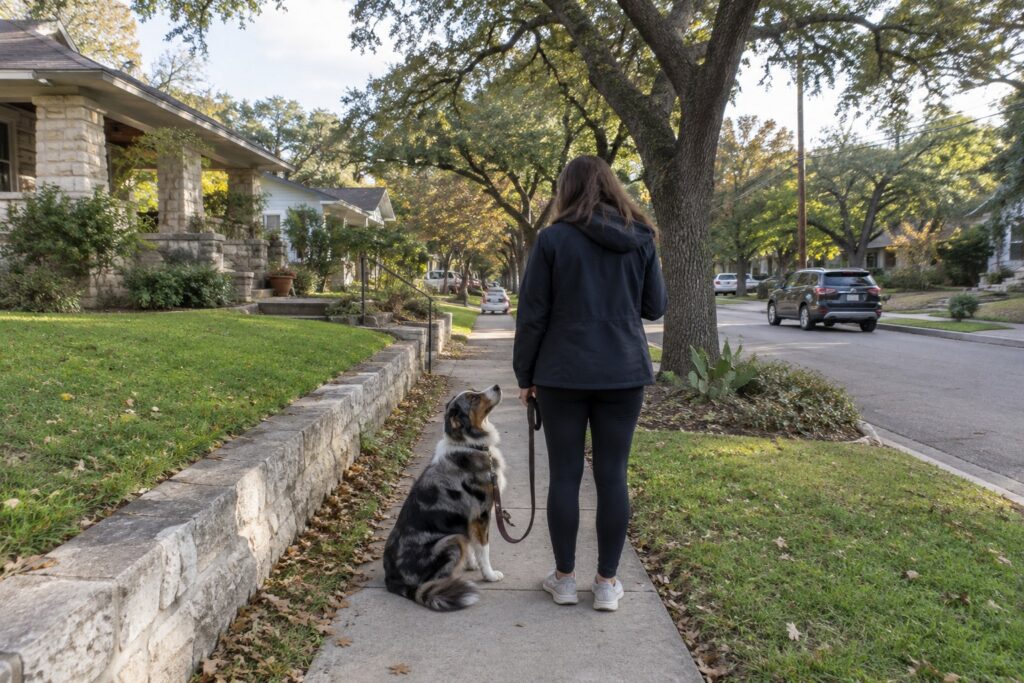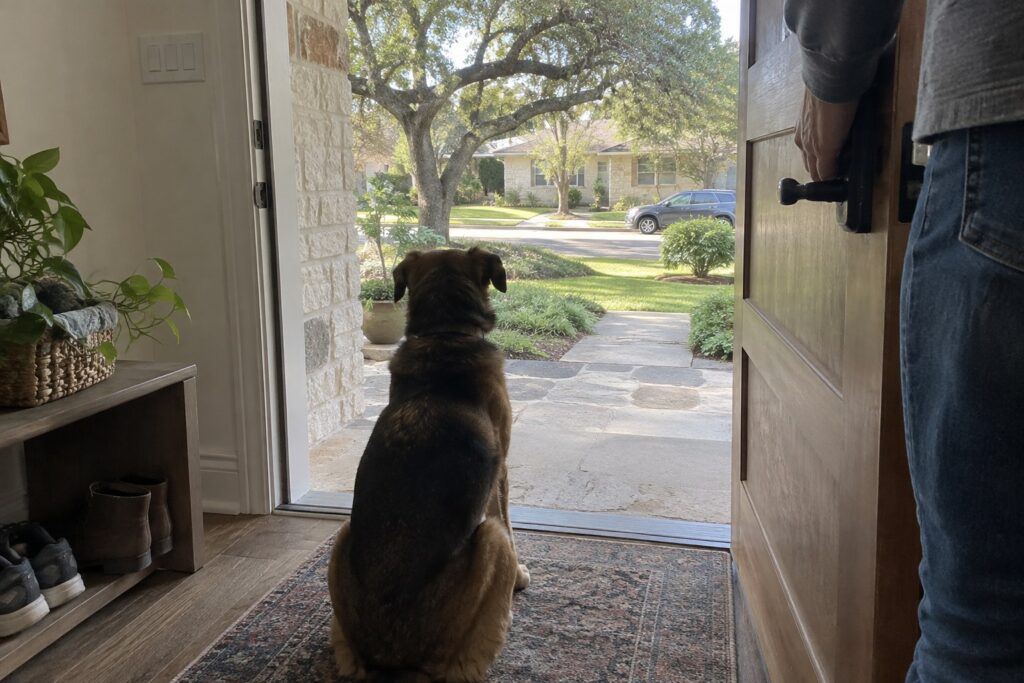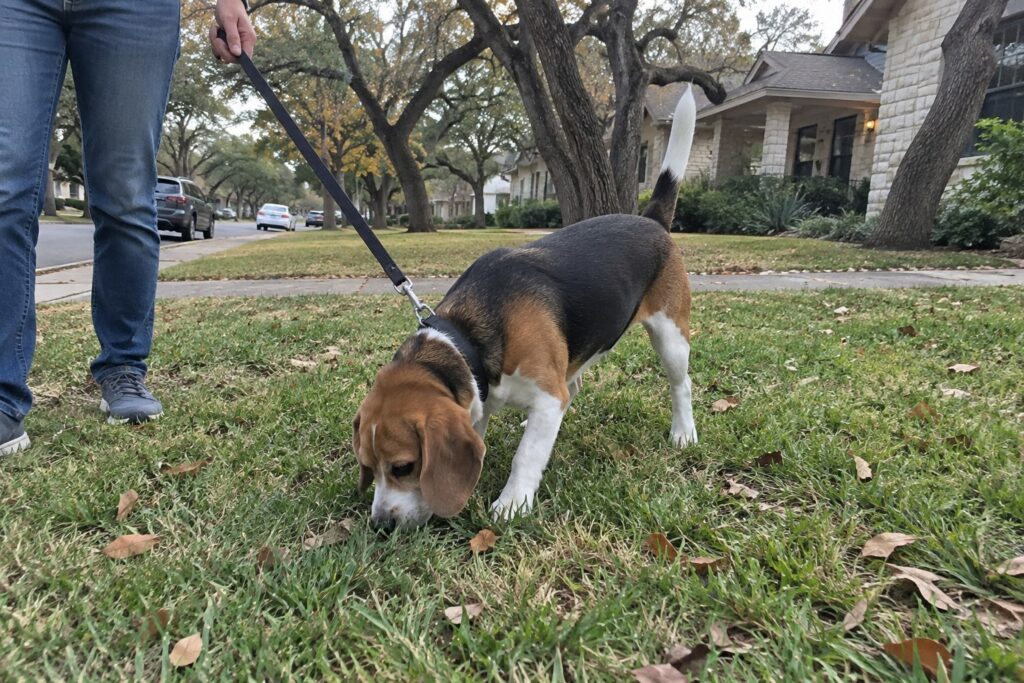

Australian Shepherd training works best when you treat your dog’s brain as seriously as its legs. Aussies were bred to make decisions while moving livestock, and a dog built for that kind of work does not switch off just because it now lives in a Shreveport subdivision instead of on a ranch. Give that mind a job and you get a focused, cooperative partner. Leave it idle and the dog will invent its own hobbies.
At All Dogs Unleashed Dog Training Shreveport, our fixed two-week Board and Train program is where most of our training happens. Your dog stays with us and works through multiple structured sessions every day. Below you will find how we think about this breed, the skills we prioritize, and simple ways to keep that busy mind content at home.
Have questions about your own Aussie? Our team is happy to talk it through.
Key Takeaways
- The American Kennel Club places the Australian Shepherd in the Herding Group and rates the breed at the top of its scale for both energy and mental stimulation needs.
- Daily mental work, such as short training sessions, food puzzles, and scent games, matters as much as physical exercise for this breed.
- Herding behaviors like circling, chasing moving things, or nipping at heels should be redirected early with clear alternatives, not simply scolded.
- Impulse control around doors, food, toys, and motion is the skill that makes an Aussie easy to live with.
- Our two-week Board and Train program includes guaranteed results and lifetime support at no additional cost for graduates.
What Makes the Aussie Brain Different
The American Kennel Club describes the Australian Shepherd as an intelligent working dog with strong herding and guarding instincts and the stamina to work all day. The AKC breed profile also lists the temperament as work-oriented, exuberant, and smart. Despite the name, the AKC notes the breed was perfected in California, and it has long been tied to ranch and rodeo life.
Those words are worth reading slowly, because each one shows up in daily life. A work-oriented dog wants something to do. An exuberant dog brings a lot of enthusiasm to greetings and play. A smart dog learns quickly, which includes learning the habits you never meant to teach.
Reading the AKC Trait Scores
The AKC profile scores the Australian Shepherd a 5 out of 5 for energy level, mental stimulation needs, and trainability. That combination is good news and a warning at the same time. Your dog can learn nearly anything you are willing to teach, but it also needs that teaching to keep happening.
| Breed Trait (AKC) | How It Shows Up at Home | Training Response |
|---|---|---|
| Herding Group breed | Circling kids, chasing bikes or cats, nudging with the nose | Teach a solid “leave it,” and give chase games an approved outlet |
| High energy level | Restless evenings, zoomies, pacing at windows | Pair exercise with structured calm time afterward |
| High mental stimulation needs | Chewing, digging, or inventing games when bored | Short daily training sessions and food puzzles |
| High trainability | Picks up routines quickly, good and bad | Be consistent so the dog learns the rules you actually want |
| Moderate openness to strangers | May watch new people closely before warming up | Calm, gradual introductions without pressure |
Why Boredom Looks Like Bad Behavior
The AKC explains that dogs bred for jobs that require decision-making and concentration will create their own projects when they lack brain exercise. With an Aussie, those projects might include shredding a couch cushion, barking at every car on the street, or herding the family cat from room to room.
It is tempting to label that as a behavior problem. More often it is an unmet need. Before you focus on stopping a habit, ask what your dog is getting out of it and how you can provide that same satisfaction in a better way.
Giving Your Aussie a Daily Job
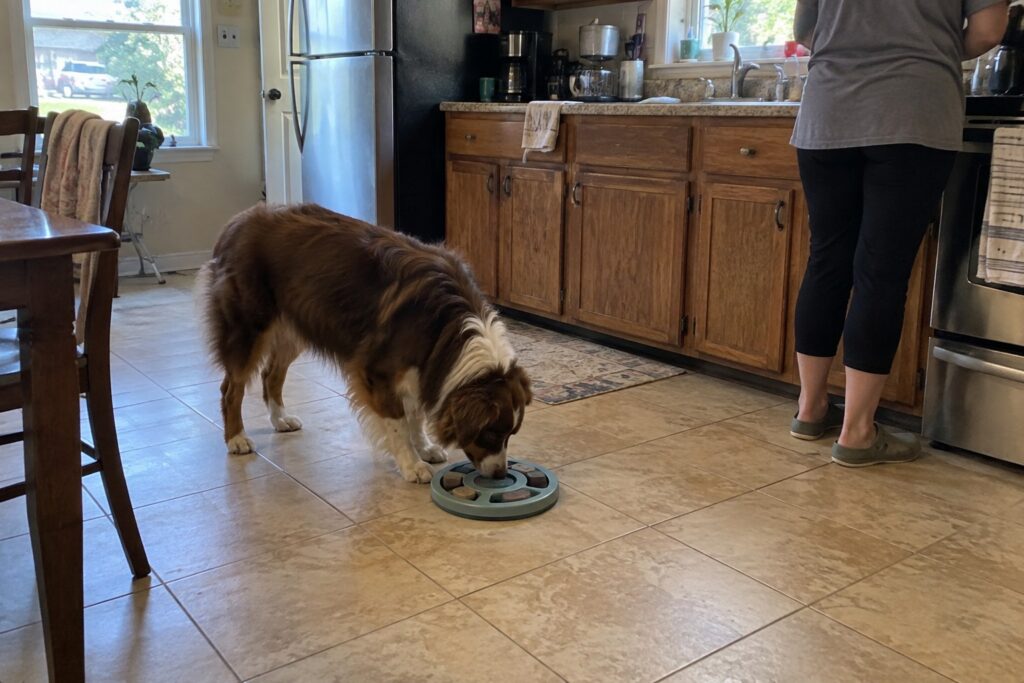
You do not need sheep to give an Australian Shepherd meaningful work. A job is simply any task with a clear goal that asks your dog to think. The trick is to build these tasks into your routine so they happen every day, not just on weekends.
Mental Work That Fits a Busy Schedule
Short sessions spread across the day tend to work better than one long session. Five to ten minutes of focused training before work, a puzzle feeder at lunch, and a scent game in the evening can take the edge off far more than you might expect.
- Feed from puzzles, not bowls. Let your dog work for some of its meals using a puzzle toy or a snuffle mat.
- Play find it. Hide pieces of kibble around a room and send your dog to search. Increase the difficulty as your dog improves.
- Name the toys. Many bright dogs can learn to pick a specific toy from a small pile when you practice consistently.
- Practice position changes. Quick rounds of “sit,” “down,” and a hand-target keep your dog listening and thinking.
- Carry something. Some dogs enjoy the responsibility of carrying a toy or a light item on a walk.
Rotate Activities to Keep Them Fresh
An Aussie can solve the same puzzle so fast that it stops being a challenge. Rotate toys every few days, change where you hide treats, and add new behaviors once the old ones are easy. Novelty is part of the reward for a dog that loves to figure things out.
| Time of Day | Mental Job | Approximate Length |
|---|---|---|
| Morning | Quick obedience round before breakfast | 5 to 10 minutes |
| Midday | Puzzle feeder or frozen food toy | 10 to 20 minutes |
| Evening | Scent game or new trick practice | 10 minutes |
| Before bed | Calm settle on a bed or mat | As long as the household is winding down |
Those times are a starting point, not a prescription. Watch your dog. If it settles easily and seems content, you have found a good balance. If it paces and pesters, add a little more thinking work.
Handling Herding Instincts Around the House
Herding behavior is not a flaw. It is the breed doing what generations of selection shaped it to do. The goal is not to erase the instinct but to put it on your terms so it does not land on your children, guests, or neighbors’ pets.
Circling, Chasing, and Heel-Nipping
Common herding behaviors include circling people, staring intensely at moving things, darting after bikes or joggers, and nipping at heels when kids run through the yard. Puppies may mix this with ordinary mouthiness, which our puppy training tips for new Shreveport owners touch on.
When you see the behavior starting, interrupt it calmly and ask for something you can reward instead. A dog cannot circle a toddler while the dog is sitting and looking at you. Over time, the alternative becomes the habit.
Redirect Instead of Just Saying No
A few practical steps help most households:
- Teach “leave it,” so your dog learns to turn away from something it wants to chase.
- Give chasing a legal outlet, such as a flirt pole or fetch with clear start and stop cues.
- Coach children to stop and stand still rather than run and squeal when the dog gets excited.
- Use a leash or a gate during busy play times until your dog shows it can stay polite.
- Reward calm watching, because a dog that looks at a moving thing and then back at you is making a great choice.
If herding tips over into snapping, fear, or guarding that worries you, get professional help. Our article on behavior modification for fear, anxiety, and reactivity explains how that kind of work is approached.
Want your Aussie to come home with reliable foundations? Learn how our two-week program works.
Building Impulse Control in a Quick-Thinking Dog
A smart, energetic dog often acts before it thinks. Impulse control teaches your Aussie to pause and check in with you, which makes everything else, from walks to meals to visitors, run more smoothly.
Everyday Moments That Teach Patience
You do not need extra training time to work on impulse control. Use the moments that already happen every day.
- Doorways. Ask for a “sit” before the door opens, and release your dog only when it holds position.
- Mealtime. Ask for a sit, set the bowl down, and release with a calm “okay.” If your dog moves before the release, calmly reset the sit and try again without taking the food away.
- Toys. Ask for a “drop it,” then reward by starting the game again.
- Car rides. Wait for calm before opening the door, both getting in and getting out.
A brief mat routine helps too. Sending your dog to a bed with a “place” cue gives it a clear spot to relax while the household is busy, though that skill deserves its own detailed practice.
Teaching an Off Switch
Many high-energy dogs know how to go but not how to stop. After exercise or play, give your dog a chew and a quiet spot, and reward it for lying down calmly. A crate can also be a helpful rest space. Our six steps for crate training a dog into a calm routine walk through that process.
Calm is a skill. The more you reward it, the more your dog offers it on its own.
Socialization for a Watchful Breed
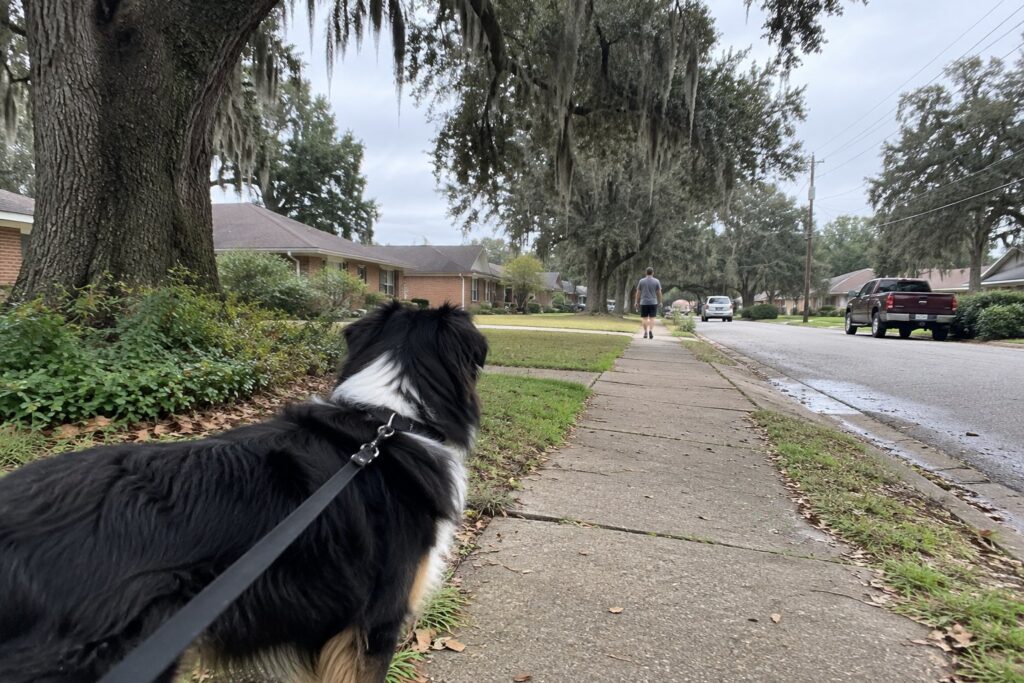
The AKC rates the Australian Shepherd in the middle of its scale for openness to strangers, and the breed standard mentions guarding instincts. In practice, many Aussies are loving with their own family but prefer to size up new people before saying hello.
Let Your Dog Observe First
Good socialization does not mean forcing your dog to greet everyone. It means helping your dog feel comfortable around new people, sounds, and places at a pace it can handle. Let your Aussie watch from a comfortable distance, and pair new sights with treats and calm praise.
Ask visitors to ignore your dog at first. A dog that can approach on its own terms tends to warm up faster than one that is being reached for.
Signs Your Aussie Needs More Space
| What You See | What It May Mean | What to Do |
|---|---|---|
| Hard stare, stiff body | Uncertain or on alert | Add distance and ask for an easy behavior |
| Backing up or hiding behind you | Feeling pressured | Let the dog retreat and try again later |
| Barking at a new person | Alerting or unsure | Stay calm, reward quiet moments |
| Loose body, soft tail wag | Relaxed and curious | Allow a brief, calm greeting |
If your dog’s watchfulness grows into barking, lunging, or fear on walks, our post on reactive dog training in Shreveport offers a closer look at the next steps.
Exercise That Fits the Louisiana Climate
An Australian Shepherd needs real daily exercise, but humid Louisiana weather means timing matters. Schedule the hardest activity for early mornings or evenings when it is cooler, and lean on mental games during the hottest part of the day.
Simple Heat Habits for a Thick-Coated Dog
- Bring water on every outing and take shade breaks.
- Check pavement with the back of your hand before a walk.
- Swap a long run for indoor training and scent games on hot afternoons.
- Watch for heavy panting, slowing down, or stumbling, and call your veterinarian if you are worried.
Why Recall Matters for a Dog That Chases
A dog that loves to chase moving things needs a dependable way back to you. Build your recall on a long line in a fenced area before trusting it in open spaces, and always make coming to you worth it. Advanced reliability around real distractions is something we cover in our look at building advanced dog training skills.
How Professional Australian Shepherd Training Fits Your Life
Some owners enjoy handling everything themselves. Others want a head start from people who train dogs every day. Both paths can work well, and the right one depends on your schedule and your dog.
Two-Week Board and Train
In our Board and Train program, your dog stays at our facility and completes multiple structured sessions each day. Trainers vary where and how exercises happen so skills carry over to new situations, and socialization is supervised based on your dog’s temperament. In the vast majority of cases, dogs complete the program within the two-week timeframe.
In the final days, we spend time teaching you how to handle your dog so the results continue at home. Board and Train graduates receive guaranteed results and lifetime support at no additional cost, and Affirm financing is available. Our guide on how to prepare your dog for Board and Train covers what to pack.
In-Home and Private Lessons
If you would rather learn alongside your dog, in-home dog training and private lessons let you work on the issues that show up in your own space. That can be a good match for owners who want to fine-tune routines after a program or build skills week by week.
Ready to give your Aussie’s busy mind the structure it needs? Call us at (318) 593-7321.
About All Dogs Unleashed Dog Training Shreveport
All Dogs Unleashed Dog Training Shreveport helps dog owners across Northwest Louisiana raise calm, reliable companions. Our fixed two-week Board and Train program gives smart, energetic breeds like the Australian Shepherd multiple structured sessions every day, varied practice settings, and a handler transition at the end so you know exactly how to keep things going. We also offer in-home and private lessons, boarding, and refresh training for dogs that need a tune-up.
Frequently Asked Questions
Are Australian Shepherds easy to train?
Australian Shepherds tend to learn quickly, and the American Kennel Club rates the breed highly for trainability. That speed cuts both ways, since they also learn habits you did not intend to teach. Consistent rules, short daily sessions, and plenty of mental work usually make training go smoothly. Most challenges come from boredom rather than an inability to learn.
How do I stop my Australian Shepherd from nipping at heels?
Heel-nipping is usually a herding instinct, so redirection works better than punishment. Interrupt the behavior calmly, ask for a “sit” or a hand target, and reward that choice. Give your dog a legal chase outlet like a flirt pole. Teach children to stand still instead of running. If nipping turns into snapping or seems fearful, ask a professional trainer for help.
How much mental stimulation does an Australian Shepherd need?
The AKC gives the breed its highest score for mental stimulation needs, so plan for brain work every day. A mix of short training sessions, puzzle feeders, and scent games spread across the day works well for most households. Watch your dog’s behavior as your guide. Pacing, chewing, and pestering usually signal that your dog needs more thinking work.
Why is my Australian Shepherd wary of strangers?
The AKC rates the breed as moderate in openness to strangers and notes guarding instincts in the breed standard, so some caution is normal. Let your dog observe new people from a comfortable distance and approach on its own terms. Pair new visitors with treats and calm praise. If wariness grows into barking, lunging, or fear, professional guidance can help.
How do I exercise an Australian Shepherd in Louisiana heat?
Schedule the most active exercise for early mornings and evenings when temperatures drop, and bring water and take shade breaks. On hot afternoons, switch to indoor training, puzzle toys, and scent games, which tire the mind without the heat risk. Check pavement before walks. If your dog pants heavily, slows down, or stumbles, stop and contact your veterinarian.
Is Board and Train a good fit for an Australian Shepherd?
Board and Train often suits this breed well because it provides multiple structured sessions every day, which matches a busy, capable mind. Your dog practices in varied settings so skills carry over, and you learn handling in the final days. Graduates receive guaranteed results and lifetime support at no additional cost. Call us to discuss whether it fits your dog.
Australian Shepherd training is really about giving a bright, hardworking dog the structure and outlets it was bred for. If you want help building that foundation, call (318) 593-7321 or reach out online. You can also find our location at 1220 Shreveport Barksdale Hwy, Shreveport, LA 71105.
Ready to Get Started with All Dogs Unleashed Dog Training Shreveport?
Your Aussie is ready to learn, and we are ready to help. Call (318) 593-7321 to talk with our team about the right program for your dog.