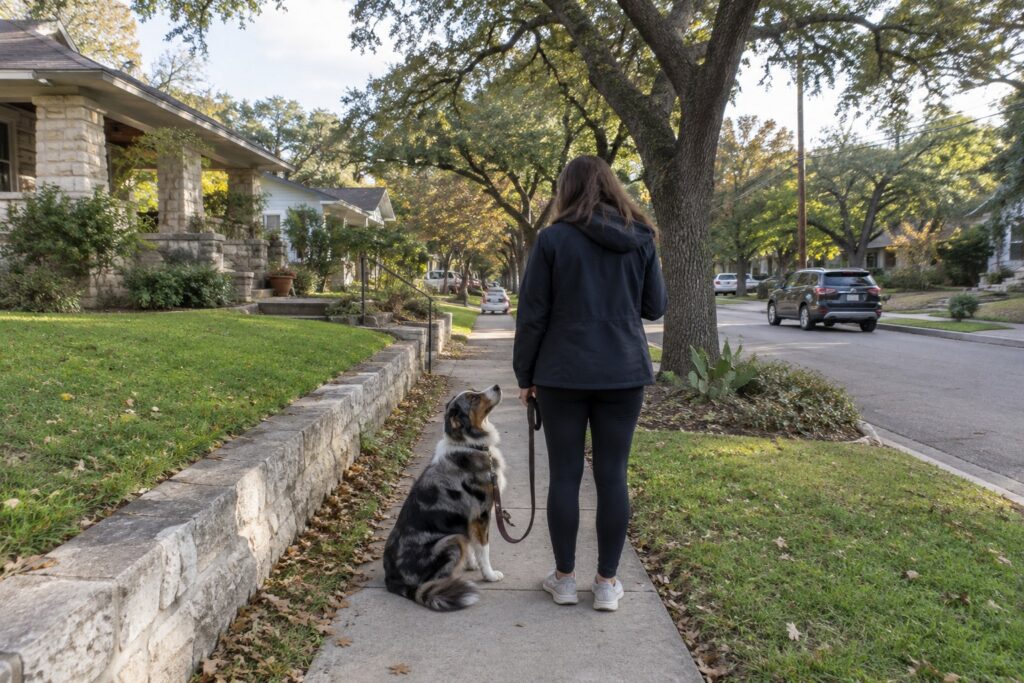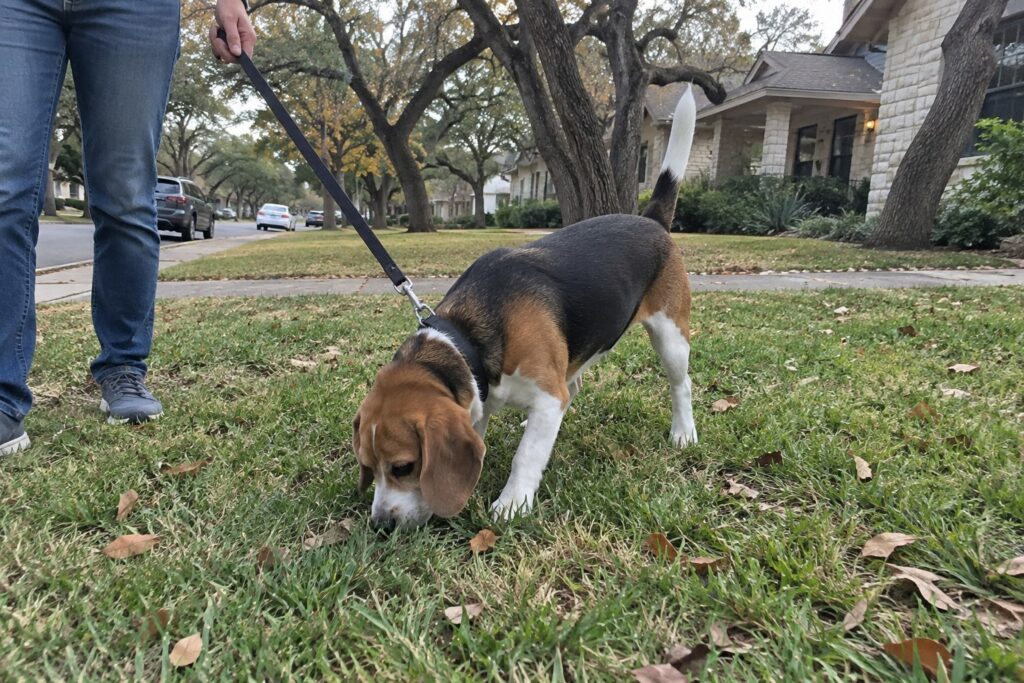

Denver is one of the most dog-friendly cities in the country, which means your dog is out in public a lot. At All Dogs Unleashed Dog Training Denver, we help you decide which path gets you there fastest: in-home sessions or group dog training classes. Not sure where to start? Book a free consultation and we will match your dog to the right program.
Key Takeaways
- Group dog training classes build socialization skills and work well for dogs who need practice staying focused around distractions.
- In-home training targets specific problem behaviors in the environment where they actually happen.
- Your dog’s temperament, your schedule, and your training goals should all shape your decision.
- Many Denver dog owners get the best results by combining both formats at different stages of training.
Why This Decision Matters for Denver Dogs
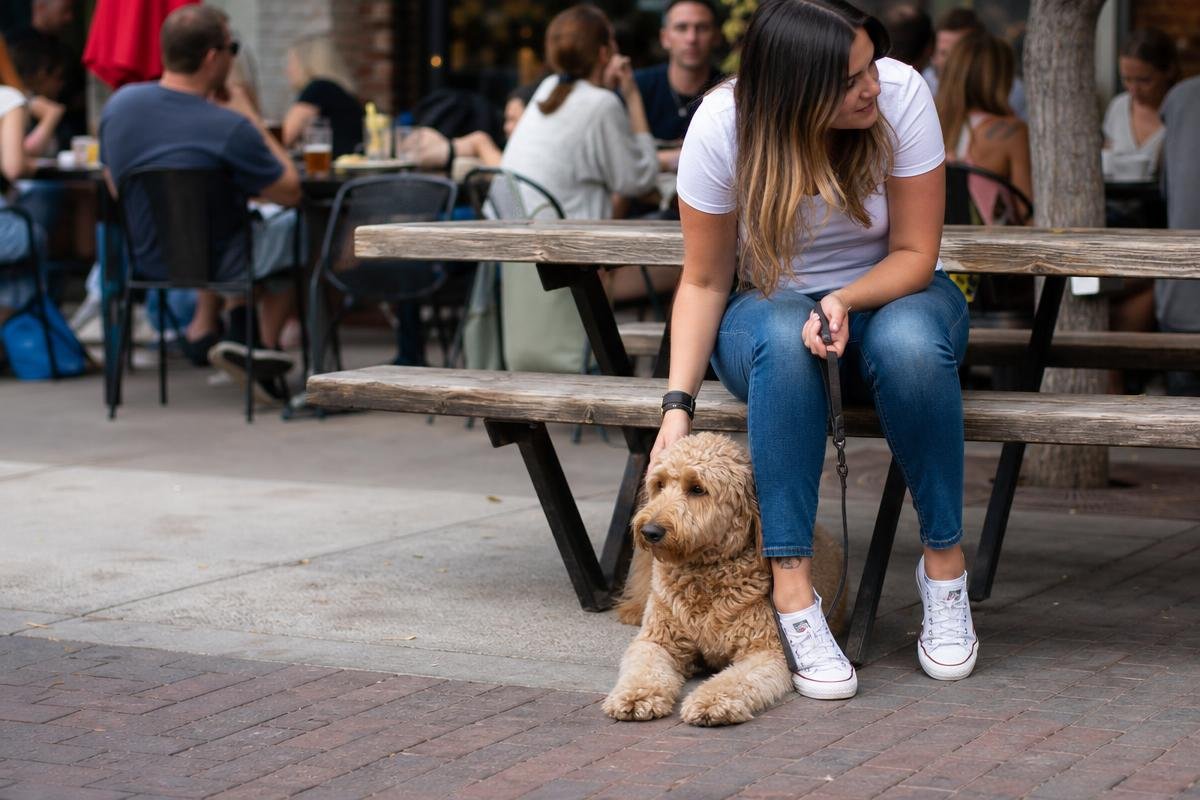
You love your dog. You know they need training. But every time you search for dog training classes, you end up more confused than when you started. Group classes, private sessions, board and train. Which one actually works for your dog?
This is one of the most common questions we hear. Denver’s dog-friendly lifestyle makes the stakes real. Your dog will be on trails, patios, and busy sidewalks near places like RiNo and Cheesman Park. A training format that does not fit your dog wastes your time and your money. Our team has trained hundreds of Front Range dogs across every temperament, and we have seen firsthand how the right format changes everything.
This guide cuts through the noise. By the end, you will know exactly which format fits your dog, whether that is group classes, in-home training, or a board and train program. You can also read our post on 8 signs your dog needs private training, not group classes for a deeper look.
What Are the Main Types of Dog Training Classes?
The three main types of dog training classes are group classes, in-home training, and board and train programs. Each one works differently, and each one fits a different situation. Here is what each format actually looks like in practice.
Group Classes
Group classes bring several dogs and their owners together in a structured setting. A trainer leads the session through a set curriculum, covering core commands like sit, stay, come, and walking in Heel position. Classes follow a regular schedule, usually once a week for several weeks.
The group format does two things at once. Your dog learns obedience skills while also practicing focus around distractions like movement, noise, and other dogs. For dogs headed to busy spots like the Cherry Creek Trail, that kind of controlled exposure is genuinely useful. Group sessions are a natural fit for puppies and dogs working on foundational skills.
In-Home Training
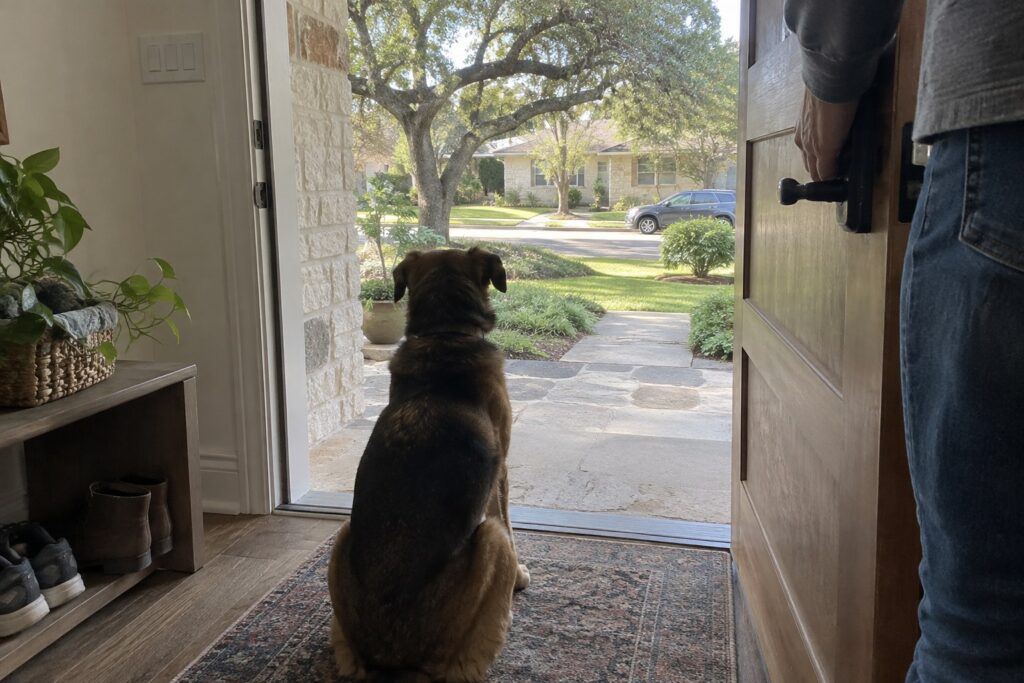
In-home training brings the trainer directly to your house. That matters because many problem behaviors only happen at home. Door bolting, jumping on guests, counter-surfing, and window barking are all context-specific. A trainer working in your dog’s actual environment can address those triggers on the spot, in the exact space where they happen.
If your dog struggles with common indoor behavior problems, private in-home work is often the faster path to real results. The training happens where the problems actually live, not in a classroom where those triggers don’t exist.
Board and Train
Board and train programs have your dog stay with our professional trainers for an intensive period of focused work. Your dog is not just attending a class. They are living the training, day in and day out, with experienced handlers guiding every interaction. This format tends to move fastest for dogs with serious behavior challenges or for owners with very limited time to practice at home.
It works especially well for Denver dogs who need to be steady in high-distraction settings, from apartment life in the Highlands to weekend hikes near Golden. Our board and train includes:
- Daily one-on-one sessions with an experienced handler
- Structured exposure to real-world distractions like traffic, cyclists, and other dogs
- A go-home transfer session so you can maintain the results your dog earned
It is not the right fit for every dog, but for the right situation, it can move the needle faster than any other option. Dogs that need overnight care without the intensive training component can also look into our dog boarding options. We cover when each format makes the most sense in the sections ahead. Want to see when the next round starts?
When to Choose Group Dog Training Classes
Group dog training classes in Denver are a great fit for dogs that are friendly, curious, and ready to learn around other people and pets. If your dog loves meeting new faces, structured group sessions put that energy to work.
Socialization Practice
Your dog needs to hold a sit while another dog trots past. That skill does not develop on your couch. The group setting gives your dog controlled practice at focusing despite unfamiliar sights and smells.
That matters here. Dogs in Lakewood, Arvada, and Wheat Ridge spend weekends at busy parks, dog-friendly breweries, and trailheads. A dog that can keep its cool in class will handle those outings with ease. Check out the 10 best dog-friendly patios and spots in Denver to see exactly what kind of environments your trained dog can enjoy.
- Builds focus around other dogs and people
- Develops impulse control in unpredictable settings
- Transfers directly to parks, patios, and trails
Training Alongside Your Dog
These sessions are not just for your dog. You learn too. Our trainers coach you on cue timing, leash handling, and consistency. That is what makes the training stick when you get home.
Most owners are surprised by how much they pick up. You will leave each session with a clearer picture of what your dog needs and how to deliver it.
- Learn proper timing for rewards and corrections
- Practice handling skills with your specific dog
- Get real-time feedback from our trainers
Puppy Training Classes
Puppies between 8 and 16 weeks are in a critical socialization window. What they experience now shapes how they handle the world as adults. Our puppy training classes in the Denver metro area are built around that window.
Structured group exposure at this age builds confidence, reduces fear responses, and lays the foundation for every skill you will teach later.
- Safe, supervised exposure to new dogs and people
- Foundation skills like sit, stay, and name recognition
- Confidence building during the prime learning window
Not sure whether a group class is right for your puppy?
When In-Home Dog Training Is the Better Fit
Sometimes a group class is not the right starting point. If your dog has specific behavior problems at home, struggles with anxiety, or your schedule makes fixed class times impossible, in-home dog training in Denver is often the smarter move. We come to you, work in the actual environment where the problems happen, and build a plan around your dog’s real life.
Specific Behavior Problems at Home
Group settings happen in a neutral space. Your dog’s problem behaviors probably do not. Jumping on guests, bolting out the front door, raiding the trash, and barking at the mail carrier all happen at home. That is exactly where we need to be to fix them.
Private sessions let us see the triggers firsthand. We can address the exact moment your dog loses it at the front window or charges the door. That kind of targeted work is far more efficient than practicing in a classroom and hoping it transfers. For a deeper look at what in-home training actually targets, check out our guide to 5 common dog behavior problems Denver owners face indoors.
Reactive or Anxious Dogs
Reactive dogs, ones that lunge, bark, or show aggression toward other dogs or strangers, are often not ready for a group setting. Putting a reactive dog in a room full of other dogs can make the reactivity worse, not better. We see this regularly.
The right approach starts in a low-stress environment. We use threshold management and calm behavior training to build confidence before adding distractions. Dense areas like Capitol Hill and the Baker district have triggers on every block, so your dog needs a solid foundation before facing all of that. One of our clients had a dog named Lenny, reactive and aggressive with strangers, who showed real transformation through our board and train program.
That kind of result starts with meeting the dog where it is. Not sure if your dog is past the group stage? Read through the 8 signs your Denver dog needs private training, not group classes before you decide.
Schedule Flexibility
Group classes run on a fixed schedule. If you have irregular work hours, young kids at home, or a demanding commute, hitting the same time slot every week is tough. Private dog training in Denver works around your calendar, not the other way around.
We schedule sessions when it actually works for your household. That consistency matters. Dogs learn better when training happens regularly, and regular training only happens when the schedule is realistic for you.
In-home training might be the right fit if your dog:
- Lunges, barks, or reacts to other dogs or strangers
- Has specific problem behaviors that only happen at home
- Gets too overstimulated in group settings to focus
- Is very young, elderly, or recovering from an injury
- Lives with a family that needs flexible scheduling
Think in-home training sounds like the right fit for your dog? Call us at (720) 310-7337 and we will talk through the best option for your situation.
The Quick Decision Guide: Which Format Fits Your Dog?
You do not need to overthink this. Answer a few honest questions about your dog and your schedule, and the right format becomes clear fast. Here is the framework we walk owners through every day.
Side-by-Side Comparison
| Factor | Group Classes | In-Home Training |
|---|---|---|
| Best for | Socialization, basic obedience, puppies | Specific behavior problems, reactive or anxious dogs |
| Setting | Structured facility with other dogs and handlers | Your home, yard, or neighborhood |
| Class size | Small group, shared trainer attention | One-on-one with your trainer |
| Schedule | Fixed weekly sessions | Flexible, set around your routine |
| Cost signal | Often more affordable | Faster, targeted results |
| Ideal dog | Social, manageable around other dogs | Reactive, fearful, or with household-specific issues |
Questions to Ask Before You Enroll
Run through these five questions. Your answers will point you in the right direction. If you are still unsure, check out 8 signs your dog needs private training, not group classes for a deeper look.
- Does your dog react aggressively or with extreme fear around other dogs or strangers? If yes, in-home training is the safer starting point.
- Is the problem happening mostly at home, like jumping, door bolting, or furniture issues? If yes, private sessions target the exact environment where the behavior lives.
- Does your dog need socialization and basic manners? If yes, group classes are a great fit and often the more affordable path.
- Is your schedule unpredictable week to week? If yes, the flexible scheduling of private dog training in Denver works better for your life.
- Do you want your dog ready for busy spots like Washington Park or dog-friendly patios around the city? If yes, group classes build the distraction tolerance your dog needs.
Mostly yes on questions 1 and 2 points to in-home. Mostly yes on questions 3 and 5 points to dog obedience classes in Denver. A mix of both? We can build a program that covers all of it. You can also browse the best off-leash trails for trained dogs to see what skills your dog will need out on the trail.
What Denver Dog Owners Should Know Before Signing Up
Denver’s Dog Culture
This city takes its dogs seriously. The Front Range lifestyle means your dog is not staying home. They are on patios in the Highlands, navigating crowded sidewalks near Union Station, and testing their recall at Washington Park every weekend. A dog that only behaves in a quiet training room is not truly trained for this city.
The best off-leash dog trails in Denver for trained dogs sit just outside the city, where your dog will meet cyclists, wildlife, and unfamiliar dogs around every bend. That kind of environment demands real, reliable obedience. Not just “good at home.” Actually trained.
Thornton, Lakewood, Aurora, and Centennial all share the same outdoor culture. Dogs here are out in public far more than in most cities. Many owners also rely on dog daycare to keep their pup social and active between training sessions. That makes solid dog obedience classes in the Denver area less of a luxury and more of a practical necessity.
What to Look for in Any Program
Not every program is built the same. Before you sign up for any dog training classes, ask these questions:
- Does the program assess your dog first? A good trainer evaluates your dog’s individual temperament before recommending a format. Group classes are not right for every dog.
- Is the communication clear? You should know exactly what skills your dog will learn, what your role is, and what success looks like.
- Is there a follow-up plan? Training does not end after the last session. Ask what support looks like after the program wraps. Our board and train includes a go-home transfer session for exactly this reason.
- Does the staff actually care? Our clients describe our team as “so kind and caring and reassuring.” One trainer’s pride in a dog’s progress was described as “palpable.” That kind of investment matters.
- Can they handle any dog, any problem? Avoid programs that only work with easy cases. Your dog deserves a team that shows up for the hard stuff too.
We offer well-balanced, customizable programs designed to work for any dog and any problem. If you are unsure which format fits your situation, our team will help you figure it out before you commit to anything.
Frequently Asked Questions
How much do dog training classes cost?
Group classes are the most affordable way to get started. They give your dog solid foundational skills at a price that works for most budgets. Private in-home training and board and train programs cost more because you’re getting one-on-one attention focused entirely on your dog. We believe in clear, upfront pricing with no surprises. You’ll know exactly what you’re paying before you commit to anything.
How long does it take to see results?
Puppies in group classes often show noticeable progress within a few weeks. Dogs in a board and train program can make dramatic improvements in as little as two weeks of daily, focused work. The real key is what happens after training ends. Your consistency at home is what makes the results stick long-term.
Can my reactive dog join a group class?
Not every dog is ready for a group setting right away. Reactive, fearful, or aggressive dogs usually need one-on-one work first. Putting them in a high-distraction group environment too soon can set progress back. A good trainer will assess your dog before recommending a format.
What is the difference between board and train and group classes?
Board and train is intensive. Your dog stays with a trainer for one to two weeks and gets daily focused sessions. Group classes meet weekly, and you’re there working alongside your dog. Both formats work. They just serve different goals and different dogs.
How do I know if my dog needs in-home training?
If the problem behavior happens mostly at home, that’s a strong signal. The same goes for dogs who are anxious in new places or haven’t held onto progress from group classes. Check out our guide on 8 signs your Denver dog needs private training, not group classes to see if it fits your situation.
Does your team offer both formats?
Yes. We offer a full menu of training formats, from puppy training classes to private in-home sessions to board and train programs. We hold a 4.9-star average across 277 reviews because we match the program to the dog, not the other way around.
Ready to find the right fit for your dog? All Dogs Unleashed Dog Training Denver works with dogs of every temperament, from social puppies ready for group classes to reactive dogs who need one-on-one work at home. Call us at (720) 310-7337 to get started. The right program is out there for your dog. Let us help you find it.
Ready to Get Started with All Dogs Unleashed Dog Training Denver?
Call (720) 310-7337 to speak with our team directly. We’re ready to answer your questions, walk you through your options, and help you find the right solution for your needs. Whether you’re just starting to plan or ready to move forward, we’ll make the process simple and stress-free.
Reach out today and let’s talk about how we can help.