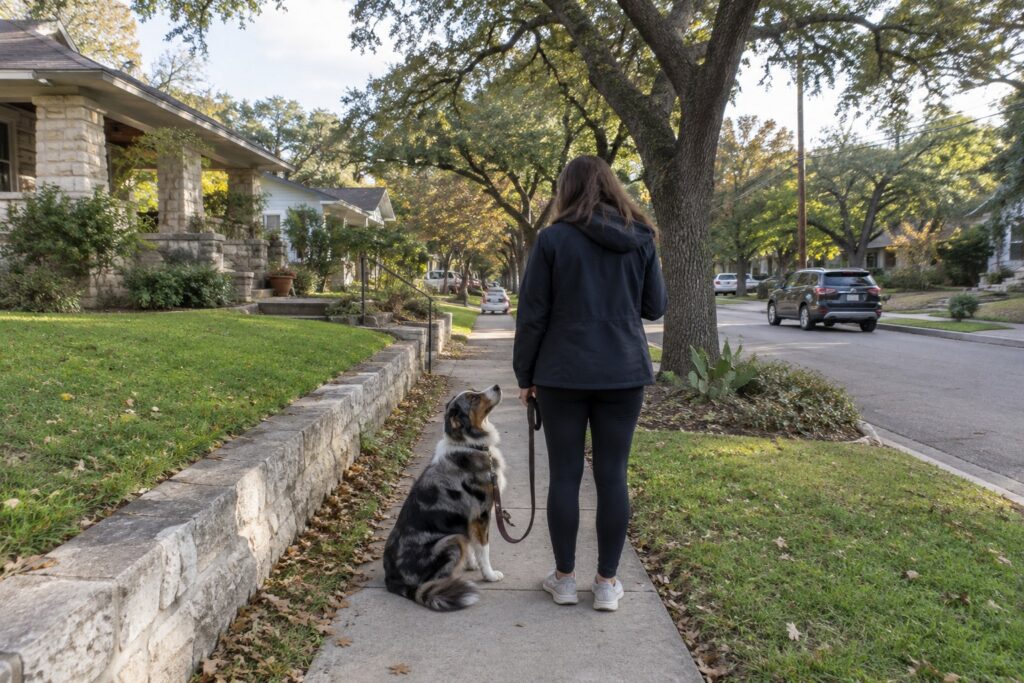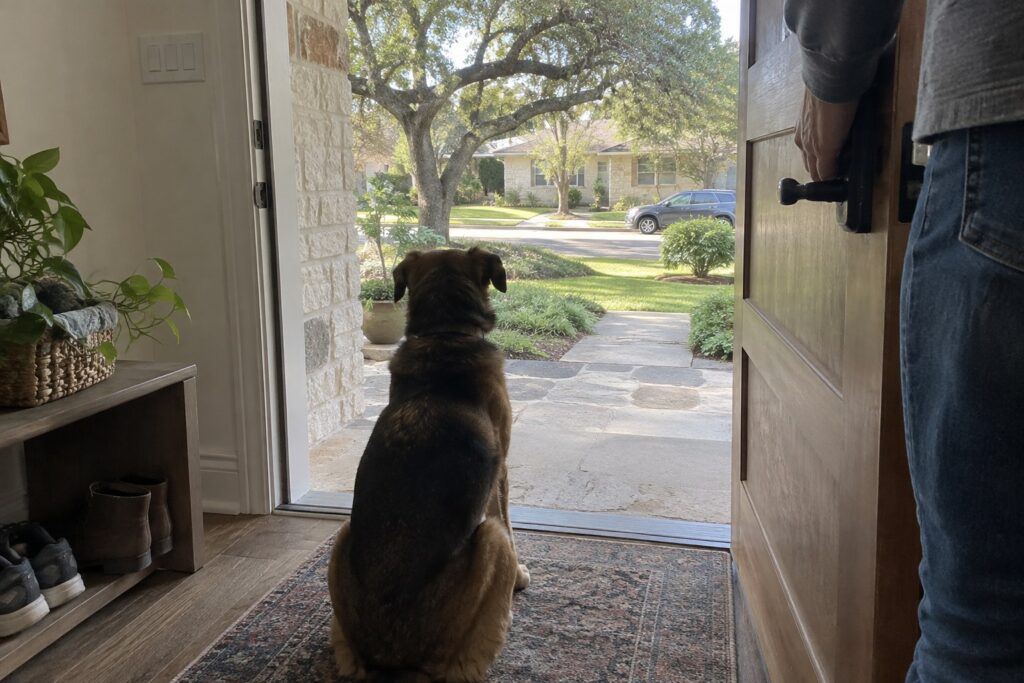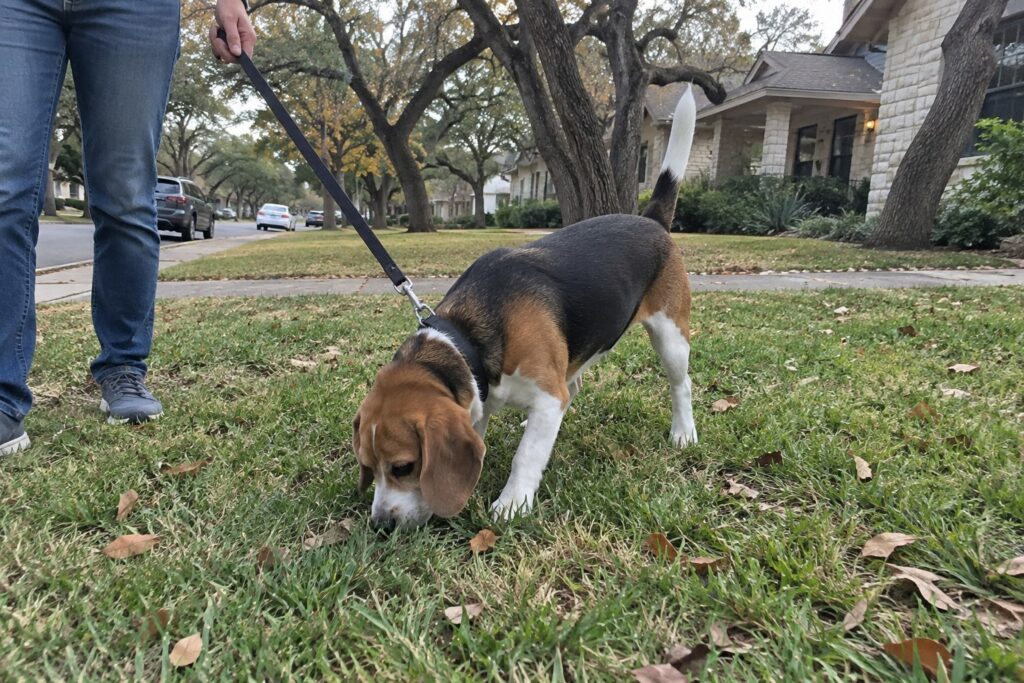

Denver dogs are some of the most loved in the country, and some of the most under-stimulated indoors. When cold snaps keep your dog inside for days, or a small LoDo apartment becomes their whole world, dog behavior problems don’t just appear. They get worse fast. At All Dogs Unleashed Dog Training Denver, we’ve worked with reactive dogs, resource guarders, escape artists, and everything in between, and we know exactly what Denver owners deal with behind closed doors. Our trainers use a balanced approach that pairs clear structure with reward-based reinforcement, and we always start by assessing what’s actually driving the behavior, not just what the behavior looks like.
Ready to stop the barking, chewing, and chaos? Let’s talk about your dog today. Call us today at (720) 310-7337.
Key Takeaways
- Indoor dog behavior problems in Denver often spike in winter when outdoor access drops and pent-up energy has nowhere to go.
- Separation anxiety, excessive barking, destructive chewing, jumping, and aggression are the five most common issues Denver owners report indoors.
- High-drive breeds like Australian shepherds and huskies are especially prone to problem behaviors when they don’t get enough mental and physical stimulation.
- Most behavior issues have a root cause, and fixing the root cause gets you lasting results, not just a temporary fix.
- Professional training addresses the behavior and strengthens the bond between you and your canine companion.
Why Do Denver Dogs Struggle With Behavior Problems Indoors?
Denver dogs act out indoors most often because they are built for movement and the city keeps interrupting it. Your dog is great on the trail. Inside? That’s a different story. If you’re dealing with jumping, excessive barking, destructive chewing, separation anxiety, or aggression indoors, you’re not alone. These are the five behavior issues we hear about most from owners across Capitol Hill, Highlands, RiNo, and LoDo.
Denver draws a lot of high-drive breeds, big personalities, and dogs built to run. When a cold snap or a long workday cuts outdoor time short, that energy goes somewhere. Usually somewhere you don’t want it. This article breaks down each problem, explains why it happens, and gives you real steps to fix it. If you’re ready to get ahead of it now, our dog training programs in Denver are built for exactly this.
Why Are Indoor Behavior Problems So Common in Denver Dogs?
Indoor problems are common here because Denver is one of the most dog-friendly cities in the country, and that is actually part of the problem. Dogs here are bred and built for action. When that action gets cut short, indoor behavior issues follow fast.
How Does Denver’s Climate Create Cooped-Up Dogs?
Denver’s climate cuts off outdoor time without warning, and that is a real factor. The Front Range gets over 300 days of sunshine per year, but cold snaps, heavy snowstorms, and high-altitude wind can shut down outdoor time in hours. A morning run along the Washington Park loop or an off-leash session at Berkeley Lake Park disappears overnight when a storm rolls in off the foothills.
Dogs in Capitol Hill apartments, Highlands bungalows, and Five Points condos all feel it the same way. The routine breaks. The energy has nowhere to go. That pent-up energy does not just sit quietly. It comes out as barking, chewing, jumping, or worse.
Why Is Under-Stimulation the Real Root Cause?
Under-stimulation is the shared root cause behind nearly all indoor problems, and high-drive breeds are especially vulnerable. Australian shepherds, border collies, huskies, and German shepherds are popular choices for active Colorado owners. These dogs need serious mental and physical outlets every single day. When those outlets disappear, boredom sets in fast.
Most of these issues are not about disobedience or bad temperament. A dog that acts out indoors is usually a dog that has not had enough to do.
Signs your dog may be under-stimulated:
- Destructive chewing on furniture or household items
- Excessive barking or whining with no clear trigger
- Restlessness, pacing, or inability to settle
- Attention-seeking behaviors that escalate when ignored
Dogs in high-rise LoDo apartments with no yard often show these signs within their first Denver winter, when short days and icy sidewalks slash the daily walk in half. Mental stimulation is just as necessary as physical exercise. A tired brain produces a calmer dog. That is why professional dog training in Denver targets the root cause, not just the visible symptom. Consistent training produces lasting change because it gives your dog a job to do every day.
Breaking Down Each Problem: What Causes It and How to Fix It
These are the behavior problems we hear about most from dog owners across Baker, Congress Park, and beyond. Each one has a real fix. Here is what each problem looks like, why it happens, and what actually works.
1. Separation Anxiety
Separation anxiety is not the same as boredom. A bored dog chews a shoe. An anxious dog shakes, drools, barks for hours, and sometimes destroys doors or windows trying to escape. The post-2020 return to offices hit a lot of dogs hard. Many bonded tightly to owners who were home all day and then suddenly were not.
What to do:
- Practice graduated departures. Leave for 30 seconds, come back calm. Build up slowly.
- Use a crate as a safe space, not a punishment. A covered crate with a worn shirt inside can reduce panic.
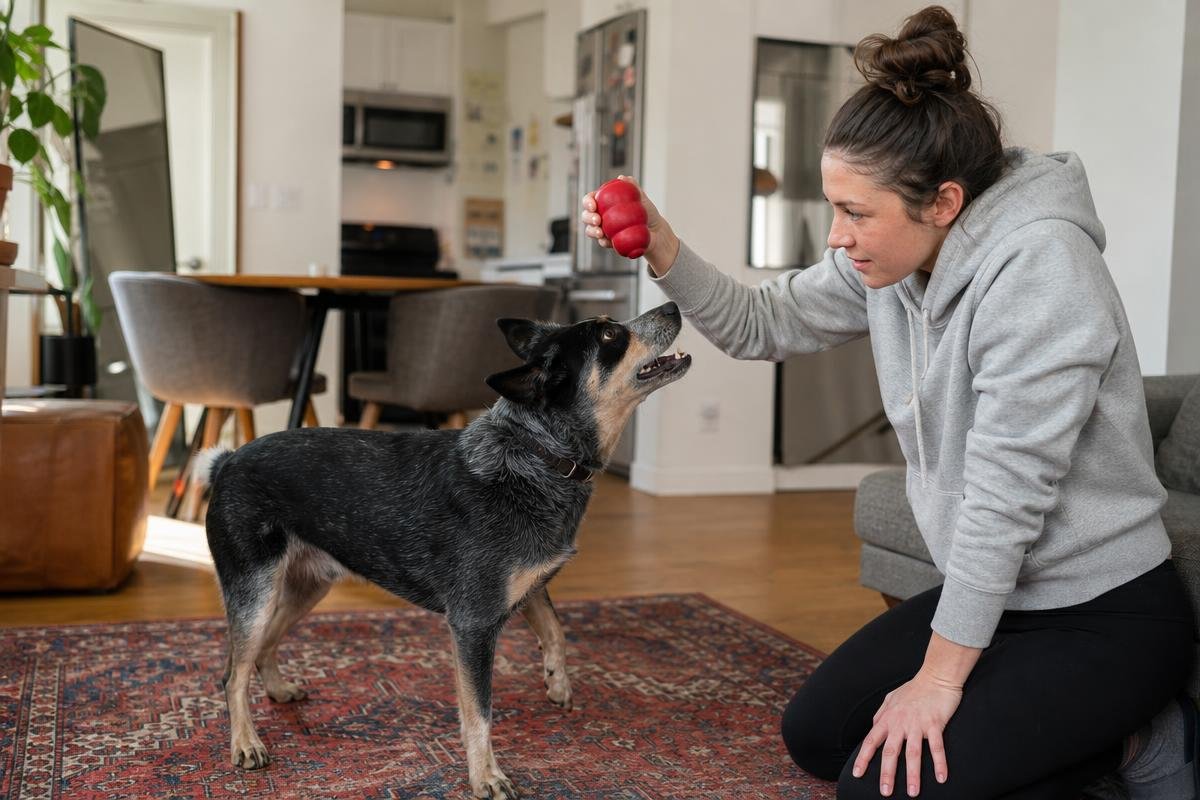
- Give a puzzle feeder or frozen Kong before you leave. It shifts the association from dread to reward.
- Severe cases may need a veterinary behaviorist alongside training. We are always honest about that.
If your dog’s anxiety is intense, our board and train program gives dogs structured, full-day work that can reset anxious patterns faster than weekly sessions alone.
2. Excessive Barking
Barking is communication. The fix depends on what your dog is saying. Alert barking, boredom barking, demand barking, and anxiety barking each need a different approach. Owners in shared-wall buildings near Union Station know this problem well. Neighbors notice fast.
Match the fix to the type:
- Alert barking: Teach a solid "quiet" command. Acknowledge, then redirect.
- Boredom barking: Add structured exercise before you leave. A tired dog is a quieter dog.
- Demand barking: Never reward it. Not with attention, not with food. Zero response.
- Anxiety barking: Address the root anxiety first. White noise machines can help in the short term.
Excessive barking tied to separation anxiety is one of the most common complaints we hear from Denver owners. Treat the anxiety and the barking usually follows.
3. Destructive Chewing
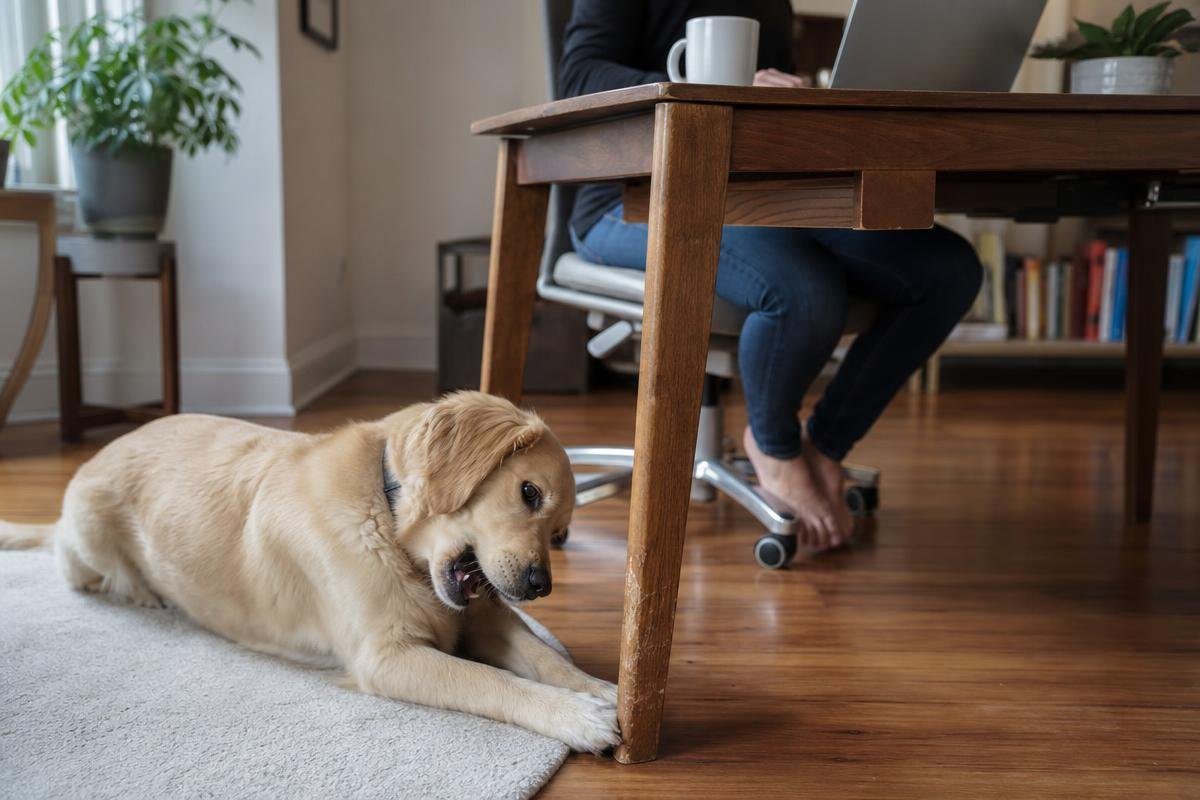
Chewing is normal. Chewing your baseboards is not. Dogs chew when they are bored, teething, anxious, or under-exercised. Worth noting: Denver’s dry, high-altitude air can cause mild oral discomfort, which may increase chewing urges. High-drive breeds like Australian shepherds and huskies are especially prone when they do not get enough mental and physical work.
What actually works:
- Rotate three to four appropriate chew toys so novelty stays high.
- Apply bitter apple spray to furniture and baseboards consistently.
- Supervise until your dog earns freedom. Management first, then trust.
- If chewing started in puppyhood and never stopped, structured dog training programs can redirect the habit for good.
4. Jumping on People
Your dog jumps because it worked before. Someone laughed, made eye contact, or pushed them down. All of that counts as attention. Pushing a dog away still gives them what they want: contact and a reaction.
The rule is simple: four paws on the floor gets attention, jumping gets nothing. The problem is consistency. If one family member rewards the jump and another corrects it, the dog keeps jumping. Everyone in the house has to follow the same rule.
Stop doing these things:
- Kneeing the dog in the chest
- Pushing the dog away with your hands
- Yelling "no" or "down" while making eye contact
All three give the dog engagement. Turn your back, wait for four paws, then calmly reward.
5. Indoor Aggression: Growling, Snapping, and Resource Guarding
A growl is not defiance. It is your dog telling you something is wrong. Punishing a growl does not fix the problem. It removes the warning and leaves the bite. This is the one issue where we say clearly: get professional help before it escalates.
There are three common types we see:
- Resource guarding: Dog protects food, toys, or furniture. Management first. Never reach in and take things.
- Fear-based aggression: Dog snaps when cornered or startled. Reduce triggers while building confidence through structured training.
- Redirected aggression: Dog cannot reach what is frustrating them and redirects onto whoever is nearby.
We work with dogs across the full spectrum, including those with serious aggression histories. For cases involving a bite history or extreme reactivity, we may recommend a veterinary behaviorist alongside our training work. That referral pathway exists because your dog’s safety and your family’s safety both matter. Reach out to our team if you are unsure where your dog falls on that spectrum.
How Do You Know If Your Dog’s Problem Needs Professional Help?
You know it is time for professional help when you have tried everything you can think of and the problem is still there. Every dog owner hits that moment of doubt. Knowing when to keep working on your own versus calling a trainer can save you weeks of frustration and, in some cases, prevent a situation from getting worse.
Signs You Can Handle It With Consistent Training at Home
Some behavior issues are genuinely manageable with patience and a clear plan. Here are signs you are probably in good shape to work through it yourself:
- The behavior started recently, within the last few weeks
- It only happens in one specific situation, like at the front door
- Your dog responds when you redirect them
- Nobody has been hurt or seriously scared
- Your dog is under 18 months old and still learning the rules
If most of those apply, consistent daily practice and choosing the right training method for your dog can make a real difference. Stick with it and track your progress week by week.
When to Call a Professional Dog Trainer in Denver
Some problems cross a line where DIY work stops being enough. Trouble in a tight Sunnyside bungalow or a busy Capitol Hill walk-up can escalate fast when there is no outdoor outlet and neighbors are close. Watch for these signs:
- The behavior has been going on for months with no improvement
- Any aggression toward people or other animals, even mild growling
- Anxiety that is affecting your dog’s daily quality of life
- You have tried multiple approaches and nothing has stuck
- The behavior is getting worse, not better
These are the situations where professional dog obedience training in Denver makes the biggest difference. Our team offers board and train and in-home training to fit different dogs, schedules, and budgets. The right format depends on your dog and your situation. We will help you figure that out.
Not sure if your dog needs professional help? Call us at (720) 310-7337 and we will talk it through with you. No pressure, just honest answers.
What Does Denver’s Dog Community Say About Fixing Behavior Problems?
Denver dog owners who’ve worked with us often say the same thing: they were nervous at first, but the results came faster than they expected. Across 277 reviews with a 4.9 out of 5 average, the themes are consistent. Real dogs. Real progress. A stronger bond between owner and dog.
What Owners Tell Us After Training
Owners of reactive dogs from Highlands to Congress Park describe visible changes within the first few sessions. Dogs that once lunged, barked nonstop, or destroyed furniture started responding to commands and settling down indoors. First-time dog owners say their fears disappeared quickly once they saw how our team worked.
Marcus and Steven are two names that come up often in reviews. Owners say both genuinely cared about their dogs, not just the training outcome. That matters. Fixing behavior problems in Denver is not just about stopping bad habits. It is about rebuilding trust between you and your canine companion.
Real Dogs, Real Progress
Lenny came in as a reactive dog with serious indoor issues. His owner was at a loss. After working with our team, Lenny’s reactivity dropped significantly and his owner finally felt confident on walks. Cali is another example. Her progress showed what consistent, well-structured training can do for any dog.
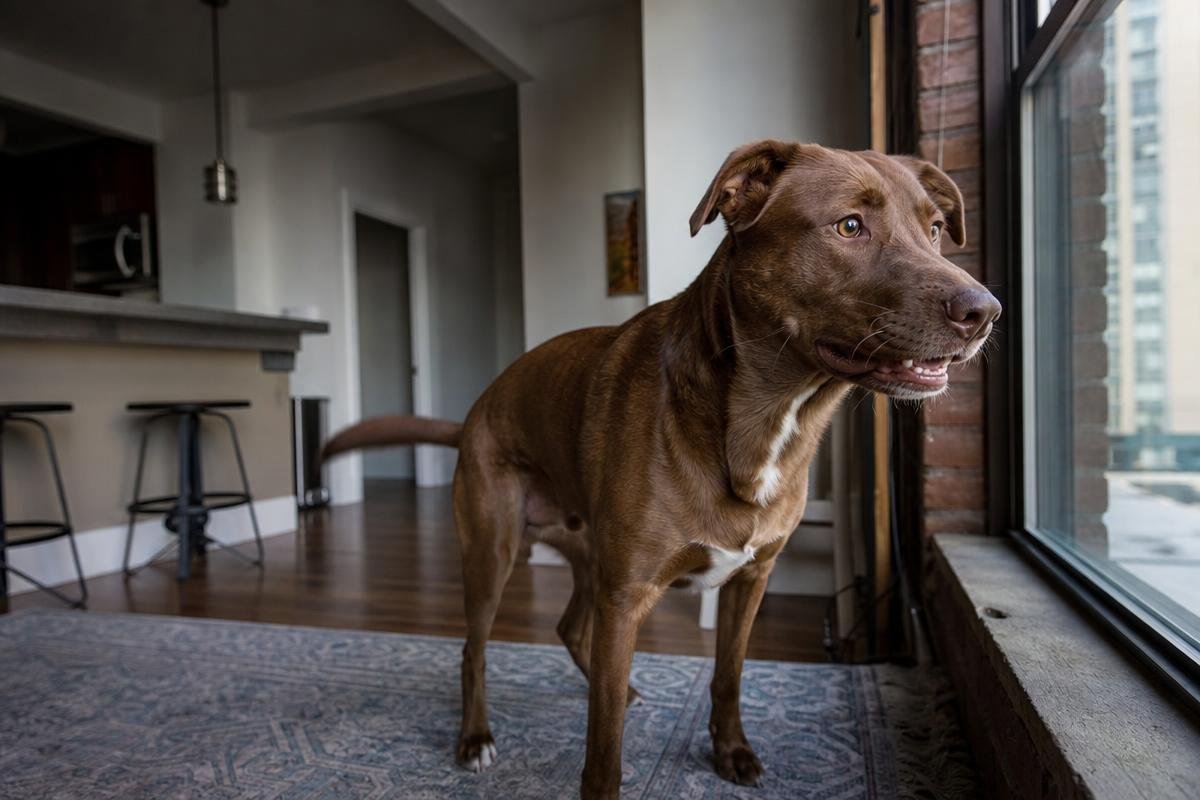
Once these problems are resolved, the possibilities open up. Owners tell us they finally feel ready to explore Denver’s best off-leash trails for trained dogs with a dog they can actually trust.
How Does Denver’s Lifestyle Shape Indoor Dog Behavior?
Denver’s active, outdoor-first lifestyle shapes indoor behavior by drawing owners to high-energy breeds that need more than a city home can easily provide. This is one of the most dog-dense cities in the country, and the breed choices here reflect that. Owners in RiNo, Sunnyside, and the Golden Triangle tend to pick high-drive dogs to match an active outdoor lifestyle. Border collies, huskies, German shepherds, and labs are everywhere. Those breeds are wired to work, run, and problem-solve all day long.
High-Drive Dogs in a High-Altitude City
Dogs that regularly hit the off-leash fields in the Central Park neighborhood build a high baseline for stimulation. When a snowstorm or a busy week cuts that access, the energy does not disappear. It shows up inside as barking, chewing, pacing, or worse. High-drive breeds feel that shift harder and faster than most.
That is a core reason behavior issues in this city trend toward the intense end. The dog is not broken. It is just running a high-performance engine in a space that cannot handle the output.
Apartment Living and Small Spaces Add Pressure
Apartment and condo growth in the Golden Triangle and along the light rail corridors puts dogs in tight quarters where every problem is magnified. Small entryways, shared hallways, and thin walls mean a dog that jumps or barks is not just your problem. It is your neighbor’s problem too, and potentially your lease.
Indoor issues hit harder in these spaces because there is nowhere for the dog to decompress. Our in-home dog training works in your actual apartment, with your layout and your distractions, which makes the results stick. If you want ideas for keeping your dog mentally engaged between sessions, check out these dog-friendly spots in Denver worth adding to your weekly routine.
Our training team works out of 2301 Blake St, Denver, CO 80205 and serves dog owners across the city, including renters dealing with exactly this kind of pressure.
Frequently Asked Questions
What are the most common dog behavior problems?
The five most common dog behavior problems we see indoors are excessive barking, destructive chewing, jumping on people, separation anxiety, and aggression. Leash pulling and house soiling are close honorable mentions, especially for dogs in apartments and condos in neighborhoods like RiNo and LoDo.
Can indoor dog behavior problems be fixed without a professional trainer?
Mild or newly developed behaviors often respond well to consistent at-home training. But long-standing issues, especially aggression or severe separation anxiety, tend to get worse without professional guidance. If you have tried for a few weeks and seen no improvement, that is a clear sign to call in help.
How long does it take to fix a dog behavior problem?
It depends on the behavior. Jumping can improve in just a few days with consistency. Separation anxiety and aggression typically take weeks to months of structured work. There is no single timeline, but dogs make real progress faster when training is applied every day.
Is separation anxiety in dogs a serious condition?
Yes. Separation anxiety is one of the most distressing conditions for both the dog and the owner. Severe cases may need support from a veterinary behaviorist, including medication alongside training. Do not ignore it. It rarely resolves on its own.
What should I do if my dog shows aggression indoors?
First, manage the environment to keep everyone safe. Do not punish growling because it is your dog’s warning signal. Contact a professional right away. For dog aggression training in the greater Denver area, contact our team so we can assess the situation and build a plan.
Does All Dogs Unleashed help with behavior problems in Denver?
Yes. Our team works with dogs of every temperament and challenge level. We offer board and train and in-home training in Denver, CO designed to address real behavior problems, not just basic obedience.
Dog behavior problems do not fix themselves, but they do respond to the right training. Whether your dog is a barker, a chewer, a jumper, or showing signs of anxiety or aggression, our team is ready to help. Call (720) 310-7337 or visit All Dogs Unleashed Dog Training Denver online today. The dog you know your dog can be is closer than you think.
Ready to Get Started with All Dogs Unleashed Dog Training Denver?
Call (720) 310-7337 to speak with our team directly. We’re ready to answer your questions, walk you through your options, and help you find the right solution for your needs. Whether you’re just starting to plan or ready to move forward, we’ll make the process simple and stress-free.
Reach out today and let’s talk about how we can help.