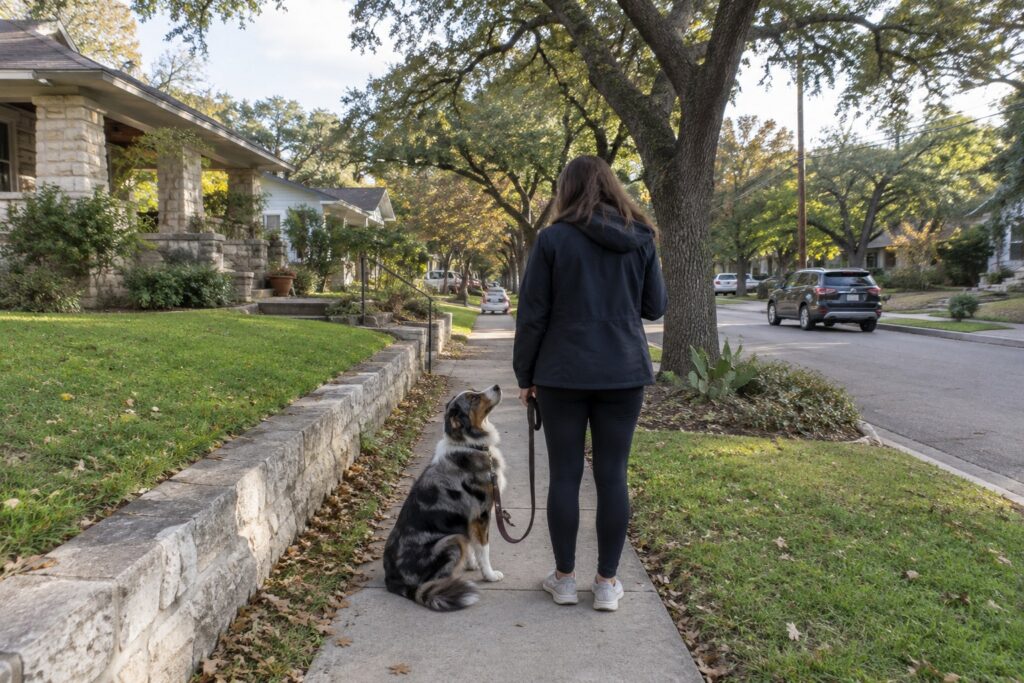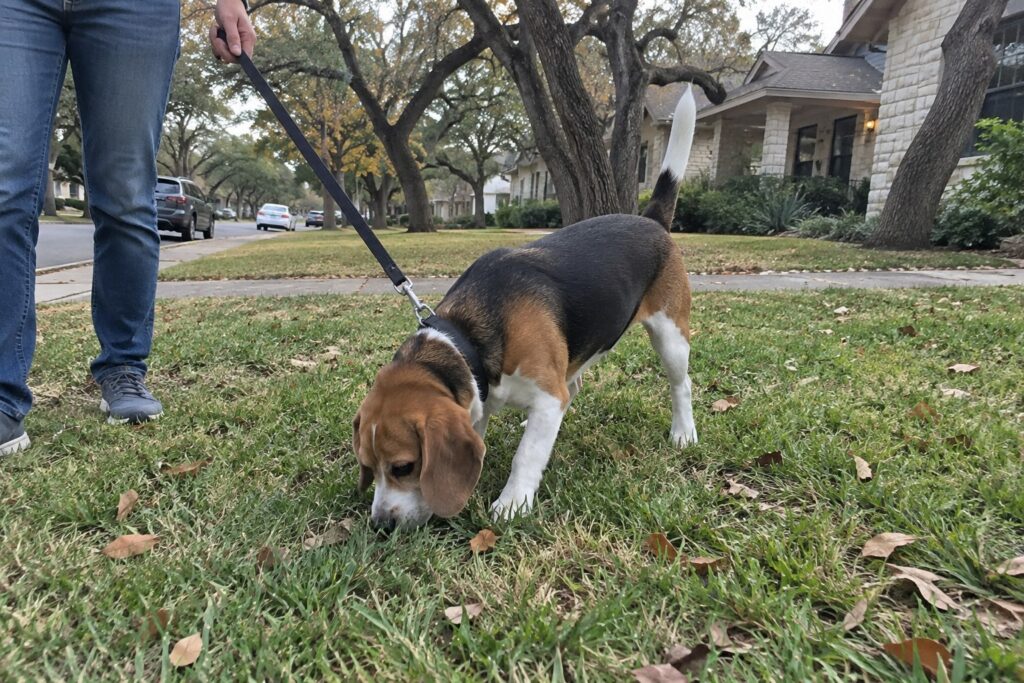

Dallas has more dog friendly hiking trails than most people realize. The problem is most dogs aren’t ready for them. Pulling on the leash, ignoring recalls, reacting to other dogs on a narrow path, those habits turn a good hike into a stressful one fast. We’ve been training Dallas dogs since 2007, and we see it every week. This guide covers the best local trails your dog will love, plus what to work on before you hit the trailhead.
Pulling, poor recall, or reactivity keeping your dog off the trail? Book a leash manners evaluation and ask about the training option that fits your dog.
Key Takeaways
The Dallas area has dozens of dog friendly hiking trails, from limestone preserves in Cedar Hill to creek-crossing trails in Garland, with varying terrain and crowd levels.
Summer heat in Dallas regularly hits 100°F by mid-morning, so early starts before 8am are critical for your dog’s safety.
Most trail problems, pulling, poor recall, reactivity, are training issues you can fix before your next hike.
A dog with solid leash manners and a proofed recall makes every trail safer and more enjoyable for everyone.
The limestone crunches under your boots at Cedar Ridge Preserve, your dog’s nose is working overtime, and the cedar-oak canopy is keeping things cool. This is exactly what he needed.
Dallas-area dog owners have access to some genuinely great trails. The problem is finding the ones that are actually dog-friendly, leash-rule clear, and worth the drive before the summer heat shuts everything down by 9am.
This guide covers the best dog-friendly hiking trails near Dallas, including trail names, mileage, leash rules, and what to know before you go. We also cover how to prep your dog so the hike actually goes well, not just for you, but for everyone else on the trail.
We are All Dogs Unleashed DFW, a balanced, obedience-focused dog training team based at 2401 Luna Rd. in Carrollton. We offer board and train, in-home private lessons, and refresh training programs, and we have been working with real dogs in real situations across the metro since 2007. If you want to know how to train your dog for hiking trails, you are in the right place.
What Are the Best Dog-Friendly Hiking Trails Near Dallas?
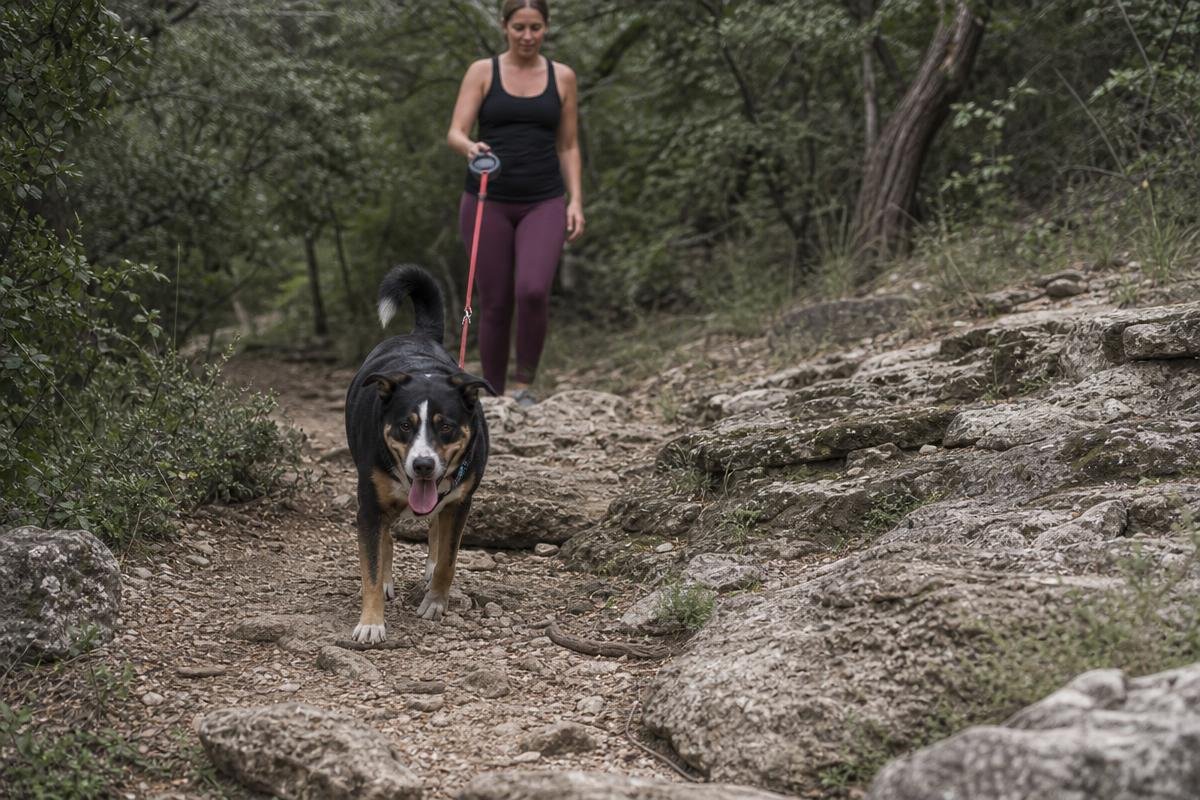
The best dog-friendly hiking trails near Dallas are Cedar Ridge Preserve in Cedar Hill, the Trinity Forest Trail in South Dallas, Arbor Hills Nature Preserve in Plano, and Rowlett Creek Preserve near Garland. These trails welcome leashed dogs and offer distinct terrain and crowd levels. Review each destination’s current posted rules before you go, including leash requirements, seasonal closures, and any trail-specific restrictions.
The Best Dog-Friendly Hiking Trails Near Dallas: Our Top Picks
These are the trails we actually recommend to dog owners in the DFW area. Each one allows dogs on leash, offers something different in terms of terrain and distance, and has at least one practical detail worth knowing before you load up the car. If you want more options closer to home, check out our guide to dog-friendly parks in Carrollton too.
Cedar Ridge Preserve (Cedar Hill, TX)
This preserve sits about 20 minutes southwest of downtown. The trail system covers roughly 9 miles of rocky limestone terrain under a cedar-oak canopy, part of the Dallas County escarpment. Dogs must be leashed throughout. There is no water on the trail, so bring more than you think you need for both of you. This one rewards the prepared.
Trinity Forest Trail (South Dallas)
This is the longest urban trail in the city at 16.8 miles, running through the Great Trinity Forest along the river corridor. The surface mixes paved and unpaved sections, and the pavement holds heat hard. During hot weather, check the forecast and pavement conditions before you go, then plan a shorter outing or choose a cooler time of day if needed. On-leash only.
Arbor Hills Nature Preserve (Plano)
Arbor Hills is about 25 minutes north of central Dallas. The loop runs 2.6 miles on mixed paved and natural surface, with an observation tower worth the short climb. It is one of the most popular trails in the area, which means weekend crowds. If your dog is reactive around other dogs on the trail, arrive by 7am or choose a weekday. Standard leash rules apply.
Kiest Park Trail (Oak Cliff, Dallas)
Kiest Park is in the Oak Cliff neighborhood, zip code 75224, close to the city center. Expect a gentle paved loop of roughly 1.5 miles with solid tree cover, open field space, and easy parking off Kiest Boulevard near the recreation center. This is the best starting point for a dog still building trail manners. No long drive, no technical terrain, just a good first hike.
Big Cedar Sunset Trail (Cedar Hill State Park)
Inside the state park on Joe Pool Lake, this trail offers lakeside views and some elevation change. There is an entrance fee at the gate. Dogs must stay leashed on the designated trail at all times. The scenery earns the extra step of buying a day pass.
Rowlett Creek Preserve (Garland and Rowlett)
This preserve sits on the northeast edge of the metro. The trails are natural surface with creek crossings, which most dogs enjoy. It is significantly less crowded than the busier northern preserves on weekends, and dogs must be leashed throughout. If your dog gets overwhelmed by trail traffic, this is your best weekend option.
More Dog-Friendly Trails Worth the Drive from Dallas
The trails closest to the city are great. But some of the best dog-friendly trails in the region are worth a longer drive. These three give your dog something different: more distance, more shade, or real terrain.
Grapevine Lake (Grapevine, TX)
About 30 minutes northwest, near the airport corridor, Grapevine Lake has over 26 miles of multi-use trails. Flat to gently rolling, with water access at the lake itself. This is the move for high-energy dogs that need serious distance to actually settle down. Dogs must be leashed throughout.
Erwin Park (McKinney, TX)
McKinney is about 40 minutes north and growing fast, but Erwin Park still feels tucked away. Wooded single-track on natural surface, shaded canopy, and noticeably cooler than open-field parks during warm months. Weekdays are quiet here. If your dog gets overstimulated around other dogs on busy trails, this is a solid option. On-leash only.
Outdoor activities with dogs in the Dallas area tend to peak on weekend mornings. A weekday visit is a different experience entirely.
Dinosaur Valley State Park (Glen Rose, TX)
This one is about 90 minutes southwest and a completely different landscape. Rocky terrain, real elevation changes, and river crossings in the Paluxy River where dogs can wade at designated areas. It is genuinely fun. It is also not for a dog that is not trail-ready. Leash rules apply on all trails.
If you are planning a longer road trip, check out dog-friendly trails in Austin for more options a few hours south. If your dog is not ready for distance or off-leash reliability, start with the shorter loops and work your way up. Is your dog ready for a 9-mile limestone hike? Find out what we work on before the trailhead with a leash manners and recall evaluation.
How to Prepare Your Dog for a Hike (the Part Most Guides Skip)
Most trail guides tell you where to go. Almost none tell you how to get your dog ready to go there. That gap gets dogs hurt, owners frustrated, and trips cut short.
Here is what to actually do before you load him in the car.
Build Trail Fitness Before the Big Day
A dog who spends most of his time in a backyard is not ready for five miles of rocky limestone. His paw pads are soft. His cardiovascular base is low. A hard escarpment trail will expose both problems fast.
Start with 20 to 30 minute walks on varied surfaces, two to three weeks out. Pavement conditions paw pads before you hit exposed limestone terrain. Watch for excessive panting, limping, or lagging behind. Those are overexertion signals, not stubbornness. He just needs a slower build.
During hot weather in the DFW area, check the forecast and trail conditions before you go. Plan for a cooler time of day or choose a shorter outing when heat is a concern.
Why Do Leash Manners Matter More on a Trail?
A dog who pulls on a sidewalk is annoying. A dog who pulls on a narrow trail with a drop-off or a sudden wildlife distraction is dangerous. The Trinity Forest Trail has exposed sections, other hikers, cyclists, and plenty of distractions. A pulling dog amplifies every one of those hazards.
Practice controlled passing and attention work before your first hike. If your dog is not there yet, fix leash pulling before your first trail hike. It is a real safety issue out there, not just a comfort one.
And if you are planning to visit any off-leash area, reliable recall is essential before any off-leash area. A proofed recall, earned one repetition at a time, is what keeps him safe when another dog or a deer shows up.
What to Pack for Your Dog on Every Hike
Keep this list in your trail bag and check it every time.
Bring enough water for your dog and a collapsible bowl
Paw wax or booties for rocky or hot-pavement sections
Dog-safe sunscreen for short-coated breeds on exposed trails
Basic first aid kit with tweezers for ticks and thorns
Waste bags, more than you think you need
ID tags with current contact information on his collar
Dehydration sneaks up fast in Texas heat. Know the signs of dehydration in Dallas dogs before you head out, not after you notice something is wrong on the trail. If your dog is not ready for trail leash manners or recall yet, we can help. Real dogs, real situations, real results.
Dallas Trail Etiquette Every Dog Owner Needs to Know
The trails around the DFW area are busy on weekends. The popular preserves fill up fast. Knowing the rules before you go keeps your dog safe and keeps you out of trouble.
Leash Rules Are Not Suggestions
Leash requirements vary by destination. Review the current posted rules for the specific preserve, park, or trail before you go, and keep your dog leashed wherever the rules require it.
Park rangers do enforce this. Violations can result in fines and park bans. We have seen it happen. An off-leash dog that bolts after a deer or charges a stranger on a narrow trail is a liability, not just a rule violation.
Stay on marked trails at all times
Pack out all waste, many trailheads have no bins
Yield to uphill hikers and step to the side
Keep your dog close when passing other trail users
On natural-surface trails with creek crossings, there is almost no room to pass. Your dog needs to stay tight to your side, not pulling ahead on a loose line.
How to Handle Trail Encounters with Other Dogs
Not every dog on the trail wants to say hello. Read your dog’s body language before a greeting goes wrong. Stiff posture, a hard stare, or a raised tail are all signs to redirect and move on.
Use the pass wide and keep moving technique on narrow sections. Step off the trail if you have space. If your dog is already over threshold, turning around is a valid choice. Reactive dogs need a different approach before hitting busy trails, and that is okay. A reactive dog is not a bad dog. He just needs more practice before the trail.
Why Dallas Dogs Need Trail Time (and What It Does for Their Behavior)
A flat neighborhood sidewalk gives your dog exercise. A trail gives his brain a workout. New smells, uneven surfaces, wildlife scents, and elevation changes fire off mental stimulation that a 4-mile suburban loop simply cannot match. A solid 2-mile hike through varied terrain often does more for your dog’s behavior than twice the distance on pavement.
Here’s the part most DFW owners don’t connect: the summer heat window, roughly mid-June through early September, pushes temperatures to 95-105°F by mid-morning. Trail time shrinks to a narrow early-morning slot. When dogs miss consistent physical and mental stimulation for weeks at a stretch, that energy goes somewhere. Usually somewhere destructive. Chewing, barking, restlessness, and indoor reactivity spike during those months. It’s not a personality problem. It’s a stimulation deficit.
Trail hiking helps reset that. But only if your dog is ready for it. Pulling on leash, ignoring recall, and reacting to other dogs or wildlife on the trail are among the most common behavior problems Dallas trainers fix most often. Those issues don’t get better on the trail. They get worse. The fix happens before you ever hit the trailhead.
A board and train program or in-home training addresses exactly those gaps. We work with real dogs in real situations, every breed, age, and behavior history. Our team is based at 2401 Luna Rd. in Carrollton and has been doing this since 2007. Trail-ready obedience is earned one rep at a time, and we can help you get there before the next good weather window opens up.
Frequently Asked Questions
Are dogs allowed on hiking trails near Dallas?
Yes, most trails in the area welcome dogs. Preserves and nature parks across the DFW metro are dog-friendly, though some zones inside Cedar Hill State Park have restrictions. Always check posted signs at the trailhead before you head in.
Do Dallas hiking trails require dogs to be on a leash?
Check the current rules for each trail before you go. Many hiking areas require dogs to stay leashed, while designated off-leash areas operate under their own posted rules.
What should I bring for my dog on a hike near Dallas?
Bring enough water for your dog and a collapsible bowl
Waste bags (more than you think you need)
Basic first aid kit with tweezers for thorns and burrs
Paw wax if you are hitting rocky limestone terrain
Plan to be off the trail before 9am in summer. The heat climbs fast.
How far should I hike with my dog the first time?
Start with 1 to 2 miles on a flat, shaded trail. The Trinity Forest Trail corridor gives you room to keep it short or extend as your dog builds stamina. Watch for stiffness, limping, or extra sleep the next day. Those are signs you hit the limit. Build up gradually before attempting longer routes.
Can I take a puppy hiking on Dallas trails?
For puppies, choose short outings on easy terrain and build gradually. Ask your veterinarian what distance, terrain, and heat exposure are appropriate for your dog’s age, breed, and conditioning. Focus on socialization and reliable recall before adding distance.
What do I do if my dog is reactive on the trail?
Create distance immediately. Step off the trail, put your dog behind you, and let the trigger pass. Do not wait for your dog to escalate. If reactivity is a pattern on the trail, address it with training before the next hike. Our board and train and in-home training programs are built exactly for this. If your dog is not trail-ready yet, call All Dogs Unleashed DFW at (214) 807-1462 or (972) 484-3647 to talk through what he needs before you head back out.
Ready to Get Started with All Dogs Unleashed DFW?
Get in touch to speak with our team directly. We’re ready to answer your questions, walk you through your options, and help you find the right solution for your needs. Whether you’re just starting to plan or ready to move forward, we’ll make the process simple and stress-free. Ready to make the trail enjoyable again? Book a consultation and start your dog on the path to trail-ready obedience.