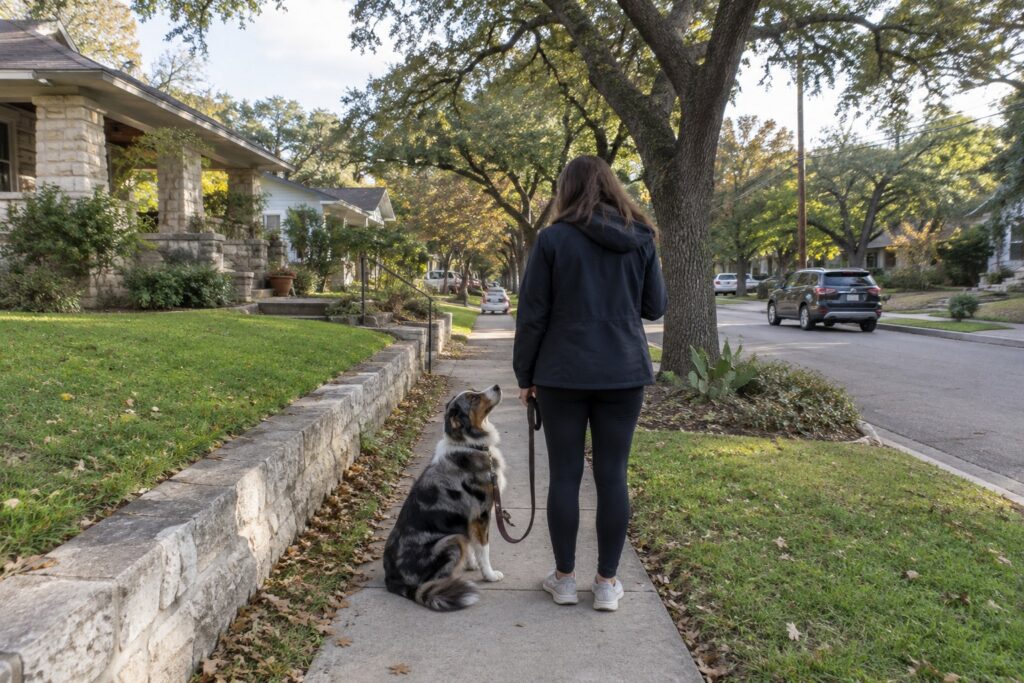

If your dog barks, lunges, or shuts down the moment another dog appears on the leash, you already know group classes can make things worse, not better. Reactive dogs need a different approach, and that is exactly what we built our programs around. At All Dogs Unleashed DFW, our certified trainers work with leash-reactive dogs every day, using proven behavior modification techniques that actually address the root of the problem.
We do offer structured reactive dog classes and one-on-one programs for dogs at every stage, so whether you are walking the Katy Trail or just trying to get around the block, we can help your dog get there. Ready to stop dreading walks? Let’s talk about the right training plan for your dog.
Key Takeaways
- Group reactivity classes are not always the right fit, and some dogs need individualized training first.
- Leash reactivity is not the same as aggression, and it is very treatable with the right program.
- Certified trainers use proven behavior modification to reduce barking, lunging, and leash tension.
- Dallas dog owners on high-traffic routes like the Katy Trail see real results with a structured behavior modification program.
- Board and train gives reactive dogs focused, daily work that group settings simply cannot replicate.
The Walk That Ruins Your Day
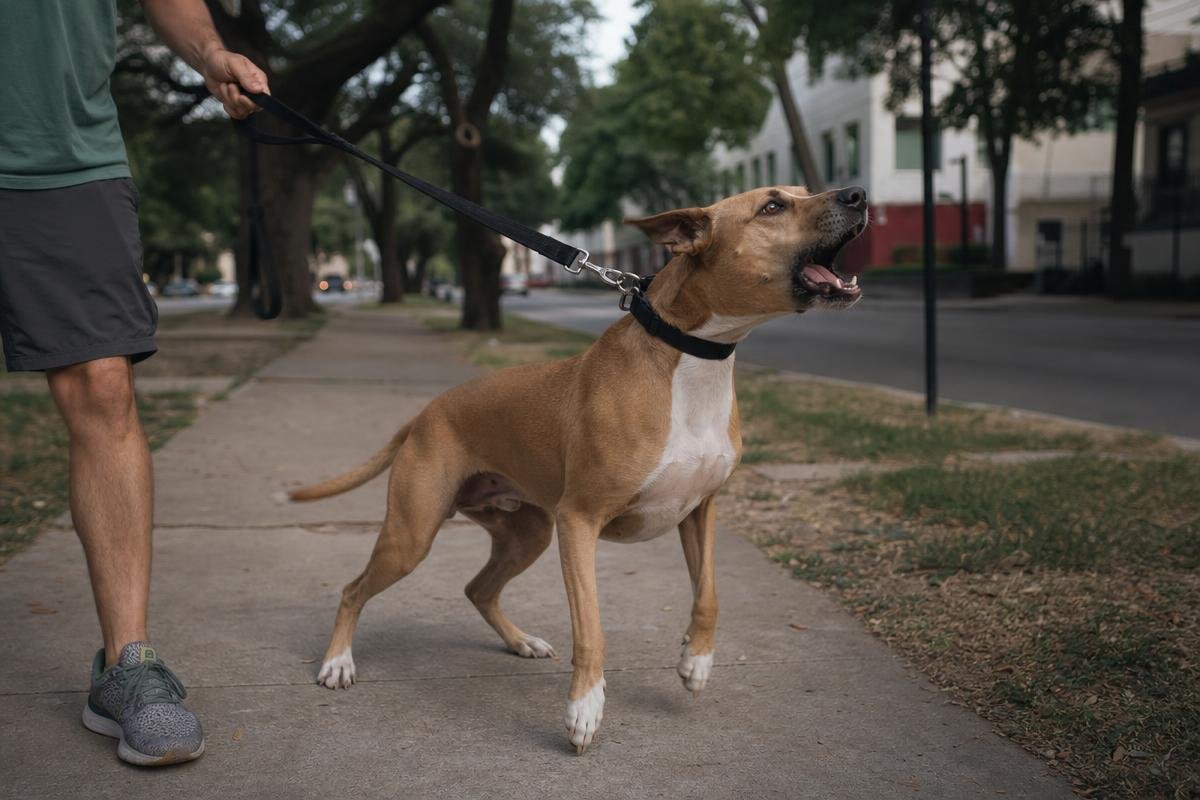
You know the feeling. You turn the corner on a busy street in Oak Lawn or Lower Greenville, another dog appears, and your dog explodes. Barking. Lunging. The leash goes tight. Every person on the sidewalk stares. It is exhausting, embarrassing, and it happens every single walk.
Here is the good news. This is one of the most common problems we see, and it is fixable. Dallas dog owners have trusted us with exactly this situation hundreds of times. With thousands of five-star Google reviews, we have the proven results Dallas dog owners rely on for real behavior change.
Below, we cover what reactivity actually is, why a group class is not always the right first step, and which training formats get real results when you are working with a reactive dog in Dallas.
What Is Dog Reactivity and Why Does It Happen?
Reactivity means your dog overreacts to a specific trigger. Other dogs, strangers, cyclists, skateboarders, delivery trucks, your dog sees one and immediately barks, lunges, growls, or pulls hard on the leash. It looks dramatic. It feels embarrassing. But it is not random, and it is not your dog being “bad.”
There are two main reasons dogs react this way. The first is fear. Your dog wants distance from the trigger and is trying to make it go away. The second is frustration. Your dog desperately wants to get to the trigger but the leash is holding them back. Both look similar from the outside, but behavior modification for dogs works differently depending on which one is driving the reaction.
The Most Common Triggers in Dallas Dogs
Dallas is a tough city for reactive dogs. Dense neighborhoods like Oak Lawn (75219), Lower Greenville (75206), and Lakewood (75214) mean your dog encounters triggers on nearly every single walk. There is almost no such thing as a quiet block.
The triggers we see most often in Dallas dogs include:
- Other dogs at White Rock Lake trail, where off-leash greetings happen without warning around the spillway and boat launch
- Cyclists and skateboarders moving fast and unpredictably
- Delivery trucks stopping and starting near the curb
- Heavy foot traffic in Uptown and Bishop Arts
- Unfamiliar dogs crowding narrow sidewalks and patio seating along Greenville Avenue
If your dog only reacts to certain things and not others, that is completely normal. Reactivity is trigger-specific. Your dog is not broken. They just have a strong emotional response to one or two particular situations.
Is Reactivity the Same as Aggression?
No. Reactivity and aggression are not the same thing. Reactivity is an emotional overreaction. Aggression involves intent to harm. Most reactive dogs are not dangerous, they are overwhelmed.
That said, reactivity can create real problems at home too. If you have multiple dogs and tension is building between them, that is a separate issue worth addressing. Our blog on how to stop dog fighting in a multi-dog home in Dallas covers that in detail.
The good news: reactivity training works. Reactive dogs improve all the time with the right approach. We will cover what that looks like in the next section.
Why Group Reactive Dog Classes Often Fall Short
The Group Class Environment Works Against Reactive Dogs
Group classes work great for a lot of dogs. But reactive dogs are usually not those dogs. The structure of a typical group class puts a reactive dog in exactly the situation that triggers them, before they have the skills to handle it.
Here is what happens in most group settings:
- Your dog is within close range of 6 to 10 other dogs from the moment you walk in.
- The trainer’s attention is split across every dog in the room, so timing on rewards and corrections gets loose.
- One outburst from any dog can reset the entire session for everyone.
- There is no way to control the distance between your dog and their triggers.
That last point matters most. Behavior modification for reactive dogs depends on controlled, gradual exposure. You start far from the trigger, reward calm behavior, and close the distance slowly over time. In a group class held at a busy retail space or park-adjacent facility, that controlled distance is gone the second you walk through the door.
Dallas makes this even harder. Dense neighborhoods like Uptown, the M Streets, and Deep Ellum mean your dog is already overstimulated before class starts. Add a room full of unfamiliar dogs and a trainer who cannot watch your dog every second, and you have a recipe for a meltdown, not a breakthrough.
What Certified Trainers and Behavior Specialists Actually Say
Certified trainers and behavior specialists consistently find that throwing a reactive dog into a group class does not desensitize them. It overwhelms them. And a dog that is overwhelmed is not learning. That is why we build our reactivity work around established protocols rather than generic obedience drills. Our trainers use Behavior Adjustment Training (BAT) to let dogs make calm choices at a distance, and Look at That (LAT) exercises to reward your dog for noticing a trigger without reacting. Both depend on controlling distance, which is exactly what a crowded room removes.
That is usually why your dog did fine practicing at home but fell apart in class. At home, there were no triggers. In class, the triggers were everywhere and unavoidable.
This is also why private trainers in Dallas handle reactive behavior and other common behavior problems differently than group instructors can. Individual sessions let a trainer watch your dog’s body language in real time, adjust the distance from triggers on the fly, and build a plan around your specific dog.
Group settings are not always the wrong answer forever. But for most reactive dogs, they are the wrong starting point. A behavior modification program that begins with private or one-on-one work gives your dog a real foundation first.
Not sure if your dog is ready for group training? Book a free assessment call and we will point you in the right direction.
The Self-Assessment: Is Your Dog Ready for Group Reactive Classes?
Before you sign up for any group class, run through this quick checklist. Knowing where your dog stands right now saves you time, money, and a lot of frustration.
Signs Your Dog May Do Fine in a Structured Group Setting
These are green-light behaviors. If your dog checks most of these boxes, a structured group class could be a good fit.
- Your dog reacts to a trigger but calms down within 30 seconds
- Your dog can take treats near mild distractions, like a dog spotted across a Knox-Henderson sidewalk
- Your dog responds to basic commands at home with few misses
- Reactivity is mild and tied to one trigger type, like cyclists or unfamiliar dogs
- You can redirect your dog with a leash cue before they hit full reaction mode
Signs Your Dog Needs One-on-One Training First
These are red flags. If your dog checks two or more of these, group classes are likely the wrong starting point. Your dog needs individualized attention before joining any group setting.
- Your dog cannot take treats once triggered, even high-value ones
- Your dog has bitten, snapped, or made contact with another dog or person
- Your dog redirects frustration toward you on the leash
- It takes more than two minutes for your dog to settle after a trigger
- Your dog has been removed from a class, daycare, or dog park
- Your dog reacts to triggers at 50 feet or more, like a neighbor’s dog visible through a fence in the Casa Linda area
If your dog checks several red-flag boxes, options like board and train or in-home behavior work are a smarter first step. Learn more about board and train programs in Dallas and whether they are worth it for dogs that need more focused help before joining a group.
Reactive Dog Training Options That Actually Work
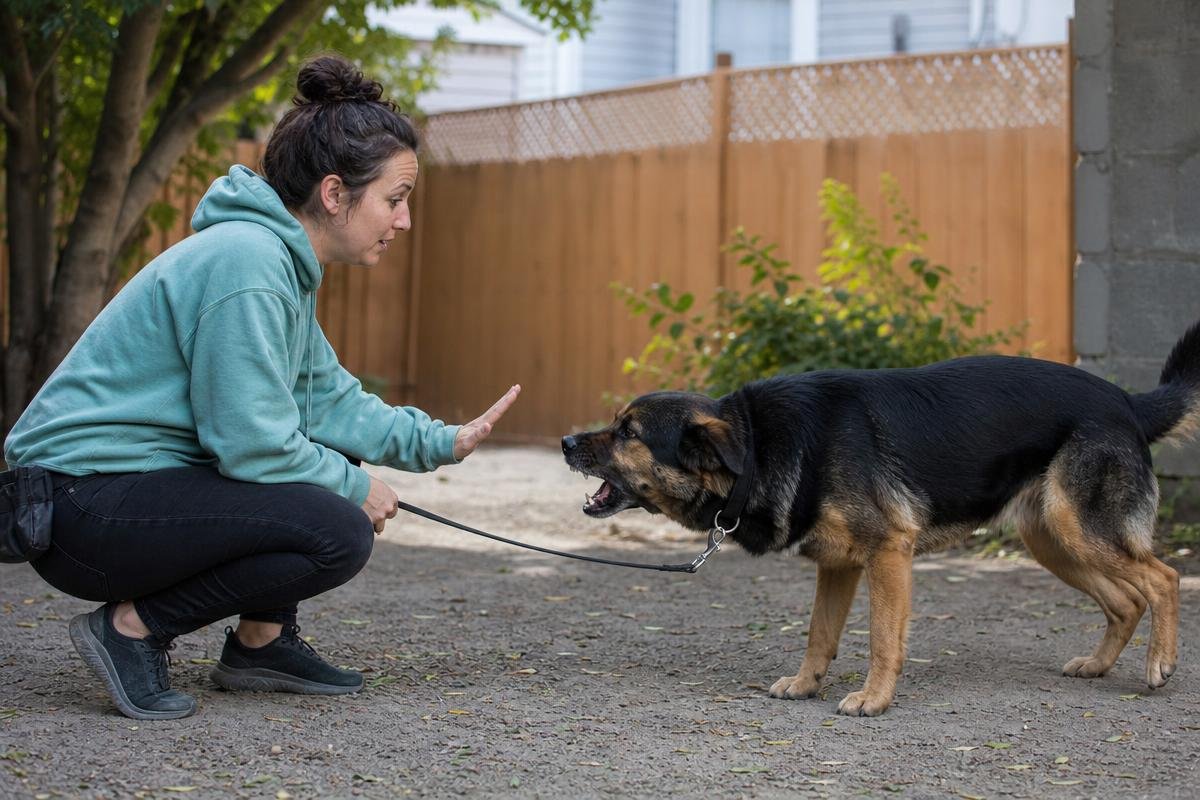
Group classes are not the only option. For most reactive dogs in Dallas, they are not even the right starting point. Here are the two formats that consistently deliver real results.
Board and Train for Reactive Dogs
Board and train is the fastest path to real improvement for a reactive dog. Your dog lives with a certified trainer full-time and works through board and train programs in Dallas designed around their specific triggers, not a generic class curriculum. They get individualized attention every single day. That daily repetition is what accelerates behavior modification for dogs who need it most.
Owners who pick up their dogs consistently describe a night and day difference. The dog that left lunging at every passing jogger comes home calm and responsive. You also get a hands-on follow-up session so the skills transfer to you at home.
- Full-time structured environment removes daily trigger overload
- Individualized attention targets your dog’s exact reactivity patterns
- Off-leash control built in from day one
- Owner transfer session included so progress sticks
In-Home Behavior Modification
Some dogs are perfectly fine on a quiet street but fall apart the moment a delivery truck pulls up or the neighbor’s dog appears at the fence. That is a home-trigger problem. In-home dog training in Dallas puts the trainer inside your dog’s actual environment, working through the exact scenarios that set them off.
This format is especially effective in dense Dallas neighborhoods where fence-fighting and reactions to mail carriers happen multiple times a day. Training in the real environment speeds up how quickly your dog generalizes new behaviors to real life.
How Long Does It Take to Improve Dog Reactivity?
Most dogs show meaningful improvement with consistent, structured training. Severe cases take longer, and timelines vary depending on the individual dog. Board and train delivers faster results simply because your dog is working every day instead of once a week.
We back our programs with guaranteed results. If your dog is not making progress, we stay with you until they do. Lifetime support means you are never on your own after training ends.
Can Reactive Dogs Be Socialized? What Dallas Owners Should Expect
Yes. Most reactive dogs can learn to manage their responses and live a full, happy life. But let’s be honest about what that means. The goal is not to make your dog love every stranger or every dog they pass on the sidewalk. The goal is to give them the tools to stay calm, respond to your commands, and move through the world without melting down.
Some dogs will always need management. Distance, structured greetings, leash protocols. That is not a failure. That is a trained dog with a plan. We have worked with hundreds of dogs that owners were told were hopeless. Most of them made real progress with the right approach.
Setting Realistic Goals for Your Reactive Dog
Here is what realistic progress looks like for most reactive dogs:
- Walking past another dog without lunging or barking
- Responding to commands even when triggered
- Maintaining off-leash control in low-distraction environments
- Calming down faster after an encounter
- Allowing structured greetings on your terms
Will your dog ever walk calmly along the White Rock Lake trail on a busy Saturday morning? Maybe. Some dogs get there. Others do great in quieter settings but still need distance in high-traffic spots. We set goals based on your dog, not a generic timeline. If you want to understand the obedience commands that give reactive dogs the best foundation, that is a good place to start.
How Dallas’s Environment Shapes the Training Plan
Training a reactive dog here is different from training one in a quiet suburb. The Katy Trail area, Uptown, and suburbs like Garland and Richardson all bring their own challenges. Foot traffic, off-leash dogs near park zones, cyclists, and unpredictable encounters around every corner. Your dog faces triggers on nearly every walk. That reality shapes how we build your training plan.
Dallas summers also matter. When temperatures push past 100 degrees, midday sessions are off the table, and hot pavement can burn paw pads within seconds. Our trainers schedule around early mornings and evenings so your dog is not stressed by heat on top of everything else. Private and in-home dog training gives us the flexibility to work in your actual environment, at times that make sense for your dog and your schedule.
Reactivity is manageable. Your dog is not broken. They just need the right plan.
Frequently Asked Questions
What are reactive dog classes and are they right for my dog?
Reactive dog classes are group training sessions designed to help dogs learn to stay calm around triggers like other dogs, strangers, or traffic. They work well for mild cases where the dog can still take treats and settle near distractions. If your dog’s reactivity is moderate to severe, a private or board and train format will get you further, faster.
How do I know if my dog is too reactive for group classes?
Check three things. Can your dog take a treat within sight of a trigger? Does your dog recover within about a minute after a reaction? Does your dog have any bite history? If the answer to any of those is no, skip group classes for now. Private or board and train is the right starting point. Our team can also help you sort through the most common behavior problems private trainers address and whether your dog’s reactivity fits that list.
What is the difference between reactive dog training and regular obedience training?
Regular obedience builds skills. Sit, stay, heel. Reactive dog training changes how your dog feels about a trigger, not just what they do. That is behavior modification, and it goes deeper than command work. Most full programs combine both. You can start with the 8 obedience commands every dog owner should teach first, then layer in reactivity work from there.
How much does reactive dog training cost in Dallas?
Cost depends on your dog’s severity, the format you choose, and your schedule. Board and train is a larger upfront investment, but it typically delivers faster and more lasting results than weekly sessions stretched over months. In a city with busy urban walking environments, the right format matters as much as the price. Contact our team for a current quote based on your dog’s specific situation.
Can a board and train program fix leash reactivity?
Yes, and it is one of the most effective formats for leash reactive dogs. Your dog gets individualized attention every day in a controlled environment, which speeds up the behavior modification process. Most dogs come home with dramatically better leash manners and improved off-leash control. You can read more about whether board and train programs are worth it for busy dog owners before you decide.
Does All Dogs Unleashed offer reactive dog training in Dallas?
Yes. All Dogs Unleashed DFW works with reactive dogs through board and train, in-home programs, boarding, and grooming. Our certified trainers build individualized plans based on each dog’s specific triggers and history. With thousands of five-star Google reviews, we have helped hundreds of DFW families turn stressful walks into something they actually enjoy.
Your dog does not have to make every walk a battle. If you are ready to stop managing the chaos and start fixing it, reach out to our team. We work with reactive dogs across the DFW area through programs built around your dog’s specific triggers. Call us or fill out the contact form on our website to get started.
Ready to Get Started with All Dogs Unleashed DFW?
Get in touch to speak with our team directly. We’re ready to answer your questions, walk you through your options, and help you find the right solution for your needs. Whether you’re just starting to plan or ready to move forward, we’ll make the process simple and stress-free.
Reach out today and let’s talk about how we can help.