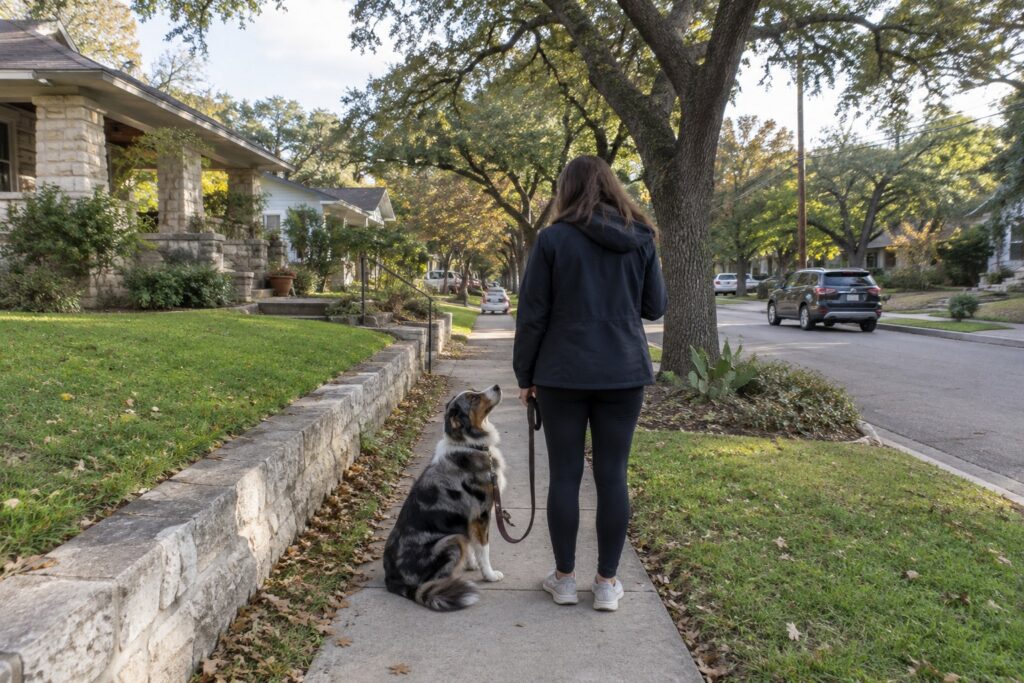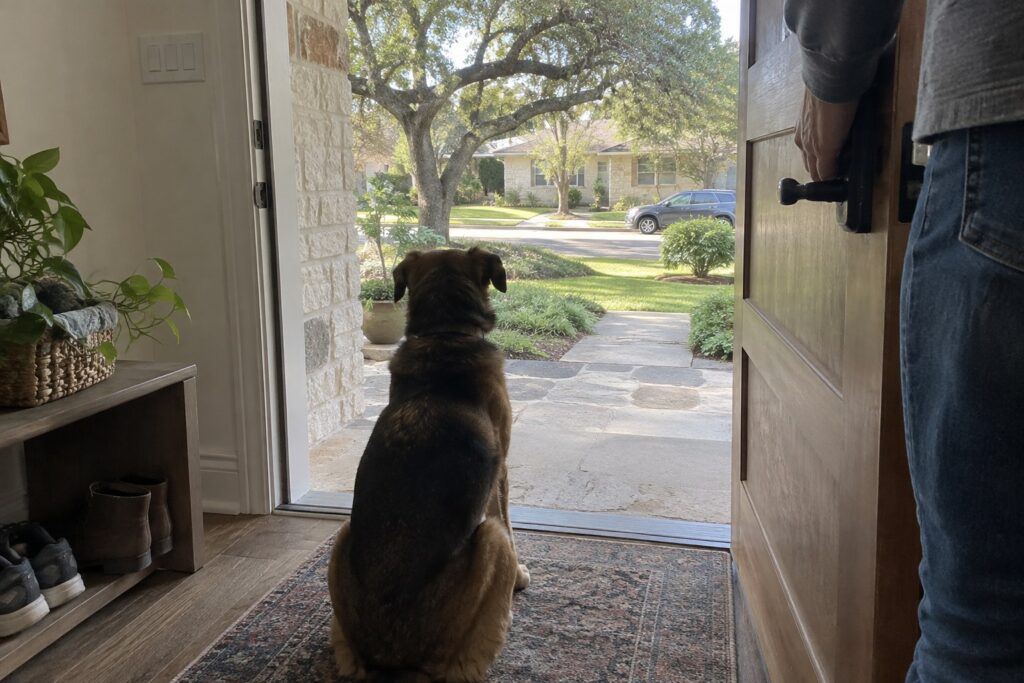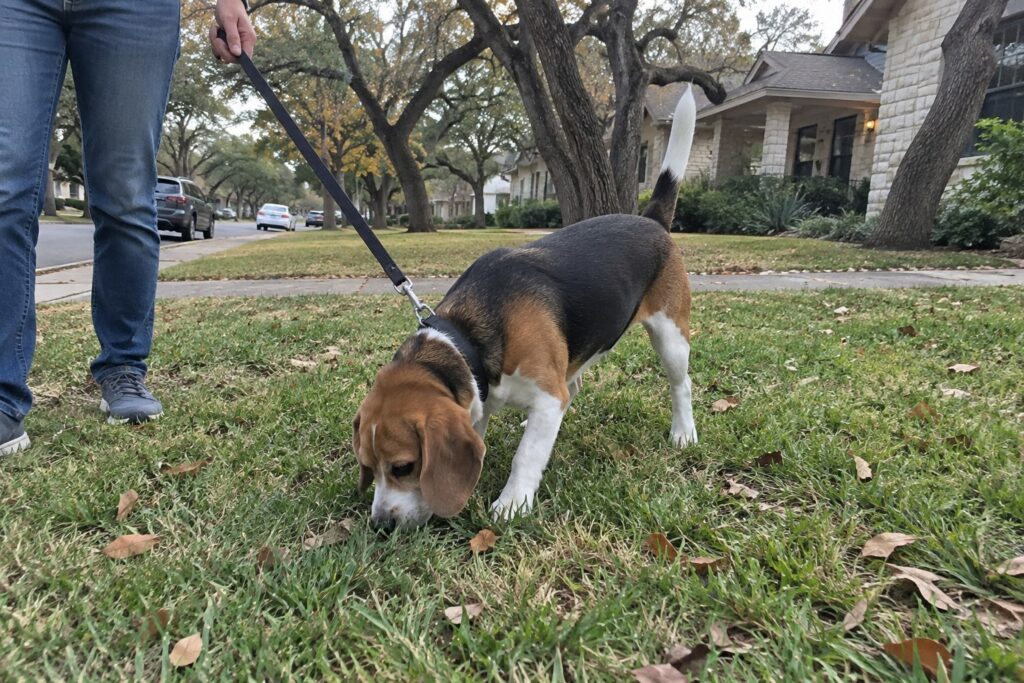

Denver dog owners ask us this question all the time: does positive reinforcement dog training actually work for serious behavior problems, or do some dogs need something more? It is a fair question, and the honest answer is more nuanced than most training blogs admit. We have worked with dogs across the metro, from laid-back pups to dogs that pull, lunge, and bark through every walk around Sloan’s Lake, and we know that the training method matters less than finding the right fit for your dog.
Not sure which training approach is right for your dog? We can help you figure it out. Call us today at (720) 310-7337.
Key Takeaways
- Positive reinforcement dog training uses rewards to build good habits, and it works well for most dogs and behaviors.
- Balanced training combines reward-based methods with clear boundaries, which some dogs respond to better in high-distraction environments.
- Neither approach is one-size-fits-all. Your dog’s temperament, history, and specific problem behaviors all matter.
- Denver’s active outdoor lifestyle means your dog will face real-world distractions, and your training method needs to hold up in those moments.
- A good trainer will assess your dog first and recommend the method that fits, not just the one they prefer.
Why Denver Dog Owners Are Confused About Training Methods
Your dog is pulling you down the path at Wash Park, jumping on strangers at a Cheesman Park picnic, or bolting toward cyclists at City Park. You ask your vet, your neighbor, and the internet for help. You get three completely different answers. Sound familiar?
The debate over reward-based methods versus balanced training is real, and the conflicting advice is genuinely frustrating. We get it. At All Dogs Unleashed Dog Training Denver, we have worked with dogs across Capitol Hill, RiNo, Washington Park, and beyond. Our lead trainers hold CPDT-KA certification through the Certification Council for Professional Dog Trainers and have completed coursework through the Karen Pryor Academy, and our 277 reviews and 4.9 out of 5 rating reflect one thing: honest training that actually works.
This guide gives you a straight answer. No lecture. No sales pitch. Just a clear breakdown of both methods so you can make the right call for your dog.
What Is Positive Reinforcement Dog Training?
Positive reinforcement dog training is simple in concept. When your dog does something right, you reward them immediately. That reward makes the behavior more likely to happen again. This is the core of operant conditioning, and it can be applied to any dog, any age, any breed as a starting point.
How Rewards Shape Your Dog’s Behavior
Timing is everything in reward-based dog training. You have a window of about one to two seconds after the behavior to deliver the reward. Miss that window and your dog has no idea what they earned it for.
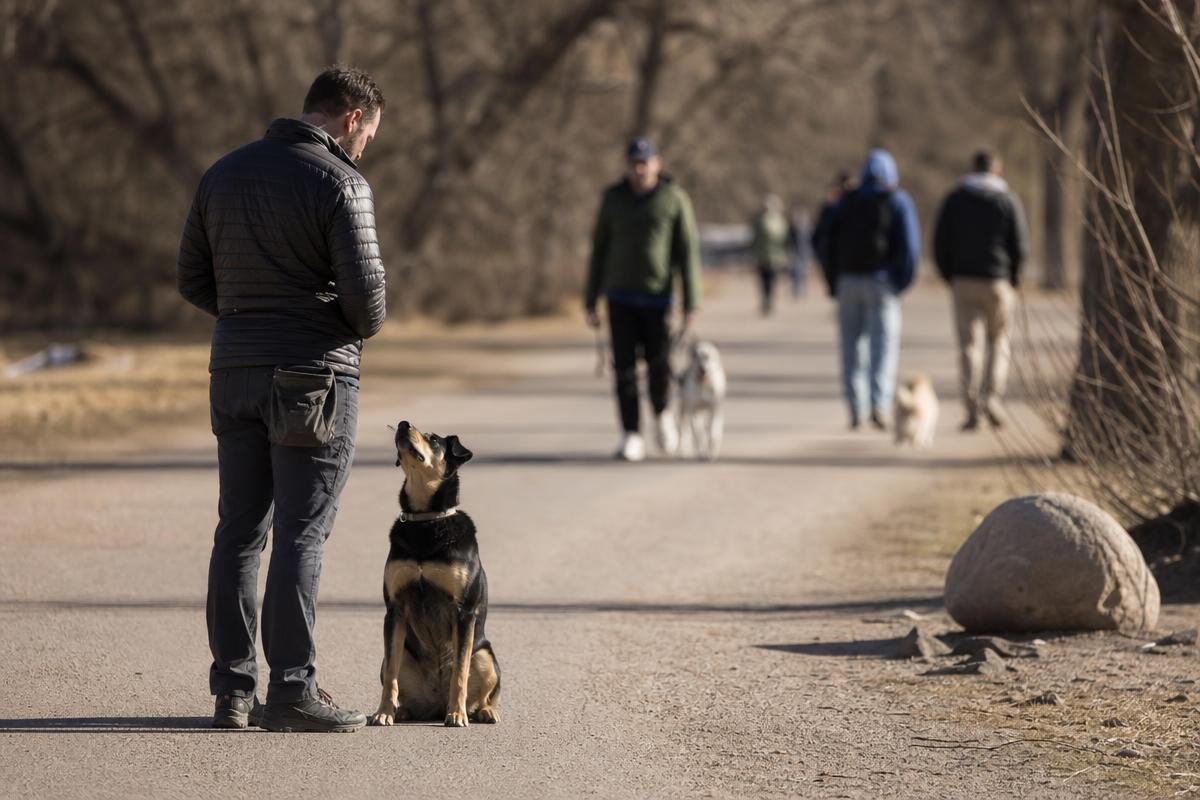
Picture this. You and your dog are heading onto the Washington Park loop. You ask for a sit before crossing the busy intersection. Your dog’s rear hits the ground. You say "Yes!" and hand over a treat within two seconds. That connection is what teaches the behavior. Do it enough times and your dog sits at crosswalks without being asked.
This is why we focus so much on handler timing in our dog training programs in Denver. The technique only works when the reward lands at the right moment.
What Counts as a Reward?
A lot of people think reward-based work means handing out treats all day. It does not. The best reward is whatever your dog actually wants in that moment. That changes by dog and by situation.
Common reward types include:
- Food treats: Small, high-value pieces like chicken or cheese work best for fast learning
- Verbal praise: A clear, upbeat "Yes!" or "Good dog!" delivered right on time
- Play: A quick game of tug or a toss of the ball after a solid recall
- Physical affection: Petting, an ear scratch, whatever your dog loves
- Life rewards: Permission to sniff a bush, go outside, or greet another dog
A dog who is not food-motivated might light up for a game of fetch. A dog who ignores toys might do anything for a piece of cheese. We read each dog individually to find what drives them. That is what makes this approach work across so many different personalities and situations.
What Is Balanced Dog Training and How Is It Different?
Balanced dog training is not punishment-first training. That is a common misconception worth clearing up right away. Balanced training means using all four quadrants of operant conditioning to communicate with your dog, not just rewards. Think of it as giving your dog a full vocabulary to work with instead of half of one.
The Four Quadrants of Operant Conditioning
In operant conditioning, "positive" and "negative" are math terms, not moral judgments. Positive means adding something. Negative means removing something. Reinforcement means the behavior increases. Punishment means the behavior decreases.
- Positive Reinforcement: Add something good (a treat, praise) to increase a behavior.
- Negative Reinforcement: Remove something uncomfortable to increase a behavior (releasing leash pressure when a dog sits).
- Positive Punishment: Add something to decrease a behavior (a firm "no" or leash correction).
- Negative Punishment: Remove something good to decrease a behavior (turning away when a dog jumps).
No single quadrant is cruel or kind on its own. What matters is how and when each tool is applied. A skilled balanced trainer uses all four with timing and fairness.
How Balanced Trainers Use Both Reward and Correction
Picture a dog bolting toward a cyclist on a shared path near Sloan’s Lake. A purely reward-based approach may not stop that behavior fast enough to keep the dog safe. A balanced trainer would use a clear, calm leash correction to redirect the dog, then reward immediately for checking back in. The correction communicates "that choice is not available." The reward communicates "this choice is great." Together, they give the dog a clear answer.
Here is what separates a fair correction from an unfair one. Before we apply anything, we watch the dog’s body, signs the level was appropriate include:
- A soft, loose posture
- A mouth that opens and closes easily
- A willingness to reorient toward the handler
Signs the correction was too much include:
- A hard freeze
- A tucked tail
- Lip licking
- Whale eye
- A dog that shuts down and stops offering behavior
When we see those, we lower the intensity or drop the tool entirely. A correct correction interrupts the dog and then lets them return to a normal, engaged state within a second or two. Over the following weeks we fade the tool out on purpose, spacing corrections farther apart as the dog starts making the right choice on its own, until the reward alone is carrying the behavior. If a dog cannot recover quickly or the behavior is fear-driven, we do not use pressure at all.
Corrections in balanced training are not about fear. They are about clear communication. A firm "no," a brief leash pressure, or a low-level e-collar stimulation can redirect a dog without distress when applied correctly. The goal is always a confident, well-rounded pet, not a fearful one.
Our dog obedience training in Denver uses well-balanced, customizable programs built around each dog’s personality, history, and the specific challenges your household faces. We find the right combination of tools to get real results.
Positive Reinforcement Only vs. Balanced Training: The Real Pros and Cons
Both methods have real strengths. The right choice depends on your dog, your goals, and the specific problem you are trying to solve. Here is an honest look at both sides.
When Rewards Alone Work Best
Reward-based training is a great fit for many dogs. It builds confidence, keeps stress low, and creates a strong bond between you and your dog.
- Puppies learning basic skills for the first time
- Fearful or anxious dogs who shut down under pressure
- Teaching new behaviors from scratch in calm environments
- Dogs with no serious behavioral issues
The trade-off is that it requires patience and consistency. Some dogs, especially those with established problem behaviors, take longer to show results with rewards alone.
When Balanced Training May Be the Better Fit
Some dogs need more than a treat to change a deeply rooted behavior. Balanced training gives trainers a fuller set of tools to work with.
- Dogs with aggression or reactivity that has not improved with reward-only methods
- Dogs that bolt, lunge, or pose a real safety risk
- High-distraction environments where food holds little value
- Owners who need faster results for safety reasons
One of our clients had a dog named Lenny, reactive and aggressive toward strangers. After a two-week board and train program, the change was dramatic. Dogs like Lenny face constant triggers in busy areas: crowds along the 16th Street Mall, off-leash dogs at City Park, and packed patios in LoHi. For those dogs, waiting on treats alone is not always a safe option.
What the Research Actually Says
The scientific community broadly supports positive reinforcement as the foundation of training. Studies show reward-based dogs display fewer stress signals and are more relaxed during sessions. That matters. A dog in a calm physical state learns faster and retains more.
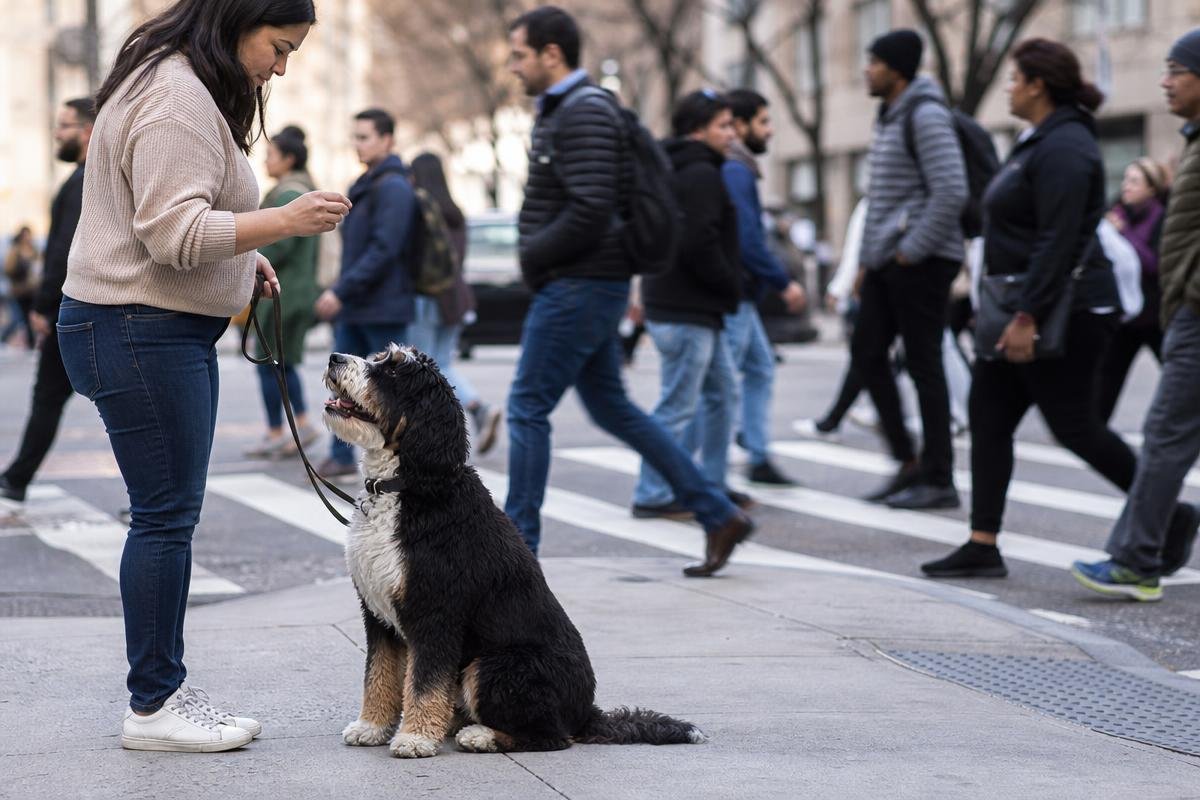
At the same time, the best trainers adapt to the individual dog. No single method works for every animal. Our dog training programs in Denver are built around what your specific dog needs, not a one-size-fits-all philosophy.
The debate is real, but the goal is always the same: a well-rounded, well-behaved dog who trusts you.
How to Choose the Right Training Approach for Your Denver Dog
Choosing between training methods can feel overwhelming. There are strong opinions on every side. But here is the truth: the label matters less than finding a trainer who actually listens to you and your dog. A great trainer builds a plan around your dog’s age, breed, temperament, and your daily life, not around a rigid philosophy.
Questions to Ask Before You Start Training
Good trainers welcome questions. If a trainer refuses to explain their methods, that is a red flag. Before you commit to anyone, ask these six questions:
- What methods do you use and why? You deserve a clear, honest answer, not vague buzzwords.
- What certifications and experience do you have? Credentials like CPDT-KA signal real, tested knowledge rather than self-taught guesswork.
- How do you handle a dog that does not respond to food treats or rewards? Every dog is different. A good trainer has more than one tool.
- Can you show me examples of your results? Ask for videos or client testimonials from dogs with similar problems.
- Do you tailor the program to my dog’s breed, age, and temperament? A reactive rescue mix needs a different plan than a puppy in LoHi.
- How will you teach ME to maintain the training at home? The reward-based habits you build daily matter just as much as any session.
Why Customization Matters More Than Labels
The best training is not "positive only" or "balanced only" as a rigid rule. It is a program built around your individual dog. Any dog, any problem deserves a thoughtful plan, not a one-size-fits-all approach. That is exactly what we do here.
We offer board and train programs in Denver and in-home sessions. Once your dog has solid recall and calm greeting behavior, a whole city opens up, from the amphitheater trails at Red Rocks to the patios and parks that make living here so great. That is the goal: a well-rounded dog you can take anywhere.
Why Denver Dogs Have Unique Training Needs
Dogs here are not just pets. They are trail partners, patio companions, and full participants in an active outdoor lifestyle. That means training has to hold up in the real world, not just in a quiet living room.
High-Altitude Energy and the Denver Dog Lifestyle
The Front Range lifestyle is high-energy by nature. Your dog is out there navigating crowded patios in LoHi, dodging cyclists on busy paths, and encountering wildlife on weekend hikes in the foothills. A solid "sit" in the kitchen means nothing if your dog loses it the moment a cyclist blows past.
Capitol Hill, RiNo, and LoHi are packed with dogs. These neighborhoods have dense foot traffic, outdoor dining, and unpredictable street energy every single day. If you want to know where dogs and their owners actually spend time together, check out our guide to the best dog-friendly spots in Denver. Real-world reliability is the goal. That is what balanced dog training in Denver is built around.
Common Behavioral Challenges We See in Denver
We talk to Denver dog owners every week. The same problems come up again and again. Here is what we see most often:
- Leash reactivity toward other dogs and cyclists on busy shared paths
- Jumping on guests at crowded social gatherings and busy patios
- Bolting out of doors or off-leash areas when distracted
- Excessive barking in apartment buildings, especially in zip codes 80203 and 80205
- Separation anxiety in dogs whose owners shifted to hybrid work schedules
That last one is real. A lot of dogs in the Capitol Hill and RiNo areas spent years with their owners working from home. Now those owners are back in the office part of the week, and their dogs are struggling. It is one of the most common calls we get.
With over 277 reviews and a 4.9 out of 5 rating, our certified team has seen these challenges across every breed and background. Dog obedience training in Denver has to meet dogs where they actually live. Explore our full training programs to find the right fit for your dog and your lifestyle.
Frequently Asked Questions
Is positive reinforcement dog training effective for aggressive dogs?
Yes, positive reinforcement dog training can work well for fear-based aggression and reactivity. The key is severity and the individual dog. Mild to moderate cases often respond well to reward-based work alone. More serious aggression may need a balanced approach for faster, more reliable results. A one-on-one assessment tells us far more than any method label. For dogs with serious behavior issues, our board and train in Denver gives them daily structured practice that speeds up results significantly.
How long does positive reinforcement training take to show results?
Basic obedience can improve within just a few sessions when timing and consistency are on point. Deep-rooted habits or complex behaviors take weeks to months. Every dog moves at their own pace. If you want faster progress, board and train programs work because your dog is practicing skills every single day, not just once a week.
What is the difference between positive reinforcement and clicker training?
Clicker training is a specific technique that uses positive reinforcement. The click is a precise marker that tells your dog the exact moment they did something right, followed immediately by a reward. All reward-based training uses some kind of marker, whether a clicker, a word like "yes," or another signal. The clicker is just one tool in that system.
Can older dogs learn with positive reinforcement?
The "old dog, new tricks" idea is a myth. Older dogs absolutely can learn new behaviors using reward-based training. They may take a little longer to build new habits, but patience and consistency get results. The reward-based approach is also gentler on older dogs physically and mentally, which makes it a great fit.
Is balanced training cruel or harmful to dogs?
When done correctly by a skilled trainer, balanced training is not cruel. The goal of any correction is clear communication, not fear or pain. The problem is poorly timed or excessive corrections from unskilled trainers. That causes stress and can make behavior worse. The trainer matters more than the method label. Always ask about experience and credentials before you commit.
How do I know which training method is right for my Denver dog?
Start by talking to a trainer who actually listens. A good trainer asks about your dog’s age, breed, temperament, history, and the specific problems you are seeing before recommending anything. There is no single right answer for every dog. Capitol Hill apartment dogs dealing with leash reactivity have different needs than a high-energy working breed in LoHi.
Your dog does not need a perfect method. They need the right approach for who they are. Call All Dogs Unleashed Dog Training Denver at (720) 310-7337 to talk through your dog’s situation. Our team will listen first, then build a program around your dog, not a label.
Ready to Get Started with All Dogs Unleashed Dog Training Denver?
Call (720) 310-7337 to speak with our team directly. We’re ready to answer your questions, walk you through your options, and help you find the right solution for your needs. Whether you’re just starting to plan or ready to move forward, we’ll make the process simple and stress-free.