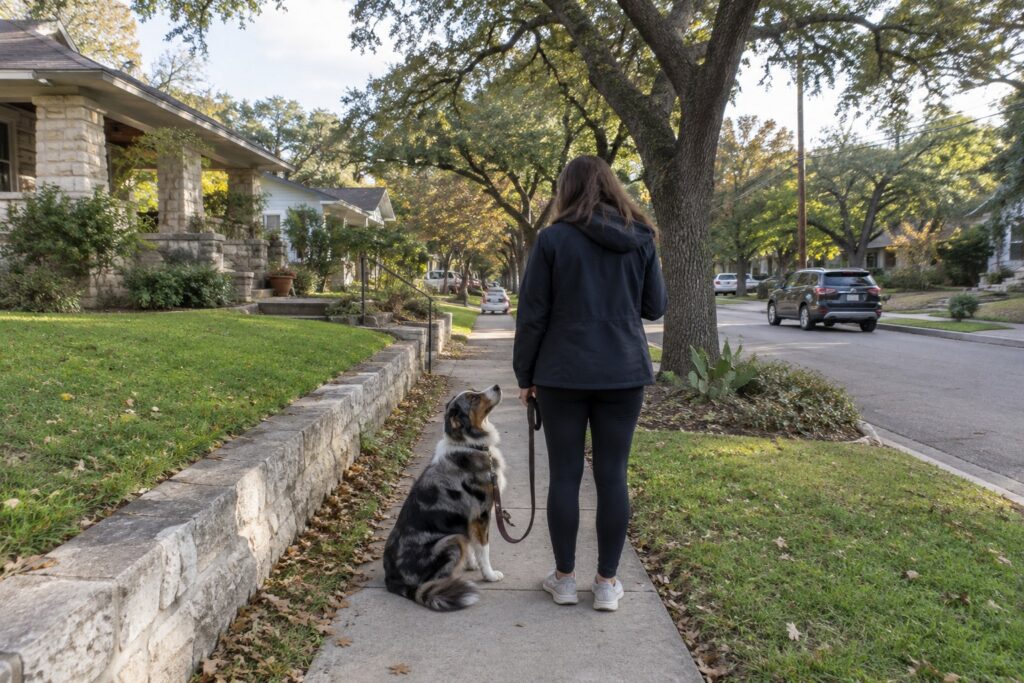

Golden retriever training requires consistency, breed awareness, and an environment that matches the dog’s high social drive and energy. Oklahoma City owners know this firsthand, and the ones who see lasting results are the ones who follow a deliberate, progressive approach from puppyhood through adolescence.
At All Dogs Unleashed Dog Training OKC, located at 101 Park Ave, Suite 1300, Oklahoma City, OK 73102, we work with golden retrievers at every stage of development, applying individualized techniques backed by guaranteed results and lifetime support. Ready to build reliable obedience in your golden retriever? Our team is here to help.
Key Takeaways
- Golden retriever training is most effective when built on a consistent daily schedule that matches the breed’s developmental stage.
- Oklahoma City’s summer heat makes early morning or evening sessions essential for double-coated breeds like golden retrievers from June through September.
- The 6- to 18-month adolescent phase is the highest-risk window for training plateaus and requires a progressive, skill-building plan.
- Guaranteed results and lifetime support are important factors to consider when evaluating a professional training program.
Golden Retrievers Are Smart, Social, and Harder to Train Than Most People Expect
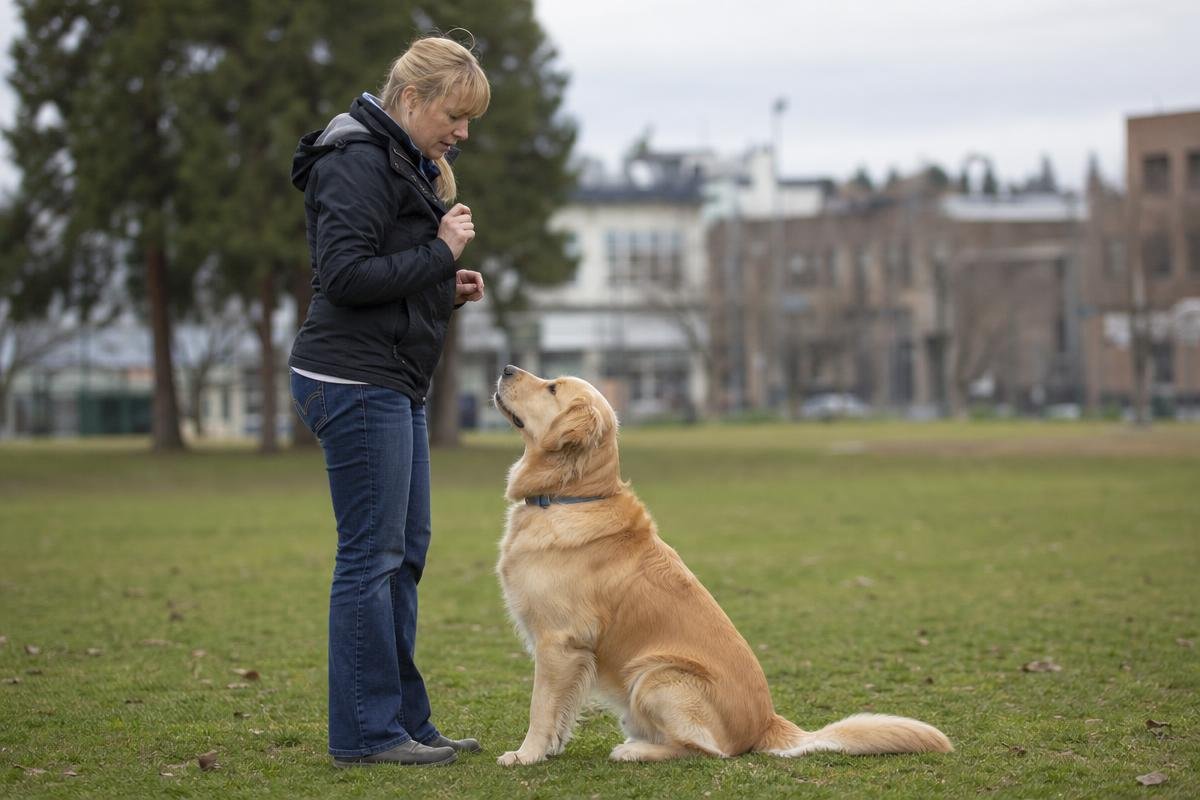
Golden retrievers are among the most food-motivated and socially driven breeds in the country, which makes them highly responsive to positive reinforcement when that reinforcement is applied within a predictable framework. The problem is that eagerness without a clear plan produces unreliable behavior, not dependable obedience. A golden that performs perfectly in your living room can become completely unresponsive at Lake Hefner’s crowded trails, and that gap is exactly what a structured professional training program is designed to close.
The same eagerness-to-please trait that makes goldens appealing also produces mouthiness in puppies under six months, leash pulling driven by high arousal, and selective recall during the adolescent phase from six to eighteen months. Our team works with golden retrievers at every developmental stage, using individualized training plans designed around each dog’s needs. If your golden is in that adolescent window, our board and train programs in Oklahoma City address exactly that plateau through consistent daily practice.
What Makes Golden Retrievers Both Easy and Challenging to Train
Golden retrievers are highly trainable due to their food motivation and social drive, but their adolescent regression phase from 6 to 18 months creates a predictable training plateau that catches most owners off guard. That combination is why golden retriever behavior problems are among the most common reasons owners in the metro area contact professional trainers. Understanding the breed’s specific traits, both the assets and the liabilities, is the foundation of any effective golden retriever obedience training plan.
Traits That Work in Your Favor
Golden retrievers are driven by food reward, social approval, and the retrieval instinct, three factors that make positive reinforcement highly effective from the earliest training sessions. These traits accelerate foundational skill acquisition. Most goldens learn sit, down, stay, recall, and leash manners faster than many other breeds precisely because the reward system is so accessible.
A treat, a brief play session, or simple praise from a familiar person carries significant motivational weight for this breed. That responsiveness is a genuine training advantage when it is guided by a consistent schedule.
Traits That Require Disciplined Management
The adolescent regression window is real. Per AKC breed guidance, it runs from 6 to 18 months and is neurological in origin, not behavioral defiance. Commands that appeared reliable at 5 months become inconsistent at 9 months. This is one of the most common reasons owners contact professional trainers: they assume their dog is trained after the puppy phase and are caught off guard when the commands stop working. Training frequency must increase during this window, not decrease.
High arousal states override learned commands in novel environments. A golden that sits reliably at home may ignore the same command entirely near a group of strangers at a crowded event. Mouthiness in puppies under 6 months is normal, but inconsistency across family members is the primary reason it persists into adolescence. The breed’s social drive also creates vulnerability to separation-related distress when daily structure is absent. A structured overnight dog boarding stay can reinforce that same daily structure while you are away from home.
Enthusiasm alone does not produce dependable obedience; it needs a deliberate practice cadence behind it. If you are seeing anxiety-related behaviors at home, read the full breakdown of signs your Oklahoma City dog has separation anxiety before those patterns become entrenched. Knowing how to train a golden retriever means accounting for these liabilities from the start, not after they have become established habits.
The 9 Golden Retriever Training Tips Oklahoma City Owners Rely On
Golden retriever puppy training requires more than good intentions and a bag of treats. The tips below are drawn from what actually works with this breed, sequenced in the order they matter most across your dog’s development. Follow them in order and you build a foundation that holds.
Tip 1: Introduce Foundational Commands During the Angel Phase
The window between 2 and 6 months is the most receptive period in your golden retriever’s development. Introduce sit, down, stay, come, and leave it during this phase, before fear imprinting solidifies and before adolescent drive kicks in. Keep sessions to 5 to 10 minutes, repeated multiple times per day. Short, frequent repetitions outperform long, infrequent ones at this age. Our week-by-week puppy training schedule maps exactly when to introduce each command and how to progress.
Tip 2: Build a Predictable Daily Framework
Feeding, exercise, training, and rest should occur at consistent times every day. A predictable environment reduces anxiety-driven behaviors and creates the conditions in which golden retriever obedience training generalizes from session to real life. Without that rhythm, even well-trained dogs regress.
Tip 3: Prioritize Deliberate Socialization Over Passive Exposure
Deliberate socialization means controlled, graduated exposure to people, surfaces, sounds, and other dogs. A dog park is not socialization. It is uncontrolled chaos that can create negative associations rather than confidence. Enroll your puppy in structured puppy socialization classes in Oklahoma City where exposure is managed and outcomes are predictable.
Tip 4: Redirect Mouthiness Immediately and Consistently
The moment your golden retriever puppy makes contact with skin, redirect to a tug toy or chew and mark the correct behavior. Never use hands as play objects. Inconsistency is the single most common reason golden retriever puppies carry nipping into adolescence. Every person in the household must apply the same response, every time.
Tip 5: Earn Recall Before Granting Off-Leash Freedom
Reliable recall is built in low-distraction environments first, then proofed progressively. Never call your dog for something aversive, a bath, a nail trim, the end of play, because the word “come” must predict good outcomes. Off-leash freedom is earned through demonstrated reliability, not granted by default.
Is your golden in the adolescent regression window between 6 and 18 months? Our board and train program is built for exactly this phase. Call (405) 299-3386 to talk through where your dog is stalling.
Tip 6: Return to Basics During the Adolescent Phase
Between 6 and 18 months, your golden retriever’s social drive and physical energy will test every command you have installed. Return to foundational skills and increase training frequency, not just duration. Many owners across Edmond and Midtown enroll their dogs in a board and train program during this window precisely because daily reinforcement resolves adolescent plateaus faster than weekly sessions alone.
Tip 7: Proof Commands in New Environments
A command that works only at home is not a reliable command. Proof known behaviors in parking lots, pet-supply stores, and busy outdoor spaces. The trails at Lake Hefner and the wide fields at Mitch Park in Edmond, where cyclists, joggers, and off-leash dogs are constant, make excellent advanced-distraction proofing grounds. Increase difficulty gradually. Dropping back to a lower distraction level when your dog struggles is not failure; it is correct training protocol.
Tip 8: Time Your Marker Within 1.5 Seconds
A clicker or verbal marker such as “yes” must land within 1.5 seconds of the correct behavior. Delayed markers communicate the wrong information and teach the wrong behavior. Consistency in your marker word and reward value matters more than the type of reward you use. Pick one marker and use it the same way every time.
Tip 9: Maintain Training Between Professional Sessions
Professional training sessions establish the skills. Daily owner practice is what makes those skills permanent. Short practice repetitions, consistent household rules, and the deliberate avoidance of inadvertent reinforcement of unwanted behaviors are all required between sessions. Review the guidance on how to keep your dog’s training sharp between sessions for a practical maintenance framework you can apply starting today.
Common Golden Retriever Behavior Problems and How to Address Them
Golden retriever behavior problems rarely appear without cause. Each one follows a predictable mechanism: the dog performs a behavior, the environment rewards it, and the behavior strengthens. Understanding that mechanism is what separates a correction that holds from one that fails within a week.
Jumping on People
Goldens jump because jumping has historically produced exactly what they want: eye contact, verbal response, and physical contact. Even a firm “no” registers as attention. The correction is systematic extinction. Turn away completely, remove all eye contact, and give zero verbal response the moment four paws leave the floor.
Then reward a default sit the instant your dog offers it during a greeting. The primary reason this behavior persists in most households is inconsistency. One family member enforces the rule; another allows it. The dog learns nothing except that the rule is unpredictable.
Leash Pulling
High-energy golden retrievers pull because forward movement is self-reinforcing. The dog pulls, the walk continues, and the behavior is confirmed. The correction is straightforward: your dog must never reach the destination while pulling. Stop completely, wait for slack in the leash, then resume. A direction change works equally well. The moment pulling produces forward progress, the lesson resets. For dogs whose pulling has escalated into full leash reactivity, our team has covered training fixes for leash reactivity in Oklahoma City dogs in detail.
Selective Recall
Selective recall is the most dangerous golden retriever behavior problem on this list. A dog that responds reliably in the backyard but ignores the command near other dogs at Scissortail Park downtown is not partially trained. That dog is untrained under real-world conditions. Recall must be proofed at progressively higher distraction levels, and the command must always predict something highly rewarding. A recall that occasionally produces nothing trains the dog to gamble on whether to respond.
This is a common reason area owners enroll in a board and train program, where recall is proofed daily across controlled real-world environments rather than once a week in a familiar yard. The adolescent regression window discussed in Tip 6 makes this gap especially pronounced in dogs between six and eighteen months.
Which Training Format Works Best for Golden Retrievers in Oklahoma City?
No single training format suits every golden retriever at every stage. The right choice depends on your dog’s age, behavioral history, and where the problem behaviors occur. Each format below addresses a distinct training need, and understanding the difference helps you make a more informed decision. You can also read our breakdown of board and train vs. in-home training in Oklahoma City to compare formats side by side.
Board and Train
Your dog lives with a professional trainer and receives daily training sessions throughout the program. This format accelerates foundational skill-building because repetition happens consistently, not just once a week. It is particularly effective for golden retrievers in the 6- to 18-month adolescent window. During this phase, the breed’s high social drive and energy frequently create plateaus that weekly owner-managed sessions cannot resolve efficiently. Our board and train programs are designed to move your dog through progressive skill-building stages during this critical period.
In-Home Training
Some behaviors are environment-specific. Door-dashing, jumping on guests, and counter-surfing happen in your home, and that is exactly where they need to be addressed. Our in-home dog training in Oklahoma City places a trainer inside your space, working directly with you and your dog together. This format builds your handling skills alongside your dog’s responses, which produces more dependable results in the environments that matter most to your household.
Group Classes
Group classes provide a controlled distraction environment for proofing commands around other dogs and handlers. For golden retrievers, whose high social arousal can override trained responses, this exposure is a critical step. Group classes work best after foundational commands are established in lower-distraction settings. Enrolling too early, before reliable responses are in place, often reinforces the problem rather than correcting it. See our comparison of dog obedience classes vs. private training in Oklahoma City to determine which format fits your dog’s current stage.
Not sure which format fits your golden retriever’s training stage? Call our team at (405) 299-3386 and we will help you identify the right starting point, backed by our guaranteed results.
Golden Retriever Training in Oklahoma City: What Local Owners Should Know
Oklahoma City’s Climate and What It Means for Training
Summers in the metro regularly push past 100°F, and golden retrievers carry a dense double coat that makes heat stress a genuine risk during midday sessions. From June through September, schedule outdoor training before 9 a.m. or after 7 p.m. Midday sessions on asphalt or open grass are not just uncomfortable for your dog; they shorten attention spans, reduce responsiveness, and can cause physical harm.
Spring weather adds a separate challenge. From March through May, sudden storms bring thunder, lightning, and sharp drops in barometric pressure that trigger noise sensitivity and anxiety in many golden retrievers. A dog that obeys reliably on a calm Tuesday may shut down completely when a storm front moves through.
Deliberate desensitization to storm-related sounds and pressure changes should be part of any complete training plan for this breed in the region. If your dog already shows signs of anxiety between sessions, our in-home dog training in Oklahoma City allows us to work through those responses in the exact environment where they occur.
Local Environments for Proofing Commands
Once foundational commands are reliable in low-distraction settings, your golden retriever needs to practice obeying them around real-world distractions. The park area surrounding our downtown office at 101 Park Ave, Suite 1300, Oklahoma City, OK 73102 offers foot traffic, cyclists, and off-leash dogs in close proximity, making it one of the most demanding proofing environments in the city core.
Owners in Nichols Hills and Bricktown often build a proofing rotation that starts quiet and works up to these high-traffic settings. For a full breakdown of locations ranked by distraction level, see our guide to the 5 best dog parks and training spots in Oklahoma City.
Proofing in a busy public space before commands are solid does not build reliability. It teaches your dog that ignoring you is an option. Progress from the backyard to quiet sidewalks to moderate parks, and only introduce high-traffic environments after your dog responds dependably at each prior level.
Why Oklahoma City Golden Retriever Owners Choose All Dogs Unleashed
All Dogs Unleashed provides professional dog training in the heart of Oklahoma City, with programs built around each dog’s individual temperament, age, and behavioral baseline. Golden retriever obedience training here is not a generic curriculum applied to every dog that walks through the door. Our team assesses where your dog is starting from and builds a progressive program from that point forward. We also offer in-home dog training in Oklahoma City for owners who need foundational work done in the environment where problem behaviors actually occur.
Consistent owner participation helps reinforce training at home. All Dogs Unleashed provides individualized support for dog owners and their dogs. Our programs include guaranteed results and lifetime support. For golden retriever owners navigating the adolescent window from six to eighteen months, our board and train programs provide the daily reinforcement that resolves plateaus more efficiently than weekly sessions alone. Our office is located at 101 Park Ave, Suite 1300, Oklahoma City, OK 73102, centrally positioned to serve golden retriever owners across the city’s core neighborhoods and surrounding communities in Edmond and beyond.
Frequently Asked Questions
How long does it take to train a golden retriever?
Foundational commands require consistent practice, and some dogs need more reinforcement than others. Board and train provides daily structured work for owners seeking a more intensive format.
What age should I start training my golden retriever?
Start at eight weeks. The two-to-six-month window is the most receptive period for foundational commands and socialization. Owners across the metro who begin early consistently report faster results and fewer behavioral corrections needed at the adolescent stage. Waiting until problems appear makes training more time-intensive and more difficult to resolve.
What are the most common golden retriever behavior problems?
Jumping on people, leash pulling, selective recall in high-distraction environments, mouthiness in puppies, and separation-related distress are the most frequent issues we address. These are rooted in inconsistent reinforcement history, not breed defect, and respond well to structured obedience programs.
Is board and train a good option for golden retrievers?
It is particularly effective during the adolescent window, six to eighteen months, when owner-managed training frequently stalls. Our board and train programs in Oklahoma City place your dog in a consistent daily environment, then transfer those skills to you through a formal handoff session.
How much does golden retriever training cost in Oklahoma City?
Program costs vary based on your dog’s specific needs and the selected format, including Board and Train, in-home training, or group classes. Our team provides clear pricing before any training begins. Call (405) 299-3386 for a program recommendation and exact pricing details.
Can you train a golden retriever puppy as young as 8 weeks?
Yes. We offer guidance on socialization, foundational commands, mouthiness, and crate training for golden retriever puppies. Early professional guidance prevents behavioral patterns from becoming entrenched during adolescence, when correction requires significantly more time and effort.
Ready to Get Started with All Dogs Unleashed Dog Training OKC?
Call (405) 299-3386 to speak with our team directly. We’re ready to answer your questions, walk you through your options, and help you find the right solution for your needs. Whether you’re just starting to plan or ready to move forward, we’ll make the process simple and stress-free. Reach out today and let’s talk about how we can help.