
Crate training gives your dog a quiet, predictable place to rest and gives you a reliable way to manage house training, chewing, and busy days. Done well, the crate becomes a spot your dog chooses on their own, not a place they get sent when they are in trouble.
At All Dogs Unleashed Dog Training OKC, we see the difference a good crate routine makes every week, from new puppies in Edmond to adopted adults in south Oklahoma City. The tips below cover choosing the right crate, introducing it, building up time, and handling the situations local owners actually face, including storm warnings and summer heat.
Want help building calm crate manners from day one? Our trainers can set up a plan that fits your dog and your household.
Key Takeaways
- Choose a crate just large enough for your dog to stand, turn around, and lie down comfortably, and use a divider for a growing puppy.
- Introduce the crate gradually with meals, treats, and short door-closed periods so your dog links it with good things before you ever leave the house.
- A common rule of thumb from the AKC is about one hour of crate time per month of age for puppies, with even adult dogs capped well short of all day.
- Never use the crate as punishment, and never leave a crated dog in a hot garage or vehicle during an Oklahoma summer.
- Our fixed two-week Board and Train program adds daily structure and calm settling practice, then teaches you to keep the routine going at home.
Choosing the Right Crate Size and Type
The right crate is the foundation of every good routine. A crate that is too big invites your dog to potty in one corner and sleep in the other. A crate that is too small is uncomfortable and makes resting in it feel like a chore.
Getting the Size Right
Measure your dog from nose to base of tail and from the floor to the top of the head while sitting, then add a few inches to each. Your dog should be able to stand without ducking, turn around easily, and stretch out on their side. For a puppy, buy the crate that fits their expected adult size and use a divider panel, moving it back as they grow.
Comparing Crate Types
Each crate style has strengths. The best choice depends on how your dog behaves, where the crate will live, and whether you plan to travel with it.
| Crate Type | Best For | Watch Out For |
|---|---|---|
| Wire crate | Home use, airflow in warm months, puppies with a divider | Some dogs feel exposed; a breathable cover on three sides can help |
| Plastic (airline-style) crate | Car travel, dogs that like a den feel, many airline and boarding needs | Less airflow; check the fit and ventilation before summer trips |
| Soft-sided crate | Calm, already crate-trained dogs on short trips | Easy for chewers and escape artists to damage |
| Heavy-duty crate | Determined escape artists and strong chewers | Heavy and expensive; address the underlying anxiety too |
What Goes Inside
Start with a durable bed or mat and a safe chew toy. If your puppy shreds bedding, remove it for a while, since swallowed fabric can cause a blockage. Take off collars with tags before crating so nothing can snag on the wire.
How to Introduce the Crate Step by Step
Most crate problems start with a rushed introduction. The goal of the first few days is simple: your dog should walk into the crate on their own because good things happen there.
Make the Crate a Good Place First
Set the crate in a room where your family spends time, such as the living room, with the door propped open. Toss treats just inside, then deeper toward the back. Let your dog explore at their own pace, and praise them for any interest.
Next, feed meals in the crate. Put the bowl near the entrance at first, then move it farther back over several meals until your dog is eating fully inside. Stuffed food toys work well here because they give your dog a reason to settle and stay.
Closing the Door for Short Periods
Once your dog eats comfortably inside, close the door during the meal and open it as soon as they finish. Add a few seconds each time. If your dog whines, wait for a brief pause in the noise before opening the door so you are not rewarding the fuss.
Adding a Cue
Pick a simple word like “crate” or “kennel up,” say it once, toss a treat inside, and praise when your dog steps in. With repetition, the cue alone will send your dog in. The AKC’s step-by-step crate training guidance follows the same gradual approach.
Building Duration and a Crate Schedule by Age
Once your dog goes in willingly and settles with the door closed, you can build duration. Stretch the time in small steps: sit nearby, then move around the room, then leave for a few minutes, then longer. Short, boring departures and returns teach your dog that you always come back.
General Crate Time Guidelines
These numbers are general guidance from the AKC and ASPCA resources, not hard rules. Individual puppies vary, and your veterinarian is the right person to ask if your dog seems to need to go out unusually often.
| Age | Typical Daytime Crate Limit | Notes |
|---|---|---|
| 9 to 10 weeks | 30 to 60 minutes | Potty breaks after naps, meals, and play |
| 11 to 14 weeks | 1 to 3 hours | Build duration slowly while you are home |
| 15 to 16 weeks | 3 to 4 hours | Nights usually get longer and quieter |
| 17 weeks to 6 months | 4 to 6 hours | Roughly one hour per month of age |
| Adult dogs | Several hours, not all day | Plan midday breaks for long workdays |
For a full week-by-week plan that pairs crate time with potty training, socialization, and early obedience, see our week-by-week puppy training schedule.
Planning Around a Workday
If you work long shifts, arrange a midday potty break with a family member, neighbor, or trusted pet sitter. A dog that spends the whole day crated and then most of the night too is getting too much confinement, no matter how calm they seem.
Want a trainer to build these habits with your dog? Our fixed two-week program includes structured daily routines, and we teach you how to keep them going at home.
Setting Up a Night Routine That Works
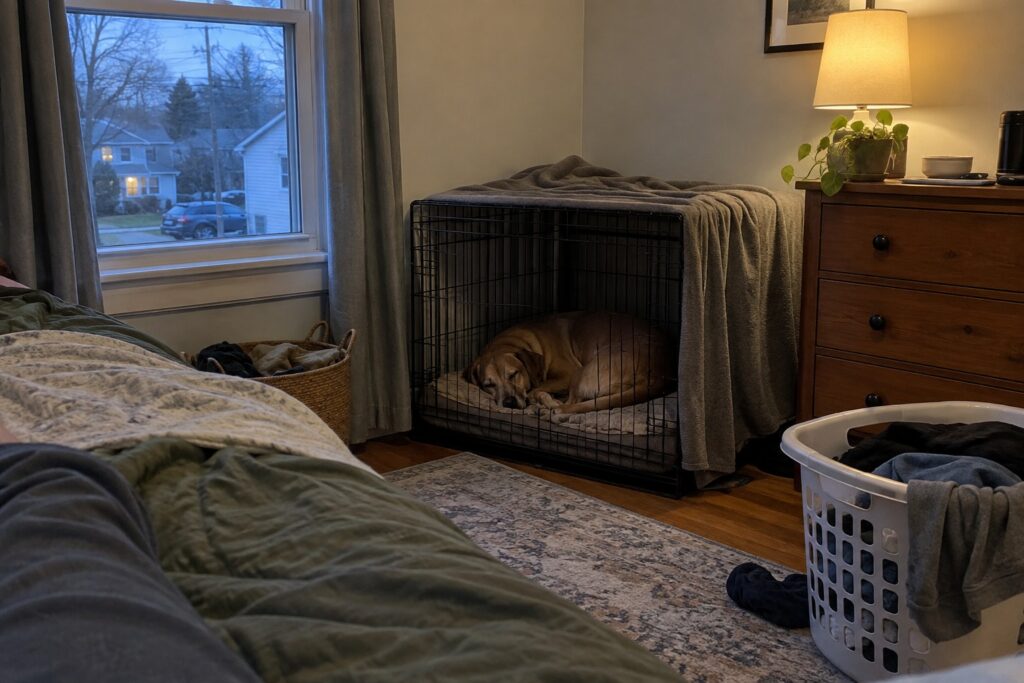
The first few nights with a new puppy or rescue are often the hardest. A predictable evening routine makes them shorter and easier on everyone.
The Hour Before Bed
Give your dog a good play or sniff walk in the early evening, then let things wind down. Pick up the water bowl about an hour or two before bed for a young puppy, unless your veterinarian advises otherwise, and take a final potty trip right before the crate.
Where the Crate Should Sleep
For the first weeks, put the crate in or near your bedroom. Your puppy can hear and smell you, which helps them settle, and you will hear when they need to go out. Once nights are consistently quiet, you can move the crate gradually to its long-term spot if you prefer.
Handling Nighttime Whining
Young puppies often need one or two potty trips overnight. Keep these trips boring: leash on, straight outside, a quiet “go potty,” praise, and straight back into the crate with no play. If your dog whines right after being put to bed, wait a few minutes for them to settle before responding, since some protest is normal in the first nights.
Common Crate Training Mistakes to Avoid
Most setbacks come from a handful of predictable errors. Avoiding them keeps the crate a positive place and saves weeks of frustration.
| Mistake | Why It Backfires | What to Do Instead |
|---|---|---|
| Using the crate as punishment | Your dog learns to dread and resist the crate | Use a calm cue and a treat every time your dog goes in |
| Crating too long | Leads to accidents, restlessness, and frustration | Follow age-based limits and plan midday breaks |
| Letting your dog out while barking | Teaches that noise opens the door | Wait for a few seconds of quiet, then release |
| Rushing the process | Creates panic and escape attempts | Build duration in small steps while you are home |
| Skipping exercise | A bored, energetic dog cannot settle | Walk, play, and train before crate time |
When Crate Stress Is Something More
Some dogs do more than whine. Drooling, frantic chewing at the bars, bent wire, broken teeth, or soaked bedding can point to panic rather than simple protest. Stop leaving a dog like that crated alone, check with your veterinarian, and read our list of signs your Oklahoma City dog has separation anxiety before deciding on next steps.
Crate Training Adult and Rescue Dogs
Adult dogs can absolutely learn to love a crate. The process looks the same, but you may need to move more slowly, especially with a dog whose history you do not know.
Starting Fresh With an Adult Dog
Some adult dogs have never seen a crate, while others spent weeks in a shelter kennel and have mixed feelings about confinement. Go back to the basics: door open, treats, meals inside, and very short closed-door sessions. Let your dog set the pace for the first week, and pay close attention to body language.
Rescue Dogs Need Decompression
Many rescue dogs benefit from a quiet first few days with a predictable routine before any real training starts. A crate in a calm corner, covered on a few sides, can be the safe retreat they need while they adjust. Our post on what Oklahoma City owners should expect from rescue dog training covers that adjustment period in more detail.
Senior Dogs and Comfort
Older dogs with stiff joints need a thicker, supportive bed and shorter stretches in the crate. If your senior dog suddenly resists a crate they used to love, rule out pain with your veterinarian before treating it as a behavior issue.
Crate Use for Travel, Holidays, Boarding, and OKC Storm Season
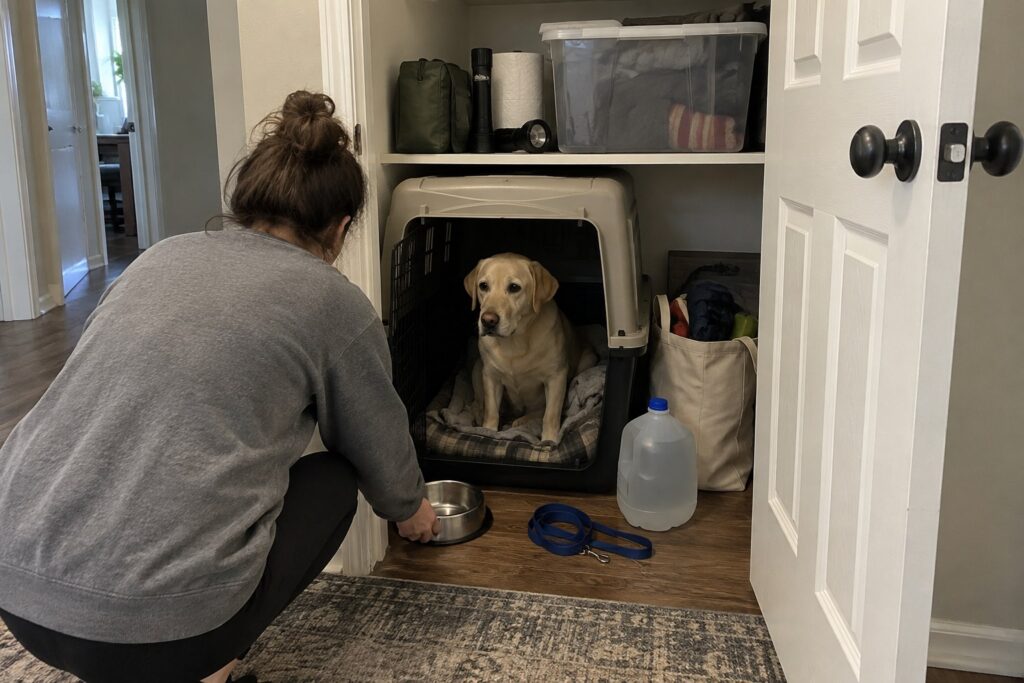
A crate-comfortable dog has more options. Road trips, busy holiday gatherings, boarding stays, and severe weather all go more smoothly when your dog can settle quietly in a crate.
Storm Season Shelter-in-Place Readiness
Oklahoma City sits in one of the most tornado-prone areas in the country, and the National Weather Service in Norman notes that April and May are peak months locally. The City’s emergency management office recommends sheltering in place during tornado warnings and planning ahead for your pets.
Practice now, on calm days. Set up a crate or carrier in your safe room, interior closet, or storm shelter entrance, feed a few meals there, and run short drills so your dog walks in on cue. The City of OKC tornado preparedness page is a good checklist for the rest of your household plan. Keep a leash, water, food, medications, and vet records near that spot.
Never Crate in a Hot Garage or Car
Oklahoma summers routinely bring triple-digit heat, and garages and parked cars get far hotter than the air outside. Never leave a crated dog in either one during warm weather. Keep the crate inside your air-conditioned home, out of direct afternoon sun from windows.
Holidays and Guests
Thanksgiving and holiday parties bring doorbells, dropped food, and excited kids. A crate in a quiet back room with a long-lasting chew gives your dog a break before overstimulation turns into jumping, begging, or snapping.
Boarding and Car Rides
Dogs that already accept a crate usually adjust to a boarding routine more easily. Our dog boarding in Oklahoma City keeps capacity limited, follows a structured daily routine, and fills up around holidays, so we recommend booking at least two weeks ahead. For car rides, a secured crate keeps your dog from roaming the cabin and reduces the chance of injury in a sudden stop.
How Board and Train and In-Home Lessons Support Crate Manners
Some owners handle the whole process on their own. Others find that a professional plan saves time, especially with a puppy that screams all night or an adult dog that panics in confinement.
Board and Train: Two Weeks of Structure
Our Board and Train program in Oklahoma City is a fixed two-week program where your dog stays at our facility and trains daily. Every enrollment begins with an evaluation, and the daily structure naturally includes calm rest periods alongside obedience work. At the end, a turnover session shows you how to handle your dog and keep the routine going at home, with written instructions to follow.
In-Home Lessons: Fixing It Where It Happens
If the crate struggle is tied to your house, your schedule, or other pets, in-home dog training in Oklahoma City lets a trainer see the setup in person. We can adjust crate placement, departure routines, and settle cues in the exact spot your dog uses every day.
Choosing the Right Fit
Not sure which option makes more sense for your dog? Our comparison of Board and Train versus in-home dog training in Oklahoma City walks through the tradeoffs. Board and Train is backed by guaranteed results and lifetime support.
Have questions about your dog’s crate habits? Call our team at (405) 299-3386 to talk through the best next step.
About All Dogs Unleashed Dog Training OKC
All Dogs Unleashed Dog Training OKC helps Oklahoma City families raise calm, reliable dogs through our two-week Board and Train program, private in-home lessons, refresh training, and structured boarding. Our trainers work with puppies learning their first routines, adult dogs picking up new habits, and rescues settling into a new home. Crate manners, quiet settling, and household structure are part of the everyday skills we build, and our Board and Train program is backed by guaranteed results and lifetime support at no additional charge.
Frequently Asked Questions
How long does it take to crate train a puppy?
Many puppies accept a crate within a few days to a couple of weeks, but it depends on age, temperament, and how consistent you are. Some settle almost immediately, while others need more gradual steps. Focus on short, positive sessions every day rather than a deadline, and expect a few rough nights before the routine clicks.
Should I cover my dog’s crate at night?
Covering a wire crate on three sides can help many dogs relax by blocking visual distractions and creating a den-like feel. Leave the front or one side open for airflow, and use a breathable fabric. Watch your dog the first few times, since some pull covers inside and chew them, which means the cover should come off.
Is it cruel to crate a dog while I am at work?
Crating is not cruel when the crate is sized correctly, introduced gradually, and used for reasonable stretches. Problems start when a dog is crated all day and most of the night with little exercise. For long workdays, plan a midday potty break and a good walk before and after, and talk to your veterinarian about your dog’s needs.
What should I do if my dog cries in the crate?
First, make sure your dog does not need to potty, especially a young puppy. If needs are met, wait for a short pause in the crying before letting them out so noise does not become the key to the door. Persistent panic, drooling, or injury attempts are different and deserve a conversation with your veterinarian or a trainer.
Can you crate train an older rescue dog?
Yes. Adult and senior rescue dogs can learn to relax in a crate, though some need a slower introduction because of past kennel experiences. Start with the door open, feed meals inside, and keep early closed-door periods very short. Give your dog time to decompress in their new home, and seek professional help if fear persists.
Where should I put my dog’s crate during a tornado warning?
Place the crate or carrier in the same interior room, closet, or shelter where your family plans to take cover, ideally on the lowest floor and away from windows. Practice going there on calm days so your dog walks in willingly. Keep a leash, water, food, medications, and records nearby so everything is ready when sirens sound.
Good crate training pays off for years, from quieter nights with a new puppy to calmer storm drills and easier boarding stays. If you would like a trainer’s help building those habits, call (405) 299-3386 or reach out online. You can also find us at 101 Park Ave, Suite 1300, in downtown Oklahoma City.
Ready to Get Started with All Dogs Unleashed Dog Training OKC?
From brand-new puppies to adult dogs that need a fresh start, our trainers can help. Call (405) 299-3386 today to talk about Board and Train, in-home lessons, or boarding.