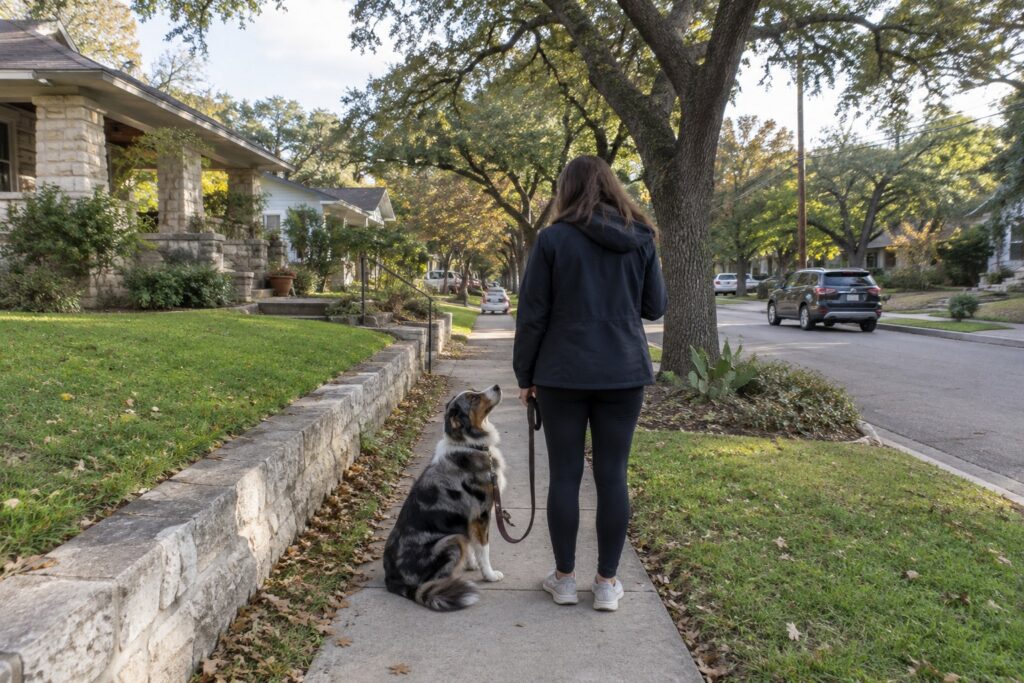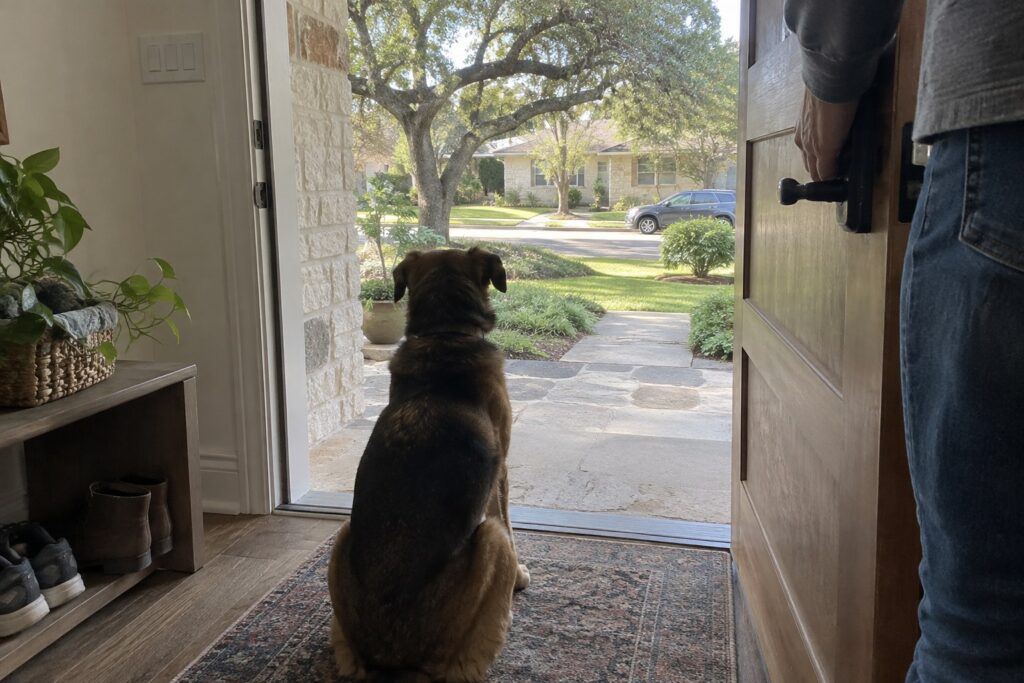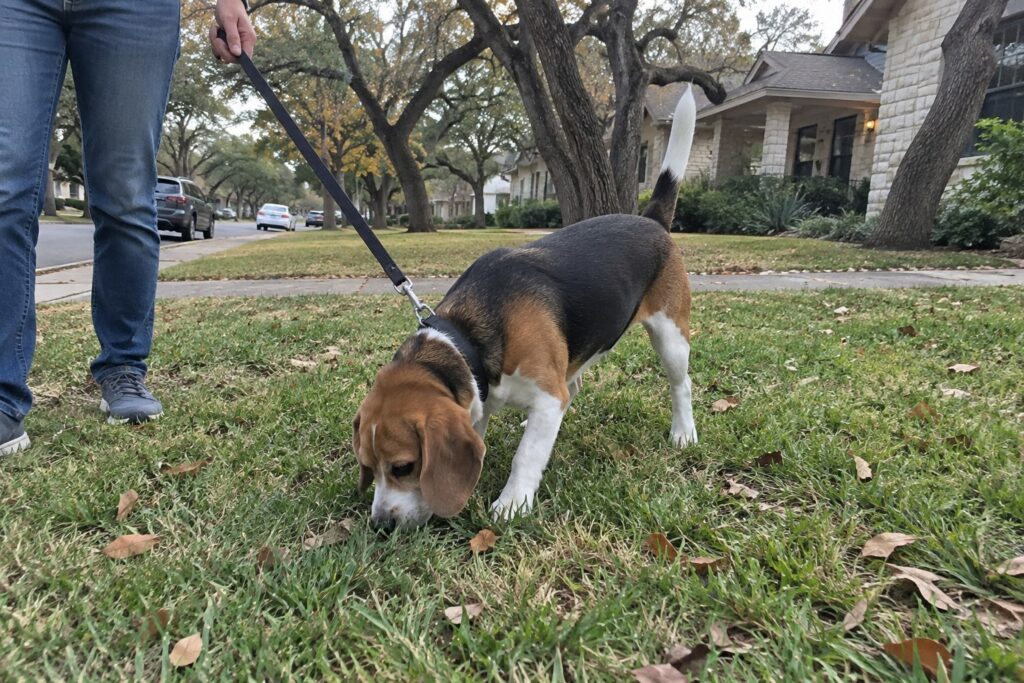

Your dog barks at every jogger, delivery truck, and squirrel in sight. In Dallas, that adds up fast. Dense neighborhoods like Uptown put your dog in front of a constant stream of triggers, and recurring barking can create conflict with neighbors. Dog excessive barking is one of the most common reasons Dallas owners contact us. All Dogs Unleashed DFW has been training real dogs in real situations since 2007, and we know exactly why Dallas dogs bark and how to make it stop.
Tired of the barking? We can help you get it under control.
Key Takeaways
Dog excessive barking in Dallas is often triggered by high foot traffic, boredom, or anxiety, not bad behavior.
Dallas summers above 100°F keep high-energy dogs cooped up indoors, which spikes boredom-driven barking fast.
Each trigger type needs its own approach. A boredom barker and an anxiety barker are not the same problem.
Punishment backfires on anxiety-driven barking and makes the underlying stress worse.
Board and train or in-home training can address barking at the source, not just suppress the symptom.
Dogs bark. That’s normal. But when your dog barks for fifteen minutes straight at every cyclist on the street, every delivery truck, every neighbor who walks past the fence, that’s a different problem entirely.
In dense neighborhoods across North Texas, excessive barking strains neighbor relationships fast. It can also lead to complaints from neighbors. The concern is real. A practical training plan starts with identifying the main trigger, then addressing it consistently.
This article covers why dogs bark excessively, the six most common triggers we see across the DFW area, and a practical step-by-step plan to address it. No guesswork. Just real dogs in real situations.
What the City of Dallas Actually Says About Excessive Barking
Continuous or repeated barking can create neighbor conflict and may lead to a complaint with local animal-services or municipal authorities. Check the City of Dallas’s current guidance for the rules that apply to your address.
What Dallas Owners Should Know About Local Rules
Local requirements and HOA rules can vary. If barking has become a recurring issue, check the current City of Dallas guidance and your community rules, then start addressing the behavior before it creates more friction with neighbors.
When Barking Is Creating Neighbor Conflict
A complaint can put more pressure on an already frustrating situation. Addressing the trigger and building a consistent training plan is the practical next step.
The reason your dog is barking matters when you are fixing the behavior. Boredom, anxiety, and territorial behavior need different training and management approaches. A complaint is a symptom. A clear training plan addresses the problem underneath it. Already getting concerns from a neighbor or your HOA? Let’s build a plan now.
The 6 Most Common Reasons Dallas Dogs Bark Excessively
Understanding why dogs bark excessively is the first step toward fixing it. The trigger shapes the fix. Get this right, and the rest of the training gets a whole lot easier.
Territorial Barking
Your dog sees the yard, the front door, and the car as his property. Anyone who enters that space gets barked at. Mail carriers, delivery drivers, cyclists passing through Lakewood, neighbors walking by in Oak Cliff. The triggers are predictable, which actually makes this type easier to address with structured training.
This type can generate neighbor complaints. Continuous territorial barking at the front window adds up fast. Door-specific barking is one of the most common complaints our trainers address, and it rarely stops on its own without a clear alternative behavior in place.
Alarm Barking
Alarm barking is triggered by sounds, not sights. A car door slamming two streets over. An AC unit cycling on. Fireworks near Fair Park. Your dog hears something that registers as a threat, and he sounds off before you even know what happened.
Owners find this one frustrating because nothing seems to be happening outside. That is the point. The trigger is not always visible to you. Systematic desensitization to specific sounds is the most effective path forward here.
Boredom and Under-Stimulation
From June through September, temperatures across the Metroplex regularly push past 100°F. High-energy dogs that would normally burn off energy outdoors get stuck inside. That energy has to go somewhere. It goes into barking.
This is partly a management problem, not just a training problem. Puzzle feeders, structured play sessions, and short obedience drills inside the house all cut down on the pent-up energy that fuels boredom barking. A tired dog is a quieter dog.
Separation Anxiety
Separation anxiety is panic, not boredom. The barking starts within minutes of you leaving. It is often paired with destructive behavior, pacing, or house-soiling, and it comes from genuine distress rather than defiance.
Do not punish it. Punishment makes anxiety worse. This kind of barking calls for a specific desensitization protocol built around departure cues and gradual alone-time exposure. Dogs with separation anxiety often struggle in group class settings and do better with individualized work.
Attention-Seeking Barking
Your dog barks. You look at him, tell him to stop, or give him a treat to quiet him. He just learned that barking works. This is an owner-created reinforcement loop, and it is extremely common.
The fix is extinction: stop rewarding the bark entirely, then reward quiet. Fair warning. Before the barking stops, it gets louder. That is called an extinction burst. It is normal. Push through it. Giving in at that point resets the whole cycle.
Reactive Barking at Other Dogs or People
Reactivity is not the same as aggression, but it can head that direction without intervention. On the Katy Trail and along the busy walking corridors in Deep Ellum, reactive dogs lunge and bark at anything that crosses their threshold. The leash makes it worse by removing their ability to create distance.
This is one of the most common barking triggers we see. It also rarely resolves without structured training. Reactive barking and leash pulling often show up together in Dallas dogs, and both respond well to obedience-focused, threshold-based work.
A 5-Step Plan to Stop Excessive Barking (Without Making It Worse)
Stop the barking by working the problem in order. Skip a step and you will likely make the behavior worse, not better. Here is the sequence we use with real dogs in real situations, from the suburbs along 635 to the urban core.
Step 1: Identify the Trigger
Before you correct anything, keep a log for three to five days. Write down the time, location, what set your dog off, and how long the barking lasted. Patterns show up fast. Amazon and delivery drivers hit most residential streets between 10 a.m. and 3 p.m. School bus stops create a predictable window every weekday morning. The trigger determines the method. Get this right, and the rest gets a whole lot easier.
Step 2: Remove or Manage the Trigger First
Management is not the cure. It is what makes training possible. Window film blocks sightlines for territorial barkers. White noise machines muffle street sounds for alarm barkers. Puzzle feeders burn mental energy for dogs barking out of boredom, which spikes in summer when triple-digit heat keeps high-energy dogs stuck inside. Reduce trigger exposure before you start any training, or the behavior keeps reinforcing itself.
Step 3: Teach an Incompatible Behavior
The “place” command is a useful foundation for territorial and alarm barkers. It gives your dog an alternate behavior and creates structure while you work through barking triggers. Teach him to go to a designated spot and stay there when a trigger appears. Foundational obedience commands like recall and place are the backbone of barking control, and place is where most owners see the fastest shift in behavior.
Step 4: Build Duration and Distance Gradually
Start at five seconds on place. Build to thirty. Then a full minute. Then add distance between you and your dog. Then reintroduce the trigger at low intensity. Do not rush the timeline. If your dog breaks and barks, the intensity was too high too fast. Back up one level and rebuild. Systematic desensitization only works when the increments are small enough that your dog can actually succeed.
Step 5: Proof the Behavior in Real-World Conditions
Training in your living room at 9 p.m. is not the same as training when the doorbell rings at noon or when foot traffic picks up outside a Bishop Arts bungalow on a Saturday afternoon. Proof the behavior at different times of day, with real distractions, at the actual moments barking typically happens. That is how to stop dog barking for good, not just during practice sessions.
If you have worked through all five steps and the barking has not budged, it is time to bring in a trainer. Tried everything and your dog is still barking? Our team works with every breed, age, and behavior history. Let us take a look.
What Makes Dallas a Unique Environment for Barking Dogs
Not every city puts the same pressure on a dog. The DFW area does things to a dog’s routine that quieter, cooler places simply don’t.
Heat, Confinement, and Boredom in Dallas Summers
Temperatures in the Metroplex regularly hit 100°F or above from June through September. That shuts down morning walks and afternoon runs at White Rock Lake for weeks at a time. High-energy dogs don’t stop needing an outlet. They just stop getting one.
July and August are peak months for boredom-driven barking. When physical exercise disappears, mental stimulation has to fill the gap. Short obedience sessions, puzzle feeders, and nose work are the tools that actually move the needle. Knowing which local dog parks offer shade and water helps you keep exercise consistent even in summer, but training still needs to carry the load on the hottest days.
Dense Neighborhoods and High Trigger Exposure

Lower Greenville, Bishop Arts, and the walkable pockets around Uptown are some of the most dog-populated corners of the region. They’re also constant trigger machines. Foot traffic, cyclists, scooters, delivery vehicles, and other dogs pass by all day. A dog that was calm in a suburban backyard can become a chronic barker here purely because the trigger volume is so high.
That’s one reason dogs bark excessively in urban settings even when their owners are doing everything right. The fix isn’t moving. It’s building your dog’s threshold through steady, systematic exposure. High-trigger urban environments can also escalate tension between dogs in the same household, so the training work matters on multiple levels.
The environment isn’t going to get quieter. Your dog can learn to handle it.
When to Call a Professional Dog Trainer in Dallas
Some barking problems respond to consistent home training. Others don’t. If you’ve been at it for months and nothing has changed, that’s a signal worth listening to.
Signs the Barking Is Beyond a DIY Fix
Most owners know when they’ve hit a wall. Here are the clearest signs it’s time to bring in help:
Barking paired with lunging, snapping, or growling at people or other dogs
Months of consistent effort with no real improvement
Active neighbor complaints or HOA violations piling up
Destructive behavior, house-soiling, or panic when left alone (separation anxiety)
Everyone in your household responds differently, and your dog has no clear rules to follow
If any of those sound familiar, self-help has probably hit its limit. There are real reasons Dallas owners call private trainers for dog behavior problems, and excessive barking is near the top of that list.
What Professional Barking Training Looks Like at All Dogs Unleashed DFW
Our team has been working with dogs of every breed, age, and behavior history since 2007. We operate out of 2401 Luna Rd. in Carrollton and a Dallas/Ervay location, so we’re close to most of the metro area. Our trainers, including Jake and Randall, use obedience-focused, balanced methods to address the root cause of the barking, not just the symptom.
For serious cases, a Dallas board and train program can give dogs focused, structured practice with trainers in real situations. Results vary by the dog, the behavior history, and follow-through at home, but a clear plan can make persistent barking more manageable.
Ready to solve the barking at the source? We’ll build a plan around your dog’s specific triggers and history.
Frequently Asked Questions
How long does it take to stop a dog’s excessive barking?
It depends on why your dog barks excessively. The timeline varies with the trigger, your dog’s history, and consistent follow-through. Attention-seeking barking may respond differently than territorial, alarm, or separation-anxiety barking. One inconsistent household member can reset weeks of progress. Everyone in the house has to follow the same rules. Every time.
Does the City of Dallas have a noise ordinance for barking dogs?
Dallas residents should check the City’s current animal-services and noise guidance for the requirements that apply to their address. If neighbors have already raised concerns, start training now so the issue does not keep escalating.
Will punishing my dog for barking make it stop faster?
No. Punishment adds stress to an already stressed dog. If your dog barks from anxiety, punishing him makes the anxiety worse, and the barking follows. It may quiet a territorial dog briefly, but it does not address the trigger. Behavior modification produces results that actually hold.
Can older dogs be trained to stop excessive barking?
Senior dogs in Dallas can absolutely learn to manage barking with the right approach. Ingrained habits take slightly longer to reshape, but the same principles apply. Consistency and patience matter far more than age. We work with senior dogs regularly and see real results.
What is the difference between territorial barking and separation anxiety barking?
Territorial barking starts when something approaches and stops when the trigger leaves. Separation anxiety barking starts when you leave and continues in your absence. Misidentifying the type means using the wrong fix. A dog barking at the front window needs a completely different plan than a dog barking alone in a crate for three hours.
Getting this right from the start saves weeks of wasted effort.
Should I use a bark collar to stop my dog from barking?
Bark collars suppress the symptom. They do not fix the cause. In anxiety-driven cases, they can actually increase stress and make the behavior worse over time. When the collar comes off, the barking typically returns. At All Dogs Unleashed DFW, we prioritize behavior modification over suppression tools because it addresses the underlying trigger.
If your dog’s barking has hit the point where neighbors are complaining, your HOA is sending letters, or you have simply tried everything and nothing has stuck, reach out to our team. All Dogs Unleashed DFW has worked with dogs of every breed, age, and behavior history since 2007, including dogs with serious barking and reactivity issues. Our trainers at 2401 Luna Rd. in Carrollton and our Dallas/Ervay location are ready to build a plan that actually fits your dog. Contact us today to get started.
Ready to Get Started with All Dogs Unleashed DFW?
Get in touch to speak with our team directly. We’re ready to answer your questions, walk you through your options, and help you find the right solution for your needs. Whether you’re just starting to plan or ready to move forward, we’ll make the process simple and stress-free. Reach out today and let’s talk about how we can help.