
Dog car anxiety can turn a holiday drive into hours of panting, whining, and pacing in the back seat. Every Thanksgiving, many Frisco households are already planning drives to see family across Texas and beyond, and a nervous dog can make every mile feel longer.
At All Dogs Unleashed Dog Training Frisco, we help dogs build calm, reliable behavior through structured training. Below, we explain the signs of travel stress, how to tell anxiety from motion sickness, a step-by-step plan to get your dog comfortable in the car, and when professional training makes sense before the holiday rush.
Want a calmer travel companion this holiday season? Our team can help you plan the next step.
Key Takeaways
- Panting, drooling, whining, pacing, and refusing to get in the car are common signs that your dog is stressed about travel.
- Motion sickness and anxiety can look alike, so talk with your veterinarian if your dog vomits or drools heavily on every drive.
- Short, positive practice sessions in a parked car, then on quick drives, work better than one long trip with no preparation.
- Starting several weeks before Thanksgiving gives your dog time to build new associations before the big drive.
- Our two-week Board and Train program uses daily sessions and hands-on owner transfer sessions to build calm behavior you can keep using at home.
Signs Your Dog Is Stressed in the Car
Some dogs make their feelings obvious. Others show quieter signals that are easy to miss until the stress builds. Learning to read your dog early helps you stop a practice session before it goes badly and adjust your plan.
Before the Car Moves
Many dogs start showing stress the moment the keys come out. Watch for hiding, slow movement toward the garage, a tucked tail, lip licking, yawning, or flat-out refusal to jump in. Some dogs freeze at the door and need to be lifted. These reactions tell you the car itself has become a cue for worry, even before any driving happens.
During the Drive
Once the car is moving, stress often shows up as heavy panting, drooling, trembling, constant whining or barking, pacing across the seat, or trying to climb into the front. Some dogs become restless at every stop and turn. Others go very still and stare, which can be just as much a sign of distress as noisy behavior.
After You Arrive
A dog who had a hard drive may bolt out of the car, act clingy, or seem wiped out for hours. If you notice that pattern every time, the car is likely a bigger source of stress than it looks from the driver’s seat.
Car Anxiety vs Motion Sickness
Owners often lump all travel problems together, but the cause matters because the fix is different. Motion sickness is a physical problem. Anxiety is an emotional one. Many dogs have a mix of both, especially if early car rides made them sick and they now dread the car.
| Sign | More Likely Motion Sickness | More Likely Anxiety |
|---|---|---|
| Timing | Starts after the car has been moving a while | Starts before the car moves or as soon as you approach it |
| Drooling and vomiting | Common, often with lip licking and swallowing | Drooling possible, vomiting less typical |
| Body language | Lethargic, quiet, uneasy | Pacing, whining, trembling, trying to escape |
| Age pattern | Often seen in puppies, may ease with age | Can appear at any age and may grow over time |
| Best first step | Talk with your veterinarian | Gradual training and positive practice, plus a vet check |
When to Call Your Veterinarian
Car sickness is often seen in puppies and young dogs, and the AKC’s overview of car sickness in dogs covers common signs and causes in more depth. If your dog vomits on most drives, drools heavily, or seems physically unwell, book a vet visit before you start training. Never give your dog human medications or supplements for travel without your veterinarian’s guidance.
Why the Two Often Overlap
A puppy who got sick on early rides may learn that the car predicts feeling awful. Even after the nausea fades, the worry can stick around. That is why a dog with a history of car sickness often needs both a medical check and patient training to feel relaxed again.
How to Help Dog Car Anxiety Before Thanksgiving
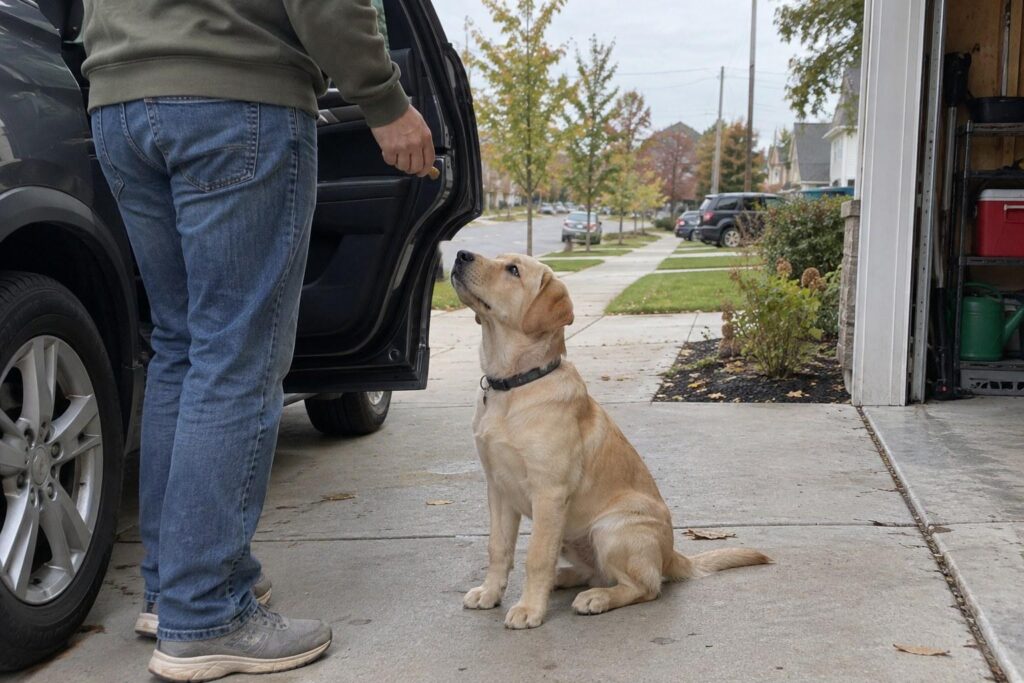
The goal is to change what the car means to your dog, one small step at a time. Keep sessions short, end on a good note, and move to the next step only when your dog is relaxed at the current one. If your dog’s stress spikes, go back a step. Plan for several weeks of practice, so early November is a reasonable time to start if your dog struggles.
Step 1: Make the Parked Car a Good Place
Start with the car parked in your driveway, engine off, doors open. Never run the engine inside a closed garage. Toss a few treats near the car, then on the floor of the back seat. Let your dog choose to approach. Feed a meal or offer a favorite chew next to or inside the parked car. Keep these sessions to a few minutes and walk away while your dog is still comfortable.
Step 2: Practice Calm Entries and Settling
Once your dog happily hops in, ask for a calm “sit” or “down” in their travel spot and reward it. Practice a “wait” at the open door so your dog does not leap in or out without permission, which also keeps them safe in parking lots. Close the door for a few seconds, then open it and reward. Gradually build up to a minute or two with the doors closed.
Step 3: Add Engine Noise
Next, sit in the driver’s seat and start the engine while your dog settles in the back. Reward calm behavior, turn the engine off, and end the session. Repeat until the sound of the engine no longer causes pacing or panting.
Step 4: Take Very Short Drives
Drive to the end of the street and back. Then around the block. Choose quiet residential roads rather than busy highways at first. End many of these short trips somewhere your dog loves, such as a walk in a park, so the car starts predicting good things instead of only vet visits.
Step 5: Build Toward Holiday Distance
Slowly stretch the drives to 15 minutes, then 30, then longer. Add highway time once your dog is relaxed on neighborhood roads. Before the Thanksgiving trip, try at least one longer practice drive that includes a rest stop, so your dog gets used to getting out on leash in an unfamiliar spot and loading back up.
| Week | Practice Focus | Signs You Are Ready to Move On |
|---|---|---|
| 1 | Treats and meals near and in the parked car | Dog approaches the car and hops in without coaxing |
| 2 | Calm “sit” or “down” in the travel spot, doors closed, engine on | Dog settles within a minute and stays relaxed |
| 3 | Short drives around the neighborhood | Little or no panting, whining, or pacing |
| 4 and beyond | Longer drives with highway time and a rest stop | Dog rests or lies down for most of the drive |
Want trainers to work on calm behavior with your dog every single day? Our residential program is built for that kind of consistency.
Road Trip Safety and Comfort Tips
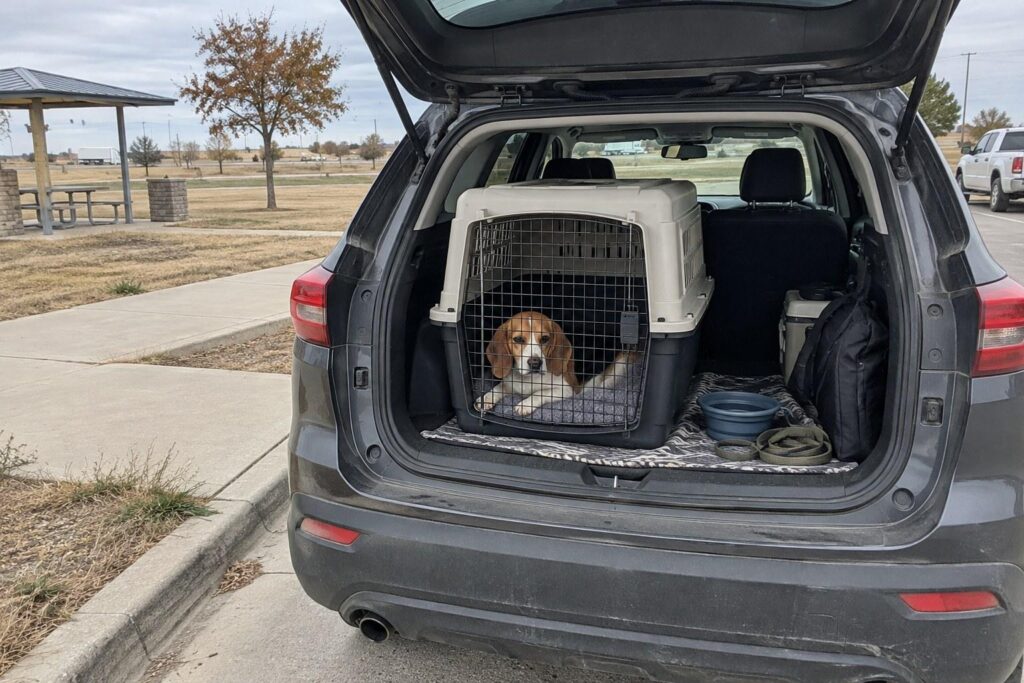
Training does the heavy lifting, but a few practical choices on travel day can lower stress and keep everyone safer.
Secure Your Dog in the Car
A loose dog can distract the driver and can be hurt in a sudden stop, so secure your dog in a well-ventilated crate or another restraint designed for travel. The ASPCA’s travel safety tips offer more planning tips. A crate your dog already knows and likes at home can also feel safer and more familiar on the road. If your dog is not yet comfortable in a crate, practice at home well before the trip.
Plan Meals, Breaks, and Familiar Items
Many dogs travel better on a light stomach, so consider a smaller meal a few hours before you leave, and ask your veterinarian if your dog is prone to car sickness. Plan regular breaks for water and a short leashed walk. Bring your dog’s own bedding, a favorite chew, and their usual food so the trip feels more like home.
Never Leave Your Dog in a Parked Car
Even on a mild North Texas fall day, the inside of a parked car can heat up quickly. Plan rest stops where someone can stay with your dog or take them along. Keep a leash on during every stop, since a nervous dog in an unfamiliar parking lot is more likely to bolt.
Keep the Holiday Arrival Calm
Arriving at a busy relative’s house full of guests, kids, and food can stack stress on top of a long drive. Give your dog a quiet room or crate to rest in, keep greetings low-key, and take a short walk before introductions. If your dog struggles around new people, our post on socializing your dog for confident, friendly behavior covers that side in more detail.
Common Mistakes That Make Car Stress Worse
Well-meaning habits can accidentally teach a dog that the car really is scary. Avoiding these helps your practice go further.
Only Driving to Stressful Places
If every car ride ends at the vet or at a stay away from home, your dog will connect the car with stressful outcomes. Mix in plenty of drives that end with a walk, a sniff, or simply a trip back home with a treat.
Rushing the Process
Waiting until the week of Thanksgiving and jumping straight to a long highway drive rarely goes well for an anxious dog. Small, steady steps beat one big push. If you are short on time, a shorter route or a different plan for the holiday may be kinder this year.
Forcing or Scolding
Pulling a frightened dog into the car or scolding them for whining usually adds to their fear. Stay calm, keep your voice even, and let the training steps do the work. Calm, confident handling helps your dog feel safer.
Ignoring Broader Anxiety
Car stress sometimes comes alongside other worries, such as panic when left alone or fear of new places. If you see those patterns at home, our complete guide to dog separation anxiety can help you sort out what is going on. Fearful reactions toward people or dogs can also be worth a closer look, and our post on fear aggression signs explains what to watch for.
How Board and Train Builds Calmer Behavior
Some dogs relax with home practice alone. Others, especially dogs with strong fear responses or long-standing habits, need more structure and repetition than a busy family schedule allows in the weeks before a holiday. That is where our Frisco Board and Train program comes in.
Daily Training With a Professional
Our standard Board and Train program runs two weeks, and each placement begins with an individual evaluation of your dog. Our trainers then work with your dog daily, building core obedience such as “sit,” “down,” “stay,” and “come.” For dogs with anxiety-driven behavior, our behavioral work uses structured desensitization and counter-conditioning during the residential stay. We accept every breed.
Owner Transfer Sessions
Calm behavior only helps if it carries over to your household and your car. Before your dog returns home, we hold hands-on owner transfer sessions where you learn the handling, cues, and rewards our trainers use. That way, you can keep practicing the same approach on your own drives.
Support After Graduation
Board and Train graduates receive guaranteed results and lifetime support at no additional cost, so you can reach out if old habits start creeping back. Affirm financing is available for the program. To see how a stay works from start to finish, read what to expect from Board and Train in Frisco.
| Option | Where Training Happens | Best For |
|---|---|---|
| Two-week Board and Train | Our Frisco facility, with daily trainer sessions | Fearful or anxious dogs and busy households |
| Private Lessons | In your home | Owners who want hands-on coaching in their own space |
| Boarding | Our Frisco facility | Dogs staying behind while the family travels |
When Private Lessons or Boarding Fit Better
If your dog’s stress is mild and you want coaching in your own driveway and neighborhood, in-home private lessons let a trainer work with you where the problem happens. And if a long drive is simply not the right choice for your dog this year, our Frisco dog boarding offers a structured stay while you travel. Holiday spots fill quickly, so plan ahead.
Ready to make holiday travel easier on your dog and your family? Call (972) 573-1715 to talk with our team.
About All Dogs Unleashed Dog Training Frisco
All Dogs Unleashed Dog Training Frisco helps dog owners across Frisco and Collin County build reliable obedience and calmer behavior at home, on walks, and on the road. Our two-week Board and Train program leads our training, starting with an individual evaluation, continuing with daily sessions, and ending with hands-on owner transfer sessions. We also offer in-home private lessons, boarding, and refresh training. Every Board and Train graduate receives guaranteed results and lifetime support at no additional cost.
Frequently Asked Questions
How do I calm my dog’s anxiety in the car?
Start by changing what the car means to your dog. Feed treats and meals near the parked car, then inside it, then add engine noise, short drives, and gradually longer trips. Keep sessions brief and end while your dog is relaxed. A secure crate your dog already likes can help, and your veterinarian can rule out motion sickness or other medical causes.
How long does it take to fix dog car anxiety?
It depends on how intense the fear is and how long it has been building. Mild cases may improve within a few weeks of consistent short practice, while dogs with strong fear often need longer. Moving too fast usually sets progress back. If Thanksgiving is close and your dog still panics, consider a shorter trip or boarding this year.
Is my dog carsick or anxious?
Carsick dogs usually start drooling, licking their lips, or vomiting after the car has been moving for a while, and they often seem quiet and uneasy. Anxious dogs tend to react before the car even moves, with pacing, whining, trembling, or refusing to get in. Many dogs have some of both, so a veterinary visit is a smart first step.
Should my dog ride in a crate on a road trip?
A secure, well-ventilated crate is a common recommendation for travel because it keeps your dog from moving around the car and distracting the driver. It works best when your dog is already comfortable in the crate at home. Introduce it gradually with treats and meals before the trip, and secure the crate so it cannot slide.
Can puppies grow out of car anxiety?
Some puppies outgrow car sickness as they mature, and that can ease their worry about rides. Others keep a fear of the car because early trips felt bad. Short, positive rides that end somewhere fun help prevent lasting anxiety. If your puppy still struggles after several weeks of practice, ask your veterinarian and a professional trainer for help.
Can Board and Train help a dog that is nervous in the car?
Board and Train builds calm, reliable behavior through daily sessions with our trainers, beginning with an individual evaluation. For anxiety-driven behavior, we use structured desensitization and counter-conditioning during the residential stay. Owner transfer sessions before your dog comes home show you how to keep that progress going, and graduates receive lifetime support at no additional cost.
Make This Thanksgiving Drive Easier for Your Dog
Dog car anxiety does not have to define your family’s holiday travel. Start early, keep practice short and positive, check with your veterinarian about motion sickness, and build toward longer drives one step at a time. If you want trainers to help your dog feel calmer, call (972) 573-1715 or reach out online, or visit our location at 6136 Frisco Square Blvd, Suite 400, Frisco, TX 75034.
Ready to Get Started with All Dogs Unleashed Dog Training Frisco?
Calmer car rides and easier holidays start with the right training plan. Call (972) 573-1715 to ask about our two-week Board and Train program and find the right fit for your dog. You can also find All Dogs Unleashed Dog Training Frisco at 6136 Frisco Square Blvd, Suite 400, Frisco, TX 75034.