
Fear aggression in dogs is one of the most misunderstood behavior problems we see in Frisco. A dog that growls, snaps, or lunges is not being dominant or defiant. That dog is scared. And scared dogs bite. At All Dogs Unleashed Dog Training Frisco, our balanced-method trainers work with reactive and fearful dogs every single week, and many of our team members are certified AKC Canine Good Citizen evaluators.
If your dog is struggling at places like Frisco Commons Park or anywhere crowds and unpredictable stimuli push them past their limit, these eight signs are your early warning system. Seeing these signs in your dog? Our Frisco trainers can help you build real, lasting off-leash control.
Key Takeaways
- Fear aggression in dogs is driven by anxiety, not dominance, and it typically gets worse without structured training.
- Early warning signs like whale eye, lip licking, and stiff posture often appear long before a dog growls or snaps.
- Desensitization and obedience training are the most effective tools for calming fear-based reactivity.
- High-traffic Frisco environments can trigger reactive behavior even in dogs that seem fine at home.
- Catching these signs early gives you the best chance of resolving aggression before it becomes a safety risk.
Why Fear-Based Reactivity Gets Worse Over Time
Here is what most owners do not realize: fear-driven aggression is self-reinforcing. Every time a dog lunges or snaps and the scary thing goes away, the dog learns that the aggressive display worked. That pattern hardens with each repetition. What started as a nervous glance at a stranger becomes a full leash explosion within months.
Owners come to us at 6136 Frisco Square Blvd Ste 400 after the behavior has escalated past what they can manage alone. The growling started small. Then came the snapping. Now walks feel impossible. The dogs we see are rarely dangerous at heart. They are frightened animals whose warning system has been ignored or accidentally punished for too long.
Below are the 8 specific signs of fear-based aggression, what causes it, and the realistic steps you can take right now. If your dog is struggling, our dog training programs at All Dogs Unleashed are built to handle exactly this.
What Is Fear Aggression in Dogs, and Why Does It Happen?
Fear aggression in dogs is a defensive response to a perceived threat, not a bid for dominance. The dog believes it is about to get hurt, and when escape feels impossible, it uses growling, snapping, or biting to force the threat away. It is rooted in anxiety, not aggression for its own sake.
This is the fight-or-flight response in action. A dog that feels cornered, restrained, or overwhelmed will sometimes skip the warning signals entirely and go straight to snapping or biting. That is why this behavior can catch owners completely off guard.
In a fast-growing area like Frisco, dogs are constantly exposed to new people, new dogs, and unpredictable environments. That constant pressure can push a predisposed dog toward reactivity fast.
Fear Aggression vs. Dominance Aggression
These two types look similar but are very different. A dominance-aggressive dog advances, escalates, and holds its ground. A fear-aggressive dog shows warning signals first, then bites if those signals are ignored. It will retreat the moment it has space to do so.
Misreading the type is a serious problem. Using a correction meant for a dominant dog on a fearful dog often makes the behavior much worse. Getting the right read on your dog is the first step in our behavior modification and Board and Train programs.
Common Triggers for Fear-Based Aggression
Certain situations are more likely to set off a fearful response. Watch for these:
- Strangers approaching directly or making eye contact
- Unfamiliar dogs in close proximity
- Loud noises like traffic, fireworks, or construction
- Sudden movements or reaching hands
- Being cornered, leashed with no exit, or physically restrained
- Lack of early socialization during puppyhood
- Past trauma or negative experiences with people or other animals
High-traffic spots like the shops and restaurants around The Star on a busy Saturday can stack several of these triggers at once. That is when the warning signs become impossible to ignore.
The 8 Signs of Fear Aggression in Dogs Frisco Owners Miss Most
Most owners don’t see a bite coming. They see a bite. The warning signs were there for weeks, sometimes months, but they looked like shyness or stubbornness. Here is exactly what to watch for, broken down by stage.
Early Warning Signs (Signs 1-3)
These are the signs most owners miss. They look minor. They are not.
- Lip Licking or Yawning Out of Context: Your dog is not tired and did not just eat. This is a calming signal. It means your dog is stressed and trying to communicate discomfort. You will see this most when a stranger approaches or another dog gets close.
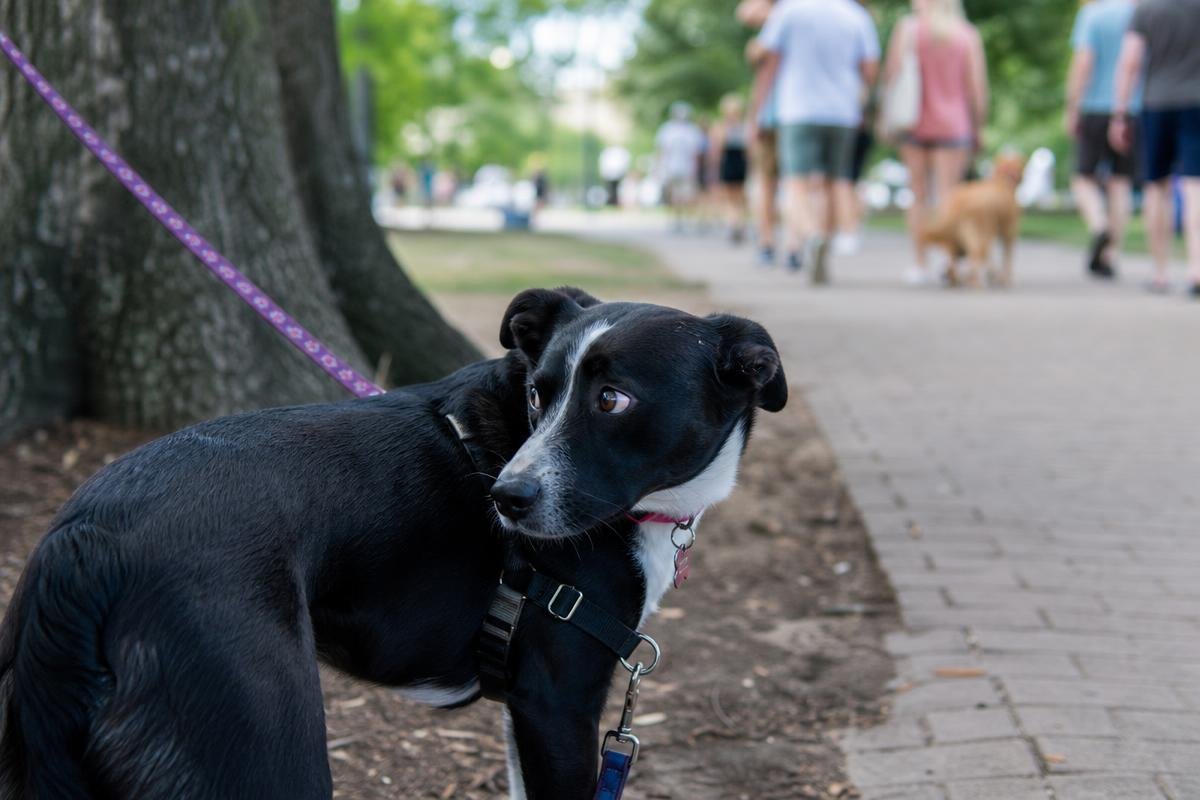
- Whale Eye: Your dog turns its head away but keeps its eyes locked on the threat. You see the whites of the eyes in a half-moon shape. This tells you your dog wants to flee but feels trapped. It is one of the clearest early indicators of fear-driven aggression.
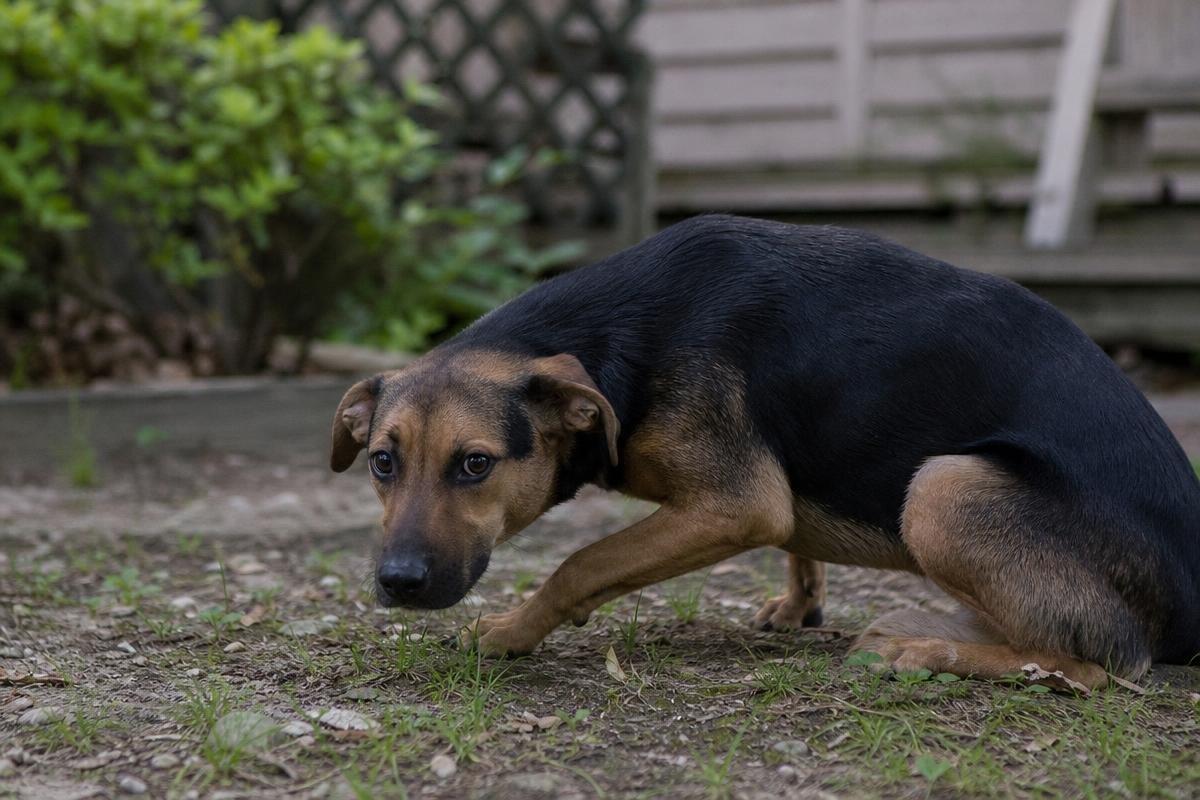
- Tucked Tail With a Stiff, Low Body: A tucked tail alone is not the full picture. Pair it with a rigid, low body posture and that is a dog bracing for conflict, not just feeling nervous.
Escalation Signs (Signs 4-6)
If your dog skipped straight to these, signs 1 through 3 were happening. You just did not catch them yet.
- Growling or Low Rumbling: This is your dog’s last verbal warning. Never punish it. A dog that learns growling gets punished stops growling and goes straight to biting. The growl is information. Use it.
- Snapping or Air-Biting Without Contact: Your dog is telling you the next step is a real bite. This is not aggression for the sake of it. This is a dog that is terrified and out of options.
- Lunging on Leash Toward Strangers or Other Dogs: This one shows up constantly in high-traffic areas. Owners walking near Frisco Commons Park off Eldorado Pkwy or through the Rail District on a busy weekend report this most. The crowd, the noise, the unpredictable movement, it overwhelms a fearful dog fast. Our in-home behavior modification sessions address leash reactivity directly.
Important: If your dog is already escalating to snapping or lunging, do not wait for the next incident. The behavior only gets more rehearsed from here. Call us at (972) 573-1715 to schedule an evaluation, and we will talk through exactly what you are seeing and how quickly your dog can improve.
Post-Incident Signs (Signs 7-8)
What happens after an episode tells you just as much as the episode itself.
- Immediate Shutdown or Hiding: After a fearful episode, many dogs retreat, hide under furniture, or go completely flat. This confirms the behavior was defensive, not dominant. Your dog is not a bad dog. Your dog is scared.
- A Predictable Pattern Tied to Specific Triggers: This behavior almost always follows a pattern. A specific type of person, a certain dog size, a particular environment. If you can predict when it happens, a trainer can build a desensitization plan around it. Note that In-Home Dog Training is often the right starting point because we can observe your dog in the exact environment where triggers occur.
Note that separation anxiety can look similar to fear-based reactivity in some cases, so accurate identification matters before any training plan begins.
What Causes Fear Aggression in Dogs?
Most owners ask us the same question: “Did I do something wrong?” The honest answer is usually no. Fear-based aggression comes from a mix of genetics, early life experiences, and environment. Understanding the cause helps you stop blaming yourself and start fixing the problem.
Genetics and Breed Predisposition
Some dogs are simply wired to be more sensitive. Certain breeds carry a higher predisposition toward anxiety-based reactivity. That does not mean your dog is broken or that training will not work. It means their starting point is different. Genetics set the stage, but they do not write the ending.
Socialization Gaps During the Critical Window
Between roughly 3 and 16 weeks of age, puppies need exposure to varied people, sounds, dogs, and environments. Miss that window and the brain never fully normalizes those stimuli. Dogs placed directly into busy suburban environments in zip codes like 75034 or 75035, without that foundation, are far more likely to develop fear-based reactions later.
A dog that never built that early confidence can be overwhelmed by even a routine trip to a crowded shopping district. Catching these gaps early matters. Our programs are built to address socialization deficits at any age, not just puppyhood.
Traumatic Experiences and Punishment-Based Training
Rescue dogs with unknown histories are common in our area. Many come from situations involving neglect, harsh handling, or punishment-based training. Here is the part most owners do not realize: punishment-based methods suppress warning signals like growling. A dog that stops growling has not gotten better. It has just lost its warning system, which makes a bite far more likely.
If your dog came from a difficult background, their reactivity is not a character flaw. It is a learned survival response. Our Board and Train program is designed to rebuild trust and replace fear-driven reactions with calm, reliable behavior.
How Do You Calm a Fear-Aggressive Dog? 5 Steps That Actually Work
Fear-driven aggression does not fix itself. But it does respond to the right approach. Here are five steps you can start applying now to reduce your dog’s reactions and build lasting calm.
Step 1: Stop Punishing the Growl
This is the most common mistake we see. When you punish a growl, you remove the warning signal. The fear does not go away. The dog just learns to skip the growl and go straight to biting. Let the growl tell you something is wrong, then remove your dog from the situation.
Step 2: Identify and Manage Triggers
Keep a simple log. Write down when reactions happen, where you were, and what your dog saw. Local dogs often react to the same things: strangers approaching fast, other dogs on leash, loud crowds. Once you know the triggers, use distance, leashes, and barriers to stop rehearsing the aggressive behavior while training is underway.
Step 3: Use Desensitization and Counter-Conditioning
This is behavior modification in practice. You expose your dog to the trigger at a distance where they notice it but stay calm. Then you pair that trigger with something your dog loves, like a high-value treat. Over many sessions, you close that distance gradually. The emotional response shifts from fear to something neutral or positive.
This takes patience. Rushing it sets you back.
Step 4: Build Confidence Through Obedience
A dog that knows sit, down, stay, and come has a job to do when stress hits. Obedience gives your dog a predictable framework. That predictability reduces anxiety. Off-leash control is the goal, because a dog that responds reliably off leash has real confidence, not just compliance on a tight lead.
Step 5: Work With a Professional Trainer
This is the step that locks everything else in. Knowing how to calm a fearful dog is one thing. Executing it correctly under real pressure is another. Our team works with high-anxiety dogs every week, and we see the biggest breakthroughs when owners get hands-on coaching alongside their dog. If you want training done in your dog’s own space, our In-Home Dog Training in Frisco is built exactly for that.
Ready to stop the reactive behavior for good? Call our team at (972) 573-1715 and let’s build a plan that actually works for your dog.
Board and Train vs. Private Lessons for Fear-Aggressive Dogs in Frisco
Choosing the right program for a fearful dog is not one-size-fits-all. The right call depends on where your dog’s triggers live and how deeply the behavior has been rehearsed. Here is how to think through it.
When Board and Train Is the Right Call
If your dog reacts to strangers, other dogs, or unpredictable environments, our Board and Train program in Frisco is often the fastest path forward. Removing your dog from the environment where the behavior has been practiced breaks the cycle. In a structured, consistent setting, your dog stops rehearsing fear responses and starts building new ones.
Our 2-week Board and Train puts your dog in daily training with patient, consistent handlers. Owners consistently note how calm and focused their dogs return home. This format also removes a common problem: owners accidentally reinforcing fear by soothing or backing away at the wrong moment.
- Best for dogs reactive to multiple triggers outside the home
- Ideal when owner habits are unintentionally reinforcing the behavior
- Works well for dogs triggered by busy areas like the Panther Creek corridor or The Hills of Kingswood
When Private Lessons or In-Home Training Work Better
Some dogs only react at home. A stranger at the door. A specific family member. A certain room. If that sounds familiar, In-Home Dog Training may be the better fit. The trainer works directly in the space where the behavior happens, addressing the exact triggers in real time.
Dogs in newer neighborhoods with constant construction traffic and shifting neighbors often fall into this category. Behavior modification done in context produces faster, more lasting results for these cases. Check out our full dog training programs to find the right fit for your dog’s specific trigger profile.
- Best for dogs triggered primarily inside the home
- Ideal when the problem is tied to a specific person, room, or routine
- Good option when owner involvement in real-time practice is essential
Fear Aggression in Frisco Dogs: What Local Owners Are Dealing With
We see it every week. A dog that was calm and friendly a year ago is now lunging, barking, or shutting down on walks. This is not a random behavior shift. For many dogs in this area, the environment itself is the trigger.
High-Traffic Areas That Trigger Reactive Dogs in Frisco
Some of the most popular spots in the area are also the hardest places for a fearful dog to handle. The Star District draws big weekend crowds with unpredictable noise and movement. The Rail District brings the same kind of chaotic stimuli. Even a simple weekend outing can push a reactive dog past its threshold before you realize what is happening.
Dogs need a solid desensitization foundation and reliable off-leash control before you take them into these environments safely. Once your dog has a solid training foundation, the trails and parks throughout Frisco become rewards instead of stress tests. Getting there takes real training work first.
Why Frisco’s Growth Is Creating More Anxious Dogs
Frisco has been one of the fastest-growing cities in Texas for over a decade, and that growth has real consequences for dogs. New construction and rising housing density mean dogs that once lived in quiet cul-de-sacs now deal with construction noise, new neighbors, and unfamiliar dogs moving in constantly. A dog’s social environment never stops shifting here. Frisco also enforces a leash ordinance in all public areas, which means reactive dogs cannot simply be given more space on a walk. Control has to come from training.
Dogs that were never exposed to this level of density can develop fear-based aggression as the world around them gets louder and more crowded. We are based at 6136 Frisco Square Blvd Ste 400 and ready to help. Explore our dog training programs built for exactly this kind of challenge. We also offer dog boarding and dog grooming at our Frisco location.
Frequently Asked Questions
Can fear aggression in dogs be cured completely?
Most dogs improve significantly with consistent training. Some may always need management in certain situations. The goal is a reliable, safe dog, not a perfect one. That is a realistic and achievable outcome for the vast majority of dogs we work with.
Is a fear-aggressive dog dangerous to keep?
Fear-aggressive dogs can be safe family pets with the right training and management in place. The risk goes up when warning signs are ignored or punished. A professional assessment gives you a clear picture of severity and what your specific dog actually needs.
How long does it take to see improvement?
It depends on the dog and how consistent training is at home. Many dogs in our Board and Train program show measurable changes within the first two weeks. Home reinforcement is what locks in long-term results.
Should I use a muzzle on my fear-aggressive dog?
A properly fitted basket muzzle is a safe management tool, not a solution. It prevents a bite while behavior modification is underway. Use it as a bridge, not a fix. The underlying fear still needs to be addressed through training.
What is the difference between fear aggression and reactivity?
Reactivity is a broad term for over-the-top responses to stimuli. Fear aggression is a specific type driven by fear rather than excitement or prey drive. All fear aggression involves reactive behavior, but not all reactivity is fear-based.
How do I find a dog trainer near me who handles fear aggression?
Look for a trainer who specifically names behavior modification and desensitization as part of their method. Generic obedience trainers may not have experience with fearful, reactive dogs or the layered approach it requires. Our programs at All Dogs Unleashed are built around exactly that. Call us at (972) 573-1715 or visit us at 6136 Frisco Square Blvd Ste 400, Frisco, TX 75034.
Fear aggression does not get better on its own. Every week without a plan is another week the behavior gets more rehearsed and harder to change. We have seen real improvement in dogs with histories far more severe than what most owners describe. Your dog is not hopeless. Call (972) 573-1715 and let us show you what is possible.
Ready to Get Started with All Dogs Unleashed Dog Training Frisco?
Call (972) 573-1715 to speak with our team directly. We’re ready to answer your questions, walk you through your options, and help you find the right solution for your needs. Whether you’re just starting to plan or ready to move forward, we’ll make the process simple and stress-free.
Reach out today and let’s talk about how we can help.