
Traveling with a dog over Thanksgiving can be one of the best parts of the holiday or one of the most stressful, and the difference usually comes down to preparation. Thanksgiving falls on Thursday, November 26, 2026, and for many Austin households that means a drive up or down I-35, out to the Hill Country, or across Texas to see family.
At All Dogs Unleashed Dog Training Austin, we help Central Texas owners build the manners that make holiday trips smoother: settling in a crate, waiting at doors, walking politely on a leash, and staying calm in a house full of new people. Below is a practical plan for the weeks before the drive, the road itself, the stay with relatives, and the moments when leaving your dog home in good hands is the smarter call.
Want help getting your dog ready for the holidays? Our Austin team can talk through your plans and your dog’s needs.
Key Takeaways
- Start car training weeks before Thanksgiving with short drives that gradually get longer, so the long trip is not your dog’s first time riding for hours.
- The ASPCA calls a well-ventilated, secured crate the safest way for a dog to ride, and recommends a harness attached to a secured seatbelt in the back seat if you skip the crate.
- Plan rest stops, pack water and your dog’s regular food, and never leave your dog alone in a parked car, even on a mild November day.
- Bring your dog’s rabies record and talk to your veterinarian before the trip, especially if you are crossing state lines or your dog has health concerns.
- If your dog struggles with car rides, crowds, or other pets, boarding or a two-week Board and Train program before the holiday may serve your dog better than the trip.
Deciding Whether Your Dog Should Come Along
Before you pack the car, take an honest look at your dog. Some dogs settle anywhere, while others find long drives and loud gatherings overwhelming.
Questions to Ask Before You Commit
Think about how your dog handles the car today, how it reacts to visitors at your door, and how it behaves around other dogs, cats, and children. Then ask your hosts whether they want a dog in the house and whether there will be other pets or small children.
If most of your answers point to stress, your dog may enjoy the holiday more in a structured setting back in Austin. If your dog is generally calm and your hosts are on board, a little preparation can make the trip a good one.
Comparing Your Main Options
| Option | Works Best When | Watch Out For |
|---|---|---|
| Bring your dog on the road trip | Your dog rides calmly, settles in new homes, and your hosts welcome dogs | Long drive days, holiday traffic, crowded houses, food left within reach |
| Board your dog in Austin | Your dog gets carsick, is reactive, or your hosts cannot take a dog | Holiday boarding fills up, so booking late can leave you without a spot |
| Train before the holiday | You want your dog to travel well for this and future trips | Training takes time, so start planning well ahead of late November |
Car Training in the Weeks Before Thanksgiving
The ASPCA recommends preparing your dog for a long trip with a series of short drives first, gradually lengthening the time spent in the car. A dog that already knows how to ride calmly for an hour is far more likely to handle a holiday drive.
Build Positive Associations With the Car
Start with the car parked in the driveway. Open the door, let your dog hop in or lift it in, reward calm behavior, and let it back out. Then add the engine running, then a trip around the block, then a drive to somewhere your dog enjoys. Keep early sessions short and end them before your dog gets restless.
If your dog drools, whines, or trembles in the car, slow down and spend more time at the easier steps. Signs of stress can be subtle, so our body language guide for Austin dog owners is worth reading before you start. If your dog seems truly fearful or carsick, talk to your veterinarian about options before the trip.
Practice the Skills the Trip Will Require
A road trip asks your dog to do a handful of things over and over. Your dog needs to load into the car on cue, wait while the door opens instead of leaping out, walk on a leash at busy rest stops, and “leave it” when it spots dropped food or another dog. Practice each of these at home and around Austin before the holiday.
A solid “wait” at the car door is one of the most important safety skills. Rest areas along I-35 sit next to fast traffic. Reward your dog for holding still until you clip the leash and give a release word.
Crate and Seat Restraint for a Safer Ride
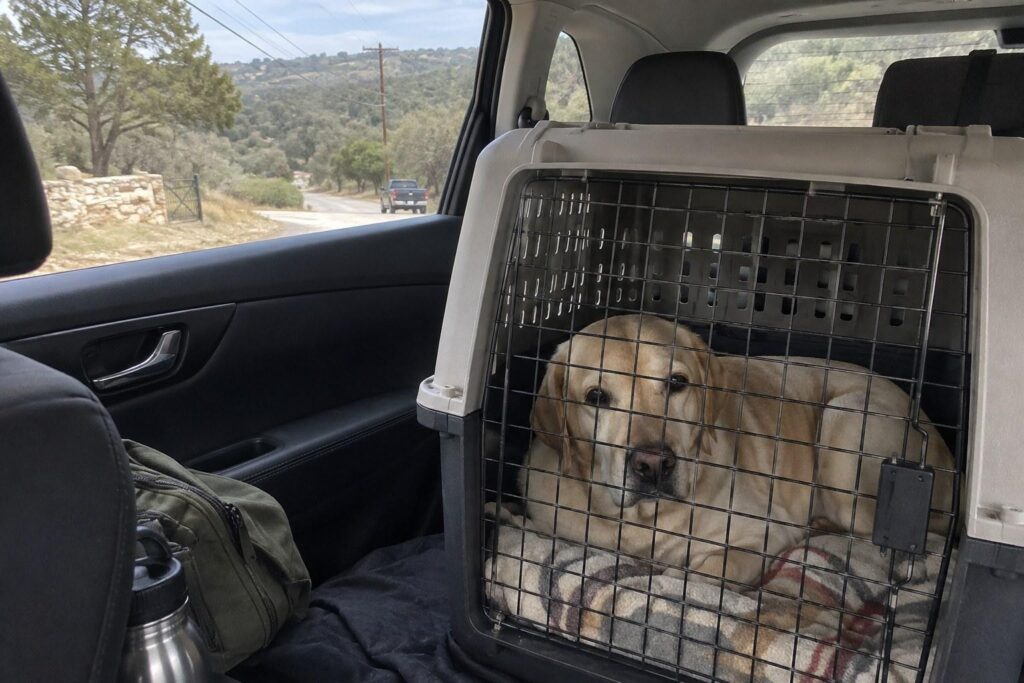
A loose dog in the car distracts the driver and is at risk in a sudden stop. Keep windows up far enough that your dog cannot lean out, since the ASPCA advises against letting a dog ride with its head outside the window.
Choosing and Securing a Crate
According to the ASPCA’s travel safety tips, a travel crate should be well ventilated and large enough for your dog to stand, sit, lie down, and turn around in. Secure the crate so it will not slide or shift if you brake hard. Put a familiar blanket or toy inside so the space feels like home.
If your dog is not crate trained yet, start at home with meals and treats inside the crate, building up to short periods with the door closed.
Harness and Seatbelt Restraint
If a crate will not fit or your dog rides better without one, the ASPCA advises keeping your dog in the back seat in a harness attached to a secured seatbelt. Attach the restraint to a harness rather than a collar, and adjust it so your dog can sit and lie down without reaching the front seats.
| Restraint Method | Advantages | Things to Check |
|---|---|---|
| Secured travel crate | The ASPCA’s safest option, contains the dog fully | Size, ventilation, and straps so it cannot slide |
| Harness with seatbelt attachment | Fits cars without crate space, dog can see you | Back seat only, attach to the harness, short enough to keep the dog off the front seats |
| Loose in the car | None worth the risk | Driver distraction and injury in a sudden stop |
Not sure your dog is ready for a long holiday drive? Our two-week program builds crate manners, door control, and calm leash skills with daily, structured training.
Planning the Drive Out of Austin
I-35 through Central Texas can be slow on a normal day, so build extra time into your Thanksgiving schedule and never skip breaks for your dog.
Timing and Feeding
The ASPCA suggests starting travel day with a light meal three to four hours before departure and avoiding feeding your dog in a moving vehicle. Bring plenty of water and a bowl, and offer drinks at every stop. The ASPCA also recommends bottled water, because water your dog is not used to can upset its stomach.
Rest Stops and Leash Manners
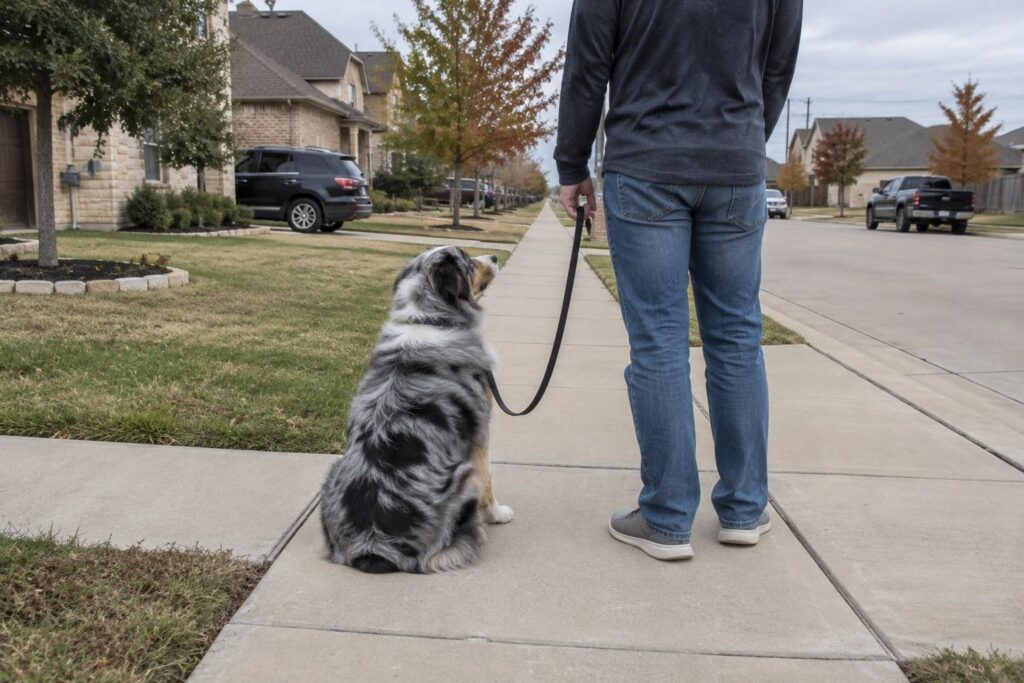
Plan a break every couple of hours so your dog can stretch, drink, and relieve itself. Always clip the leash on before the car door opens, and keep your dog close in parking areas. Rest stops are full of new smells, dropped food, and other travelers’ dogs, so this is where your “leave it” and loose-leash practice pays off. If pulling is a problem, read our post on why dogs pull on the leash and how to stop it before the trip.
Never Leave Your Dog Alone in the Car
The ASPCA warns never to leave your pet alone in a parked vehicle. On a warm day, even with the windows open, a parked car can heat up quickly and heatstroke can develop. Plan meals at places where your dog can come with you, take food to go, or travel with another adult so someone can stay with your dog.
Vet Records, ID, and Health Prep
Vaccination Records and Health Certificates
The ASPCA recommends bringing your dog’s rabies vaccination record when traveling across state lines and checking with your veterinarian about whether a health certificate, also called a certificate of veterinary inspection, is required.
Identification for an Unfamiliar Place
A new house means new doors, gates, and visitors coming and going. The ASPCA advises making sure your pet is microchipped and wears a collar with a tag showing your name and phone number, and suggests a temporary travel tag with your cell number and destination phone number for the trip. Confirm that your microchip contact information is current.
Staying in a Relative’s Home for the Holiday
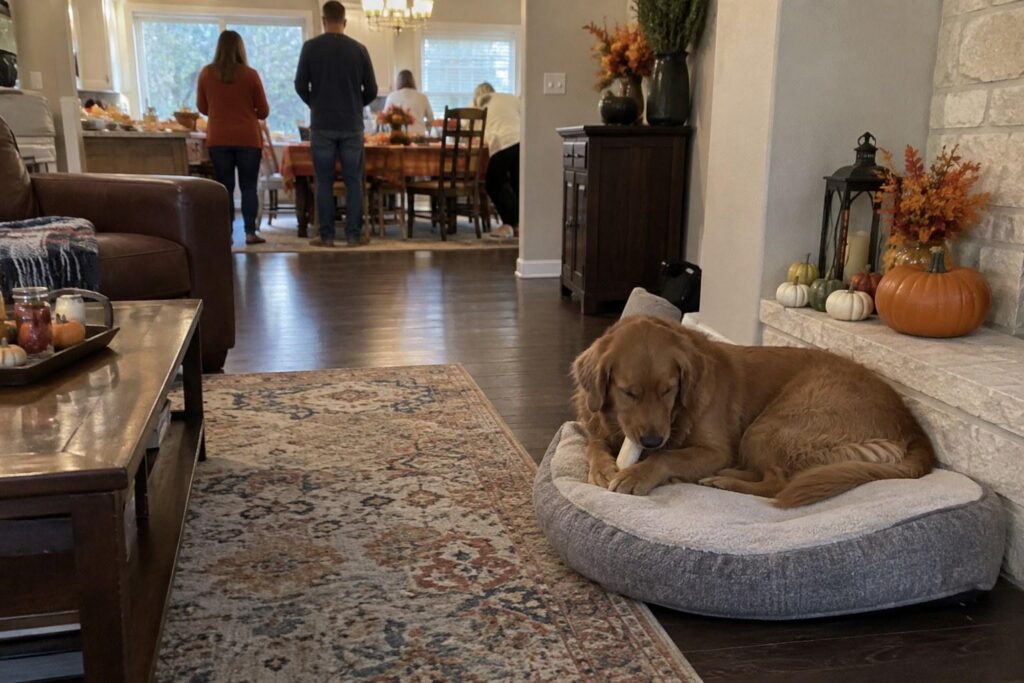
A house full of relatives, cooking smells, and new routines can unsettle even an easygoing dog.
Arrival and First Impressions
Before you bring your dog inside, give it a short walk around the block. Then enter on leash, keep greetings calm, and ask relatives to let your dog approach them instead of crowding around. Walk the yard together and check for gaps in the fence, open gates, and pool areas before you let your dog off leash outdoors.
Set Up a Quiet Home Base
Choose a quiet room or corner for your dog’s crate or bed, away from the kitchen and the busiest part of the house. When the gathering gets loud, give your dog a chew and a break in its space instead of expecting it to cope with the crowd for hours.
Thanksgiving Food and House Rules
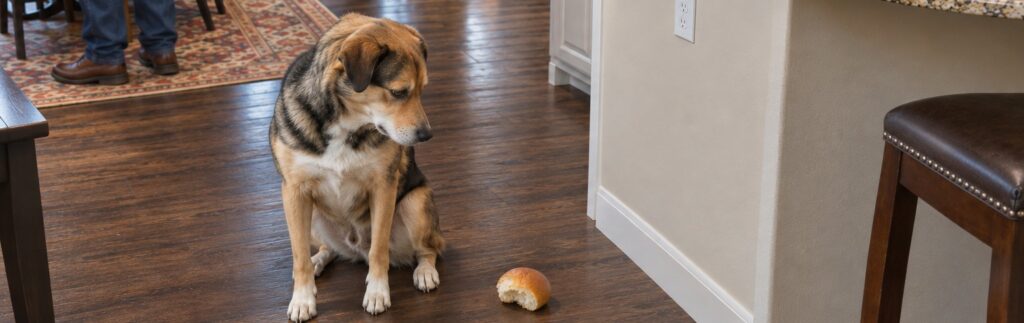
Holiday tables and counters are full of food your dog should not have, and well-meaning guests may slip scraps under the table. Ask relatives not to feed your dog, keep your dog away from the kitchen while food is out, and use “place” or the crate during the meal. If you think your dog has eaten something harmful, call a veterinarian right away.
Door manners matter here too. Guests will be coming in and out all day, so practice “wait” at doorways and keep a leash handy. If your dog is anxious when you step out to visit or shop, our post on separation anxiety for Austin pet owners has helpful context.
When Boarding Beats Traveling With a Dog
If your dog gets carsick, reacts to strangers or other pets, or your hosts simply cannot take a dog, leaving your dog in Austin can mean a calmer holiday for everyone.
Holiday Boarding in Austin
Our dog boarding in Austin follows a structured daily routine with exercise, rest periods in climate-controlled kennels, and meals served according to your instructions. You bring your dog’s regular food and any prescribed medications, along with a familiar blanket or toy. All guests need current records for rabies, distemper, parvovirus, and bordetella vaccinations.
Holiday weeks are a popular time for boarding, so we recommend contacting us at least three to four weeks before the holiday to ask about availability for the dates around November 26.
Board and Train as Holiday Manners Prep
If you want your dog to be a better traveler for years to come, our two-week Board and Train program is the most complete option. Your dog stays at our facility and trains every day, housed individually in a secure, climate-controlled kennel. Every enrollment begins with an evaluation so we can shape the approach to your dog.
We do not offer observation of training sessions. At the end of the program, a turnover session walks you through everything your dog learned, with written instructions for home. Board and Train comes with guaranteed results and lifetime support at no additional cost, and Affirm financing is available. Because it is a fixed two-week program, plan ahead and call to discuss scheduling.
In-Home Lessons and Refresh Training
Some owners want to practice car loading, door manners, and calm greetings in their own home and neighborhood. Our in-home dog training and private lessons work well for that. You can compare all of our dog training programs in one place.
| Service | Best For | What to Know |
|---|---|---|
| Boarding | Dogs staying home while you travel | Bring food and medications, current vaccine records required, book three to four weeks ahead for holidays |
| Two-week Board and Train | Dogs that need crate, door, leash, and greeting manners | Evaluation, daily training, turnover session, written instructions, guaranteed results, lifetime support |
| In-home private lessons | Owners who want coaching in their own home | Practice the exact routines your trip requires |
Have questions about holiday plans for your dog? Call our Austin team at (512) 963-6017 and we will help you choose the right option.
About All Dogs Unleashed Dog Training Austin
All Dogs Unleashed Dog Training Austin helps Central Texas families raise dogs that are calm at home and easy to take places. Our fixed two-week Board and Train program builds crate manners, door control, leash skills, and polite greetings with daily structure, followed by a turnover session and written instructions, and it is backed by guaranteed results and lifetime support. We also offer in-home private lessons, boarding, and refresh training for holiday seasons and every season after.
Frequently Asked Questions
What is the safest way for a dog to ride in the car?
The ASPCA calls a well-ventilated crate the safest option in case of an accident. It should be large enough for your dog to stand, sit, lie down, and turn around, and secured so it cannot slide. If you skip the crate, keep your dog in the back seat in a harness attached to a secured seatbelt, with its head inside the car.
How often should I stop when driving with my dog?
Plan a break every couple of hours so your dog can stretch, drink water, and relieve itself, and adjust for puppies, seniors, or dogs with health needs. Always clip on the leash before opening the car door, keep your dog close in busy parking areas, and never leave your dog alone in a parked car.
What documents does my dog need for a road trip?
Bring your dog’s rabies vaccination record and your veterinarian’s contact information. The ASPCA recommends checking with your vet about whether a health certificate is required if you cross state lines. Make sure your dog is microchipped with current contact details and wears a collar tag with your phone number, plus a temporary tag for the trip.
How do I help my dog stop getting anxious in the car?
Start well before the trip with very short, positive sessions, first in the parked car, then around the block, then on longer drives. Reward calm behavior, keep your dog secured in a familiar crate or harness, and exercise it before each ride. If your dog drools heavily, vomits, or panics, ask your veterinarian about motion sickness or anxiety options.
How far ahead should I book Thanksgiving boarding in Austin?
Thanksgiving boarding often reaches capacity several weeks ahead, so we recommend contacting our Austin team at least three to four weeks before the holiday. With Thanksgiving on November 26, 2026, reaching out by late October or early November is a smart plan. Have your dog’s rabies, distemper, parvovirus, and bordetella records ready when you reserve.
Can Board and Train help my dog behave better at family gatherings?
Yes. Our fixed two-week Board and Train program gives your dog daily, structured practice on skills like crate manners, waiting at doors, loose-leash walking, and calm greetings. It starts with an evaluation and ends with a turnover session and written instructions, so you know how to handle your dog at home and on the road. It includes guaranteed results and lifetime support.
Traveling with a dog over Thanksgiving goes best when you plan ahead: practice short drives, secure your dog in the car, pack records and supplies, and set up a quiet space at your relatives’ home. If your dog would be happier staying in Austin, or you want help building better travel manners, call us at (512) 963-6017 or reach out online. You can also visit either of our Austin locations, at 111 Congress Ave. #201 downtown or at 3704 Mountain View Ave.
Ready to Get Started with All Dogs Unleashed Dog Training Austin?
Give your dog the skills to handle holiday travel, house guests, and new places with confidence. Call (512) 963-6017 to talk with our team about Board and Train, boarding, or in-home lessons before Thanksgiving. You can also visit All Dogs Unleashed Dog Training Austin at 111 Congress Ave. #201, Austin, TX 78701, or at our second Austin location at 3704 Mountain View Ave, Austin, TX 78734, (512) 253-8819.