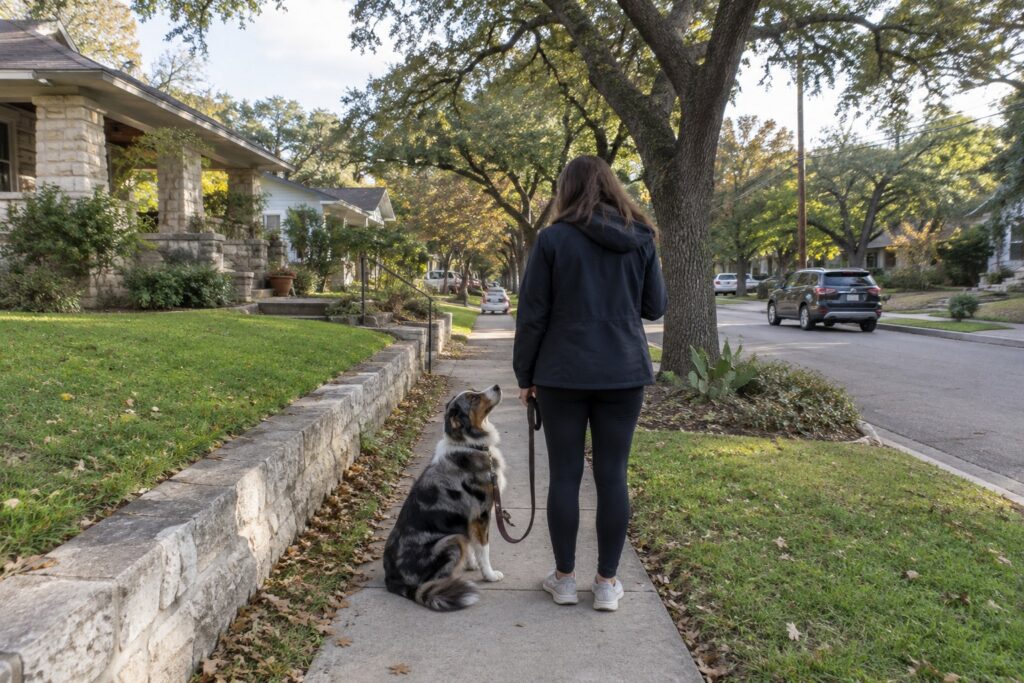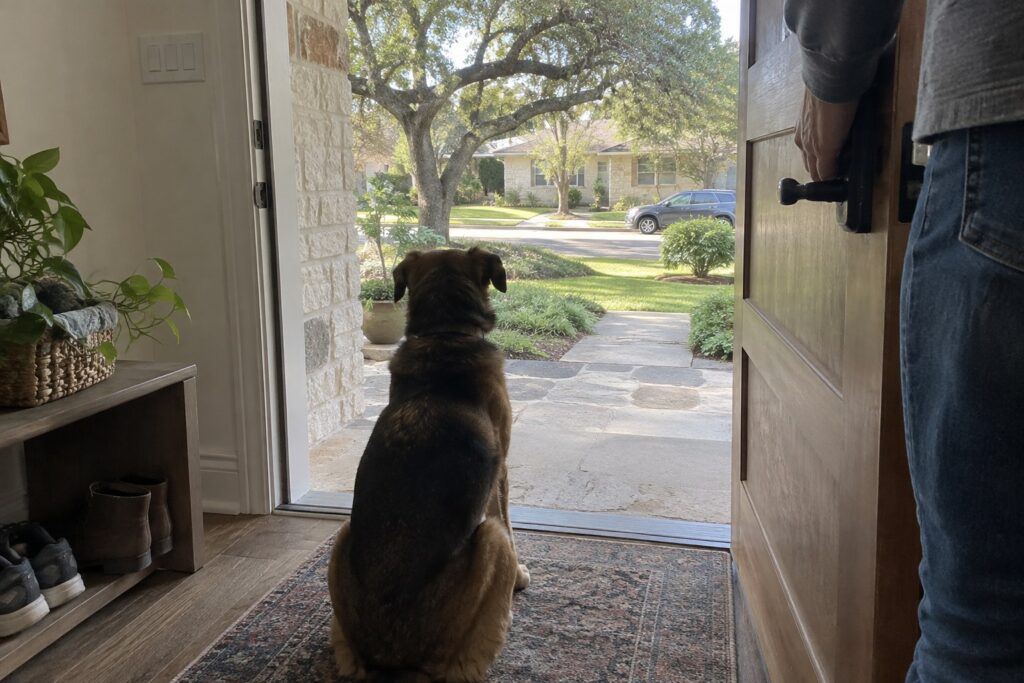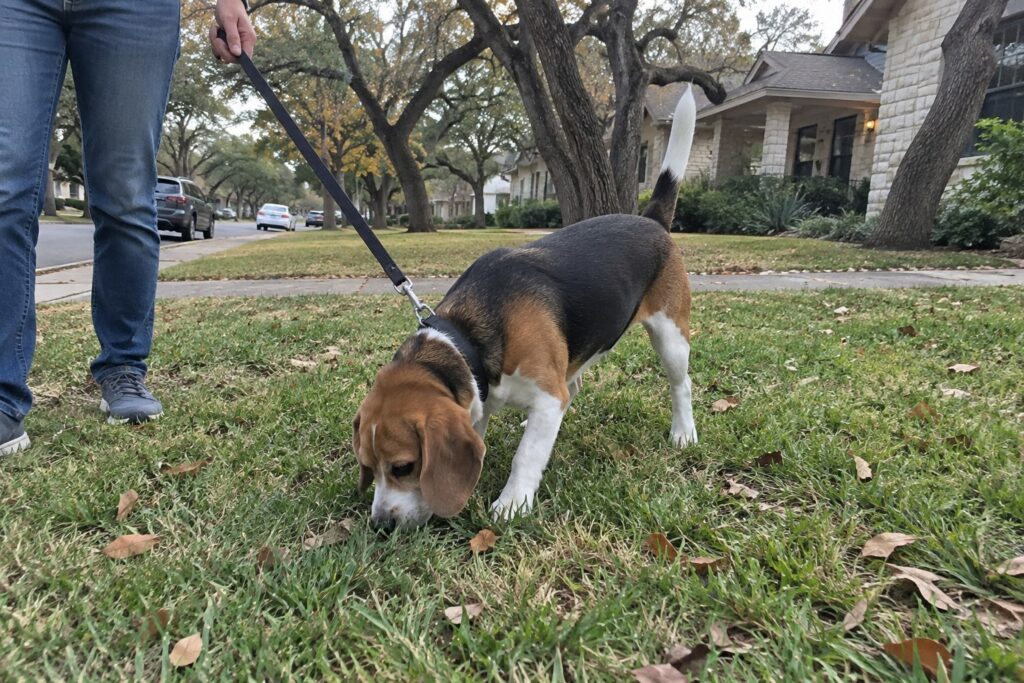

Thanksgiving week is when counter surfing goes from an annoying habit to a real problem. The turkey is resting on the island, the butter is softening next to the stove, and a pan of rolls is cooling by the window. For a dog with a good nose and a little height, your kitchen suddenly looks like an open buffet.
At All Dogs Unleashed Dog Training Fort Worth, we help families across the southwest side and the rest of Tarrant County turn kitchen thieves into dogs who wait politely with four paws on the floor. The fix starts with smart management, adds a few clear skills, and for many dogs finishes with our two-week Board and Train program.
Want a calmer kitchen before the holiday cooking starts? Talk with our team about the right plan for your dog.
Key Takeaways
- Dogs steal food from counters because it works, and every successful grab makes the next attempt more likely.
- Management comes first: clear counters, lidded trash cans, baby gates, and a crate or place bed during cooking stop the habit from being rehearsed.
- Teaching leave it, place, and off, then rewarding four paws on the floor, gives your dog a clear job that replaces jumping up at the counter.
- Turkey bones, fatty trimmings, onions, garlic, grapes, raisins, chocolate, xylitol, and raw yeast dough can all hurt a dog, so call your veterinarian right away if your dog eats something risky.
- Our fixed two-week Board and Train program tackles stubborn food stealing with daily structured training, owner transfer sessions, guaranteed results, and lifetime support.
Why Dogs Counter Surf in the First Place
Stealing food is not spite, and it is not your dog trying to be the boss of the kitchen. It is a simple learning equation. Your dog stood up, put its paws on the counter, and found something delicious. That payoff taught the dog that counters are worth checking, and it only takes a few wins to build a strong habit.
A Self-Rewarding Behavior
Trainers call behaviors like this self-rewarding. You do not have to be in the room for the dog to get paid, and a crust of bread or a buttery wrapper is enough to keep it trying. Scolding after the fact rarely helps, because the dog has already eaten the reward.
Why the Holidays Make It Worse
Holiday cooking stacks the deck against you. There is more food out for longer stretches, the smells are richer, and the kitchen is full of distracted people. Guests set plates down at dog height, and routines like walks often slip.
Many Fort Worth homes also have open kitchens that flow right into the living room, which makes it hard to keep a dog out of the cooking zone without a plan.
Management First Before Thanksgiving Cooking Starts
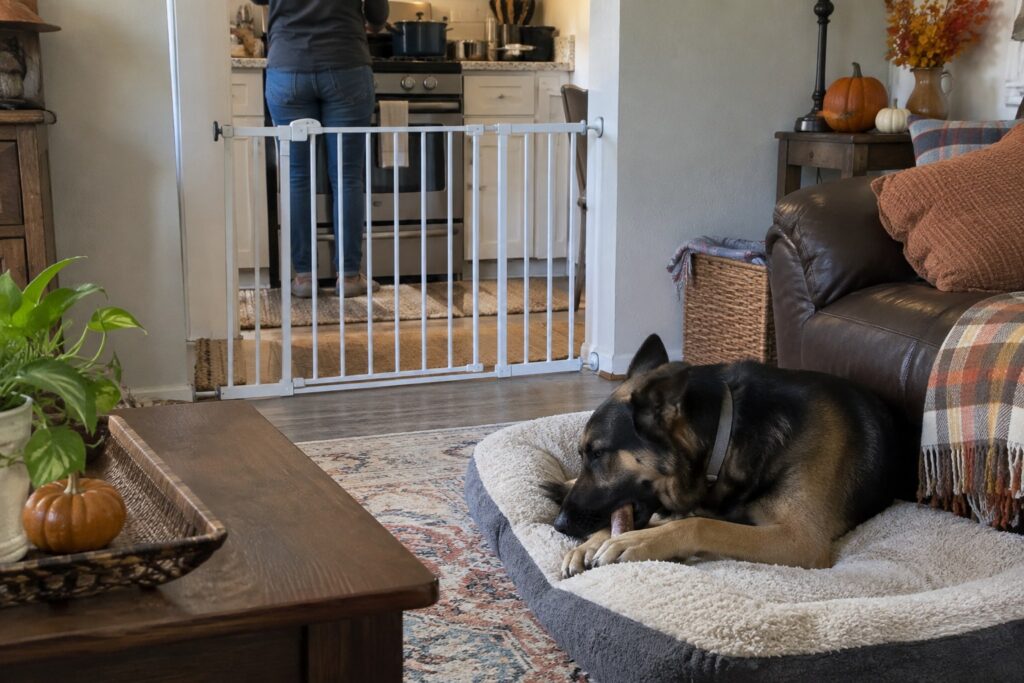
Training takes time, and your holiday meal is on a fixed date. That is why management comes first. Management means arranging your home so your dog cannot practice the habit while you teach better ones. Every grab you prevent is one less reward, and fewer rewards mean the habit starts to fade.
Clear the Counters and Lock Down the Trash
The simplest rule is also the most effective: if you are not standing at the counter, food should not be on it. Push dishes to the back, use the oven or microwave as a temporary holding spot, and put leftovers in the fridge promptly. Wipe down counters and cutting boards after prep so the smell does not keep inviting your dog to check.
The trash can is the second target. Turkey carcasses, fatty drippings, and string all end up in the bin on Thanksgiving, so use a can with a locking lid or tuck it behind a pantry door.
Gates, Crates, and Place During Cooking
During the busiest hours, your dog does not need to be in the kitchen at all. A baby gate across the kitchen entry, a crate in a quiet room, or a place bed within sight of the family keeps your dog safe and out of trouble. Give your dog a long-lasting chew or a stuffed food toy made with dog-safe ingredients so the downtime feels like a good deal.
If your dog is not comfortable in a crate yet, do not wait until the day of the dinner to start. Build short, pleasant crate sessions in the weeks before the holiday, and read up on the common crate training mistakes Fort Worth owners make so the crate stays a calm spot instead of a punishment.
| Management Tool | Best Used For | Tip for the Holidays |
|---|---|---|
| Clear counters | Every dog, every day | Store resting dishes in the oven or microwave instead of on the island |
| Lidded or hidden trash can | Dogs who raid the bin | Take bones and fatty scraps outside to a covered bin right away |
| Baby gate | Open kitchens that connect to living areas | Set it up a week early so your dog gets used to it |
| Crate | Peak cooking and serving time | Pair with a safe chew in a quieter room |
| Place bed | Dogs who can settle near the family | Practice place with small distractions before guests arrive |
| Leash or house line | Dogs still learning the rules | Keep the leash attached and supervised so you can guide your dog away calmly |
Training Leave It, Place, and Off
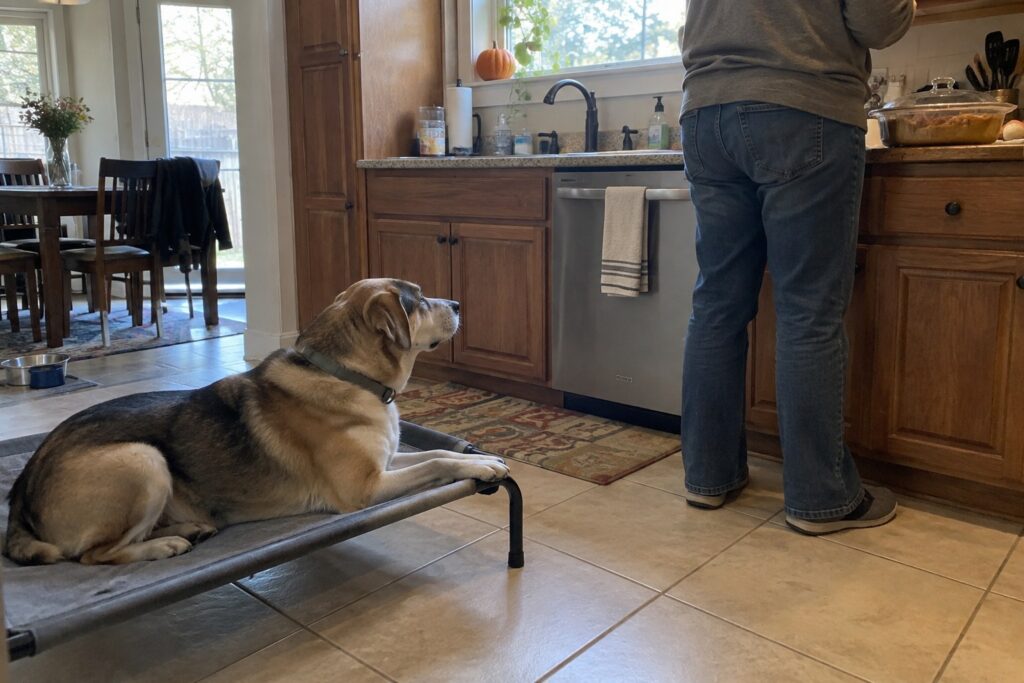
Once management is keeping your dog from practicing the habit, you can teach the skills that replace it. Three cues do most of the work in the kitchen: leave it, place, and off. Practice them in short sessions of a few minutes, several times a day, starting with no food on the counter and adding challenge gradually.
Leave It
Leave it tells your dog to turn away from something it wants. Start with a low-value treat in your closed hand. Let your dog sniff and paw, and the moment it backs off or looks away, mark the choice and reward from your other hand. Over several sessions, move to a treat on the floor under your foot, then a treat on a low table, and eventually a plate at counter height while you stand close.
Place
Place sends your dog to a specific bed or mat and asks it to stay there until released, which gives it a clear job while you cook. Lure your dog onto the bed, reward while it stays, and slowly build duration. Then add kitchen distractions like chopping and opening the fridge.
Off
Off means all four paws go back to the floor. Use it when your dog has already started to stand up at the counter. Say the cue once in a calm, neutral voice, guide your dog down if needed, and reward the instant its paws land. Keep off separate from down, which should mean lie down, so your dog does not get mixed signals.
| Cue | What It Means | When to Use It in the Kitchen |
|---|---|---|
| Leave it | Turn away from the item and look to me | Your dog is sniffing toward a plate or a dropped scrap |
| Place | Go to your bed and stay until released | Cooking, carving, and serving time |
| Off | Put all four paws back on the floor | Your dog has started to stand up at the counter |
| Four on the floor | Reward for standing or sitting calmly | Any moment your dog chooses not to jump up |
If your dog already knows these cues in the living room but falls apart the minute the turkey comes out, that gap is exactly what structured training closes. Our fixed two-week Board and Train program includes daily work on obedience cues like place, plus problem behavior correction for nuisance habits.
How to Stop Dog Counter Surfing for Good With Four on the Floor
Most owners only notice their dog when it does something wrong. To make counter surfing fade for good, flip that around. Notice and reward the moments your dog stands or sits calmly in the kitchen with all four paws on the floor. A small treat, a quiet “good,” or a toss to its bed tells your dog that polite choices are what pay in this room.
Reward the Behavior You Want to See
Keep small treats up high in the kitchen so you are always ready. When your dog walks in and does not jump up, or looks at the counter and then at you, reward it. These tiny moments build a dog who checks in with you instead of checking the counter.
Consistency matters just as much. If one family member hands over scraps from the cutting board, your dog will keep trying, so agree on the kitchen rules before the holiday week.
Avoid Setting Your Dog Up to Fail
Do not leave a full plate out and walk away to test your dog, because that usually just hands it another win. Build difficulty slowly while you are present, and keep using management whenever you cannot supervise. If you are unsure whether your dog’s food stealing has crossed into a bigger problem, our list of signs your dog needs professional training can help you decide.
Dangerous Holiday Foods If Your Dog Does Grab Something
Even with good management, accidents happen. A guest turns their back, a plate slides to the edge of the table, or the trash gets knocked over. Knowing which holiday foods are the riskiest helps you act fast. The ASPCA list of people foods to avoid feeding your pets and the AVMA Thanksgiving pet safety page both cover the most common holiday hazards.
Holiday Food Risk Table
| Holiday Food | Why It Is Risky for Dogs | Risk Level |
|---|---|---|
| Cooked turkey bones | Can splinter and cause choking, mouth injuries, or blockages in the stomach and intestines | High |
| Fatty trimmings, turkey skin, gravy, drippings | Rich, fatty foods can cause stomach upset and may trigger pancreatitis | High |
| Onions, garlic, chives (stuffing, casseroles) | Can irritate the gut and damage red blood cells | High |
| Grapes and raisins | Linked to kidney damage in dogs | High |
| Chocolate and cocoa desserts | Contains methylxanthines that can cause vomiting, a racing heart, tremors, and seizures; darker chocolate is more dangerous | High |
| Xylitol (sugar-free baked goods, gum, candy) | Can cause a sudden drop in blood sugar and liver failure | High |
| Raw yeast bread dough | Can expand in the stomach and produce alcohol as it ferments | High |
| Plain, boneless, fully cooked turkey meat | A small piece is generally fine for most healthy dogs, but ask your vet if your dog has health issues | Low |
What to Do Right Away
If your dog eats something on this list, or you are not sure what it ate, call your veterinarian immediately. If your regular vet is closed for the holiday, contact an emergency veterinary hospital or the ASPCA Animal Poison Control Center. Do not wait for symptoms to appear, and do not try to make your dog vomit unless a veterinarian tells you to.
Have a few details ready when you call: what your dog ate, roughly how much, and when. Save any packaging, because ingredient lists matter, especially for xylitol.
Guests Feeding the Dog and Other Holiday Hosting Challenges
Your family might follow the kitchen rules perfectly, but guests often do not know them. One bite slipped under the table can undo a week of training and put your dog’s health at risk.
Set Clear House Rules for Visitors
Tell guests up front, in a friendly way, that the dog does not get people food. A small bowl of dog treats on a side table gives visitors who want to share something safe to offer. Ask guests not to leave plates on low coffee tables.
Give Your Dog a Break
Big gatherings are a lot for many dogs. Plan a quiet room or crate break during the meal itself, a good walk before guests arrive, and a calm place to rest afterward. If you are traveling for the holidays and your dog is staying behind, our dog boarding in Fort Worth offers 24-hour supervision in a climate-controlled facility, and you bring your dog’s regular food so its diet stays the same.
When to Get Professional Help
Some dogs give up the counter quickly once the counters are clear and the rewards stop. Others are persistent, athletic, or so food motivated that management alone never feels like enough. If your dog steals food the moment you turn around, guards what it grabs, or has already needed a vet visit after raiding the kitchen, it is time to bring in help.
Our Two-Week Board and Train Program
For most families, we recommend starting with our two-week Board and Train program. Your dog stays at our facility and trains every day, beginning with an evaluation on arrival. Trainers use a balanced approach that combines positive reinforcement with clear structure, building reliable obedience like place and targeting nuisance habits such as jumping and stealing food.
Near the end of the program, owner transfer sessions teach you the cues, timing, and handling your dog learned, with practice in different environments. You also get detailed written instructions, and every Board and Train graduate is backed by guaranteed results and lifetime support at no additional charge. Affirm financing is available.
In-Home Lessons for Your Own Kitchen
Food stealing happens in a specific room with specific counters, and sometimes it helps to work right there. Our in-home dog training and private lessons bring a trainer to your house to address household manners where they actually happen. In-home lessons can also follow Board and Train to fine-tune the kitchen routine after your dog comes home, and you can compare all of our dog training programs in Fort Worth to see what fits.
Ready to take back your kitchen before the holidays? Call us at (817) 393-6224 to talk through the best option for your dog.
About All Dogs Unleashed Dog Training Fort Worth
All Dogs Unleashed Dog Training Fort Worth helps Tarrant County families build dogs who are easy to live with, including in the kitchen. Our fixed two-week Board and Train program combines daily structured training, an evaluation on arrival, owner transfer sessions, and detailed written instructions, backed by guaranteed results and lifetime support. We also offer private lessons and in-home training, refresh training, and boarding from our climate-controlled facility at 4011 Benbrook State Rte on the southwest side of Fort Worth.
Frequently Asked Questions
Why does my dog steal food off the counter?
Your dog steals food because it has worked before. Each time a dog finds something tasty on the counter, the habit gets stronger, even if it only succeeds once in a while. Hunger is rarely the real cause. Clear the counters, block kitchen access when you cannot supervise, and reward your dog for keeping all four paws on the floor.
Can you train a dog to stop counter surfing?
Yes. Most dogs can learn to leave the counters alone with consistent management and training. Start by removing the reward, then teach leave it, place, and off, and reward calm behavior in the kitchen. Dogs with a long history of stealing may need more repetition or professional help, such as our two-week Board and Train program.
Should I punish my dog for stealing food off the counter?
Punishing after the fact usually does not help, because your dog has already eaten the reward and may not connect your reaction to the counter. Harsh reactions can also make some dogs sneakier or anxious. Focus on preventing access, interrupting calmly with a cue like off, and rewarding the behavior you want instead of relying on scolding.
What should I do if my dog ate turkey bones or stuffing?
Call your veterinarian right away, or an emergency veterinary hospital if your vet is closed for the holiday. Cooked bones can splinter or cause blockages, and many stuffing recipes contain onions and garlic, which can harm dogs. Do not try to make your dog vomit unless a vet tells you to, and note roughly how much it ate and when.
How do I keep my dog out of the kitchen on Thanksgiving?
Set up a baby gate at the kitchen entry, or use a crate or place bed in a quieter area during peak cooking and serving time. Give your dog a safe chew or food toy to enjoy while it waits. Practice the setup for at least a week before the holiday so your dog is comfortable with it on the big day.
Can in-home dog training help with kitchen manners?
Yes. In-home lessons let a trainer see your actual kitchen layout, counters, and household routine, then coach you through management and training right where the problem happens. You can also pair in-home lessons with our two-week Board and Train program, using the home sessions to reinforce the kitchen routine after your dog returns from training with us.
When you want to stop dog counter surfing, it comes down to three things: take away the reward with smart management, teach clear cues like leave it, place, and off, and reward four paws on the floor every chance you get. Start now, and your holiday cooking will feel far less stressful. If you want help, call (817) 393-6224 or reach out online. You can also visit us at our location at 4011 Benbrook State Rte on the southwest side of Fort Worth.
Ready to Get Started with All Dogs Unleashed Dog Training Fort Worth?
Whether your dog needs our full two-week Board and Train program or a few in-home lessons focused on your kitchen, our team is ready to help you enjoy a calmer holiday season. Call (817) 393-6224 to talk with our team today.