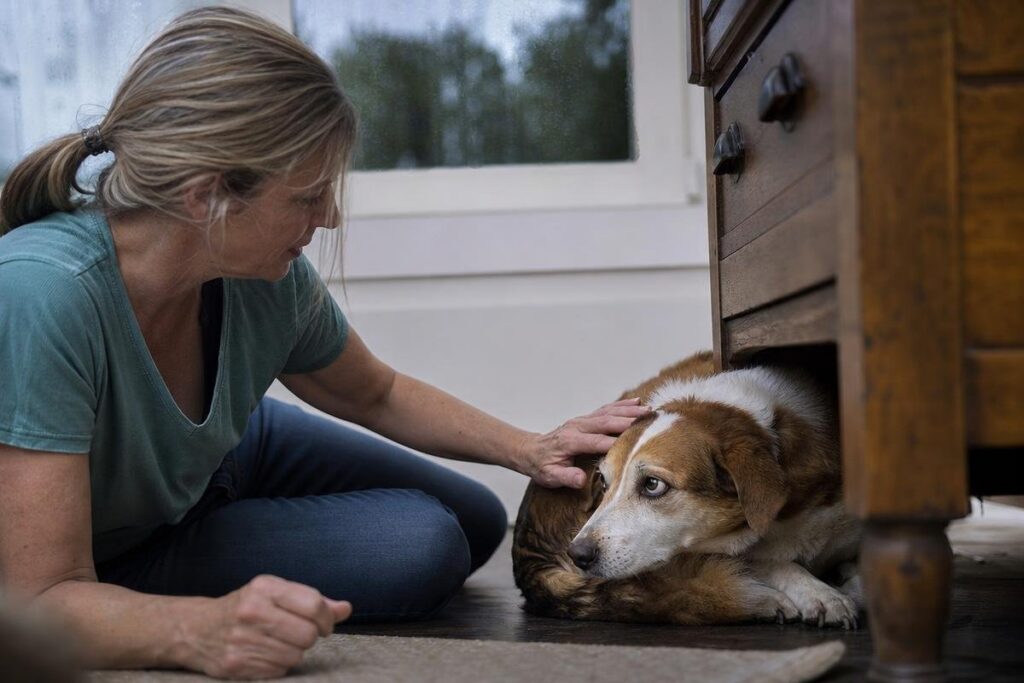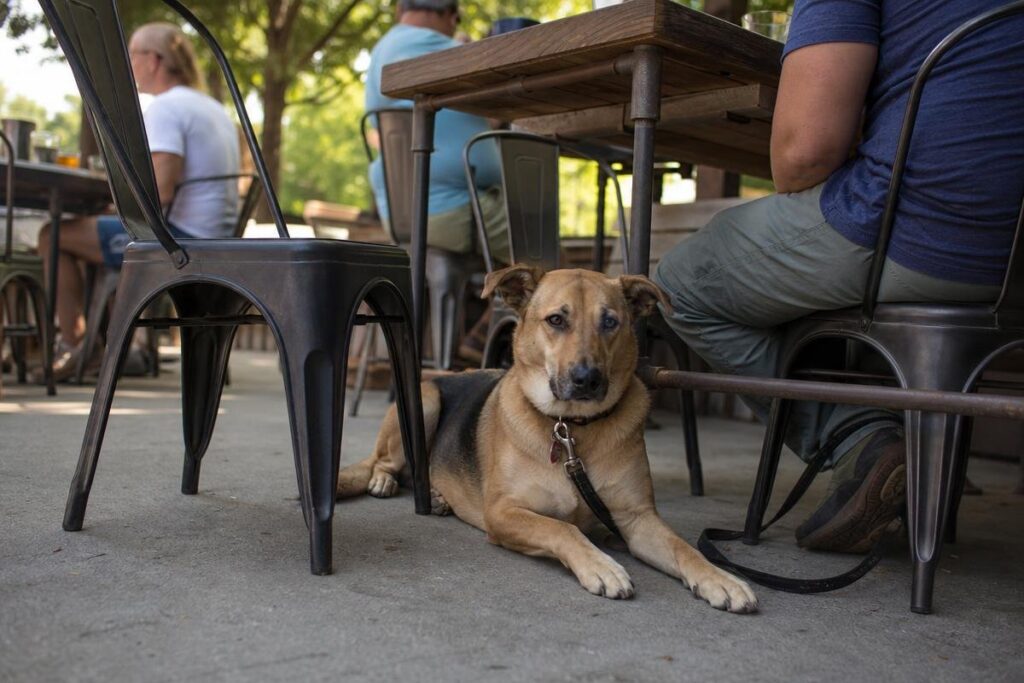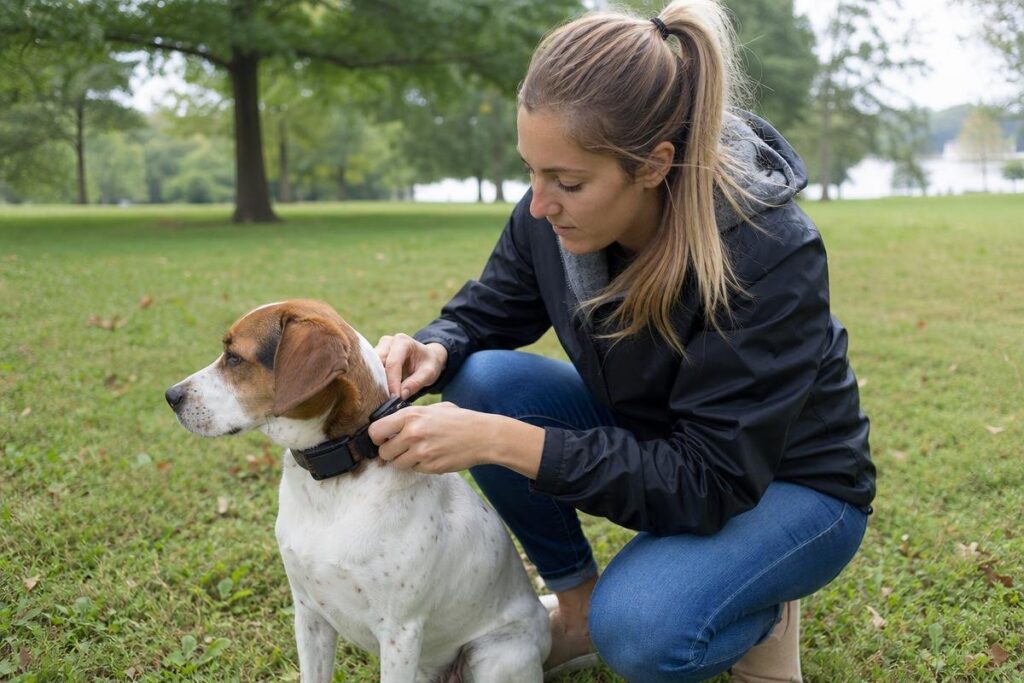

Recognizing dog anxiety symptoms early can mean the difference between a manageable behavioral issue and a persistent problem that disrupts daily life for both you and your dog. Local dogs face real, recurring triggers: spring thunderstorms, tornado sirens, and dense urban foot traffic across the metro. All Dogs Unleashed Dog Training Des Moines uses structured, evidence-based canine instruction to identify what your dog is communicating and address the root cause before those behaviors escalate.
Our trainers work from a relationship-based, balanced methodology and provide guaranteed results and lifetime support, so families across Central Iowa have a clear path forward when anxiety takes hold. Concerned about your dog’s anxious behavior? Our team is ready to help.
Key Takeaways
- Common dog anxiety symptoms include excessive barking, shaking, destructive behavior, and unprovoked aggression.
- Noise-triggered anxiety is especially common in Des Moines due to frequent thunderstorms and seasonal severe weather events.
- Separation anxiety is one of the most misread and undertreated forms of canine anxiety in adult dogs.
- Structured training with graduated exposure can reduce anxiety-driven behaviors without relying solely on medication.
- Early recognition of anxiety signs gives your dog the best chance at lasting behavioral improvement.
What Is Dog Anxiety, and Why Does It Matter for Your Dog?
Dog anxiety is a state of anticipatory apprehension in which your dog responds to a perceived or remembered threat, even when no actual stressor is present in the moment. Unruly behavior and persistent behavioral problems often have a root cause that goes deeper than disobedience, and that distinction matters because it changes how the condition must be addressed.
Normal stress produces a short-term arousal response. When the stressor is removed, your dog’s nervous system returns to baseline. Anxiety does not work that way. Chronic activation of the fight-or-flight pathway keeps your dog’s body in a state of physiological alertness long after the trigger has passed, which is why anxious dog behavior tends to escalate without structured intervention.
Anxiety vs. Normal Stress
A dog that startles at a loud noise and then settles within minutes is experiencing a normal stress response. A dog that pants, paces, or vocalizes for hours after a thunderstorm has ended is displaying dog anxiety symptoms rooted in anticipatory apprehension, not the event itself. The stress response has become decoupled from any present danger. Recognizing that difference is the first step toward getting your dog the right kind of help, whether that is veterinary support, structured training programs, or a combination of both.
The Three Primary Anxiety Types
Dog anxiety can involve separation-related distress, fear of specific triggers, or broader patterns of anxiety. A veterinarian can help determine whether medical factors contribute to your dog’s symptoms, while a trainer can support behavior work when appropriate.
Thunderstorms and severe-weather alerts can be recurring seasonal triggers for local dogs. Identifying which category applies to your dog shapes every decision that follows. Not sure which type of anxiety your dog may be experiencing? Our team can help you decide whether to begin with a veterinary visit or a training consultation.
The Physical and Behavioral Symptoms of Anxiety in Dogs
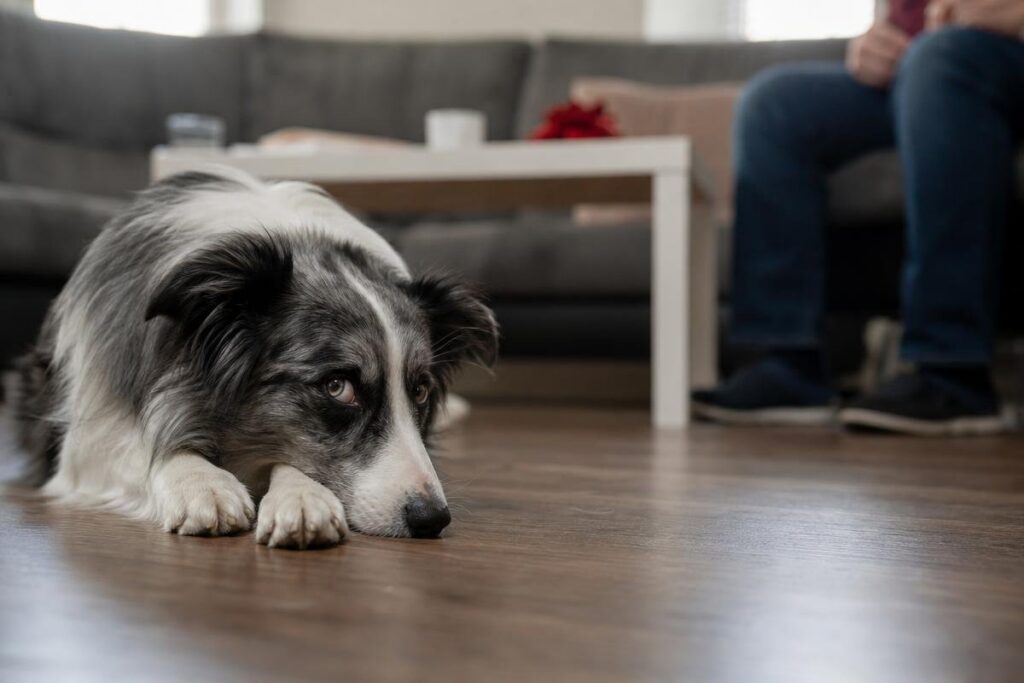
Unruly or withdrawn behavior often signals something deeper than poor manners. Recognizing the specific signs of anxiety in dogs early gives you a clear path to intervention before persistent behavioral problems become entrenched. The symptom clusters below are organized by category so you can read your dog’s body language accurately.
Physical Symptoms
Anxiety produces measurable physiological responses. These are not random or vague. Each sign below reflects a specific mechanism in your dog’s stress response system.
- Panting beyond thermoregulation: Rapid, shallow breathing that occurs at rest or in cool environments indicates fight-or-flight activation, not heat dissipation.
- Trembling: Involuntary muscle shaking driven by sustained physiological arousal, distinct from cold-related shivering in its onset and duration.
- Excessive yawning: A displacement behavior and recognized calming signal, where a dog performs an out-of-context action to discharge internal tension in high-stimulation or unpredictable environments.
- Whale eye: Visible scleral exposure at the corners of the eyes, indicating hypervigilance and threat assessment.
- Piloerection: A dorsal hackle raise along the spine, reflecting active threat evaluation rather than aggression readiness.
- Tucked tail and lowered posture: Classic appeasement and fear signaling, often paired with avoidance of direct eye contact.
- Excessive drooling or lip licking: Salivation and oral displacement behavior that intensifies under acute stress.
- Dilated pupils: Nervous system activation causes pupil dilation independent of ambient light conditions.
Behavioral Symptoms
Anxious dog behavior frequently surfaces as conduct problems that owners misread as disobedience. These behavioral dog stress signs have a consistent anxiety profile.
- Excessive barking or vocalization: Sustained or repetitive barking without an obvious external trigger.
- Destructive chewing or digging: Arousal-relief behavior that provides temporary release from built-up tension, distinct from the calming-signal displacement seen in yawning.
- Pacing or restlessness: Inability to settle, often in repetitive patterns across the same route.
- House soiling despite prior housetraining: Regression under chronic or acute stress, not a housetraining failure.
- Compulsive behaviors: Tail chasing, flank sucking, or repetitive licking that escalates over time.
- Aggression or irritability: Fear-based reactivity is one of the most misread dog anxiety symptoms. What appears to be dominance aggression is frequently fear-based aggression toward other dogs, requiring a fundamentally different training response.
- Escape attempts: Persistent efforts to breach fencing, crates, or doors when left alone or overstimulated.
Separation Anxiety Symptoms
Dog separation anxiety symptoms form a distinct cluster that differs from generalized anxiety. Owners commuting downtown from residential pockets like Beaverdale or the Ankeny suburbs frequently report returning home to clear evidence of this pattern after a full workday.
The specific signs include hyper-attachment (your dog follows you from room to room before departure), vocalization beginning within minutes of your exit, and destructive behavior concentrated near doors and windows. Self-injurious behaviors such as excessive paw licking or compulsive grooming indicate a more severe presentation. Setting up a camera to monitor your dog during your absence is one of the most reliable diagnostic tools available.
If the destruction is exit-point specific and the vocalization starts immediately, separation anxiety is the likely cause. Our in-home dog training in Des Moines addresses this pattern directly in the environment where it occurs.
What Causes Anxiety in Dogs? Common Triggers in Des Moines
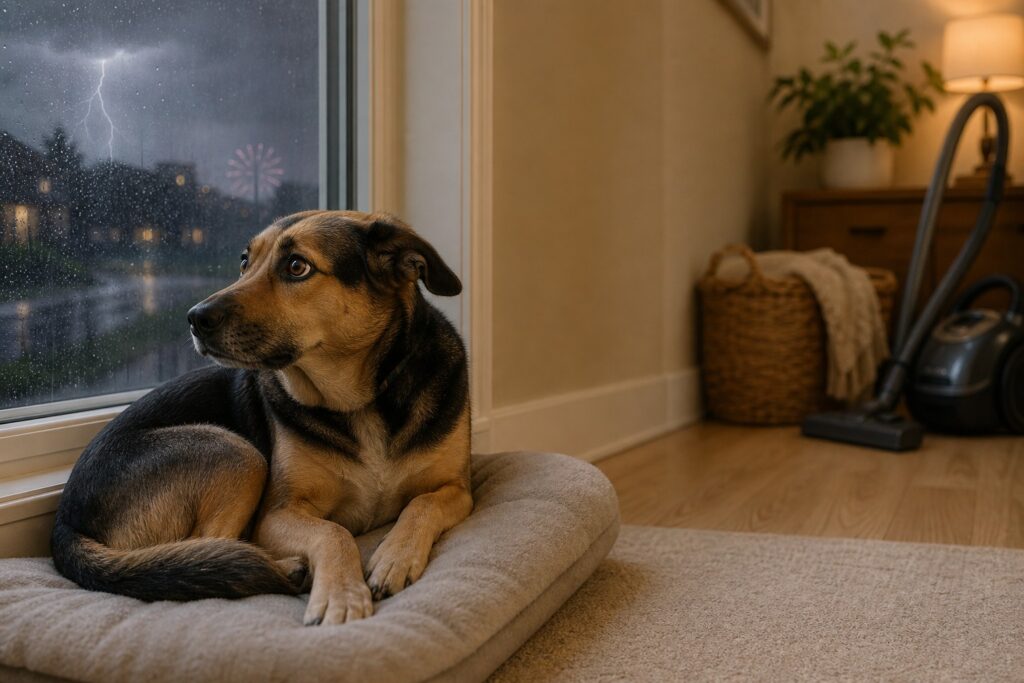
Anxious dog behavior rarely appears without a cause. Identifying the specific trigger is the first step toward effective treatment, and some triggers are more common in Central Iowa than owners realize.
Environmental and Situational Triggers
The metro sees frequent thunderstorm activity, and tornado sirens are a recurring seasonal event from spring through early summer. Dogs in denser neighborhoods like Sherman Hill and the Drake University area also face elevated foot traffic, urban noise, and frequent off-leash encounters that can accelerate dog stress signs. The Des Moines River waterfront fireworks each July 4th represent a predictable annual spike in noise-triggered anxiety for noise-sensitive dogs across the metro.
Routine disruption is an equally common trigger. A new work schedule, a new baby, or a new pet can destabilize your dog’s daily structure and produce visible anxiety symptoms within days. Rescue and shelter dogs with histories of abuse, neglect, or multiple rehoming events frequently present with generalized anxiety from the moment they arrive in a new home.
Dogs with limited early socialization may need additional support as they adjust to unfamiliar people, places, and experiences. Confinement anxiety is also worth noting for owners who board during travel; structured dog boarding in Des Moines with trained staff can reduce that stress considerably compared to standard kennel environments.
Medical and Genetic Predispositions
Not all anxious dog behavior is behavioral in origin. Thyroid dysfunction, chronic pain, cognitive dysfunction syndrome in senior dogs, and certain neurological conditions can all produce or mimic anxiety symptoms. A veterinary evaluation should rule out medical causes before any behavioral intervention begins.
Breed also plays a role. Herding breeds such as Australian Shepherds and Border Collies, working breeds like German Shepherds and Belgian Malinois, and some toy breeds including Chihuahuas show higher incidence of anxiety-related behavior. That said, any dog regardless of breed can develop anxiety given the right combination of environment, history, and genetics.
How to Tell If Your Dog’s Symptoms Are Anxiety or Something Else
Panting, trembling, and house soiling are signs of anxiety in dogs, but they are also signs of serious medical conditions. Panting can indicate pain, respiratory distress, or Cushing’s disease. Trembling may signal hypoglycemia, toxin ingestion, or neurological disease. House soiling can point to a urinary tract infection or gastrointestinal illness. Sudden onset of any of these symptoms warrants a veterinary evaluation before you assume a behavioral cause.
Anxiety vs. Medical Illness
Your veterinarian can confirm a dog anxiety diagnosis and rule out underlying physical disease. For severe cases, a vet may recommend combining behavioral intervention with pharmacological support, including SSRIs or anxiolytics, alongside structured training. Do not skip this step. A trainer addresses behavior; a veterinarian addresses physiology. Both may be necessary.
Our trainers conduct in-home dog training in Des Moines that allows direct observation of departure cues, confinement setup, and environmental stressors in your dog’s actual living space. This direct observation can inform a training plan and help owners document behavior patterns to discuss with their veterinarian.
Anxiety vs. Boredom and Under-Stimulation
Boredom and anxiety produce overlapping behaviors, but the distinction matters for treatment. Boredom-driven behaviors typically resolve with increased physical exercise and mental stimulation. Dog anxiety symptoms persist or escalate even when your dog is well-exercised, which is the key differentiator.
Confinement frustration adds another layer of complexity. A dog that is destructive only when crated but calm with free roam of the home is likely experiencing confinement frustration, not separation anxiety. Structured daily routines with consistent obedience work resolve most boredom-driven and confinement-related behaviors. Separation-related distress may benefit from gradual behavior work, such as desensitizing your dog to departure cues and increasing alone-time intervals, under appropriate professional guidance.
Not sure whether your dog’s behavior may involve anxiety, boredom, or a medical concern? Our trainers can observe behavior patterns in the home and help you prepare questions for your veterinarian. Call us at (515) 480-7977.
How Professional Training Addresses Dog Anxiety Symptoms
Recognizing dog anxiety symptoms is only the first step. Without structured intervention, persistent behavioral problems tend to intensify rather than resolve on their own. Our trainers apply evidence-based methods tailored to your dog’s specific trigger profile, working across the metro to produce reliable, lasting behavioral change.
Graduated Exposure Training
Graduated exposure training addresses fear and anxiety through systematic desensitization paired with counter-conditioning. Our trainers introduce the anxiety trigger at sub-threshold intensity, well below the point where your dog reacts, then pair that controlled exposure with a positive outcome. As your dog demonstrates reliable responsiveness at each level, intensity increases incrementally.
Every protocol is built around the specific triggers identified during your dog’s initial assessment. A dog reactive to urban foot traffic in the Sherman Hill area requires a different exposure sequence than a dog unsettled by storm sirens in a quieter suburb. The individualized structure is what produces durable results.
Board and Train for Severe Anxiety
Dogs with severe generalized anxiety or compulsive behaviors often need more than weekly sessions can provide. Our board and train program in Des Moines places your dog in a structured residential environment where behavioral conditioning occurs consistently across real-world scenarios throughout the day.
Immersive canine instruction accelerates change because your dog is not returning each evening to an environment that reinforces anxious patterns. Our board and train program is backed by guaranteed results and lifetime support.
In-Home Training for Separation Anxiety
Dog separation anxiety symptoms are most effectively addressed where they actually occur. Our in-home dog training in Des Moines brings a trainer directly to your residence to observe departure cues, assess your dog’s response during owner absence, and implement a structured desensitization protocol in the exact environment producing the distress.
In-home work also allows our trainers to identify environmental factors that compound anxiety, including exit-point confinement, insufficient enrichment, and pre-departure rituals that inadvertently signal distress. Independence training, safe-space establishment, and pre-departure ritual modification are built into every separation anxiety protocol. Call us at (515) 480-7977 to schedule an assessment.
Anxiety in Des Moines Dogs: Local Conditions That Make It Worse
Iowa’s Weather Patterns and Noise Sensitivity
The metro area sees frequent thunderstorm activity, and tornado warning sirens activate across the region with little notice during spring and early summer. These are recurring anxiety triggers your dog cannot reason through. Repeated exposure may increase fear for some dogs, especially when they do not receive appropriate support.
The River waterfront fireworks on July 4th produce a predictable annual spike in anxious dog behavior across the urban core, particularly in ZIP codes 50309, 50312, and 50314. Dogs showing signs of anxiety during storm season often display the same panting, pacing, and vocalization during fireworks events. Graduated exposure training, built into our structured training programs, conditions your dog to tolerate these high-intensity noise events without full-scale distress.
Urban Density and Socialization Gaps
Dogs socialized in quieter suburban or rural environments frequently develop dog stress signs within weeks of relocating to denser neighborhoods like Gray’s Lake or the East Village. Increased foot traffic, construction noise, off-leash dog encounters, and crowd events create a stimulus load that overwhelms a dog with an incomplete socialization history. This is a common pattern we see with dogs brought into the urban core from quieter surrounding communities.
Addressing acclimation challenges requires real-world scenario training across actual neighborhood environments, not just controlled indoor settings. Our board and train program builds reliable responsiveness across varied urban environments. For dogs already showing reactive or anxious behavior on walks, our guide on managing reactivity on local walking trails addresses acclimation in real-world settings.
Frequently Asked Questions
What symptoms do owners most commonly overlook?
The most commonly missed signs of anxiety in dogs are subtle calming signals: excessive yawning, whale eye (showing the whites of the eyes), lip licking, and displacement sniffing. Busy owners, especially those managing long downtown commutes, often attribute these behaviors to tiredness or distraction. Missing them means your dog escalates to more visible symptoms before you have a chance to intervene.
How do I tell true separation anxiety from general restlessness?
Separation-related distress may appear around departure cues, such as keys jingling or shoes going on, and may include vocalization or destructive behavior after you leave. Video monitoring can help document patterns for a veterinarian or qualified behavior professional to review.
Does my dog need medication, or will training be enough?
A veterinary professional can help determine whether training, medication, or a combined approach is appropriate for your dog. Structured routines and gradual behavior work may be part of a plan developed with your veterinarian. Our trainers work alongside your veterinarian’s recommendations, and our structured training programs are designed to integrate with any concurrent medical treatment.
At what age does anxiety typically develop?
Anxiety can develop at different life stages and may be influenced by changes in routine, health, environment, and past experiences. A veterinarian can help rule out medical contributors, while consistent structure and appropriate training can support behavior work. Our puppy training in Des Moines addresses foundational confidence before fear patterns become established.
How long does treatment take?
Treatment timing varies based on your dog’s symptoms, history, environment, and response to the plan. Your veterinarian and trainer can help set appropriate expectations and adjust the approach as your dog progresses.
When should I call a professional trainer?
Call when symptoms are persistent, escalating, or include aggression, self-injury, or property destruction. A veterinarian can help rule out medical causes and advise on the right next step.
If your dog’s anxiety symptoms are persistent or escalating, contact our team at (515) 480-7977 or visit us at 699 Walnut St Ste 400, Des Moines, IA 50309 to schedule a behavioral assessment. Our trainers will identify the root cause, design a structured plan, and support you through every stage of your dog’s progress.
Ready to Get Started with All Dogs Unleashed Dog Training Des Moines?
Call (515) 480-7977 to speak with our team directly. We’re ready to answer your questions, walk you through your options, and help you find the right solution for your needs. Whether you’re just starting to plan or ready to move forward, we’ll make the process simple and stress-free. Reach out today and let’s talk about how we can help.