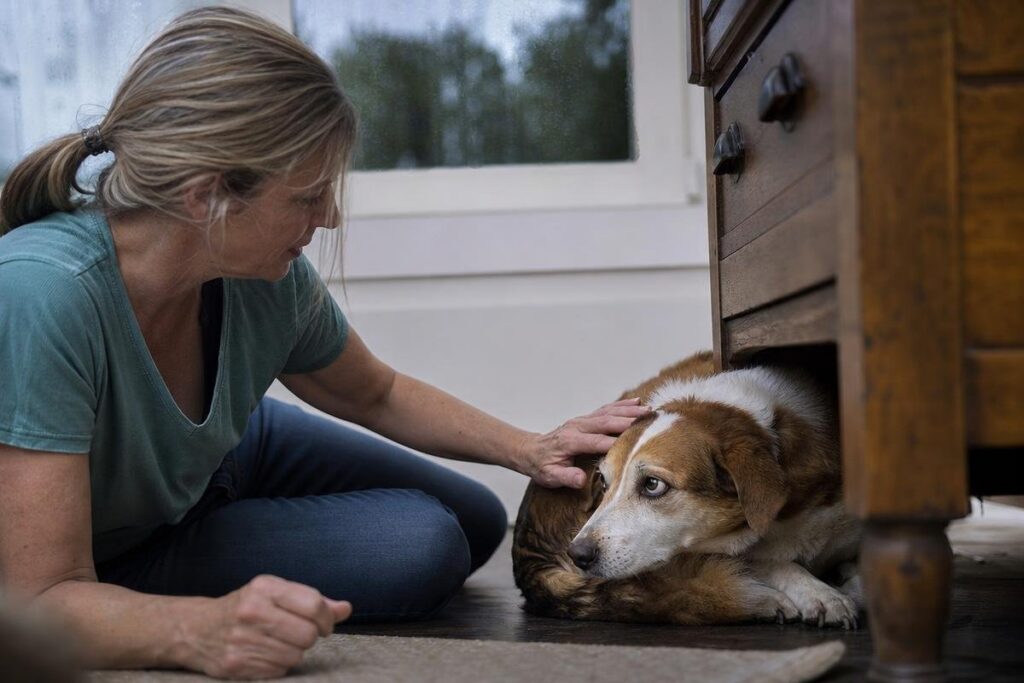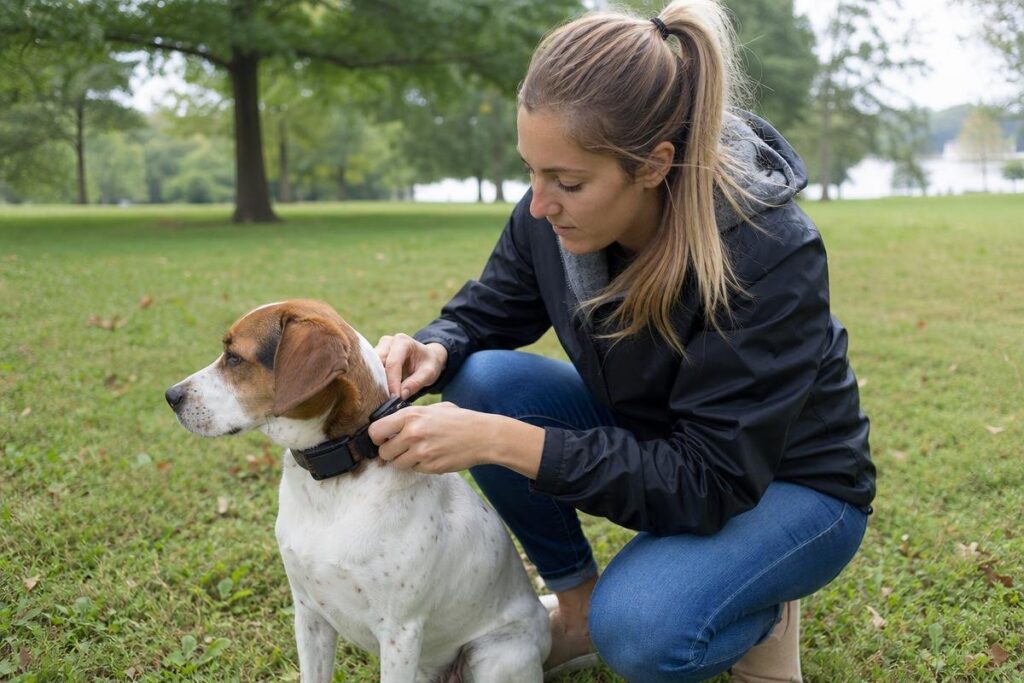

Choosing the right dog training collar is one of the first decisions new dog owners in Des Moines face, and the wrong choice slows progress before training even begins. All Dogs Unleashed Dog Training Des Moines works with collar-based training methods every day, and after helping hundreds of Central Iowa dogs and their owners build reliable obedience, we see firsthand how collar selection affects your dog’s responsiveness in real-world environments like the Principal Riverwalk or a busy neighborhood street. Here are the main collar types from a professional trainer’s perspective to help you make a confident, informed decision. Ready to put the right tools to work? Our trainers can walk you through collar selection as part of a structured training program.
Key Takeaways
- The right dog training collar depends on your dog’s size, temperament, and the specific behavior you are addressing.
- Remote e-collars offer precise, adjustable stimulation and are most effective when introduced through graduated exposure training.
- Flat collars, martingales, and remote trainers each serve different stages of a dog’s obedience development.
- Des Moines’ seasonal weather extremes require collars rated for moisture resistance and temperature durability.
- Professional guidance ensures your dog’s collar is fitted correctly and used in a way that produces reliable responsiveness.
The Four Main Types of Dog Training Collars Explained
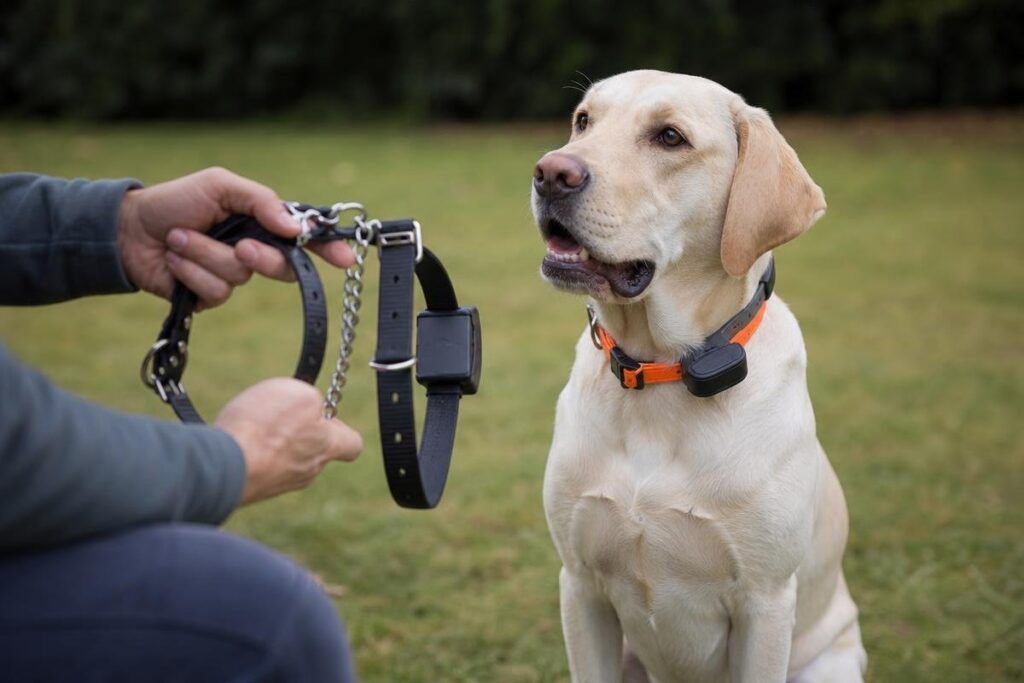
Choosing the wrong collar does not just slow your dog’s progress. It can create avoidance behavior, physical stress, or a complete breakdown in communication between you and your dog. Each collar type serves a specific mechanical and behavioral function, and understanding those functions from a trainer’s standpoint is the first step toward making a sound decision.
What Is a Flat Collar and When Should You Use One?
A flat collar is a fixed-length collar designed for light leash pressure, identification tags, and early obedience work where your dog already shows minimal resistance. They are appropriate when your dog is not pulling against the leash with consistent force. If your dog pulls hard, ask a qualified trainer or veterinarian which equipment is appropriate for your dog.
What Is a Martingale Collar and When Should You Use One?
A martingale collar is a limited-slip collar that solves a specific mechanical problem: dogs whose skull-to-neck ratio allows a standard collar to slip over the head. The design tightens to a preset point under pressure and releases when tension drops. A qualified trainer or veterinarian can help determine whether it is suitable and correctly fitted for your dog. Sighthound breeds and escape-prone dogs benefit most from this design, particularly in high-distraction environments like the Saylorville Lake trail where pedestrians, cyclists, and other dogs create constant pull triggers.
If your dog is already pulling consistently on walks, our guide on how to stop a dog from pulling on the leash covers the behavioral side of that problem in detail.
Prong Collar
Prong collars distribute pressure across blunted metal links positioned around the neck, producing a sensation that functions similarly to scruff pressure. When fitted correctly at the top of the neck and sized to the individual dog, the prong collar delivers a clear, momentary communication signal that most dogs respond to without escalation. Misuse, incorrect sizing, or low placement on the neck produces the opposite result: avoidance behavior, increased anxiety, and a dog that associates the discomfort with the environment rather than the behavior.
Our in-home dog training in Des Moines programs address prong collar introduction as part of a consistent daily protocol, never as a standalone correction.
Remote E-Collar
The remote e-collar is the most misunderstood category in this group. Remote training collars deliver adjustable stimulation. Device selection, stimulation levels, and training approach should be determined with a qualified trainer and, when health concerns are present, a veterinarian.
Off-leash reliability at locations like Gray’s Lake Park or Waterworks Park, where retriever breeds and high-energy dogs face constant environmental distractors, is one of the primary reasons our trainers integrate remote collars into board and train programs in Des Moines. The tool does not train the dog. The protocol does. The brand references below are provided for informational purposes only, and any tool we use in our programs is selected based on your individual dog’s needs.
How to Match the Right Collar to Your Dog’s Size, Breed, and Temperament
Selecting a dog training collar based on size alone is one of the most common errors new owners make. Breed provides useful starting information, but temperament, training history, the specific behavioral problem you are addressing, and your own handler experience all factor into the final selection. Our trainers conduct a behavioral evaluation before recommending any collar, particularly for dogs with a history of fear reactivity or aggression.
Small Breeds and Puppies
Puppies and small breeds need individualized guidance before any correction-based collar is considered. A veterinarian and qualified trainer can help determine whether a collar is appropriate for your dog’s age, size, health, and training needs.
For this group, flat collars and properly fitted martingales are the appropriate starting point. If you are working through foundational obedience with a young dog, our puppy training in Des Moines program addresses collar introduction as part of a day-to-day training schedule, not as a standalone tool decision.
Which Training Collar Is Best for High-Drive and Working Breeds?
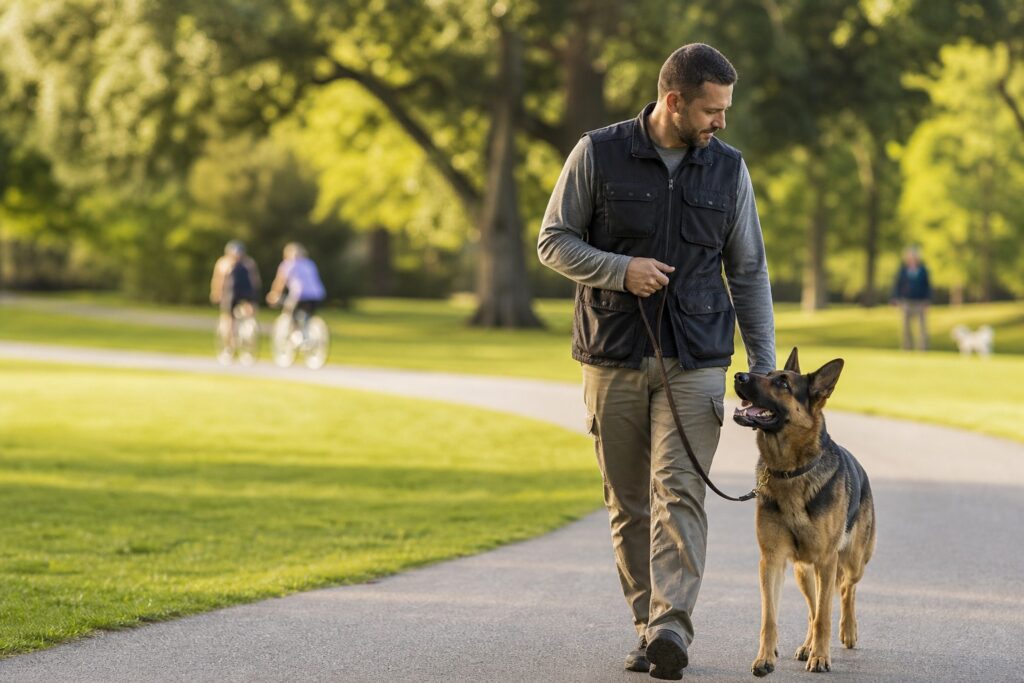
For high-drive and working breeds, the appropriate equipment and training method depend on the individual dog and should be selected with a qualified trainer. German Shepherds, Belgian Malinois, Labrador Retrievers, and Vizslas, a breed common in Iowa hunting communities, frequently reach threshold moments where a flat collar or martingale produces no meaningful communication.
At peak arousal, the pressure from those tools simply does not register. A properly introduced correction tool gives our trainers a signal that cuts through distraction at busy spots like Raccoon River Park, where cyclists, pedestrians, and other dogs create constant competing stimuli.
High-drive dogs are not difficult dogs. They require a collar that matches their drive level and a handler who knows how to use it consistently. Our trainers build that handler skill alongside the dog’s response, so the tool works in real-world scenarios, not just controlled settings.
Working with a high-drive breed? Our board and train program is built for dogs like yours. Schedule a collar fitting consultation with our team.
Reactive and Fear-Based Dogs
Reactive and fear-based dogs require the most careful collar selection of any group. A dog already operating in fight-or-flight can have that physiological state intensified by an improperly introduced correction tool, making the behavioral problem worse and reducing the dog’s capacity to learn. Collar selection for this group is a safety and welfare decision before it is a training decision.
Our trainers assess the specific trigger profile, arousal threshold, and behavioral history before any collar recommendation is made. Graduated exposure training is typically built into the process before any correction-based tool is introduced. If your dog shows reactivity on leash, read our guide on how to calm a reactive dog on Des Moines walking trails before making any collar change on your own.
What Professional Trainers in Des Moines Actually Use, and Why
Attempting to choose a training collar without understanding how professional trainers actually apply these tools leads to inconsistent results and, in some cases, sets back behavioral progress. Our trainers work with dogs across the Polk County area daily, and the collars we reach for depend entirely on the dog’s current behavioral baseline, distraction threshold, and training phase.
E-Collar Integration in Residential Training
Our board and train programs in Des Moines introduce e-collar work only after your dog has acclimated to the residential environment and demonstrated a working understanding of foundational commands. Graduated exposure training is the standard protocol. Your dog begins at the lowest effective stimulation level, and the remote training collar is never paired with a command until your dog already understands what that command means. This sequence prevents avoidance responses that result from premature or improper e-collar introduction.
Our dog training programs in Des Moines are structured so the e-collar becomes a communication interface, not a correction device used in frustration. The distinction matters enormously in the East Village and other busy urban areas, where foot traffic, restaurant patios, and other dogs create layered distractions that expose every gap in a dog’s training.
Prong Collar Use in Leash Reactivity and Obedience Work
Dogs that pull, lunge, or become reactive on leash often need a communication tool that a flat collar simply cannot provide in high-distraction environments. Our trainers use the prong collar as a transitional tool during early obedience phases, particularly for leash reactivity work at locations like Gray’s Lake Park, where foot traffic, cyclists, and off-leash dogs create constant pressure. The mechanical feedback a prong collar delivers is immediate and proportional, which gives handlers a communication advantage during the early stages of conditioning.
Once your dog demonstrates reliable responsiveness, the prong collar is phased out in favor of a flat collar or remote training collar. The prong collar vs e-collar decision is not permanent. It reflects where your dog is in the training process, not a long-term management strategy.
Why the Collar Is a Tool, Not a Training Program
No collar produces a trained dog on its own. Purchasing the best e-collar on the market and putting it on your dog without a structured protocol, consistent handler mechanics, and a clear behavioral framework will not produce reliable responsiveness. The collar is a communication interface. What produces results is the consistent daily protocol, the handler’s timing, and the behavioral framework our trainers build around the tool.
Our trainers at (515) 480-7977 can assess your dog’s current behavioral baseline and recommend the right collar approach for your specific situation.
Common Collar Mistakes New Dog Owners Make, and How to Avoid Them
Attempting to correct persistent behavioral problems with the wrong collar fit or the wrong timing produces one consistent outcome: a dog that is confused, not corrected. Our trainers across Polk County see the same failure modes repeated by well-intentioned owners who purchased the right tool and then applied it incorrectly. These three mistakes account for the majority of collar-related setbacks we address in in-home dog training sessions.
How to Size a Dog Training Collar Correctly
A flat collar or martingale requires the two-finger rule: you should be able to slide two fingers beneath the collar, but no more. Prong collars demand a different standard entirely. Correct placement varies by dog and should be assessed by a qualified trainer. Incorrect fit can reduce the tool’s effectiveness and comfort. Professional fitting is advised for prong collar placement because fit and suitability vary by dog.
A remote training collar introduces a separate fit problem. Worn too loosely, it produces inconsistent skin contact between the contact points and the dog’s neck. That inconsistency erodes the conditioned response because the stimulation becomes unpredictable. The collar should sit snug enough that both contact points maintain firm contact, with no gap, particularly during movement.
Skipping Acclimation
New dog owners frequently place a remote training collar on a dog and begin using stimulation the same day. The dog has no conditioned understanding of what the sensation means, so the stimulation functions as a random aversive event rather than a communication signal. Acclimation is a graduated exposure training process: the dog learns to associate the collar’s presence with neutral or positive experiences before any stimulation is introduced. Skipping this period does not accelerate training. It delays it, sometimes significantly.
Dogs tested at high-distraction environments like Raccoon River Park or the Saylorville Lake trail system will fail reliably if the acclimation period was compressed or skipped. The collar cannot perform above the level of the foundation built before it was ever activated.
Using a Correction Tool Without a Conditioned Response Foundation
A correction tool applied before the target behavior exists has no instructional value. It is an aversive stimulus with no meaning attached. If your dog does not yet understand a reliable sit or recall in a low-distraction environment, introducing a prong collar or e-collar to enforce those behaviors will not teach the behavior. It will teach the dog that unpredictable discomfort occurs in your presence.
Behavioral foundation must precede collar introduction. Our dog training programs build that foundation first, then introduce collar tools in sequence, so your dog understands exactly what each stimulus means before it is used to reinforce a standard. That sequence is what separates collar training that works from collar training that damages trust.
Collar Training in the Context of Des Moines Dog Life
Collar reliability is not an abstract concern in Central Iowa. The real test happens at Gray’s Lake Park on a Saturday morning, when your dog spots three cyclists, two off-leash retrievers, and a squirrel in the span of thirty seconds. These are exactly the conditions under which a flat collar loses its communication value entirely.
High-Distraction Environments
The Principal Riverwalk trail system, Raccoon River Park, and Waterworks Park off-leash areas present simultaneous distractors that a controlled backyard session cannot replicate: pedestrian traffic, cyclists, reactive dogs, and wildlife all competing for your dog’s attention at once. A dog’s conditioned response to a flat collar degrades quickly at threshold in these environments. A properly fitted remote training collar or prong collar maintains a reliable communication channel precisely when distraction pressure peaks.
If you are working toward off-leash reliability in public spaces, read 7 signs your dog is ready to move off-leash in public before testing your dog in these areas. For dogs that already show reactivity on trail walks, how to calm a reactive dog on Des Moines walking trails covers graduated exposure training specific to this environment. Our board and train programs include real-world proofing in high-distraction settings so your dog’s response holds when it matters.
Iowa Weather and Collar Durability
Polk County summers push humidity above 80 percent, and winters regularly drop below 10 degrees Fahrenheit. Standard nylon flat collars and martingales absorb moisture, develop odor, and lose stitching integrity within a single Iowa season. Biothane and coated nylon resist moisture absorption and hold up across both extremes without degrading.
For retriever owners training near the Des Moines River corridor or Saylorville Lake, select an e-collar rated IPX7 or higher for waterproofing. Stainless steel prong collar links are appropriate for the local climate, but inspect each link for rust after wet seasons. Material selection is not a minor detail. It determines whether your collar is still functioning reliably by spring.
Frequently Asked Questions
Is an e-collar safe for my dog?
E-collar suitability depends on the individual dog, handler knowledge, acclimation, and appropriate use. Consult a qualified trainer and veterinarian before using one, especially if your dog has health or behavior concerns.
What is the difference between an e-collar and a shock collar?
Early-generation devices delivered fixed, high-level stimulation with no adjustment. Modern units from manufacturers such as Dogtra, E-Collar Technologies, and Garmin Alpha offer 100-plus adjustable levels, making the older shock collar comparison largely outdated. The behavioral mechanism and handler control are entirely different. These brand names are shared for informational purposes only.
At what age can I start using a training collar on my puppy?
Collar choice for a puppy depends on age, size, health, and training needs. Consult a veterinarian and qualified trainer before using any correction-based collar. Our puppy training in Des Moines program can help build a foundation for safe, age-appropriate training.
Do professional dog trainers in Des Moines recommend prong collars?
The prong collar is a transitional tool selected through professional behavioral assessment, not a universal recommendation. Improper use produces avoidance behavior and erodes trust. Our team at 699 Walnut St Ste 400, Des Moines, IA 50309 determines suitability on an individual basis.
Can I use a training collar without professional help?
Flat collars and martingales can be owner-managed with correct fitting and a structured protocol. Prong collars and e-collars require professional instruction for timing precision. Our in-home dog training in Des Moines gives you guided, real-world practice in your own environment.
How do I know which dog training collar is right for my dog’s breed?
Breed, size, coat type, and temperament all factor into the right selection for dog training collar use. A behavioral evaluation removes the guesswork entirely. Call our team at (515) 480-7977 to schedule an assessment. We will review your dog’s history and tell you exactly which tool fits and how to use it correctly from day one.
The right collar is one part of the equation. The structured training protocol behind it is the other. Call us at (515) 480-7977 or visit 699 Walnut St Ste 400, Des Moines, IA 50309 to get started.
Ready to Get Started with All Dogs Unleashed Dog Training Des Moines?
Call (515) 480-7977 to speak with our team directly. We’re ready to answer your questions, walk you through your options, and help you find the right solution for your needs. Whether you’re just starting to plan or ready to move forward, we’ll make the process simple and stress-free. Reach out today and let’s talk about how we can help.