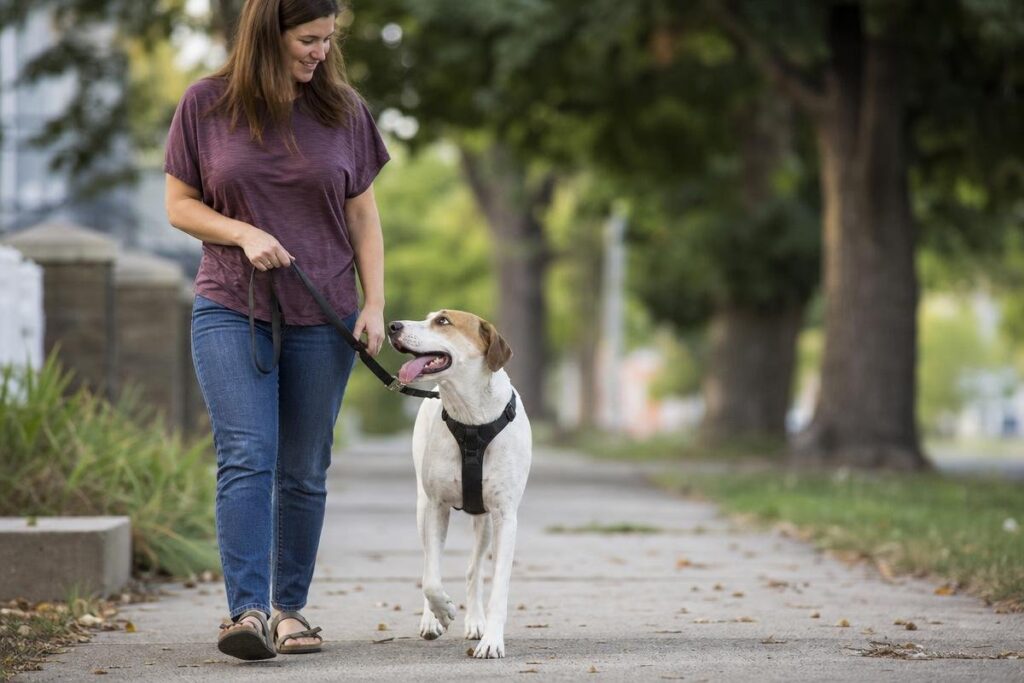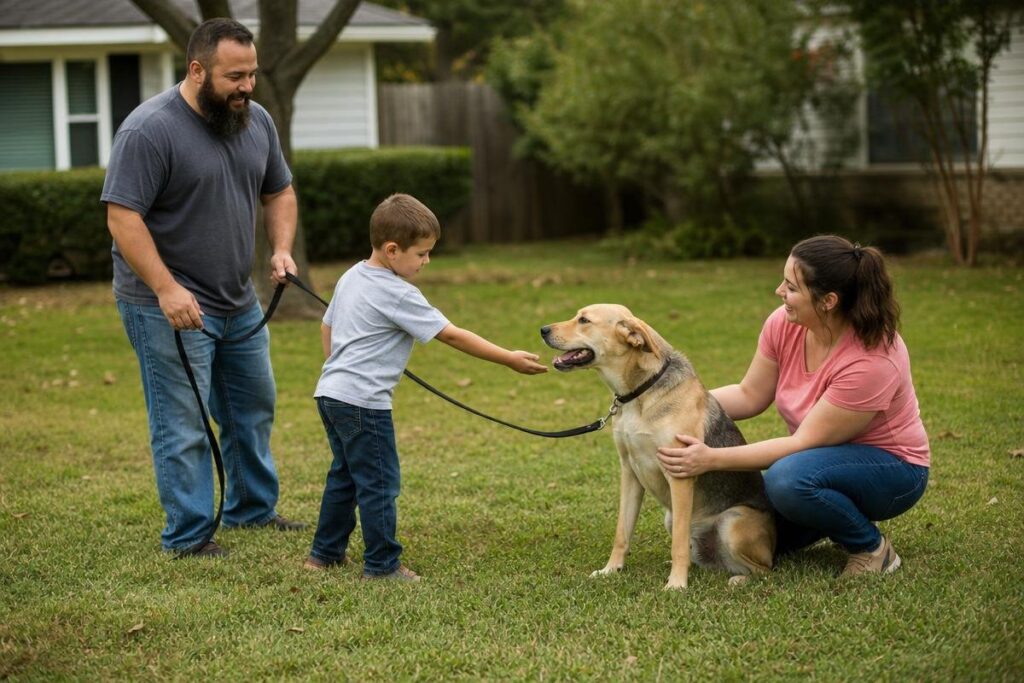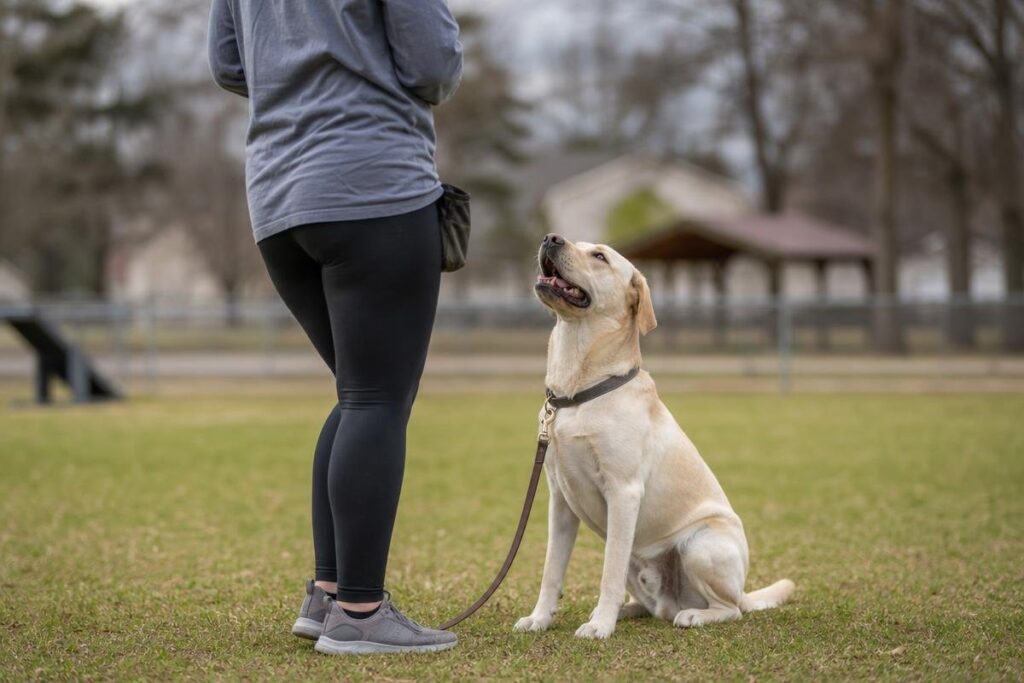

Rescue dog training requires a different approach than starting with a puppy raised in a stable home. Adopted dogs arrive with unknown histories, unresolved fear responses, and behavioral patterns that standard obedience methods often fail to address. At All Dogs Unleashed Dog Training Frisco, located at 6136 Frisco Square Blvd, #400 in Frisco's Frisco Square district, our behavior rehab protocols are designed specifically to address the underlying triggers of anxiety, reactivity, and avoidance in shelter and rescue dogs.
Our trainers provide structured support for adopted dogs as they adjust to new routines and environments.
Ready to give your rescue dog a stable foundation? Our team is ready to help.
Key Takeaways
- Rescue dog training must target the underlying triggers of fear and reactivity, not just surface-level obedience commands.
- An initial decompression period can help a newly adopted dog settle before formal training begins.
- Frisco's busy suburban environment creates specific distraction challenges that require systematic, progressive exposure protocols.
- Board and train programs can provide a structured setting for rescue dogs with moderate to severe rehabilitation needs.
- Lifetime support after training helps Frisco adopters maintain compliance as their rescue dog encounters new environments.
Why Rescue Dogs Require a Different Training Approach
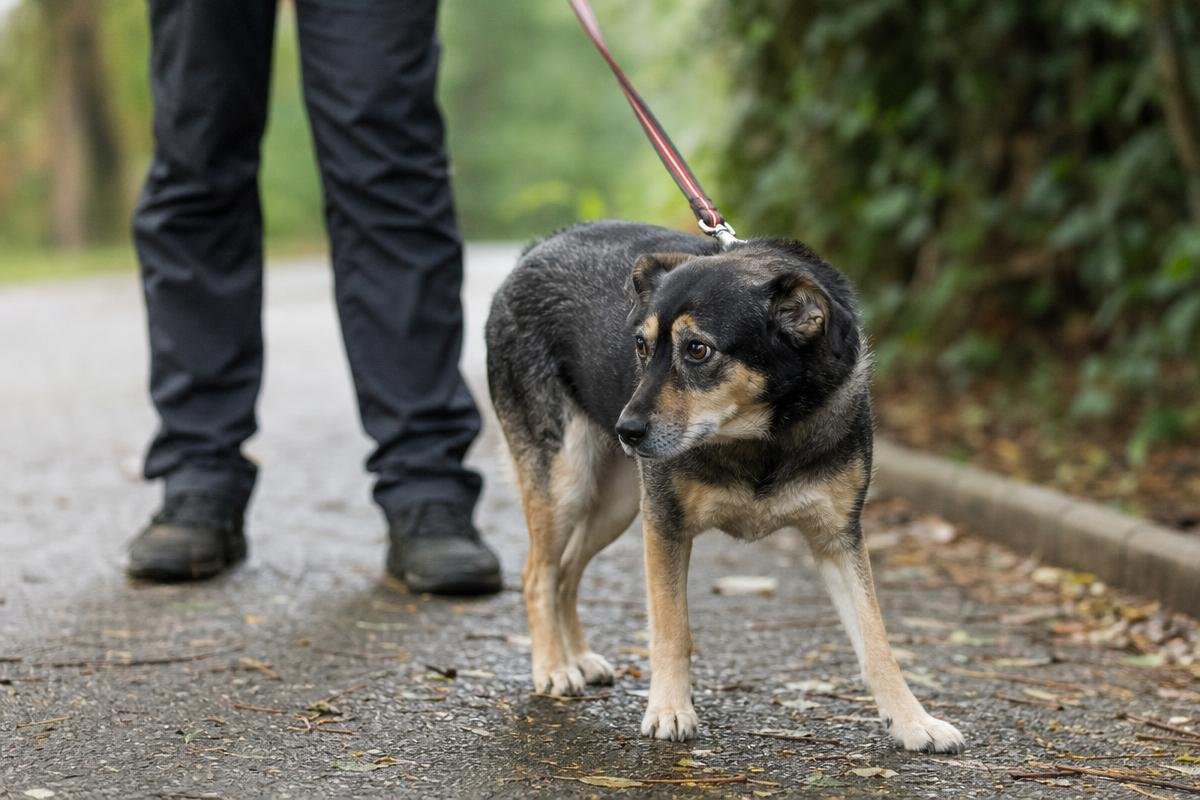
Standard obedience protocols assume a baseline: a dog with a known socialization history, manageable stress levels, and the neurological readiness to acquire new behaviors. Rescue dogs frequently meet none of those conditions. Beginning formal training without first conducting a behavioral assessment risks reinforcing avoidance patterns or triggering defensive aggression before trust is established.
The Role of Unknown Behavioral History
Adopted dog behavior problems often trace back to early-life experiences that are entirely invisible to the new owner. Reactivity, resource guarding, and fear responses each have an originating stressor. Without documented history of prior training, socialization, or trauma exposure, corrective training must begin with assessment rather than assumption.
Dogs adopted from Collin County shelters and rescue organizations arrive in a dense suburban environment with high-traffic corridors, active parks, and constant pedestrian activity. That environmental load amplifies stress responses in dogs already dysregulated from shelter life. Our team conducts a structured behavioral assessment before any obedience protocol is applied, identifying the specific triggers your dog carries into your home. Learn more about how our in-home dog training in Frisco applies this assessment-first model.
How Shelter Stress Affects Learning and Compliance
Shelter and transition stress can affect a dog's behavior and ability to settle in a new home.
Fear and anxiety in rescue dogs are not corrected by obedience repetition alone. Targeted intervention addressing the physiological stress state must precede any compliance work. Our dog board and train services in Frisco are structured to account for this decompression window before systematic training begins.
Tip 1: Allow a Structured Decompression Period Before Formal Training
Why Decompression Comes First
Rescue dogs entering a new home may need time to adjust before formal obedience training begins. Owners who begin commands, environmental exposure, or social introductions within the first day or two frequently report that their dog "won't listen," when the actual driver is neurological overload, not disobedience. Decompression is not passive waiting. It is a deliberate protocol designed to reduce baseline arousal and prepare your dog to receive instruction.
An initial decompression period can include a designated sleeping area, predictable feeding times, and minimal exposure to new people or animals. Keep the environment low-stimulation. This gives your dog time to settle into the new routine before formal training begins.
The dense suburban environment surrounding the Frisco Square area, with its high pedestrian traffic, active commercial corridors, and busy residential streets, makes controlled home decompression especially important before applying any training in public settings. Your dog's first week at home is not lost training time. It is foundational preparation. If you are considering in-home dog training in Frisco, our team can assess your dog's decompression readiness before any formal protocol begins. Call (972) 573-1715 to schedule an evaluation.
Tip 2: Establish Foundational Compliance Before Adding Distractions
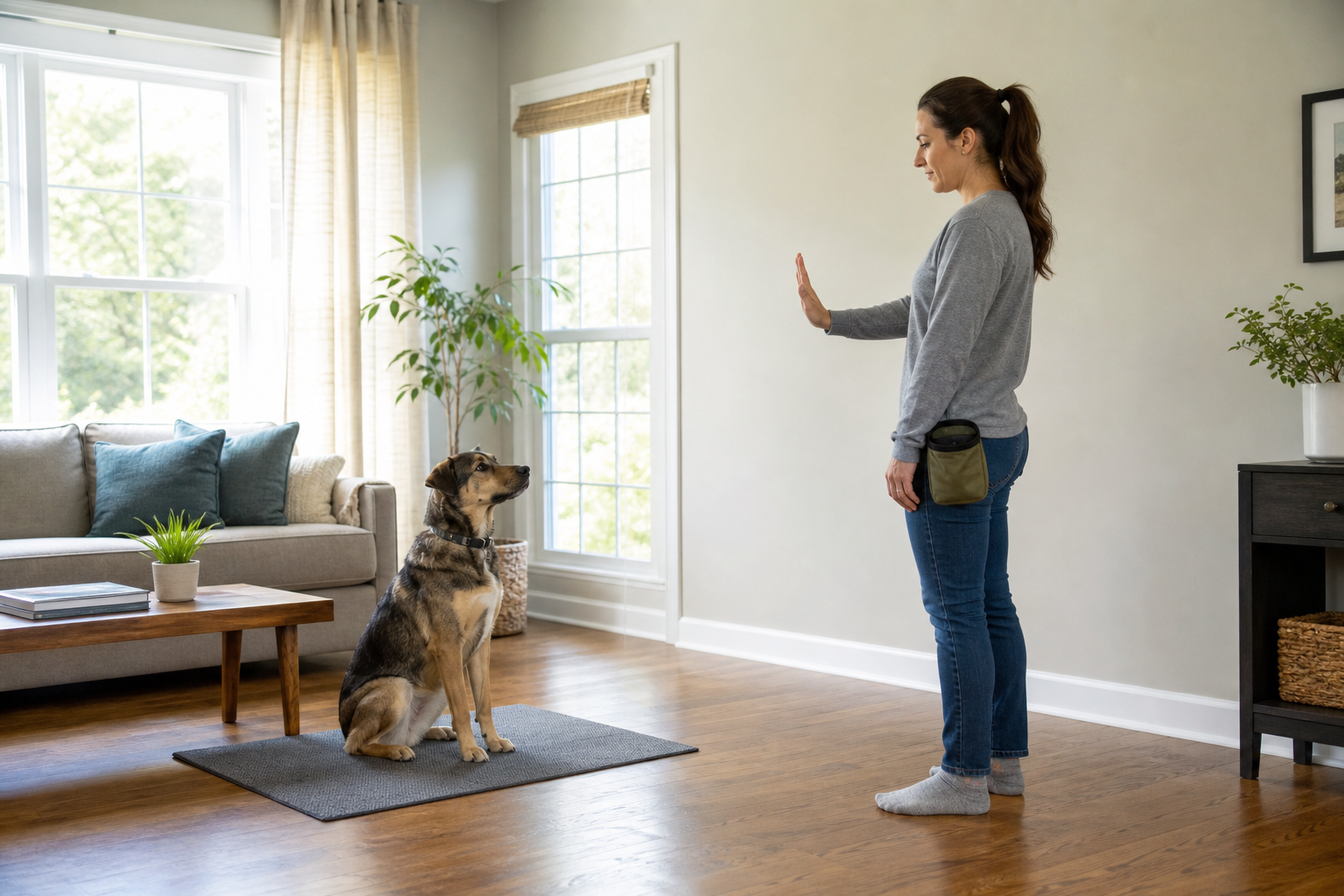
Build Fluency Indoors First
Rescue dog obedience training fails most often when owners move too fast. A dog that responds reliably in the living room will frequently ignore the same commands the moment it encounters vehicle traffic, cyclists, or other dogs outdoors. That gap is not a training failure; it is a sequencing failure.
Foundational commands, sit, down, stay, and come, must be trained to fluency in a low-distraction indoor environment before any outdoor exposure begins. Frisco's suburban residential streets present significant distraction loads even on a short neighborhood walk. Attempting to proof commands in those conditions before indoor fluency is established produces inconsistent results and erodes the handler's ability to communicate clearly with the dog.
The progressive distraction-proofing model moves systematically from controlled indoor settings to low-distraction outdoor areas, then to moderate and high-distraction environments. Distraction-proofed compliance is the measurable standard, not obedience under ideal conditions only. In-home dog training in Frisco is a structured format that builds foundational compliance in the dog's actual living environment, establishing reliable responses before public exposure begins.
Understanding how to train a rescue dog means accepting that patience in the sequencing phase prevents months of regression later. Outdoor destinations such as Frisco Commons Park and the Cottonwood Creek Trail are appropriate only after foundational compliance is confirmed, not before.
Tip 3: Identify and Address Fear and Anxiety as the Underlying Trigger
Recognizing Fear-Based Behavioral Signals
Fear and anxiety in rescue dogs are frequently misread as stubbornness or willful non-compliance, and that misidentification leads directly to training failures. Specific physiological signals distinguish a fear response from defiance: whale eye, lip licking outside of food context, yawning unrelated to fatigue, low tail carriage, piloerection along the spine, and sudden freezing or stillness. Recognizing these signals accurately is the first step in any targeted intervention.
Applying compulsion-based corrections when a dog is displaying these signals does not produce compliance. It escalates the fear response and can produce defensive aggression. Owners should document when and where these signals occur, noting the specific environment and stimulus, before any training protocol begins. Our trainers cover 8 fear aggression signs in dogs Frisco owners should not ignore in detail for adopters who need a clear reference point.
Desensitization and Counter-Conditioning Protocols
Desensitization requires systematic, graduated exposure to a fear trigger at sub-threshold intensity. The dog is exposed at a distance or intensity that does not produce a visible fear response, then exposure is increased only after the dog demonstrates consistent calm at the prior level. Premature advancement through exposure levels is the most common reason these protocols fail.
Counter-conditioning pairs each sub-threshold exposure with a high-value reinforcer to build a new emotional association with the trigger. Around the Stonebriar area, busy commercial corridors and high-pedestrian public spaces present numerous potential triggers for adopted dogs. Identifying your dog's specific threshold before entering those environments is not optional. If your dog's fear response is severe or producing aggression, in-home dog training in Frisco allows these protocols to be applied in the dog's own environment first.
Not sure if your rescue dog is ready for public outings? Schedule a behavioral assessment at (972) 573-1715 and we will map the right next step.
Tip 4: Use Consistent Marker Training to Build Communication
Establishing a Single Clear Signal
Dogs adopted across the Frisco area often arrive having encountered multiple handlers using entirely different cue systems. That inconsistent prior exposure produces confusion, not defiance. Marker training solves this by establishing a single, unambiguous communication signal that tells your dog the exact moment a correct behavior occurred.
A marker, either a clicker or a verbal cue such as "yes," bridges the gap between the behavior and the reward. Timing is the critical variable. Prompt, consistent timing helps your dog connect the marker with the behavior. Handler inconsistency in timing is the source of most marker training failures, not the dog's capacity to learn.
For rescue dogs with shelter stress or prior handling trauma, a verbal marker is often preferable to a clicker in early sessions. Many shelter-stressed dogs are noise-sensitive, and a clicker can function as an aversive stimulus rather than a neutral signal. A calm, consistent verbal mark removes that variable and reduces the social pressure of close handler proximity, which can itself be a trigger for dogs with difficult handling histories.
Our in-home dog training in Frisco applies marker-based protocols from the first session, giving your rescue dog a clean communication baseline regardless of prior exposure. Contact us at (972) 573-1715 to schedule an assessment.
Tip 5: Address Leash Reactivity Early and Systematically
Matching the Protocol to the Cause
Leash reactivity, defined as lunging, barking, or pulling toward other dogs, people, or moving objects, is one of the most frequently reported adopted dog behavior problems and one of the most commonly mismanaged. In high-density suburban environments with active pedestrian corridors and busy parks, this behavior directly limits where and when you can exercise your dog.
Reactivity is not aggression. It is typically a manifestation of frustration, fear, or over-arousal, and correctly identifying the source behavior determines the entire intervention design. Fear-based reactivity requires desensitization and counter-conditioning protocols. Frustration-based reactivity requires impulse control work. Applying the wrong protocol to the wrong source delays progress and can worsen the behavior. Our guide on how to train a dog to stop barking at other dogs in Frisco covers this distinction in detail.
Threshold management is the foundational technique here. It involves keeping your dog below its reactive threshold during sessions by controlling distance from triggers, then systematically reducing that distance as calm behavior becomes reliable. Leash corrections applied at or above threshold increase arousal and worsen reactivity over time, embedding the correction into the trigger chain rather than interrupting it.
Starting this work early, before reactivity becomes a conditioned pattern, produces faster, more durable results. Our in-home dog training in Frisco allows threshold work to begin in your dog's actual environment, where triggers are real and controlled exposure is possible from day one.
Leash reactivity is manageable with the right protocol applied early. Call our team at (972) 573-1715 to discuss a targeted intervention for your rescue dog.
Tip 6: Establish a Predictable Daily Routine as a Behavioral Foundation
Predictability Reduces Baseline Stress
Rescue dogs that have experienced multiple placements, shelter rotations, or neglect frequently display heightened anxiety in unpredictable environments, and that anxiety directly impairs learning and compliance. Inconsistency in daily structure is one of the most common reasons progress stalls when owners are working on how to train a rescue dog at home. Predictability functions as environmental reinforcement: your dog learns its surroundings are safe and controllable, which reduces vigilance behaviors and frees cognitive resources for learning.
A structured daily routine with fixed feeding times, consistent exercise windows, scheduled training sessions, and a designated sleeping area reduces baseline cortisol levels and creates the environmental stability that makes progress possible. Routine is not merely a management tool. For dogs with trauma histories, it is a core component of the rehabilitation protocol itself.
Suburban households in the 75034 and 75035 zip codes often have variable schedules driven by work hours, school pickups, and weekend activity patterns. That variability creates exactly the schedule inconsistency that anxious rescue dogs respond to most poorly. Even minor disruptions can reset progress in highly reactive dogs, which means handler compliance with the routine is as important as your dog's compliance with commands.
If your household schedule makes consistency difficult to maintain, in-home dog training in Frisco allows a trainer to build a protocol around your actual daily structure rather than a generic framework.
Tip 7: Socialize Progressively, Not Immediately
Sequencing Social Exposure Safely
Premature socialization is one of the most common mistakes owners make with rescue dogs. Introducing your dog to new people, animals, or high-stimulation environments before foundational compliance and emotional stability are established produces negative conditioning, not positive social associations. Rescue dog obedience training must follow a specific sequence: foundational compliance first, controlled low-stimulation social exposure second, public environment exposure third.
Progressive socialization follows the same graduated exposure model used in desensitization protocols. New stimuli are introduced at low intensity and short duration. Positive outcomes are reinforced, and intensity increases only when your dog demonstrates consistent calm behavior at the current level. This approach is categorically different from flooding, which involves overwhelming exposure to a stimulus and is contraindicated for rescue dogs with fear histories. Flooding can produce learned helplessness or trigger defensive aggression.
Dog-friendly parks and trail systems across zip codes 75034, 75035, and 75033 are appropriate socialization destinations, but only after your dog has achieved reliable leash compliance and demonstrated stable social behavior in controlled settings. These are high-stimulation environments with dense pedestrian traffic, unfamiliar dogs, and unpredictable movement. They are not suitable venues during early rehabilitation. For guidance on sequencing public outings correctly, review our dog training programs in Frisco, TX to understand how our structured progressions are built.
Tip 8: Work with a Professional Trainer for Behavior Rehabilitation
When Professional Intervention Is Necessary
Some rescue dog behaviors exceed what owner-led training can resolve. Aggression, severe separation anxiety, resource guarding, and trauma-based reactivity are not corrected through patience alone. These are consolidated behavioral patterns with identifiable causes that require targeted, systematic intervention from an experienced trainer.
Specific indicators that professional help is needed include a dog that has bitten, a dog that cannot be left alone without destructive or self-injurious behavior, or a dog that has not responded to structured owner-led training after four to six weeks of consistent effort. Delayed intervention allows those patterns to consolidate further, making rehabilitation more time-intensive. If your rescue dog displays any of these behaviors, contact a professional before the behavior escalates.
What to Expect From a Structured Training Program
All Dogs Unleashed Dog Training Frisco offers program formats matched to the behavioral profile of your rescue dog and your schedule. Dog board and train services in Frisco offer a structured program that includes owner guidance to support follow-through at home. Private lessons and in-home dog training in Frisco address behavioral issues within your dog's actual environment, which is particularly effective for context-specific reactivity.
Lifetime support is provided after program completion, so rescue dog obedience training does not end when the structured program does.
Rescue Dog Training in Frisco: Local Context and Resources
Rescue dog training in this area carries specific environmental demands that generic obedience programs do not account for. North Texas's rapid residential growth has driven higher pet adoption rates from local shelters and rescue organizations, placing more dogs with behavioral histories into suburban households that are dense with distractions. Busy commercial corridors, high pedestrian traffic, and active public parks create distraction-proofing challenges that require systematic protocols before a rescue dog is ready for those environments.
Our training center is located at 6136 Frisco Square Blvd, #400, Frisco, TX 75034, within the mixed-use district that is accessible from both the western and eastern residential corridors across zip codes 75034, 75035, and 75033. Adopters working through our dog board and train services in Frisco or in-home dog training in Frisco receive programs matched to their rescue dog's specific behavioral profile, not a standardized curriculum.
Dog-friendly trail systems and parks throughout the area are appropriate destinations after foundational compliance is established, not during the decompression or early training phases. Call (972) 573-1715 to discuss which program format fits your rescue dog's current behavioral baseline.
Frequently Asked Questions
How long does it take to train a rescue dog?
Foundational compliance skills, including sit, down, stay, and recall in low-distraction environments, typically require 4 to 8 weeks of consistent, structured training. Dogs with fear-based or trauma-related behavioral patterns require 3 to 6 months of progressive rehabilitation before reliable responses are established across varied environments.
What is the most common behavioral problem in rescue dogs?
Leash reactivity, separation anxiety, and resource guarding are reported most frequently in newly adopted dogs. These problems share a common source: unresolved anxiety combined with absent foundational compliance. Addressing the anxiety first, rather than the surface behavior, produces more durable results.
Should I use positive reinforcement or corrections with a rescue dog?
Methodology must match your dog's behavioral profile. Dogs with documented fear histories or trauma responses are poor candidates for compulsion-based corrections during early training stages. Marker-based reinforcement builds communication and trust before any correction protocol is introduced.
Can a rescue dog with aggression be trained?
Most dogs displaying aggression can be improved significantly when the underlying triggers are correctly identified. Fear-based aggression, resource guarding, and territorial aggression each require different protocols. A professional assessment can identify the trigger pattern and the appropriate training approach.
Is board and train appropriate for a newly adopted rescue dog?
Our board and train program is effective for rescue dogs when owners lack the time or experience for consistent daily training. Multiple training sessions per day accelerate behavioral progress. A structured handler training session at program conclusion transfers those gains to you at home.
How do I know if my rescue dog needs professional training?
If your dog is displaying fear-based reactivity, aggression, separation anxiety, or is not responding to owner-led training after several weeks of consistent effort, professional assessment is warranted. Early intervention produces better outcomes. Established behavioral patterns become progressively more difficult to modify the longer they go unaddressed.
Contact our team at (972) 573-1715 for a behavioral assessment. We will identify the source behavior and recommend the program format, whether in-home dog training, private lessons, or board and train, that matches your dog's current behavioral profile.
Ready to Get Started with All Dogs Unleashed Dog Training Frisco?
Call (972) 573-1715 to speak with our team directly. We're ready to answer your questions, walk you through your options, and help you find the right solution for your needs. Whether you're just starting to plan or ready to move forward, we'll make the process simple and stress-free. Reach out today and let's talk about how we can help.