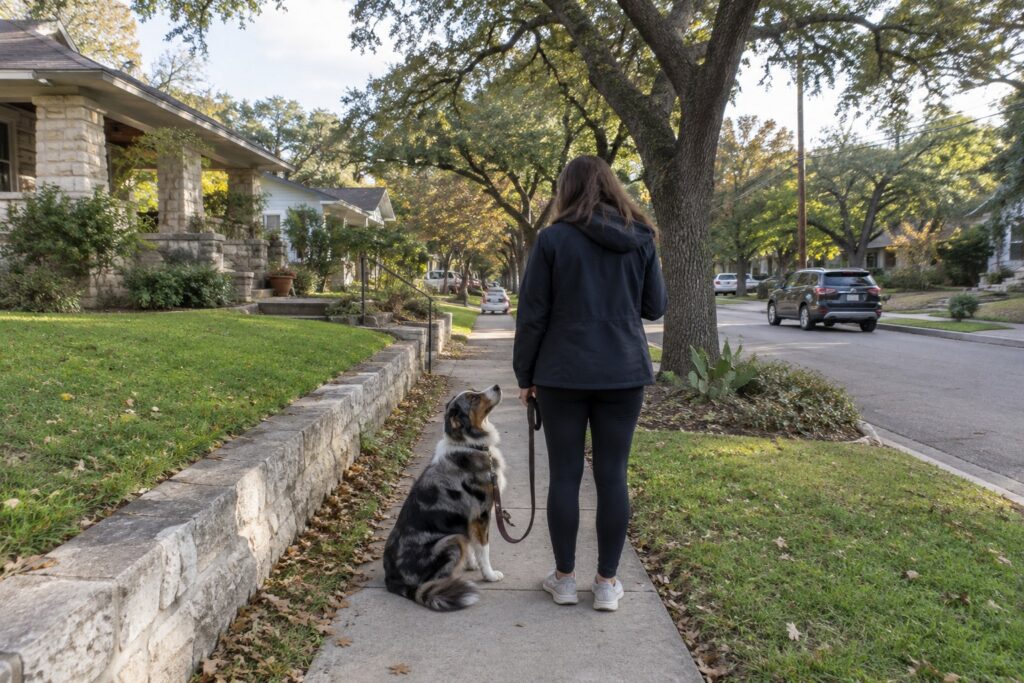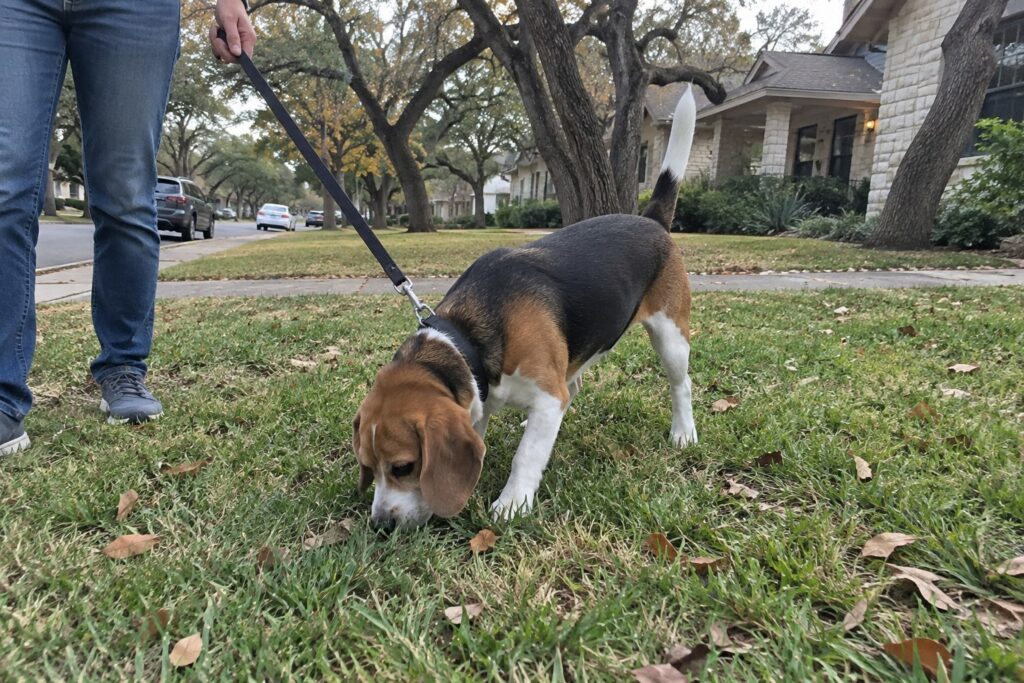

Choosing between positive reinforcement dog training and balanced methods is one of the most common questions Fort Worth dog owners ask us. Both approaches can produce results, but they work differently, and the right fit depends on your dog’s temperament, history, and your goals. We work with dogs of all breeds, ages, and temperaments across Tarrant County from our facility at 4011 Benbrook State Route, Fort Worth, TX 76116. Here is an honest look at how these methods compare. Want to know which training approach is right for your dog? We can help you figure that out.
Key Takeaways
- Positive reinforcement dog training uses rewards to build behavior, while balanced methods also apply corrections when needed.
- Neither approach is universally superior. Your dog’s temperament and history should guide the choice.
- Fort Worth’s heat, dense neighborhoods, and high-distraction trails all affect how and where training should be applied.
- All Dogs Unleashed backs every training program with a money-back guarantee and lifetime support for the full life of your dog.
Two Very Different Answers from Fort Worth Trainers
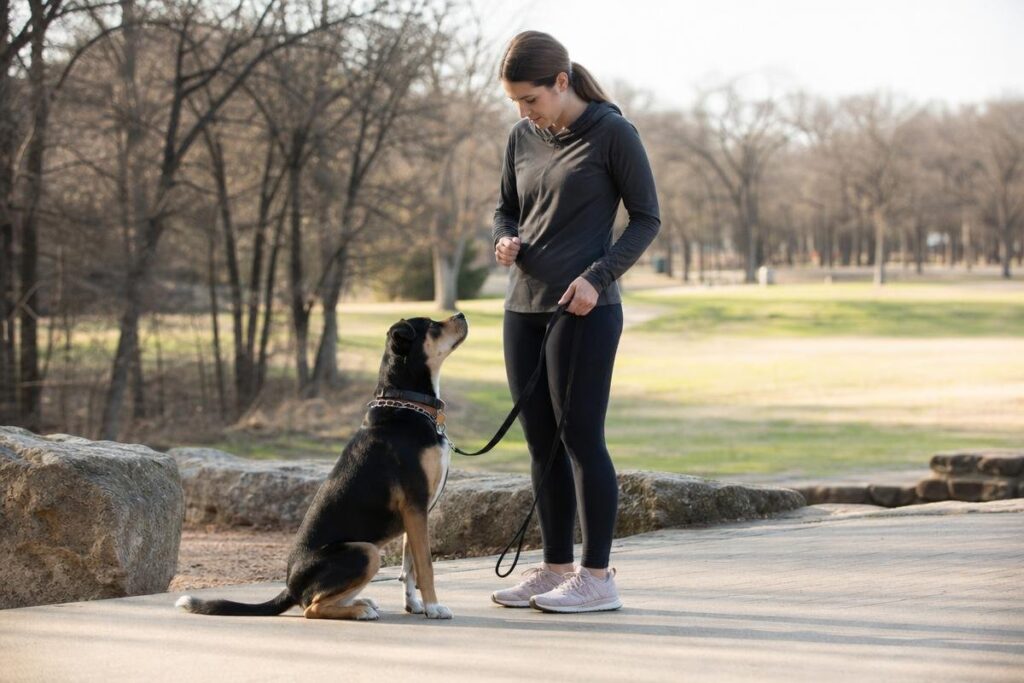
Fort Worth dog owners hear two very different things from trainers. One says use only food treats and praise. Another says your dog needs clear leadership and consequences. Both sound confident. Both claim results. So who’s right?
That conflict is exactly what this article breaks down. You’ll get a plain-language look at positive reinforcement, balanced training, what the science actually says, and how to pick the right method based on your dog’s age, breed, and behavior history. If you have a young dog, our puppy training programs in Fort Worth are a good starting point since age shapes which approach works best.
No fluff. Just straight answers so you can make a smart call for your dog.
What Is Positive Reinforcement Dog Training, Really?
Positive reinforcement dog training is a method that uses rewards, whether food, praise, or play, to increase the likelihood a dog repeats a desired behavior. That is the core of it, but the term is also one of the most misunderstood in the dog training world. Most people assume “positive” means being nice or permissive. It doesn’t. In training science, “positive” simply means adding something. That one distinction changes everything about how you read the research.
The Four Quadrants of Operant Conditioning
Operant conditioning is the science of how behavior is shaped by consequences. There are four quadrants, and every training method falls somewhere inside them. Here’s what each one actually means:
- Positive reinforcement: Add something good to increase a behavior. Your dog sits, you give a treat, the dog sits more often.
- Negative reinforcement: Remove something aversive to increase a behavior. Pressure releases when the dog complies, so the dog complies to escape the pressure.
- Positive punishment: Add something aversive to decrease a behavior. A leash correction or a sharp “no” after an unwanted behavior.
- Negative punishment: Remove something good to decrease a behavior. Turn away and withhold attention when your dog jumps on you.
Reward-based training in Tarrant County focuses heavily on the first quadrant, though most real-world programs draw on more than one. We cover how that balance works in section three.
What Counts as a Reward
Food treats get all the attention, but they’re only one type of reinforcer. A reward is anything your dog works to get. That list is longer than most owners expect.
- Food treats (high-value or low-value depending on distraction level)
- Praise and verbal markers
- Tug play or a favorite toy
- Permission to sniff a fire hydrant or a patch of grass
- Life rewards: getting the leash clipped on, a door opened, or access to the yard
One thing worth knowing: Fort Worth summers regularly push past 100 degrees. Heat affects your dog’s physical state and appetite, which directly changes how responsive they are to food rewards. Shorter sessions with higher-value rewards work better in those conditions.
Common Behaviors Fort Worth Owners Work On
Operant conditioning isn’t just for puppies learning to sit. Owners across central Fort Worth neighborhoods like Ryan Place and Fairmount come to us with very specific problems. Dense foot traffic and close-set homes create real pressure on dogs that aren’t trained for it.
- Leash pulling on neighborhood sidewalks and the Trinity Trails and Benbrook Lake trails
- Nuisance barking triggered by pedestrians and neighboring dogs
- Jumping on guests at the front door
- Off-leash recall at high-distraction spots like Trinity Trails
Recall is especially important if you use any of the area’s off-leash parks. A dog that won’t come back reliably is a safety risk. If you’re starting with a new puppy, our team can build a plan around your dog’s specific needs from day one.
How Balanced Training Differs From Positive-Only Approaches
Balanced training is not just a polite word for punishment-based training. Balanced trainers work across all four quadrants of operant conditioning, using both rewards and well-timed corrections depending on the dog’s history, temperament, and the specific behavior being addressed. The corrections used vary widely, from leash pressure to verbal interrupters, and are matched to the individual dog.
Where Balanced Trainers Draw the Line
Ethical balanced trainers do not lead with corrections. A dog needs to understand what is being asked before any correction is introduced. When corrections are used, they come in at the lowest effective level and only after the dog has a clear picture of the expected behavior. A trainer who skips the teaching phase and goes straight to punishment is not practicing balanced training correctly, regardless of what they call their method.
This matters especially for rescue dogs common in the area, including bully breeds and hound mixes. Dogs coming from high-stress shelter environments need a clear, structured approach before any correction is appropriate.
The LIMA Principle
LIMA stands for Least Intrusive, Minimally Aversive. It is an ethical framework recognized by the CCPDT (Certification Council for Professional Dog Trainers) and used as a credentialing standard in the field. LIMA is not a method on its own. Both positive-only and balanced trainers can follow it.
- Rewards and relationship-building come first
- Corrections are introduced only when necessary and at the minimum effective level
- The dog’s physical state, including heat stress during Fort Worth summers, affects how any method should be applied
If you are evaluating any trainer in the area, ask directly whether they follow LIMA. Their answer tells you a lot about their approach to dog training in Fort Worth and how they will treat your dog.
What Does the Science Actually Say About Dog Training Methods?
The research is clear on one point: training methods that rely heavily on aversive tools produce measurable stress in dogs. Studies published in Applied Animal Behaviour Science found that dogs trained with punishment-based techniques showed higher cortisol levels and more stress signals, including yawning, lip-licking, and tail-tucking, than dogs trained with reward-based methods. The American Veterinary Society of Animal Behavior (AVSAB) recommends reward-based training as the first-line approach for exactly this reason.
That does not mean every correction is harmful or unscientific. It means the evidence points toward starting with rewards and adding structure carefully, based on the individual dog’s history and physical state.
Research Findings on Aversive Methods
Context shapes outcomes. A reactive dog lunging at cyclists on Trinity Trails is not in the same physical or emotional state as a dog practicing sits in a quiet living room. A dog running hot after 20 minutes in Fort Worth’s summer heat is less responsive to food treats and more likely to misread timing cues, whether those cues are a treat or a correction. The AVSAB position statement specifically accounts for this: the dog’s current state matters as much as the tool in your hand.
Rescue dogs with fear or trauma histories add another layer. If you are training a rescue dog in Fort Worth, understanding that stress history is essential before choosing any method.
Why Science-Based Is Not a Synonym for Treats Only
Behavioral science covers all four quadrants of operant conditioning: positive reinforcement, negative reinforcement, positive punishment, and negative punishment. A trainer who calls their approach “science-based” is not automatically a treats-only trainer. What science actually demands is good timing, consistency, and reading the dog in front of you.
A poorly timed treat can reinforce the wrong behavior just as easily as a poorly timed correction creates confusion. The tool matters less than the skill behind it. Our team builds programs around that principle, whether we are working with a large-breed dog jumping on children in Keller or a leash-reactive dog in a dense neighborhood like Fairmount.
Which Training Method Is Right for Your Dog?
The honest answer is that it depends on your dog’s age, history, and goals. There is no single method that works identically for every dog. What matters is matching the approach to the individual animal in front of you.
Puppies and Dogs New to Training
Puppies between 8 and 16 weeks are in a critical socialization window. They have no bad habits yet. Reward-based shaping builds confidence, teaches them that learning is safe, and creates a strong bond with you from day one. Starting with corrections at this stage can create anxiety before a puppy even understands what you want. Our puppy programs focus on building that foundation correctly the first time.
- Start training as early as 8 weeks
- Food treats and praise build confidence fast at this age
- Early reward-based work makes later structure much easier to add
Dogs With Fear, Anxiety, or Trauma Histories
Rescue dogs and dogs with trauma histories need a different starting point. Corrections applied to a fearful dog often suppress the visible behavior without fixing the emotional state underneath. That can make fear-based reactivity worse over time, not better. If you adopted a bully breed or hound mix from a local shelter, reward-based methods give that dog a chance to rebuild trust before any structured consequences are introduced.
- Address the emotional state first, not just the behavior
- Build predictability and safety before adding corrections
- Progress is slower but far more stable long-term
High-Drive Dogs and Off-Leash Reliability Goals
German Shepherds, Belgian Malinois, Labradors, and Pit Bull types are common in Keller and Southlake households. These dogs have the drive to ignore reward-based cues the moment a squirrel crosses the Chisholm Trail Parkway or another dog appears at Clearfork. For real-world off-leash control in high-distraction environments, clear and consistent consequences are often necessary alongside reward-based reinforcement. Balanced training gives these dogs the structure they need to stay reliable when it counts.
- Off-leash reliability requires proofing against real distractions
- High-drive breeds often need more than food treats alone
- Balanced methods produce consistent results in busy parks and on crowded trails
Not sure which approach fits your dog? Schedule a free assessment and we’ll help you figure it out before you commit to any program.
How Fort Worth Dog Owners Can Evaluate Any Trainer’s Methods
Choosing a trainer is one of the most important decisions you’ll make for your dog. Whether you’re searching in Southlake, Mansfield, or anywhere in between, the right questions protect your dog and your investment. This checklist gives you real ground to stand on before you hand your dog over to anyone.
Questions to Ask Before You Book
Start with credentials. Ask specifically whether the trainer holds a CPDT-KA certification from the CCPDT or an equivalent credential. That acronym matters. It means the trainer has logged documented hours and passed a standardized exam, not just watched videos online.
Then dig into their methods. Good trainers can explain their approach in plain language. Ask which quadrants of operant conditioning they use and why. Ask what happens when a dog stops responding to food treats or rewards. The answer tells you a lot about their actual philosophy versus their marketing language.
- What certifications do you hold, and from which organization?
- Can you walk me through your training philosophy in plain terms?
- How do you handle a dog that is not responding to rewards?
- Can I observe a session or review video of your methods?
- What is your policy if my dog does not improve?
That last question is critical. Any trainer worth booking should have a clear, confident answer to an improvement policy question. Vague answers are a warning sign. These questions apply whether you’re looking for a dog trainer in Keller or a dog trainer in Southlake.
Red Flags to Watch For
Walk away if a trainer cannot explain their methods without jargon, uses physical force or flooding techniques, or promises results in a single session. Those are not signs of confidence. They are signs of shortcuts.
Also pay attention at pickup. When you collect your dog after a board and train program, a good trainer should demonstrate the learned behaviors right in front of you. They should show you exactly how to maintain what your dog learned. If a trainer hands your dog back and rushes you out the door, that is a problem. Science-based dog training in Fort Worth should produce results you can see and repeat at home, not just in the trainer’s facility.
Our Guarantee and Ongoing Support
We stand behind our work at All Dogs Unleashed in a way many trainers do not. Every program we run from our Fort Worth facility at 4011 Benbrook State Route is backed by a money-back guarantee, and every client gets lifetime support for the full life of your dog. That means when your dog hits a new stage, moves into a new environment, or develops a new habit down the road, you can reach back out to us without paying for a whole new program.
Lifetime support is not a throwaway phrase for us. Dogs change. A puppy that graduated our program at six months will behave differently at two years, and life events like a move, a new baby, or a second dog can surface behaviors that were never an issue before. Having a trainer you can call again, at no additional cost, is the difference between a quick reset and starting over from scratch. That ongoing relationship is a core part of how we work with every dog.
Training in Fort Worth: Local Conditions That Affect Your Approach
Training a dog in North Texas is not the same as training anywhere else. The heat alone changes everything. Summers here regularly push past 100°F, and that physical state directly affects your dog’s ability to focus, take food treats, and respond to rewards. It does not matter whether you are using reward-based methods or a balanced approach. A hot, stressed dog does not learn well.
Heat, Outdoor Distractions, and Training Session Length
Keep outdoor sessions under 15 minutes during summer months. Schedule them early morning or after 7 p.m. when the pavement cools. If the heat index is high, move the session indoors entirely. Watch for panting, slowed responses, and disinterest in food rewards. Those are early signs your dog is done.
The Trinity area trails and the Fort Worth Nature Center are excellent spots for distraction-proofing work, but both are busy environments. Cyclists, joggers, and wildlife create real-world distractions that test your dog’s focus. The Clearfork dog parks and the Chisholm Trail Parkway trail are high-distraction zones where off-leash control gets tested fast.
Common Breeds and Behavior Challenges in North Texas
Fort Worth Animal Care and Control on Brennan Ave sees high intakes of bully breeds and hound mixes. Many of these rescue dogs arrive with leash reactivity, jumping, and poor recall. Those are the exact behaviors we work with most. Neighborhoods like Ryan Place see nuisance barking complaints regularly due to close foot traffic and neighboring yards. If you have a puppy or newly adopted dog in the area, starting structured training early makes a measurable difference.
What All Dogs Unleashed Customers Say About Their Experience
“Chloe was absolutely amazing! She brought our crazy 7 month old bernedoodle, back a whole new puppy! She was so professional and so thorough while teaching us what he’s been learning. Overall such a great experience!!”
Kyleigh Cuevas
“Chloe is an amazing trainer!! All Dogs Unleashed is a wonderful service for your precious animals. My K-9 was in perfect care and returned to me on command with a 1000% difference. I’m so happy with the results.”
DOWNSHIFT-HVAC-R
“They communicated great the entire time! Our dog came home and the trainers demonstrated the new learned behaviors and how to use them and the tools provided.”
Chance Wade
Frequently Asked Questions
Does positive reinforcement work for my specific breed?
Yes. Positive reinforcement dog training works across all breeds, but the details matter. High-drive breeds like Belgian Malinois, German Shepherds, and working-line retrievers often need higher-value rewards and more repetitions before behaviors hold up in real-world distractions. The reward has to actually motivate your dog, and timing has to be precise. A good trainer adjusts both to match your individual dog, not a generic breed profile.
What is the difference between positive reinforcement and balanced training?
Positive reinforcement adds something the dog wants to increase a behavior, typically food treats, praise, or play. Balanced training uses all four quadrants of operant conditioning, including well-timed corrections alongside rewards. Ethical balanced trainers follow the LIMA principle, which stands for Least Intrusive, Minimally Aversive, meaning corrections are only introduced after reward-based methods have been given a fair opportunity to work. The goal of both approaches is the same: a dog that responds reliably.
How long does it take to see results from professional dog training?
Most dogs show noticeable improvement within the first week of consistent training. Board and train programs produce visible behavior changes during the program itself, and our trainers walk you through every learned behavior at pickup so you can maintain it at home. Results depend on your dog’s history, the specific behavior being addressed, and how consistently you follow through after training ends. Owner consistency is the biggest variable.
What methods does this business use?
We use a structured, individualized approach that incorporates reward-based methods alongside clear, consistent communication. We do not apply a one-size-fits-all method to every dog. Every program is backed by a money-back guarantee and lifetime support for the full life of your dog, so you are never left on your own after the program ends. If you are looking for puppy training in Fort Worth or help with an adult dog’s behavior, we build a plan around your specific situation.
What certifications should I look for in a dog trainer?
Ask about credentials like the CPDT-KA from the CCPDT, which requires documented training hours and passing a standardized exam. Beyond credentials, ask any trainer to explain their methods in plain language and confirm they follow the LIMA ethical framework. If a trainer cannot explain what they do and why in terms you understand, that is a red flag regardless of their certifications.
Can my fearful or aggressive rescue dog actually be trained safely?
Yes, but the approach has to be tailored carefully. Fear-based reactivity often responds well to reward-based counter-conditioning and desensitization, where the dog learns to associate triggers with good outcomes instead of threat. Dogs with a history of aggression should be evaluated individually before any program begins. Reach out to our team to talk through where to start before your first session.
Ready to stop guessing and start training? Call All Dogs Unleashed Dog Training Fort Worth at (817) 393-6224 to talk through which approach fits your dog. Our team works with dogs of all breeds, ages, and behavior histories across Fort Worth, Keller, Arlington, Southlake, and the surrounding area. Every program is backed by a money-back guarantee and lifetime support for the full life of your dog. Call (817) 393-6224.
Ready to Get Started with All Dogs Unleashed Dog Training Fort Worth?
Call (817) 393-6224 to speak with our team directly. We’re ready to answer your questions, walk you through your options, and help you find the right solution for your needs. Whether you’re just starting to plan or ready to move forward, we’ll make the process simple and stress-free. Reach out today and letxE2x80x99s talk about how we can help.