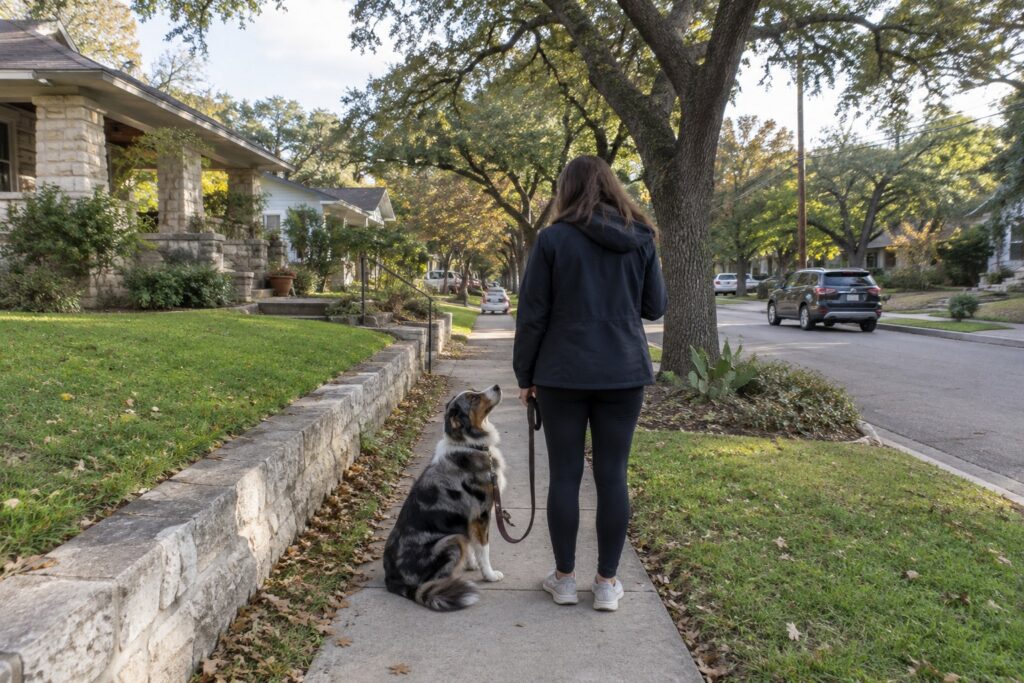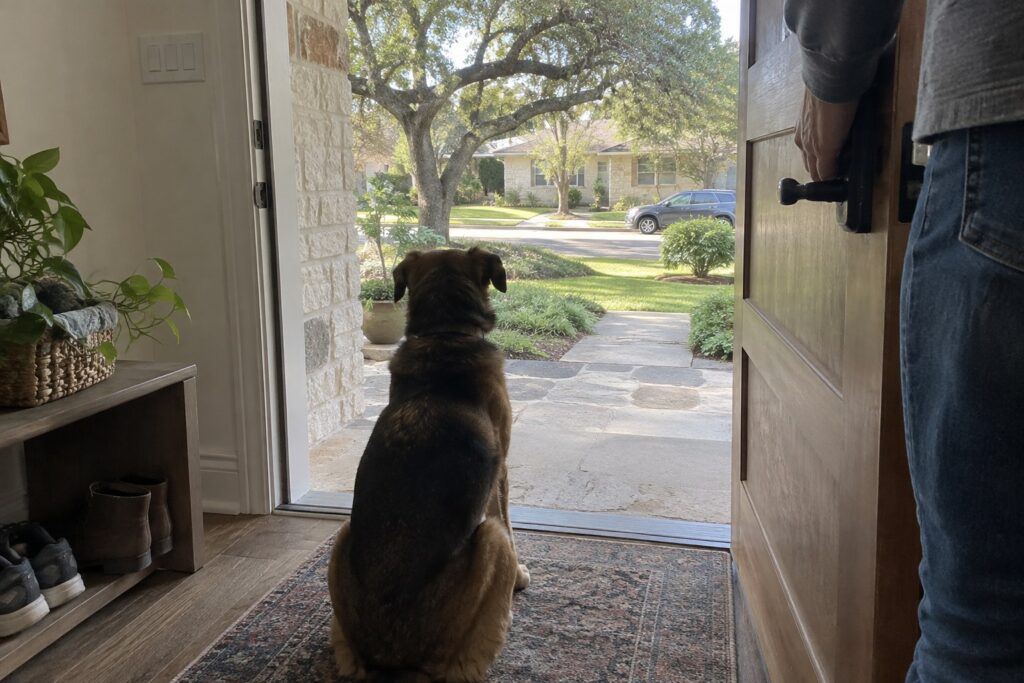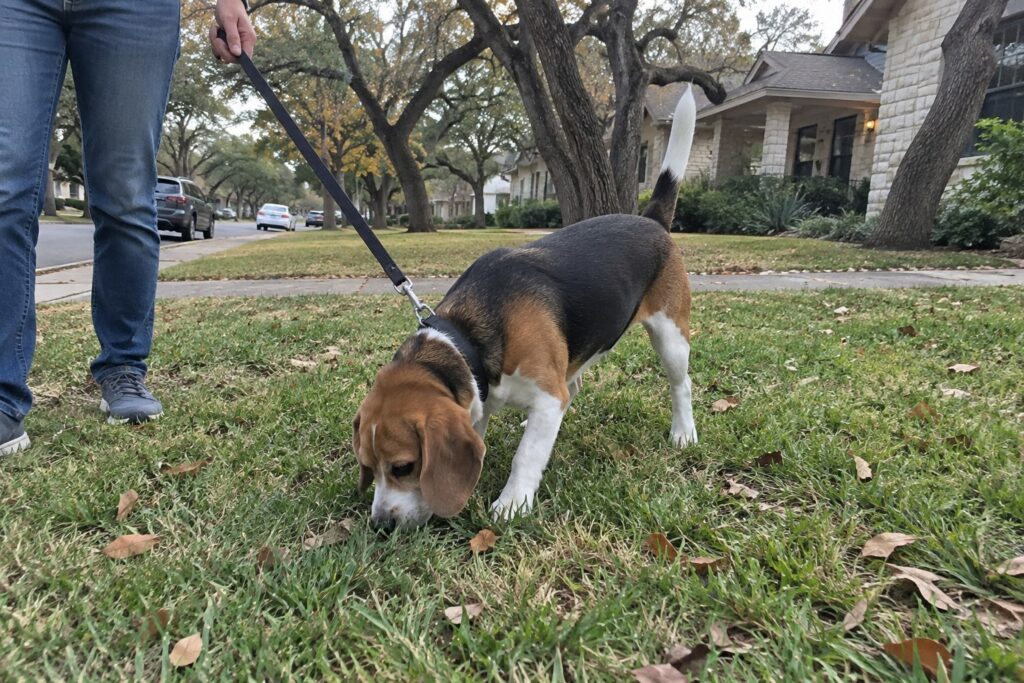

Dog ownership in Denver isn’t the same experience as dog ownership in most American cities. Apartments dominate the housing mix in neighborhoods like LoDo, Capitol Hill, and RiNo. Off-leash trail culture is part of weekend life from Cherry Creek to Mount Falcon. Light rail, scooters, dense sidewalk traffic, and a high concentration of other dogs create more daily stimuli than the average dog ever encounters. And the climate, thin altitude air, sub-zero winter mornings, and 90-degree summer afternoons, shapes how and when training actually works.
That mix means general dog training advice only gets Denver owners partway there. The 12 tips below come from real-world experience with Denver dogs and the specific challenges that come with raising one here. They apply to puppies, rescues, and adult dogs already living in the city.
Tip #1: Start Training Earlier Than You Think You Need To
The biggest training mistake new owners make is waiting. A puppy’s most important developmental window runs from 8 to 16 weeks, and skills built during that period stick for life. Owners who plan to “wait until the dog is a little older” usually arrive at training class six months later trying to undo habits that should have been prevented from the start.
For adult dogs and rescues, the same principle applies in reverse: start the day you bring them home, not after problems emerge. Setting clear rules, predictable routines, and basic obedience expectations from day one prevents most of the reactive, anxious, and pushy behaviors that develop when dogs operate in an unstructured environment.
Tip #2: Match Training to Denver’s Real Environments
A dog who sits perfectly in the living room often falls apart on the 16th Street Mall. Training that happens only at home produces dogs who only behave at home. Real-world reliability comes from practicing commands in the environments you actually live in: busy sidewalks, dog-friendly patios, elevator lobbies, light rail platforms, and crowded trailheads.
Start in low-distraction environments and build up gradually. A dog who can hold a sit-stay at home should next practice it on a quiet residential street, then a busier corner, then outside a coffee shop on Larimer Square. Skipping these intermediate steps is why so many dogs look trained at home but unmanageable in public.
Tip #3: Make Recall the Foundation, Not the Afterthought
Denver’s off-leash culture (Cherry Creek State Park dog area, hundreds of miles of off-leash National Forest trails, the off-leash areas at Berkeley and Stapleton) makes reliable recall the single most important skill a Denver dog can have. A dog who comes when called is a dog who can join the lifestyle that drew most owners to Colorado in the first place.
Recall isn’t a one-trick command. It’s a layered skill built over months: name recognition, response to a verbal cue, performance under distraction, performance at distance, and ultimately performance in environments with wildlife, other dogs, and unfamiliar people. Our post on Recall: The Foundation of Dog Training breaks down the progression, which applies just as well in Colorado as anywhere else.
Tip #4: Train Through Distraction, Not Around It
Denver dogs see more daily stimuli than rural dogs: light rail trains, electric scooters, off-leash dogs in mixed-use parks, urban wildlife (foxes, coyotes, raccoons), construction noise, and dense pedestrian traffic. The instinct for many owners is to avoid these stimuli, walking the dog at quiet times or in quiet places. That approach builds dogs who can’t function in their actual environment.
The better path is structured exposure. Start at a distance where the dog notices the stimulus but stays calm. Reward calm behavior. Move closer over weeks, not minutes. A dog who’s worked through dozens of light rail encounters at increasing proximity becomes a dog who barely notices the train at all.
Tip #5: Build Calm Around Altitude and Climate Realities

Denver sits at 5,280 feet, and most dogs need a few days to two weeks to adjust to the thinner air. Dogs who recently moved from sea level often tire faster, sleep more, and have lower exercise tolerance for their first few weeks in the city. Training routines need to flex around that.
Structured rest is part of training, not a sign of failure. A dog who’s overworked at altitude becomes a frustrated, reactive dog who can’t focus during sessions. Build training around shorter, more frequent sessions during the adjustment period, and let the dog set the pace for endurance work.
Climate matters across seasons too. Summer pavement above 85 degrees burns paws within seconds. Winter sidewalks treated with ice melt damage paw pads chemically. Training sessions should adjust to the weather: indoor focus work during temperature extremes, outdoor sessions during shoulder windows.
Tip #6: Use Short, Consistent Sessions Over Long Ones
Dogs learn better from frequent short sessions than from occasional long ones. Five to ten minutes of focused training, two or three times a day, produces faster results than a single 30-minute session. The reason is simple: dogs lose mental focus quickly, and training quality degrades fast once focus is gone.
This fits well with Denver apartment life. A few minutes of leash work before the morning walk, five minutes of recall practice at lunch, and a short focus session before dinner adds up to more total productive training time than most owners manage with formal sessions. Our post on 5 Tips to Build Your Dog’s Attention Span covers how to extend session length over time once the foundation is in place.
Tip #7: Reward What You Want, Don’t Punish What You Don’t
Modern training research is clear: reward-based methods produce dogs who learn faster, retain skills longer, and trust their owners more. Heavy-handed correction-based training tends to suppress unwanted behavior without teaching what the dog should do instead, often creating new problems (anxiety, reactivity, learned helplessness) in the process.
The practical version is simple. Catch the dog doing what you want and reward it generously. When the dog does something unwanted, redirect to a behavior you can reward. Reserve corrections for safety issues (recall failures near traffic, for example), not everyday training. Dogs trained this way become genuine partners rather than dogs who comply out of fear.
Tip #8: Train Apartment-Specific Manners Early
Denver’s high apartment density makes building manners non-negotiable. Dogs need to be calm in elevators, quiet in hallways, controlled in lobbies, and unfazed by neighbors passing close in tight spaces. These behaviors don’t develop on their own and don’t transfer from suburban training.
The list of apartment-specific skills includes: holding a sit while waiting for the elevator, walking calmly through revolving doors and tight entryways, settling quietly when neighbors knock on the door, and tolerating other dogs and people in shared spaces without reacting. Practicing each of these in the actual environment, starting from the first week in the apartment, builds dogs who succeed long-term in city buildings.
Tip #9: Master Leash Skills Before Off-Leash Trail Time
Owners who hike often want to skip ahead to off-leash trail work, but the foundation matters. A dog who pulls on a leash, lunges at other dogs, or ignores recall in the backyard isn’t ready for the freedom of a Boulder Open Space trail or a National Forest hike. Off-leash reliability is built from leash reliability, not as an alternative to it.
Strong leash work means a loose leash on walks, controlled greetings with other dogs and people, and immediate response to the leash as a directional cue. Our guide to The Basics of Leash Training covers the foundation that needs to be solid before any off-leash work starts.
Tip #10: Socialize Strategically, Not Randomly
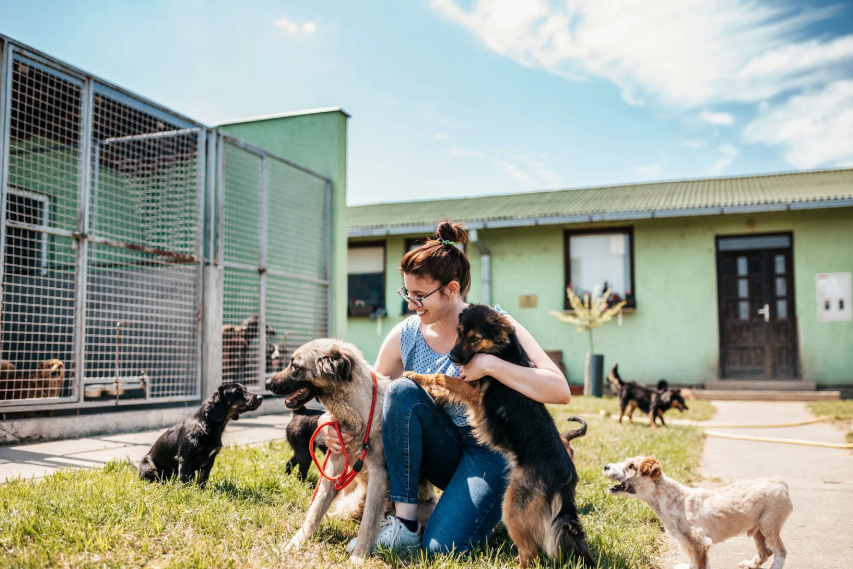
Socialization is one of the most misunderstood concepts in dog training. The goal isn’t to expose a dog to as many other dogs as possible, it’s to create positive associations with the world the dog will live in. A bad experience at a dog park can set training back months, sometimes creating reactivity that takes professional help to undo.
Strategic socialization means controlled exposure to varied environments: different surfaces, sounds, people of different ages and appearances, well-mannered dogs in controlled settings, and the kinds of daily Denver scenarios the dog will encounter for life. Random dog park visits with unknown dogs don’t qualify as socialization in any meaningful sense.
Tip #11: Plan for Denver’s Seasonal Energy Swings
Winter and summer create opposite training challenges in Denver. Winter cabin fever turns under-exercised dogs into destructive ones, with snow and cold limiting outdoor time. Summer altitude and heat make midday exercise dangerous, forcing dawn or dusk-only routines.
Training routines need to flex with the season. Winter is the time to invest heavily in indoor focus work, scent games, trick training, and structured indoor exercise like treadmill conditioning. Summer is the time to prioritize early-morning trail work, evening walks, and indoor cooling breaks. Trying to maintain the same training routine year-round in Denver leads to burned-out owners and frustrated dogs.
Tip #12: Know When to Bring in a Professional
DIY training works well for foundation skills with most dogs. Where it tends to fall short is reactivity, aggression, severe anxiety, and any behavior that puts dogs or people at risk. Signs that training has hit a ceiling include progress that’s stalled for weeks, behaviors that are getting worse rather than better, escalating reactivity on walks, and any incident involving a bite or serious lunging.
A professional trainer can identify the specific drivers of a behavior issue and build a structured plan to address it. The earlier the intervention, the easier the fix; problems that have run for years take longer to resolve than ones caught in the first few months.
Common Training Mistakes Denver Owners Make
A few patterns show up repeatedly in Denver dog owners who hit training walls.
Inconsistency between household members. Two people in the same apartment giving the dog different rules teaches the dog that rules are negotiable. Agree on the rules and enforce them the same way.
Training only at home. Home training produces home-only obedience. Generalization to public environments is a separate skill that needs separate practice.
Treating the dog park as socialization. Most dog parks have a mix of well-trained dogs, untrained dogs, and dogs with behavior issues. A single bad encounter can create lasting reactivity. Use them sparingly and selectively, not as the primary socialization tool.
Ignoring early reactivity signs. Stiff body language, hard staring, lip-licking, and avoidance behaviors are early warning signs. Addressing them when they first appear is far easier than waiting until the dog lunges or barks.
Frequently Asked Questions
What age should I start training my puppy?
Training starts the day a puppy comes home, typically around 8 weeks old. The window from 8 to 16 weeks is the most critical socialization and learning period. Skills built during that time stick for life, while problems that develop during it become harder to address later.
How long does it take to train a dog?
Foundation skills (basic obedience, leash manners, recall) typically take 8 to 12 weeks of consistent training to establish. True reliability across distractions and environments takes 6 to 12 months. Maintenance training continues for the dog’s lifetime, training isn’t a phase, it’s an ongoing relationship.
Are group classes or private training better in Denver?
Group classes work well for owners who want structured socialization and basic obedience for a friendly, balanced dog. Private training is better for dogs with specific issues (reactivity, anxiety, aggression), older dogs with established habits, or owners who want training tailored to their apartment, neighborhood, and lifestyle. Many Denver owners benefit from a mix of both.
Can a reactive dog be trained?
Yes. Reactivity is a learned behavior, often rooted in fear or frustration, and it can be addressed with structured behavior modification. The process takes patience and consistency, and it usually benefits from professional guidance. Catching reactivity early and addressing it before it becomes a deeply ingrained pattern makes the work much easier.
How do I train a dog in a small Denver apartment?
Apartment training works better than most owners expect. Short, frequent sessions throughout the day add up faster than long sessions, and the apartment itself provides a controlled environment for foundation skills. The key additions for apartment training are practicing in the building (elevators, hallways, lobby) and out on real Denver streets to build generalization beyond the unit.
What’s the hardest part of training a dog in Denver?
The two challenges Denver owners report most often are managing reactivity in dense, dog-heavy neighborhoods and building reliable recall for off-leash trail use. Both are solvable with structured training, and both get harder the longer they’re left unaddressed.
Whether you’re working through foundation skills with a new puppy or addressing specific issues with an adult dog, our Denver dog training programs are built around the realities of city and outdoor life in Colorado. We offer in-home dog training for owners who want to train in their actual environment, and board and train programs for accelerated results. Contact us or call (720) 310-7337 to get started.
About All Dogs Unleashed Denver
All Dogs Unleashed trains dogs for the specific demands of Mile High life. Our work focuses on real-world performance in the environments Denver dogs actually live in: dense apartment buildings, off-leash trails, busy sidewalks, and the full mix of city and outdoor stimuli that shape what training has to deliver. Beyond core training, our Denver location also offers in-home dog training, board and train, dog boarding, and dog daycare for owners who need full-service support.
Visit us at 2301 Blake St, Denver, CO 80205, or call (720) 310-7337 to learn more about how our trainers can help your dog thrive in the city.