
Leash walking is an integral part of any dog’s routine and calm on-leash behavior will make your life (and your dog’s) a lot less stressful. Leash training is one of the first things you should work on with your new dog, whether she’s a three-month puppy or a senior. Read on as we share the basics of leash training and where to turn if you’re struggling.
Choosing the Right Leash
First thing’s first: you need to choose a leash that supports your training goals and is safe to use. We recommend steering clear of retractable leashes because they tend to extend too far for everyday use while limiting your control. Instead, get a six-foot leash for city walking and a ten-foot leash for parks and trails.
Never clip a leash directly to your dog’s collar, especially when you’re training. Use a front-leading harness or a gentle leader, which connects to a loop around the dog’s snout and head. These systems make it difficult for your dog to pull without putting pressure on the neck.
Pick a Cue You Can Repeat Often
Leash training is all about teaching your dog that no matter what’s going on around them, they need to stay connected to you. In fact, the more responsive they are to you, the more freedom you can grant them when you’re out and about.
To strengthen this connection, you’ll need a simple cue that reminds them to check in. For some people, that’s a word, like heel or look. For others, it’s a sound, like a clicker or tongue cluck. No matter what you choose, keep it short and simple. Reward your dog every time they look at you after hearing that sound before introducing additional commands and tasks.
Start With Loose Leash Walking
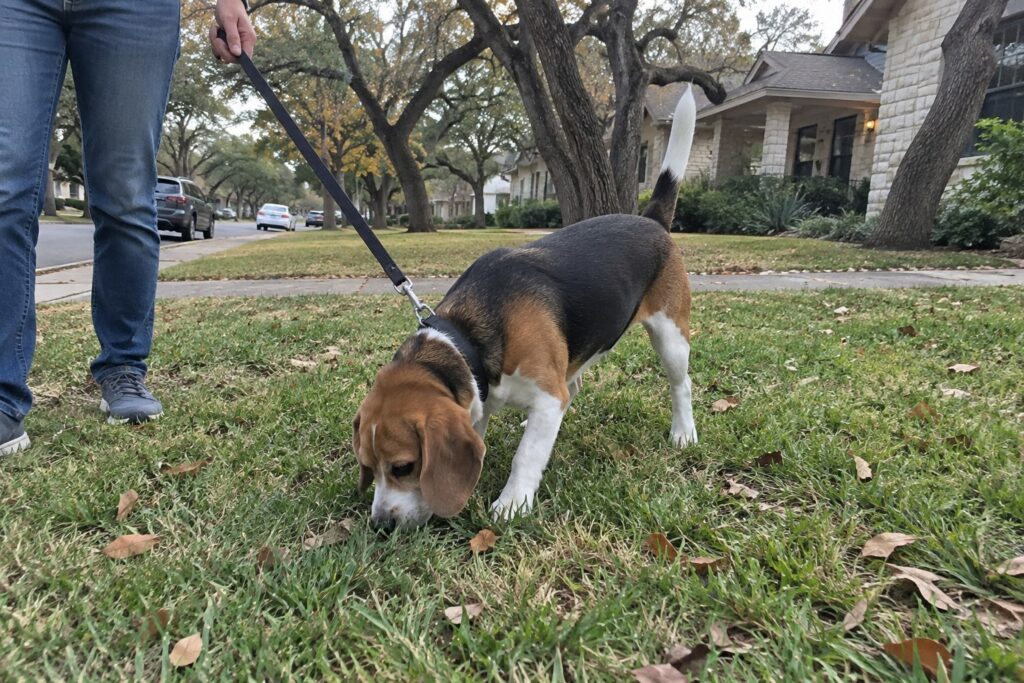
Loose leash walking is a term you’ll hear a lot in the dog training community. It refers to a dog’s ability to walk within the parameters of their leash without pulling. A leash-trained dog should be able to walk this way even with limited slack.
One of the easiest ways to establish this expectation with your dog is to stop walking every time they hit the end of their leash and try to pull ahead. Use the cue mentioned above to get their attention and reward them when they get close enough to create slack in the leash again.
Notice Problem Areas
Some dogs have no trouble learning proper leash walking skills. Others have triggers or behavioral issues that can create roadblocks in your training journey. For example, some dogs struggle with leash reactivity, a set of behaviors that can include fear or aggression toward other dogs specifically while leashed. Others may bark excessively on walks, which should be considered undesirable even if the barking is friendly.
Don’t assume that persistent problems will work themselves out. Instead, work with a professional dog trainer to get to the root of the issue. At ADU, we offer both private and group training programs that can help.