
Every year, the Bossier City night sky lights up with fireworks. Freedom Fest brings displays to Cypress Lake, South Bossier Park, and the Louisiana Boardwalk. New Year’s Eve adds another round, and Rockets Over the Red rounds out the calendar. For most people, it’s the highlight of the season. For dogs that are scared of fireworks, it’s the worst night of the year.
If you’ve ever watched your dog tremble, hide under the bed, or claw at the door during a fireworks show, you already know how distressing it can be. The good news is that firework anxiety is highly manageable with the right preparation. This guide walks Bossier City dog owners through what to do before, during, and after, plus how to address the underlying fear so it gets better year after year instead of worse.
Why Fireworks Hit Dogs So Hard
Fireworks combine three things that dogs are biologically wired to react to: sudden loud noises, unpredictable timing, and bright flashes. Dogs hear roughly four times better than humans do, which means a firework that sounds loud to you sounds genuinely overwhelming to them. The unpredictability makes it worse, since they can’t anticipate when the next boom is coming.
The result is a stress response their body can’t shut off. Cortisol spikes. Heart rate climbs. The fight-or-flight system stays activated for hours.
In Bossier City, dogs face fireworks exposure during several major windows each year:
- Freedom Fest (July 4) at Cypress Lake, South Bossier Park, and the Louisiana Boardwalk
- Backyard fireworks (July 1–5), which are legal in Bossier City between 10 a.m. and 10 p.m.
- Rockets Over the Red (typically late November)
- New Year’s Eve displays and neighborhood fireworks
- Random celebration nights throughout the warm months
Knowing the calendar lets you plan ahead instead of scrambling on the day of.
The Signs Your Dog Is Truly Struggling, Not Just Startled
There’s a difference between a dog who flinches at one loud bang and a dog who has a genuine phobia. Watch for these signs of real distress:
Behavioral signs:
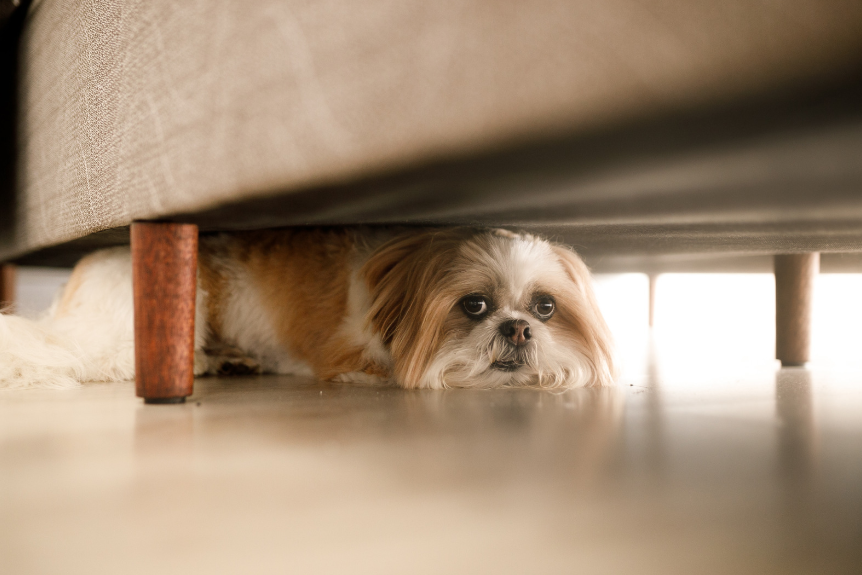
- Hiding in closets, bathrooms, or under furniture
- Refusing to go outside, even hours after the noise stops
- Trying to escape (digging, scratching at doors, jumping fences)
- Pacing or restlessness that won’t settle
- Following you closely and refusing to leave your side
- Shaking, trembling, or freezing in place
- Whining, howling, or barking that doesn’t stop
- Refusing food or treats they normally love
Physical signs:
- Heavy panting when it isn’t hot
- Drooling more than usual
- Dilated pupils
- Loss of bladder or bowel control
- Vomiting from stress
- Tucked tail and flattened ears
If your dog shows multiple signs every fireworks event, you’re dealing with a real fear response that needs management, not just a temporary startle. For more on how to read your dog’s stress signals, our guide on reading your dog’s body language is a useful starting point.
What to Do Before Fireworks Start (1–2 Weeks Out)
The single biggest mistake owners make is waiting until the day of. Real preparation starts a week or two before any major fireworks event.
- Update ID tags and confirm your microchip info. July 5 is consistently the busiest day of the year for animal shelters. Frightened dogs run, jump fences, or break out of crates, and a current ID is the difference between getting them back quickly and not at all.
- Check in with your vet. If your dog has serious anxiety, talk to your vet about prescription options like Sileo or trazodone. These need to be prescribed and tested in advance.
- Reinforce the safe space. Pick the quietest room in your house (often an interior bathroom, closet, or windowless laundry room). Spend time there with your dog over several days so it becomes a place they associate with calm.
- Start sound desensitization. Play low-volume firework recordings (easily found on YouTube or Spotify) while feeding meals or playing. Gradually increase the volume across days. This works best as a long-term project, but even a week or two of practice can help.
- Plan exercise for the day of. A tired dog handles stress better than a fresh one. Schedule a long walk or training session for the morning of fireworks day.
What to Do the Day Of
Day-of preparation matters as much as the weeks leading up to it. Here’s a practical timeline:
| Time of Day | What to Do |
|---|---|
| Morning | Long walk, training session, or play to burn off energy |
| Early afternoon | Feed your dog their main meal early so digestion is settled before noise starts |
| Late afternoon | Last bathroom break in the yard, on leash, before sundown |
| Around sunset | Close all windows, draw curtains, turn on white noise or TV |
| Before fireworks start | Move dog into the safe space, set up calming aids |
| During fireworks | Stay calm, don’t force interaction, let your dog cope however they need to |
| After fireworks end | Wait 30+ minutes before letting them outside, and only on leash |
That last point is important. Even after the show ends, neighborhood fireworks can continue late into the night. A dog that bolts from a yard at 10 p.m. on July 4 has very low odds of being recovered quickly.
How to Set Up a Safe Space During the Show
The right safe space can transform fireworks night from traumatic to merely uncomfortable. Here’s what an effective setup looks like:
Location: Pick the most interior room of your house, ideally one without windows. An upstairs closet, a basement room, an interior bathroom, or a windowless laundry area all work well. Avoid rooms with large windows or thin exterior walls.
Containment: If your dog is crate-trained, their crate inside the safe room is ideal. The enclosed space adds a layer of physical security. If they’re not crate trained, a fully enclosed space with a closed door works fine.
Sound dampening:
- White noise machine or fan
- TV or music at moderate volume
- Heavy blankets draped over the crate or piled in the room
- Closed windows and doors throughout the house
Comfort items:
- A worn t-shirt or blanket that smells like you
- Their favorite bed or familiar bedding
- A long-lasting chew or stuffed Kong (only if they’re calm enough to engage with it)
- Fresh water available
Lighting: Keep lights on or use a nightlight. Darkness amplifies the visual flashes from fireworks even through closed curtains.
If your dog has had a bad experience with crating in the past or is new to it, our guide on puppy crate training covers how to introduce a crate as a positive space rather than a punishment.
Calming Techniques That Actually Work (and Ones That Don’t)
There’s a lot of conflicting advice about what to do when your dog is in distress. Here’s a clear breakdown:
| What Works | What Doesn’t |
|---|---|
| Calm, neutral presence from you | Loud reassurances (“It’s OK! It’s OK!” in a worried voice) |
| Letting your dog hide where they feel safe | Forcing them out from hiding spots |
| Background noise to mask the booms | Leaving them in silence |
| Distraction with food puzzles or chews | Trying to play vigorously through the anxiety |
| Familiar scents and bedding | Bringing in new, unfamiliar items |
| Staying home with them when possible | Leaving them alone for hours during a major event |
| Letting them shake, pace, or hide as needed | Punishing them for “bad” anxiety behaviors |
You can absolutely comfort your dog. The old advice that “comforting reinforces fear” has been debunked. What matters is how you comfort. Calm petting and quiet companionship help. Anxious, high-pitched reassurances make things worse because dogs read your tone as confirmation that something is wrong.
When Calming Aids and Medication Make Sense
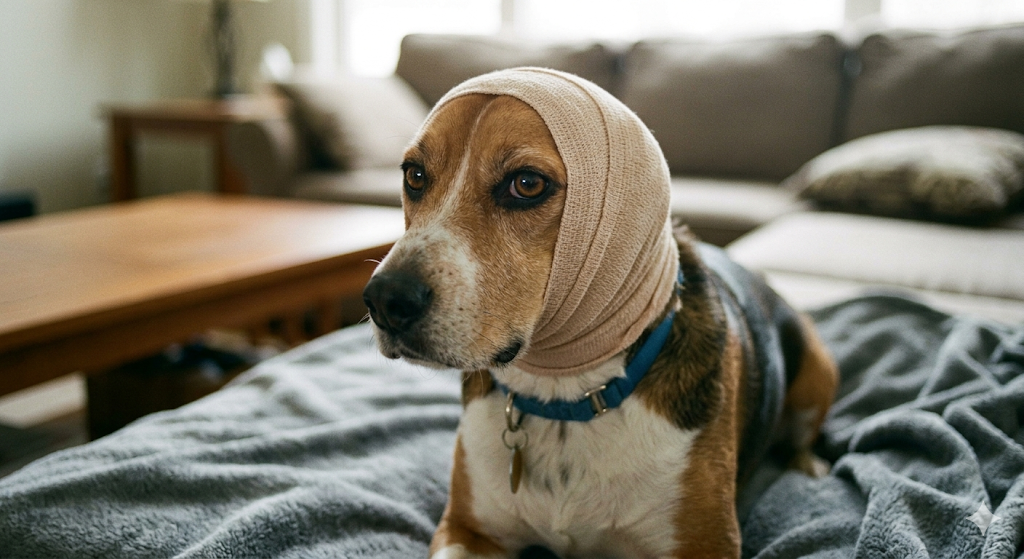
For mild anxiety, environmental management may be enough. For moderate to severe fear, additional support helps. Here’s a quick reference:
| Option | What It Does | When to Consider It |
|---|---|---|
| Compression wraps (Thundershirt) | Provides constant gentle pressure that can reduce anxiety | Mild to moderate cases; some dogs respond well, others don’t |
| Calming chews (L-theanine, melatonin, hemp-based) | Mild relaxant effect, available over the counter | Mild anxiety; works best as a supplement to other strategies |
| Adaptil pheromone diffusers | Mimics calming dog pheromones | Mild to moderate anxiety; needs to be set up days in advance |
| Sileo (prescription) | FDA-approved gel for noise aversion | Moderate to severe; must be prescribed by your vet |
| Trazodone (prescription) | Anti-anxiety medication used off-label for dogs | Severe cases or dogs that don’t respond to other options |
| Gabapentin (prescription) | Mild sedative often combined with trazodone | Severe cases under vet supervision |
Never give your dog human medications without explicit vet guidance. Even commonly recommended options like Benadryl have appropriate doses and contraindications that need professional input.
The Long-Term Fix Is Training, Not Just Survival
Everything above helps your dog get through fireworks. But the real goal is reducing the fear over time so each year is a little easier than the last. That’s a training project, not a one-night solution.
Effective long-term strategies include:
- Counter-conditioning with sound recordings paired with high-value rewards
- Confidence building through structured obedience work and clear leadership
- Exposure therapy in controlled settings, gradually increasing intensity
- Addressing general anxiety that may be making fireworks-specific fear worse
Dogs with strong obedience foundations and confident, balanced temperaments tend to handle stressful events better than dogs without that structure. Our dog training programs are built around producing exactly that kind of dog: focused, responsive, and resilient.
For dogs with deeper fear issues or trauma history, a more intensive approach often works best. Our in-home dog training program addresses anxiety where your dog actually lives, while board and train gives us extended time to work through behavior patterns in a structured environment. For dogs with significant fear-based issues, our post on working with and training a traumatized dog covers the broader approach.
Frequently Asked Questions
Can my dog grow out of fireworks anxiety?
Unfortunately, no. Without intervention, firework phobia tends to get worse with age, not better. Each negative experience reinforces the fear, which is why proactive management and training matter so much.
Is it OK to give my dog Benadryl for fireworks?
Diphenhydramine has mild sedating effects in some dogs, but it’s not particularly effective for noise anxiety and shouldn’t be relied on as a primary solution. Talk to your vet about better-suited options like Sileo or trazodone for moderate to severe cases.
Will the same techniques work for thunderstorms?
Yes, mostly. Thunderstorm anxiety and fireworks anxiety often overlap, and the safe-space setup, sound dampening, and calming aids transfer well. The main difference is that storms also include barometric pressure changes that some dogs sense before the thunder starts.
Should I comfort my dog or ignore them?
Comfort them, but stay calm. Sit with them, pet them gently, talk in a normal voice. What you want to avoid is anxious, high-pitched reassurance, which signals to your dog that there really is something to worry about.
What do I do if my dog escapes during fireworks?
Move quickly. Check your immediate yard and surrounding blocks first. Call animal control and post in local lost-pet groups on Facebook. The Bossier City and Caddo Parish animal services intake numbers should be saved in your phone before fireworks night. Our guide on what to do if your dog gets loose covers the full recovery playbook.
When are fireworks legal in Bossier City?
Bossier City allows fireworks from 10 a.m. to 10 p.m. on July 1 through July 5. Discharging fireworks outside that window or those dates is unlawful within city limits. That doesn’t stop neighborhood fireworks from happening at other times, but it gives you a clearer planning window.
About All Dogs Unleashed
All Dogs Unleashed is a professional dog training and boarding facility serving Bossier City, Shreveport, and the surrounding communities. Located at 4500 Benton Rd, Suite 200, Bossier City, LA 71111, our team specializes in building the kind of confidence and obedience that helps dogs handle stressful situations like fireworks, thunderstorms, and other high-stimulation events. All Dogs Unleashed helps Bossier City families turn anxious dogs into calm, trusting companions through proven, balanced training methods.
Get Help Before the Next Fireworks Show
If your dog struggles every Fourth of July, New Year’s Eve, or thunderstorm, the time to start working on it is now, not the week of the next event. All Dogs Unleashed can help you build a calmer, more confident dog who handles loud nights with less fear and faster recovery.
Call us at (318) 562-6536 or visit our contact page to schedule a consultation. Let’s get your dog ready for the next celebration before it arrives.