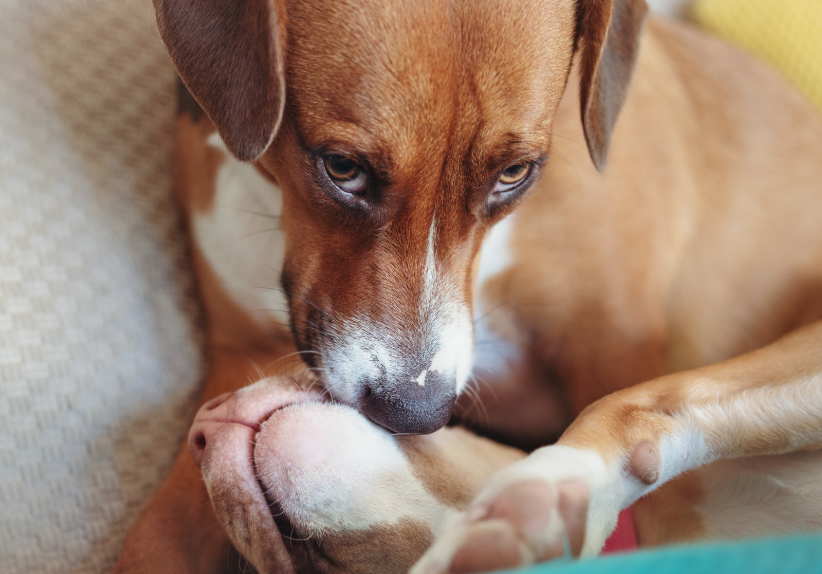

Adopting a rescue dog from Bossier or Caddo Parish is one of the more meaningful things you can do as a Bossier City resident. Local shelters have a constant stream of dogs needing homes, and the families who step up to adopt are doing real good. But the picture most adoption stories paint, the one where a frightened dog blossoms within weeks into a confident, well-adjusted family member, isn’t always how it goes.
Many rescue dogs need real support to thrive in a new home. They arrive with unknown histories, learned coping strategies, behavioral patterns rehearsed for years, and the kind of background that DIY training often can’t address. This isn’t a knock on owners. It’s the reality of taking on a dog whose first chapters you don’t have access to. Professional training, brought in at the right time and with the right approach, makes the difference between a rescue dog who survives the transition and one who genuinely thrives.
The Reality of Bringing Home a Rescue Dog in Bossier City
The first 30 days with a rescue dog rarely look like the social media version. Many adopted dogs come home and immediately seem perfect, calm, quiet, almost shy. Owners think they got lucky. Then around week three, the real personality starts to emerge. The dog begins testing boundaries. Behaviors that weren’t visible in the shelter or during the first nervous days start appearing. Resource guarding around food. Reactivity on the leash. Anxiety when the family leaves for work. Sometimes outright aggression in specific situations.
This isn’t because the dog “tricked” anyone. It’s because shelters are stressful environments where dogs often shut down emotionally. Once your home starts to feel safe, the dog has the bandwidth to express their true patterns, including the difficult ones.
The good news is that most of these patterns are addressable with the right approach. The hard part is that the right approach for a rescue dog is rarely the same approach that works for a puppy or for a dog you’ve raised from 8 weeks old. Knowing the difference is where professional training earns its place.
The 3-3-3 Adjustment Timeline (And Why Training Has to Wait Sometimes)
The widely used 3-3-3 framework gives a realistic picture of what your rescue dog is going through:
The first 3 days are decompression. Your dog is processing a massive change: new smells, new sounds, new people, new routines, new everything. Many dogs in this phase appear withdrawn, refuse food, hide, or seem unusually subdued. This isn’t training time. This is “let your dog exist without pressure” time. Pushing structured training too early often backfires.
The first 3 weeks are when your dog starts to feel safe enough to express their actual personality. The “honeymoon phase” begins to fade. Real behaviors emerge. This is also when foundational training can genuinely begin, with short positive sessions that build trust and start establishing routines.
The first 3 months are when patterns lock in for the long term. Whatever you reinforce or fail to address during this window becomes the baseline. This is the most important period for getting structure right, and it’s also the period where most owners realize they may need professional help.
For dogs from hoarding situations, puppy mills, or with multiple prior placements, the timeline often stretches to 6 months or longer. Senior rescues sometimes need a year or more. The 3-3-3 framework is a guideline, not a fixed schedule.
Why Rescue Dogs Are Different From Puppies or Owner-Surrendered Dogs
A puppy comes to you as a blank slate. An owner-surrendered adult dog typically comes with at least some known history, often including the reason for the surrender. A rescue dog often comes with none of that.
You may not know whether your rescue was previously abused, neglected, abandoned, or simply lost. You may not know if they were ever housetrained. You may not know whether they’ve been around children, cats, other dogs, or men with hats. You may not know what triggers their anxiety, or what they’ve learned to fear. You’re essentially starting a relationship with a dog whose entire emotional database is hidden from you.
On top of that, behaviors rehearsed for years are deeply ingrained. A 5-year-old rescue who’s been pulling on the leash since puppyhood has practiced that pattern thousands of times. A dog who’s learned that growling makes scary things go away has had that behavior reinforced repeatedly. None of these patterns are unfixable, but they require more time, more skill, and more consistency than building behaviors fresh.
The honeymoon phase complicates the picture. Many rescue dogs are quiet and tractable for the first 1–3 weeks because they’re still in survival mode. As they relax into the new home, the patterns that survival mode was suppressing start surfacing. Owners who built training plans around the honeymoon-phase dog often find themselves recalibrating when the real dog shows up.
The Most Common Behavioral Issues in Bossier City Rescue Dogs
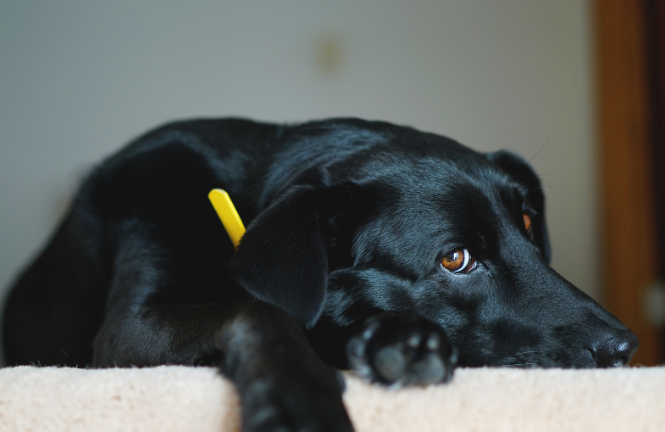
Most rescue dogs that come into Bossier City homes show one or more of these patterns within the first few months:
- Separation anxiety: panic, destruction, or vocalization when left alone
- Fear-based reactivity: barking, lunging, or freezing around specific triggers
- Resource guarding: protecting food, toys, sleeping spots, or even people
- Leash reactivity: exploding at other dogs, strangers, bikes, or cars on walks
- Fear of specific things: men with beards, hats, brooms, vacuums, doorways, certain rooms
- House-training gaps: accidents in specific spots, marking behavior, no concept of holding
- Food guarding or anxiety around mealtimes
- Hyperarousal: inability to settle, pacing, demand barking, constant motion
- Avoidance behaviors: hiding, refusing to come out from under furniture, fleeing from people
- Body sensitivity: refusing to be touched in certain areas, pulling away from handling
Some of these resolve with time and consistency. Others get worse without intervention. The challenge is that owners often can’t tell which is which until they’re in deep.
Why DIY Training Often Falls Short for Rescue Dogs
The training advice you’ll find online generally assumes a dog with a known history and predictable triggers. Rescue dogs break those assumptions in ways that DIY approaches struggle to handle.
Most owners adopting a rescue dog are working blind. You don’t know what your dog has experienced. You don’t know what their triggers actually are until they’re triggered. You don’t know which of their behaviors are stress responses, learned strategies, or genuine personality. The training methods you’d reach for first, treats for sit, corrections for pulling, time-outs for misbehavior, can range from neutral to actively harmful depending on what’s actually driving the behavior.
The wrong approach can make things significantly worse. A fearful dog who’s been corrected for growling learns to skip the warning signal and go straight to a bite. A dog with separation anxiety who’s left alone “to cry it out” often develops more severe panic, not less. A dog who guards food and gets their food bowl removed mid-meal as “training” becomes more aggressive about it, not less. These are real outcomes from well-meaning owners following standard advice that doesn’t fit their specific dog.
Reading body language is also harder with rescue dogs. Many have learned to suppress their distress signals, either because expressing them led to punishment or because they didn’t help. By the time the average owner notices their rescue is uncomfortable, the dog has already gone past several earlier warning signs that a trained eye would have caught. Our blog on reading your dog’s body language covers what those earlier signs look like, but reading them in real time during a stressful moment is harder than reading them in a guide.
What Professional Training Actually Provides for a Rescue Dog
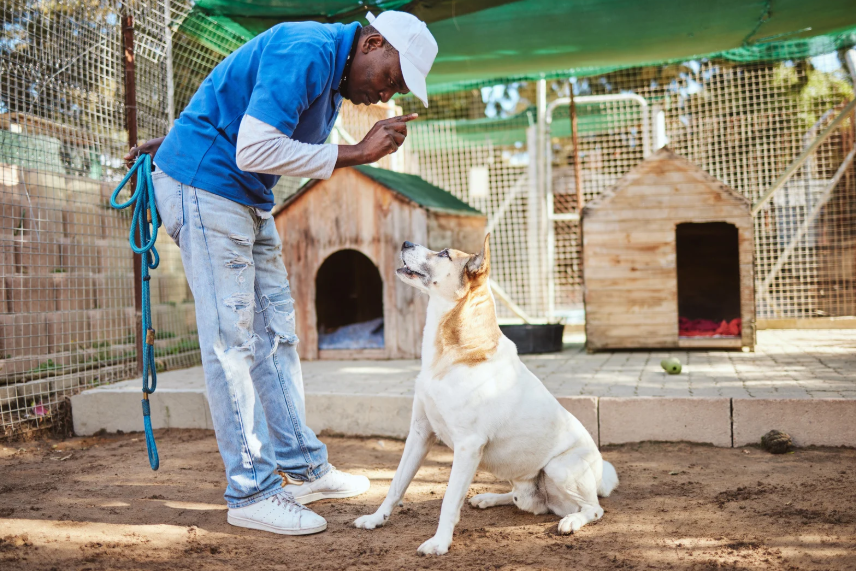
The reason professional training matters more for rescue dogs than for puppies isn’t just about teaching commands. It’s about the specific things a good trainer brings to the table that DIY can’t replicate.
A diagnostic eye for what the dog isn’t telling you. An experienced trainer reads patterns most owners miss. The way a dog looks at the door when you put your shoes on. The hesitation before crossing certain thresholds. The slight stiffening when a stranger walks past. These signals tell a trainer what you’re actually dealing with before the dog has had a chance to escalate.
A trauma-informed approach. Rescue dogs often need work that builds trust before pushing skills. The standard “correct the bad, reward the good” framework can re-traumatize a dog whose original problem was being punished for things they didn’t understand. A trainer experienced with rescue dogs knows how to build the foundation before adding structure on top.
Prevention of small problems becoming big ones. Most serious rescue dog behavior cases started as something manageable. The dog who growls at strangers becomes the dog who bites. The dog with mild separation anxiety becomes the dog who breaks teeth on the crate. Early professional intervention catches these trajectories before they lock in.
Owner education. Half of every training relationship is the human. Most owners are reinforcing problem behaviors without realizing it: comforting fearful behaviors, accidentally rewarding reactivity, unintentionally undermining their own training. A good trainer teaches you to see what you’re doing and how to change it.
A pace appropriate to the dog, not the calendar. Group classes and DIY programs are calendar-driven: six weeks of class, ten lessons, et cetera. A rescue dog often doesn’t fit that calendar. Some are ready to move fast; many need to slow way down at certain stages. Professional training can adjust to the dog instead of forcing the dog to adjust to a schedule.
For dogs whose backgrounds include real trauma, our blog on working with and training a traumatized dog covers the broader rehabilitation framework.
Specific Scenarios Where Professional Training Pays Off Fastest
Some rescue situations are manageable with good owner effort and a basic training book. Others benefit dramatically from professional support, sometimes from day one. Worth bringing in a professional sooner rather than later if any of these apply to your situation:
Severe separation anxiety. A dog who panics when you leave, with destruction, vocalization, accidents, or self-injury, needs structured behavior modification work. The pattern entrenches fast and gets harder to reverse the longer it runs.
Fear-based aggression. A dog who growls, snaps, or bites out of fear is communicating distress. The wrong response (punishment, forced exposure, “showing them who’s boss”) makes things significantly worse. Professional support is the right call from early on.
Multi-pet household integration. If you have other dogs, cats, or small animals, integrating a rescue with unknown history is a real project. A trainer can manage introductions, identify warning signs, and structure the household to set everyone up for success.
Children in the home. Even friendly rescue dogs can have triggers around children that don’t show up in the shelter assessment. Professional support during the first few months of integration prevents bites and protects everyone involved.
Reactivity on leash from day one. If your rescue is exploding at other dogs, strangers, or cars from the very first walks, this is a sign of a deeper pattern that responds well to professional behavior modification. Our blog on walking a reactive dog covers the layered approach.
Visibly traumatized dogs. Cowering, flinching at sudden movements, hiding for days, refusing to eat for extended periods, panic at common stimuli — these signs of significant trauma are not something to push through alone. Professional support helps build trust safely.
Resource guarding that’s already escalated. Mild guarding can be managed at home. Guarding that’s progressed to snapping or biting needs professional intervention before someone gets hurt.
For rescue dogs showing overprotective behavior toward you specifically, our post on socializing an overprotective dog covers that pattern. For aggression-related concerns more broadly, our piece on common types of aggression in dogs breaks down the different categories.
What to Look for in a Rescue Dog Trainer
Not all professional trainers are equally suited to rescue dog work. Worth looking for these things specifically:
- Experience working with rescue dogs (not just puppies and family pets)
- Willingness to work at the dog’s pace rather than a fixed timeline
- Understanding of fear-based and trauma-related behavior
- A balanced approach that doesn’t rely on harsh corrections for fearful dogs
- Comfort discussing their training philosophy and methods openly
- Willingness to refer to a veterinary behaviorist if needed
- A program that includes owner education, not just dog work
- Realistic expectations rather than guarantees
- Ability to read your specific dog rather than running a generic protocol
The best trainers will actually evaluate your dog before quoting a program. Anyone who promises specific timelines or guaranteed outcomes without meeting your dog isn’t the right fit for a rescue with unknown history.
The Pace That Actually Works
Rescue dog training rarely runs on the same timelines as standard puppy training. Setting realistic expectations from the start prevents frustration on both ends.
Mild issues, basic obedience gaps, mild leash reactivity, attention-seeking behaviors, generally respond to consistent work in 4–8 weeks. Moderate issues, like resource guarding around food, mild separation anxiety, fear of specific triggers, often take 2–4 months of structured work to meaningfully improve. Severe cases, dogs with significant trauma history, panic-level separation anxiety, fear-based aggression, can take 6–12 months or longer of consistent professional support.
This isn’t bad news. It’s just the timeline. A dog who came from years of difficult circumstances doesn’t reset in three weeks. The investment of time and consistency pays off in years of better quality of life for both the dog and the family. Owners who go in expecting the rescue version of a puppy training journey often get discouraged. Owners who go in understanding the actual timeline are far more likely to stick with the work and see real results.
The other side of this is that progress isn’t linear. Rescue dogs commonly have setbacks that look like regression but are actually normal parts of the adjustment process. A dog who seemed fine for two weeks suddenly has a bad week. A behavior that seemed resolved reappears under stress. This is part of the picture, not a sign that training isn’t working.
Frequently Asked Questions
How soon after adoption should I start training my rescue dog?
Hold off on formal training for the first 3–7 days while your dog decompresses. After the first week, you can begin building basic routines (consistent feeding times, designated potty spots, simple house manners). Structured training generally works best starting in week 2 or 3, when your dog has settled in enough to engage. Severe behavioral issues that emerge earlier may need professional input sooner.
My rescue dog seems perfect. Do I really need training?
If your rescue is genuinely well-adjusted, you may only need basic obedience reinforcement. But the honeymoon phase is real. Many rescue dogs seem perfect for the first 2–3 weeks before patterns emerge. Building a relationship with a trainer early, even just for a consultation, gives you support if things change. It also identifies issues that might be invisible to a new owner.
My dog flinches when I reach for him. Is that abuse?
Possibly, but not necessarily. Some dogs flinch from past mistreatment. Others flinch because they were never socialized to handling. Others flinch because of pain you haven’t identified yet (vet check first). What matters more than the cause is the response: slow, patient counter-conditioning to build positive associations with handling. Don’t push through it, and don’t write it off.
Can a rescue dog ever fully overcome their past?
Many do, but “fully overcome” is the wrong frame. Some dogs get to a point where their past is essentially invisible in their daily behavior. Others always have specific triggers that need ongoing management. Both outcomes are good outcomes. The goal is a dog who lives well, not a dog who pretends nothing ever happened.
What if I can’t afford professional training?
If full programs are out of reach financially, even a single consultation with a professional trainer can be valuable. A good trainer can evaluate your dog, identify the priority issues, and give you a structured plan you can work on at home. Many trainers offer single-session consults or sliding-scale options for adopters. Some local rescues partner with trainers and may offer reduced-cost support to recent adopters.
Is board-and-train a good fit for a newly adopted rescue?
Usually not in the first few weeks. Sending a recently adopted rescue away for board-and-train can interrupt the bonding and trust-building process that needs to happen with you specifically. Better fits for early support are in-home training (works in your environment), private lessons, or a consultation that gives you a plan to follow at home. Board-and-train can be appropriate later for dogs who need an intensive reset, after the foundation has been built.
About All Dogs Unleashed
All Dogs Unleashed is a professional dog training facility serving Bossier City, Shreveport, and the surrounding communities. Located at 4500 Benton Rd, Suite 200, Bossier City, LA 71111, our team has worked with rescue dogs of every background, from straightforward adults needing basic obedience to dogs with significant trauma histories that require careful, patient rehabilitation. All Dogs Unleashed believes in meeting each dog where they are and building the kind of trust that allows real, lasting change.
Just Adopted a Rescue Dog? Let’s Make Sure They Thrive.
Whether you adopted last week or three months ago, the right professional support can change the trajectory of your rescue dog’s life. We’ve helped many Bossier City families turn struggling rescues into confident, well-adjusted family members, and we’d love to do the same for yours.
Our dog training programs include rescue-specific work that adapts to each dog’s history and pace. In-home dog training is often the right starting point because it builds the work into your dog’s actual environment and protects the bonding process that’s so important early on. For dogs who eventually need more intensive structure, our board and train program is available once the foundation is in place.
Call us at (318) 562-6536 or visit our contact page to schedule a consultation. Let’s help your rescue dog become the dog they were always meant to be.