
Your dog pulls on the leash. Every walk turns into a tug-of-war, and even a short stroll stops being fun fast. A dog pulling on leash is one of the most common problems Dallas dog owners bring to us, and it is also one of the most fixable. We have been training real dogs in real situations across Dallas since 2007, and we know exactly why it happens and how to stop it for good.
Ready to walk your dog without the drag?
Key Takeaways
Leash pulling is a learned habit, not a personality flaw, and it can be corrected at any age or breed.
Dallas environments like the Katy Trail create high distraction levels that make leash manners harder to maintain without proper training.
Consistent obedience-focused methods, not gear swaps, are what actually stop pulling for good.
Board and train can provide concentrated practice, but progress depends on the dog, the behavior history, and follow-through at home.
Check the current leash rules for the public areas you visit, then build reliable leash skills for safer, easier walks.
Your dog is dragging you through Klyde Warren Park while cyclists and joggers blur past. You are not walking him. He is walking you. It feels like defiance, but it is not.
Here is what most owners get wrong. Pulling is not a dominance move. It is not attitude. It is a simple learned pattern. Your dog pulled forward, got where he wanted to go, and his brain filed that away as a winning strategy. He just needs a reset.
All Dogs Unleashed DFW has been working with real dogs in real situations across the DFW area since 2007. This article covers why dogs pull, what local conditions make it worse, and a step-by-step fix you can start today. If you want to understand the full picture, recall training as the foundation of Dallas dog training is a good place to start alongside this.
Why Do Dogs Pull on the Leash?
Is Pulling Reinforcement or Rebellion?
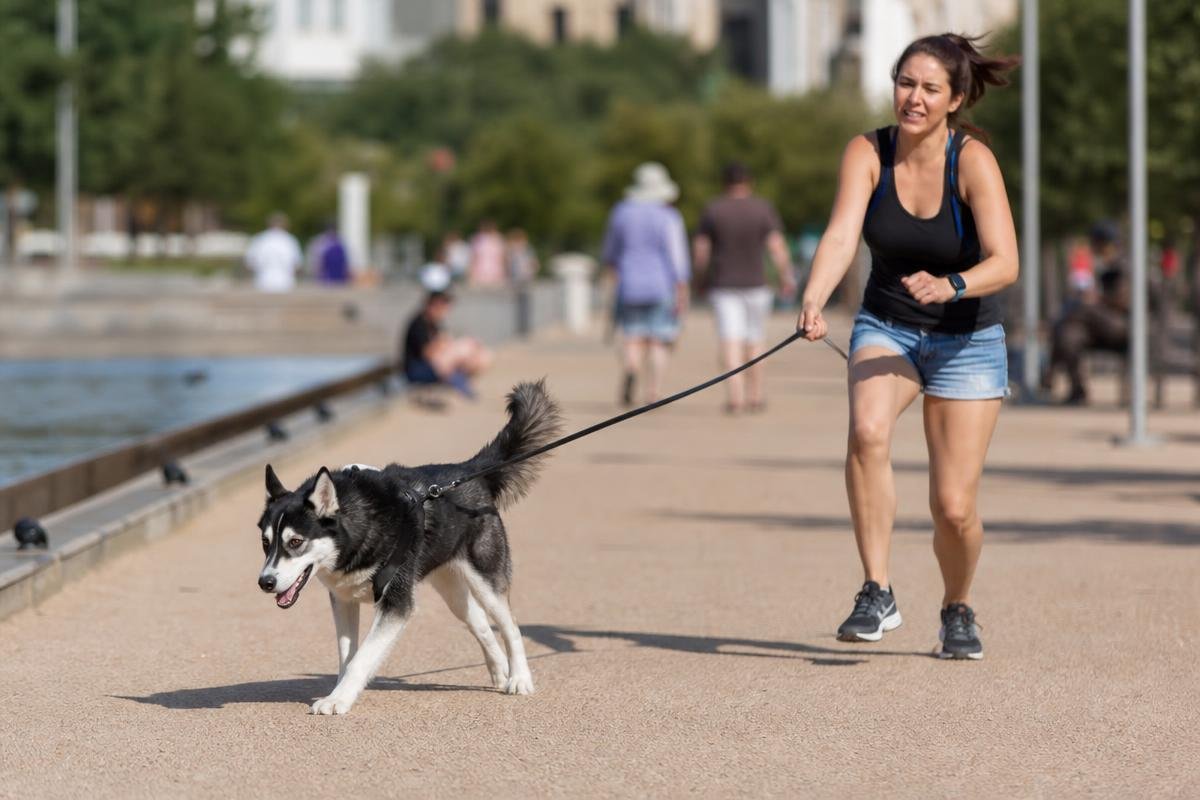
Dogs pull on the leash because pulling has been consistently rewarded with forward movement. Your dog is not trying to dominate you. He is not being stubborn or defiant. He pulls because pulling has always worked.
Every time he lunges forward and you follow, he learns one clear lesson: a tight leash gets me where I want to go. That is operant conditioning at its most basic. Forward movement is the reward. The correction you give mid-walk barely registers because the payoff, reaching that tree or that dog across the street, already happened. Repeat that pattern a few hundred times and you have a dog who pulls on leash with total confidence. This applies to every breed, age, and behavior history. It is not a personality flaw. It is just math.
How Do Dallas Walks Make the Problem Worse?
The environment here stacks the odds against loose leash walking. The White Rock Lake loop in East Dallas runs nine miles through geese, ducks, deer, and heavy weekend foot traffic. That level of distraction spikes arousal before most dogs have solid leash skills. The same goes for the Katy Trail, a 3.5-mile paved corridor packed with cyclists, runners, and other dogs. These are not beginner environments. If your dog is already pulling on a quiet side street in Lakewood, he will pull three times harder out there.
Summer heat adds another layer. When pavement is dangerously hot, owners rush. A fast, stressed walk rewards pulling faster. Check the current leash rules for the specific public area you plan to visit, including any designated off-leash spaces. A pulling dog can build momentum quickly if you are not managing position from the start.
The conditions here are not impossible. They just mean you have to get this right before you hit the trail.
The Equipment Mistake That Makes Leash Pulling Worse
A lot of owners in the M Streets and Bishop Arts buy a retractable leash thinking it gives their dog more freedom. It does. It also teaches him to pull every single time he walks.
Why Do Retractable Leashes Teach Dogs to Pull?
Retractable leashes teach dogs to pull because the cord only extends when the dog creates tension against it. So every time your dog moves forward and feels that resistance, the leash rewards him by giving more length. He learns fast. Pull, and you get more ground. That is not a training problem. That is an equipment problem. A retractable leash can also make it harder to keep your dog close in busy areas, so check local rules before you use one in public.
What Gear Actually Helps?
Three options work well for most dogs:
Standard 4-to-6-foot flat leash. Gives you direct, consistent communication with your dog. Check current local rules for the areas where you walk. Start here.
Front-clip harness. When your dog pulls, the clip point redirects his momentum back toward you instead of letting him drive forward. Useful for strong pullers on high-traffic routes.
Martingale collar. A good fit for dogs that back out of standard collars. The collar tightens slightly under pressure and releases when the dog relaxes.
None of these tools fix pulling on their own. The right gear manages the symptom. Training addresses the cause. If you want a deeper foundation to build on, start with the basic obedience commands every Dallas dog should know before tackling leash work.
The 4-Step Method to Stop Leash Pulling
Most owners try to muscle through the pull. That does not work. Your dog learns that tension gets him where he wants to go, and the habit gets harder to break every single walk.
These four steps are what we teach in real training sessions with real dogs. Get this right, and the rest gets a whole lot easier.
Step 1: Stop the Moment the Leash Goes Taut
The instant you feel tension, you stop. Completely. No verbal correction. No leash pop. You become a statue. Tension equals the walk stops. That is the rule. Your dog figures out fast that pulling gets him nowhere. This is the behavioral foundation everything else builds on.
Step 2: Mark and Reward the Loose Leash
The moment the leash goes slack and your dog steps back toward your side, mark it. Say “yes” or click within one to two seconds. Then deliver the reward.
Timing is everything here. A two-second delay and you are rewarding the wrong thing. This is one of the trickiest parts of fixing dog leash manners, and it is where most owners slip up. Loose-leash walking is earned one step at a time.
Step 3: Change Direction Before the Dog Reaches the End of the Leash
Do not wait for the pull. When you see your dog drifting ahead, turn 180 degrees and walk the opposite direction before the leash goes tight. This keeps his attention on you instead of whatever is ahead. He cannot pull toward something he is now walking away from. It also builds the habit of watching your position, which is exactly what you want on a busy trail.
Step 4: Build in Low-Distraction Environments First
Start on quiet side streets in Lakewood or the Ervay area. Low foot traffic. No cyclists. No off-leash dogs nearby. Build duration and consistency there before you graduate to high-distraction spots.
Busy trails like the Katy Trail are the graduation destinations, not the starting point. They are full of runners, bikes, geese, and other dogs. Your dog needs a solid foundation before he can handle any of that. Distraction-proofing is the step most owners skip entirely. Do not skip it. Consistency across every single walk is what makes this stick.
Want your dog trained by pros while you work? Ask about our board-and-train program.
Is Your Dog Ready for Leash Training? A Quick Checklist
Not every dog pulls for the same reason. Before you start working on leash manners, run through this quick checklist to see where your dog actually stands.
Answer yes or no to each question:
Does your dog pull from the moment the leash clips on?
Does your dog sit reliably on command before walks?
Does your dog make eye contact with you during a walk, even briefly?
Does your dog pull harder near cyclists, joggers, or other dogs?
Have you tried stopping when he pulls? Did it change anything?
Does your dog pull on every single walk, or only in high-distraction areas like a busy trail?
Is your dog under 18 months old?
Does your dog lunge, bark, or fixate on triggers in addition to pulling?
Several pulling-related “yes” answers can indicate that structured leash training may help. A clear, consistent method gives you a better starting point than hoping the pattern changes on its own.
That last question matters most. Pulling and reactivity are not the same problem. If your dog lunges and barks on top of pulling, DIY methods usually cannot address that layer on their own. Read more about reactive dogs in Dallas to understand the difference and what actually helps.
Quieter side streets in Oak Cliff are good starting points for early training. A packed trail is not. Get the foundation solid first, then proof it in harder environments. Not sure where your dog falls? Schedule a free assessment and we’ll build a plan.
When DIY Leash Training Is Not Enough
What Are the Signs the Problem Is Bigger Than Pulling?
Some dogs just need consistent practice. Others have crossed into territory where pulling is only part of the problem. Here are the signs that tell you DIY is not cutting it:
Your dog lunges at other dogs, people, bikes, or cars with real force
He has knocked you down or caused an actual injury
He gags himself on the collar because the pulling is that hard
Barking or snapping comes with the pulling, not just excitement
The behavior gets worse in busier areas, not better with practice
That last one matters. If your dog is escalating instead of improving, you are dealing with reactivity, not just a leash training gap. Sound familiar? He is not a bad dog. He just needs more than YouTube and patience.
How Does Our Team Fix Leash Pulling in Dallas?
Our team has been doing this since 2007. We use balanced, obedience-focused methods with real dogs in real situations, every breed, age, and behavior history. We run two program paths depending on your dog and your schedule.
The first is our board and train program. Your dog stays at our Carrollton facility at 2401 Luna Rd for two weeks and works with a trainer multiple times a day. A focused two-week program can provide concentrated practice with a trainer.
The second is in-home training. One of our trainers comes directly to your neighborhood and works with you and your dog where the pulling actually happens. If your dog loses his mind along Lower Greenville, that is exactly where we train.
If you want more enjoyable walks, we can help you build a plan. Pulling turning into lunging or reacting? Tell us about your dog and we’ll build a plan.
Walking Your Dog in Dallas: Local Conditions That Affect Training
DFW summers are brutal, and that matters more than most owners realize. Pavement through the Uptown corridor can become dangerously hot on summer days. That heat can make walks uncomfortable and harder for your dog to focus on. A dog that is hot and hurting is not a dog that can focus on loose leash walking.
How Do Heat and Humidity Affect Walk Timing?
Walk during cooler parts of the day during summer months. An overheated dog pulls harder, reacts faster, and retains almost nothing from a training session. Watch for early warning signs and read up on signs of dehydration in Dallas dogs before you head out.
Keep sessions short in warm weather. Fifteen focused minutes in the cool morning beats an hour of frustrated walking at noon.
What Should You Expect on High-Traffic Trails?
Some spots in this city are genuinely great for dogs with solid leash manners. They are nearly impossible training environments for dogs still learning. The nine-mile loop around White Rock Lake draws heavy weekend crowds, cyclists, geese, and deer. That combination will overwhelm a dog who has not mastered the basics yet.
Start somewhere quieter. The side streets through the M Streets corridor, Lower Greenville, and the neighborhoods around Carrollton near our facility at 2401 Luna Rd give you real-world distraction without the chaos. Build dog leash manners in those spots first. Once your dog holds a loose leash reliably in low-traffic areas, graduate to busier routes when he is ready for them.
Frequently Asked Questions
How long does it take to stop a dog from pulling?
Progress depends on your dog’s behavior history, the training plan, and consistent follow-through at home. Board and train gives dogs more concentrated practice with a trainer, while daily owner consistency remains the variable that matters most.
Does my dog need a special harness or collar?
Equipment manages the symptom, not the behavior. A front-clip harness can reduce momentum short-term. For actual training, a standard 4 to 6 foot flat leash gives you direct control. Check the local rules for the areas where you walk. Retractable leashes can make pulling harder to manage during training. Put them away.
What is the best age to start leash training?
Puppies as young as 8 weeks can begin in low-distraction environments like a quiet backyard or a calm side street in the M Streets corridor. There is no age cutoff on the other end either. Senior dogs can still learn, and we see it regularly.
Can an older dog learn to stop pulling?
Yes. The idea that old dogs cannot change is a myth. The stop-and-redirect method can help dogs of many ages with consistent reinforcement. It takes patience and should be adjusted to your dog’s needs.
Is leash pulling a sign of aggression or dominance?
No. Pulling is almost always a reinforcement issue. If pulling comes with lunging, snapping, or growling, that is a separate reactivity problem and needs professional evaluation, not just leash work.
When should I hire a professional dog trainer?
If consistent practice has not helped, or if your dog is pulling and reacting at the same time, it is time to bring in a trainer. Our team has worked with dogs of every breed, age, and behavior history across the DFW area since 2007. Call us at (214) 807-1462 for the Dallas location or (972) 484-3647 for our Carrollton facility at 2401 Luna Rd. Let us show you what loose leash walking actually looks like.
Ready to Get Started with All Dogs Unleashed DFW?
Get in touch to speak with our team directly. We’re ready to answer your questions, walk you through your options, and help you find the right solution for your needs. Whether you’re just starting to plan or ready to move forward, we’ll make the process simple and stress-free. Reach out today and let’s talk about how we can help.