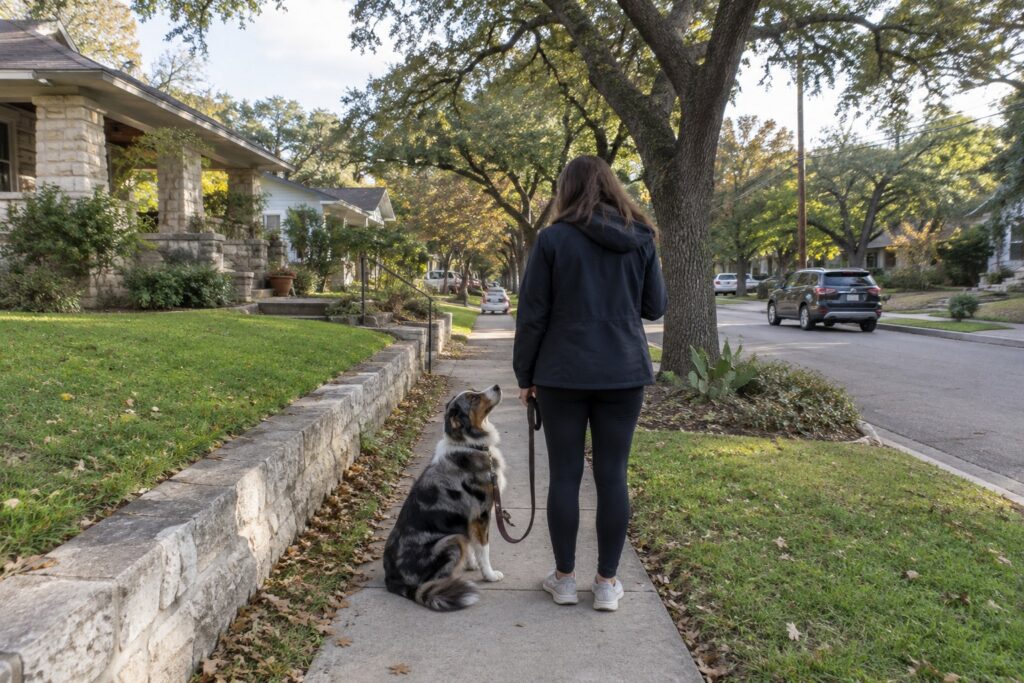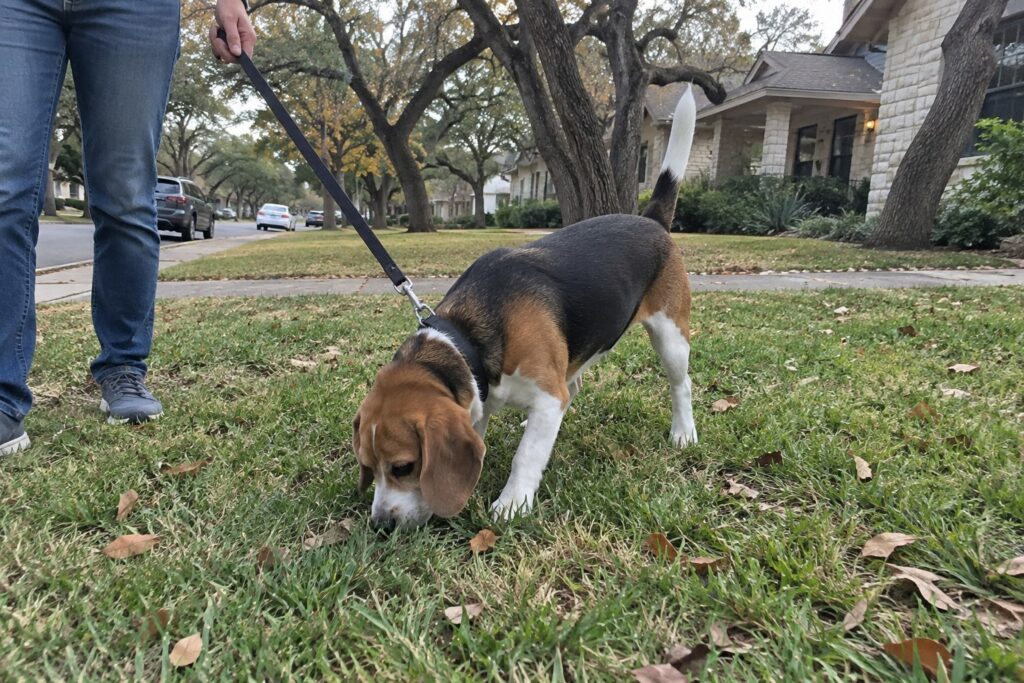

Leash pulling is one of the most common complaints among dog owners in Carrollton, TX. A dog that constantly strains against the leash makes walks stressful and even dangerous. Understanding why dogs pull and how to correct the behavior can transform your daily walks into something both you and your dog look forward to.
Why Do Dogs Pull on the Leash?
Understanding the reason behind pulling makes it easier to address. The primary explanation is simple: pulling works. When a dog pulls toward something interesting and the owner follows, the dog learns that pulling is an effective way to get where they want to go. Every walk where the owner lets the dog drag them forward reinforces that pulling gets results.
Other contributing factors include:
- Excess energy: A dog with pent-up energy is more likely to pull in excitement at the start of a walk.
- Arousal around distractions: Other dogs, squirrels, people, and new smells can spike a dog’s excitement level to the point where self-control becomes very difficult.
- Lack of early training: Dogs that were never taught what is expected of them on the leash will default to natural behavior, which means moving toward anything interesting as fast as possible.
- Inadvertent reinforcement: Owners who follow when their dog pulls, even just to prevent being dragged over, are teaching the dog that pulling pays off.
The Foundation of Loose-Leash Walking
Loose-leash walking means your dog walks close enough to you that the leash has a slight curve (a “J” shape) rather than being pulled taut. Your dog does not have to walk glued to your leg in a formal heel. The goal is simply that neither you nor the dog is under physical strain.
Teaching this starts before you even leave the driveway. Begin in a low-distraction environment where your dog can focus. Your backyard or a quiet street are ideal starting points.
- The stop-and-stand method: Every time your dog moves ahead and the leash becomes taut, stop completely. Do not move forward again until there is slack in the leash. When your dog comes back toward you and the leash relaxes, reward immediately and continue walking. Over many repetitions, your dog learns that a tight leash means the walk stops.
- The change-direction method: When your dog pulls, calmly turn and walk in the opposite direction. The dog has no choice but to follow. When they catch up and the leash relaxes, reward them. This keeps your dog focused on paying attention to where you are going rather than forging ahead.
- Rewarding the right position: Reinforce your dog frequently for being in the correct position near your side. Do not wait for pulling to happen. Proactively reward your dog for walking nicely to build the habit.
Training Tools That Can Help
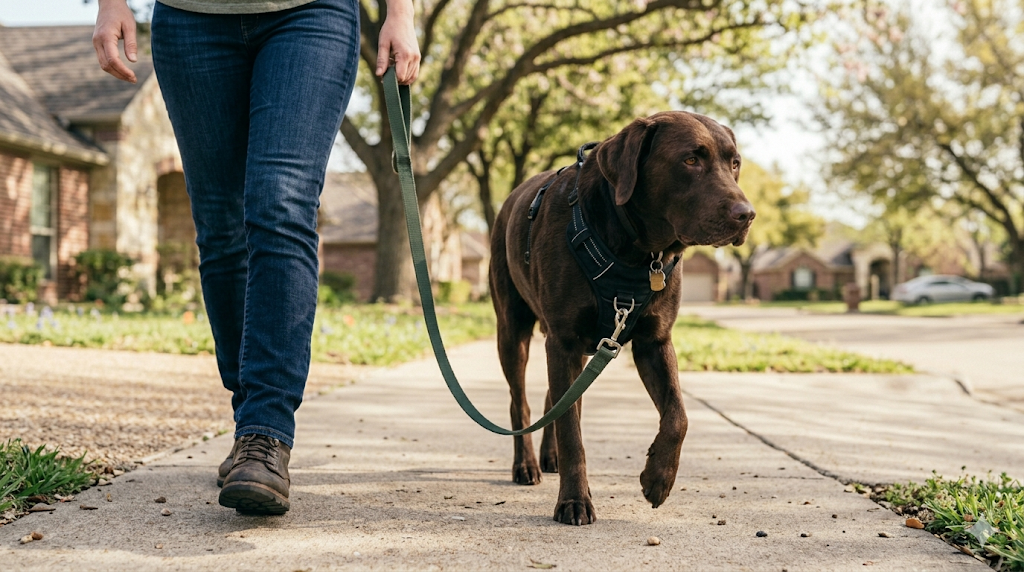
Training tools are meant to support the training process, not replace it. No tool will teach loose-leash walking on its own, but several can make the process easier while you work on the skills.
- Front-clip harness: Attaches at the chest instead of the back. When a dog pulls, the harness redirects them sideways toward you rather than allowing forward momentum.
- Head halter: Fits over the dog’s snout and redirects the head when pulling occurs. Effective for strong dogs but requires gradual introduction to ensure comfort.
- Standard flat collar: Works fine for dogs with mild pulling habits. Not ideal for dogs that pull with significant force, as it can stress the neck and trachea.
- No-pull harness: Designed specifically to discourage pulling through a tightening mechanism. Effectiveness varies by dog.
Avoid retractable leashes during training. They teach dogs that pulling extends their range, which is the opposite of what you want.
Our in-home dog training program includes personalized guidance on tool selection and technique based on your specific dog and walking environment.
Managing Arousal Around Distractions
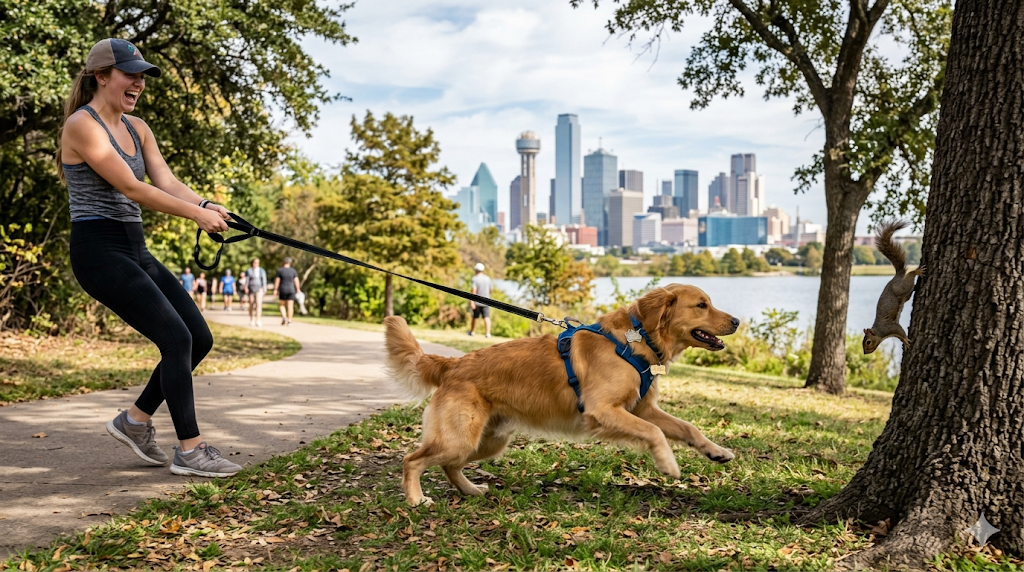
For many Carrollton dogs, the challenge is not pulling at the start of the walk but rather reacting when a trigger appears. The sight of another dog, a cyclist, or a squirrel can override all self-control in an otherwise polite walker.
Building impulse control helps significantly. Practice asking your dog to look at you (using a focus or “watch me” cue) and rewarding eye contact around gradually increasing levels of distraction. The goal is to give your dog a way to respond to exciting stimuli that earns a reward instead of lunging toward them.
Our board and training program provides intensive, immersive training that helps dogs with high reactivity levels develop the focus and impulse control needed for calm walks.
Consistency Is Everything
Loose-leash walking is one of those skills that deteriorates rapidly without consistent practice. If you work on it Monday but let your dog pull freely on Wednesday, you are teaching two incompatible things at the same time. Every person who walks the dog must follow the same rules, because dogs are very good at figuring out which handler lets them pull and which one does not.
Frequently Asked Questions
How long does it take to teach a dog to stop pulling?
Most dogs show noticeable improvement within two to four weeks of consistent daily practice. Some dogs take longer, especially if pulling has been heavily reinforced over years.
Should I use a prong collar to stop pulling?
Prong collars can suppress pulling through discomfort but do not teach the dog what to do instead. Many trainers, including our team at All Dogs Unleashed, prefer tools that help dogs succeed rather than simply correcting failures.
My dog pulls only when they see other dogs. Is this normal?
Yes, this is very common. It is called leash reactivity and involves a combination of excitement and frustration. It responds well to counter-conditioning and desensitization work, often with professional help.
Can I teach an older dog to stop pulling?
Absolutely. Dogs of any age can learn loose-leash walking. It simply takes patience and consistent reinforcement over time.
Enjoy Better Walks in Carrollton
Leash pulling does not have to be a permanent part of your daily routine. With the right approach and the consistency to follow through, walks through Carrollton’s neighborhoods and parks can become something both you and your dog genuinely look forward to. At All Dogs Unleashed, our trainers are ready to help. Give us a call at (972) 484-3647 or come see us at 2401 Luna Rd, Carrollton, TX 75006.
Related Reading
Looking for hands-on help? See how Board and Train in Dallas and Carrollton works.