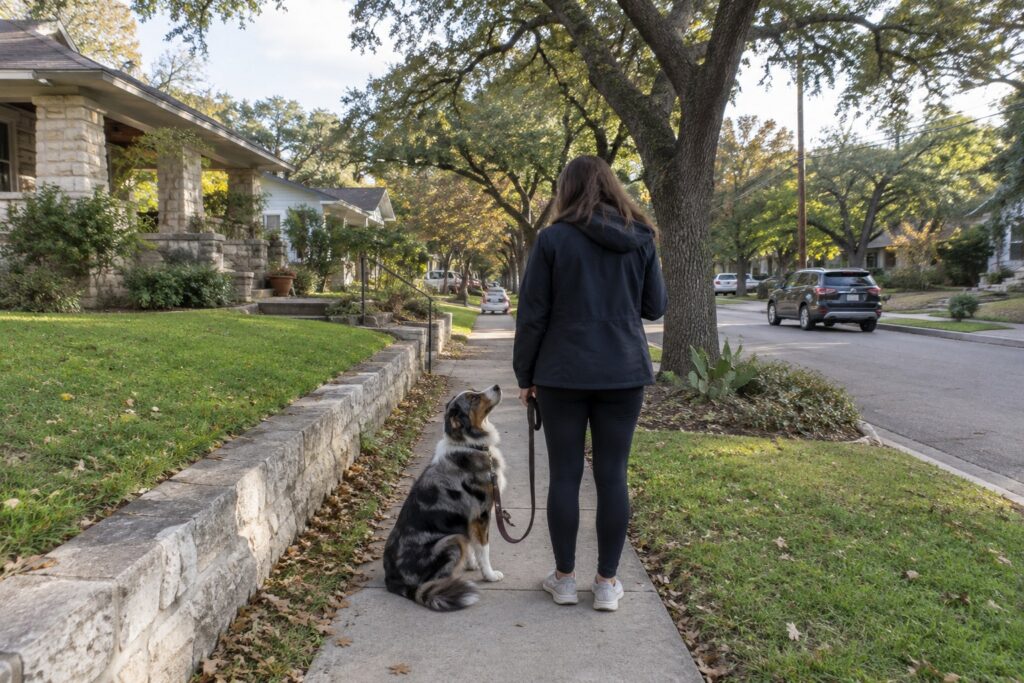

Leaving your dog behind while you travel is rarely a casual decision. Whether you're heading out of Shreveport for a long weekend at the lake, traveling for work, or visiting family across the country, the question of who watches your dog can shape the entire trip. A good dog boarding facility gives you genuine peace of mind. A poor one leaves you checking your phone every hour, hoping for an update that never comes.
Shreveport and Bossier City owners have more boarding options than ever, and the quality gap between facilities is wider than most people realize. A clean lobby and a friendly tour guide are not enough to evaluate where your dog will actually live for the next several days. The real markers of a quality dog boarding facility sit behind the scenes: in staff training, sanitation protocols, medical readiness, and the daily routine your dog experiences from the moment you hand over the leash.
Key Takeaways
- A quality dog boarding facility in Shreveport balances safety, sanitation, qualified staffing, climate control, and clear owner communication, not just clean appearances.
- Vaccination requirements, supervision ratios, and emergency veterinary partnerships are non-negotiable markers of a serious operation.
- Louisiana's heat and humidity make climate control, ventilation, and outdoor shade design especially important for dog safety in summer months.
- The best facilities treat boarding as an extension of training, not a break from it, so your dog comes home calmer and more settled, not wound up.
- Asking specific questions before you book is how you separate facilities that look good from those that actually are good.
Why the Stakes Are Higher Than Most Owners Realize
Most dogs board without incident. But most is not all, and the incidents that do happen tend to share a common thread: an owner who chose a facility based on price or proximity without asking the right questions first.
Dogs in boarding are under a different kind of stress than they experience at home. They are in an unfamiliar environment, surrounded by other dogs and handlers they do not know, without their normal routine and the people they trust. A quality facility is built around managing that stress well. A poor one ignores it, crowds runs, understaffs shifts, and handles problems reactively instead of preventing them.
The difference shows up in how dogs behave when they come home. A dog who boards well at a quality facility usually comes home tired from activity but otherwise calm and settled. A dog who had a poor boarding experience often comes home anxious, reactive, or with behavioral regressions that take days or weeks to resolve.
Cleanliness Standards That Actually Matter
Every boarding facility looks clean on a tour. The question is how clean it stays between tours.
A quality facility uses a sanitation protocol that goes beyond basic cleaning. Kennels and runs are disinfected between every occupant using veterinarian-approved products that address bacteria, viruses, and parasites. Common areas are cleaned on a scheduled rotation throughout the day, not just at open and close. Waste is removed promptly, not left to accumulate between cleaning windows.
The smell test is a reliable starting point. A well-maintained facility does not smell strongly of urine or feces, even in kenneled areas. Odor control is a byproduct of frequency and thoroughness, not just product strength. A facility that smells bad on a tour smells worse when no one is watching.
Ask specifically about their disinfection products and schedule. Ask what they do when a dog in the facility is diagnosed with kennel cough or another contagious condition. A quality operation has a written protocol for quarantine, owner notification, and deep cleaning. An operation that has never thought about this is not one you want to board your dog at.
Staffing and Supervision Ratios
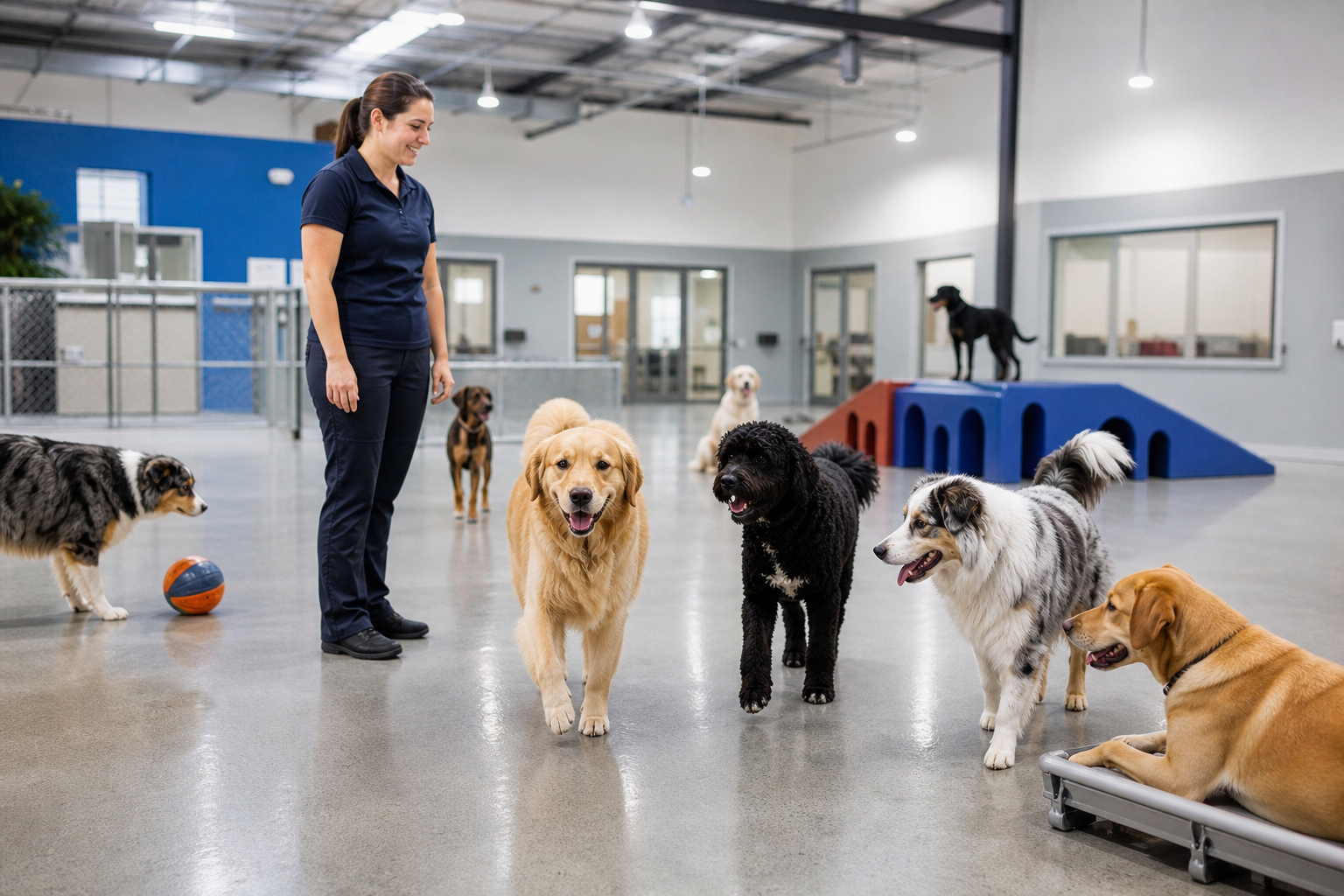
This is where most owners fail to ask the right questions, and where the quality gap between facilities is widest.
Ask how many dogs one staff member is responsible for at any given time. The honest answer varies by activity. During group play, a ratio above fifteen to one is difficult to supervise safely, especially if the dogs are size-mixed or energy-mixed. In kennel areas overnight, the ratio is less critical because activity is lower, but there should still be someone present or checking in regularly.
Ask whether staff are trained in canine body language. The ability to read early stress signals, play escalation, and pre-conflict cues is what separates a handler who prevents a fight from one who breaks one up after the fact. Ask whether staff have any formal training in dog behavior or handling. The answer tells you a great deal about how seriously the operation takes safety.
Ask about overnight staffing specifically. Many facilities are unstaffed overnight. That is not automatically a disqualifier, but you should know it before your dog stays there. A facility that has on-site overnight staff is a meaningful upgrade for dogs who are anxious, older, or have medical needs.
For owners whose dogs need more structured care, our Shreveport dog boarding program pairs boarding with trained handlers who understand behavior and can maintain the routines your dog relies on.
Vaccination and Health Requirements
A quality boarding facility requires vaccination documentation before your dog steps through the door. Non-negotiable minimums are rabies, distemper combination (DHPP), and Bordetella (kennel cough). Some facilities also require canine influenza vaccination, which is appropriate given how quickly respiratory illness can move through a boarding population.
If a facility does not require proof of current vaccinations, do not board your dog there. This is not a bureaucratic formality. It is how contagious disease is prevented in populations of dogs who have no choice but to share air, surfaces, and handlers.
Ask how they handle a dog who arrives without current documentation. The correct answer is that the dog does not board until documentation is confirmed. An operation that waves this through for convenience is showing you exactly how seriously they take every other safety protocol.
Also ask about their flea and parasite prevention requirements. A facility that does not address external parasites is one where your dog can pick up hitchhikers that cause weeks of problems at home.
Climate Control and Physical Environment
Shreveport summers are serious. Temperatures regularly exceed ninety degrees from June through September, and the humidity makes heat stress a genuine risk for dogs who are active, excited, or spending time outdoors.
Ask specifically about the HVAC system. How is the indoor temperature maintained during peak summer heat? What happens if the air conditioning fails? Is there a backup system or protocol? A quality facility has a plan. A facility that has never considered this question is one where your dog could experience heat stress during a summer thunderstorm that knocks out power.
Ask about outdoor access. Where do the dogs go for exercise and bathroom breaks? Is there shade? Is outdoor time limited during the hottest parts of the day? A responsible facility in Louisiana adjusts outdoor schedules seasonally, keeping outdoor time in the early morning and late evening during summer months and limiting midday exposure.
Also ask about kennel size and sleeping arrangements. Is your dog in an individual run or a shared space? Can you bring a bed or blanket from home? Familiar scents reduce anxiety in boarding environments significantly. A facility that allows and encourages personal items understands dog psychology better than one that standardizes everything for operational convenience.
Exercise, Enrichment, and Daily Routine
A dog that spends most of a four-day boarding stay in a kennel run is not having a good experience. Confinement without adequate exercise and stimulation produces stress behaviors: pacing, barking, loss of appetite, and sometimes behavioral regressions that take time to resolve at home.
Ask how many times per day dogs are out of their kennel space and for how long. Ask what structured activities are available and how they are supervised. Ask whether dogs are grouped by size, energy level, and temperament for play sessions, or whether the entire boarding population is mixed together. Mixed groups can work, but they require more attentive supervision and better pre-screening.
Ask about add-on services like individual training sessions, enrichment walks, or one-on-one playtime. These are not upsell gimmicks at a quality facility. They are indicators of an operation that understands what dogs actually need during extended stays.
For owners considering options that combine boarding with ongoing behavioral work, our overview of Shreveport dog training programs covers how structured care and training can work together.
Medical Readiness and Emergency Protocols
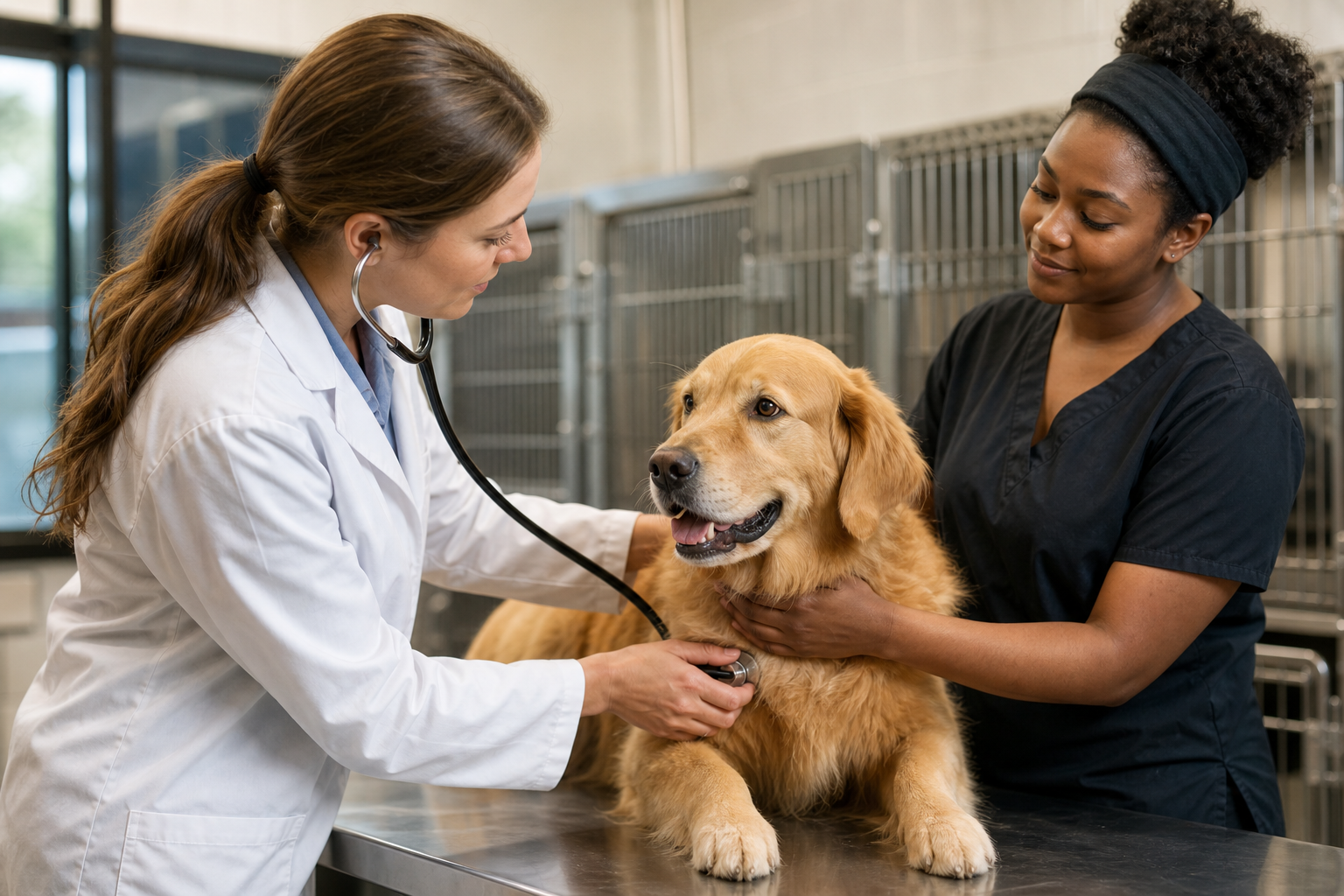
Ask which veterinary clinic the facility uses in an emergency and how far that clinic is from the facility. Ask what the protocol is when a dog shows signs of illness, injury, or distress. Ask who is authorized to approve emergency veterinary care if the owner cannot be reached.
A quality facility has written protocols for each of these scenarios. The staff can answer these questions clearly because they have been trained on them. A facility that responds vaguely, says they would just call you, or seems to be improvising the answer in the moment is telling you something important about their emergency preparedness.
Also ask about their intake assessment process. Does someone evaluate your dog's temperament before they are placed into a group play environment? A quality facility does not drop every new arrival into the play yard on day one. They assess the dog's energy, behavior, and compatibility before any group exposure. This protects your dog and every other dog in the facility.
Communication During the Stay
Owners who have never boarded a dog before often underestimate how much they want updates. Owners who have boarded and had a poor experience know exactly how much they want updates.
Ask what communication looks like during the stay. Do they send photo updates? Daily check-in messages? How do you reach someone if you have a question or concern? What is the response time expectation?
A quality facility communicates proactively. If your dog is not eating, you hear about it. If your dog had an interaction that needed attention, you hear about it. If your dog is doing particularly well, you might hear about that too. The goal is not to create anxiety but to keep you informed so you can make decisions and enjoy your trip with confidence.
Facilities that say they only call if there is a problem are not necessarily poor quality, but they set a lower communication standard than facilities who treat owner peace of mind as part of the service.
Questions to Ask Before You Book
Walking into a boarding consultation with a prepared list of questions separates owners who evaluate facilities from those who take a tour and make a gut call.
What is your staff-to-dog ratio during play sessions and overnight? How do you handle a dog that is not a good fit for group play? What vaccinations do you require and how do you verify documentation? What disinfection products and schedule do you use? How is temperature controlled in summer, and what is your protocol if HVAC fails? Which veterinary clinic do you use for emergencies, and how far away are they? How do you assess a new dog before placing them in group play? What does communication with owners look like during the stay? Can I bring personal items from home for my dog? What is your policy if my dog shows signs of illness during the stay?
A facility that answers these questions clearly, specifically, and without hesitation is worth your trust. A facility that deflects, generalizes, or seems surprised by the questions is giving you the answer you need.
Red Flags to Watch For
A few warning signs are worth knowing before you visit.
Staff who cannot answer basic questions about protocols or defer every question to a manager. Tours that skip the actual kennel and run areas and focus entirely on the lobby and play spaces. A facility that does not require vaccination documentation or that has not thought about their emergency veterinary process. Overcrowded play yards with no visible staff management. A strong smell of urine or feces in any part of the facility. Resistance to allowing you to visit during non-appointment hours or to see where your dog would actually sleep.
None of these individually is necessarily disqualifying, but several together should send you to another facility.
How Boarding and Training Work Together
The best boarding experiences are the ones where the dog comes home with their training intact, and ideally a little sharper. This happens when the boarding facility is staffed by people who understand behavior, use consistent cues and handling, and reinforce the patterns the dog has been building at home.
It does not require the facility to run a formal training program, though that is a significant advantage. It requires handlers who understand how to reinforce a sit before a meal, how to manage a dog who gets overstimulated in play, and how to read a dog who is telling them something is wrong. Behavioral literacy in the staff is what separates a boarding experience that sustains your dog's training from one that quietly erodes it.
For families who want to combine boarding with active training work, our board and train program in Shreveport is designed exactly for this. Your dog works with our trainers throughout the stay and comes home with meaningful progress, not just time spent.
Frequently Asked Questions
What vaccinations does my dog need to board in Shreveport?
Most quality boarding facilities in the Shreveport area require current rabies, DHPP, and Bordetella vaccines. Some also require canine influenza. Bring documentation from your veterinarian. Verbal confirmation is not enough at a serious facility.
How do I know if my dog will do well in a group play environment?
A quality facility will assess your dog before placing them in group play. Dogs who are highly anxious, reactive, or have a history of dog-to-dog conflict may do better with individual exercise time rather than group play. Be honest with the facility about your dog's history so they can place them appropriately.
What should I bring for my dog's boarding stay?
A familiar blanket or bed from home, your dog's regular food (to avoid digestive upset from a food change), any medications with clear instructions, and a note about your dog's routine and any behavioral quirks the staff should know about. Do not bring high-value toys that could cause resource guarding around other dogs.
How long is too long for a dog to board?
Most dogs handle boarding stays of one to two weeks without significant behavioral impact, provided the facility is high quality. Extended stays beyond two to three weeks can create more stress for some dogs, particularly anxious ones. For longer trips, more frequent check-ins with the facility and enrichment add-ons help maintain stability.
What happens if my dog gets sick while boarding?
A quality facility contacts you immediately, assesses the severity, and either manages mild illness on-site or transports the dog to their emergency veterinary partner. You should establish beforehand whether the facility has authorization to approve emergency care if you cannot be reached. Most facilities ask you to sign a form covering this at intake.
Is it better to board my dog or hire a pet sitter?
It depends on the dog. Dogs who are very home-oriented, anxious about new environments, or who do not like other dogs often do better with an in-home sitter. Dogs who are social, adaptable, and benefit from the structure and activity of a boarding environment often do better at a quality facility. Either option is fine if it is well-matched to your dog.
Contact Our Shreveport Team
If you have questions about boarding your dog in Shreveport or want to learn more about how our program works, our team is easy to reach. Call (318) 593-7321 or contact our Shreveport team directly to talk through your dog's needs and find the right fit.
About All Dogs Unleashed Shreveport
All Dogs Unleashed Shreveport serves dogs and families across Shreveport, Bossier City, and the surrounding Northwest Louisiana communities. Our Shreveport team brings hands-on training experience to every aspect of boarding, from temperament-matched group play to one-on-one care for anxious or medically complex dogs. We built our Shreveport dog boarding program around the standards we'd want for our own dogs, with climate-controlled spaces, trained handlers, and clear communication from check-in through pickup.