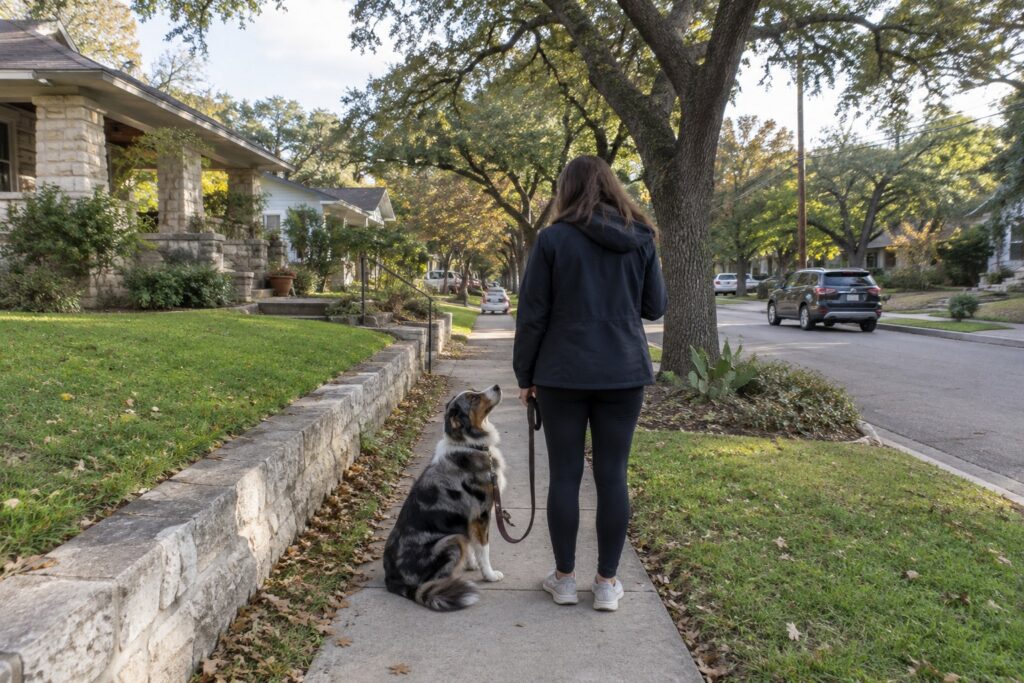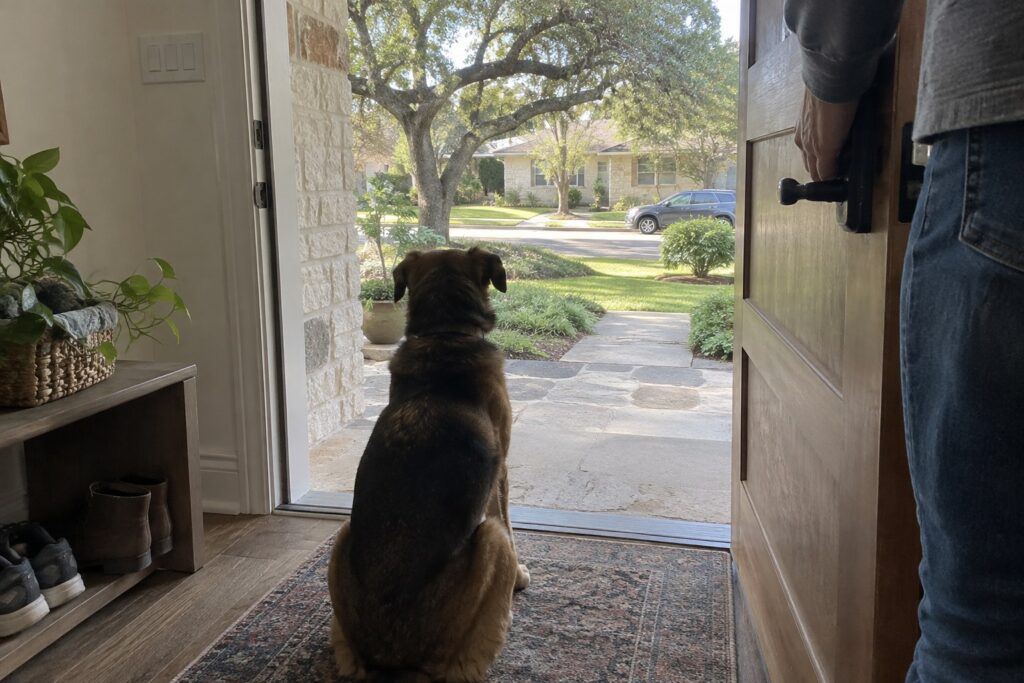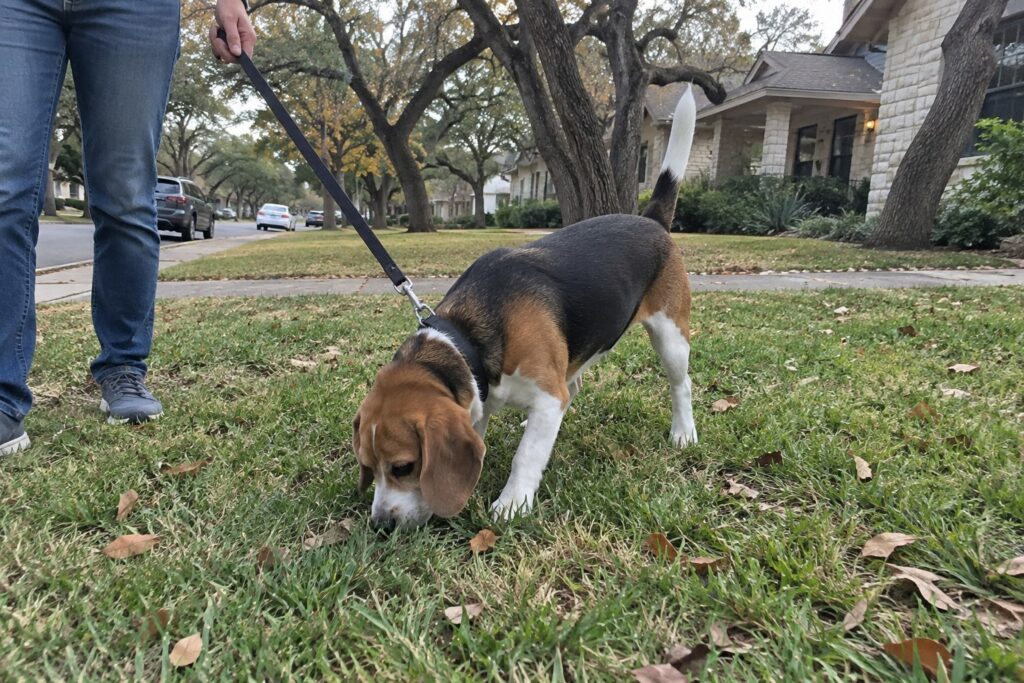

Dog prey drive is the instinct that makes your dog lock onto a squirrel, freeze, and then launch toward the end of the leash before you can say a word. It is natural and hardwired, and in a city full of backyard squirrels, neighborhood cats, and lakeside ducks, it shows up on almost every walk.
At All Dogs Unleashed DFW, we help Dallas owners turn that explosive chase into a dog who notices, stays with you, and comes back when called. For dogs with a strong chase instinct, our two-week Board and Train program builds the impulse control and reliability that everyday walks demand, and private lessons help the whole household keep it going.
Tired of bracing for every squirrel? Talk with our team about a plan for your dog.
Key Takeaways
- Prey drive is a normal chain of hunting behaviors, from spotting and stalking to chasing and grabbing, and every dog has some version of it.
- Fall is a busy season for Dallas fox squirrels as they bury acorns and pecans, which puts more movement in front of your dog in yards and parks.
- A dog with a strong chase instinct belongs on a leash or long line in unfenced areas, and Dallas City Code requires dogs in public parks to be leashed outside designated off-leash sites.
- Engagement, leave it, threshold distance, and a reliable recall give your dog better choices, while flirt poles, fetch, and scent games offer safe outlets.
- Our fixed two-week Board and Train program includes an advanced level that covers off-leash reliability, distance commands, and impulse control, backed by guaranteed results and lifetime support.
What Dog Prey Drive Really Is
Prey drive is not a sign that your dog is mean, dominant, or poorly raised. It is an inherited set of hunting behaviors that dogs share with their wild ancestors. The American Kennel Club describes predation as an instinctive, natural behavior that is found in all dogs to a certain extent.
The Predatory Motor Sequence
Behavior researchers break predation into a chain of steps, often called the predatory motor sequence. The version you will see most often runs orient, eye, stalk, chase, grab-bite, kill-bite, dissect, and consume. The AKC describes the same chain as orientation, stalking, creeping toward prey, chasing, grab-biting, kill-biting, possessing, dissecting, and consuming.
Each step feels good to your dog. Chasing is rewarding on its own, so a dog that gets to chase a squirrel across the yard has just been paid for the behavior, even if the squirrel escapes up a tree.
Why Some Dogs Feel It More Than Others
The AKC notes that breeds developed for hunting work, such as hounds, terriers, sporting breeds, and herding breeds, commonly have strong prey drives. Selective breeding also shaped which parts of the sequence stand out. Herding breeds like the Border Collie tend to show the early parts most strongly, while retrievers were bred to bring birds back rather than harm them.
Breed is a starting point, not a verdict. Mixed breeds, individual genetics, and a dog’s history all matter.
| Stage of the Sequence | What You Might See | Dogs Bred to Emphasize It |
|---|---|---|
| Orient and eye | Head snaps toward movement, body goes still, hard focused stare | Herding breeds, pointing breeds |
| Stalk | Slow, low creeping, weight shifted forward | Herding breeds |
| Chase | Sudden sprint toward anything that runs | Sighthounds, many terriers |
| Grab-bite and kill-bite | Catching, pinning, or shaking a toy or animal | Terriers bred to catch vermin |
| Carry and retrieve | Picking up and bringing back what was caught | Retrievers and other sporting breeds |
Where Dallas Dogs Meet Prey Drive Triggers
Fall Squirrels in Lakewood and Beyond
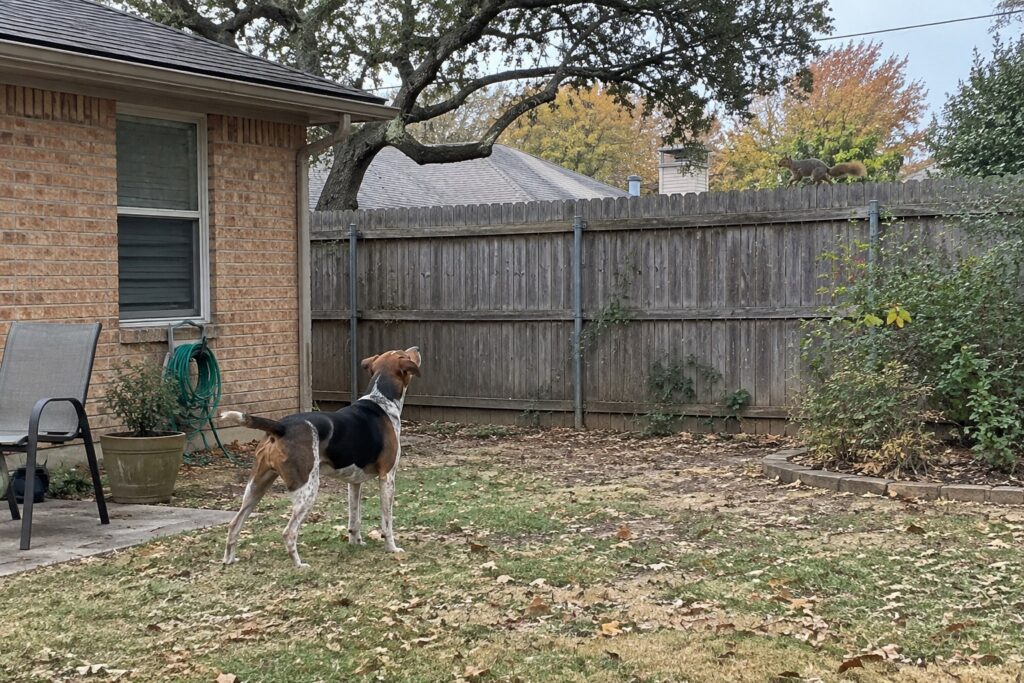
The squirrels running along fences in East Dallas are mostly fox squirrels, a native species that spends more time on the ground than most tree squirrels. In the fall, fox squirrels are busy burying acorns and pecans to eat later in the season. That means more quick dashes across lawns and sidewalks, right at the moments your dog is most likely to spot them.
Older neighborhoods with big oaks and pecans, like Lakewood, the M Streets, and parts of Oak Cliff, can feel like a squirrel obstacle course on a fall walk. Your dog is not being defiant when it stares up a tree trunk.
Rabbits, Cats, and Backyard Visitors
Eastern cottontails are a common sight in yards across the Metroplex, including Carrollton, and they tend to bolt when a dog appears. Neighborhood cats are another frequent trigger, both on walks and along shared fences. Small animals that run give your dog the full chase experience, which is why a rabbit sprinting under a hedge can undo a week of calm walks.
Ducks and Geese at White Rock Lake
White Rock Lake is one of the best birding spots in the city, and the Sunset Bay area is well known for ducks, geese, pelicans, and other waterfowl. For a bird-focused dog, the shoreline can be a lot to handle. Keep the leash short, give the birds plenty of room, and choose quieter stretches of the trail while your dog is still learning.
The same goes for busy spots like the Katy Trail, where squirrels, cyclists, and runners all create fast movement. Friends of the Katy Trail asks that dogs stay on a short leash, which helps you catch that first hard stare before it turns into a lunge.
Prey Drive, Reactivity, and Play Are Not the Same Thing
Prey drive, reactivity, and play come from different places, and the training plan changes with the label.
Predatory behavior is about closing distance. The dog wants to get to the target. That is different from most aggression, and the ASPCA notes that a predatory dog usually does not growl or show its teeth first, so the chase can seem to come out of nowhere. Reactivity, on the other hand, is usually an emotional overreaction, often driven by fear or frustration, and the dog’s barking and lunging may be meant to make a trigger go away.
| Behavior | Prey Drive | Reactivity | Play |
|---|---|---|---|
| Main goal | Get closer to catch the target | Make the trigger go away or vent frustration | Have fun and keep the game going |
| Typical body language | Silent, still, focused stare, forward weight, tail often high or stiff | Barking, growling, raised hackles, lunging, sometimes backing up | Loose, bouncy movement, play bows, relaxed open mouth |
| Common triggers | Squirrels, rabbits, cats, birds, anything that runs | Other dogs, strangers, bikes, noises | Familiar dogs, toys, people inviting a game |
| Sound | Often quiet until the chase | Often loud | Play growls and barks that come and go |
| Training focus | Impulse control, leave it, recall, safe outlets | Distance, confidence, calmer responses to triggers | Manners, breaks, and a solid stop cue |
If your dog barks and lunges at other dogs or people, our post on reactive dog training in Dallas goes deeper into that problem. If you are seeing growling, snapping, or bites directed at people or pets, read our overview of understanding dog aggression and talk with a professional before the behavior escalates. Learning to read canine body language also helps you spot the difference early.
Want a dog who can see a squirrel and still listen? Our two-week residential program builds impulse control and off-leash reliability with daily structured training.
Safety First for Dogs With a Strong Chase Instinct
Before any training plan, you need a safety plan. A dog in full chase mode is not thinking about traffic, fences, or your voice.
Leashes, Long Lines, and Dallas Rules
Dallas City Code requires dogs in public parks to be on a leash unless they are inside a designated off-leash site, and those sites are enclosed areas set up by the park board. You can find the current list on the Dallas Parks and Recreation dog parks page. For a broader look at local rules and courtesy, see our post on leash laws and off-leash etiquette in DFW.
A standard 6-foot leash and a well-fitted flat collar or harness work for everyday walks. For training in open fields, a long line gives your dog more room to move while you still have a physical connection. The AKC recommends keeping dogs on a leash or long line in areas with lots of wildlife while you work on the problem.
Secure Yards and Fence Checks
A backyard fence is only as good as its weakest spot. Walk your fence line regularly, especially after storms, and look for loose boards, gaps under gates, and soft soil where a terrier could dig. Squirrels using the top rail of your fence can tempt a dog to climb or jump, so supervise yard time until you trust your dog’s response.
The AKC also suggests reserving the yard for potty breaks for a while, since every sprint along the fence strengthens the habit.
Why Off-Leash Freedom Has to Be Earned
Never let a dog with high prey drive run loose in an unfenced area, no matter how good its recall is in the living room. One rabbit can pull a dog across a parking lot or into a busy street. There are legal stakes, too. Dallas City Code defines an aggressive dog as one that, while not legally restrained, killed or injured a domestic animal that was legally restrained, and owners of those dogs face strict requirements.
Training Skills That Help You Manage Dog Prey Drive
You cannot train the instinct out of your dog, and you do not need to. The goal is to put a pause between the stare and the sprint, and then give your dog something better to do in that pause.
Engagement and Watch Me
Engagement means your dog checks in with you on its own. Reward every glance you get on walks, especially in low-distraction areas. Then teach a clear focus cue such as “watch me,” and practice it until your dog snaps its eyes to you quickly.
The AKC suggests asking for that eye contact before your dog notices the bird or bunny. Timing is everything. Once your dog is locked on and stalking, you have lost most of your window.
Threshold Distance
Every dog has a distance where it can see a trigger and still think. Closer than that, and your dog goes over threshold, which means it stops taking food, stops hearing cues, and only sees the target. Find the spot where your dog notices a squirrel but can still sit and take a treat, and train there. Shrink the distance gradually. If your dog starts staring hard or ignoring treats, step back and rebuild.
Leave It and Impulse Control
Leave it teaches your dog that turning away from something it wants pays better than going after it. Start with a treat in your closed hand, reward the moment your dog backs off, and then work up to treats on the floor, toys, and eventually real wildlife at a distance.
Impulse control shows up in small daily habits too. Asking your dog to sit before meals, wait at doorways, and hold a stay while a toy rolls past all build the same muscle your dog needs when a cat darts under a car.
Recall That Works Under Pressure
A recall that only works in the kitchen will not stop a chase. Build it in layers: quiet rooms first, then the yard, then a long line in the park, always rewarding generously. Never call your dog to you for something unpleasant, and avoid repeating the cue over and over. Our post on recall as the foundation of Dallas dog training walks through the basics.
Healthy Outlets for the Urge to Chase
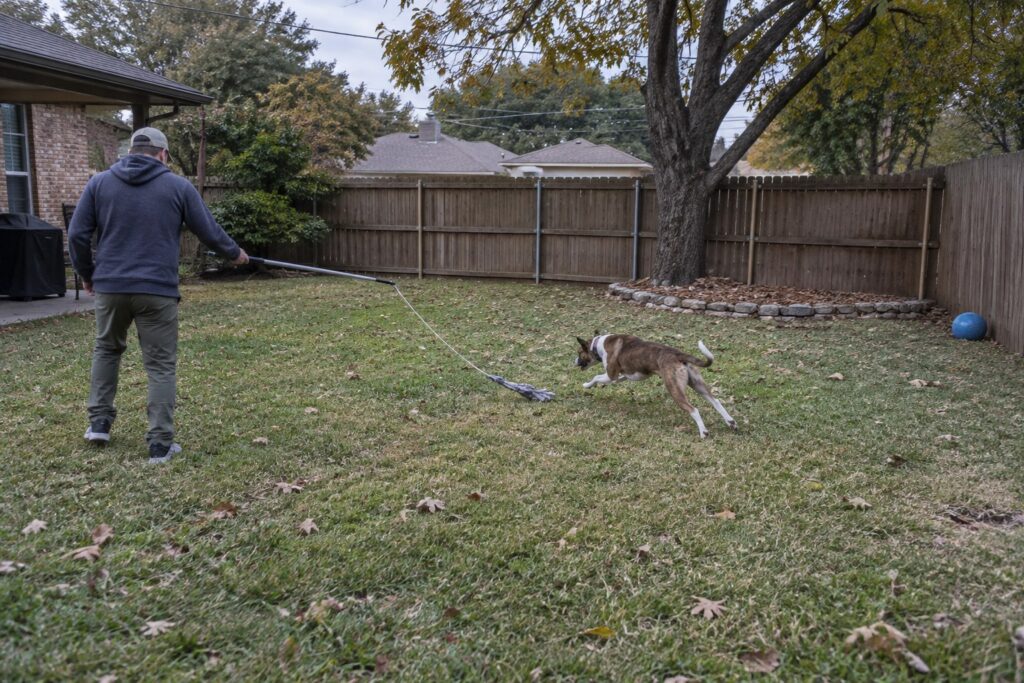
Suppressing dog prey drive without giving it an outlet tends to backfire. A dog that gets to chase, grab, and carry in a controlled game is often easier to manage on walks. The AKC points out that games like chase, fetch, and flying disc are all based on predatory drive, and suggests substituting yourself or a toy for the animal.
Flirt Pole, Fetch, and Tug
A flirt pole is a long handle with a rope and a lure on the end. You drag the lure along the ground, your dog chases it, and you decide when the game starts and stops. Build in rules: your dog waits before the chase starts, drops the lure on cue, and gets the game back as the reward. That turns every session into impulse control practice.
Keep flirt pole sessions short, use grass rather than concrete, and avoid sharp, twisting turns. In Dallas heat, save high-energy games for cooler mornings and evenings, and check with your veterinarian first if your dog has joint problems or is still a growing puppy.
Scent Games and Sniff Time
For dogs that love to track and stalk, scent work is a great fit. Hide treats around a room, scatter kibble in the grass, or teach your dog to find a favorite toy. For more at-home ideas, browse our dog enrichment activities list.
When to Bring in a Professional Trainer
If your dog pulls you off your feet, has escaped the yard to chase something, or stalks the family cat, it is time to get help.
How Board and Train Builds Impulse Control
Our two-week Board and Train program gives your dog daily structured instruction at our Carrollton training facility. Each dog starts with an initial assessment, and trainers build a customized plan from there. The foundation covers core obedience like sit, stay, come, and heel, along with leash pulling and structured socialization.
For chase-driven dogs, the advanced level matters most. It covers off-leash reliability, distance commands, and impulse control, the exact skills that let your dog see a squirrel and still respond to you. Board and Train comes with guaranteed results and lifetime support at no additional charge, and Affirm financing is available.
Private Lessons to Keep Everyone Consistent
Our private lessons take place at our facility or in your home across the DFW Metroplex, so every family member learns the same cues and leash handling. Ready to take the stress out of squirrel season? Call our team at (972) 484-3647 to talk about your dog’s chase instinct and the right next step.
About All Dogs Unleashed DFW
All Dogs Unleashed DFW is a dog training company serving Dallas and the DFW Metroplex from our training facility in Carrollton. We help owners manage strong chase instincts with a fixed two-week Board and Train program that includes advanced work on impulse control, off-leash reliability, and distance commands, backed by guaranteed results and lifetime support. We also offer private lessons at our facility or in your home, plus boarding and refresh training, so your dog’s progress keeps going long after the first session.
Frequently Asked Questions
Can you train prey drive out of a dog?
No, and you do not need to. Prey drive is an instinct, so the realistic goal is control rather than removal. With impulse control, leave it, threshold work, and a strong recall, most dogs can learn to notice a squirrel and then turn back to their owner. Safe outlets like flirt poles and fetch help satisfy the urge in a controlled way.
What dog breeds have the highest prey drive?
According to the American Kennel Club, breeds developed for hunting work, including hounds, terriers, sporting breeds, and herding breeds, commonly have strong prey drives. Sighthounds tend to love the chase, terriers often want to catch, and herding dogs may stalk and stare. Individual dogs vary a lot, so mixed breeds and small dogs can have a powerful chase instinct too.
Is prey drive the same as aggression?
No. Predatory behavior aims to close the distance and catch a target, and it is often silent. Aggression and reactivity usually involve emotions like fear or frustration, with warning signs such as growling, barking, or raised hackles. The two can overlap, so if your dog has injured an animal or shows aggression toward people, work with a professional trainer right away.
Can a dog with high prey drive live with a cat?
Often, yes, but it takes careful management and training. Start with barriers like baby gates and crates, keep your dog leashed during early meetings, and reward calm behavior around the cat. Never leave them alone together until you fully trust your dog. If your dog stares, stalks, or lunges at the cat, get professional help before the situation escalates.
Should I let my dog chase squirrels in the backyard?
It is better not to. Each chase rewards the behavior and makes it stronger, which spills over onto walks, and dogs can injure themselves on fences or escape while chasing. Supervise yard time, call your dog away before it locks on, and reward it for coming back. Give it a flirt pole or fetch session instead so the chase happens on your terms.
How long does it take to improve a dog’s recall around wildlife?
It depends on the dog, its history, and how consistently you practice, so there is no fixed timeline. Recall around squirrels and rabbits is one of the hardest skills to build. Our fixed two-week Board and Train program gives daily structured practice, and the advanced level covers off-leash reliability and impulse control. Keep practicing at home afterward to maintain the results.
Managing dog prey drive takes patience, smart safety habits, and training that gives your dog a better choice than the chase. If a squirrel, rabbit, or cat still wins every argument on your walks, we can help. Call (972) 484-3647 or reach out online to talk with our team. Our training facility at 2401 Luna Rd in Carrollton serves Dallas and the entire DFW Metroplex.
Ready to Get Started with All Dogs Unleashed DFW?
Give your dog the impulse control it needs to handle squirrels, cats, and ducks without dragging you along. Call (972) 484-3647 to ask about our two-week Board and Train program.