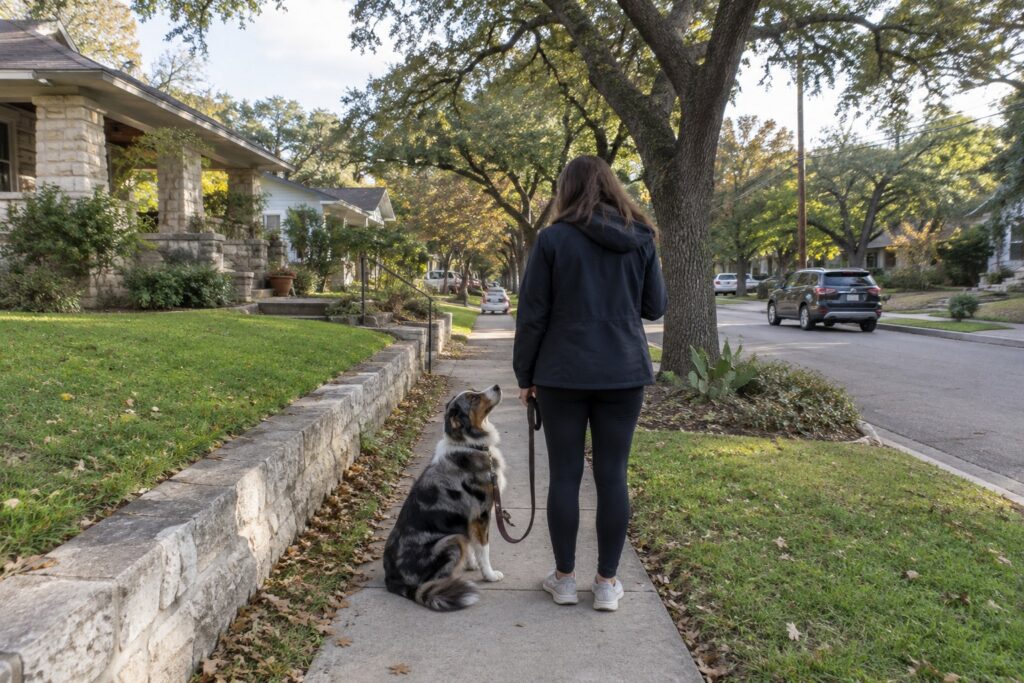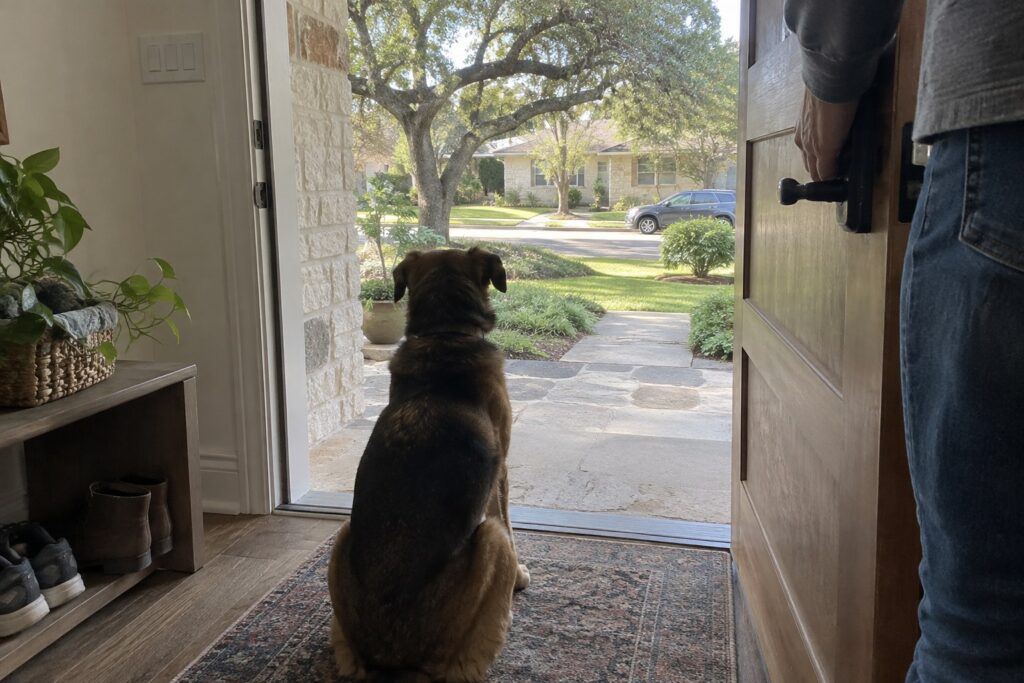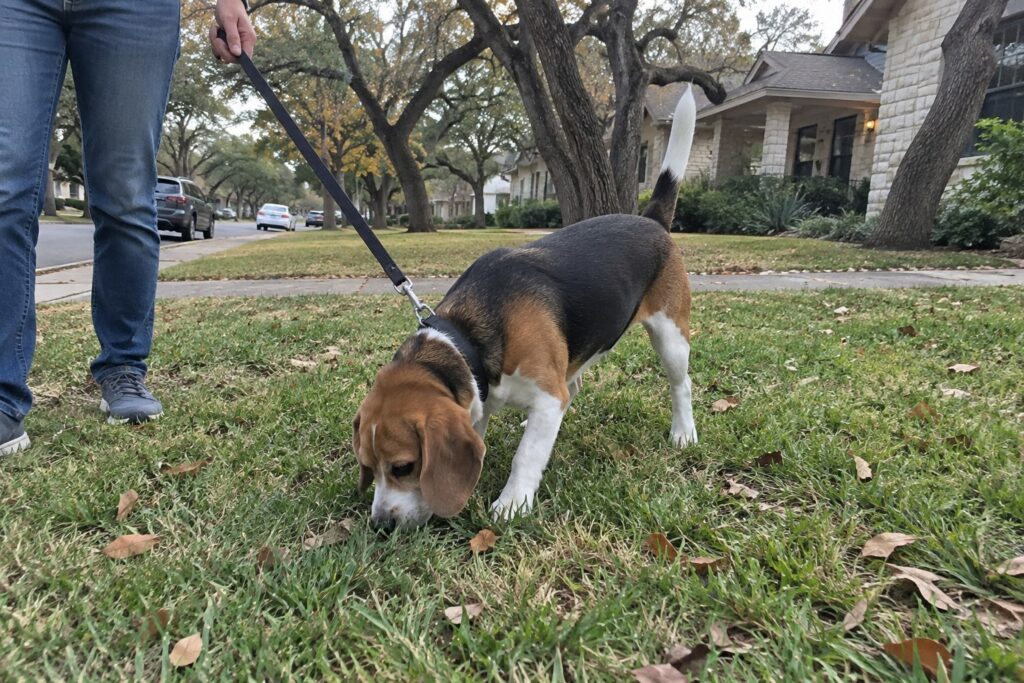

Your dog barks, lunges, or spins on the leash the moment another dog rounds the corner. You have crossed streets to avoid neighbors, skipped walks during busy hours, and wondered whether your dog will ever relax in public. Reactive dog training gives you a way forward. With the right approach, a reactive dog can learn to notice a trigger, stay under control, and walk past it without melting down.
Dallas is full of stimuli that challenge reactive dogs. Patio dining on Greenville Avenue, off-leash areas at White Rock Lake, apartment hallways in Uptown, joggers along the Katy Trail: every outing introduces new sights, sounds, and smells. Teaching your dog to move through these environments calmly takes the right plan, consistent handling, and often a professional who understands what reactivity really is.
Key Takeaways
- Reactivity is an over-the-top response to a trigger, usually rooted in fear, frustration, or over-arousal, and is distinct from true aggression.
- Threshold distance is the cornerstone of reactive dog training: work below it, and your dog can learn; push past it, and nothing sticks.
- Core techniques like counter-conditioning, desensitization, Look at That, and pattern games work best in combination, not in isolation.
- Dallas environments, including apartment hallways, trail systems, and busy sidewalks, introduce specific triggers that reactive dogs need preparation to handle.
- Progress is rarely linear; early wins are small, and setbacks are part of the work, not a sign of failure.
- Professional help is warranted any time reactivity involves contact, escalates, or has plateaued under owner-led training.
What Reactive Behavior Actually Looks Like
Reactivity is an over-the-top response to something in the environment. A reactive dog reacts; they do not necessarily attack. Most reactive dogs are not aggressive. They are overwhelmed, frustrated, or afraid, and their behavior spills out in ways that look alarming to passersby.
Common signs include barking and lunging at the end of the leash, whining, hackles up, fixed staring, pacing, a stiff tail, hard panting, or an inability to take treats in the presence of a trigger. A reactive dog may act perfectly calm at home and then fall apart as soon as they see another dog on a walk.
Reactivity sits on a different track than true aggression. An aggressive dog intends harm and will follow through; a reactive dog is typically trying to create distance or manage their own discomfort. Understanding the difference matters because the training path is different. For a deeper look at how to tell the two apart, our post on common types of aggression in dogs walks through the distinctions in detail.
Why Dogs Become Reactive
Reactivity has many roots, and most reactive dogs have more than one.
Fear is the largest driver. A dog who was startled by another dog as a puppy, spent time in a shelter, or missed out on early socialization can carry that fear into adulthood. Their reactive display is a way of saying, “Back off.”
Frustration shows up in dogs who love people or other dogs but cannot reach them because of the leash. The leash itself creates the tension. These dogs often play beautifully off-leash but explode into barking and pulling the second they are tethered.
Genetics and breed tendencies play a role. Herding breeds react to movement. Guardian breeds react to unfamiliar people. Terriers react to small fast animals. None of this is a flaw, but it shapes what your dog finds exciting or concerning.
Under-socialization during the critical window between three and sixteen weeks leaves dogs without a reference point for normal life. Everything becomes a question mark, and question marks feel threatening.
Past trauma, medical issues, chronic pain, and thyroid imbalances can also push a dog into reactive patterns. A proper evaluation separates behavioral issues from health-driven ones.
Common Triggers for Reactive Dogs in Dallas
Every dog has their own list, but certain triggers come up again and again in the DFW area.
Other dogs on leash are the number one trigger for Dallas owners. Narrow sidewalks, apartment hallways, and crowded parks force close-quarters encounters that many reactive dogs cannot handle.
Strangers, especially men in hats, delivery workers, or anyone moving quickly, can set off fear-based reactivity. Dogs who live in apartment complexes or townhomes often struggle more, since they encounter new people constantly in elevators and stairwells. Our guide to dog etiquette for apartment living in DFW covers the practical side of managing these encounters.
Fast-moving objects like bikes, skateboards, e-scooters, and joggers tap into prey drive or motion sensitivity. The Katy Trail and White Rock Lake loop both see heavy bike and runner traffic, which can overwhelm a reactive dog who is not ready for that environment yet.
Loud urban sounds, including construction, trash trucks, and traffic, raise a dog’s baseline arousal even before any direct trigger appears. A dog who is already on edge from noise has less bandwidth to stay calm when a real trigger shows up.
Understanding Threshold Distance
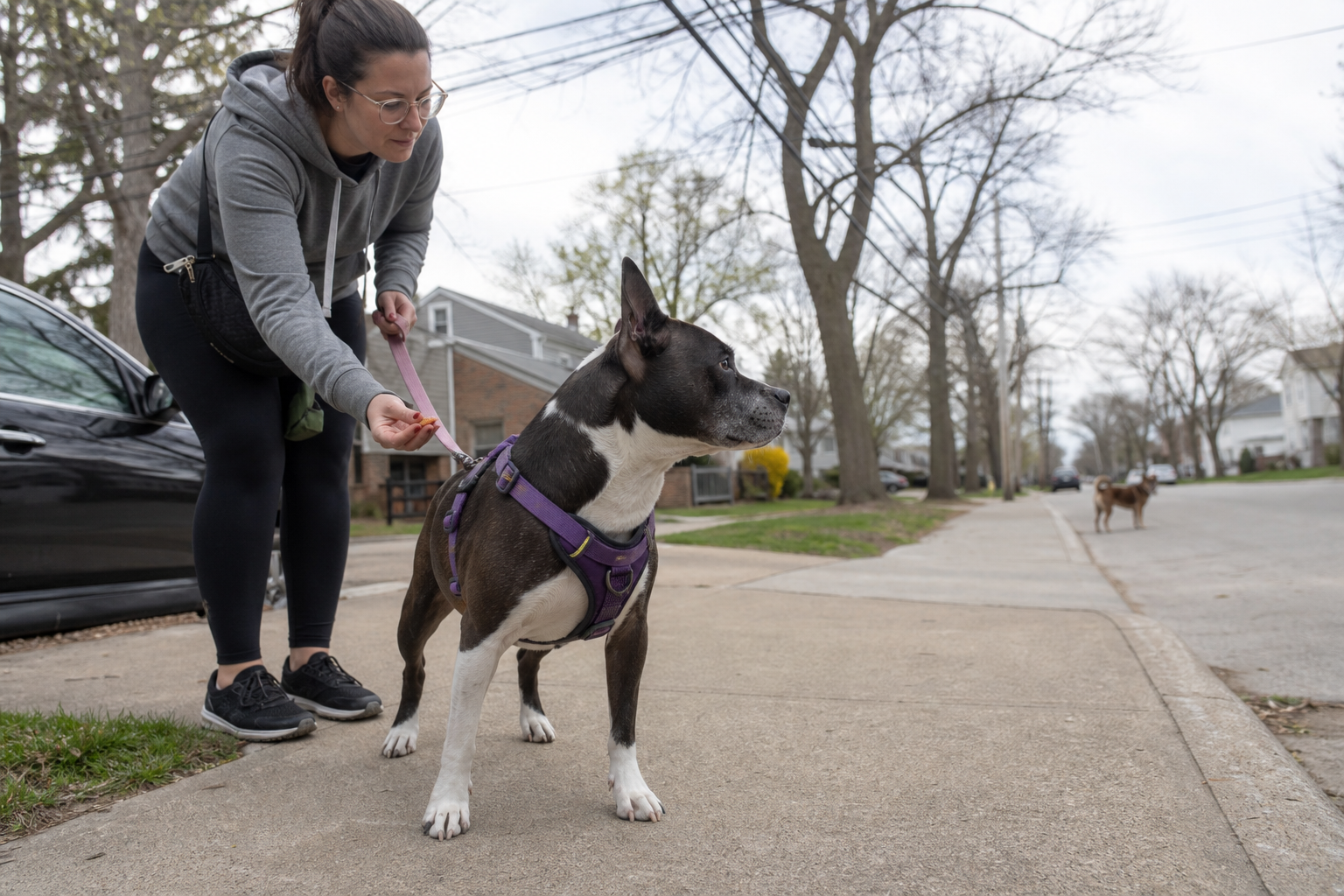
Threshold is the single most important concept in reactive dog training. A dog is under threshold when they can see or hear a trigger and still think, respond to cues, and take treats. They are over threshold when their emotional brain takes over and they cannot process anything you say.
Every reactive dog has a threshold distance for each trigger. One dog might hold it together twenty feet from another dog but fall apart at ten. Another might need a hundred feet. That number is not fixed; it changes based on sleep, stress, weather, and what happened earlier that day.
Trigger stacking compounds the problem. A dog sees a skateboard, then a barking dog behind a fence, then a stranger in a hoodie. None of those alone would push them over, but stacked together they are too much. Good training spaces these exposures out and gives the dog recovery time between challenges.
Distance is the handler’s first and best tool. If your dog is reacting, you are too close. Create space, let the arousal come down, and try again from further away.
Core Techniques Used in Reactive Dog Training
Professional trainers use a combination of methods, not just one. The core toolkit looks like this:
Counter-conditioning pairs the sight of a trigger with something the dog loves, usually high-value food. Over many repetitions, the dog’s emotional response shifts from “Oh no” to “Oh good, treats are coming.”
Desensitization exposes the dog to the trigger at a low enough intensity that they stay under threshold. Intensity is lowered through distance, duration, or how active the trigger is.
“Look at That” (LAT) teaches the dog to look at a trigger and then look back at you for a reward. It turns the trigger itself into a cue for an alternative, calm behavior.
Engage-disengage builds on LAT by reinforcing the dog’s voluntary choice to disengage from a trigger and check in with the handler.
Pattern games use predictable sequences like “1-2-3” walking or treat tosses to give the dog something familiar to latch onto when the world feels unpredictable.
The emergency U-turn is a rehearsed 180-degree turn used when a trigger appears suddenly. Practice it in calm environments first so it becomes automatic.
Learning to read your dog’s early stress signals is what makes these techniques work. Our post on reading your dog’s body language goes deeper into the small cues that come before the big reaction.
Reactive Dog Training Approaches Compared
Not every reactive dog needs the same program. The right choice depends on the severity of the behavior, how much time you can commit, and what environment your dog lives in.
| Approach | Best Fit | Structure | Typical Timeline | Owner Commitment |
|---|---|---|---|---|
| In-home dog training | Mild to moderate reactivity, owners who want to be hands-on | One-on-one sessions in the dog’s real environment, customized to household triggers | Several weeks of weekly sessions, plus ongoing practice | High, with daily handling between sessions |
| Board and train | Moderate to severe reactivity, busy owners, dogs who need intensive structure | Dog lives with the trainer for an immersive two-week program, followed by owner transfer sessions | Two weeks of intensive work, plus follow-up | Moderate during the board period, higher during transfer and after |
| DIY with online resources | Very mild reactivity, owners with strong dog-training background | Self-directed using videos, books, and articles | Open-ended, often months to years | Very high, with no professional guardrails |
Most Dallas dogs with established reactivity benefit from professional help. DIY can work for owners with experience, but for lunging, biting, or fear-based reactivity, a trained eye catches the early signals you might miss. Our article on choosing the right dog training program in Dallas breaks down how to evaluate providers.
What Progress Actually Looks Like
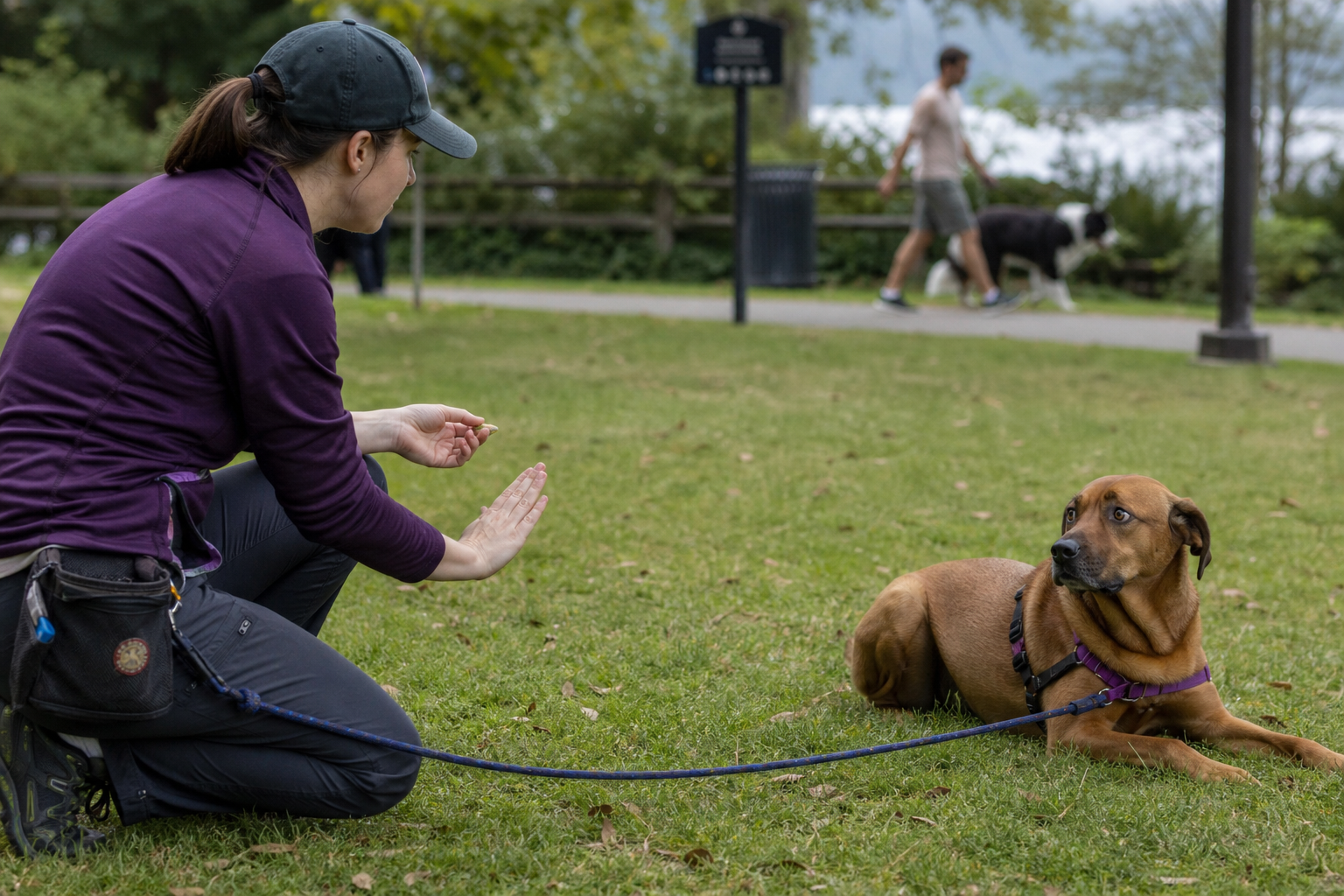
Reactivity rarely disappears in a straight line. A dog might handle three walks beautifully and then blow up on the fourth. That setback does not erase the work; it is part of the process.
Early wins look small. Your dog notices another dog at fifty feet and looks at you. Your dog recovers from a bark within ten seconds instead of two minutes. Your dog can eat a treat in a situation where last month they could not. Those moments are the real progress, even if a stranger watching the walk would not be impressed yet.
Over weeks and months, the threshold distance shrinks. The recovery time shortens. The intensity drops. Eventually, most reactive dogs reach a point where they can navigate ordinary walks without constant hypervigilance from their owner. The goal is not a dog who ignores other dogs entirely; it is a dog who notices, stays regulated, and keeps moving.
Your own emotional state matters too. Dogs read tension through the leash. A handler who braces and tightens the leash at every corner signals that something bad is coming. Staying relaxed, breathing, and trusting the training helps your dog do the same.
When to Bring in a Professional Trainer
Some reactive dogs make real progress with careful owner handling alone. Others do not. Signs that it is time for professional help include:
Your dog has bitten or made contact with a person or another dog. Even a small nip is a warning signal that the reactive pattern is escalating. Our guide to Dallas aggressive dog training covers what changes once contact has already happened.
Walks have become unsafe for you, your dog, or the public. If you are being pulled off your feet, or if your dog redirects on you when overwhelmed, you need hands-on expert support.
You have plateaued. You have read the articles, tried the methods, and nothing is moving. A qualified trainer can spot what you cannot see from the inside.
Reactivity is getting worse, not better. Escalating behavior means something in the current plan is not working, and continuing it risks reinforcing the pattern.
A professional evaluates the behavior, builds a plan around your dog’s specific triggers, and shows you how to handle the leash in the moments that count. Whether that ends up being Dallas dog training programs in a structured format or a customized in-home plan, the difference between guessing and having a clear road map is significant.
For owners ready to read up on day-to-day management while they decide, our posts on walking a reactive dog and signs your dog is leash reactive are good starting points.
Frequently Asked Questions
Is my dog aggressive or just reactive?
Most reactive dogs are not aggressive. Reactivity is usually rooted in fear, frustration, or over-arousal, and the behavior is meant to create distance from a trigger. True aggression involves intent to harm and follow-through. A professional evaluation is the most reliable way to tell them apart.
How long does reactive dog training take?
Most dogs show meaningful change within four to twelve weeks of consistent work, but the full process often takes several months. Severe or long-standing reactivity takes longer. Progress depends on the dog’s history, the handler’s consistency, and how often training happens in real-world conditions.
Can an older dog overcome reactivity?
Yes. Older dogs can absolutely make progress, and many respond well because they are calmer in general and less reactive to new routines. The age of the dog matters less than the quality of the training and the owner’s follow-through.
Should I avoid other dogs entirely during training?
Controlled exposure is part of the training, but random encounters should be avoided until your dog has the skills to handle them. Set up structured practice at safe distances, and skip high-traffic areas like dog parks or crowded trails during the early stages.
What equipment do reactive dogs need?
A well-fitted front-clip harness or head halter, a standard six-foot leash (not retractable), high-value treats your dog will actually work for, and a treat pouch for quick access. Some dogs also benefit from a basket muzzle, especially during training in public spaces.
Will my dog ever be fully cured?
Reactivity is managed, not cured. Most dogs reach a point where triggers no longer set them off in daily life, but the underlying sensitivity usually remains at some level. With consistent handling and ongoing practice, reactive dogs can live full, active lives.
Contact Us
If your dog’s reactivity is making walks stressful, interrupting your daily life, or putting anyone at risk, we are here to help. Our Dallas trainers evaluate each dog individually, build a plan around the actual triggers your dog faces, and show you exactly how to handle the leash when it matters most. Call (214) 807-1462 or contact our team to schedule an evaluation and start moving forward.
About All Dogs Unleashed
All Dogs Unleashed has trained thousands of dogs across the Dallas-Fort Worth area using a results-driven method built around obedience and behavior modification. The team specializes in complex cases, including reactivity, fear-based behavior, and aggression, with programs ranging from in-home sessions to immersive board and train formats. Every program includes unlimited follow-up for the life of the dog, because behavior work does not stop at graduation.