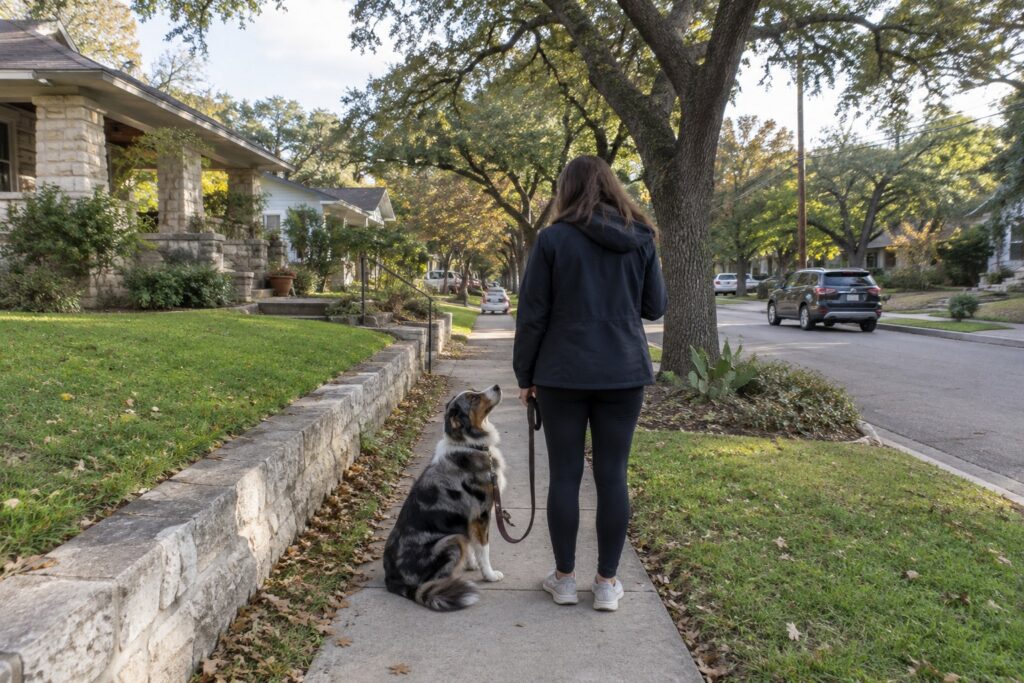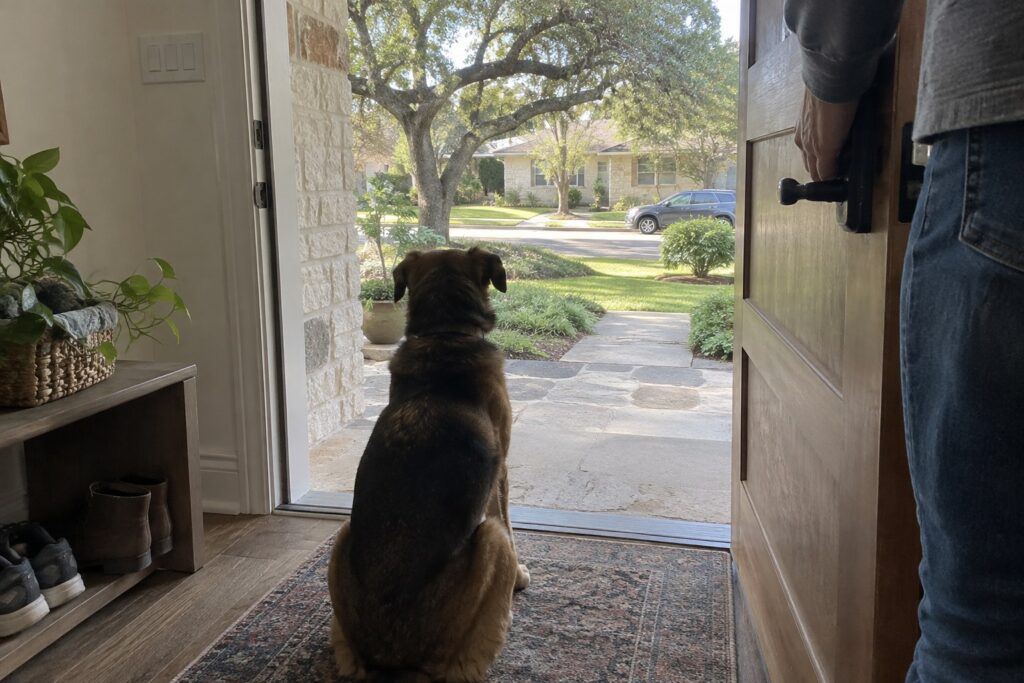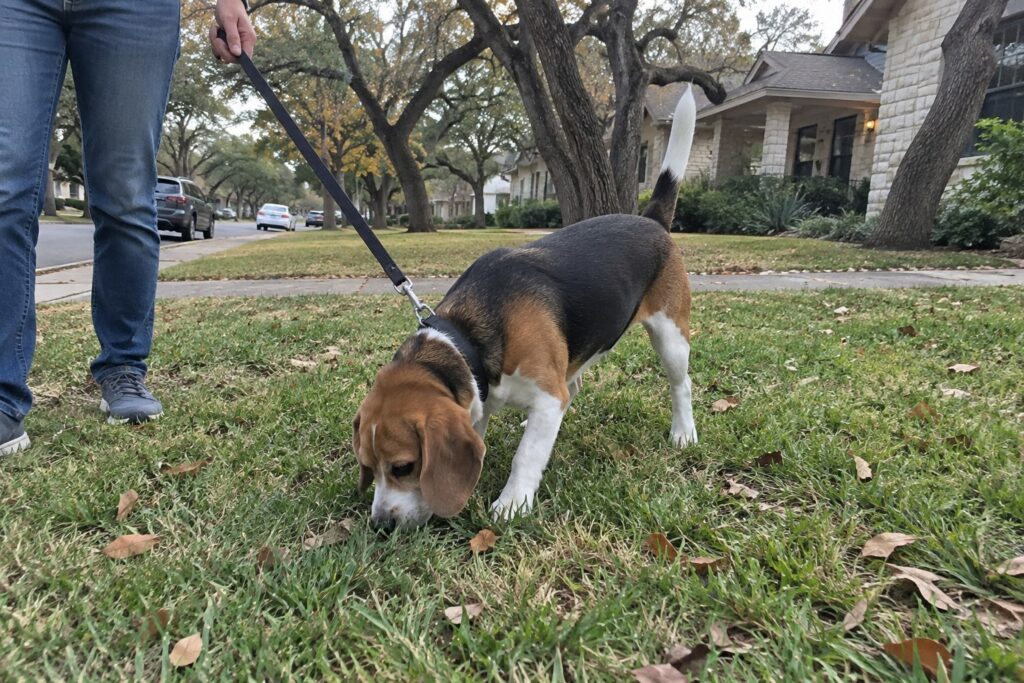

You let your dog into the backyard, look away for ten seconds, and turn back to find them chewing on something you really hope is a stick. If you have ever asked yourself, “Why do dogs eat poop?” you are not alone, and your dog is not broken. Poop eating has a name, a handful of predictable causes, and a clear path to stopping it.
At All Dogs Unleashed DFW, we work with Dallas dogs on impulse control every day, and poop eating is an impulse control problem at heart. Below we break down the real reasons behind the habit, when it points to a vet visit, and the management and training steps that work in Dallas backyards and on local trails.
Want help breaking the habit for good? Talk to our team about your dog.
Key Takeaways
- Poop eating, called coprophagia, is common in dogs and usually has a behavioral cause such as puppy exploration, boredom, attention seeking, or stress.
- An adult dog who suddenly starts eating poop should see a veterinarian first, because parasites, diet, and some medical conditions can drive the behavior.
- Prompt yard cleanup, leashed potty breaks, and close supervision on walks remove most chances to practice the habit while you train.
- A strong leave it, a reliable drop it, and a fast recall away from temptation are the core skills that replace poop eating with a better choice.
- Our two-week Board and Train program builds impulse control through daily structured sessions, and private lessons help your whole household stay consistent at home.
Why Do Dogs Eat Poop in the First Place?
The scientific name for eating feces is coprophagia. Dogs evolved as scavengers, so from their point of view it is not that strange. That does not mean you have to live with it. It means you need to understand what is driving it before you pick a fix.
It Is More Common Than You Think
According to the American Kennel Club, a study led by Dr. Benjamin Hart at the University of California, Davis, surveyed about 3,000 dog owners. Roughly one in six dogs was classified as serious poop eaters, and about one in four had been seen eating poop at least once. The same research found the habit was more common in multi-dog homes and that most poop eaters prefer fresh stools from other dogs rather than their own.
So you are dealing with a normal, if gross, canine behavior. The goal is to change what your dog finds rewarding and remove the chances to rehearse the habit.
Puppies Explore the World With Their Mouths
Puppies put everything in their mouths, and poop is no exception. Mother dogs also clean up after their puppies for the first few weeks of life, so some pups are exposed to the behavior very early. The AKC notes that in most cases puppy poop eating fades before the puppy is about nine months old.
That is good news, but “fades” is not the same as “disappears on its own every time.” A puppy who gets dozens of chances to practice can carry the habit into adolescence. Good potty routines matter here, and our tips on potty training a puppy in your Dallas home pair well with everything below.
The Behavioral Reasons Behind Poop Eating
For most healthy dogs, the cause is behavioral. Here are the patterns trainers see most often, and what each one tends to look like in daily life.
Boredom and Too Little Enrichment
A dog with nothing to do will find something to do. Long stretches alone in a yard with no toys, no chews, and no mental work make poop an interesting object to investigate.
Attention Seeking
Think about how you react when you catch your dog in the act. Shouting and chasing are a lot of attention to a dog. The AKC lists attention seeking as one reason dogs eat poop and advises owners not to overreact. If the fastest way to get you off the couch is to head for a pile, some dogs will learn that lesson quickly.
Stress, Isolation, and Confinement
The AKC reports that dogs kept alone in kennels or basements are more likely to eat poop than dogs who live close to their people, and that too much time confined in a small space can contribute to the problem. It also notes the habit is not unusual in dogs rescued from crowded shelters. If your dog spends long workdays shut in a laundry room, that setup may be part of the picture.
Anxiety From Harsh House Training
Punishing a dog after a potty accident can backfire. One theory the AKC describes is that a dog punished for eliminating may start eating the evidence, which leads to more punishment and more anxiety. Calm, consistent potty routines break that cycle.
Confusing Food Smells With Poop Smells
Dogs fed close to where they eliminate may connect the two smells. The AKC recommends keeping feeding and water areas separate from potty areas. If your dog eats on the patio right next to the spot where they relieve themselves, move the bowl.
Cause, Signs, and What Helps
| Likely Cause | What It Looks Like | What Helps |
|---|---|---|
| Puppy exploration | Young dog mouths everything on the ground, poop included | Leashed potty breaks, instant cleanup, early leave it practice |
| Boredom | Happens during long yard time alone, often with digging or chewing | Daily exercise, food puzzles, shorter unsupervised stretches |
| Attention seeking | Dog looks at you, then heads for the pile, and runs when you chase | Stay calm, call the dog away, reward the choice to come |
| Stress or confinement | Occurs in a crate, kennel, or small room after long periods alone | More time with the family, a better daily schedule, vet or trainer input |
| Anxiety from punishment | Dog eats its own stool quickly, often right after an accident indoors | Stop scolding, rebuild a calm potty routine, reward outdoor elimination |
| Food association | Dog eats near its potty spot or is a known food thief | Separate eating and potty areas, secure trash and counters |
When Poop Eating Points to a Vet Visit
Training solves most poop eating, but not all of it. We are trainers, not veterinarians, so our advice is simple. If anything about the behavior seems new, sudden, or paired with other symptoms, talk to your veterinarian before you start a training plan.
Medical and Dietary Factors
The AKC advises that if an adult dog starts eating poop, owners should consult a vet to rule out problems such as parasites, medications like steroids, malabsorption syndromes, diabetes, Cushing’s disease, thyroid disease, and other conditions that can increase appetite. Diets lacking in nutrients or calories can also play a role.
Why Other Animals’ Poop Is a Real Risk
The AKC notes that eating poop from other animals can cause health problems if the stool carries parasites, viruses, or toxins. That matters in a city where dogs share sidewalks, trails, and parks. Keep your dog’s vaccines and parasite prevention current, and ask your vet what schedule fits your dog’s lifestyle.
| Probably a Training Issue | Talk to Your Veterinarian |
|---|---|
| Puppy under a year old who mouths everything | Adult dog who suddenly starts eating poop with no history of it |
| Happens mostly when bored, alone, or ignored | Dog seems hungry all the time or is losing weight |
| Dog is otherwise healthy, energetic, and eating well | Vomiting, diarrhea, low energy, or changes in thirst |
| Habit shows up in predictable places and times | Behavior started after a new medication or diet change |
Once your vet clears your dog, the work shifts to training. For many dogs, the fastest way to build real impulse control is concentrated daily practice with a professional.
Management at Home and Around Dallas

Every time your dog eats poop, the habit gets a little stronger. Management means setting up your home and walks so your dog cannot practice while you train.
Clean the Yard Promptly
The simplest fix is also the most effective. If there is no poop in the yard, there is nothing to eat. Pick up right after your dog goes, not once a week. The AKC lists keeping the living area and yard clean among the best ways to stop the problem.
Picking up matters off your property too. The City of Dallas pet waste rules under the Dallas city code make it an offense to let your dog defecate on property that is not yours without cleaning it up. Carry bags on every walk.
Keep a Leash On in the Yard
For dogs with a strong habit, walk them out to the yard on a leash for potty breaks. Let them go, calmly guide them away, and pick up right away. After a few weeks of clean, controlled potty trips, you can start giving more freedom.
Supervise on Walks, Trails, and Parks
Dallas gives dogs plenty of interesting ground to sniff. The White Rock Lake loop in East Dallas is more than nine miles long and draws plenty of waterfowl, and the AKC notes that some dogs find goose droppings especially appealing. The 3.5-mile Katy Trail through Uptown sees a steady stream of dogs, runners, and cyclists.
Keep your dog on a standard leash, not a long retractable line, near grassy edges and busy trailheads and move them along the moment their nose locks onto something. It also helps to know the local rules for leashed and off-leash areas, which we cover in our post on leash laws and off-leash etiquette in DFW.
Litter Boxes and Multi-Dog Homes
Many dogs find cat litter boxes irresistible. The AKC recommends keeping the box clean or out of the dog’s reach, for example with a baby gate or a covered box your dog cannot access.
Training Skills That Stop Poop Eating
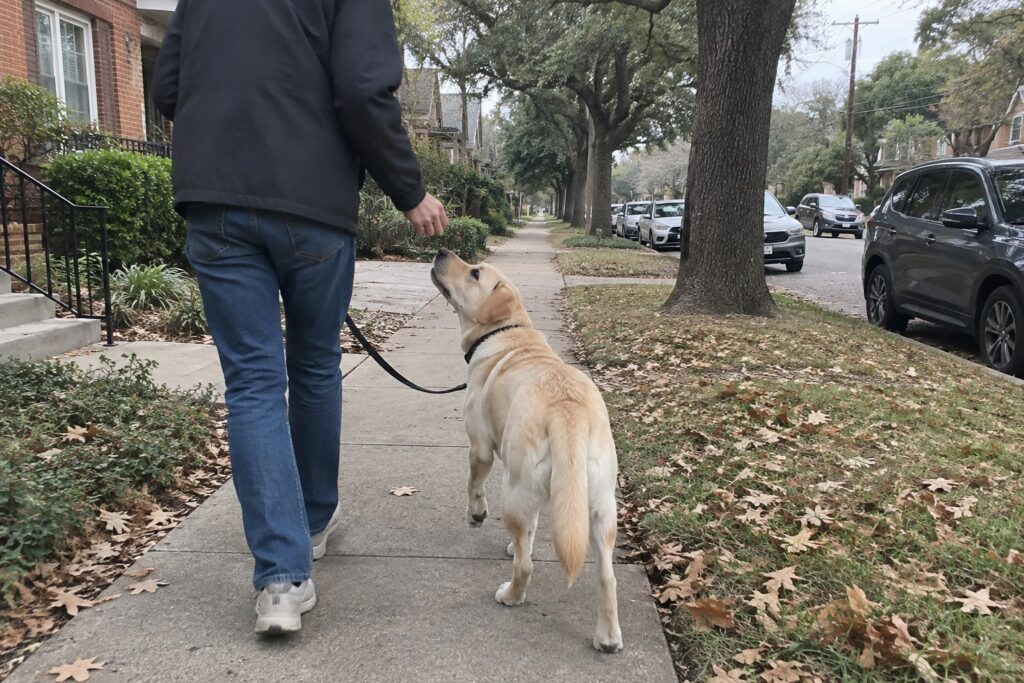
Management buys you time. Training changes the habit. The AKC specifically recommends working hard on leave it and come. These are the skills we lean on, in the order we usually build them.
Leave It
Leave it teaches your dog that ignoring something on the ground earns a better reward from you. Start at home with a treat under your hand. When your dog backs off, mark it and reward from your other hand. Gradually move to treats on the floor, then to low-value items outside, then to real distractions on walks.
Asking for leave it next to a fresh pile on day two sets your dog up to fail. For a refresher on the basics, our list of must-know obedience commands from Dallas trainers is a good starting point.
Drop It
Sometimes your dog gets there first. Drop it teaches your dog to release whatever is in their mouth. Practice with toys during play by offering a trade, marking the moment the toy hits the ground, and rewarding. Never chase your dog to pry something out of their mouth. Chasing turns it into a game.
Recall Away From Temptation
A reliable come lets you call your dog away from a pile before they reach it. The AKC suggests a simple exercise: teach your dog to come to you for a treat right after they poop. Over time, your dog starts turning toward you after going instead of turning toward the ground. For a deeper look at building a recall that holds up, read our post on recall as the foundation of Dallas dog training.
Get Your Marker Timing Right
A marker is a word like “yes” or a click that tells your dog exactly what earned the reward. With poop eating, timing is everything. Mark the instant your dog turns away from the pile or looks back at you, not a few seconds later when they have already sniffed something else. Late markers reward the wrong behavior.
Enrichment That Reduces the Urge
If boredom is part of the problem, training alone will not fully solve it.
- Feed with food puzzles or snuffle mats. Turning meals into a search gives your dog a legitimate outlet for sniffing and foraging.
- Schedule short training sessions. Five minutes of practice a few times a day tires the brain and strengthens leave it at the same time.
- Offer safe chews. Give your dog something appropriate to work on during downtime, with supervision.
- Get out of the yard. Sniff walks in your neighborhood, whether that is Lakewood, Oak Cliff, or a quiet street in Carrollton, give your dog new smells to process on leash.
- Cut down long unsupervised stretches. If your dog spends hours alone outside, bring them in or break up the time.
For more ideas, see our list of enrichment ideas for bored pups.
How Board and Train and Private Lessons Help
Poop eating is a habit built on repetition, and the fastest way to replace it is with consistent repetition of better choices. That is hard to do on a busy schedule.
Two Weeks of Structured Daily Practice
Our two-week Board and Train program gives your dog daily structured instruction at our training facility. Every dog starts with an initial assessment at intake, and that assessment shapes a customized plan. Tell us about the poop eating so we know what you are dealing with. Board and Train covers the obedience foundation of sit, stay, come, and heel, and our advanced level adds off-leash reliability, distance commands, and impulse control, the same self-control a dog needs to walk past a pile without diving in.
Every dog who completes Board and Train is backed by guaranteed results and lifetime support at no additional charge. Affirm financing is available if you prefer to spread out the cost.
Private Lessons for the Whole Household
Poop eating often shows up in specific places, like your own backyard or your usual walking route. Private lessons are available at our facility or in your home across the DFW Metroplex. In-home sessions let a trainer work with you in the actual spaces where the problem happens, and every family member can learn the same handling so your dog gets one clear message. Follow-up support between sessions helps you stay on track.
Ready to stop the backyard scramble? Call us at (972) 484-3647 to talk through your dog’s habits and the right next step.
About All Dogs Unleashed DFW
All Dogs Unleashed DFW helps dog owners across Dallas and the DFW Metroplex build calm, reliable dogs through structured training. Our two-week Board and Train program provides daily instruction built on a customized plan, with impulse control work that helps dogs make better choices around temptations like poop. Private lessons at our Carrollton facility or in your home give your household the handling skills to keep progress going. Board and Train graduates receive guaranteed results and lifetime support.
Frequently Asked Questions
Why do dogs eat poop even when they are fed well?
Many healthy, well-fed dogs eat poop for behavioral reasons like boredom, attention seeking, stress, or simple scavenging instinct. Puppies also explore with their mouths. That said, diet and medical issues can play a role, so if your adult dog suddenly starts or seems constantly hungry, talk to your veterinarian first. Once your vet rules out health problems, management and training usually make the biggest difference.
Will my puppy grow out of eating poop?
Many puppies do. The American Kennel Club notes that puppy poop eating usually fades before about nine months of age. You can help it fade faster by cleaning up right away, taking your puppy out on a leash for potty breaks, and practicing leave it early. A puppy who gets lots of chances to rehearse may carry the habit into adolescence.
Is it dangerous for my dog to eat poop?
Eating their own fresh stool is usually not dangerous, but eating poop from other dogs, cats, or wildlife can expose your dog to parasites, viruses, or toxins. That risk is real on shared trails and in parks. Keep vaccines and parasite prevention current and ask your veterinarian about any symptoms such as vomiting, diarrhea, or low energy after your dog eats poop.
Should I punish my dog for eating poop?
No. Punishment and big reactions often make the habit worse. A dog punished around potty time can become anxious and eat stool to hide the evidence, and a dog who gets chased may treat it as a game. Stay calm, call your dog away, and reward the choice to come to you. Then tighten up management so fewer chances happen.
Do food additives or deterrent sprays stop poop eating?
Some owners try taste deterrents or supplements, and some dogs respond while others do not. The AKC notes that every dog and cat in the home has to eat the deterrent for it to work, and it does not teach your dog anything. Ask your veterinarian before adding any product to your dog’s diet. Consistent yard cleanup, supervision, and a solid leave it cue are the most dependable long-term solution.
Can professional training stop my dog from eating poop?
Yes, training can help most healthy dogs. Our two-week Board and Train program builds impulse control and reliable obedience through daily structured sessions, which carries over to walking past temptations. Private lessons at our facility or in your home help your household practice the same skills. Start with a vet check if the habit appeared suddenly, then call us to discuss your dog.
Answering “why do dogs eat poop” is the first step toward stopping it. Rule out medical causes with your veterinarian, keep your yard and walks clean, and build a strong leave it and recall so your dog chooses you over the pile. If you want professional help, call us at (972) 484-3647 or reach out online. Our training facility at 2401 Luna Rd in Carrollton serves Dallas and the entire DFW Metroplex.
Ready to Get Started with All Dogs Unleashed DFW?
If poop eating has turned every backyard trip into a race, our trainers can help your dog build the impulse control to leave it alone. Call (972) 484-3647 today to talk about Board and Train or private lessons for your dog.