
Bringing a new puppy home is exciting, until the second accident hits your living room rug. Potty training is the first real test of patience for most Dallas dog owners, and it tends to define the early weeks of life with a new pup. The good news is that puppies are wired to learn this skill quickly when you give them consistency, a clear schedule, and a setup that works for your home.
Knowing how to potty train a puppy in a Dallas environment also means accounting for things owners in cooler climates don’t deal with. Summer pavement gets hot enough to burn paws by mid-morning, sudden thunderstorms can scare a young dog out of going outside, and apartment dwellers in Uptown or Downtown high-rises face a long elevator ride before any bathroom break. The right approach handles all of it.
When to Start Potty Training Your Dallas Puppy
Most puppies are ready to begin potty training between 8 and 12 weeks of age, which is also when they typically come home from a breeder or rescue. Before 8 weeks, puppies have very little bladder control and are still learning basic body awareness. After 12 weeks, the foundation gets harder to install, though it’s still very achievable.
Bladder capacity follows a rough rule: puppies can hold their bladder for roughly one hour per month of age, plus one. An 8-week-old puppy maxes out at about two hours, a 12-week-old at around three, and a 16-week-old at four. Small breeds like Yorkies and Chihuahuas develop slightly slower than larger breeds because of their smaller bladders, so owners of toy breeds should plan for more frequent breaks well past the four-month mark.
Start the moment your puppy walks through the door. Even on day one, carry them to your designated potty spot before bringing them inside. The first impression of where the bathroom is matters more than most owners realize.
Setting Up Your Home for Potty Training Success
A successful potty training setup limits your puppy’s access to the house during the early weeks. Open floor plans common in Dallas suburbs work against you here, since a puppy with full run of 2,500 square feet has plenty of corners to slip away and have an accident.
Use baby gates or exercise pens to keep your puppy in one or two rooms at a time, ideally rooms with hard flooring rather than carpet. A crate sized just large enough for the puppy to stand, turn around, and lie down is essential. Puppies instinctively avoid soiling their sleeping area, which is the principle behind effective puppy crate training.
Choose one outdoor potty spot and use it every time. For homeowners with a fenced backyard in Frisco, Plano, or Garland, pick a corner near the back door. For townhouse owners in Bishop Arts or Lower Greenville, the same patch of grass near your front entry works. Apartment dwellers need a specific patch of grass outside their building, not just any grassy area. The smell of previous bathroom breaks helps cue your puppy to go.
Building a Consistent Potty Training Schedule
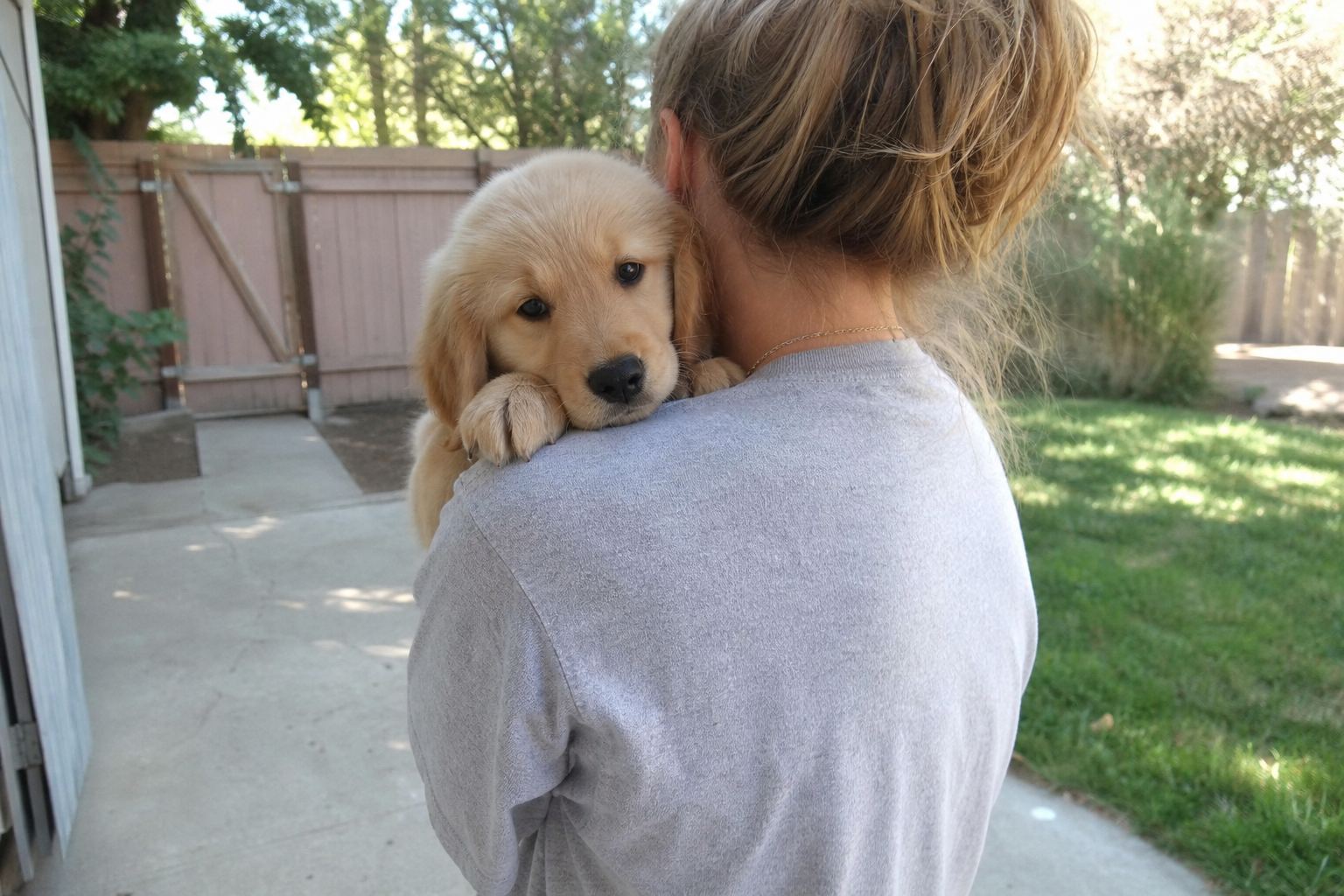
A puppy potty training schedule is the single biggest factor in fast results. Puppies thrive on routine, and a predictable schedule makes their bathroom needs predictable too.
Here’s a baseline daily schedule for a puppy between 8 and 12 weeks old:
- 6:00 AM: Out to potty immediately after waking
- 6:15 AM: Breakfast
- 6:45 AM: Out to potty again after eating
- 9:00 AM: Potty break
- 12:00 PM: Lunch followed by potty break
- 3:00 PM: Potty break
- 5:30 PM: Dinner followed by potty break
- 8:00 PM: Last big play session, then potty break
- 10:00 PM: Final potty break before bed
- 2:00 AM or 3:00 AM: Overnight potty break for very young puppies
Feed your puppy on a strict schedule, not free-feeding, since regular meals create regular bathroom needs. Pull up the water bowl about two hours before bedtime to reduce overnight accidents. Tie your puppy’s daily routine into your existing puppy sleep schedule for the best results.
How Often to Take Your Puppy Outside
Knowing how often to take your puppy out is part math, part observation. Use this age-based guide as a starting point:
| Puppy Age | Daytime Potty Breaks | Maximum Hold Time |
|---|---|---|
| 8 to 10 weeks | Every 1 to 2 hours | 2 hours |
| 10 to 12 weeks | Every 2 hours | 2 to 3 hours |
| 12 to 16 weeks | Every 2 to 3 hours | 3 to 4 hours |
| 4 to 6 months | Every 3 to 4 hours | 4 to 5 hours |
| 6 months and older | Every 4 to 6 hours | 6 to 8 hours |
Beyond the schedule, always take your puppy out within 10 minutes of:
- Waking up from any nap
- Finishing a meal or drink of water
- Ending a play session
- Coming out of the crate
Dallas weather adds an extra consideration. From June through September, asphalt and concrete can reach temperatures hot enough to burn paws within seconds. Stick to grass surfaces during summer afternoons, or schedule breaks for early morning and after sunset. During severe thunderstorms, some puppies refuse to go outside, so a covered patio or garage area with potty pads can serve as a backup.
Reading the Signs Your Puppy Needs to Go
Catching your puppy before an accident is more valuable than any cleanup product. Most puppies show clear signals 30 to 90 seconds before they need to relieve themselves, and learning to read those signals turns potty training around fast.
Watch for circling, especially with their nose to the floor. Sudden sniffing in a new spot is another reliable cue. Whining, pacing, scratching at the door, or abruptly stopping play and standing still are all warnings. Some puppies will run to a specific spot they’ve used before, even if you cleaned it.
When you see any of these signs, move immediately. Scoop up small puppies and carry them outside; for larger pups, leash up and head for the door. The faster you respond, the more your puppy connects the sensation of needing to go with the outdoor potty spot.
Handling Nighttime Potty Training
Nighttime is where most owners hit their breaking point during the first few weeks. A puppy that’s slept through a full night by twelve weeks is the exception, not the rule. Plan for at least one overnight potty break until your puppy is around 14 to 16 weeks old.
Set up the crate within sight of where you sleep, or in your bedroom if possible. Puppies are pack animals, and proximity to you reduces stress and crying. When your puppy whines in the middle of the night, take them outside on leash with minimal interaction. No play, no treats, no extended cuddling. Quiet bathroom break, then straight back into the crate. The goal is to teach them that nighttime is for sleeping, not socializing.
Pull up water two hours before bedtime, and time the last potty break right before you turn out the lights. Avoid puppy potty pads inside the crate during overnight hours; they teach your puppy that going inside their sleeping space is acceptable, which undermines the entire crate concept.
What to Do When Accidents Happen
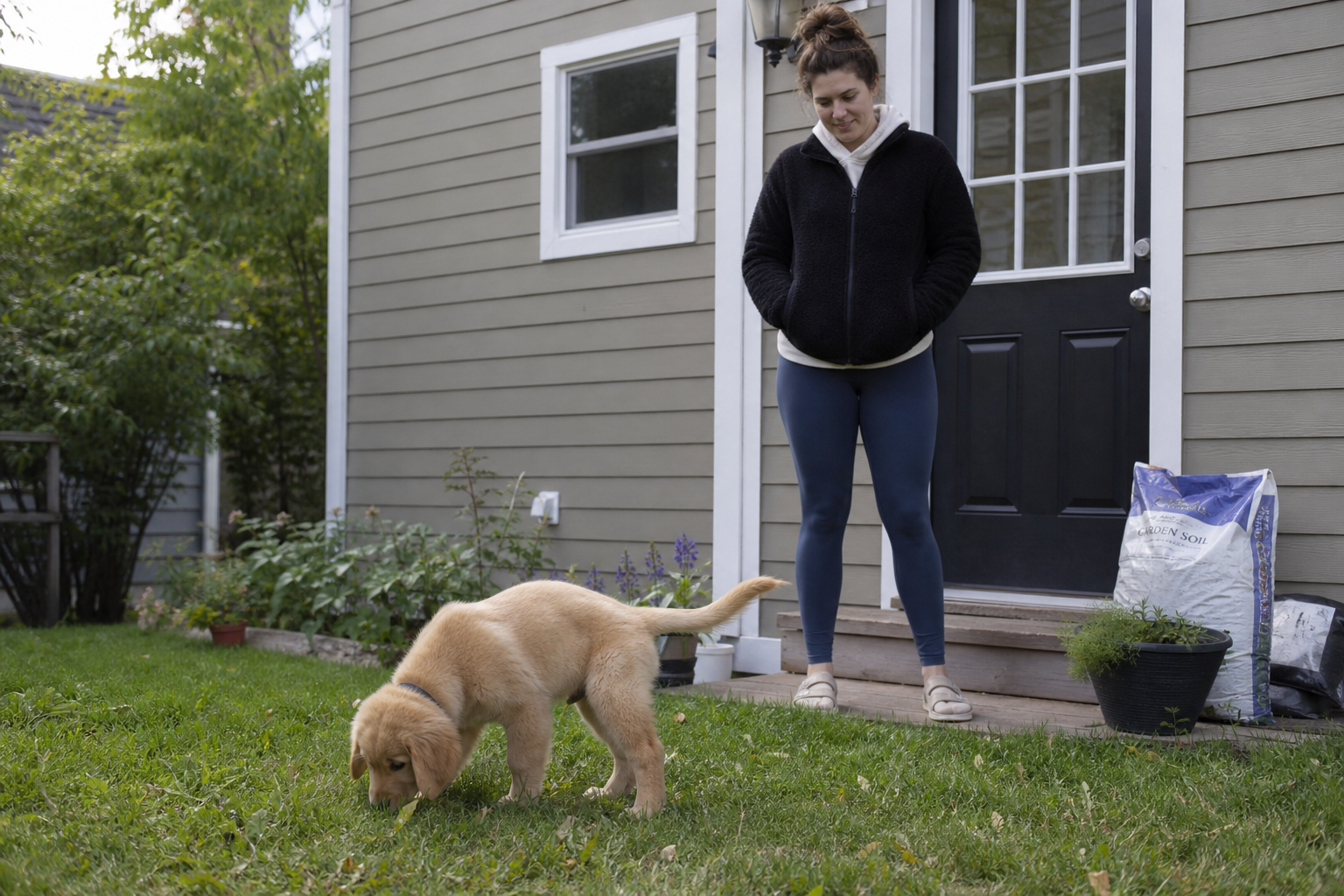
Every puppy has accidents. Your reaction to those accidents determines whether your puppy learns or just gets confused.
If you catch your puppy mid-accident, interrupt with a calm “uh-uh” or a clap, then immediately take them outside to finish. When they finish outdoors, praise enthusiastically and offer a small treat. Never yell, never rub their nose in it, and never punish after the fact. Puppies cannot connect punishment to an accident that happened more than a few seconds ago, and harsh corrections often teach puppies to hide their accidents in closets and behind furniture instead.
Clean every accident with an enzymatic cleaner specifically formulated for pet urine. Regular household cleaners mask the smell to humans but leave behind compounds that puppies can still detect, which signals “this is a bathroom spot.” Brands like Nature’s Miracle, Rocco & Roxie, and Skout’s Honor break down the enzymes completely.
If accidents continue happening in the same spot, that area needs deeper cleaning and possibly a temporary barrier. Persistent accidents in older dogs are a different issue entirely, and our guide on indoor accidents with adult dogs covers that topic in depth.
Potty Training Regression and How to Push Through
A puppy who was reliably housebroken at 14 weeks and starts having accidents again at 16 weeks is experiencing potty training regression. It’s common, frustrating, and almost always temporary.
Regression usually has a cause. A schedule change, a new family member, a recent move, a vet visit, or a urinary tract infection can all trigger backsliding. The first step is to rule out a medical issue with your vet, especially if accidents are sudden, frequent, or accompanied by straining.
Once medical causes are ruled out, treat regression by going back to basics. Restart the strict schedule, increase potty breaks by one or two per day, and supervise more closely. Most regressions resolve within one to two weeks of consistent reinforcement.
Dallas-Specific Challenges to Plan For
Dallas summers create real obstacles that puppy owners in cooler climates never face. Pavement temperatures regularly exceed 120 degrees Fahrenheit from June through September, which means daytime walks on concrete sidewalks aren’t safe for puppy paws. Plan summer potty breaks for grass surfaces, schedule them for early morning before 8:00 AM and evening after 7:00 PM, and keep midday breaks brief.
High-rise apartment dwellers in neighborhoods like Victory Park, Uptown, and the Arts District face a different challenge: the time between recognizing a puppy’s signal and reaching the elevator, riding down, and walking outside often exceeds the 30 to 90 seconds a young puppy can hold it. For these situations, a designated indoor potty area with grass-topped trays works as a transition tool during the first few months. Our guide on apartment living etiquette in DFW covers more on managing dogs in vertical living.
Suburban owners with fenced backyards in Plano, Frisco, McKinney, and Allen have the easiest setup, since the door-to-grass distance is short. The challenge here is consistency: it’s tempting to just let the puppy out alone, but you need to go outside with them to reward the moment they finish.
Frequently Asked Questions
How long does it take to fully potty train a puppy?
Most puppies are reliably housebroken between 4 and 6 months of age, though some small breeds take up to 8 months. Consistency with the schedule shortens the timeline significantly.
Can I use potty pads and still teach my puppy to go outside?
Yes, but transition off pads as quickly as possible. Long-term pad use teaches puppies that going inside is acceptable, which makes the eventual switch to outdoor-only harder.
What if my puppy refuses to go outside in the rain?
Some puppies are sensitive to weather. Use a covered patio area, hold an umbrella over them, or carry them to a sheltered spot. Don’t bring them back inside until they go, or you’ll teach them that refusal earns a return to the house.
Why does my puppy pee right after coming back inside?
This usually means the outdoor session was too short or too distracting. Stay outside for 10 to 15 minutes minimum, and avoid play or chatter until after they’ve eliminated.
Is it okay to crate my puppy at work all day?
No puppy under 6 months should be crated for more than 4 hours during the day. If your work schedule requires longer, hire a dog walker, use a doggy daycare, or set up a larger exercise pen with a potty area inside.
Should I wake my puppy up at night to go potty?
For puppies under 12 weeks, yes, set an alarm for one overnight break. After 12 weeks, only wake them if they’re whining or showing signs of needing to go.
Will training classes help with potty training?
Group classes mainly focus on obedience, not housebreaking. However, the structure and impulse control taught in puppy training classes supports better focus and learning across all skills, including potty habits. For information on timing, see our guide on when puppies are ready for obedience school.
About All Dogs Unleashed Dog Training Dallas
All Dogs Unleashed has been helping Dallas families build well-behaved, confident dogs through structured training programs tailored to each dog’s age, breed, and temperament. Our trainers work with hundreds of puppies every year, giving us a deep understanding of what Dallas owners need at every stage of development. From house manners to advanced obedience, we meet you where you are.
Get Help With Puppy Training in Dallas
Potty training is the foundation, but it’s only the start of raising a well-mannered dog. If you’re feeling stuck on housebreaking, struggling with biting and nipping, or want a head start on obedience, our team is here to help. Reach out to our team to learn more about our puppy training programs in Dallas and how we can support your puppy’s first year. Call our Dallas N Ervay location at (214) 807-1462 or our Carrollton location at (972) 484-3647 to schedule a consultation today.