
Picking the right dog breed for Dallas isn’t the same as picking one for Seattle or Boston. Summer here runs from May through September with stretches of 100-degree heat, humidity that makes the air feel heavier, and pavement temperatures that can hit 140 degrees by early afternoon. A breed that thrives in cooler climates can struggle here, sometimes dangerously so.
Beyond the heat, Dallas living looks different depending on your neighborhood. A family in Plano with a fenced backyard has different breed considerations than a young professional in Uptown navigating elevator rides and dog parks. The best dog breeds for Dallas are the ones that fit both the climate and your daily routine, and matching those two factors before bringing a dog home saves years of mismatched expectations.
What Makes a Dog Breed a Good Fit for Dallas
Three factors matter most when choosing a breed for the Dallas area: heat tolerance, exercise compatibility, and coat maintenance.
Heat tolerance is non-negotiable. Some breeds handle Texas summers with minimal adjustment, while others need significant management to stay safe from May through September. Exercise compatibility is the second factor. A high-energy breed in a small apartment with an owner who works long hours sets up both dog and human for frustration. Coat maintenance is the third. Heavy double coats designed for snow country require more grooming and indoor cooling time in Dallas, and shedding accelerates when dogs blow their winter coat in March.
Your specific neighborhood adds nuance. Suburbs like Frisco, Allen, and McKinney offer yard space that suits larger and higher-energy breeds. Apartment-heavy zones like Uptown, Victory Park, and the Arts District favor smaller or calmer breeds. Older neighborhoods in East Dallas and Oak Cliff sit somewhere in the middle, with smaller yards and walkable streets.
Heat Tolerance: The Most Important Factor for Dallas Dogs
Heat tolerance comes down to body structure and coat type more than breed reputation.
Brachycephalic breeds, meaning flat-faced dogs like Pugs, French Bulldogs, English Bulldogs, and Boxers, have shortened airways that make panting less effective. Panting is how dogs cool themselves, so anything that limits airflow puts these breeds at higher risk of heat stroke. They can still live happily in Dallas, but they need stricter management.
Coat type matters too. Single-coated breeds like Greyhounds, Vizslas, and Boxers shed heat more efficiently than double-coated breeds like Huskies, Australian Shepherds, and Golden Retrievers. Double coats actually insulate against both cold and heat to a degree, but they hold body heat longer during recovery periods after exercise.
Body size plays a role as well. Larger dogs have more body mass relative to surface area, which means they retain heat longer and cool down more slowly. A 90-pound Labrador and a 25-pound Beagle in the same yard at noon are having very different experiences.
For more on managing summer risks regardless of breed, see our guide on protecting your dog through North Texas summers.
Top Heat-Tolerant Breeds That Thrive in Dallas
These breeds tend to handle Dallas summers with the least intervention, though every dog still needs shade, water, and pavement awareness.
- Vizsla: A Hungarian hunting breed with a short single coat and an athletic build. Vizslas need substantial daily exercise but handle morning runs in the heat better than most active breeds. They’re affectionate, smart, and bond strongly with their families.
- Greyhound: Despite the reputation as racing dogs, retired Greyhounds are famously low-energy indoors. Their thin coat and lean build make them well-suited to hot climates. They’re calm, gentle, and ideal for owners who can offer short bursts of running paired with long stretches of couch time.
- Whippet: A smaller cousin of the Greyhound, the Whippet has similar heat tolerance with a more apartment-friendly size. They’re quiet, affectionate, and need a fenced area for sprints rather than long walks.
- Rhodesian Ridgeback: Bred to hunt in African heat, Ridgebacks tolerate Texas summers as well as any breed. They’re large, independent, and need experienced owners willing to invest in early training.
- Australian Cattle Dog (Blue Heeler): A working breed built for the Australian outback. They handle heat well but need significant mental and physical exercise. Best for active owners with yards.
- Italian Greyhound: A miniature version of the Greyhound suited to apartment living. Heat-tolerant, low-shedding, and quiet, though their thin coats mean they actually need sweaters in winter.
Best Family Dog Breeds for Dallas Suburbs
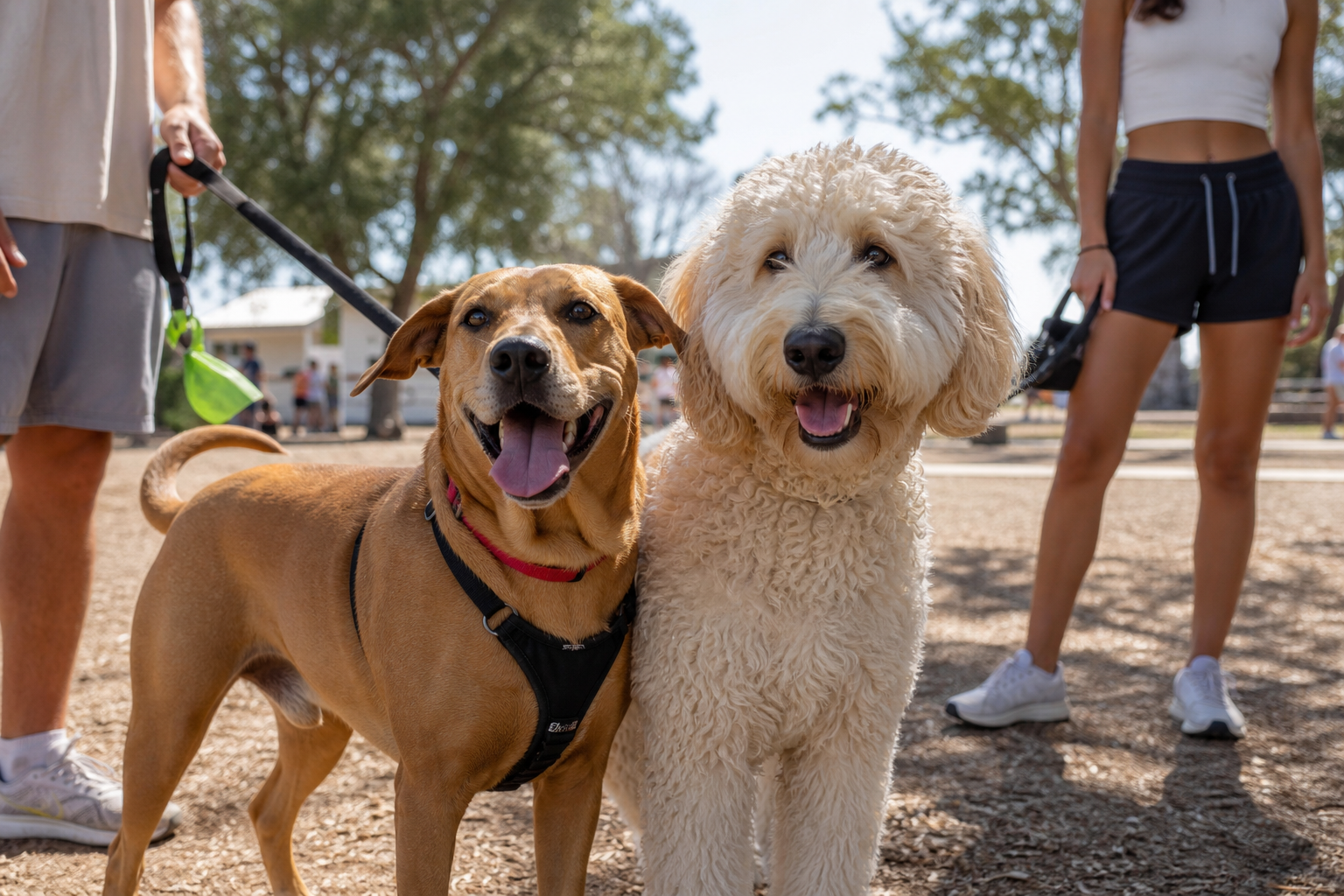
For families in Plano, Frisco, McKinney, Allen, and other suburbs with yards, kids, and active lifestyles, these breeds balance heat tolerance with family-friendly temperament.
- Labrador Retriever: The most popular family dog in America for good reason. Friendly, trainable, and patient with kids. Labradors do well in Dallas with one caveat: they love water, so a kiddie pool or splash pool in summer keeps them happy and cool. Avoid midday exercise from June through September.
- Standard Poodle: Smart, athletic, and low-shedding. Poodles handle heat reasonably well thanks to their non-shedding coat, which can be clipped short in summer. They’re excellent with children and rank among the most trainable breeds.
- Vizsla: Already mentioned for heat tolerance, Vizslas also make outstanding family dogs. They’re affectionate to a fault, often called “Velcro dogs” for how closely they stick to their people.
- Boxer: Brachycephalic and needs heat caution, but their playful, patient temperament with children makes them a popular family choice in DFW. Cool walks early or late and indoor air conditioning during peak hours are essential.
- Australian Shepherd: High-energy and intelligent, Aussies excel in active families with kids old enough to participate in walks and yard play. They have a double coat that needs more grooming and heat management.
Best Dog Breeds for Dallas Apartment Living
Apartment owners in Uptown, Downtown, Deep Ellum, and the Arts District benefit from smaller, calmer, and quieter breeds. Size matters less than energy level and bark tendency. A calm 60-pound Greyhound often does better in apartments than a yappy 10-pound terrier mix.
- Cavalier King Charles Spaniel: Small, affectionate, and content with moderate exercise. They tolerate heat fairly well thanks to a single-layer coat and small size.
- Italian Greyhound: Compact, quiet, and heat-tolerant.
- Shih Tzu: Brachycephalic, so summer heat management is necessary, but their small size and low exercise needs suit apartment life.
- Whippet: Quiet, low-shedding, and surprisingly mellow indoors despite their athletic ability.
- Bichon Frise: Cheerful, low-shedding, and adaptable. Their white curly coat reflects heat and they’re small enough to manage in compact spaces.
- French Bulldog: Hugely popular in Dallas apartments despite the heat challenge. Frenchies require strict summer protocols, but their quiet nature and low exercise needs make them apartment standouts when owners manage the climate carefully.
For more on managing dogs in vertical living, see our guide on apartment living etiquette in DFW.
Breeds to Approach With Caution in the Dallas Climate
Plenty of beloved breeds simply require more management in Dallas. None of these are off-limits, but owners should go in with eyes open about the extra effort.
- Siberian Husky: Bred for Arctic temperatures with a heavy double coat. Huskies can live in Dallas but need air-conditioned indoor space at all times in summer, limited outdoor time during peak heat, and regular grooming.
- Saint Bernard and Newfoundland: Large, double-coated, and built for cool weather. Both struggle significantly in Texas summers and need cooling mats, frozen treats, and minimal outdoor exposure from June through September.
- English Bulldog: Brachycephalic with a stocky build. They overheat quickly and need climate-controlled environments most of the year.
- Pug: Small but brachycephalic. Heat stroke risk is real, and walks must be timed for cool parts of the day.
- Akita: Double-coated and built for Japanese mountain climates. Heavy shedding and heat sensitivity require committed owners.
- Bernese Mountain Dog: Beautiful, gentle, and built for Swiss Alps weather. Their thick coat and large size make Dallas summers genuinely difficult.
If you have your heart set on one of these breeds, plan for air conditioning that runs constantly in summer, early morning and late evening exercise only, frequent grooming, and a vet experienced with heat-related issues.
Breed Comparison Table for Dallas Owners
| Breed | Heat Tolerance | Exercise Needs | Apartment Friendly | Family Friendly | Training Difficulty |
|---|---|---|---|---|---|
| Vizsla | Excellent | Very High | Limited | High | Moderate |
| Greyhound | Excellent | Low to Moderate | High | High | Easy |
| Whippet | Excellent | Moderate | High | High | Easy |
| Rhodesian Ridgeback | Excellent | High | Limited | Moderate | Challenging |
| Labrador Retriever | Moderate | High | Limited | Very High | Easy |
| Standard Poodle | Good | High | Moderate | Very High | Easy |
| Italian Greyhound | Excellent | Low | High | Moderate | Moderate |
| Cavalier King Charles | Good | Low to Moderate | High | High | Easy |
| French Bulldog | Poor | Low | High | High | Moderate |
| Siberian Husky | Very Poor | Very High | Poor | High | Challenging |
How Lifestyle Should Drive Your Breed Choice
A breed that matches Dallas weather but mismatches your daily routine is still a bad fit. Honest answers to a few questions narrow the search quickly.
How much time can you commit to daily exercise? Working dogs like Australian Cattle Dogs and Vizslas need 60 to 90 minutes of vigorous activity every day. A Cavalier King Charles Spaniel is happy with 30 minutes and a few short play sessions.
How often are you home? Breeds with high social needs, like Vizslas and Labradors, suffer with long stretches of alone time. More independent breeds like Greyhounds and Whippets handle a typical workday better.
How much grooming are you willing to do? Poodles need professional grooming every 6 to 8 weeks. Double-coated breeds shed heavily, especially during spring and fall coat blows.
Do you have prior dog experience? Some breeds, like Labradors and Cavaliers, forgive first-time owner mistakes. Others, like Akitas, Rhodesian Ridgebacks, and certain hounds, do best with handlers who have raised dogs before. Our guide on training hounds with strong instincts covers more on the experience curve with prey-driven breeds.
What to Do After You Choose a Breed
Once you’ve matched a breed to your climate and lifestyle, the work of raising a great dog begins. Source from a reputable breeder, a breed-specific rescue, or a shelter. Avoid pet stores and online sellers who can’t verify health testing of the parents.
Early socialization between 8 and 16 weeks shapes the rest of your dog’s life. Expose your puppy to a wide range of people, places, sounds, and other dogs during this window. Pair that with foundational obedience training as early as possible. Our overview of Dallas puppy training classes walks through what to expect when you start.
It’s also worth knowing how much breed influences disposition and where individual personality takes over. Breed gives you tendencies and training, environment and experience deliver the actual dog.
Frequently Asked Questions
What’s the single best dog breed for Dallas summers?
Greyhounds and Vizslas top most lists for heat tolerance combined with adaptable personality, though the right breed depends heavily on your lifestyle and home setup.
Can I have a Husky or other cold-climate breed in Dallas?
Yes, but it requires constant air conditioning, strict outdoor scheduling, and a commitment to grooming. Many owners do it successfully, but it’s not a low-effort choice.
Are mixed-breed dogs better suited to Dallas than purebreds?
Not necessarily. A mixed-breed dog inherits traits from its parent breeds, so a Husky-Labrador mix still has Husky heat sensitivities. Focus on the traits of the parent breeds rather than assuming mixes are automatically more adaptable.
What’s the easiest breed for a first-time Dallas dog owner?
Cavalier King Charles Spaniels, Labrador Retrievers, and Greyhounds all rank as forgiving first-time-owner breeds. They tolerate training mistakes, socialize easily, and adapt to a range of home setups.
Are there any breeds that are particularly difficult to train?
Independent breeds bred for solo work, like Akitas, Chow Chows, and some hounds, can challenge new owners. Our guide on training stubborn breeds covers strategies for these dogs.
How do I know if a specific dog will handle the heat well, regardless of breed?
Watch for excessive panting, lethargy, or reluctance to go outside during warm months. Some individual dogs within heat-tolerant breeds still struggle, and some dogs from cold-weather breeds adapt better than expected. Your vet can help assess your specific dog’s tolerance.
About All Dogs Unleashed Dog Training Dallas
All Dogs Unleashed trains hundreds of dogs across the Dallas area every year, from energetic Vizslas to laid-back Cavaliers. Our trainers understand how breed, temperament, and Dallas living combine to shape each dog’s needs, and we tailor every program to the dog in front of us rather than the breed standard alone. Whatever you bring home, we can help you build the kind of relationship that lasts.
Start Your Dog’s Training in Dallas the Right Way
Choosing the right breed is step one, but training builds the dog you actually want to live with. Whether you have a new puppy, a rescue settling in, or an adult dog with bad habits, we can help. Reach out to our team to learn more about our training programs in Dallas. Call our Dallas N Ervay location at (214) 807-1462 or our Carrollton location at (972) 484-3647 to schedule a consultation today.