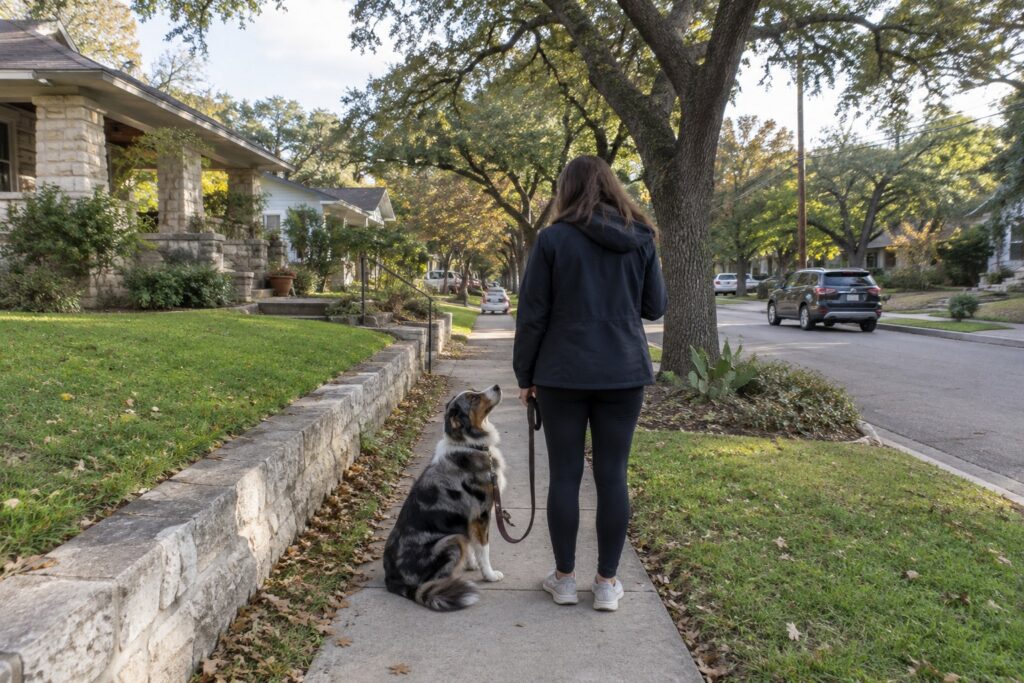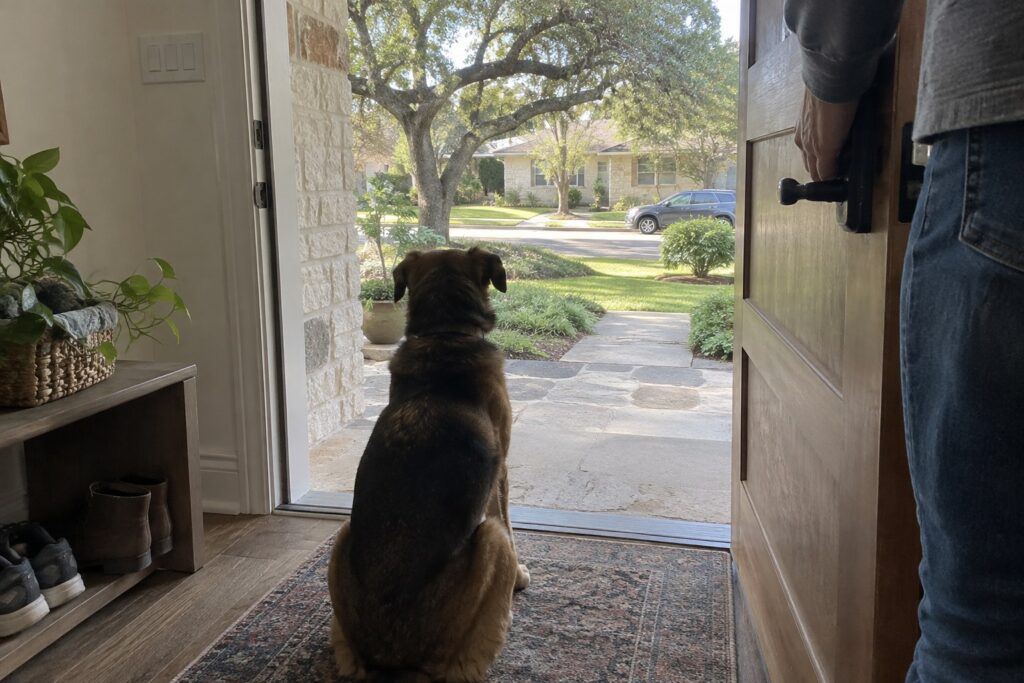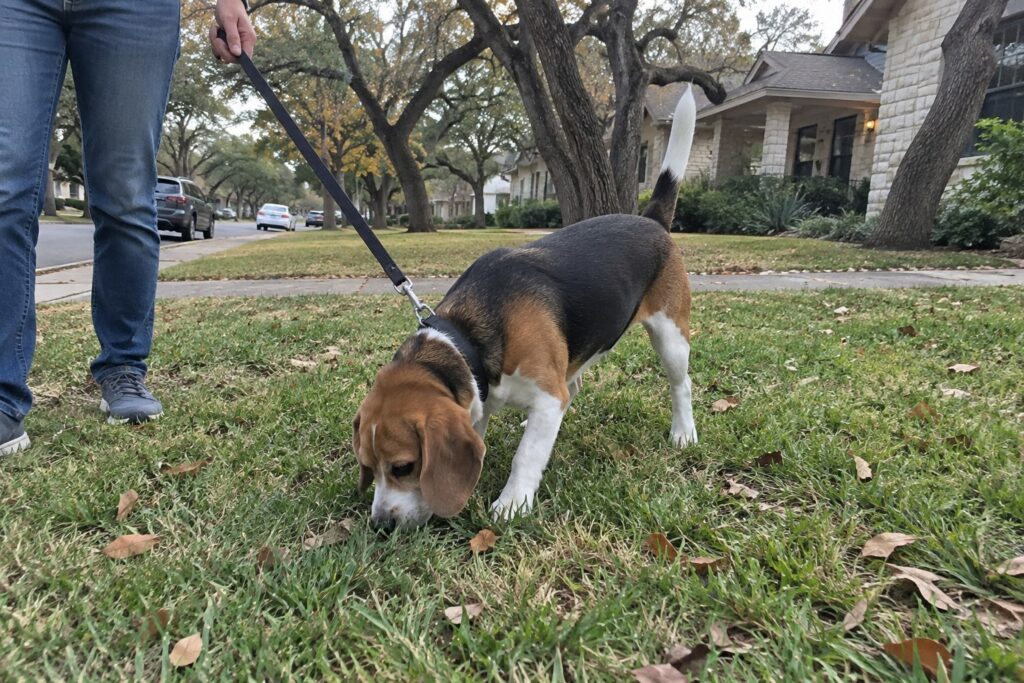

If you have ever opened the front door to a trick-or-treater and watched your dog launch at a kid in a costume, you already know why so many owners search for how to stop dog from jumping on people this time of year. Fall and winter bring a steady stream of doorbells, visitors, and full living rooms, and a dog who jumps turns every greeting into a wrestling match.
At All Dogs Unleashed Dog Training OKC, we help Oklahoma City owners fix greeting problems every week. The good news is that jumping is a learned habit, and with the right management and a clear replacement behavior, your dog can greet guests with four paws on the floor.
Want calmer greetings before the holiday crowd shows up? Talk with our team about the right plan for your dog.
Key Takeaways
- Dogs jump on people because it has worked for them in the past, usually by earning attention, touch, or excitement from the person they jumped on.
- Management tools like a leash, baby gate, crate, or place bed stop your dog from practicing the jump while you train a better habit.
- Teaching a sit or place as the default greeting gives your dog a clear job that is physically incompatible with jumping.
- Guests need simple instructions, because one visitor who pets a jumping dog can undo days of consistent practice.
- For faster, lasting results, our fixed two-week Board and Train program builds calm greetings and a reliable place command with daily professional training.
Why Dogs Jump on People (and Why the Holidays Make It Worse)
Jumping is rarely about dominance or spite. Most dogs jump because they want to get close to a face, and the behavior has been rewarded over and over. When a puppy jumps and someone laughs, bends down, pushes it away, or says its name, the puppy learns that jumping produces attention. By adulthood, that habit is deeply rehearsed.
Attention Is the Reward Most Owners Miss
To your dog, even negative attention counts. Pushing a dog down with your hands, kneeing it in the chest, or saying “off” in an excited voice can all feel like play. The American Kennel Club notes that removing attention for jumping and rewarding calm greetings is one of the most reliable ways to change the pattern.
What Changes From Halloween to New Year’s
The holiday stretch stacks up triggers your dog does not see the rest of the year. Doorbells ring dozens of times on Halloween night. Costumes, masks, and wagons change how people look and move. Thanksgiving and Christmas bring relatives who only visit once a year, extra food on counters, and kids who squeal and run.
All of that raises your dog’s arousal level. A dog who can hold a sit on a quiet Tuesday may fall apart when six people walk in at once carrying casseroles. Planning for that higher level of excitement is the key to getting through the season without knocked-over guests or torn sweaters.
| Holiday Situation | Why It Triggers Jumping | Best First Step |
|---|---|---|
| Halloween trick-or-treaters | Repeated doorbells, costumes, excited kids | Gate or crate your dog away from the door for the evening |
| Thanksgiving arrivals | Several guests at once, food smells, long visits | Leash your dog for arrivals, then send it to place |
| Christmas visitors and parties | Unfamiliar relatives, gifts, noise, late hours | Brief guests ahead of time and schedule quiet breaks |
| Holiday houseguests | Daily greetings in the morning and after outings | Practice the same sit greeting at every re-entry |
Management First: Stop the Jump Before It Happens
Training takes repetition, but your guests are arriving on a calendar. Management is how you prevent the behavior while your dog learns. Every time your dog is allowed to jump on someone and receives a reaction, the habit gets stronger, so the goal is to limit those chances.
Use a Leash Indoors for Arrivals
A standard flat collar or harness and a six-foot leash are some of the simplest tools you own. Clip it on a few minutes before guests are due, and stand on the leash or hold it short enough that your dog cannot reach a person’s chest. Your dog can still see and sniff the visitor, but it physically cannot practice the jump.
Once the first excitement passes, you can reward a sit and let your dog say hello calmly. If your dog pops up again, the greeting ends and you step back.
Baby Gates and Closed Doors
Gates are ideal for busy nights like Halloween, when the door opens again and again. Set up a gate across a hallway or kitchen doorway so your dog can hear the activity without being at the front door. Give your dog a stuffed food toy or long-lasting chew to keep it occupied, and it will learn that the doorbell predicts something good in its own space.
Crate or Place for the Busiest Moments
A crate-trained dog often relaxes more in its crate than in a crowded living room. For dogs who know a place command, a bed or mat in the corner of the room lets them be part of the gathering without being in the traffic path. Either option protects your guests and gives your dog a break from overstimulation.
Management also keeps your dog safe during the holidays. The ASPCA’s holiday safety tips remind owners to keep candy and food off the ground and to ask houseguests to store medications out of reach, both of which are easier when your dog is not roaming loose through the party.
| Management Tool | Best For | Watch Out For |
|---|---|---|
| Leash indoors | Controlled greetings with a few guests | Never leave a leashed dog unattended |
| Baby gate | Trick-or-treat nights and frequent door traffic | Jumpers and climbers may need a taller gate |
| Crate | Large gatherings and meal times | Only use if your dog is already comfortable crating |
| Place bed or mat | Keeping your dog in the room but out of the way | Requires practice before guests arrive |
How to Stop Dog From Jumping on People With an Incompatible Behavior
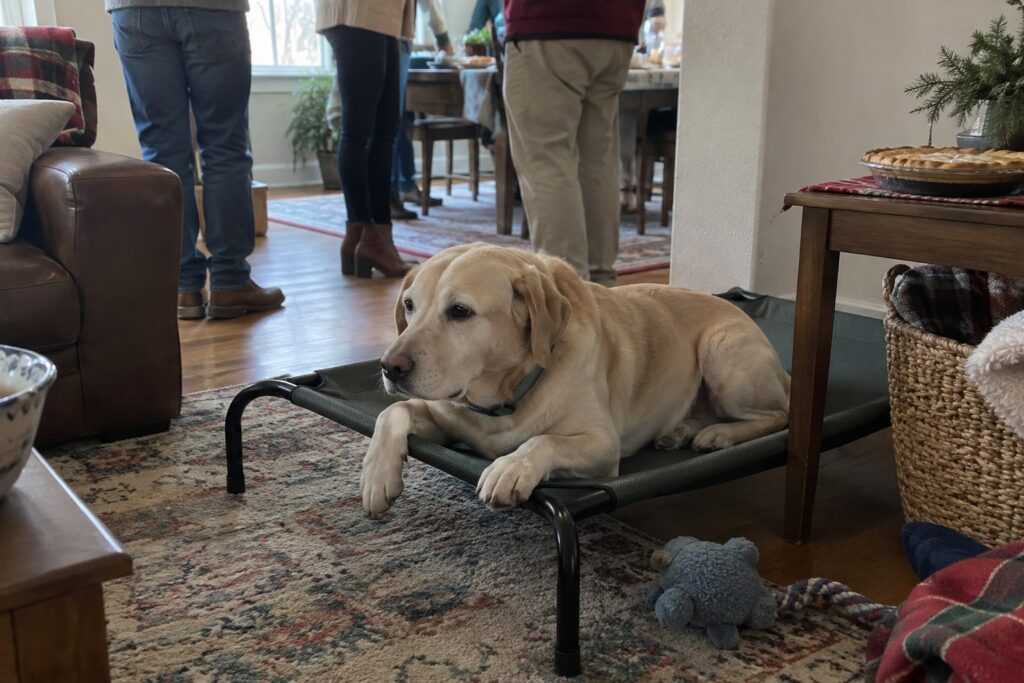
Management keeps things safe, but it does not teach your dog what to do instead. The fastest way to reduce jumping is to train a behavior your dog cannot do at the same time. A dog with its rear on the floor or its body on a bed cannot also have its paws on your guest’s shoulders.
Build a Rock-Solid Sit Greeting
Start without guests. Walk in the front door, wait for your dog to sit, and then calmly praise and reward. If your dog jumps, turn away, fold your arms, and wait a few seconds before trying again. Repeat this every time you come home, and your dog will start offering the sit on its own because it is the only thing that earns your attention.
Keep your energy low. A soft “good” and a treat delivered at your dog’s nose height keep all four paws down. A loud, excited greeting invites the jump right back.
Teach Place as the Door Routine
Place is a trained behavior where your dog goes to a specific bed or mat and stays there until released. It is one of the most useful skills for holiday hosting because it gives your dog a clear job the moment the doorbell rings. Teach it by luring your dog onto the bed, rewarding while it stays, and gradually adding distance, duration, and distractions.
Once place is solid, the door routine becomes simple: doorbell rings, your dog goes to place, you answer the door, and your dog is released to greet calmly after guests are inside and settled. This takes practice, but it turns a chaotic moment into a predictable one.
Reward Calm, Not Just Compliance
A dog that sits while vibrating with excitement is still one second from jumping. Reward the relaxed moments too: a dog lying down, a slow tail, a soft body. Over time your dog learns that calm behavior around visitors is what pays off.
Jumping is only one of several habits we see in Oklahoma City homes. If you are also dealing with pulling, barking, or counter surfing, our breakdown of common dog behavior problems OKC owners can fix fast covers those issues in more detail.
Short on time before the holidays? Our two-week Board and Train program builds calm greeting manners and a reliable place command with daily professional training.
Give Your Guests a Simple Game Plan
Your dog will learn fastest when everyone follows the same rules. The hardest part of holiday training is often the guest who says, “It’s fine, I love dogs,” and then scratches your dog’s ears while it has its paws on their chest. That one moment tells your dog that jumping still works.
What to Tell Visitors Before They Arrive
A short text or a quick word at the door goes a long way. Keep your instructions to a few clear points:
- Please ignore the dog when you first walk in, with no eye contact, talking, or touching.
- If the dog jumps, turn away and stay quiet until it has four paws on the floor.
- Only pet the dog once it is sitting or lying calmly, and keep it low-key.
- Let us handle the leash, treats, and any corrections.
Kids, Older Relatives, and Trick-or-Treaters
Children and older adults are the guests most likely to be knocked down, and they are also the least likely to follow instructions in the moment. For these visitors, rely on management rather than training. Keep your dog behind a gate or on leash, and never ask a young child to be the helper during a training exercise.
On Halloween, many owners find it easiest to sit outside with a candy bowl while the dog stays inside with a chew. That keeps the door closed, the costumes out of sight, and your dog out of trouble.
Proofing the Doorbell Before the Holiday Rush
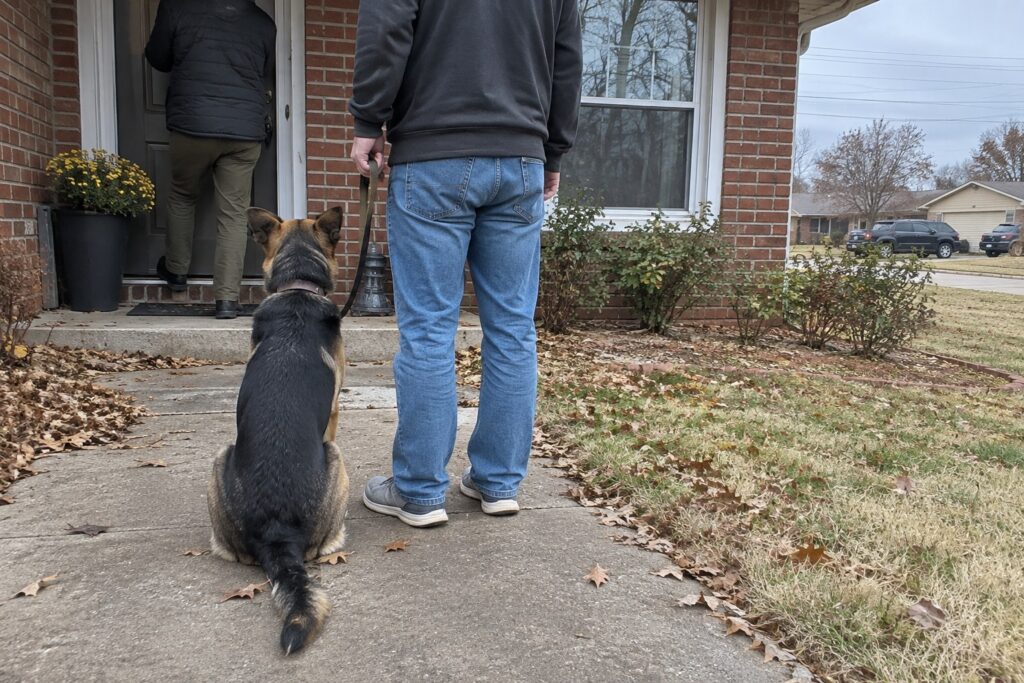
Your dog may do beautifully when you practice in the kitchen and then forget everything when a real doorbell rings. That gap is normal. Dogs do not generalize well, so you need to rehearse the exact situation that sets them off, starting easy and building up.
Start With a Recorded or Fake Doorbell
Play a doorbell sound on your phone at low volume or tap the door softly while your dog is on leash. The moment your dog hears it, cue place or sit and reward. Repeat several short sessions a day, raising the volume and realism a little at a time.
When your dog can stay calm through the sound, have a family member ring the actual doorbell. Then have them step inside, then walk in talking, and eventually walk in with a bag or coat in hand.
Recruit a Helper and Add Realism
A neighbor or friend who can come over a few times is worth their weight in pumpkin pie. Ask them to arrive, follow your guest instructions exactly, leave, and come back a few minutes later. Five or six quick arrivals in one session give your dog more practice than a whole holiday dinner.
Once your dog handles one helper, add a second person or a costume element like a hat or a large coat.
| Proofing Step | What Your Dog Practices | Move On When |
|---|---|---|
| Recorded doorbell at low volume | Going to place or sitting at the sound | Your dog responds on the first cue most of the time |
| Real doorbell rung by family | Staying calm at the actual trigger | Your dog holds position until released |
| Helper enters and ignores dog | Waiting while a visitor comes inside | Your dog stays down as the helper walks in |
| Multiple helpers or costumes | Keeping manners with more excitement | Your dog recovers quickly if it gets up |
When Board and Train Helps With Jumping
Many owners can make real progress with the steps above. Others find that their schedule, their dog’s energy, or a houseful of family makes consistency tough. That is when professional help can save a lot of frustration.
What the Two-Week Program Builds
Our Board and Train program in Oklahoma City is a fixed two-week program where your dog stays at our facility and trains daily with our team. Every enrollment begins with an evaluation, so we can build the plan around your dog’s specific habits, whether that means jumping at the door, bolting past guests, or struggling to settle.
For jumpers, that work usually centers on impulse control, polite greetings, and a dependable place command that holds up around real distractions. If you want to picture the routine, our day-by-day look at a board and train program walks through how training progresses.
The Turnover Session and Lifetime Support
Training only lasts if you can keep it going at home. The program ends with a turnover session where you learn how to handle your dog and use the same cues, plus written instructions to refer back to. Our Board and Train is backed by guaranteed results and lifetime support at no additional charge, so you can reach out if greeting problems ever resurface.
In-Home Lessons for Door Problems at Your House
Some dogs only jump at their own front door. For those cases, in-home dog training in Oklahoma City lets a trainer work with you on your actual doorway, your entry routine, and your family’s habits. It is a practical option if you want hands-on coaching in the exact spot where the jumping happens.
After either option, a little daily practice keeps the new habit strong. Our tips on keeping your dog’s training sharp between sessions make it easier to maintain calm greetings long after the holidays end.
Traveling for the holidays instead of hosting? Our dog boarding in Oklahoma City has limited capacity during holidays, so we recommend booking at least two weeks ahead. Questions about jumping or scheduling? Call us at (405) 299-3386.
About All Dogs Unleashed Dog Training OKC
All Dogs Unleashed Dog Training OKC helps Oklahoma City families turn chaotic door greetings into calm, polite hellos. From our location on Park Avenue in downtown Oklahoma City, we offer a fixed two-week Board and Train program, private in-home lessons, refresh training, and boarding. Every Board and Train enrollment begins with an evaluation and ends with a turnover session, so you leave knowing exactly how to keep your dog’s four paws on the floor. Our Board and Train is backed by guaranteed results and lifetime support.
Frequently Asked Questions
Why does my dog jump on guests but not on me?
Guests are new and exciting, and many of them reward jumping by laughing, petting, or talking to your dog. You may have already stopped responding to jumps, so your dog learned it does not work with you. Give visitors the same rules you follow, and keep your dog leashed or gated until it can greet calmly.
Should I knee my dog in the chest to stop jumping?
We do not recommend it. Kneeing or pushing can hurt your dog, and many dogs treat it as rough play, which keeps the jumping going. A better approach is removing attention the instant your dog jumps and rewarding a sit. Pair that with a leash or gate so your dog cannot practice the habit.
How long does it take to stop a dog from jumping on people?
It depends on your dog’s age, energy, and how long the habit has been rewarded. Some dogs improve within days of consistent practice, while others need weeks of work around real visitors. Consistency from every person in the home matters more than anything, and professional training can help if progress stalls.
What is the best command to stop a dog from jumping?
Sit and place are the two most useful options because both are incompatible with jumping. Sit works well for quick greetings at the door or on walks. Place gives your dog a specific bed or mat to go to when the doorbell rings, which is especially helpful when you are hosting a crowd for the holidays.
Is my dog too old to learn not to jump?
No. Adult and senior dogs can learn new greeting habits, although a long-rehearsed behavior may take more repetition to change. Focus on management so your dog stops practicing the jump, and reward the calm alternative every time. If your older dog seems stiff or sore when jumping or sitting, check in with your veterinarian.
Can board and train fix jumping before the holidays?
Our fixed two-week Board and Train program regularly works on greeting manners, impulse control, and place. Results depend on your dog, and the turnover session teaches you to keep the new habits going at home. If you want training finished before guests start arriving this season, contact us early so we can talk through timing for your dog.
Learning how to stop dog from jumping on people comes down to three steps: manage the door, teach a calm replacement behavior, and make sure every guest follows the same rules. Start practicing now, and your holiday gatherings will feel a lot more relaxed. If you want professional help, call (405) 299-3386 or reach out online. You can also visit us at our Park Avenue location in downtown Oklahoma City.
Ready to Get Started with All Dogs Unleashed Dog Training OKC?
Whether you need a full two-week Board and Train program or a few in-home lessons focused on your front door, our team is ready to help your dog greet guests politely. Call (405) 299-3386 to talk with our team today.