
Your dog learned "sit," "stay," and "come" in training sessions. But what happens between those sessions matters just as much. Maintaining those skills takes daily practice, the right environments, and knowing when to call in backup. At All Dogs Unleashed Dog Training OKC, our trainers work with Oklahoma City dog owners every day.
After thousands of hours in the field with local dogs, we have identified exactly what separates dogs who hold their skills long-term from dogs who backslide. This guide gives you real, practical steps to keep your furry friend on track. Ready to build on your dog's progress? Talk with our OKC team about the training plan that fits your dog.
Key Takeaways
- Short, daily practice sessions are more effective than one long weekly training push.
- Maintaining obedience skills means proofing commands in real-world places like parks and busy sidewalks.
- Oklahoma City's extreme summer heat makes indoor training drills a smart substitute from June through August.
- Refresher sessions with a professional trainer can catch skill gaps before they become bad habits.
- Consistency from everyone in your household is one of the biggest factors in long-term training success.
Your Dog Nailed It at the Last Session. So What Happened?
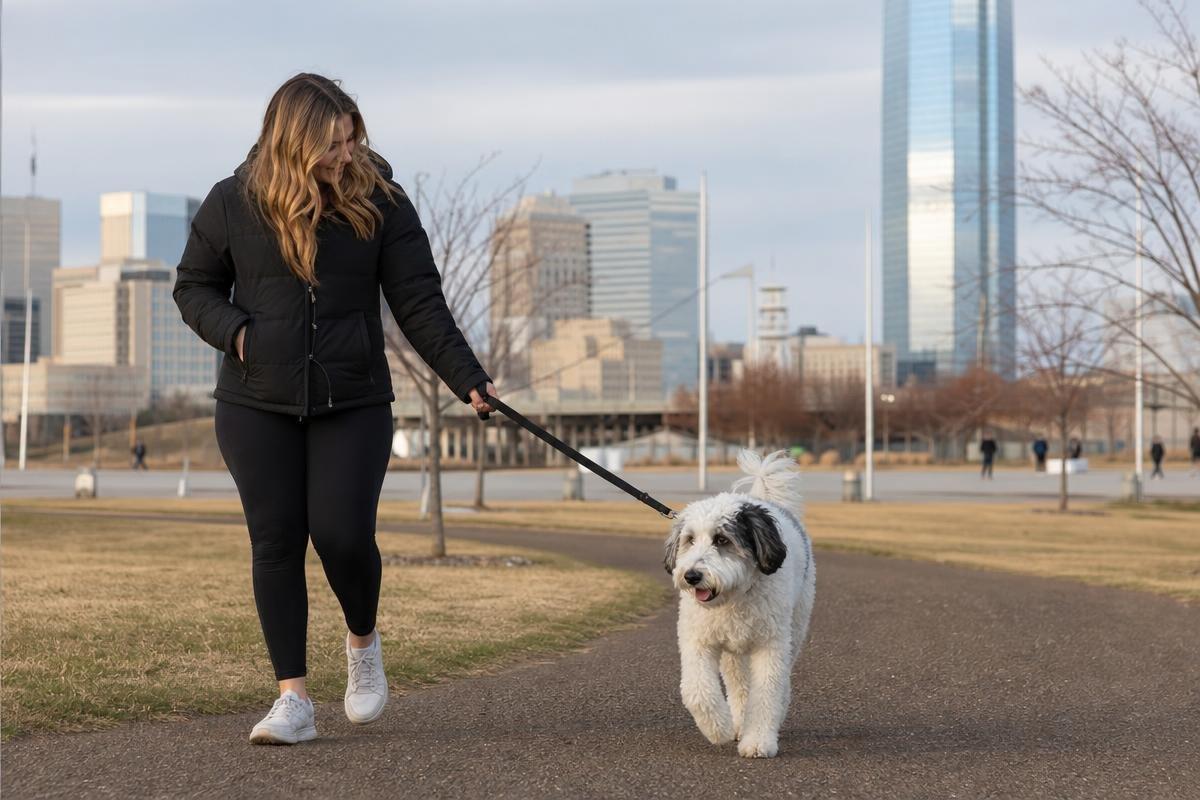
Your dog was a star at training. Every command, clean and crisp. Then three days later, you're at Scissortail Park and they're pulling toward every passing dog like the leash doesn't exist. Sound familiar? You're not alone, and it's not your fault.
This is one of the most common things we hear from OKC dog owners. Knowing how to keep your dog's training sharp between professional sessions makes all the difference. Skills fade without practice, but the good news is that small, consistent efforts at home work.
In this guide, we cover four areas: daily practice habits, mental stimulation, real-life training moments, and knowing when to call in backup from our certified dog trainers in Oklahoma City. We put this together to help you get real results that last.
Why Dogs Lose Their Training Sharpness, And Why It's Not Your Fault
Dogs lose training sharpness when behaviors stop being reinforced, a process called behavioral extinction. Yes, it is completely normal for a trained dog to start ignoring commands again. It happens to almost every dog owner, and it does not mean you failed or that your dog has a bad attitude. There is a straightforward explanation for it.
Behaviors that stop getting reinforced gradually weaken over time. Think of it like a second language you studied in school. If you stop speaking it, you lose fluency. Your dog's obedience works the same way. This challenge is especially real in Oklahoma City, where busy parks and active neighborhoods create constant distractions.
The Science Behind Skill Fade
When your dog learned to sit, stay, or come, those behaviors got reinforced repeatedly. Praise, treats, attention. Over time, your dog's brain connected the command to the reward. But once a behavior seems solid, most owners naturally stop reinforcing it. That is when the connection starts to loosen.
It does not vanish overnight, but it fades. Reinforcing commands means continuing to reward the behaviors that matter, even after they look reliable. If you have ever wondered why your trained dog stopped listening, this is usually the root cause.
Common Triggers That Undo Good Habits
Skill fade rarely happens without a reason. These are the most common triggers we see:
- Inconsistent verbal cues across family members. "Come," "come here," and "get over here" are three different commands to your dog.
- Long gaps between practice sessions. A week off feels like a month to your dog's memory.
- High-distraction environments. Places like Bricktown or busy OKC dog parks can completely override a dog's focus.
- Routine changes. A new baby, a move, or a new work schedule disrupts your dog's world more than you might expect.
- Skipping reinforcement once a behavior looks solid. This is the most common mistake we see.
- Adolescence. Dogs between 6 and 18 months go through a developmental phase where previously solid behaviors can seem to vanish almost overnight.
Adolescence is especially disruptive. Hormonal changes, increased independence, and a stronger pull toward distractions all hit at once. It is not defiance. It is biology. Once you identify the specific trigger behind your dog's skill fade, fixing it becomes much more straightforward. That is always our starting point.
The Daily Practice Habits That Actually Keep Commands Locked In
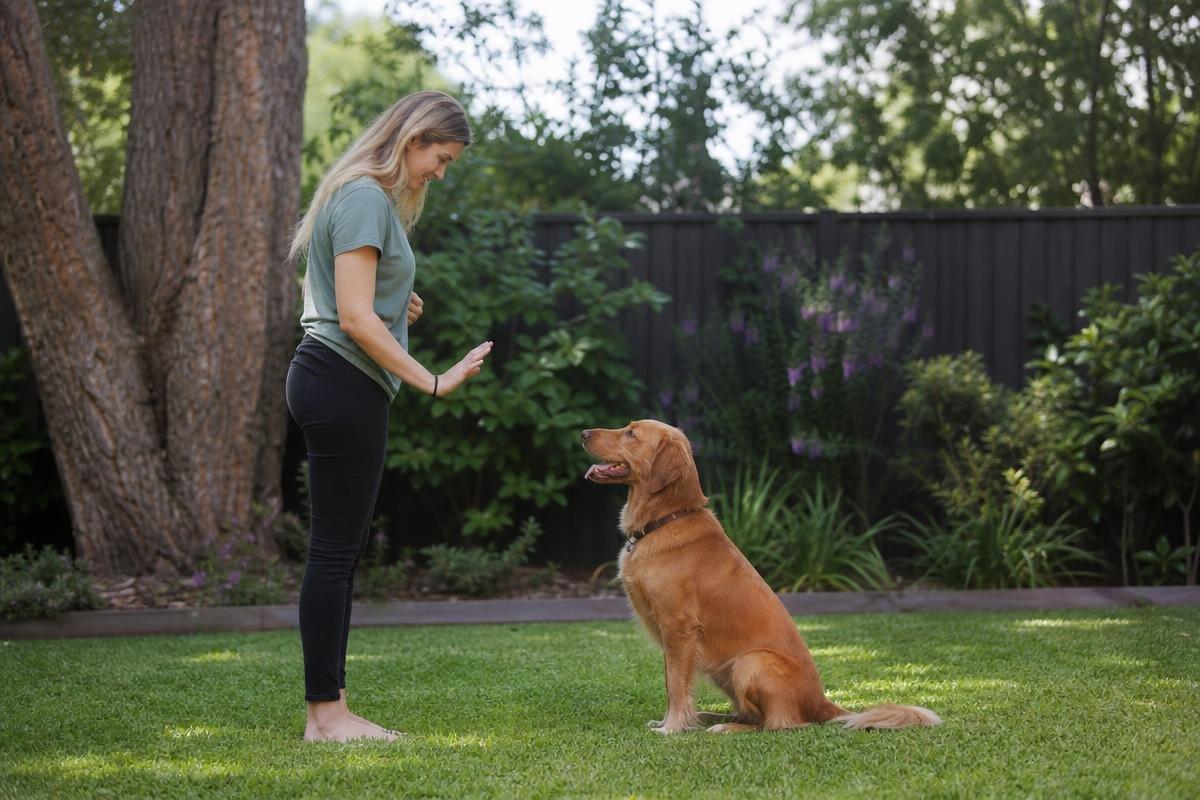
Short sessions beat long ones every time. Two or three focused sessions of three to five minutes each day will do more for your dog than one long session crammed in on the weekend. Dogs have short attention spans, and they fatigue faster than most owners realize. Frequent, brief repetitions are how commands move from "sometimes works" to fully locked in.
The 5-Minute Rule
Set a timer. Five minutes is enough. Work two or three commands your dog already knows, keep the energy upbeat, and always finish on a win. Ask a command you know your dog will nail, reward it, and call it done. Ending on a success builds a positive association with training time, so your dog shows up ready for the next session.
This is one of the simplest ways to reinforce dog training at home without rearranging your schedule. Five minutes before dinner. Five minutes after your morning coffee. It adds up fast.
Building Training Into Your Dog's Daily Routine
You do not need extra time. You need to use the time you already have. Weave training into the moments that happen every single day:
- Sit-stay before the food bowl goes down. Every meal becomes a practice rep.
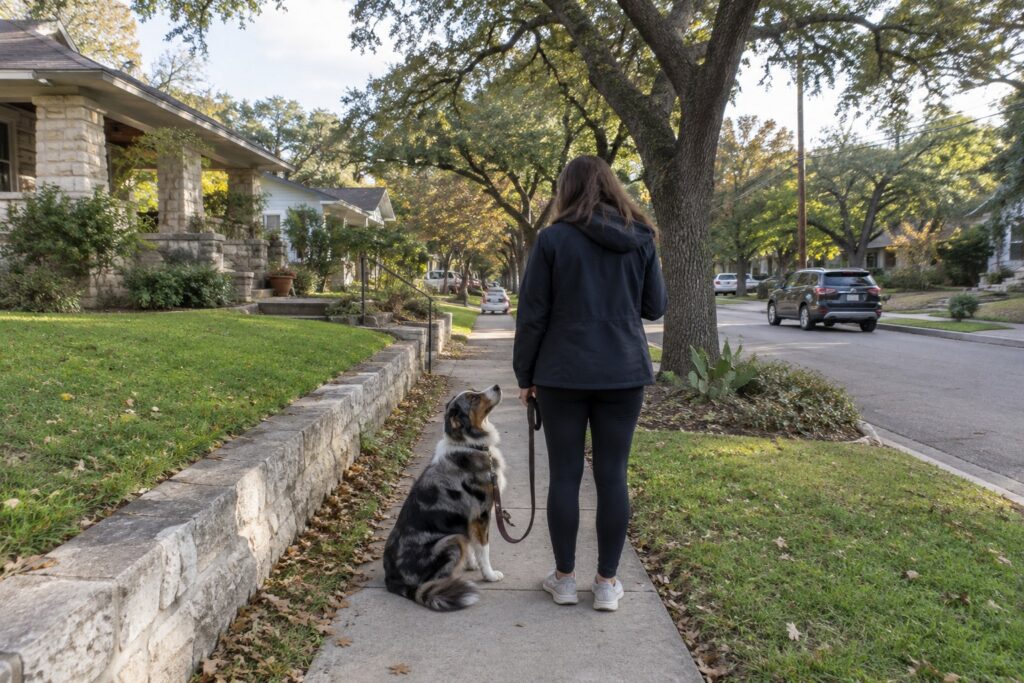
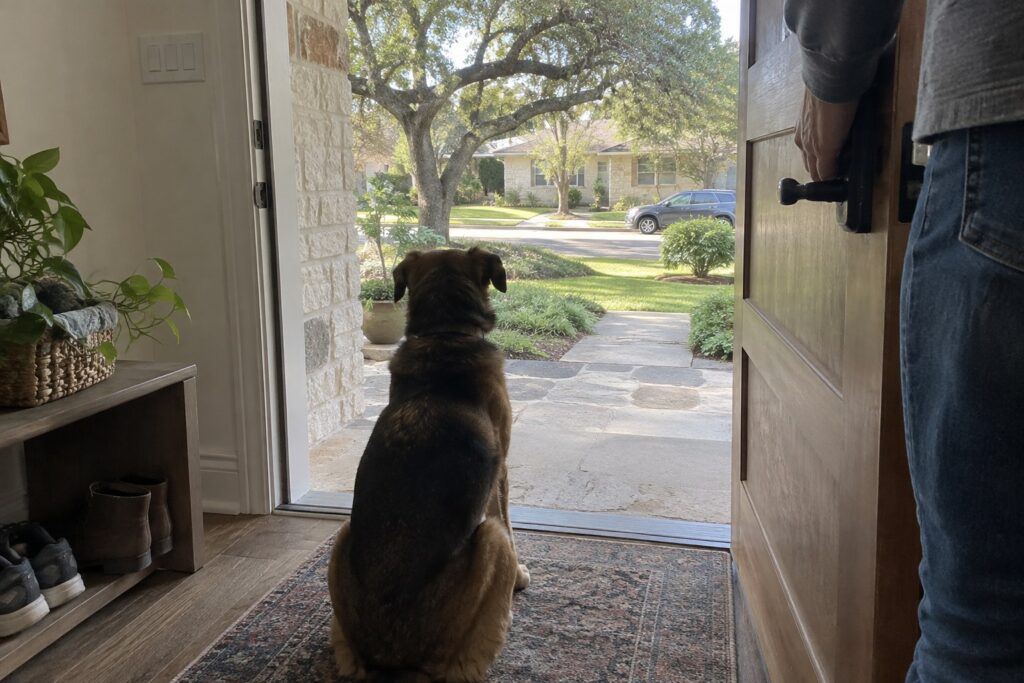
- Wait at the door before going outside. Builds impulse control without a formal session.
- Four paws on the floor before greeting guests. Real-life jumping prevention, practiced daily.
- Quick recall during a commercial break. Thirty seconds, high reward, done.
These micro-touchpoints keep commands active in your dog's brain without any extra time carved out of your day. Noticing skills fade already? Book a refresher session with our OKC trainers before small gaps turn into stubborn habits.
How to Use Real-Life Moments as Practice Reps
The kitchen is the easiest place to train. It is also the least useful place to stop. A dog that sits perfectly at home but ignores you outside has not fully learned the command. Proofing in new environments is what turns a practiced behavior into a reliable one.
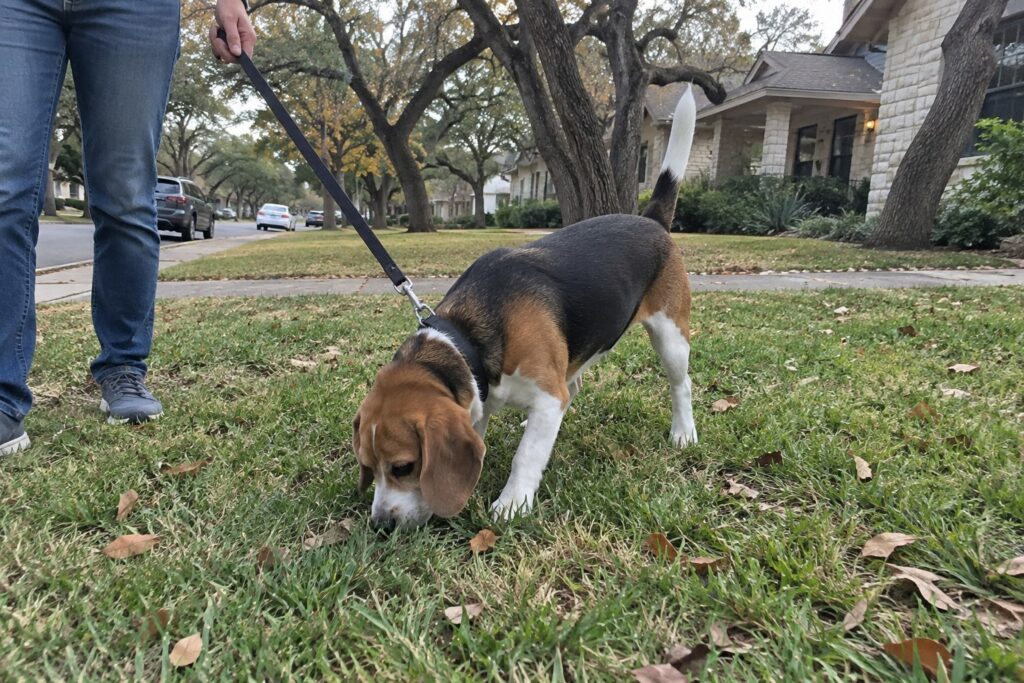
The OKC area gives you great options for this. The walking paths at Lake Hefner bring joggers, cyclists, and other dogs, which makes it ideal for higher-distraction heel and recall work. Scissortail Park offers a mix of on-leash walking and moderate foot traffic, a good middle step before busier spots. Midtown's walkable streets with storefronts and sidewalk activity are excellent for real-world proofing of "leave it" and "heel." These are not just walks. They are live training environments.
If you want a head start on building these habits from day one, it helps to know what our certified trainers in Oklahoma City focus on during structured sessions, so your at-home practice reinforces the same cues in the same way.
Mental Stimulation: How to Keep Your Dog's Mind Sharp Every Day
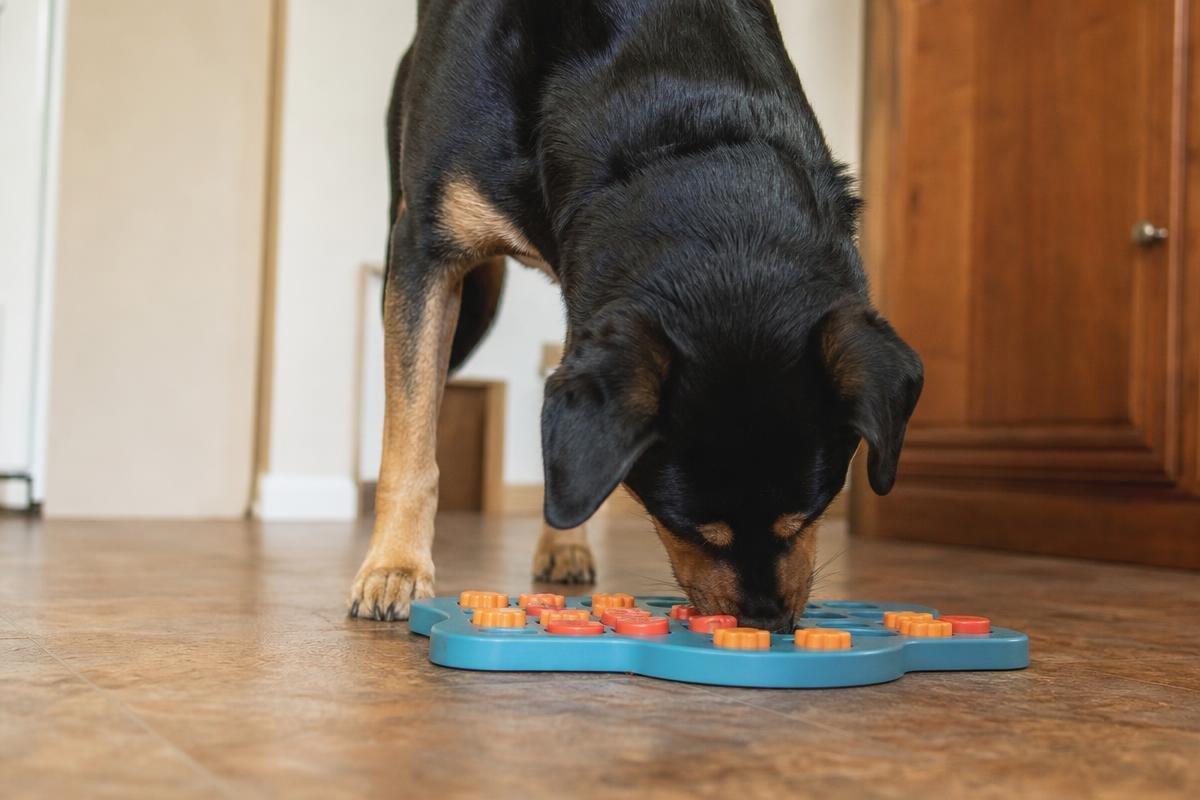
Physical exercise alone will not maintain your dog's obedience. A tired body is great, but a tired brain is even better. Mental stimulation builds focus, reinforces impulse control, and keeps your furry friend engaged with you as the one worth listening to. For high-energy breeds common in OKC households like Labs, German Shepherds, and Australian Shepherds, brain games can be just as draining as a 30-minute walk.
This matters even more during OKC summers. With Oklahoma City temperatures regularly hitting 100°F and above from June through August, indoor enrichment is not a backup plan. It is your main plan for those months.
Puzzle Feeders, Nose Work, and Brain Games
You do not need fancy equipment to give your dog a real mental workout. These activities work in any home and take less than 15 minutes:
- Snuffle mats and food-stuffed Kongs: Turn mealtime into a problem-solving session. Your dog works for every bite, which slows eating and activates natural scent-driven focus.
- Hide-and-seek with treats: Scatter treats in different rooms or hide them under cups. This builds focus and impulse control without needing outdoor space.
- The "which hand" game: Hold a treat in one fist and let your dog sniff both hands to find it. Simple, fast, and genuinely tiring for a working breed.
- Scatter feeding in the yard: Toss your dog's kibble across the grass instead of using a bowl. It activates natural foraging behavior and can wear out a high-energy dog fast.
Teaching New Commands to Reinforce Old Ones
One of the best ways to sustain training gains is command chaining. Once "sit" is solid, add duration with a "sit-stay." Then introduce a distraction challenge. Your dog's brain stays engaged while the foundation behavior gets stronger, not replaced.
Teaching something new, even a simple trick, also reminds your dog to pay attention to you. That focus carries over to every command they already know. If you feel like home practice has hit a ceiling, it may be time to talk to our team about a board and train program in Oklahoma City to reset and rebuild momentum.
Consistency Across the Whole Family: The Rule Everyone Forgets
Why Mixed Signals Undo Weeks of Progress
Your dog is not being stubborn. If your dog is ignoring a command, there is a good chance the command itself has been muddied by mixed signals at home. Dogs learn through consistent patterns. When one person says "down" and another says "off" for the same behavior, your dog is genuinely confused, not defiant.
Here is a scenario we see all the time. Dad lets the dog jump on him when he walks through the door because it feels like a greeting. Mom is working hard on four-paws-on-the-floor every single time. From your dog's perspective, there is no clear rule. Just two contradictory signals from people in the same house. That confusion can undo weeks of solid progress in just a few days.
Family alignment is one of the most commonly skipped steps in dog training. It is also one of the most impactful for long-term results. We build owner education into every program because of exactly this. As one of our customers put it, "they gave me the tools to ensure my dog has direction and understanding from me." That kind of clarity has to extend to everyone in the household.
How to Get Every Family Member on the Same Page
Getting your whole family aligned does not have to be complicated. A few simple steps make a big difference when you reinforce dog training at home together.
- Write down the exact verbal cue for each command and post it on the fridge. One word per behavior, agreed on by everyone.
- Set house rules before your next session. Jumping, furniture access, feeding from the table, decide together and stick to it.
- Have every family member practice the same 3 to 5 core commands for five minutes daily. Short, consistent, and unified.
- Attend at least one training session together so everyone hears the same instructions from the same trainer.
Long-term obedience starts at home, not at the park. If your family needs a structured starting point, our dog trainer in Oklahoma City can walk every member of your household through the exact cues and expectations your dog needs to succeed.
Ready to get your whole family on the same page? Call All Dogs Unleashed at (405) 299-3386 and ask about training sessions the whole family can attend.
Oklahoma City Dog Owners: Local Conditions That Affect Your Training Routine
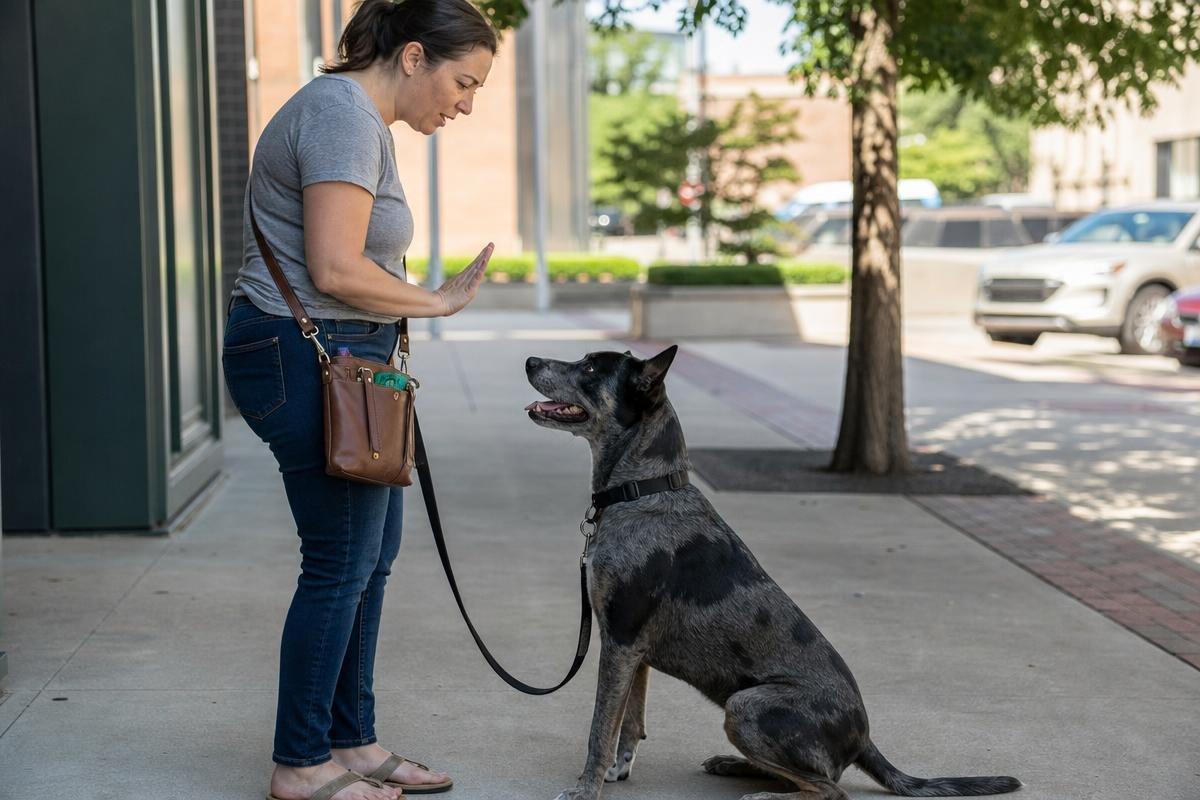
Living and training dogs in OKC means dealing with weather that swings from brutal summer heat to surprise ice storms. Those conditions are not just inconvenient. They directly shape how and where you practice with your dog. Smart training upkeep in Oklahoma City means planning around the climate, not fighting it.
Training Through Oklahoma's Weather Extremes
Summers here regularly push past 100°F from late June through early August, so early morning sessions before 8am or indoor drills in an air-conditioned space are the practical solution. That heat is dangerous, especially for Bulldogs, Pugs, French Bulldogs, and dark-coated dogs, who overheat much faster than other breeds. During heat advisories, move practice indoors. Hallway recalls, kitchen sit-stays, and staircase stays all work well and keep your dog's skills reliable without the risk.
Oklahoma winters bring their own challenges. Ice storms and sharp wind chills can shut down outdoor sessions for days at a stretch. A covered patio, a garage, or even a cleared living room keeps the routine alive. Skipping practice entirely is what lets skills fade.
Here is the upside: Oklahoma's unpredictable weather is actually a useful training tool. A dog that only practices in calm, perfect conditions will not generalize commands well to real life. Varied environments build a more reliable dog.
The Best OKC Spots to Proof Your Dog's Commands
Proofing means practicing commands around real distractions. Build up gradually using a distraction ladder:
- Quiet neighborhood streets: Start here. Low foot traffic, familiar smells, manageable distractions.
- Scissortail: Moderate distraction. Other dogs, joggers, kids, and open space make this a solid mid-level challenge for heel and stay work.
- Lake Hefner walking paths: Higher distraction. Cyclists, runners, and off-leash dogs nearby push your dog's focus harder. Great for recall and heel practice.
- Midtown OKC sidewalks: Urban proofing. Storefronts, street noise, and heavy foot traffic test real-world obedience in a way parks simply cannot.
If you are unsure whether your dog is ready for higher-distraction environments, our dog trainers in Oklahoma City can help you assess where your dog stands and build a proofing plan that fits your neighborhood and schedule.
When Home Practice Is Not Enough: Signs Your Dog Needs a Refresher
Daily practice goes a long way. But sometimes, even consistent owners hit a wall. If your dog's behavior is sliding backward despite your best efforts, that's not a failure. It's a normal checkpoint in a dog's life, and it's exactly what professional refresher training is designed for.
Behaviors That Signal It Is Time to Call a Trainer
Some slippage is expected. But certain signs tell you that more home practice alone won't fix the problem. Watch for these:
- Commands that were solid are now ignored more than half the time
- Leash reactivity has returned or gotten worse, even on familiar routes like the paths around Lake Hefner
- House manners have regressed, including jumping, counter-surfing, or door-dashing
- A major life change, like a move, a new baby, or a new pet, has unsettled your dog
- You feel frustrated and inconsistent, and you are genuinely not sure what to do next
If any of these sound familiar, it may help to read more about why your trained dog stopped listening before deciding your next step. Understanding the cause makes the fix a lot clearer.
What a Refresh Training Program Looks Like
A professional refresher is not starting over. Our trainers re-evaluate your dog's current skill level, pinpoint the specific gaps, and build a short, targeted plan to restore reliability. It's focused work, not a full restart.
We offer both in-home sessions and board and train options for dogs that need a tune-up. In-home training works well for busy OKC schedules. Board and train delivers faster results when the regression is more serious. Our clients regularly describe picking up their dogs and being completely shocked at the transformation, and our 297 five-star Google reviews reflect that consistently.
Keeping your dog's obedience reliable is an ongoing process. Our team at All Dogs Unleashed Dog Training OKC is here whenever you need that extra support.
Frequently Asked Questions
How often should I practice commands at home?
Short and consistent beats long and occasional every time. Two to three sessions of 3 to 5 minutes daily keeps commands sharp far better than one long session on the weekend. Your dog's brain retains more when repetition is spread across the day.
What is the best way to reinforce training without treats?
Praise, play, and life rewards work great. Letting your dog sniff the yard, opening the door to go outside, or a quick game of tug can all reinforce good behavior. The key is timing. Reward within 1 to 2 seconds of the correct behavior or the moment loses its impact.
My dog does great at home but falls apart in public. What is going on?
This is a proofing gap. Your dog learned the command in one place but has not yet generalized it to new environments. The fix is a structured distraction ladder. Start in a quiet spot, then slowly add distractions. The paved paths at Lake Hefner, with joggers, cyclists, and other dogs, are a great mid-level proofing location once your dog is ready.
How long does it take for a dog to forget its training?
Most dogs show noticeable skill fade within 2 to 4 weeks of no practice. Recall and leash manners tend to fade the fastest. Daily maintenance is what turns trained behaviors into lifelong habits.
Should I keep training after my dog graduates from a program?
Always. Graduation is the beginning, not the end. Consistent daily practice is what locks commands in permanently. If you want structured ongoing support, ask us about our board and train options to keep your dog's skills on track.
When should I call a professional trainer instead of troubleshooting on my own?
If a behavior has regressed significantly, new aggression or reactivity has appeared, or you have practiced consistently for 2 to 3 weeks without improvement, it is time to get professional eyes on the situation. Contact All Dogs Unleashed in Oklahoma City and we will assess where your dog is today and build a plan from there.
Your dog already knows more than you think. The goal now is keeping those skills alive through short daily practice, smart mental enrichment, and consistent rules across your whole household. If you have been putting in the work and still feel like you are losing ground, that is exactly what a refresher session is for.
Call our team at (405) 299-3386 or visit All Dogs Unleashed Dog Training OKC online to schedule a consultation. We will assess where your dog is today and build a plan to get those commands reliable again.
Ready to Get Started with All Dogs Unleashed Dog Training OKC?
Call (405) 299-3386 to speak with our team directly. We're ready to answer your questions, walk you through your options, and help you find the right solution for your needs. Whether you're just starting to plan or ready to move forward, we'll make the process simple and stress-free. Ask about our board and train and refresh training programs when you call.
Reach out today and let's talk about the board and train or in-home refresher that fits your dog.