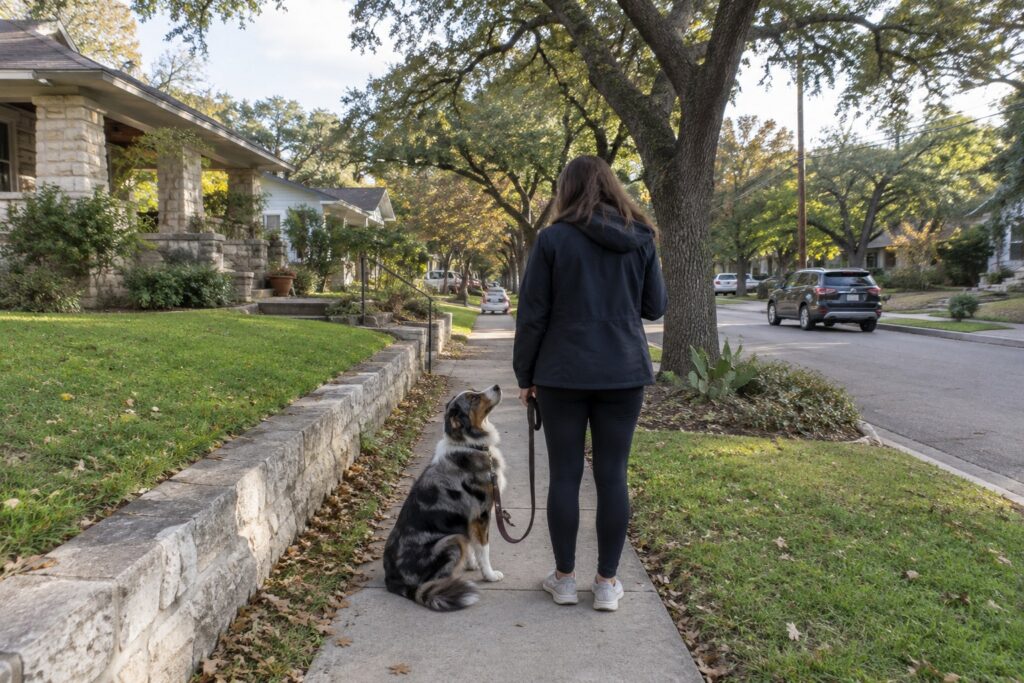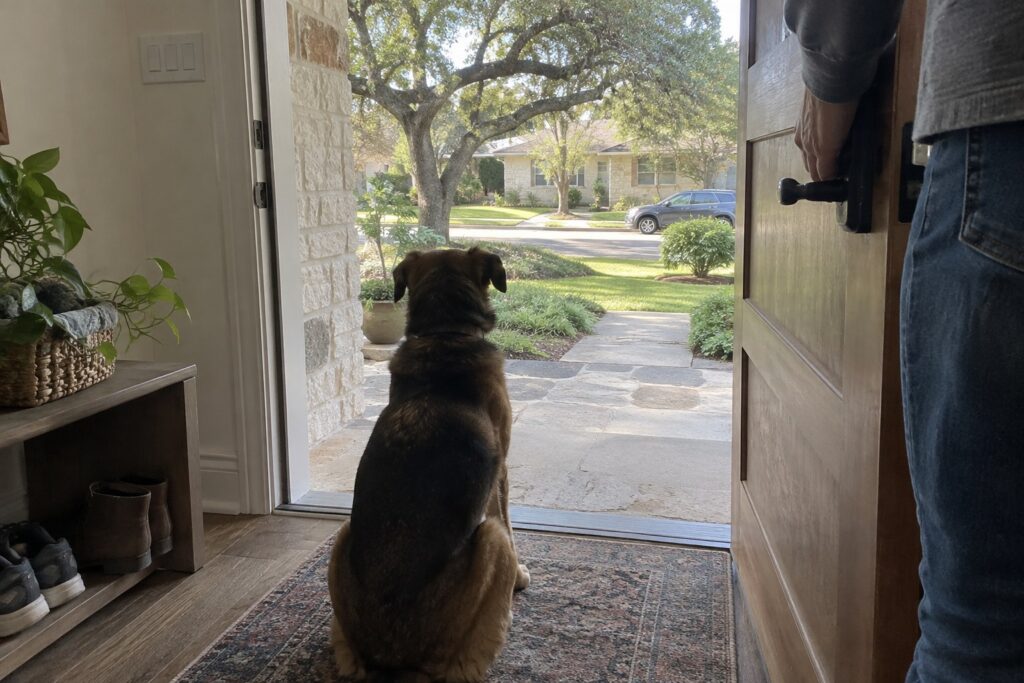

If you want to teach a dog to heel, it helps to know exactly what you are asking for. A true “heel” is a precise position at your side, not just a walk without pulling, and it is the skill that keeps your dog calm and close when a sidewalk gets crowded with strollers, bikes, and other dogs.
At All Dogs Unleashed Dog Training Frisco, we teach “heel” as part of everyday obedience because Frisco walks rarely stay quiet for long. Below, we break down how a formal heel differs from loose-leash walking, how to build it step by step, and when professional help makes sense.
Want a dog that walks at your side on every outing? Our team can help you get there.
Key Takeaways
- A formal “heel” means your dog’s shoulder stays level with your leg, on one chosen side, until you release them.
- Loose-leash walking is a relaxed everyday skill, while “heel” is a precise position you use for short, high-distraction stretches.
- Short, frequent sessions with a clear marker and release word build a reliable heel faster than long, tiring walks.
- Distractions should be added gradually, moving from your living room to a quiet street before a busy sidewalk.
- Our two-week Board and Train program includes daily training sessions plus hands-on owner transfer sessions so the heel keeps working at home.
Heel vs Loose-Leash Walking
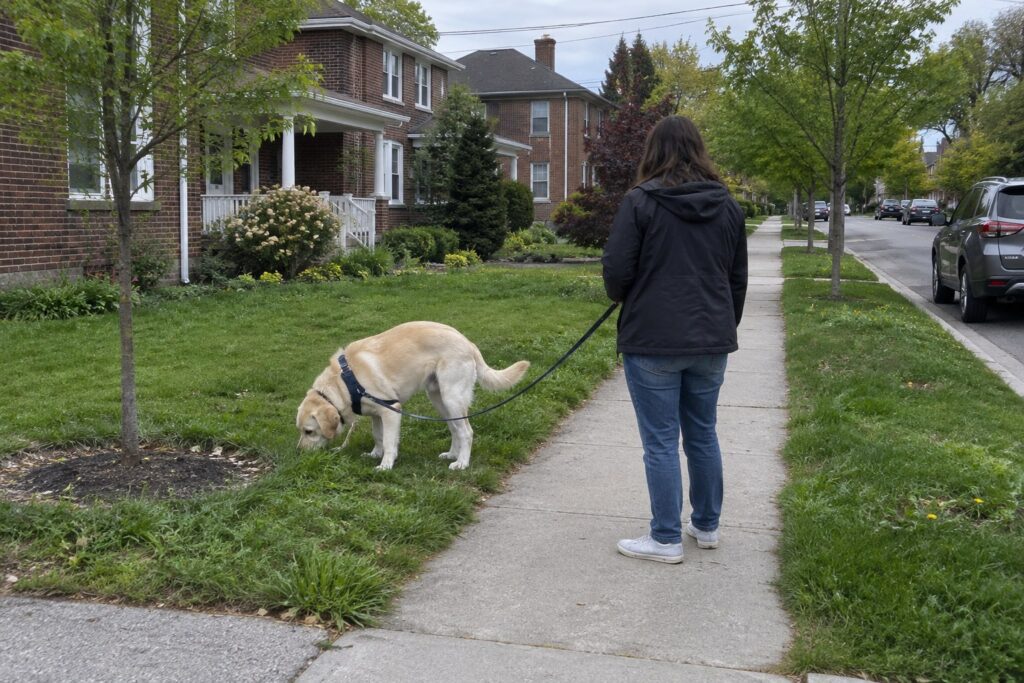
Many owners use “heel” to mean “stop pulling.” In professional training, the two are different skills with different jobs. Knowing the difference keeps you from expecting a stiff, formal position on a relaxed evening stroll, or accepting a wandering dog when you really need control.
What a Formal Heel Looks Like
In a formal heel, your dog walks on your chosen side (most people use the left) with their shoulder roughly even with your leg. They match your pace, turn when you turn, and stop when you stop. Their attention stays on you, and they hold the position until you give a release word.
That precision is what makes “heel” useful. It gives you a clear, known position to call your dog into whenever the situation demands it.
What Loose-Leash Walking Looks Like
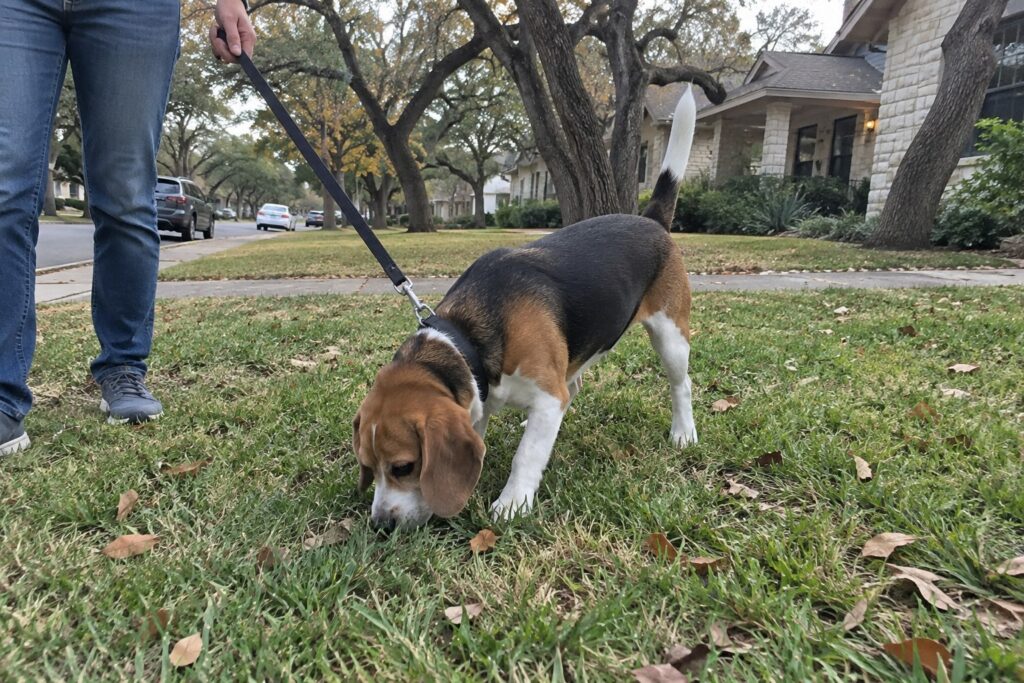
Loose-leash walking is more relaxed. Your dog can sniff, drift a little ahead or behind, and switch sides, as long as the leash stays slack and they do not pull. For most of a neighborhood walk, this is the right skill. If your dog still drags you down the street, start with our post on leash training a puppy without the pulling before you work on a formal heel.
| Feature | Formal Heel | Loose-Leash Walking |
|---|---|---|
| Position | Shoulder level with your leg, one side | Anywhere within leash length |
| Attention | Focused on the handler | Free to look around and sniff |
| Duration | Short stretches, then release | Most of the walk |
| Best use | Crowds, passing dogs, crossings, tight spaces | Quiet streets and casual strolls |
| Mental effort for the dog | High | Low to moderate |
Why You Want Both Skills
Think of loose-leash walking as your dog’s default and “heel” as a tool you pull out when you need it. A dog that knows both can relax on a quiet block and then tighten up the moment a jogger, a scooter, or a barking dog behind a fence appears.
Why a Reliable Heel Matters in Frisco
Frisco is a fast-growing suburb, and that shows up on your daily walk. Wide sidewalks in newer neighborhoods fill up with families, runners, and other dog owners in the cool parts of the day, and shared paths near parks can feel crowded on weekends.
Busy Sidewalks and Shared Paths
When two dogs approach each other on a sidewalk, a dog on a loose leash can wander into the other dog’s space. A dog in “heel” stays tucked at your side, which makes passing calmer for everyone. That is especially useful if your dog gets excited or vocal around other dogs. If that describes your dog, our post on stopping barking at other dogs covers the reactivity side in more detail.
Crossings, Parking Lots, and Events
Street crossings, parking lots, and outdoor events are places where a few feet of drift can matter. A dog that holds “heel” through a crosswalk or past a row of parked cars is easier to keep safe. Fall weekends around Frisco bring more foot traffic to parks and shopping areas, and a solid heel keeps those outings manageable instead of stressful.
Hot Pavement and Short Outings
North Texas heat lingers into early fall, and pavement can get hot enough to hurt paws. The AVMA’s warm-weather pet safety advice recommends watching for heat stress and avoiding hot surfaces. A dog that heels well lets you move efficiently through the hot stretches, keep walks shorter in warm weather, and train during cooler morning and evening hours.
Want your dog’s heel built by trainers who work with them every day? Our residential program is designed for exactly that.
How to Teach a Dog to Heel Step by Step
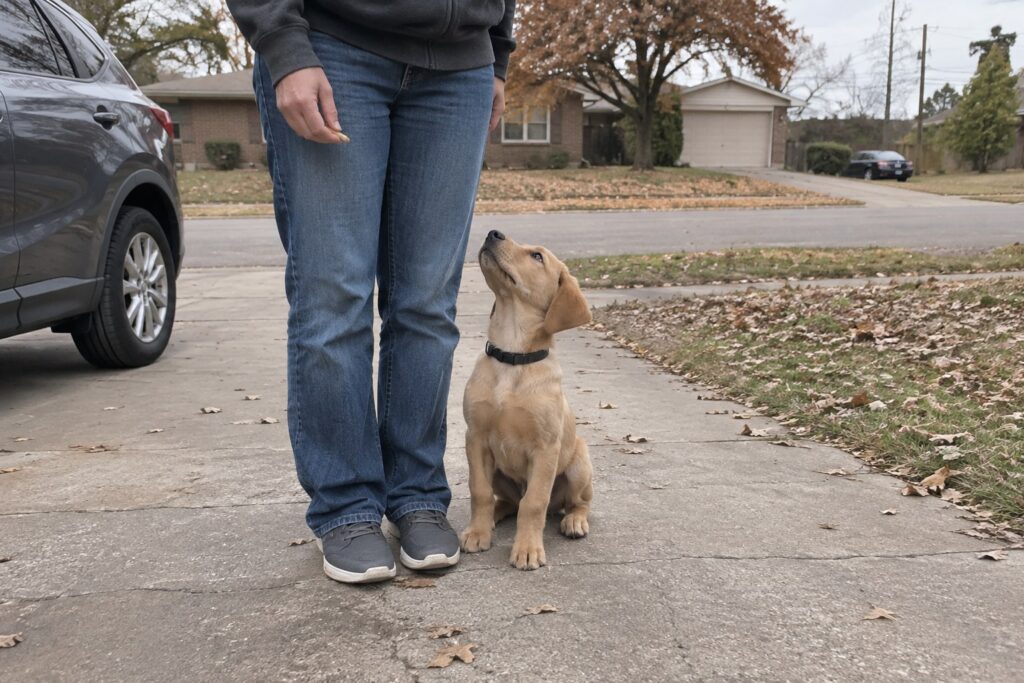
A good heel is built in small pieces. Keep sessions short, about five to ten minutes, and end while your dog is still succeeding. Use high-value treats, a standard flat collar or harness, and a regular leash.
Step 1: Choose Your Side and Your Words
Pick one side and stick with it. Choose a marker word such as “yes” to tell your dog they got it right, and a release word such as “free” or “okay” to tell them the heel is over. Consistency with these words matters more than which words you choose.
Step 2: Reward the Position
Start standing still in a quiet room. Lure your dog to your side with a treat, mark the moment their shoulder lines up with your leg, and reward right there at your side. Repeat until your dog starts drifting into that spot on their own. Deliver rewards at your leg, not in front of you, so the position itself becomes valuable.
Step 3: Add Movement One Step at a Time
Take one step, mark, and reward if your dog stays in position. Then try two steps, then three. Once your dog can follow for ten or so steps, add the word “heel” just before you start moving. Release often so your dog learns that “heel” has a clear start and end.
Step 4: Practice Turns, Stops, and Pace Changes
Add right turns, left turns, and about-turns. Stop and ask for a “sit” at your side. Speed up for a few steps, then slow down. These changes teach your dog to watch you rather than autopilot along, which is what makes the heel hold up in real life.
Step 5: Build Distractions Gradually
Move from the living room to the backyard, then your driveway, then a quiet street, and only later a busier sidewalk. Each time you raise the level of distraction, make the task easier again: shorter stretches, more rewards. If your dog falls apart, you moved too fast, so step back a level.
| Stage | Location | Goal |
|---|---|---|
| 1 | Quiet room indoors | Dog finds and holds position while you stand still |
| 2 | Backyard | Ten to twenty steps with turns and stops |
| 3 | Driveway or quiet street | Heel past mild distractions like a parked car or mailbox |
| 4 | Neighborhood sidewalk | Heel past people, bikes, and dogs at a distance |
| 5 | Busier park paths or shopping areas | Short heel stretches in real crowds, then release |
Common Heel Training Mistakes
Most heel problems come from a few predictable habits. Fixing them usually speeds progress more than any new technique.
Asking for Heel Too Long
A formal heel takes real focus. Asking for a heel for an entire walk leads to a dog that drifts, lags, or tunes you out. Use “heel” in short bursts, then release to a loose-leash walk and let your dog sniff.
Rewarding in the Wrong Spot
If you hand treats out in front of your body, your dog will start forging ahead to meet them. Keep rewards at your seam, right where you want your dog’s head and shoulder.
Repeating the Word
Saying “heel, heel, heel” teaches your dog that the first cue is optional. Say it once, help your dog into position if needed, and reward when they get there.
Skipping the Recall Foundation
Heel and recall support each other. A dog that reliably comes back to you finds the heel position more easily. Our post on teaching a dog to come when called covers that foundation, and dogs working toward more freedom can build on both with reliable off-leash training.
How Board and Train Builds a Reliable Heel
Some dogs pick up “heel” quickly at home. Others, especially strong pullers, excitable young dogs, and dogs with years of habits, need more consistency than a busy household schedule allows. That is where our Frisco Board and Train program comes in.
Daily Sessions With a Trainer
Our standard Board and Train program runs two weeks, and each placement begins with an individual evaluation. From there, our trainers work with your dog daily, building core obedience such as “sit,” “stay,” “come,” and “heel” through progressive repetition under increasing distraction. We accept every breed, from small dogs to large working breeds.
Owner Transfer Sessions
A heel only helps if it works with you on the other end of the leash. Before your dog comes home, we hold hands-on owner transfer sessions where you learn how to cue, reward, and reinforce the heel yourself. You practice the same handling our trainers use, so the skill does not fade once you are back on your own sidewalk.
Support After Graduation
Board and Train graduates receive guaranteed results and lifetime support at no additional cost. If the heel gets sloppy months later, you can reach out for guidance. Affirm financing is also available for the program. To see how the full stay works, read what to expect from Board and Train in Frisco.
| Option | Where Training Happens | Best For |
|---|---|---|
| Two-week Board and Train | Our Frisco facility, with daily trainer sessions | Strong pullers, excitable dogs, busy households |
| Private Lessons | Your home or our facility | Owners who want to learn hands-on each week |
| Refresh Training | Scheduled with our team | Dogs whose skills have slipped over time |
When Private Lessons Fit Better
If your dog already walks fairly well and you want coaching on the finer points, in-home private lessons let a trainer work with you and your dog in your own neighborhood or at our facility.
Ready to trade leash battles for calm walks? Call (972) 573-1715 to talk with our team.
About All Dogs Unleashed Dog Training Frisco
All Dogs Unleashed Dog Training Frisco helps dog owners across Frisco and Collin County build reliable obedience, calmer walks, and better manners at home. Our two-week Board and Train program leads our training, with daily sessions, an individual evaluation at the start, and hands-on owner transfer sessions before your dog heads home. We also offer private lessons, boarding, and refresh training. Every Board and Train graduate receives guaranteed results and lifetime support at no additional cost.
Frequently Asked Questions
How long does it take to teach a dog to heel?
It depends on your dog’s age, energy, and existing habits. Many dogs learn the basic position within a few short sessions, but holding a heel around real distractions takes consistent practice over weeks. Short daily sessions work better than occasional long ones. In our two-week Board and Train program, trainers practice with your dog every day, which speeds up that consistency.
Should my dog heel on the left or the right?
The left side is traditional and is the standard in obedience competition, but for everyday walking either side works. What matters is picking one side and staying consistent so your dog always knows where “heel” is. If you walk facing traffic or carry things in one hand, choose the side that keeps your dog safest and your hands free.
Is heel the same as loose-leash walking?
No. Loose-leash walking means your dog stays within leash length without pulling and can sniff and look around. A formal heel is a precise position at your side with your dog’s attention on you, held until you release them. Most owners use loose-leash walking for the bulk of a walk and ask for “heel” in crowds or tight spaces.
Can an older dog learn to heel?
Yes. Dogs can keep learning throughout their lives, and adult dogs often focus better than young puppies. Older dogs with years of pulling may need more repetition to replace the old habit, so patience matters. Check with your veterinarian first if your dog has joint pain or mobility issues, since frequent turns and pace changes can be demanding on sore joints.
What equipment should I use for heel training?
A well-fitted flat collar or harness and a standard leash of about six feet work well for most dogs. Bring small, soft, high-value treats you can deliver quickly at your side. Avoid retractable leashes during heel practice, because the constant tension and changing length make it harder for your dog to understand where they should be walking.
Will my dog keep heeling after Board and Train?
The heel holds up best when you keep using it. That is why every Board and Train stay ends with hands-on owner transfer sessions, where you practice cueing and rewarding the heel yourself before your dog comes home. Graduates also receive lifetime support at no additional cost, so you can reach out if the heel starts to slip later.
When you teach a dog to heel, you give yourself a dependable way to handle crowded sidewalks, crossings, and busy weekend outings. Keep sessions short, reward at your side, and build distractions slowly. If you want trainers to build that foundation for you, call (972) 573-1715 or reach out online, or visit our location at 6136 Frisco Square Blvd, Suite 400.
Ready to Get Started with All Dogs Unleashed Dog Training Frisco?
Calm, controlled walks are closer than you think. Call (972) 573-1715 to ask about our two-week Board and Train program and find the right fit for your dog.