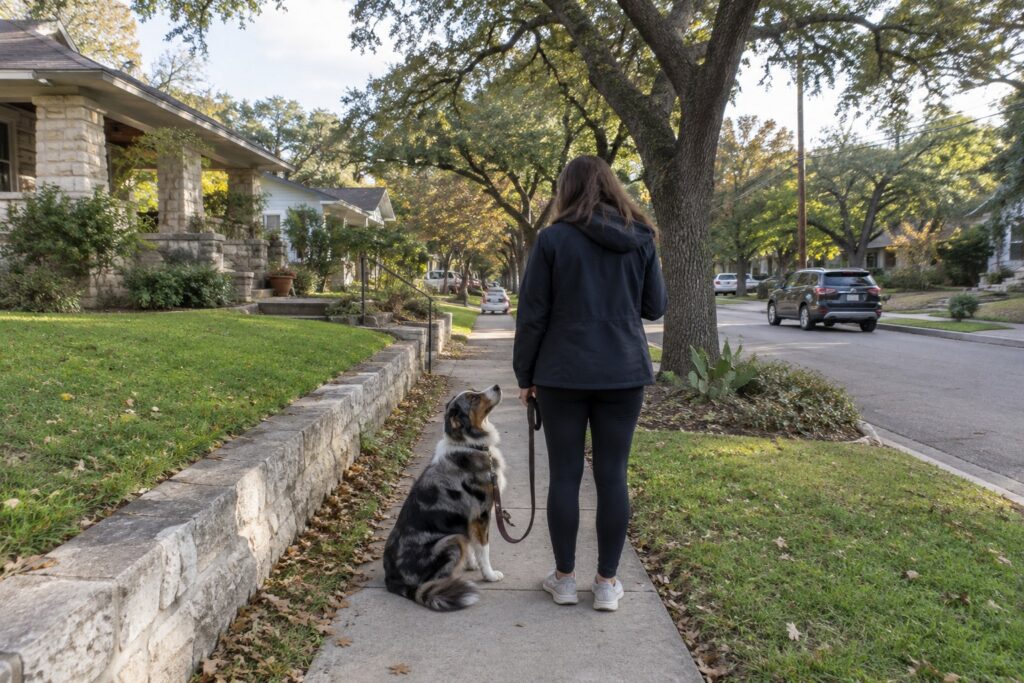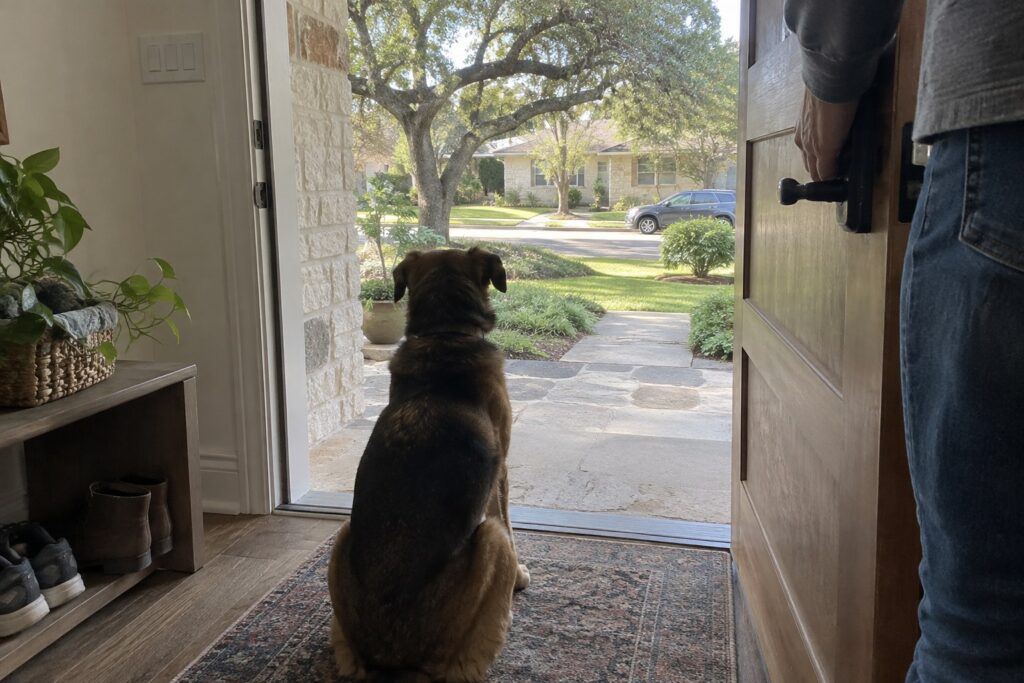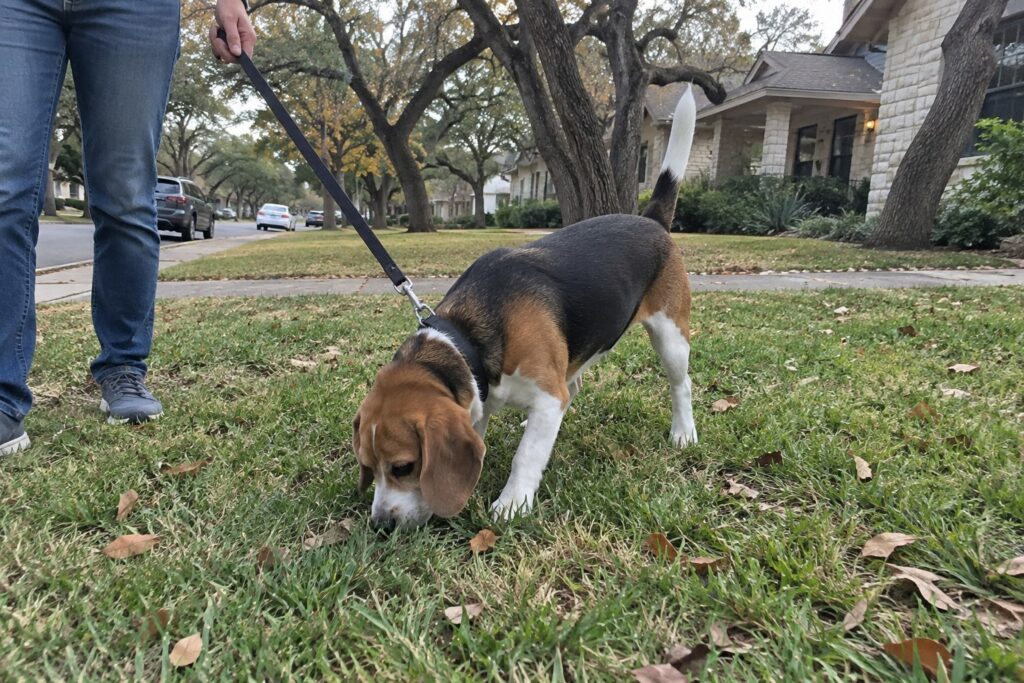

Off leash dog training is a goal many Oklahoma City owners share, and it is also one of the skills most often rushed. A dog that comes when called in the kitchen is not the same as a dog that turns away from a squirrel, a jogger, or an open gate on the first cue.
At All Dogs Unleashed Dog Training OKC, we build off-leash reliability the same way every time: solid foundations first, then a long line, then carefully planned distractions. Below we break down each stage, the safety rules that apply in OKC, and where off-leash time is actually allowed.
Want a recall you can trust? Talk with our team about where your dog is today and what it will take to get there.
Key Takeaways
- Reliable off-leash behavior rests on five foundations: recall, place, heel, stay, and impulse control, each proofed on leash before any freedom is given.
- A long line is the bridge between leash and freedom, letting you practice distance while you can still enforce every cue safely.
- A distraction ladder raises difficulty one step at a time, and you only move up after your dog succeeds consistently at the current level.
- Oklahoma City ordinance requires dogs to be leashed or confined on the owner’s property, so off-leash time belongs in designated, fenced dog parks such as the dog park at Scissortail Park.
- Our two-week Board & Train program builds the focus and impulse control that off-leash work depends on, then hands the skills to you in a turnover session backed by lifetime support.
What Off-Leash Reliability Really Means
Off-leash reliability is not a trick your dog knows. It is a set of responses your dog gives quickly, the first time, in places full of competing interests. If you have to repeat “come” four times or chase your dog around the yard, the skill is not ready for real freedom yet.
Reliable Versus “Usually Comes Back”
Most owners describe their dog’s recall as “pretty good.” In practice that often means the dog returns when nothing more interesting is happening. A reliable recall looks different: your dog turns on the first cue, comes directly to you without detours, and stays with you until released.
The gap between those two dogs is where most off-leash accidents happen. A dog that ignores you 1 time in 10 will eventually ignore you near a street, a loose dog, or wildlife along a creek bank.
Why Most Recalls Break Down
Recalls usually fail for predictable reasons. The cue was only practiced in easy settings, it was used to end fun (leaving the dog park, coming inside for a bath), or it was repeated so often without follow-through that the dog learned it was optional.
The American Kennel Club’s recall training advice makes the same point: coming to you should always be worth it, and you should never call your dog to something unpleasant. Fixing a broken recall starts with rebuilding what the cue means.
Off Leash Dog Training Starts With Five Foundations
Recall gets the attention, but it does not work alone. A dog that can hold a stay, settle on a place, walk in heel, and control its impulses is a dog that can actually listen when you call. We treat these five skills as one package.
| Foundation | What It Looks Like | Why Off-Leash Work Needs It |
|---|---|---|
| Recall | Dog turns on the first cue and comes directly to you | Your primary safety tool when your dog is at a distance |
| Place | Dog goes to a bed or mat and stays there until released | Teaches duration and calm settling in busy settings |
| Heel | Dog walks at your side, matching your pace and turns | Lets you move through crowds, gates, and parking lots under control |
| Stay | Dog holds a sit or down while you move away or distractions pass | Stops your dog in place when coming to you is not the safest option |
| Impulse control | Dog waits at doors, food, and toys until given permission | Builds the habit of checking in with you before acting on an urge |
Recall: The Non-Negotiable Skill
Pick one recall cue and protect it. Use it only when you can reinforce it, pay generously with food, play, or praise, and follow through every time. If your dog does not come, calmly go get your dog or guide it in with the leash rather than repeating the word.
Place: Teaching Calm on Cue
Place teaches your dog to hold a position with you at a distance and life happening around it. That same duration and self-control carries into outdoor work, where your dog has to stay engaged with you instead of drifting toward every smell.
Heel: Control in Tight Spaces
Heel is more structured than a loose-leash walk. Your dog stays beside you through turns, stops, and pace changes. When you need to pass another dog on a narrow path or walk to the car after a park visit, heel keeps your dog close without constant leash pressure.
Stay: The Emergency Brake
Sometimes calling your dog to you is the wrong move, for example when there is a car or bike between you. A solid stay, or an emergency down at a distance, lets you freeze your dog in place and walk to it instead.
Impulse Control: The Skill Underneath Everything
Impulse control is what the other four skills are made of. A dog that waits at the front door, waits for its food bowl, and releases a toy on cue is practicing the same decision it will face when a rabbit bolts across the grass. Our obedience training breakdown for OKC dogs covers these everyday habits in more detail.
The Long-Line Progression: Bridging Leash and Freedom
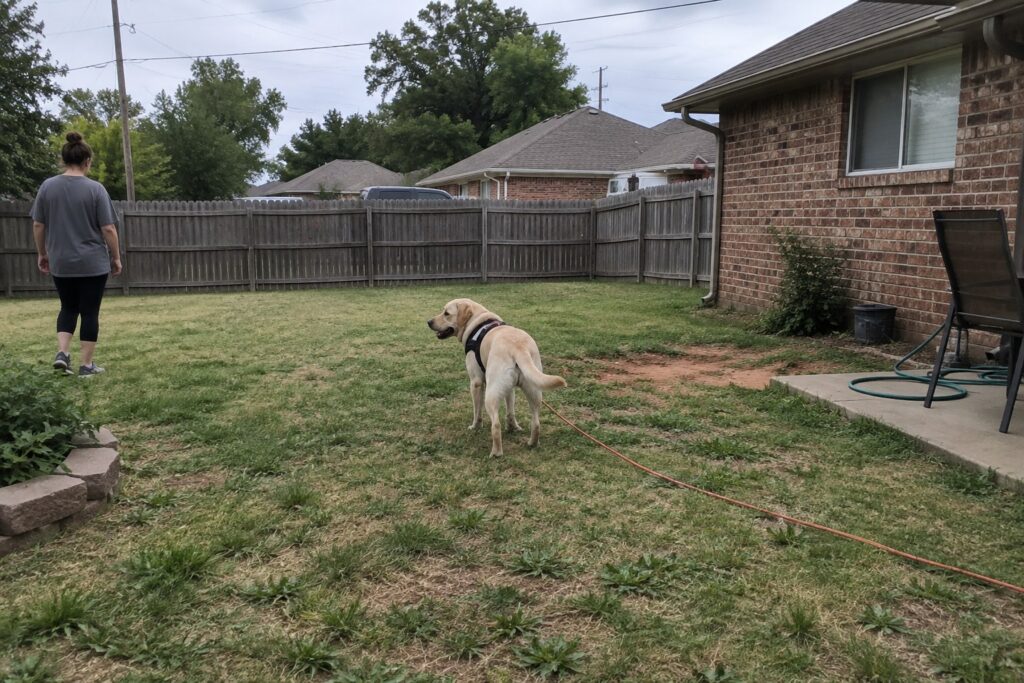
Going straight from a six-foot leash to no leash is the most common mistake we see. The long line fills that gap. It gives your dog the feeling of distance while you keep the ability to follow through on every cue.
Equipment and Setup
A long line is simply a lightweight lead, often 15 to 30 feet, attached to a well-fitted flat collar or back-clip harness. Avoid attaching a long line to a head halter, since a sudden stop at the end of the line can jerk your dog’s neck. Wear gloves, keep the line from wrapping around your hands or legs, and practice in an open, fenced area such as your backyard first.
Stage One: Short Distance, Low Distraction
Let your dog wander to the end of a shortened line, then call once. Reward the moment your dog commits to turning toward you, and again when it arrives. If your dog does not respond, use gentle line pressure to guide it in, then reward. The goal is a near-perfect success rate before you add distance.
Stage Two: Full Line, Dragging
Once your dog responds reliably, let the line drag on the ground in a safe, enclosed space while you stay close enough to step on it. Your dog feels freer, but you can still prevent a runaway. Mix in stays, check-ins, and releases back to play so coming to you does not always mean the fun is over.
Stage Three: Random, Real-World Recalls
Call your dog when it is sniffing, playing, or mildly distracted, not just when it is already looking at you. Reward heavily. Many owners also practice “check-ins,” rewarding any moment their dog chooses to look back at them without being asked.
Structured repetition like this is exactly what a residential program does well, because the reps happen every day with consistent timing. Curious whether your dog would benefit from daily professional practice?
Building a Distraction Ladder Your Dog Can Climb
A distraction ladder is a planned list of situations, ranked from easiest to hardest. You work at one rung until your dog succeeds consistently, then move up one step. If your dog starts failing, you drop back a rung. Progress feels slow at first and fast later.
| Rung | Example Setting | Distraction Level | Equipment |
|---|---|---|---|
| 1 | Inside your home | Minimal | Standard leash or none |
| 2 | Fenced backyard | Smells, birds, neighbor noise | Long line |
| 3 | Front yard or quiet street | Cars, walkers, other dogs at a distance | Standard leash |
| 4 | Busier neighborhood or park path | Joggers, bikes, children, squirrels | Standard leash |
| 5 | Designated off-leash dog park | Loose dogs, play, gates opening | Off leash inside the fence only |
Rungs One and Two: Home and Backyard
Your living room and fenced yard are where you build fluency. Add small challenges on purpose: a toy on the floor, a family member walking by, a treat placed on a chair. Your dog should recall away from each of these before it ever sees a busier setting.
Rungs Three and Four: Neighborhood and Park Paths
In public, your dog stays on leash, but that does not mean training stops. Practice heel past other dogs, stays while bikes go by, and short recalls to your side on a standard leash. If your dog struggles around other dogs on leash, our leash reactivity guidance for OKC owners is a better starting point than off-leash work.
Rung Five: Fenced Off-Leash Areas
The first real off-leash sessions should happen in a fenced, designated area during quiet hours. Call your dog out of play a few times, reward, and send it back to play. That teaches your dog that coming to you is part of the fun, not the end of it.
Safety and Legality: Where Off-Leash Is Allowed in OKC
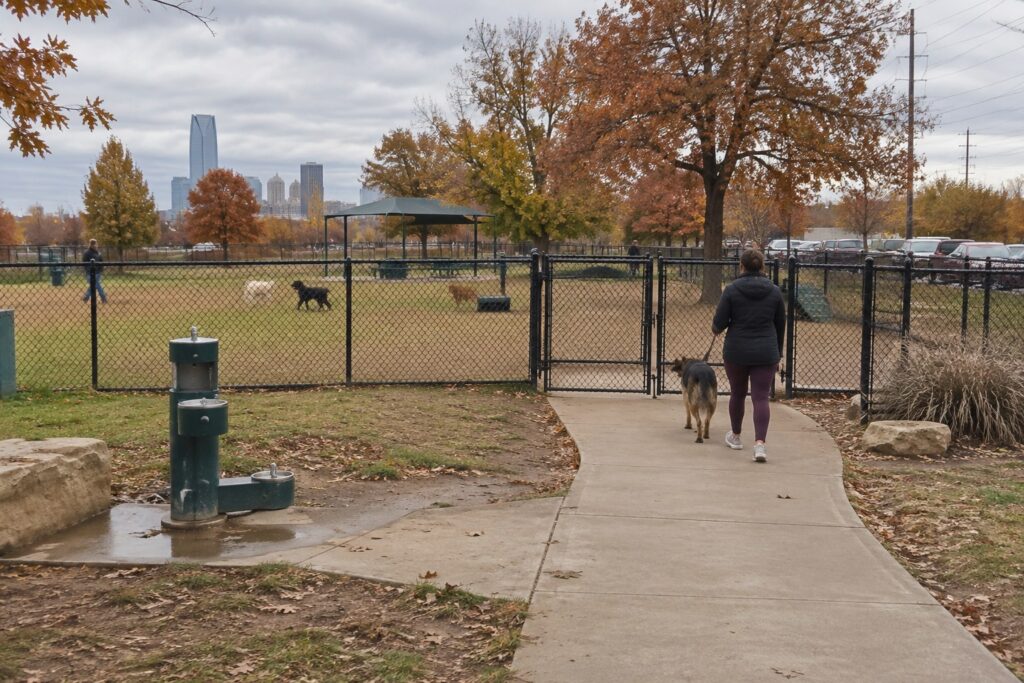
Even a perfectly trained dog has to follow local rules. Before you unclip the leash anywhere in town, know what the city allows and what the location posts.
What Oklahoma City’s Leash Rules Say
According to the City of Oklahoma City, every dog in the city must be confined on the owner’s property or kept on a leash, and dog parks are among the limited exceptions. The city’s park rules for public dog parks also require owners to walk their dogs to and from the dog park on a leash and keep it on until they are inside the fence.
In practical terms, a great recall does not make open parks, trails, or neighborhood streets legal off-leash spaces. Off-leash time in OKC belongs in designated, fenced off-leash areas, and posted rules at each location still apply. Suburbs like Edmond, Norman, and Moore set their own rules, so check with the city before visiting.
Designated Off-Leash Areas Around OKC
Scissortail Park downtown has a half-acre fenced dog park with separate sides for large and small dogs, and the park asks that dogs be leashed everywhere else on the grounds. PAW Park at 3303 NW Grand Blvd, near Lake Hefner, is a privately managed dog park run by Partners for Animal Welfare, with separate fenced areas for smaller and larger dogs.
For more spots and what to expect at each, see our roundup of the best dog parks and training spots in Oklahoma City. Always confirm current hours and rules on the park’s own site before you go.
A Pre-Release Safety Checklist
- Your dog is up to date on the vaccinations and parasite prevention your veterinarian recommends.
- Your dog wears a collar with current ID tags, and its microchip information is current.
- You have practiced recall out of play at least a few times inside the fence before relaxing.
- You bring water, and you skip midday sessions on hot Oklahoma summer days when pavement and turf heat up.
- You leave at the first sign of rough play, bullying, or a dog that seems overwhelmed.
How Board & Train Builds Off-Leash Reliability
Our site describes off-leash reliability as part of advanced residential training, and for good reason. The foundations above take hundreds of consistent repetitions, and daily practice with a professional trainer compresses that work in a way weekly sessions often cannot.
It Starts With an Evaluation
Every Board & Train program in Oklahoma City begins with an evaluation. We look at your dog’s current obedience, its response to distractions, and any behavior issues that need attention before off-leash goals make sense. Honest expectations come from this first step.
Two Weeks of Daily, Structured Training
Board & Train is a fixed two-week program. Your dog stays at our facility and trains every day, working on focus, impulse control, and the core commands that off-leash reliability is built on. Training sessions are not open to observation, which keeps your dog’s attention on the trainer and the work.
The Turnover Session and Lifetime Support
At the end of the program, you attend a turnover session where you learn how to handle your dog and use each command correctly. You go home with written instructions, and Board & Train includes guaranteed results and lifetime support at no additional charge. Your job afterward is to keep practicing and continue up the distraction ladder at home.
| Factor | Board & Train | Private In-Home Lessons |
|---|---|---|
| Who does most of the reps | Our trainers, every day for two weeks | You, between sessions |
| Where training happens | Our facility, then your home after turnover | Your home and neighborhood |
| Best fit | Busy owners, strong-willed dogs, big behavior goals | Owners who want to learn hands-on at home |
| Owner handoff | Turnover session and written instructions | Coaching in every session |
When In-Home Lessons Make More Sense
If your dog already has good basics and you enjoy training, private in-home dog training lets a trainer coach you through long-line work and distractions in the environment your dog lives in. You can compare every format on our OKC dog training programs page. If skills slip later, our note on why trained dogs stop listening and how refresh training helps explains how to get back on track.
Ready to talk through your dog’s recall and off-leash goals? Call our team at (405) 299-3386 and we will help you choose the right starting point.
About All Dogs Unleashed Dog Training OKC
All Dogs Unleashed Dog Training OKC helps Oklahoma City owners build dogs that listen at home, on walks, and in the places where freedom matters most. Our two-week Board & Train program is the core of what we do, pairing daily structured training with an evaluation up front and a turnover session at the end. We also offer private in-home lessons, refresh training, and boarding. Every Board & Train program includes guaranteed results and lifetime support, so your dog’s recall keeps improving long after training ends.
Frequently Asked Questions
How long does it take to train a dog to be off leash?
There is no fixed timeline, because it depends on your dog’s age, temperament, history, and how consistently you practice. Most dogs need solid on-leash obedience first, then weeks of long-line work and gradual distractions. A structured program speeds up the foundation, but owners who keep practicing afterward are the ones whose dogs stay reliable.
Can any dog be trained to be off leash?
Many dogs can learn reliable off-leash behavior inside safe, fenced areas, but not every dog is a good candidate. Dogs with strong prey drive, fear issues, or reactivity toward other dogs may need behavior work first, and some are safer staying on a long line. An evaluation helps you set realistic goals for your specific dog.
Is it legal to walk my dog off leash in Oklahoma City?
Generally, no. The City of Oklahoma City requires dogs to be leashed or confined on the owner’s property, with dog parks among the limited exceptions. Walk your dog on a leash to and from the dog park and unclip it only once you are inside the fence. Check the posted rules at each park you visit.
What age should you start off leash dog training?
You can start the foundations with a young puppy: name recognition, short recalls indoors, and simple waits at doors and food bowls. True off-leash freedom should wait until your dog has reliable obedience on leash and on a long line, which usually happens well after puppyhood. Adolescent dogs often test recall, so keep practicing through that stage.
Is a long line better than a retractable leash for recall training?
For recall practice, a long line is usually the better choice. It gives you a consistent feel, lets you step on it to stop a runaway, and does not teach your dog that pulling earns more distance. Retractable leashes are harder to control quickly and the thin cord can cause burns or cuts if it wraps around people or dogs.
Does Board & Train help with off-leash reliability?
Yes, it builds the groundwork. Our two-week Board & Train program focuses on the attention, impulse control, and core commands that off-leash reliability depends on, with daily training at our facility. You finish with a turnover session and written instructions, then continue proofing at home. The program includes guaranteed results and lifetime support at no additional charge.
Off leash dog training is a process, not a single command, and it pays off every time your dog turns and runs back to you on the first call. If you want help building that reliability, call (405) 299-3386 or reach out online. We are located on Park Avenue in downtown Oklahoma City and work with dogs and owners across the metro.
Ready to Get Started with All Dogs Unleashed Dog Training OKC?
A dependable recall starts with the right plan for your dog. Call (405) 299-3386 to talk with our team about Board & Train, in-home lessons, and the next step toward safe, confident off-leash time.