
Trying to decide between board and train vs. in-home training, and which program actually fits your dog? You're not alone. Oklahoma City dog owners ask us this question every week. At All Dogs Unleashed Dog Training OKC, our CPDT-KA certified instructors work with both formats daily, and the right choice depends on your dog, your schedule, and the results you need. We'll break down exactly how each program works so you can make a confident decision. Ready to find the right training program for your dog? Our team is here to help.
Key Takeaways
- Board and train programs deliver faster results by keeping your dog in a structured training environment around the clock.
- In-home training builds skills inside your dog's own environment, which can help with household-specific behavior problems.
- Choosing the right format depends on your dog's age, behavior history, and your daily schedule.
- Both programs use humane, reward-based methods and are taught by our credentialed instructors at our Oklahoma City facility.
- Oklahoma City's busy parks, trails, and dog-friendly patios make real-world obedience a practical must for every dog.
How to Choose Between Board and Train and In-Home Training
It's one of the most common questions we hear from dog owners across the metro: should I send my dog to a board and train program, or is in-home dog training the better fit? Both formats produce lasting change. But the right choice depends on your dog's personality, your schedule, and what you're trying to fix.
All Dogs Unleashed Dog Training OKC has worked with over 400 dogs across Edmond, Yukon, Midtown, and the wider metro. One recent example: a reactive rescue from Edmond arrived unable to walk past another dog without lunging, completed our two-week board and train, and now heels calmly on a loose leash through his neighborhood. Our instructors know that a reactive rescue and a stubborn puppy don't need the same program.
Here is a clear breakdown of both formats, which dogs thrive in each, and how to make a confident decision for your dog. Before we compare the two programs, it helps to understand one thing first: how dogs actually learn.
How Do Dogs Actually Learn? The Foundation Behind Both Programs
Dogs learn through repetition, clear cues, and consistent reward-based reinforcement, but here's the part most owners underestimate: dogs do not generalize well. Your dog can sit perfectly in your living room and completely ignore you at a busy park. That isn't stubbornness. A behavior practiced in one quiet place does not automatically transfer to a new, noisy one.
A dog trained only in a fenced Yukon backyard often falls apart the moment you reach Scissortail Park's crowds or a dog-friendly patio along NW 23rd in Midtown. That is exactly why real-world practice across different environments is a core part of any dog training program worth your time and money.
Board and train and in-home training take different paths to that reliability. Board and train delivers daily, structured repetition in a controlled setting, which compresses the learning timeline because your dog isn't waiting a week between lessons. In-home training builds skills in your dog's real environment, but the reinforcement between visits depends on your follow-through. Neither is a flaw. They simply ask different things of you, which is what the rest of this guide will help you weigh.
What Is Board and Train, and Is It Right for Your Dog?
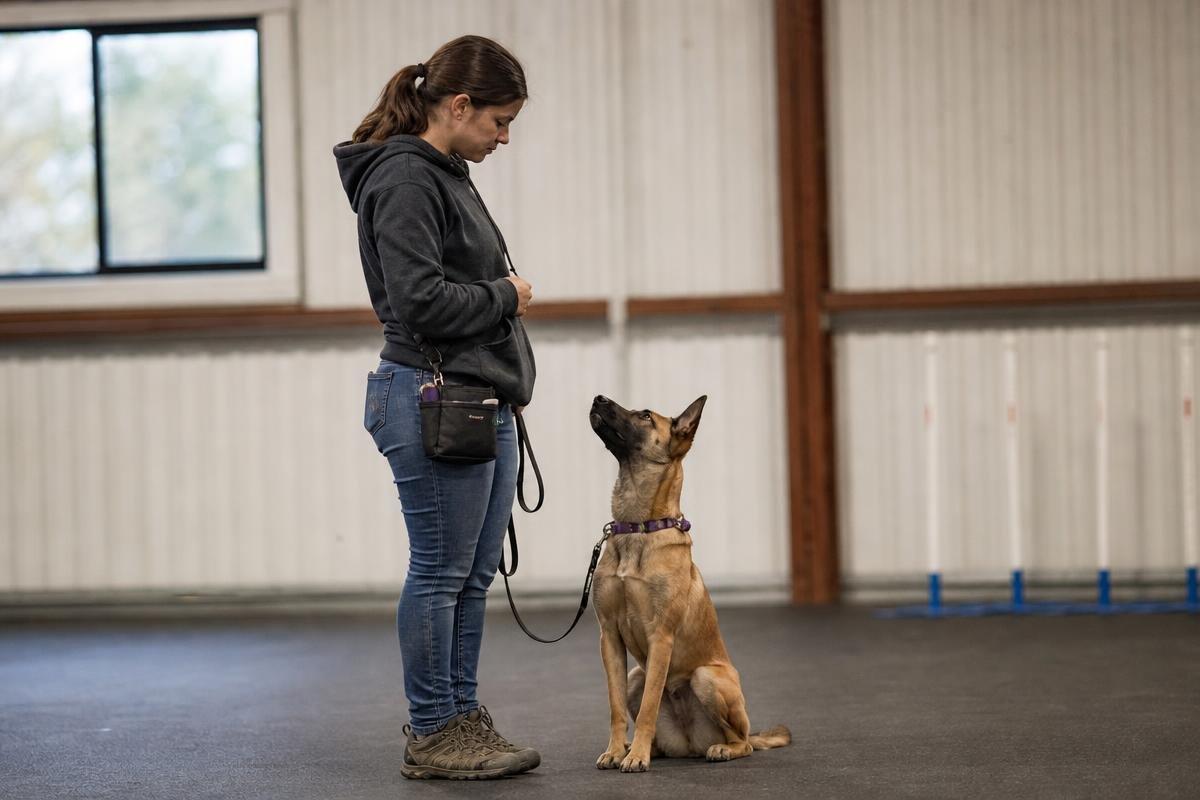
A board and train program in Oklahoma City means your dog stays at our facility and works with our instructors multiple times every day. It is full immersion. Instead of one session per week, your dog is learning, practicing, and reinforcing skills from morning to evening in a structured environment built for exactly that.
What Happens During a Board and Train Program
Your dog's day is built around structured, repeated practice, which is exactly how dogs build reliable habits. Our team works through obedience commands, behavior modification, and leash skills across multiple short sessions each day. Because our facility is climate-controlled indoors, the program runs on schedule year-round. That matters here. Summer temperatures regularly push past 95°F, and spring storm season is unpredictable. Your dog's training never gets postponed because of the weather.
We know leaving your dog feels like a big deal. That is completely normal. Our instructors keep the environment calm, structured, and positive. Many owners tell us their dog came home more confident than when they dropped them off.
Dogs That Tend to Thrive in Board and Train
This format is not the right fit for every dog, but for the right dog it produces fast, durable change. Board and train tends to work especially well for:
- Dogs with significant behavior challenges like jumping, leash reactivity, or aggression
- Puppies that need fast foundational obedience before bad habits set in
- Owners with demanding schedules who cannot commit to consistent daily practice
- Dogs working to break deeply ingrained habits in a low-distraction setting
- Stubborn dogs that have not responded to previous training attempts
If your dog has tried other programs without lasting results, the immersive structure here often makes the difference. Ready to start your dog's board and train program? Spots fill quickly, so reserve yours this week.
What to Expect When Your Dog Comes Home
The handoff session is one of the most important parts of the whole program. Before your dog goes home, our instructors walk you through every command taught, how to give corrections, and how to keep the routine going. You are not left guessing. You leave with a clear plan.
Long-term success depends on you continuing that routine at home. The handoff gives you the tools and confidence to do that. Training sticks when the owner knows exactly what to do next. That is the goal every time.
What Is In-Home Dog Training, and When Does It Make More Sense?
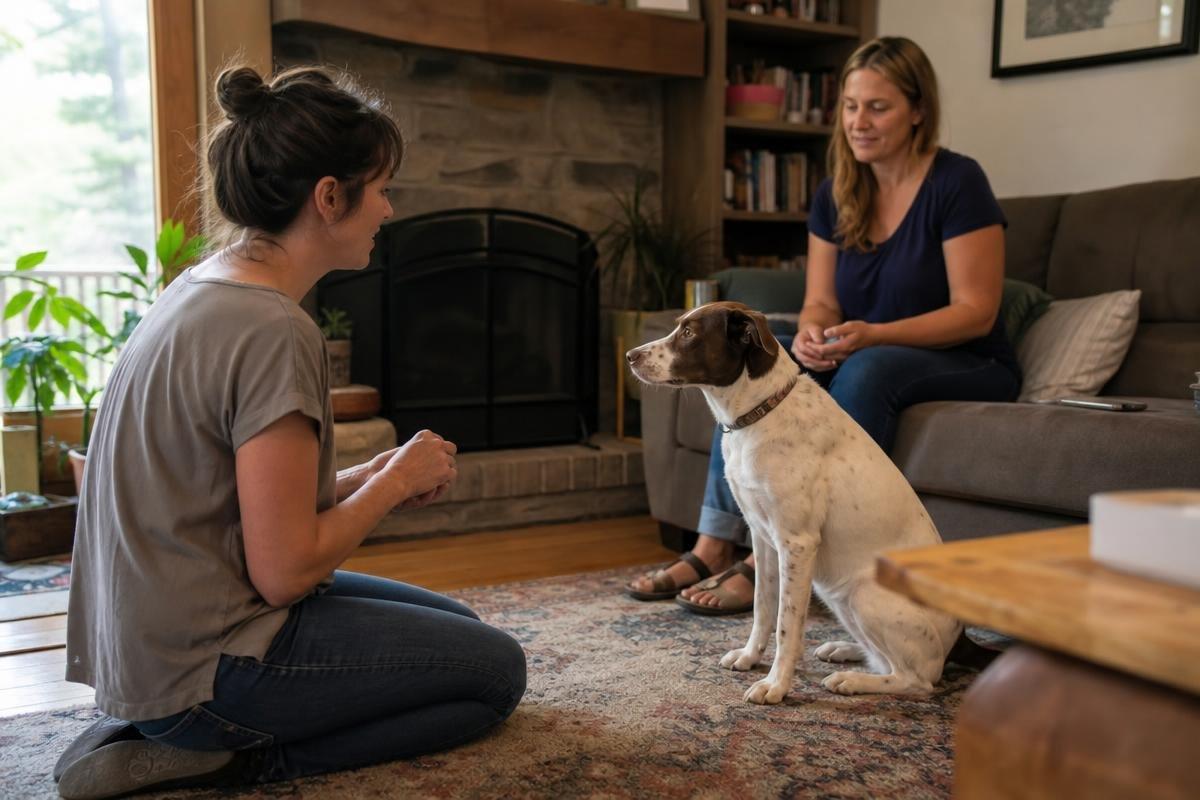
In-home dog training is exactly what it sounds like. One of our instructors comes directly to your house and works with you and your dog in the real environment where problem behaviors actually happen. The living room. The backyard. The front door. That's where the training needs to stick, so that's where we do the work.
This is a strong, active choice for a lot of dog owners. It's not a fallback option. As we covered in the learning section, dogs generalize behavior best in the context where they first learned it. Training at home means your dog is learning exactly where it counts.
How In-Home Training Sessions Are Structured
Every session is private and one-on-one. There's no generic curriculum. Our instructor builds a plan around your dog's specific triggers and your household's daily routines. Sessions for dog training programs in Oklahoma City can be scheduled around summer heat and spring weather, keeping training indoors and comfortable when conditions outside aren't cooperating.
One of our clients put it well: the instructor didn't just work with the dog, they taught the whole family the technique so everyone was on the same page. That's exactly how we structure it.
Dogs and Situations Where In-Home Training Shines
In-home private dog training lessons are the stronger fit in situations like these:
- Mild to moderate behavior issues that don't require intensive daily immersion
- Dogs who are anxious or stressed in new environments
- Behaviors that only happen at home, like door dashing, furniture jumping, or resource guarding
- Multi-dog households where the dynamic between dogs needs to be addressed together
- Owners who want to be hands-on and learn the skills themselves
Neighborhoods with busy front streets, active foot traffic, or multiple pets in the home are natural fits. The distractions are already built into the session.
The Owner's Role in In-Home Training
In-home training is a real partnership. Our instructor teaches the technique. You practice it daily between sessions. That daily repetition is the primary driver of how fast your dog progresses.
The more consistent you are between visits, the faster your dog improves. If you're ready to be that hands-on partner, book an in-home assessment and we'll talk through whether this format is the right fit for your dog.
Side-by-Side: Key Differences Between the Two Programs
Both programs produce lasting change. The question is which format fits your dog's needs and your lifestyle right now. Use the table below as a quick reference, then read on for the detail behind each row.
Factor | Board and Train | In-Home Training |
Program duration | Typically 2 to 3 weeks of full immersion | Ongoing weekly or bi-weekly sessions |
Ideal dog profile | Reactivity, aggression, deep-rooted habits, busy owners | Mild to moderate issues, anxious dogs, home-specific behaviors |
Owner time commitment | Low during the stay, focused effort at handoff and after | High, you practice daily between visits |
Speed of results | Fastest, daily repetition compresses the timeline | Gradual, paced to your follow-through |
Training environment | Controlled facility, distractions added gradually | Your home, yard, and neighborhood |
Training Environment and Daily Repetition
Board and train puts your dog in a structured facility setting with multiple sessions every day. Distractions are controlled and introduced gradually. Your dog is not waiting until next week to practice.
In-home training happens in your actual living space, your yard, your neighborhood. That is a real advantage for dogs who need to learn around the specific triggers in their world. Sessions are typically weekly or bi-weekly, with you reinforcing skills in between.
Owner Involvement and Skill Transfer
In-home training puts you in the room for every session. You build skills alongside your dog from day one, and that consistency between visits is what drives progress.
With board and train, our instructors do the foundational work. You step in at the handoff stage, where we teach you how to maintain and build on what your dog has learned. Both paths work. They just ask different things of you.
Timeline and Intensity
Board and train is the faster route for foundational change. Behavior modification that might take months in weekly private lessons can shift in a matter of weeks when your dog is training every day. If your dog has a serious behavior issue, that speed matters.
In-home training is better suited for gradual skill building and ongoing refinement. It works well for puppies, mild behavior concerns, and owners who want to stay closely involved throughout the process.
Not sure which program is the right fit? Our team can help you figure it out. Call us at (405) 299-3386 or reach out online.
What About Group Classes? Where Socialization Fits In
Group classes are not a replacement for board and train or private in-home lessons. Think of them as the next step. Once your dog has a solid foundation, group classes give them a chance to practice commands around real distractions: other dogs, unfamiliar people, and new environments. That kind of practice is hard to replicate anywhere else.
Some owners choose to complement private training with group socialization classes through other providers. Dogs that graduate from an immersive program especially benefit from group classes. It is where learned behaviors get tested and reinforced in the real world.
When Group Training Complements Private or Immersion Programs
A dog that has completed an intensive program knows the commands. Group class is where they learn to listen even when a Labrador is barking two feet away. That is the kind of reliability you need at Scissortail Park, on the Lake Hefner trail, or walking through a crowded stretch of Bricktown.
Private lessons build the skill. Group classes build the proof that the skill actually holds up under pressure. Most dogs benefit from both.
Puppies, Socialization, and Why Early Training Matters in Oklahoma City
Puppies have a critical socialization window, roughly 3 to 14 weeks of age. What they experience during that period shapes how they respond to the world as adults. Missing that window does not mean all is lost, but it does make things harder later.
Starting early, with puppy board and train or in-home sessions, sets the foundation for a lifelong bond and reliable behavior. Early training covers:
- Basic commands like sit, stay, and come
- Leash manners
- Crate training
- Bite inhibition
- Positive exposure to people and other dogs
The OKC metro has no shortage of dog-friendly parks, trails, and outdoor spaces, from the Lake Hefner loop to Scissortail Park. A well-socialized, trained dog gets to enjoy all of it. That is a real payoff for starting early.
Oklahoma City Dog Owners: Local Factors That Can Influence Your Choice
Living in the OKC metro area comes with some real quirks that actually affect your dog's training. The weather, your neighborhood, and the distractions your dog faces every day all play a role in which format makes the most sense for your family.
Oklahoma City's Climate and Outdoor Training Conditions
Summers here regularly push above 95°F, and spring brings some of the most unpredictable severe weather in the country. That matters when you're trying to keep a training program on schedule.
With in-home training, sessions happen inside your house. Heat waves and tornado watches don't cancel your appointment. Your dog still gets consistent work regardless of what's happening outside.
Board and train runs the same way. Our facility uses climate-controlled indoor training space, so your dog's program stays on track year-round. A stretch of brutal July heat or a week of spring storms won't set things back. You can see our training locations in the OKC area to get a feel for the setup.
Neighborhoods, Busy Streets, and Real-World Distraction Training
The OKC metro is spread out, and every part of it feels different for a dog. A dog in Mustang deals with quiet cul-de-sacs and open fields. A dog in Midtown faces busy arterial roads, foot traffic, and the dog-friendly patios along NW 23rd. Dogs in the Norman or Moore areas have their own mix of parks, neighborhoods, and distractions.
In-home training is built around your specific environment. Your instructor works with your dog on the exact triggers and distractions your dog actually encounters, whether that's a busy street out front or a neighbor's dog at the fence line.
Board and train builds a solid foundation first, then you take over reinforcing those skills in your own neighborhood. OKC's outdoor culture, with its dog-friendly parks and trails, means your dog needs to respond reliably around real-world distractions. Both formats get you there. The path just looks a little different.
Frequently Asked Questions
Is board and train more effective than in-home training?
Neither program is universally better. Effectiveness depends on your dog's specific challenges, your schedule, and how consistently you reinforce the training once the program ends. A dog with severe leash reactivity may thrive in a board and train program's daily structure. A dog whose problem behaviors only show up at home may make faster progress with private dog training lessons in your own space.
How long does a board and train program take?
Most dogs complete foundational work in two to three weeks. More complex behavior issues, like aggression or deep-rooted anxiety, may require additional time. Our instructors outline a realistic timeline during your initial consultation so you know exactly what to expect before your dog ever arrives.
Will my dog forget everything after coming home?
Not if you stay consistent. Dogs retain what they learn when owners reinforce the same commands and routines from day one at home. Every board and train program includes a handoff session where our team walks you through exactly how to maintain your dog's progress. Your follow-through is what turns a two-week program into lifelong results.
Can I do in-home training if my dog has aggression issues?
Yes. In-home training works well when aggression is triggered by specific situations in your environment, like the front door, other pets, or strangers entering the home. For more severe cases, an instructor will assess whether the intensive daily structure of a dog board and train program in OKC would produce faster results. You can also read about what to expect from your first in-home training session to get a clearer picture before you decide.
What age can a puppy start training?
Puppies can begin as early as 8 weeks old. Starting early takes full advantage of the critical socialization window, which closes faster than most owners realize. Whether you choose board and train or in-home sessions, getting started young builds habits that stick for life.
How do I know which program is right for my dog?
Talk to one of our instructors. We look at your dog's behavior, your daily schedule, and your training goals together, then give you a straightforward recommendation. There is no guesswork and no pressure.
Ready to find the right fit?
Call All Dogs Unleashed Dog Training OKC at (405) 299-3386 or contact our team online to talk through your dog's behavior, your schedule, and which program gives you both the best shot at real, lasting results. Our team is ready to help you figure it out.
Ready to Get Started with All Dogs Unleashed Dog Training OKC?
Call (405) 299-3386 to speak with our team directly. We're ready to answer your questions, walk you through your options, and help you find the right solution for your needs. Whether you're just starting to plan or ready to move forward, we'll make the process simple and stress-free.
Reach out today and let's talk about how we can help.