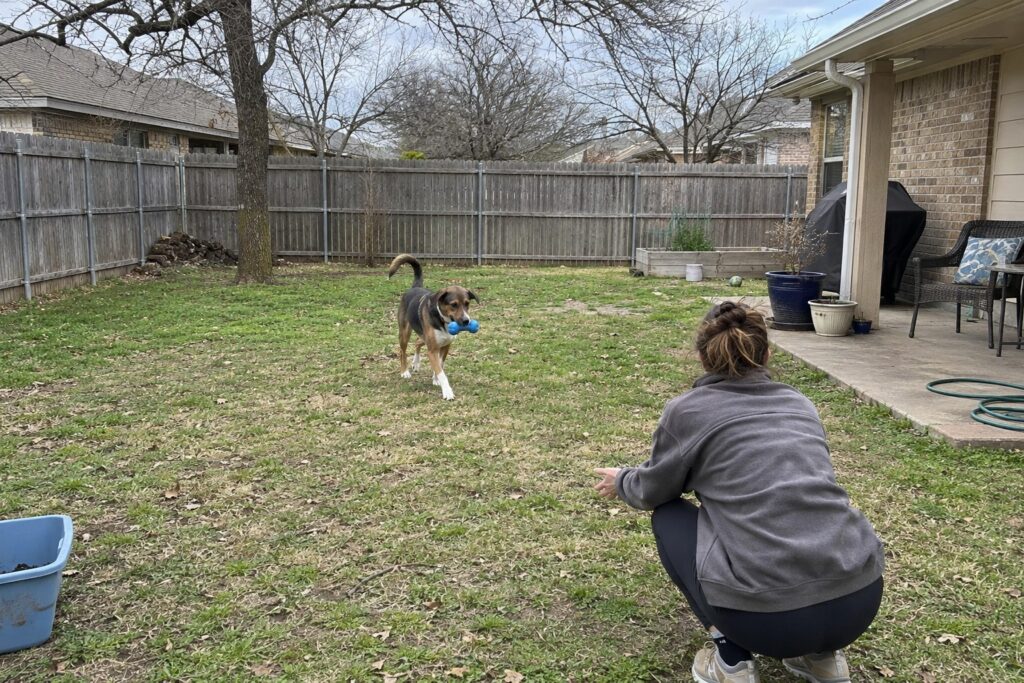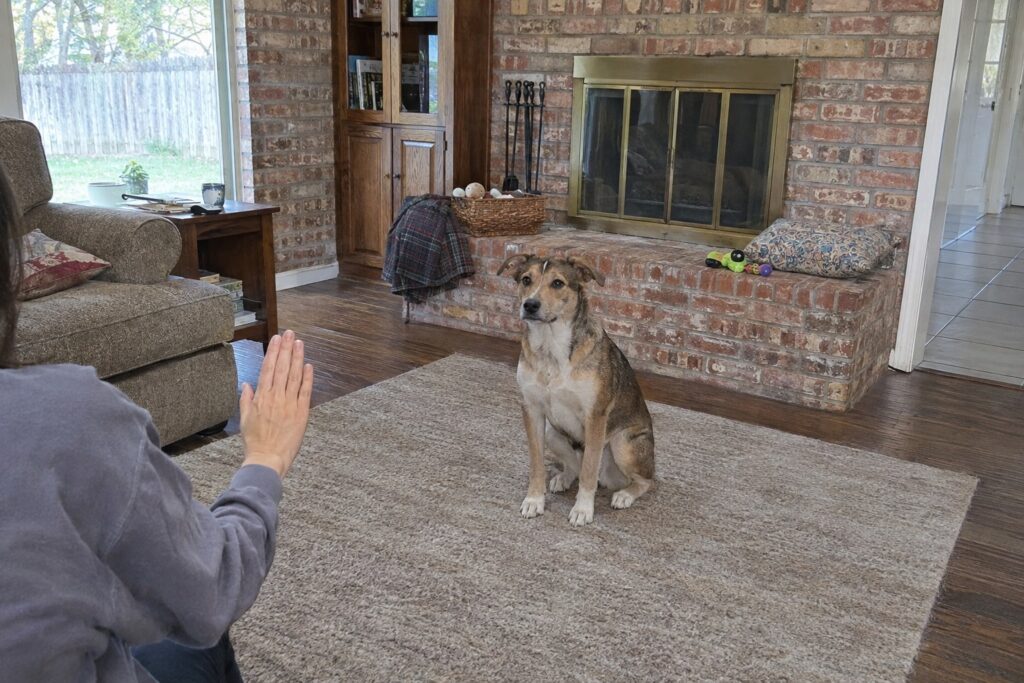

Easy dog tricks are one of the best ways to turn cooler fall evenings into real training time with your dog. A trick like “shake” or “spin” looks like pure fun, but every repetition teaches your dog to watch you, listen for a cue, and work for a reward. Those are the same skills that make “sit”, “down”, and “come” reliable.
At All Dogs Unleashed Dog Training Frisco, we see tricks as a bridge between play and obedience. Below you will find simple step-by-step plans for five beginner tricks, kid-safe rules for family practice, and signs that your dog would benefit from a stronger obedience foundation first.
Want help building the obedience that makes every trick easier? Our Frisco team is here for you.
Key Takeaways
- Short trick sessions of about five minutes build focus, impulse control, and a stronger bond between your dog and every family member.
- Beginner tricks such as “touch”, “shake”, “spin”, “bow”, and “roll over” can be taught with small treats and clear markers in a few steps each.
- Children can join trick practice safely when an adult supervises, the dog stays calm, and treats are delivered on a flat palm or tossed to the floor.
- Tricks work best on top of solid basic obedience, so dogs that jump, grab treats, or ignore “sit” usually need foundation work first.
- Our in-home private lessons and two-week Board and Train program build the listening skills that make fun family training possible.
Why Trick Training Matters More Than You Think
Many owners treat tricks as party pieces, something to show off at a holiday gathering. In our experience as trainers, tricks do much more than entertain. They give your dog a job, a way to earn rewards, and a reason to pay attention to you instead of the squirrel on the fence.
Tricks Build the Same Skills as Obedience
Your dog does not know the difference between a “trick” and a “command”. To a dog, “spin” and “sit” are both cues that lead to good things when performed correctly. Every trick session sharpens eye contact, patience, and the habit of offering a behavior and waiting for feedback. A dog who learns to hold a “bow” for two seconds is also practicing the self-control needed to hold a “stay” at the front door.
Mental Enrichment for Active Frisco Dogs
Mental work tires dogs out in a way that a walk alone does not. Even as North Texas cools down in the fall, there are still warm afternoons when long outdoor exercise is not ideal. Ten minutes of trick practice in the living room gives a busy retriever or herding breed something to think about. Tired, satisfied dogs are less likely to chew furniture, bark out of boredom, or pester the family during dinner.
A Shared Activity for the Whole Household
Tricks give every member of the family a positive role in training. Parents can teach the first steps, older kids can help practice, and everyone uses the same words and rewards. That consistency matters. When everyone in the house handles the dog the same way, your dog learns faster and gets less confused.
Setting Up for Success Before You Start
Good trick training starts before the first treat comes out. A little preparation keeps sessions short, positive, and productive for both you and your dog.
Choose the Right Rewards
Use small, soft treats your dog loves, cut to about the size of a pea so you can reward often without overfeeding. Some dogs work happily for part of their regular kibble, while others need something more exciting. A favorite toy can also be a reward for dogs who love to tug. Watch the total amount of treats over the day and reduce meals slightly if you train a lot.
Pick a Marker Word
A marker tells your dog the exact moment they did something right. Choose one short word such as “yes” or use a clicker, and always follow it with a reward. Say the marker the instant the behavior happens, then deliver the treat. Clear timing is the single biggest factor in how quickly a dog learns a new trick.
Keep Sessions Short and Upbeat
Aim for about five minutes, once or twice a day. Stop while your dog is still eager rather than waiting until they lose interest. Train in a quiet room first, then move to the backyard or a calmer corner of your neighborhood once your dog understands the trick. If your dog seems frustrated, go back a step and end with something easy they know well.
| Setup Item | What to Use | Why It Helps |
|---|---|---|
| Rewards | Pea-sized soft treats, kibble, or a tug toy | Lets you reward quickly and often |
| Marker | The word “yes” or a clicker | Pinpoints the exact correct moment |
| Location | Quiet room, then backyard | Reduces distractions while learning |
| Session length | About five minutes | Keeps motivation high and frustration low |
| Timing | Before meals, not after big play | A slightly hungry, calm dog focuses better |
Five Beginner Tricks With Step-by-Step Instructions
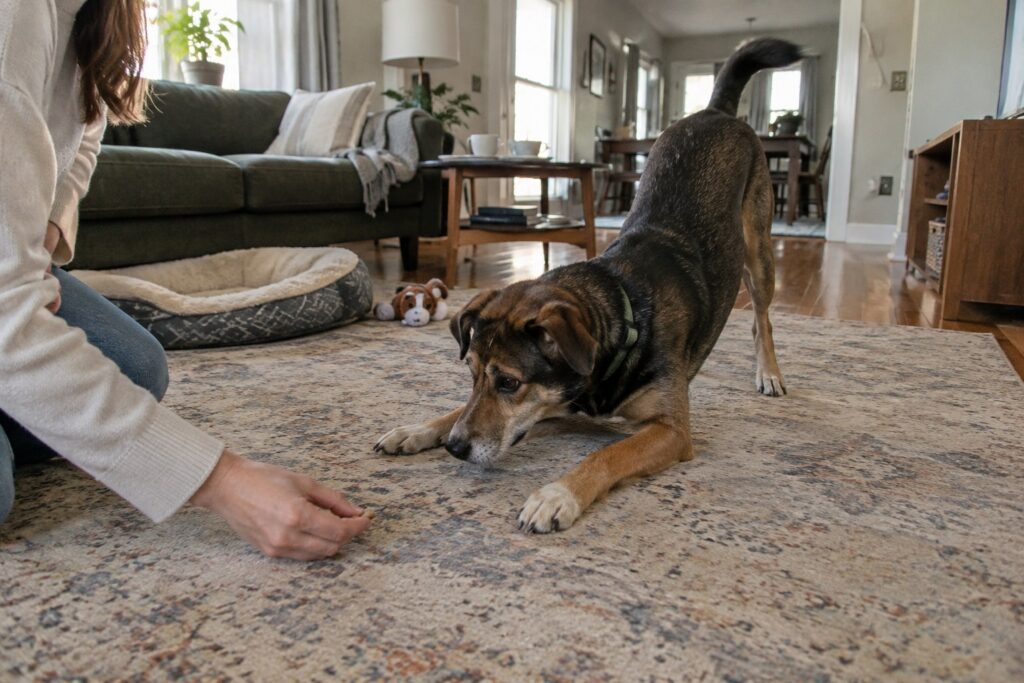
These tricks are ideal for beginners because each one breaks down into small, rewardable steps. Teach one trick at a time and move on only when your dog performs it reliably in your quiet practice space.
Touch (Nose Target)
“Touch” teaches your dog to bump their nose against your open hand. It is one of the most useful tricks because you can later use it to guide your dog away from distractions or into position.
- Hold your flat hand a few inches from your dog’s nose.
- The moment their nose bumps your palm, say “yes” and reward from your other hand.
- Repeat several times, then add the word “touch” just before you present your hand.
- Gradually move your hand higher, lower, and farther away.
Shake (Paw)
Most dogs naturally paw at a closed hand holding a treat, which makes “shake” a quick win.
- Ask your dog to “sit” and hold a treat in a closed fist near their chest.
- Wait. When your dog lifts a paw to investigate, say “yes” and open your hand.
- After a few successes, present an open palm and reward when the paw lands in it.
- Add the cue “shake” as the paw starts to lift.
Spin
“Spin” is a great trick for high-energy dogs and a favorite with kids.
- Hold a treat at your dog’s nose and slowly lure them in a wide circle.
- Mark and reward when they complete the full turn.
- Make the hand motion smaller over several sessions until a small circle with your finger is enough.
- Add the word “spin” before the hand signal. Teach one direction first, then the other.
Bow
The “bow” mimics a natural play bow, with the elbows down and the rear end up.
- Start with your dog standing. Hold a treat at their nose and slowly move it down toward the floor between their front paws.
- Mark and reward the instant the elbows dip while the rear stays up, even for a moment.
- If your dog lies all the way down, calmly reset and try again with a slightly faster lure.
- Add the cue “bow” once your dog is dipping reliably.
Roll Over
“Roll over” takes a bit more patience, so save it until your dog knows “down” well.
- Ask for a “down” and hold a treat by your dog’s nose.
- Move the treat toward their shoulder so they shift onto one hip, then mark and reward.
- Continue the lure over their shoulder so they roll onto their back, and reward.
- Finish the lure so they complete the roll, then reward generously and add the cue “roll over”.
Skip “roll over” if your dog has back, hip, or joint problems, or if they seem uncomfortable lying on their back. Ask your veterinarian before teaching physical tricks to senior dogs or dogs recovering from injury.
| Trick | Difficulty | Prerequisite | Best For |
|---|---|---|---|
| Touch | Easiest | None | Puppies, redirecting attention |
| Shake | Easy | “Sit” | Calm greetings, kids |
| Spin | Easy | None | High-energy dogs |
| Bow | Moderate | Standing still | Flexible, playful dogs |
| Roll Over | Moderate | Reliable “down” | Dogs comfortable on their backs |
If your dog struggles to hold a “sit” or “down” long enough to learn these tricks, a structured program can build that foundation quickly.
Kid-Safe Rules for Family Trick Practice
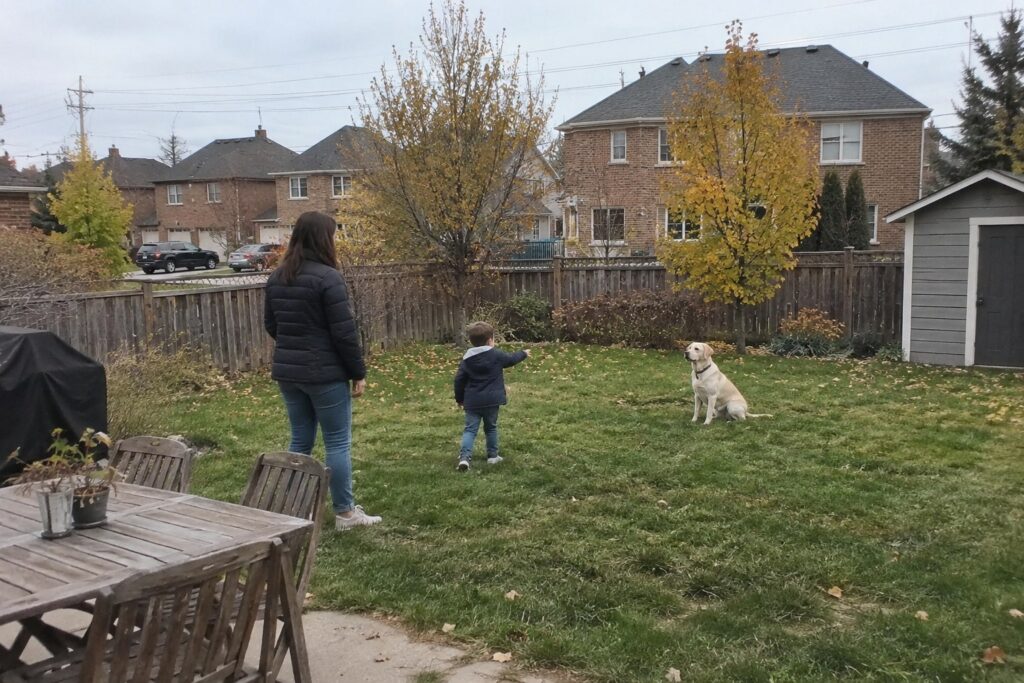
Trick training is a wonderful way to involve children, but safety comes first. Even friendly dogs can nip by accident when treats and excitement are involved. The AVMA dog bite prevention resources recommend supervising all interactions between children and dogs and teaching kids how to behave around pets.
Adults Stay in Charge
An adult should always be present and should teach new tricks first. Once your dog understands a trick, children can practice cues the dog already knows. Keep the dog on a leash in the house during early sessions if they tend to get overexcited.
Safe Treat Delivery
Teach kids to offer treats on a flat, open palm or to toss them on the floor. Avoid holding treats between the fingers, which invites grabbing. If your dog tends to snatch, have kids toss every treat until the adult has taught gentler manners.
Read the Dog’s Body Language
Show children the signs that a dog needs a break: yawning, lip licking, turning away, or walking off. If your dog shows any of these, end the session calmly. Never let kids hug the dog, lean over them, or chase them as part of practice. Dogs that stiffen, growl, or guard treats around children need professional guidance, and our post on recognizing and addressing resource guarding explains what to watch for.
| Do | Don’t |
|---|---|
| Offer treats on a flat palm or toss them | Hold treats between fingers |
| Use short, happy sessions | Repeat cues over and over |
| Let the dog walk away when done | Chase, hug, or corner the dog |
| Practice tricks the dog already knows | Let kids teach brand-new tricks alone |
Fitting Easy Dog Tricks Into Your Frisco Fall Routine
Fall is a great time to build a training habit. Evenings are cooler, school routines are set, and the holiday season is coming. A few minutes a day adds up quickly.
Practice in New Places
Once your dog knows a trick at home, try it in the backyard, on the front walk, or during a quiet moment on a neighborhood stroll. New places make known skills harder, so lower your expectations at first and reward generously. If you are looking for new spots to explore, our roundup of dog parks and trails in Frisco is a good starting point, though busy parks are better for practicing once your dog is steady.
Use Tricks for Holiday Manners
Halloween falls on Saturday, October 31, 2026, and Thanksgiving is Thursday, November 26. Doorbells, costumes, and visiting relatives can overwhelm a dog. A known trick like “touch” gives your dog something to do instead of jumping on guests. Ask for a “touch” or a “sit” and reward, and you have replaced a problem behavior with a polite one. If jumping or barking at the door is already a struggle, our guide on stopping excessive barking can help.
Link Tricks to Everyday Moments
Ask for a quick “shake” before meals, a “spin” before a walk, or a “bow” before a game of fetch. Weaving tricks into daily routines keeps skills sharp without extra time set aside for formal training.
When Your Dog Needs Obedience Before Tricks
Some dogs find tricks frustrating because the foundation is not there yet. If your dog cannot settle long enough to learn, it is not a sign of a “bad” dog. It usually means basic obedience needs attention first.
Signs Your Dog Needs Foundation Work
- Your dog jumps, mouths, or grabs at hands whenever treats appear.
- They cannot hold a “sit” for even a few seconds.
- They ignore cues the moment anything interesting happens nearby.
- Training sessions end with barking, frustration, or zoomies.
Puppies especially benefit from structure before fancier skills. Our puppy training guide for Frisco owners covers the early habits that make later training smoother.
In-Home Private Lessons
With in-home dog training and private lessons, a trainer works with you and your dog in the place where problems actually happen. Lessons cover basic obedience foundations and advanced skill development, and the whole family can learn how to give cues and rewards consistently. Private sessions are also available at our training facility if you prefer a more structured, distraction-controlled setting.
The Two-Week Board and Train Program
Our two-week Board and Train program is our core program for Frisco families who want a solid obedience foundation. Each placement begins with an individual evaluation, and our trainers work with your dog daily on reliable responses to commands such as “sit”, “stay”, “come”, and “heel”. Before your dog returns home, you take part in hands-on transfer sessions so you know how to maintain the results. Board and Train graduates receive guaranteed results and lifetime support at no additional cost. Curious about the details? Read what to expect from board and train programs in Frisco.
| Option | Where Training Happens | Best Fit |
|---|---|---|
| In-Home Private Lessons | Your home or our facility | Families who want to learn alongside their dog |
| Two-Week Board and Train | Our Frisco facility, with daily training | Dogs that need a strong obedience foundation fast |
Ready to build the listening skills that make every trick easier? Call us at (972) 573-1715 to talk with our team.
About All Dogs Unleashed Dog Training Frisco
All Dogs Unleashed Dog Training Frisco helps families across the area build dogs that listen at home and out in the world. Our two-week Board and Train program starts with an individual evaluation, includes daily work with our trainers, and ends with hands-on transfer sessions for owners. We also offer in-home private lessons, boarding, and refresh training. Every breed is welcome, and the strong obedience foundation we build makes fun activities like trick training easier for the whole family to enjoy.
Frequently Asked Questions
What is the easiest trick to teach a dog?
“Touch” is usually the easiest trick because most dogs naturally sniff an open hand held near their nose. You simply mark the moment their nose bumps your palm and reward. “Shake” is a close second since many dogs paw at a closed fist holding a treat. Both tricks can often be learned in just a few short, upbeat sessions at home.
How long does it take to teach a dog a trick?
It depends on the dog, the trick, and how consistently you practice. Simple tricks like “touch” or “shake” may click within a few short sessions, while “roll over” can take longer. Practicing about five minutes once or twice a day works better than one long session. Move on only when your dog performs reliably in a quiet space.
Can older dogs learn new tricks?
Yes. Adult and senior dogs can learn new tricks, and mental work is great enrichment as dogs age. Choose low-impact tricks like “touch” or “shake” for older dogs and skip physical moves like “roll over” or “bow” if your dog has joint or back problems. Check with your veterinarian before starting any physical activity with a senior dog.
What treats are best for trick training?
Small, soft treats about the size of a pea work best because your dog can eat them quickly and stay focused. Some dogs will happily work for their regular kibble. Keep an eye on the total amount you give each day and trim meal portions if needed. Avoid foods that are toxic to dogs, and ask your veterinarian about dietary concerns.
Is it safe for kids to teach a dog tricks?
Kids can practice tricks safely when an adult supervises and the dog already knows the cue. Teach children to offer treats on a flat palm or toss them to the floor, keep sessions short, and let the dog walk away when it wants a break. Dogs that grab, jump, or guard food around children should work with a professional trainer first.
Does All Dogs Unleashed teach dog tricks?
Our focus is obedience and behavior training through our two-week Board and Train program and in-home private lessons. The foundation skills we build, like focus, impulse control, and reliable responses to cues, make it much easier for you to teach fun tricks at home. Our trainers can talk through your goals and recommend the best program for your dog and family.
Teaching easy dog tricks is a simple, rewarding way to keep your dog’s mind busy and strengthen your family’s bond this fall. When you want a stronger obedience foundation to build on, call (972) 573-1715 or reach out online, and visit our location at 6136 Frisco Square Blvd, Suite 400.
Ready to Get Started with All Dogs Unleashed Dog Training Frisco?
Give your dog the obedience foundation that makes training fun for everyone. Call (972) 573-1715 today to discuss our two-week Board and Train program or in-home private lessons.