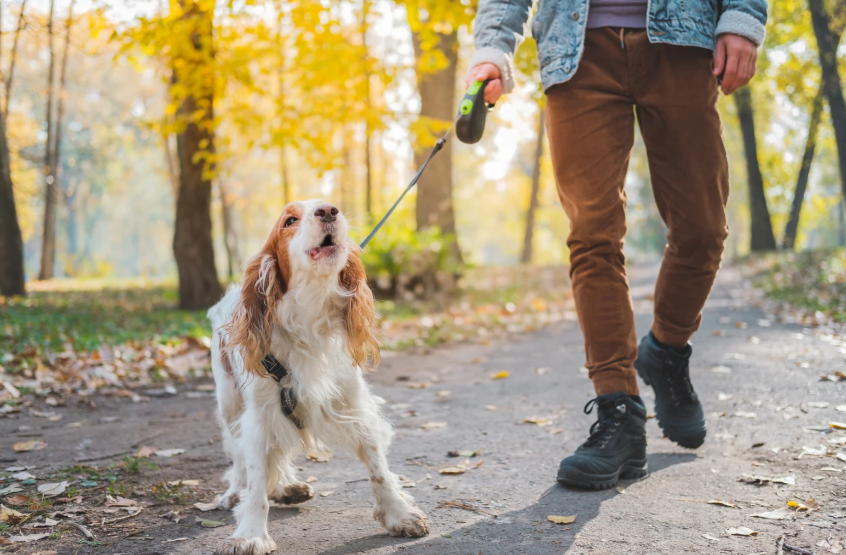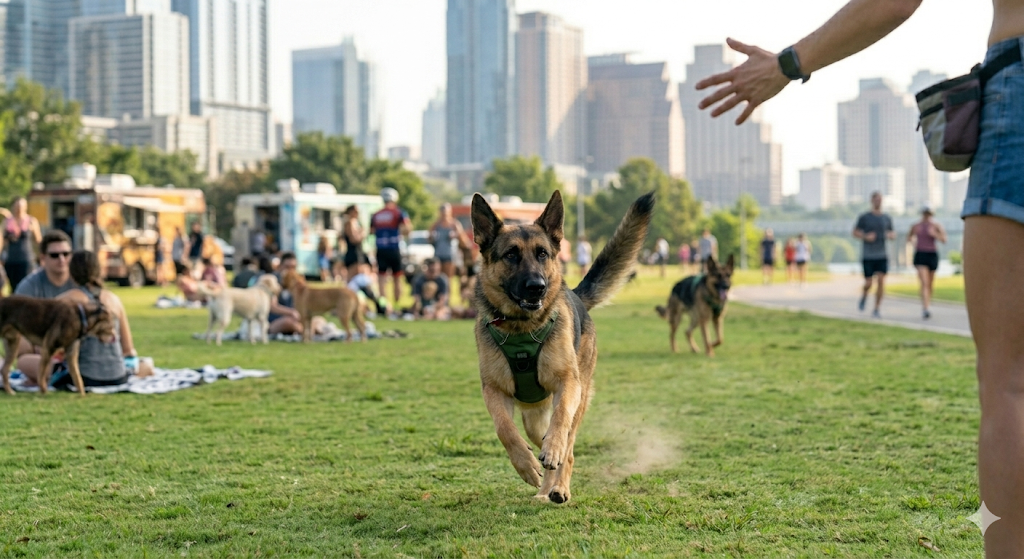

A reliable recall, your dog coming to you every single time you call, is arguably the most important skill you can teach. It can prevent your dog from running into traffic, keep them safe at Zilker Park, and give you peace of mind in almost any situation. Yet for many Austin dog owners, the word “come” is one their dog consistently ignores.
The problem is almost never the dog. Most dogs have been unintentionally taught that coming when called is optional, or they have simply never been trained to do it under real-world conditions. The good news is that with the right approach, any dog can develop a strong recall, and it does not take months to see real progress.
At All Dogs Unleashed, recall training is one of the most common things we work on with Austin families. These seven tips walk you through the principles and methods that produce lasting results.
Tip 1: Understand Why Dogs Ignore “Come”
Before you can fix a recall, it helps to understand why dogs blow it off in the first place. In most cases, coming when called has been “poisoned”, meaning it has been associated with something the dog does not want, such as a bath, being crated, or having fun end. Or it simply has not been reinforced enough to compete with the environment.
Dogs are always making cost-benefit calculations. If sniffing a patch of grass is more rewarding than coming to you, they will sniff the grass. If they have learned that “come” sometimes means the leash goes on and the park trip ends, they will avoid it. The solution is making coming to you the single most rewarding thing that can happen in your dog’s world.
Tip 2: Build the Foundation Indoors First
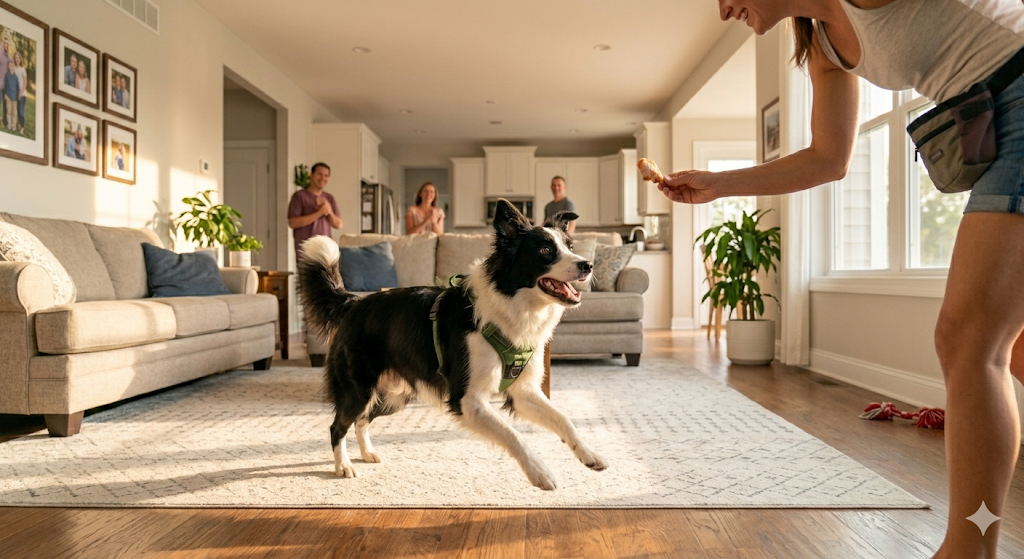
Start with zero distractions. Say your dog’s name followed by “come” in a happy, upbeat tone, never stern or frustrated. The moment they arrive, reward them with something genuinely exciting: high-value treats like small pieces of chicken or cheese, enthusiastic praise, or a quick play session.
Repeat this dozens of times across short sessions. You are building a conditioned emotional response: your dog should hear “come” and immediately feel a surge of positive anticipation. Once you have a fast, happy response indoors, move to your backyard, then your front yard, then a quiet park, gradually increasing distraction as reliability improves.
Tip 3: Use a Long Line for Real-World Practice
One of the most effective tools for building a real-world recall is a long training line, typically 20 to 30 feet of lightweight leash. It allows your dog to experience the freedom of being off-leash while you maintain the ability to gently guide them back if they do not respond. This prevents the single biggest mistake in recall training: letting a non-response go without a consequence.
When using a long line, call your dog once in a happy voice. If they do not come within two or three seconds, apply gentle, steady pressure on the line while continuing to encourage them. The moment they turn toward you, release the pressure and celebrate their arrival with big rewards. Never yank or pop the line. You want recall to feel like a good choice, not a forced one.
Tip 4: Never Punish a Dog for Coming to You
This is the most common mistake owners make. They call their dog, the dog eventually comes after several attempts, and the frustrated owner scolds them for not coming sooner. From the dog’s perspective, they came and got punished. The result is a dog that learns coming to you is risky and becomes slower and less reliable over time.
No matter how long it took, no matter how many times you had to call, no matter how annoyed you are: when your dog arrives, they get a party. Every single time. If you are too frustrated to deliver a cheerful reward in the moment, take a breath before your dog reaches you. Consistency here is non-negotiable. The recall is either always rewarded or it degrades.
Tip 5: Proof the Recall Across Austin’s Outdoor Environments
Training in your living room is the first step, not the finish line. Austin’s outdoor environment is full of high-value distractions: other dogs, cyclists, squirrels, food smells near food trucks on South Congress, and the sights and sounds of busy trails like Barton Creek Greenbelt. Proofing means systematically practicing recall in progressively more distracting environments until your dog responds reliably everywhere.
Use the Three D’s framework:
Distance: Practice from gradually greater distances before adding other challenges.
Duration: Build the habit over many short sessions before expecting reliability in tough environments.
Distraction: Layer in real-world distractions only after distance and repetition are solid.
If your dog has a great recall from 10 feet away in a quiet yard, do not immediately try it from 50 feet away near other dogs at Lady Bird Lake. Increase distance first while keeping distraction low, then layer in distractions once distance is solid.
Tip 6: Maintain the Recall Over Time
Recall is a perishable skill. It needs regular reinforcement to stay sharp. Even dogs with excellent recalls should be rewarded for coming when called several times a week. You do not need to treat every single response forever, but randomly reinforcing it keeps the behavior strong. Think of it like a slot machine: the uncertainty of when the reward comes actually makes the behavior more persistent.
Also, be thoughtful about how often you use “come” in situations that end something your dog loves. If every time you say “come” at the dog park it means the leash goes on and it is time to leave, your dog will start avoiding it. Practice calling your dog to you, rewarding them, and then releasing them back to play. This teaches them that coming to you does not always end the fun.
Tip 7: Know When to Bring in a Professional Trainer
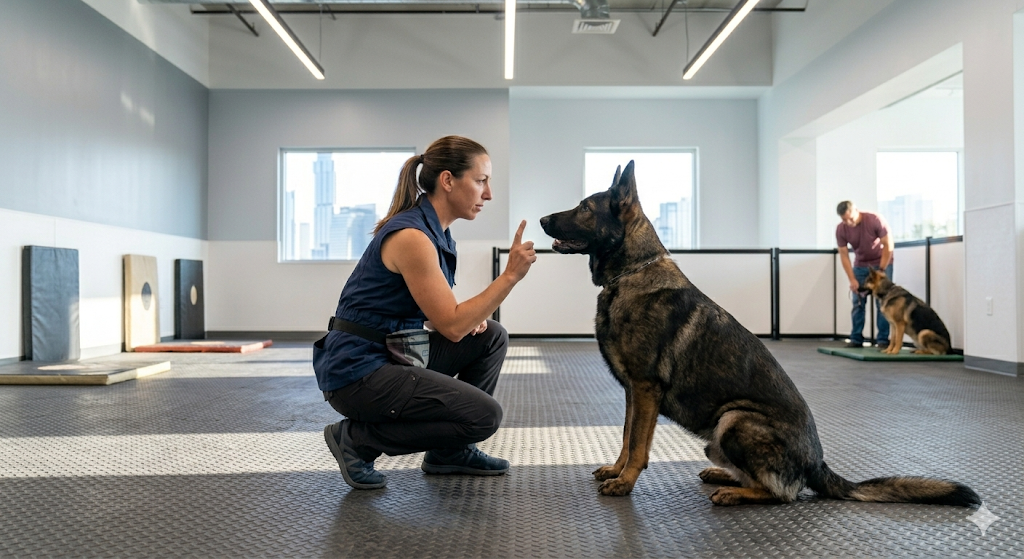
Many owners successfully teach loose-leash recall on their own with the right guidance and consistent practice. However, professional training is especially helpful if your dog is reactive, extremely distracted outdoors, or if you have been working on recall for months without meaningful progress. A trainer can identify exactly what is breaking down and build a plan tailored to your specific dog.
The training programs at All Dogs Unleashed are designed to meet Austin dogs and their owners where they are. Whether you are starting from scratch or troubleshooting a stubborn problem, structured support makes a significant difference in how fast and how reliably your dog responds.
Frequently Asked Questions
How long does it take to train a reliable recall?
In low-distraction environments, most dogs develop a consistent response within one to two weeks of daily practice. Building reliability across all environments, including busy parks, off-leash areas, and high-distraction situations, typically takes two to three months of progressive training. The timeline depends heavily on how consistently the recall is practiced and rewarded.
Should I use a different word instead of “come”?
If your dog has a history of ignoring or avoiding “come,” it can help to start fresh with a new cue. Some trainers use “here,” a whistle, or a unique phrase. This lets you build positive associations from scratch without the baggage of the old cue. Whatever word you choose, protect it: only use it when you can guarantee a good outcome and always reward the response.
Can I teach recall to a dog with a strong prey drive?
Yes, though it requires more patience and a higher-value reward. Dogs with strong prey drive, like terriers, hounds, and herding breeds common in Austin, are more easily pulled off-task by moving things. The key is building a recall so thoroughly reinforced it becomes a stronger habit than the chase. Long-line training and controlled exposure to prey triggers are especially important for these dogs.
My dog comes sometimes but not always. What is going wrong?
An inconsistent recall usually means the behavior has not been reinforced enough at the current level of distraction, or the dog has learned that non-compliance sometimes works. Go back to easier conditions with shorter distances and lower distractions and rebuild the behavior until it is near 100 percent reliable, then gradually increase difficulty again. Also ensure everyone in the household is using the same cue and reward protocol.
Is it safe to let my dog off-leash in Austin once they have a good recall?
A solid recall is a prerequisite for off-leash time, but it is not the only factor. Always make sure you are in a legal off-leash area, such as the designated sections of Zilker Park or Norwood Estate Dog Park, and that your dog is reliably responsive even with other dogs and distractions present. When in doubt, keep a long line attached for safety until you are fully confident.
At what age should I start teaching recall?
As early as possible. Puppies as young as eight weeks can begin learning their name and a basic recall in a low-distraction home environment. The earlier you start, the more you are building the habit before the world becomes too interesting. That said, adult dogs can absolutely learn a reliable recall with consistent training, so it is never too late to start.
Build a Recall Your Austin Dog Will Respond to Every Time
A dog that comes when called is a safer, happier dog, and a dog you can trust in more situations. Whether you are starting from scratch with a puppy or rebuilding a recall that has gone sideways, the right training approach makes all the difference.
All Dogs Unleashed offers private training, group classes, and board-and-train programs for dogs of all ages and breeds across the Austin area. Our trainers specialize in real-world reliability. Give us a call at (512) 253-8819, stop by 3704 Mountain View Ave, Austin, TX 78734, or explore our training programs online, stop by 3704 Mountain View Ave, Austin, TX 78734, or explore our training programs online to schedule your first session.