
Most dog aggression signs don’t start with a bite. They start with a stiff body, a hard stare, or a low growl that owners brush off as “just being protective.” By the time the behavior escalates, the pattern is already well established, and most owners miss those early signals because they look like harmless quirks rather than warnings. At All Dogs Unleashed Dog Training Fort Worth, our trainers work with reactive and aggressive dogs across Tarrant County, and the dogs we see most often aren’t the obvious cases.
They’re the ones whose warning signs went unnoticed for months. Knowing what to look for early makes all the difference. Seeing warning signs in your dog? Book a behavior assessment with a trainer who works with reactive and aggressive dogs across Fort Worth every week.
Key Takeaways
- Early dog aggression signs like stiff posture and growling are often dismissed before behavior escalates.
- Anxiety-driven aggression is one of the most overlooked causes of reactive behavior in otherwise manageable dogs.
- Fort Worth summer highs above 100°F can lower your dog’s stress threshold and amplify aggression signs you rarely see in cooler months.
- Most aggression is addressable with structured training when warning signs are caught and acted on early.
- A dog that shows aggression in one environment, like a busy trail or off-leash park, may be fine at home until the threshold lowers.
The Moments Most Owners Brush Off
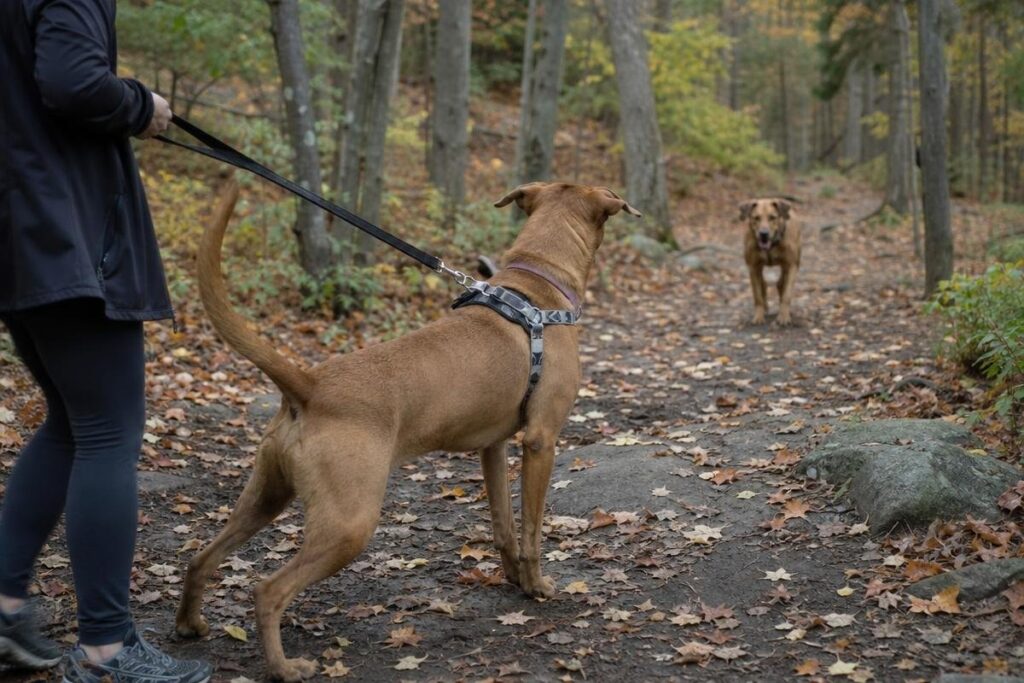
Your dog stiffens on the Trinity Trails the moment another dog rounds the bend. Or he freezes at a Near Southside patio when a stranger reaches down to pet him. You brush it off. He didn’t bite. Everything was fine. But those moments matter more than most owners realize.
The most common question we hear is simple: “Is my dog aggressive, or is this just how he is?” The signs of aggression in dogs rarely look like the dramatic biting scenes owners picture. They look like quirks. Stubbornness. Overexcitement.
This article covers 8 specific dog aggression signs that Fort Worth owners regularly overlook, including the subtle ones that show up long before a bite ever happens. Catching them early is the single most important step you can take. If your dog is still young, our puppy training in Fort Worth program addresses these behaviors before they become serious problems.
Why Early Dog Aggression Signs Are So Easy to Miss
Early dog aggression signs are easy to miss because they look like normal dog quirks, stiffness, staring, or a low growl, before they ever escalate to biting behavior. Dogs communicate through a layered escalation sequence long before they snap. By the time teeth are bared, the earlier signals have already been ignored.
The Difference Between Aggression and Normal Dog Communication
Dogs don’t go from calm to biting in one step. The escalation ladder looks like this:
- Whale eye (whites of the eyes visible)
- Stiff, frozen body posture
- Low growl
- Lip lift and baring teeth
- Snap without contact
- Bite
Growling is communication, not defiance. When owners punish a growl, the dog learns to skip that warning and go straight to a snap. That’s how bites happen with “no warning.” Baring teeth is already a late-stage signal. The body language signals that matter most come much earlier in that sequence.
Crowded environments in areas like Clearfork or near the Cultural District push dogs through this ladder faster. Multi-dog suburban households in Saginaw and Keller add resource pressure that accelerates the whole sequence. If you’re working on these behaviors at home, our aggressive and reactive dog training puts a trainer in the exact environment where the signs appear.
How Anxiety and Fear Drive Most Aggression in Dogs
Anxiety-driven aggression in dogs is the most misread presentation we see. A fearful dog is trying to create distance. A resource-guarding dog is trying to block access. Both look aggressive, but the cause and the fix are completely different. Fear-based aggression often shows up as lunging, snapping, or growling when the dog feels cornered or overwhelmed, not when it’s trying to dominate anyone. Catching the difference early changes everything. Owners who recognize these warning signals before a bite occurs have far more training options available to them.
The 8 Dog Aggression Signs Fort Worth Owners Most Often Overlook
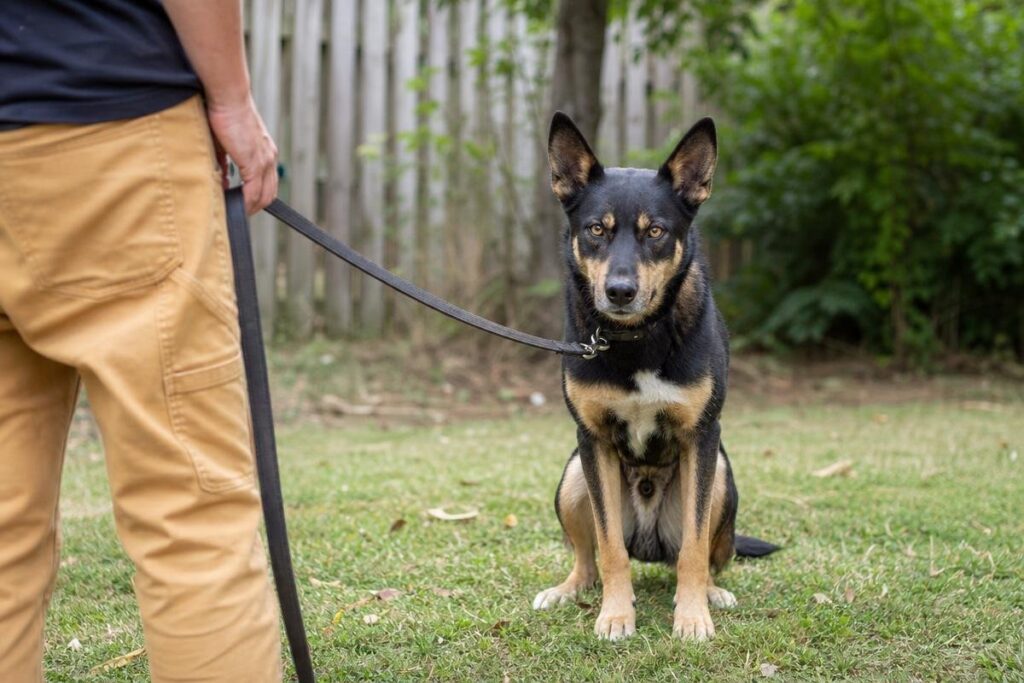
Dogs give clear body language signals long before teeth make contact. Knowing what to look for can stop a bite before it ever happens. Here are the eight signs we see missed most often.
Sign 1: Stiff Body and Frozen Posture
A dog that suddenly goes completely still is not calm. The muscles tighten, weight shifts forward, and the tail goes rigid. Owners often read this as focus or curiosity. It is one of the most reliable pre-bite signals there is.
- Weight shifts toward the front legs
- Tail held high and rigid, not wagging
- Entire body looks locked in place
Sign 2: Hard Staring and Whale Eye
Whale eye happens when your dog turns its head slightly but keeps its gaze locked on a target. You see the whites of the eyes. Paired with a still body, this is a high-alert signal that a bite could follow quickly.
- Whites of the eyes visible at the corners
- Head turned but eyes staying fixed forward
- Unblinking, hard stare directed at a person or dog
Sign 3: Low Rumbling Growl During Play or Petting
A growl during petting is not contentment. If the growl deepens when your hand moves away or stops, that is a control or resource-guarding signal. It means your dog is communicating that you are doing something on its terms, not yours.
- Growl that gets lower as petting slows
- Body stiffens slightly when you shift position
- Growl stops only when petting resumes
Sign 4: Pinned-Back Ears With a Tense Jaw
Relaxed ears sitting back naturally are fine. Ears pressed flat against the skull combined with a clenched jaw signal fear-based aggression. This dog is uncomfortable and is telling you it is close to its limit.
- Ears pinned tight to the sides of the head
- Jaw muscles visibly tight or clenched
- Lips pulled slightly back even without a full lip lift
Recognize your dog in the first four signs? See how we’ve helped reactive dogs across Fort Worth turn these patterns around before they escalate.
Sign 5: Silent Lip Lift or Baring of Teeth
A dog baring teeth without making a sound is often more dangerous than a growling dog. The silent lip lift gets missed entirely because there is no noise to catch your attention. By the time you notice, the dog is already at its threshold and one step from a snap.
- Upper lip curls to expose front teeth
- No growl or sound accompanies the expression
- Happens briefly and is easy to miss in a busy environment
Sign 6: Leash Lunging and Barrier Frustration
Dogs on the Trinity Trails system or at Oakmont Park that lunge, bark, and strain at the end of the leash are showing signs of aggression, not just excitement. Barrier frustration builds over time and escalates without structured intervention. Our loose leash walking tips cover the early steps, but reactive lunging usually needs direct training support.
- Explosive forward lunge toward other dogs or people
- Barking that does not stop when the trigger passes
- Dog unable to recover attention after the trigger is gone
Sign 7: Resource Guarding Over Food, Toys, or Spaces
Resource guarding is one of the most common dog aggression signs in multi-dog households across the area. Your dog freezes over a food bowl, stiffens when another pet approaches the couch, or picks up a toy and stares. Left unaddressed, guarding escalates to snapping and biting.
- Body hovers directly over food, toy, or resting spot
- Low growl when another pet or person approaches
- Hard stare directed at anyone moving nearby
Sign 8: Air Snapping
An air snap is not a bluff. It is a final warning. If the trigger is not removed immediately, a contact bite is the next step. Dogs that air snap have already moved past growling and stiffening. This behavior needs professional attention right away. If your dog is showing this sign, our dog training program in Fort Worth is built to address exactly this level of escalation.
- Teeth snap shut in the air near a hand or face
- Happens fast with little warning before it escalates
- Often follows ignored growls or lip lifts earlier in the interaction
What Triggers These Warning Signs in Fort Worth Dogs?
Knowing the trigger is the first step to fixing the behavior. A dog that seems perfectly calm at home can show real dog behavior problems in Fort Worth environments the moment something sets them off. The trigger is not random. It is almost always specific, and once you identify it, training becomes much more focused and effective.
Environmental Triggers Common in Fort Worth
Different parts of the DFW area create different stress points for dogs. The Stockyards and Magnolia Avenue corridor expose dogs to horses, crowds, and dense foot traffic that can overwhelm a reactive dog fast. Quanah Parker Park and Sansom Park off-leash areas are frequent flashpoints for resource guarding and inter-dog aggression.
Suburban neighborhoods in Keller, Southlake, and North Richland Hills bring deer and rabbits into the picture, which can spike prey-drive reactivity in dogs that seem manageable everywhere else. Texas summers also matter. According to National Weather Service data, Fort Worth July highs average in the upper 90s and regularly climb above 100°F, and that sustained heat from June through September lowers your dog’s stress threshold significantly. A dog that handles distractions fine in October may snap in July.
Read more about dog heat stress in Fort Worth summers and how it affects behavior.
- Stockyards and Magnolia Avenue: horses, crowds, sensory overload
- Quanah Parker Park and Sansom Park: resource guarding, inter-dog aggression
- Keller, Southlake, North Richland Hills: wildlife triggering prey-drive reactivity
- June through September heat: lowers bite threshold in otherwise manageable dogs
Medical and Pain-Related Aggression
A dog with no prior history of aggression that suddenly starts growling or snapping needs a vet visit before any training begins. Pain from hip dysplasia, ear infections, dental disease, or arthritis can turn a gentle dog into one that bites. We ask about recent vet visits during every intake for this exact reason. Fear and anxiety can also be a root cause, as covered above.
Dog Aggression Warning Signs Checklist: Print and Use This
Use this checklist to track which warning signs your dog is showing before your first training consultation. Check off what you observe and bring it with you.
Early Warning Signs (Act Now)
- Body stiffens or freezes when approached
- Sustained unblinking stare at a person or dog
- Low rumbling growl during petting or feeding
- Ears pinned flat with jaw clenched tight
- Whites of the eyes visible (whale eye)
Serious Warning Signs (Seek Training Immediately)
- Silent lip lift or baring of teeth
- Leash lunging with hard, clipped barking
- Snapping at air near hands, face, or feet
- Growling or freezing over food, toys, or furniture
- Sudden signs of aggression in a dog with no prior history (see a vet first)
If you checked two or more items in either category, your dog is showing a pattern. That pattern has a solution. Our board and train program in Fort Worth is built specifically to address these signs of aggression with a structured, individualized approach.
How All Dogs Unleashed Addresses Aggression in Fort Worth Dogs
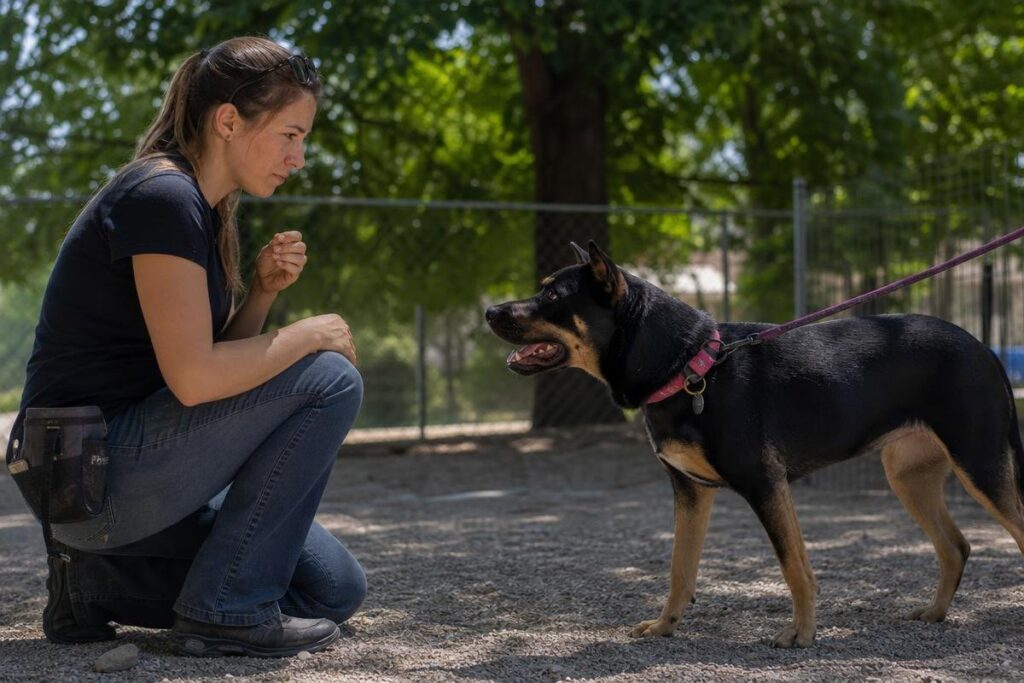
Dogs of all breeds, ages, and temperaments can learn to manage their triggers. That is the foundation of how we work. Whether your dog is growling at strangers, baring teeth over a food bowl, or going stiff and reactive on leash, we build a structured, individualized approach around the specific behaviors your dog is showing. And with guaranteed results and lifetime support for the full life of your dog, you are never left handling a resurfacing problem on your own.
Board and Train for Aggressive or Reactive Dogs
Our board and train program removes your dog from the environment where triggers have built up and places them in a structured daily training setting. Trainers Dana and Chloe communicate with you throughout the process, send regular updates, and walk you through every behavior your dog has learned at pickup. You leave with real tools and a clear understanding of how to maintain results at home. You are not just picking up a “fixed” dog.
In-Home Training for Resource Guarding and Household Triggers
Some dog behavior problems in the Tarrant County area are tied directly to a specific room, doorway, or piece of furniture. Resource guarding, front-door reactivity, and space-claiming behaviors are best addressed where they actually happen. In-home training puts our trainers in your space, working through the exact triggers your dog responds to.
Owners consistently tell us they finally understand what their dog needs and feel confident handling situations after sessions end. If you are also working with a rescue, our approach to training a rescue dog in Fort Worth follows the same individualized structure. Visit our training facility at 4011 Benbrook State Route, Fort Worth, TX 76116, or call us at (817) 393-6224.
Seeing warning signs in your dog’s behavior? Our team is ready to help. Call All Dogs Unleashed at (817) 393-6224 to book a free behavior assessment and talk through the right training option for your dog.
Ready to Address Your Dog’s Aggression Signs?
Catching these signs early gives your dog the best chance at a calm, confident life. Our team has helped hundreds of dogs across Tarrant County work through aggression and reactivity, covering dogs of all breeds, ages, and temperaments. With 121 five-star Google reviews, we know what it takes to get real results.
Do not wait for a bite to happen. Whether your dog is growling on walks, baring teeth around other dogs, or showing stiff posture near strangers, a structured plan can change that. Our dog training program in Fort Worth is built around your dog’s specific triggers and behavior history.
Call us today at (817) 393-6224. We will talk through what you are seeing and build a plan that fits your dog. Our team is ready to help you and your dog move forward with confidence.
Frequently Asked Questions
What are the first signs of aggression in a dog?
The earliest signs of aggression in dogs are easy to miss because they show up in body language, not biting. Watch for stiff posture, a sustained hard stare, or a low rumbling growl during petting. Dogs give multiple warnings before they snap. Catching those early signals is what prevents an escalation.
Is my dog aggressive or just playing?
Playful dogs have loose, bouncy body language. They take turns, disengage easily, and reset quickly. Aggressive body language is stiff and forward-weighted, and it does not settle when the trigger moves away. If your dog’s intensity increases as the other dog or person gets closer, that is not play.
Can an aggressive dog be trained?
Yes. Most dogs showing aggression signs make significant progress with a structured, individualized program. We back our work with a money-back guarantee and lifetime support for the full life of your dog. The earlier you start, the faster and more durable the results tend to be.
At what age do dogs show aggression signs?
Any age, but many owners first notice warning signs between one and three years old, around social maturity. Puppies showing early resource guarding or fear responses benefit from early intervention, and our puppy training resources in Fort Worth address those patterns before they solidify. Senior dogs can develop sudden aggression from pain or cognitive changes, so a vet evaluation is a smart first step in those cases.
How much does dog aggression training cost in Fort Worth?
Costs vary by program type and the severity of the behavior. We give you a clear price before any work begins, no surprises. Call us at (817) 393-6224 to describe what you are seeing and we will give you a firm quote.
Should I punish my dog for growling?
No. Punishing a growl removes the warning signal without fixing the cause. That makes a bite more likely, not less. The right move is to remove the trigger, give your dog space, and work with a trainer. Suppressing growling is one of the most common and most dangerous mistakes owners make.
Tell us what you are seeing and we will build a clear plan for your dog. Call us at (817) 393-6224 or reach out online. Do not wait for a bite to make the decision for you.
Ready to Get Started with All Dogs Unleashed Dog Training Fort Worth?
Call (817) 393-6224 to speak with our team directly. We’re ready to answer your questions, walk you through your options, and help you find the right solution for your needs. Whether you’re just starting to plan or ready to move forward, we’ll make the process simple and stress-free. Reach out today and let’s talk about how we can help.