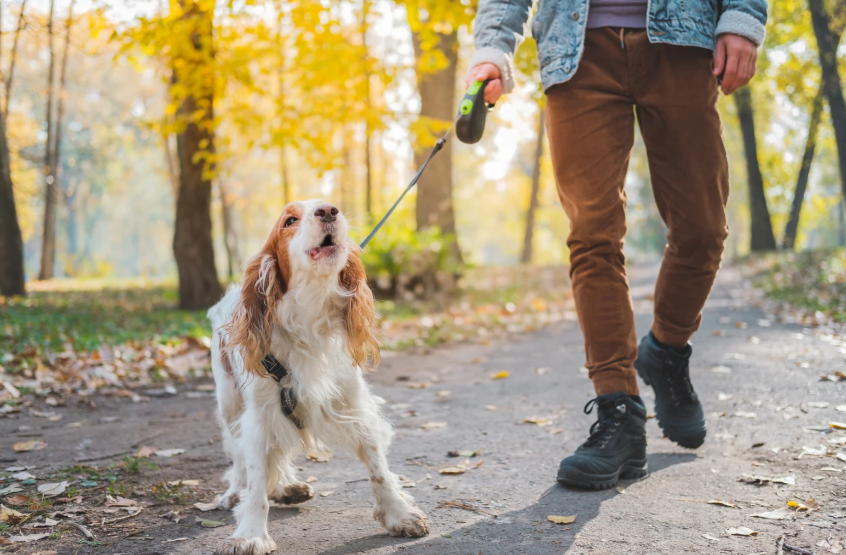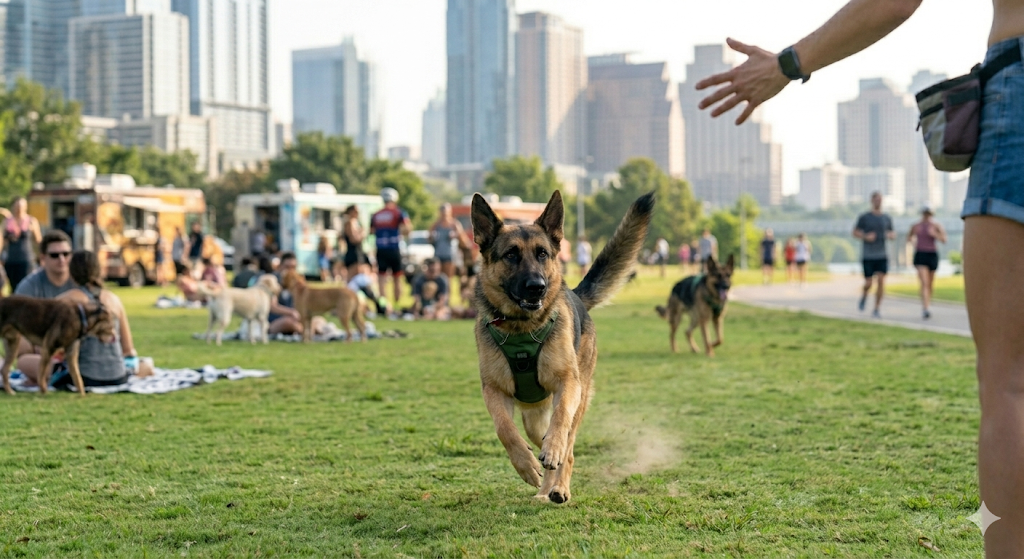

Unleash Your Dog’s Potential. If your dog barking at the door is driving you crazy every time the bell rings or a package shows up, we can fix that. At All Dogs Unleashed Dog Training Des Moines, we train ANY dog to stay calm when someone comes to the house. Our Board and Train and In-Home programs turn door-charging chaos into quiet, controlled behavior, fast.
Ready for a quiet front door? Call us today at (515) 480-7977.
Key Takeaways
- Door barking is a habit, not a personality trait, and any dog can be trained to stop it.
- Teach a “place” command so your dog goes to a spot and stays when the doorbell rings.
- Stay calm yourself, because a dog reads your energy and matches it when guests arrive.
- Consistent rules and repetition matter more than treats when fixing a dog barking at the door.
- Professional help speeds up results when your dog barks excessively at every knock or visitor.
The doorbell rings. Your dog explodes. Barking, spinning, jumping at the door while the delivery driver waits on the porch. You apologize, grab a collar, and try to wrestle your way to the handle. Sound familiar?
A dog barking at the door is one of the most common problems we fix in Des Moines homes.
The good news: ANY dog can learn to stay calm when someone comes to the door. In this article, we will cover why your dog barks excessively at every knock, the triggers that set them off, and a step-by-step plan to stop the chaos. You will learn what to do when the doorbell rings, how to read your dog’s body language, and how to build a calm response that sticks for good.
Why Dogs Bark at the Door and What Triggers It
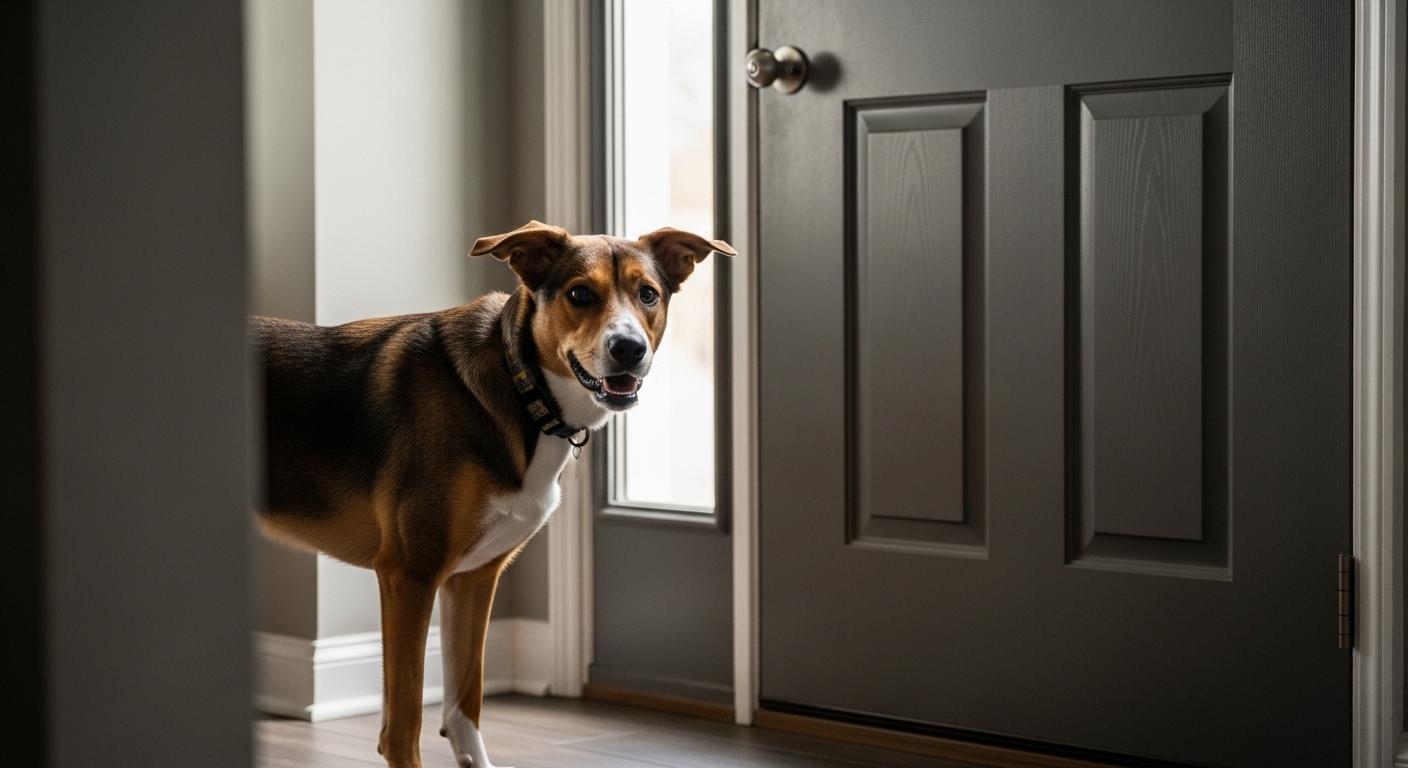
Door barking is not random. It is a learned pattern with clear triggers. Once you understand the mechanism, the fix gets simple.
Territorial Barking vs. Alert Barking
Territorial barking means your dog is defending the door zone. The body is forward, tail high, bark deep. We see this often in German Shepherds, Belgian Malinois, and other guardian breeds across Des Moines homes.
Alert barking is different. The dog is signaling a change in the environment, not guarding it. These dogs are usually anxious or under-stimulated. The fix for territorial dogs is boundary work. The fix for alert barkers is desensitization. If your dog also struggles on walks, our guide on how to calm a reactive dog covers the same nervous system you are working with here.
Why the Doorbell Sends Your Dog Into Overdrive
The doorbell is a classically conditioned trigger. Sharp sound, consistent pitch, always followed by a person arriving. Your dog’s brain links the two within a few repetitions. That is why a dog barks at doorbell sounds even on TV commercials.
A knock is softer and less predictable. The doorbell fires the stress response before anyone is even at the door. Add a Des Moines front porch and daily Amazon and UPS drops, and your dog gets a free rehearsal of the trigger every single day.
How Accidental Reinforcement Makes Door Barking Worse
Here is the part most owners miss. The delivery driver drops the package and leaves. Your dog barks, the person disappears, and your dog concludes the barking worked. That is reinforcement, repeated daily.
Yelling “No!” does not help either. To your dog, that is attention, and attention is reinforcement. You just joined the bark party.
Common ways owners accidentally reward a dog barking excessively at door triggers:
- Yelling, shushing, or repeating the dog’s name
- Grabbing the collar or pushing the dog back
- Opening the door while the dog is still loud
- Tossing treats to distract mid-bark
- Letting the dog “win” by watching the visitor leave
Every one of those teaches your dog that barking gets a result. Fix the reinforcement pattern and you are halfway to a quiet door.
The 4-Step Protocol to Stop Door Barking for Good
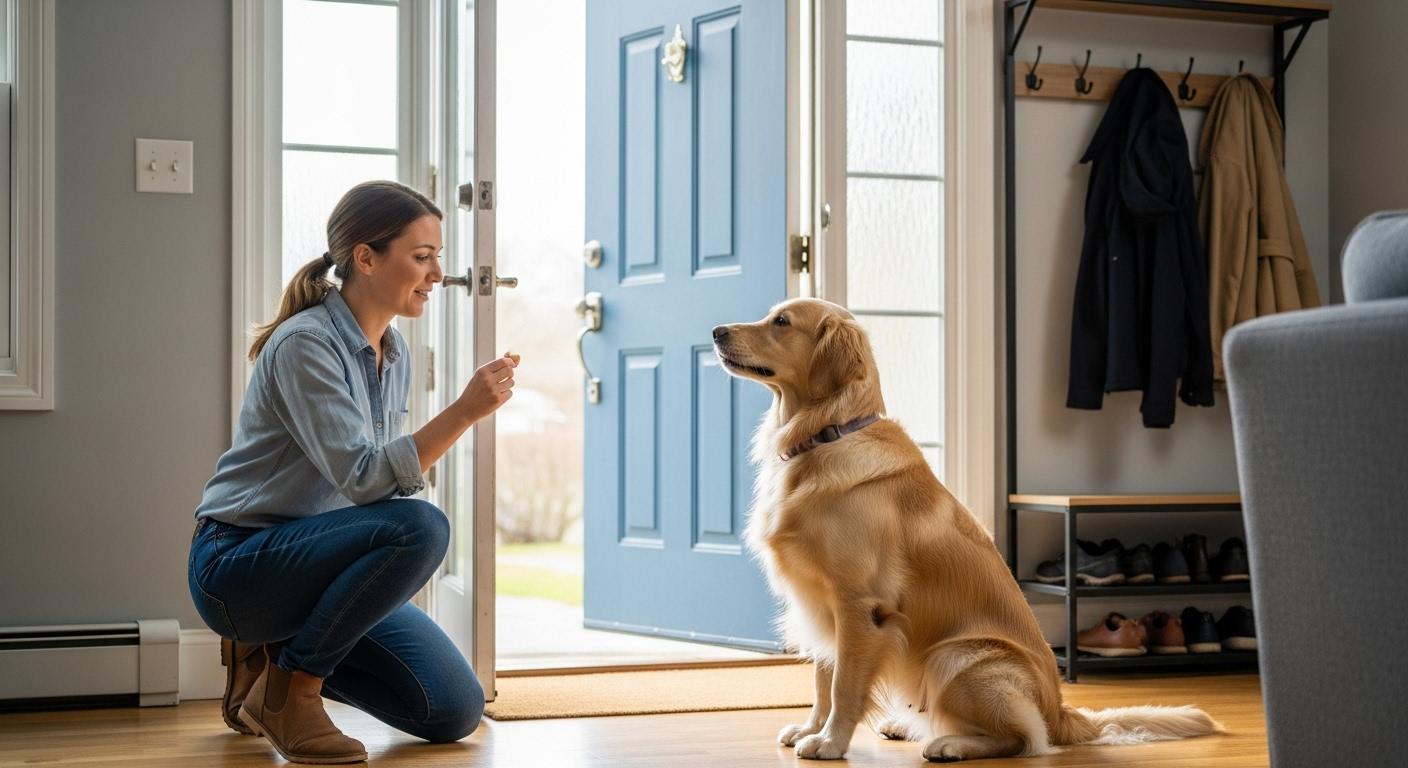
This is the exact sequence we use to fix door barking. Follow it in order. Do not skip ahead until your dog hits 80% reliability on the current step.
Step 1: Teach ‘Place’
The first thing you should train is a rock-solid Place command. Put a mat or raised bed 6 to 10 feet from the front door. Lure your dog onto it with food until all four paws land, then mark and reward.
- Build duration in small jumps: 5 seconds, 15, 30, then 60+ seconds
- Reward on the mat, not off it
- Practice 3 short sessions a day until your dog holds Place for a full minute with you walking around
No door work happens until the place is solid. This is the same foundation we use when crate training your dog, calm spot, clear job.
Step 2: Desensitize the Doorbell
Pull up a doorbell recording on your phone. Play it at the lowest volume your dog can hear without reacting. Mark and reward calm behavior. That is the threshold you work under.
- 3 to 5 minutes, twice daily
- Raise volume one notch only after your dog stays calm for a full session
- Never push past threshold, if your dog barks, the volume was too high
- Do the same with knock sounds
Most Des Moines dogs need 1 to 2 weeks of this before the real bell stops triggering the bark.
Step 3: The Knock-and-Calm Sequence
Now you pair it together. Grab a helper, a spouse, kid, or neighbor works fine. They stand outside. You cue Place. They knock or ring.
- Cue Place before the knock
- Helper knocks once
- If your dog stays, mark and reward on the mat
- You walk to the door, hand on the knob
- Door only opens if your dog is calm and holding Place
- If your dog breaks, close the door, reset, try again
Run 10 successful reps in a row before you progress. If your dog breaks Place twice, you moved too fast. Drop back to Step 2 for a day.
Step 4: Proof With Real Visitors
Proofing is how you stop a dog from barking at strangers for real, not just in practice. You vary every piece of the picture so your dog generalizes the behavior.
- Switch between knocks and doorbell rings
- Practice at the front door, the side gate, and the back door
- Work the storm door open AND closed, a lot of Des Moines homes have glass storm doors that amplify visual triggers, your dog needs reps with that visual stimulation
- Try different times of day and different weather, mail carriers in the rain look different than neighbors on a sunny Saturday
When real guests arrive, text them first. Tell them to ignore your dog completely until your dog is settled on Place. No eye contact, no petting, no high-pitched hello. This is the same rule that stops dog jumping on visitors from coming back.
Stick with the 80% rule the whole way through. If your dog only succeeds half the time at a step, you do not have a behavior yet, you have a guess. Back up and rebuild.
Stuck on a step or seeing your dog backslide? Our trainers can walk you through it in person. Call (515) 480-7977.
Common Mistakes That Keep Door Barking Stuck
If your dog is still barking excessively at the door after weeks of work, one of these three mistakes is usually the reason. Fix them and the protocol starts working.
Punishing the Bark Instead of Training a Replacement
Spray bottles, yelling, and leash pops shut the noise off for a second. They never teach your dog what to do instead. The moment you leave the room or stop watching, the barking comes right back.
Punishment pauses barking. Training eliminates it. Your dog needs a clear job at the door, like going to a mat, not just a list of things that get them squirted.
Moving Too Fast Through the Steps
Rushing from a fake knock to a real UPS driver guarantees regression. Each step has to hit roughly 80% reliability before you add a harder trigger. If your dog still breaks the mat on doorbell reps, you are not ready for live visitors.
This is the same reason your dog ignores commands at home when the distraction level jumps. Build the skill at each level. Do not skip rungs.
Inconsistency Across the Household
One person letting your dog rush the door undoes a week of training. Kids sprinting to greet a friend, a spouse who thinks barking at strangers is fine, three Amazon drops a day in busy West Des Moines and Ankeny households. That is how the habit stays alive.
Every adult in the home runs the same protocol. Same cue, same mat, same reward, same rule that the door does not open until your dog is calm. If one person skips the steps, your dog learns the rules only apply sometimes, which means they apply never.
Need a hand getting the whole family on the same page? Our trainers will come coach everyone at once.
When Door Barking Is a Sign of a Bigger Behavior Problem
Sometimes door barking is not just noise. It is a warning sign. If your dog shows fear or aggression at the door, the standard protocol is not enough on its own.
Fear-Based Barking
A scared dog barks differently than an excited one. Watch for these signs:
- Cowering or tucked tail while barking
- Pacing back and forth near the door
- Hiding behind you, then darting out to bark
- Trying to flee the room while still vocalizing
Fearful dogs need confidence first, obedience second. Place training alone will not fix this. They need slow desensitization, controlled exposure, and trust building before you ever expect calm behavior at the door. Pushing too fast makes it worse. Learning how to socialize a dog with strangers the right way is a strong first step.
Aggression Toward Visitors
Aggression looks different. Red flags include:
- Snapping or air-biting when someone enters
- Lunging at the door with hard body language
- Any prior bite history with a guest
- Stiff posture, hard stare, raised hackles
This is past the DIY stage. A dog that lunges at visitors needs a structured behavior modification plan from a pro, not more YouTube videos. The risk to your guests and your liability is real.
If you have been searching how to stop dogs from barking at strangers and the steps in this article have not moved the needle, call us. Our professional dog trainers in Des Moines handle serious door aggression every week across the metro. We train ANY dog, ANY problem. Call (515) 480-7977 and we will build a plan specific to your dog and your front door.
Frequently Asked Questions
How Long Does It Take to Stop a Dog From Barking at the Door?
Most dogs show noticeable improvement within two to four weeks of consistent daily practice using a structured protocol. Dogs with a longer history of door barking or high arousal breeds may take six to eight weeks to reach reliable calm. All Dogs Unleashed Dog Training Des Moines recommends short, frequent training sessions of five to ten minutes rather than long infrequent ones to speed up results.
Can an Older Dog Learn to Stop Barking at the Door?
Yes, older dogs can absolutely learn new door manners, though the process may take slightly longer than with a puppy. The core steps of teaching a place command and desensitizing triggers work at any age. Consistency from every person in the household matters even more with older dogs because they have had more time to rehearse the unwanted behavior.
Will Anti-Bark Collars Fix My Dog’s Door Barking?
Anti-bark collars suppress the symptom without addressing the underlying trigger, which means the barking often returns or shifts to a different unwanted behavior. They also carry a real risk of increasing anxiety in dogs that bark out of fear or over-excitement. Training a replacement behavior, such as going to a designated place, produces more lasting results and does not introduce stress into the greeting routine.
Should I Crate My Dog Every Time Someone Knocks?
Crating at every knock can work as a short-term management tool, but it does not teach your dog what to do instead and can build frustration over time. A better long-term approach is training your dog to go to a specific spot and stay calm while you answer the door. Management and training work best when used together, with crating reserved for situations where safety is a concern before training is complete.
What Should I Tell Guests to Do When They Arrive During Training?
Ask guests to wait calmly outside until you have your dog settled on its place before opening the door. Instruct them to avoid eye contact, loud greetings, or bending down immediately, since those actions can reignite arousal before the dog has fully settled. Giving guests a simple one-sentence brief before they arrive makes a real difference in how quickly your dog generalizes calm behavior to real visitors.
Is Door Barking Worse for Certain Breeds?
Herding breeds, guarding breeds, and many terriers tend to have stronger territorial or alert instincts that make door barking more intense out of the box. However, breed tendencies explain the degree of the behavior, not whether training can address it. All Dogs Unleashed Dog Training Des Moines works with all breeds across Des Moines and finds that a clear, consistent protocol produces improvement regardless of breed background.
Can My Dog Learn to Stay Calm at the Door If It Has Never Been Trained Before?
A dog with no prior obedience training will need to build foundational skills like a solid stay and a place command before door-specific work can be effective. Starting from scratch is very common and does not mean the process takes dramatically longer, especially when training begins with low-distraction environments before adding the doorbell or knocking. Working with a professional trainer at All Dogs Unleashed Dog Training Des Moines can help establish those foundational behaviors quickly so door training has a strong base to build on.
Ready to Get Started with All Dogs Unleashed Dog Training Des Moines?
Call (515) 480-7977 to speak with our team directly, or reach out using the form below.
Reach out today and let’s talk about how we can help.