
Potty training a puppy is challenging anywhere. Doing it in a Denver apartment adds a layer most online guides ignore. The 60 to 90 seconds it takes to clip a leash, ride an elevator, cross a lobby, and reach a sidewalk is often the difference between a clean training day and an accident. Add sub-zero winter mornings, hot summer pavement, thin altitude air that tires young puppies faster, and shared lobby spaces marked by every other dog in the building, and the basic training process gets meaningfully harder.
The fundamentals still work. Puppies in Denver apartments learn the same way puppies in suburban houses learn. The difference is that apartment owners need a tighter system, better gear, and a more disciplined schedule to make it stick. The guide below walks through everything that actually matters: realistic timelines, the right starting setup, the daily schedule by age, how to handle elevators and weather, and the mistakes that quietly extend training by weeks.
Why Apartment Potty Training Is Different in Denver
Most potty training advice assumes a back door opens onto grass. In a Denver apartment, that’s almost never true, and the differences matter.
Time to outside is long. From the puppy’s first signal (sniffing, circling, restlessness) to actually being on grass, an apartment owner typically has under two minutes. Add an elevator wait or a fifth-floor walk-up and the window narrows further. Suburban owners get to wait for the signal. Apartment owners have to anticipate it.
Weather extremes shape every outing. Denver winters can drop below zero with windchill, making outdoor sessions short and uncomfortable for both puppy and owner. Summer pavement above 85 degrees burns puppy paws within seconds. Both extremes shrink the realistic potty training window and increase the temptation to delay trips outside.
No yard means no quick relief. A puppy in a suburban house can be let into the backyard at any sign of restlessness with almost no cost. An apartment puppy requires a full gear-up, elevator ride, and outdoor walk for every single attempt. The total daily effort is roughly four times higher.
Shared lobby and hallway scents complicate signals. Apartment buildings carry scent markers from every other dog that passes through. New puppies often try to mark in elevators, lobbies, and shared hallways, which can derail outdoor training if not managed actively.
When to Start Potty Training Your Puppy
Most puppies can begin potty training around 8 weeks, the age most go home from the breeder or rescue. Full reliability (no accidents under normal circumstances) typically arrives between 4 and 6 months, though some breeds and individuals take longer. Smaller breeds often take longer than larger ones because their bladders are smaller and their bodies mature differently.
The single most useful rule of thumb is bladder control by age. A puppy can typically hold their bladder for roughly their age in months plus one hour. An 8-week-old (2-month-old) puppy can hold it for about 3 hours under ideal conditions. A 4-month-old can hold it for about 5 hours. These are maximums, not targets. Asking a puppy to wait at the upper limit produces failure. Aiming well under it produces success.
What You Need Before You Start
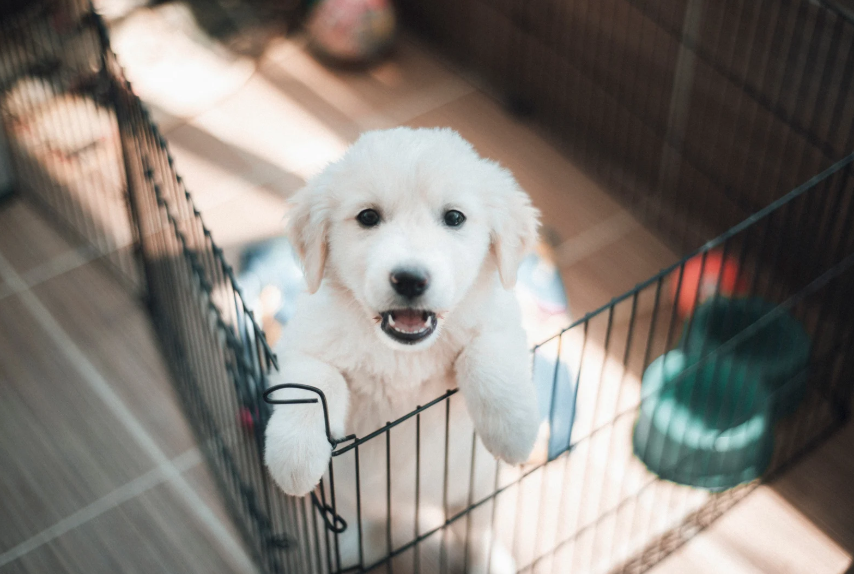
- A properly sized crate. Big enough for the puppy to stand, turn, and lie down comfortably. Too large encourages elimination in one corner and sleeping in another.
- Enzymatic cleaner. Regular cleaners don’t fully neutralize urine scent markers. Enzymatic cleaners (Nature’s Miracle, Rocco & Roxie, similar products) break down the proteins and prevent repeat accidents in the same spot.
- Leash, collar or harness, and gear by the door. Apartment owners need to grab and go in under 30 seconds. Keep gear in one consistent spot near the entry.
- Treats your puppy values highly. Small, soft, easy to consume in one bite. Saved for outdoor potty success, not general training.
- A designated outdoor spot. Pick one location within a 2-minute walk of your building and use it consistently.
- Optional: indoor pads or a grass patch system. Only as a temporary bridge tool for very young puppies in high-rise buildings or extreme weather situations, not as a long-term solution.
The Core Potty Training Schedule
Schedule is the single most important variable in potty training success. Below are realistic intervals by age. The schedule assumes the puppy is healthy, eating consistently, and on a regular feeding routine (two to three meals per day for puppies under 6 months).
| Puppy Age | Bladder Hold Time | Trips Outside Per Day | Overnight Expectation |
|---|---|---|---|
| 8-12 weeks | 1-2 hours max | 8-12 | 1-2 wake-ups |
| 12-16 weeks | 2-3 hours | 6-8 | 1 wake-up |
| 4-6 months | 3-5 hours | 5-6 | Usually sleeps through |
| 6+ months | 4-6 hours | 4-5 | Sleeps through |
Take the puppy out: first thing in the morning before anything else, 10 to 15 minutes after every meal, right after waking from a nap, after play or any excited activity, before bedtime, and every 1 to 2 hours during the day for puppies under 12 weeks. The goal isn’t to wait for the puppy to signal. The goal is to get the puppy outside before they need to signal.
The First Two Weeks
The first two weeks set the pattern. Accidents during this window are normal, but the goal is to keep them rare enough that the puppy builds a strong association between “outside” and “potty.”
Day 1-3: Carry the puppy to the elevator and outside whenever possible, especially in high-rises. Young puppies often can’t hold it during a long walk to the outdoors. Set a timer and take the puppy out every 90 minutes minimum, regardless of whether they seem to need it. Use a consistent verbal cue (“go potty” or similar) as soon as they start to go.
Day 4-7: Maintain the timer but watch for early signals, sniffing the floor, circling, sudden restlessness, leaving a play session abruptly. Get to the door fast when you see them. Praise heavily for any outdoor success.
Week 2: If accidents are decreasing, extend the intervals slightly (90 minutes to 2 hours during the day for puppies over 10 weeks). If accidents are not decreasing, tighten the schedule instead of loosening it. Most regressions in week 2 come from owners pushing the timeline too fast.
Pick a Designated Outdoor Potty Spot
Consistency in location speeds up training significantly. Puppies build strong associations between a specific spot and elimination, so taking them to the same area every trip helps them understand what they’re supposed to do.
Pick a spot that meets a few criteria: within 2 minutes of your building entrance, away from heavy foot traffic, away from other dogs’ high-marking zones, and accessible at all hours. Some Denver apartment buildings have gated dog runs that close at night. Make sure your spot works at 2 AM in February, not just during business hours.
Handle the Elevator and Lobby Without Losing the Window
The trip from apartment to outside is where apartment potty training breaks down. The realistic timeline is roughly 2 to 3 minutes from noticing the signal to reaching the potty spot. For a puppy under 12 weeks, three minutes is often too long. The solution for very young puppies in mid- or high-rise buildings is to carry them. Carrying eliminates the risk of mid-elevator accidents and lets you skip the unsuccessful “trying to walk fast” stage that produces puddles in lobbies.
For older puppies, build calm elevator behavior into the training. Practice sitting calmly while the elevator descends, walking quietly through the lobby, and waiting at the entry door before going outside. Excitement in the lobby often triggers elimination, and a controlled exit reduces that risk.
Reward Immediately and Outside, Not Inside
The single biggest factor in potty training success is timing. The reward needs to come within 3 seconds of the puppy finishing outside. Wait until you’re back in the apartment to praise, and the puppy associates the reward with re-entering the building, not with eliminating outside.
Bring a high-value treat outside every trip. The moment the puppy finishes, mark the behavior verbally (“yes!” or “good potty!”) and deliver the treat. Add brief, calm praise. Overstimulating praise can interrupt a puppy mid-stream and create incomplete elimination, which leads to a repeat accident upstairs.
What to Do When Accidents Happen
Accidents are normal during potty training. How you handle them matters more than whether they happen.
Do not punish the puppy. Scolding, rubbing their nose in the accident, or any harsh correction creates fear of eliminating in front of you, which often leads to puppies hiding behind couches to go, lengthening the training process by weeks.
Clean thoroughly with enzymatic cleaner. Standard cleaners may remove the visible mess but leave scent markers that signal “this is the bathroom spot.” Enzymatic cleaners break down the markers fully. Use them on every accident, every time.
Look at what went wrong in the schedule. Most accidents come from one of three sources: too much time between outdoor trips, missed signals, or unsupervised free-roaming time too early in training. Adjust the schedule rather than blaming the puppy. For more on troubleshooting persistent accidents, see our post on Help! My Dog Is Having Accidents Inside.
Using Puppy Pads as a Bridge Tool (or Not)
Puppy pads are controversial, and the honest answer is that they slow potty training in most cases. Pads teach a puppy that indoor elimination is acceptable, which creates a second behavior to unlearn later when transitioning fully to outdoor potty.
That said, pads make sense in specific situations: very young puppies (under 10 weeks) in high-rise buildings where the elevator transit is genuinely too long, owners working long shifts who can’t get home for midday breaks, severe weather periods where outdoor time is medically risky, and building lockdown situations where outdoor access is temporarily restricted. If you use pads, plan to phase them out between 12 and 16 weeks as bladder control develops.
Navigating Denver’s Climate Challenges
Winter (October through April): Salt and ice melt damage puppy paws and can be toxic if licked off after the walk. Wipe paws after every trip with a damp cloth. For very cold mornings (below 20°F windchill), keep outdoor sessions short. Consider booties for puppies over 16 weeks who can tolerate them.
Summer (June through August): Pavement temperature is the critical factor. Asphalt and concrete above 85°F air temperature can burn puppy paws within seconds. Test pavement with the back of your hand. If you can’t hold it there for 7 seconds, it’s too hot. Time outdoor trips for early morning and late evening during heat waves.
Altitude: New puppies brought from sea level can tire faster at Denver’s 5,280-foot elevation. Give new arrivals a week or two to acclimate before extending outdoor sessions.
Crate Training as the Backbone of Potty Training
Crate training and potty training work together. Dogs don’t naturally soil where they sleep, and a properly sized crate uses that instinct to teach bladder control. A puppy who can comfortably wait out a crate session learns to hold it for longer periods, which translates directly to fewer apartment accidents.
The basics: the crate should be just large enough for the puppy to stand, turn, and lie down. Too large, and the puppy will eliminate in one end and sleep in the other. Use the crate for nap times, overnight sleeping, and short periods when you can’t actively supervise. Always take the puppy directly from the crate to the outdoor potty spot, every time. For a full breakdown, our guide to Puppy Crate Training: Is It Right for Your Dog? covers crate selection, introduction, and integration with potty training.
Common Mistakes Apartment Owners Make
Free-roaming the apartment too early. A puppy under 4 months given run of a 700-square-foot apartment will find spots to go that the owner doesn’t see. Use baby gates to keep the puppy in one room until reliability is established.
Inconsistent schedules between roommates or partners. Two people giving different signals or following different schedules confuses the puppy. Agree on the schedule and follow it identically.
Scolding after the fact. Walking in on an accident and scolding the puppy teaches them you’re unpredictable, not that elimination is wrong. The puppy can’t connect a scolding to an act that happened five minutes earlier.
Skipping middle-of-the-night potty breaks too soon. Puppies under 12 weeks usually need one or two overnight breaks. Skipping them to “let the puppy learn” produces sleep-disrupted puppies and a soiled crate. Our post on Dealing with a Puppy Sleep Schedule covers the overnight routine in detail.
Frequently Asked Questions
How long does it take to potty train a puppy in an apartment?
Most puppies in apartments are reliably potty trained between 4 and 6 months with a consistent schedule. Some breeds and individuals take longer, particularly small breeds and dogs adopted from situations where they were previously kennel-raised or pad-trained.
Why does my puppy keep having accidents at night?
Nighttime accidents are common in puppies under 12 weeks. Their bladder control isn’t fully developed, and most need one or two overnight trips outside until around 4 months. If a previously reliable puppy starts having nighttime accidents, check for changes in evening water intake, late meal timing, or possible medical issues like a UTI.
Should I use puppy pads in my Denver apartment?
Pads make sense as a short-term bridge for very young puppies in high-rise buildings or during severe weather, but they tend to slow overall potty training because they teach indoor elimination is acceptable. If you use pads, plan to phase them out between 12 and 16 weeks as bladder control develops.
What do I do if my puppy refuses to potty outside in the cold?
Cold refusal is common in young or small puppies. Keep sessions short, stay in one spot rather than walking the puppy around, and reward heavily the moment they go. A coat or booties can help, though most very young puppies resist gear at first.
Can I train my puppy to ring a bell to go outside?
Bell training works well as a communication tool once the basics are established. Hang a bell at the door, ring it yourself every time you take the puppy out, and gradually transition to having the puppy tap it. Most puppies pick it up between 4 and 6 months.
Potty training works best when it’s part of a broader foundation rather than an isolated focus. Our Denver dog training programs cover the full picture for apartment puppies: house manners, crate training, leash skills, socialization, and the calm behavior that makes city life work. We offer in-home dog training for owners who want to train in their actual environment from day one, and board and train for accelerated results. Contact us or call (720) 310-7337 to get started.
About All Dogs Unleashed Denver
All Dogs Unleashed works with apartment owners across Denver to build the calm, well-mannered city dogs that make small-space living work. Potty training is one of the foundations we help owners establish in the first months, alongside crate training, leash skills, and the apartment-specific manners that make life in a Denver building actually pleasant. Beyond core training, our Denver location also offers in-home dog training, board and train, dog boarding, and dog daycare for owners who need full-service support.
Visit us at 2301 Blake St, Denver, CO 80205, or call (720) 310-7337 to learn more about how our trainers can help your puppy thrive.