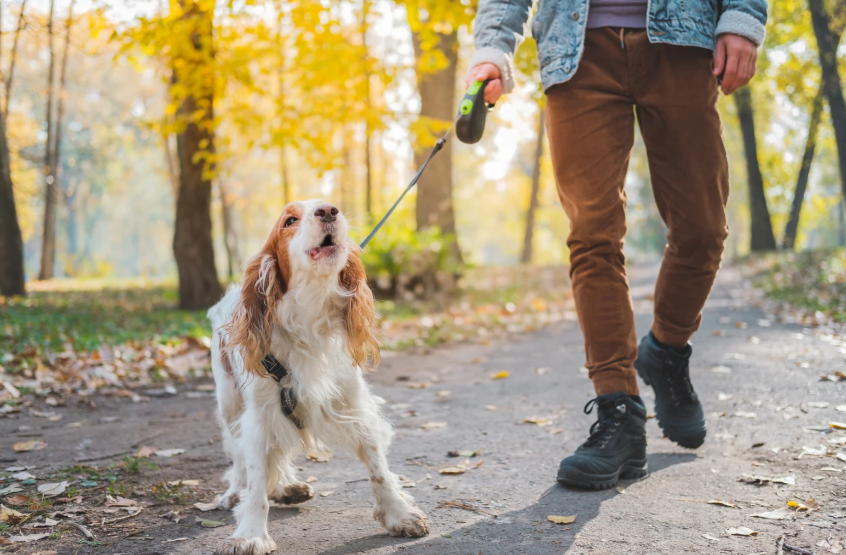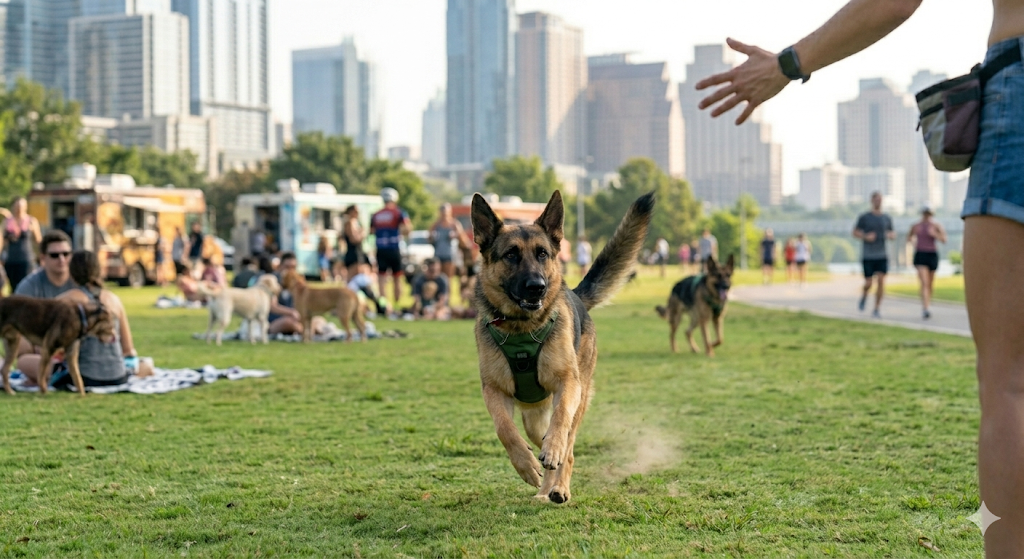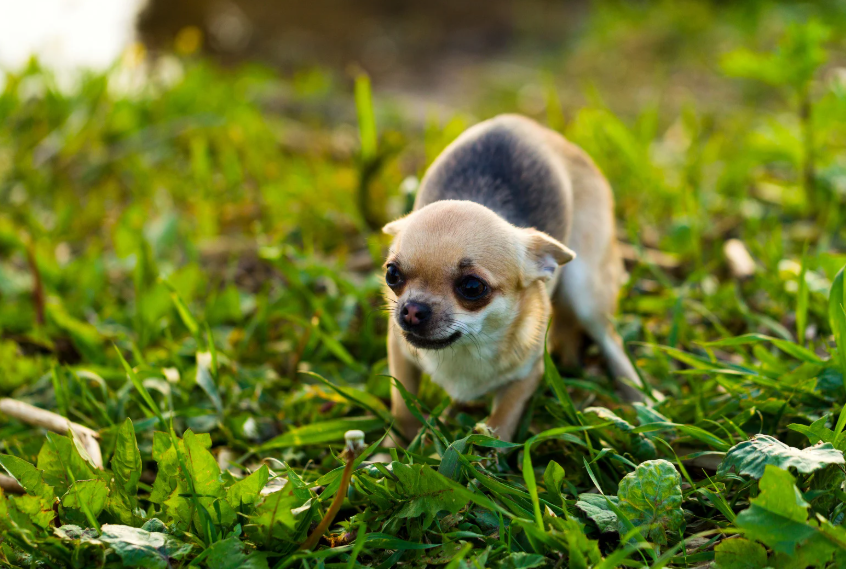

A reliable recall is the single most important skill your dog can learn. It keeps them safe at the dog park, on hikes around Frisco, and in your own backyard when the gate gets left open. At All Dogs Unleashed Dog Training Frisco, we teach dogs to come when called using clear steps that work for any breed or age. Our board and train programs build off-leash control your dog actually keeps, with unlimited follow-up support after you graduate.
Ready to build a rock-solid recall? Call us today at (972) 573-1715.
Key Takeaways
- Teaching your dog to come when called starts with short, high-reward practice sessions in a low-distraction space.
- A long line is the safest tool for bridging the gap between leash work and off-leash reliability.
- Never call your dog for something they dislike, or the word “come” loses all its value.
- Consistent daily practice and clear consequences build a recall that works around real Frisco distractions.
A solid recall can save your dog’s life. If your dog bolts toward a busy road off Preston or slips the leash at a crowded trailhead, the word “come” has to mean stop everything and run back to you. That is why recall sits above sit, down, and every other cue. It is not a trick. It is the difference between a close call and a tragedy.
It is also the key to more freedom. A dog with reliable recall gets to romp at Bark Park at Hank Haney Park and hike Cottonwood Creek Trail without dragging a leash. In this guide, our Frisco dog training team at All Dogs Unleashed walks you through why dogs ignore the cue, a step-by-step method to teach dogs to come when called, and when recall training for dogs needs a pro. Read it once, then start practicing today.
Why Dogs Ignore the ‘Come’ Command (And What That Tells You)
Your dog isn’t being stubborn. They’re doing math. And right now, the squirrel, the other dog, or the smell on the fence post is winning. Plano and McKinney yards are packed with distractions that beat a tired old “come” cue every single time.
The Real Reason Your Dog Runs the Other Way
Most recall problems trace back to one of three root causes in dog come command training:
- Coming to you is less rewarding than whatever they’re doing right now.
- You’ve repeated the cue so many times it now means “optional.”
- The cue predicts something your dog dislikes, like a bath, the leash going on, or going inside.
Read your dog honestly. If “come” usually ends the fun, they’ve learned the word means the fun stops. That’s not disobedience. That’s a smart dog reading the pattern.
How Punishment Poisons the Recall Cue
Here’s the part most owners in Allen and Prosper get wrong. If your dog wanders off for 20 minutes and you scold them when they finally trot back, you just taught them that returning to you is dangerous. Next time, they’ll stay out longer.
Even a sharp tone poisons the cue. Frustration leaks into your voice, your dog hears it, and the word “come” starts to feel like a trap. The rule is simple, and there are no exceptions:
- Never scold a dog who returns to you, no matter how long it took.
- Pay them every single time, with food, praise, or play.
- If you’re frustrated, fake a cheerful voice. Your dog can’t tell.
The Step-by-Step Method to Teach a Dog to Come When Called
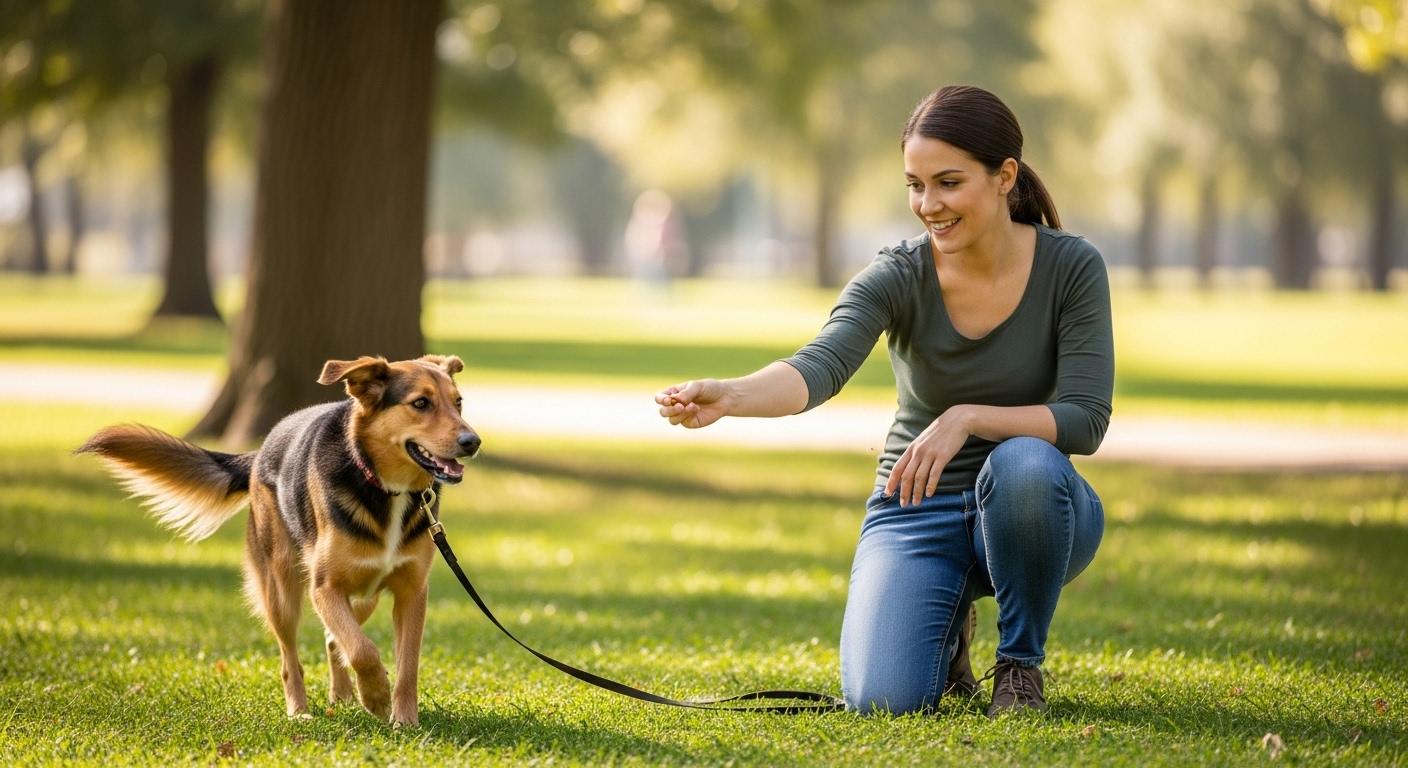
Recall is built in a specific order. Skip a step and the whole thing falls apart at the worst moment, usually when a squirrel runs by. Here is the exact progression we walk every client through, from the living room to wide-open trails.
Step 1: Charge the Word “Come”
Before your dog can obey the word, it has to mean something. We “charge” it the same way Pavlov charged a bell. Say “come” once, then immediately deliver a high-value reward. Do this 10 to 15 times per session, two or three sessions a day, for about a week.
- Use small, soft treats like real chicken, cheese, or freeze-dried liver
- Say the word ONCE, then reward within one second
- Mix in a favorite toy or excited praise so it is not always food
- Keep it indoors with zero distractions to start
- End every session while your dog still wants more
Step 2: Short Recalls With a Release Cue
Now add movement. Back up a few steps, say “come,” and reward when your dog gets to you. Then release them with “free” or “okay” so they learn that coming to you does not always end the fun. This is the single biggest fix for dogs who blow off the cue, and it matters just as much in puppy recall training as it does with adult dogs.
- Start with 3 to 6 foot recalls inside the house
- Reward at your feet, then release back to play
- Never repeat the word, say it once and move if needed
- Practice 5 to 10 reps, then quit for the day
- Rotate family members so the cue generalizes
Step 3: Build Distance With a Long Line
A 15 to 30 foot biothane long line on a flat collar or harness is your safety net. It is not a correction tool. It just guarantees you can always get your dog back. We like the quiet greenbelt trails near Eldorado Parkway in Little Elm for this stage. Plenty of room, low traffic, and real-world smells. If you want a trainer working through this step alongside you in your own neighborhood, our in-home dog training covers Frisco and the surrounding McKinney and Plano areas.
- Week 1 to 2: full long line in your hand
- Week 3 to 4: line dragging on the ground
- Week 5+: short off-leash reps in safe, enclosed areas
- Only drop the line once your dog hits 9 out of 10 recalls
Step 4: Proof Against Real-World Distractions
Add one distraction at a time and raise your reward value as the difficulty climbs. Working outside the fence at Stuart Thomas Park in Allen is a great proofing spot. Other dogs are close, but contained. If your dog fails twice in a row, drop back a level. That is how a reliable off-leash recall dog gets built, one win at a time.
- Start with mild distractions: a toy on the ground, a familiar person
- Build to dogs at a distance, joggers, then bikes
- Use jackpot rewards (5 to 10 treats in a row) for hard wins
- If they fail, shorten distance and lower distractions immediately
Common Recall Training Mistakes That Set You Back
We see the same three mistakes wreck recall in nearly every dog obedience training Frisco TX consult we run. Fix these and your dog’s response time changes fast.
Repeating the Command Multiple Times
Saying “come, come, COME” teaches your dog the real cue is the fifth rep, not the first. The first four become background noise.
Say it once. Then become more interesting than whatever has your dog’s attention. Run backward, clap, crouch low, pull out a high-value treat. One word, then action.
Calling Only When Fun Is Over
If “come” always predicts the crate, the bath, or the end of the dog park, your dog learns to avoid it. You poisoned the cue.
Mix in surprise visit recalls during play. Call your dog, reward big, then release them right back to whatever they were doing. Do this 5 to 10 times for every “fun is over” recall. Now coming when called pays better than ignoring you.
Skipping the Long Line
Open yards, greenbelts, and the trail systems around McKinney and Plano give dogs endless chances to self-reward by chasing a squirrel or another dog. One successful chase can set you back weeks.
A 30-foot long line keeps your dog from rehearsing the wrong behavior while you build reliability. Skip it and you are gambling. For dogs with serious recall problems, our full lineup of Frisco dog training programs handles the foundation work for you.
Tired of chasing your dog around the yard? Call us at (972) 573-1715 and let’s build a recall that actually works.
What ‘Reliable Recall’ Actually Looks Like in Real Life
Reliable recall means your dog comes the first time, every time, regardless of what’s happening around them. Most Plano and McKinney parks enforce leash ordinances, so a solid recall is a legal and safety matter, not just a party trick. Here’s how we measure the real thing.
The 3-D Framework: Distance, Duration, Distraction
We train each dimension on its own, then stack them. Trying to add all three at once is where most owners stall out.
- Distance: Your dog returns from the full length of a 30-foot long line, or across a wide open field, without hesitation.
- Duration: Your dog turns and heads toward you within a second or two of the call, not after a 20-second sniff break.
- Distraction: Your dog leaves other dogs, dropped food, joggers, and interesting smells to come to you.
Practice each one in isolation first. Then combine two. Then all three.
Ready for Off-Leash Freedom
True off-leash recall has clear benchmarks. Your dog is ready when you can check every box below in different locations across Allen, Prosper, and surrounding areas.
- 9 out of 10 first-call response on the long line
- Success with at least one moderate distraction present
- A direct path back to you, no detours or sniff stops
- Consistent results in three or more new environments
Hit those numbers and you’ve earned off-leash freedom. Skip them and you’re gambling with your dog’s safety.
Recall Training for Frisco Dog Owners: Local Conditions to Keep in Mind
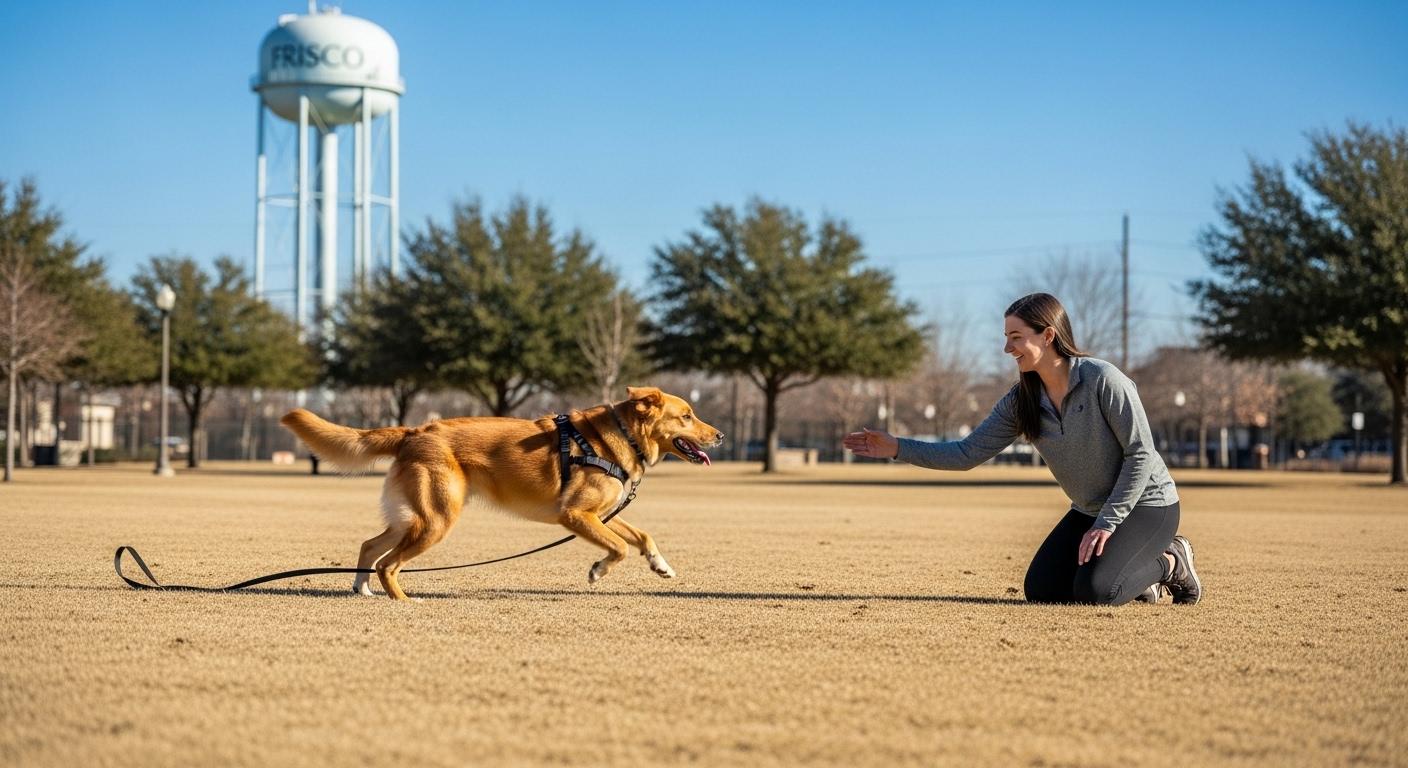
North Texas weather and our local park scene shape how recall training actually plays out. The plan that works in October will cook your dog in August. Here is how we adjust.
Texas Heat and Short Training Sessions
Our summers regularly push into the mid-90s and over 100, with brutal July and August humidity. Pavement burns paws, and dogs overheat fast. Keep outdoor sessions to 10 to 15 minutes, early morning before 9am or after sunset.
Three or four short sessions beat one long one, every time. Your dog stays sharp, you stay patient, and nobody ends up panting in the grass. In peak heat, move recall work indoors. A hallway and a long line work fine for the basics. If you need a place for your dog during a long day at work or a weekend away while training is in progress, our dog boarding keeps the routine steady, and many owners add dog grooming so their dog comes home clean and ready for the next session.
Local Practice Spots, From Quiet to Busy
Build a recall ladder. Start boring, end exciting. Here is the progression we use with clients across Prosper, McKinney, and Little Elm:
- Level 1: A quiet cul-de-sac in The Hills of Kingswood or Grayhawk. Almost no distractions.
- Level 2: Cottonwood Creek Park. Mild distractions, joggers, scents, other dogs at a distance.
- Level 3: Open green space near Toyota Stadium on a long line. Real-world noise and movement.
- Level 4: The Bark Park at Hank Haney Park. This is a goal, not a starting point.
If recall is shaky, other behaviors usually are too. The same foundation fixes pulling, door dashing, and even how to stop your dog from jumping on people.
If your dog blows off the recall, ignores you at the park, or has already learned that “come” is optional, our trainers can help you rebuild it the right way. Call (972) 573-1715 to set up a consultation and get a dog obedience training Frisco TX plan built for your dog, your schedule, and your neighborhood.
Frequently Asked Questions
How Long Does It Take to Teach a Dog to Come When Called Reliably?
Most dogs can learn the basic recall cue within a few training sessions, but building a truly reliable recall across different environments typically takes several weeks of consistent practice. Factors like your dog’s age, breed, and previous training history all affect the timeline. All Dogs Unleashed Dog Training Frisco generally sees stronger results when owners practice short daily sessions rather than occasional long ones, and our board and train option delivers the fastest path for owners who want a fully proofed recall without the multi-week DIY grind.
At What Age Should I Start Recall Training With My Puppy?
You can begin recall training as early as 8 weeks old, since puppies at that age naturally want to follow their owners and are highly food motivated. Starting young builds a strong habit before independent instincts kick in around adolescence. That said, adult dogs can absolutely learn a reliable recall with the right approach and patience, and our full Frisco dog training programs cover every life stage from puppy through adult.
Is It Harder to Teach Recall to Certain Dog Breeds?
Breeds with strong prey drive or independent natures, such as huskies, beagles, and many terriers, tend to find recall more challenging because their instincts compete directly with the cue. This does not mean those breeds cannot learn a reliable come command. It simply means the reward value needs to be higher and proofing against distractions needs to be more gradual and deliberate.
Should I Use a Clicker When Teaching My Dog to Come?
A clicker can be a helpful marker tool because it pinpoints the exact moment your dog makes the right choice, which speeds up learning. However, it is not strictly required. A consistent verbal marker like “yes” works just as well, as long as you pair it reliably with a reward every time during the early training stages.
Can I Still Fix a Dog’s Recall If I Have Already Accidentally Punished the Behavior?
Yes, a poisoned recall cue can be rehabilitated, though it does take extra time and patience. The most effective approach is to retire the old cue entirely and build a fresh recall using a new word or sound your dog has no negative associations with. All Dogs Unleashed Dog Training Frisco works with owners on exactly this kind of reset, often through in-home dog training so the trainer can see the exact environments where the old cue was poisoned and rebuild from there.
Do I Need to Keep Rewarding My Dog With Treats Forever to Maintain a Good Recall?
Once recall is well established, you can shift from rewarding every repetition to rewarding on a variable schedule, meaning your dog gets a treat sometimes but not every single time. This actually strengthens the behavior over time because unpredictability keeps dogs engaged. Occasional high-value rewards during practice sessions are enough to keep a solid recall sharp for years.
What Should I Do If My Dog Comes Most of the Time But Ignores Me in Certain Situations?
Inconsistent recall usually means the training has not been sufficiently proofed for that specific context, whether that is a dog park, a busy trail, or the presence of squirrels. Rather than repeating the command and hoping, go back to a lower distraction level and rebuild success there before increasing the difficulty.
All Dogs Unleashed Dog Training Frisco recommends identifying the exact trigger that breaks the recall and targeting it directly with structured practice. If you need a place for your dog during travel or long workdays while you continue proofing, our dog boarding maintains the training routine, and dog grooming can be added to the stay.
Ready to Get Started with All Dogs Unleashed Dog Training Frisco?
Call (972) 573-1715 to speak with our team directly, or reach out using the form below.
Reach out today and let’s talk about how we can help.