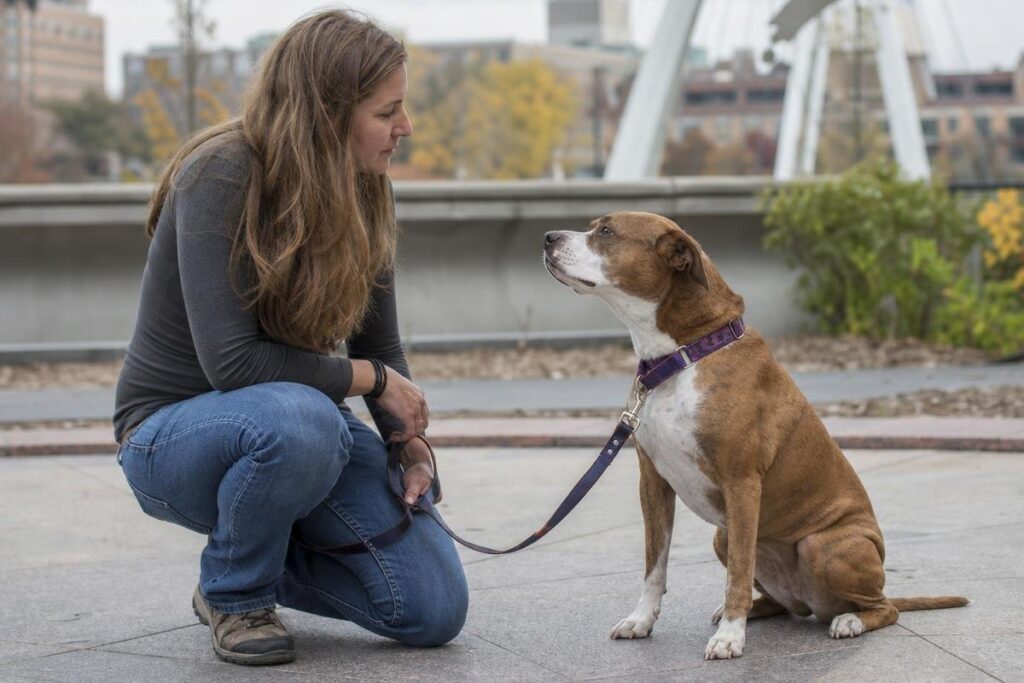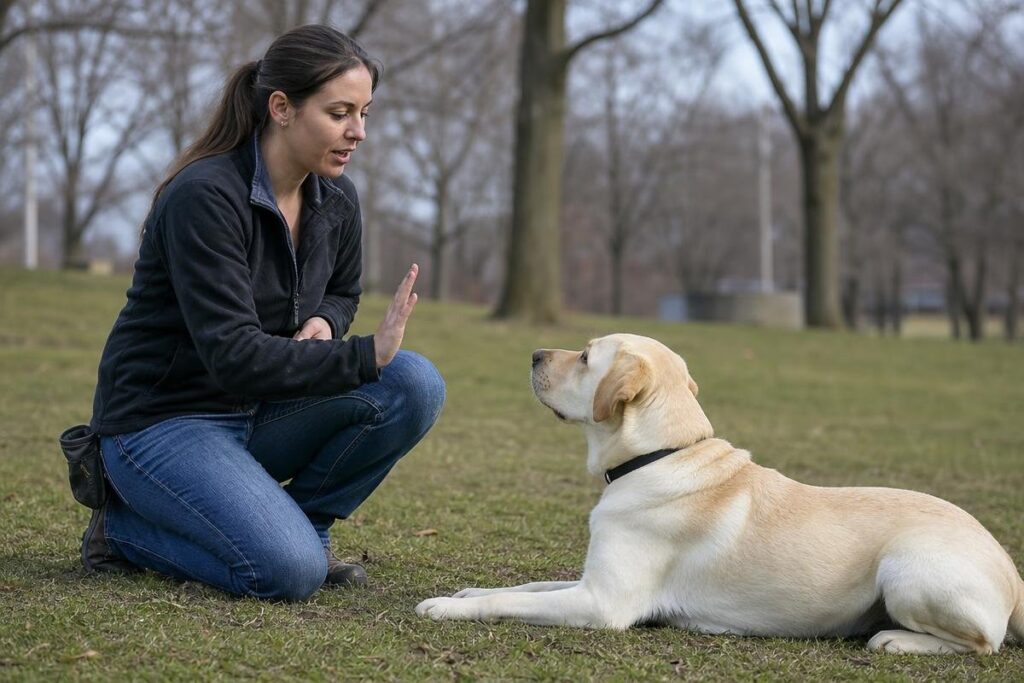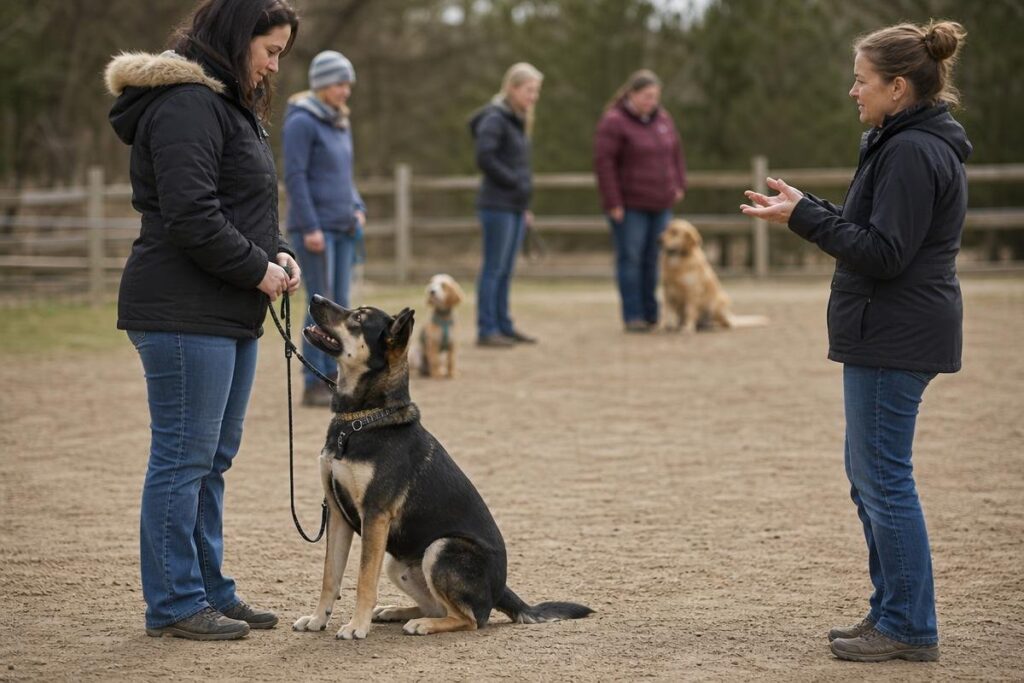

Dog owners tend to focus on verbalizations like barks, growls, and whimpers to understand what their dogs are feeling. Did you know that you can learn just as much (if not more) by learning how to read your dog’s body language? Read on as we decode some of the most common nonverbal signals dogs give and what they might mean.
The Truth About Tail Wagging
Just about every dog lover assumes that a wagging tail means that a dog is happy and excited. While this is often the case, tail wagging ultimately signals that a dog is in a state of arousal. The faster that tail is wagging, the more heightened the dog’s emotions. They could be really happy to see you, or they could be expressing that the current situation is making them nervous, scared, or threatened.
It can be useful to assess the position of your dog’s tail when it’s wagging. A neutral position paired with a relaxed body tends to mean that she’s happy and excited. A low position may mean that she’s feeling nervous, while a high, “alert” tail may indicate that she’s asserting a bit of dominance or feeling aggressive.
When Belly-Up Isn’t an Invitation
Rolling over is another behavior that we can easily misinterpret. Dog owners are often told that when their dog rolls over, they’re feeling comfortable and asking for affection. When paired with a relaxed body and soft eyes, this is very likely the case.
However, dogs also roll over to signal that they don’t want attention, particularly if they’re afraid that another dog (or person) may direct aggression their way. Look to the accompanying behaviors for clarity. Tension, trembling, pinned ears, or wide eyes say, “Give me some space.”
When Eyes Point to Anxiety
We’ve mentioned eyes a few times, and that’s because they can tell us a lot about how a dog is reacting to her surroundings. When we talk about soft eyes, we’re talking about relaxed eyelids and a relaxed gaze—some dogs may even squint. These are happy eyes, and you’ll notice them when your dog is greeting someone she loves, enjoying attention, or playing with a favorite toy.
On the other end of the spectrum, you may notice that her eyelids are retracted, the whites of her eyes are exposed, or her gaze is “hard” or fixed. These expressions indicate that your dog isn’t comfortable and may even resort to aggression in order to feel safe.
Finally, what if your dog refuses to make eye contact and pointedly looks anywhere but your face? Dogs tend to break eye contact when they’re ready for an interaction to end. This is a good time to give your dog some space and let her come back to you when she’s ready for more attention.
Your Dog’s Body Language and Training
Learning to read your dog’s body language can tell you a lot about how to interact and solidify your bond. It can also allow you to pinpoint problem areas and triggers that need some extra work.
All Dogs Unleashed is here to help dogs and their owners find new ways to tap into confidence and great behavior. Learn more about our training programs today.