
Walking your dog should be the easiest part of owning one. But when your dog lunges, snarls, or snaps at every dog it sees on the trail, a simple walk through Gray’s Lake or the Clive Greenbelt becomes something you dread. You start changing routes, crossing streets to avoid other owners, and shortening walks just to get through them without an incident.
Dog aggression toward other dogs on walks is one of the most stressful behavioral challenges an owner can face. It’s also one of the most misunderstood. Most owners either overcorrect with punishment, which makes the problem worse, or avoid the issue entirely, which lets it escalate. Neither approach solves the root cause. Here’s what actually works to manage and reduce dog-directed aggression on Des Moines walks, and when it’s time to bring in a professional.
Key Takeaways
- Aggression and reactivity are related but different; true aggression involves intent to harm, while reactivity is an emotional overreaction that looks aggressive but usually isn’t
- Most dog-directed aggression on walks is rooted in fear, frustration, or past negative experiences, not dominance
- The behavior self-reinforces every time it goes unaddressed because the other dog eventually moves away, which rewards the aggressive display
- Proper equipment like a front-clip harness and a conditioned muzzle improves safety; aversive tools like prong collars and retractable leashes make aggression worse
- Management techniques keep everyone safe in the short term, but lasting change requires a structured desensitization and counter-conditioning plan
- Dog-directed aggression that involves biting, redirected aggression toward the owner, or escalating intensity should always involve a professional trainer
Aggression vs Reactivity: Knowing the Difference Changes Everything
The distinction between aggression and reactivity matters because the training approach for each is different, and misidentifying one as the other leads to the wrong intervention.
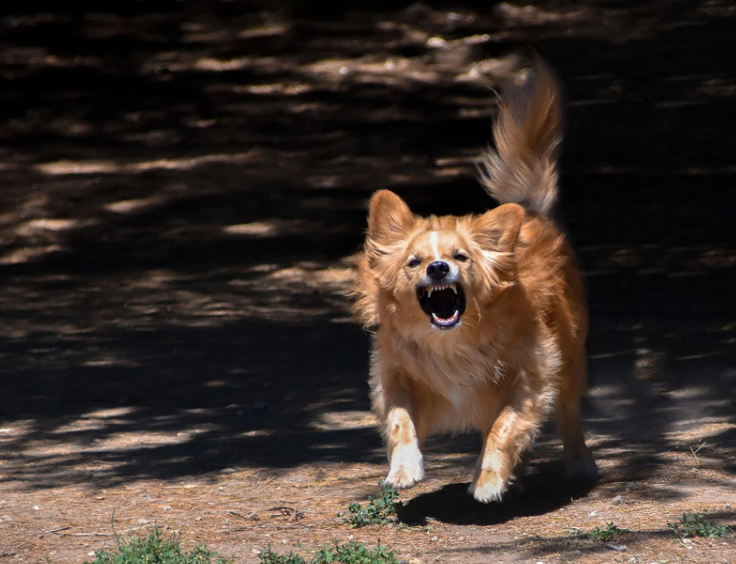
A reactive dog is emotionally overwhelmed by a trigger. It barks, lunges, and makes a scene, but the goal isn’t to harm the other dog. Reactive dogs are usually trying to create distance (fear-based) or trying to get closer (frustration-based). The outburst is loud and dramatic, but if the leash weren’t there, many reactive dogs would either flee or attempt an awkward, over-aroused greeting.
An aggressive dog has escalated past that point. The body language is different: hard, fixed stare; closed mouth with tension in the jaw; stiff, forward-leaning posture; raised hackles along the shoulders and spine; and a low, sustained growl rather than high-pitched barking. The intent shifts from “I want space” or “I want to get there” to “I intend to do damage.”
Some dogs start as reactive and develop aggressive behaviors over time when the reactivity is punished, mismanaged, or left unaddressed. That escalation is one of the biggest reasons early intervention matters. For a broader look at the different forms aggression can take, our post on types of aggression in dogs covers the full spectrum.
Why Dogs Become Aggressive Toward Other Dogs on Walks
Dog aggression toward other dogs doesn’t appear out of nowhere. It develops from a combination of emotional triggers, learning history, and environmental factors that compound over time.
| Root Cause | How It Shows Up on Walks |
|---|---|
| Fear or insecurity | Dog becomes aggressive when another dog approaches too quickly or too closely; the aggression is defensive, aimed at creating distance |
| Barrier frustration | The leash prevents the dog from choosing fight or flight; frustration builds and redirects into aggressive behavior |
| Lack of socialization | Dog never learned how to read or respond to other dogs’ body language; misinterprets normal approaches as threats |
| Past negative experience | A previous dog fight, attack, or rough encounter created a learned association between other dogs and danger |
| Redirected arousal | Dog becomes highly aroused by a stimulus (squirrel, jogger) and redirects that energy aggressively toward the nearest dog |
| Pain or medical issue | A dog in pain may become defensively aggressive when it anticipates being bumped or jostled by another dog |
Understanding the root cause shapes the rehabilitation plan. A fear-aggressive dog needs slow, controlled desensitization at distance. A frustration-aggressive dog needs impulse control and structured engagement. A dog with a trauma history may need both, along with work on building general confidence. Our guide on why your dog is showing aggression breaks down the diagnostic process in more detail, and for dogs whose behavior traces back to a specific event, our post on working with a traumatized dog covers the rehabilitation approach.
What Happens When Aggression Goes Unaddressed
Dog-directed aggression is a self-reinforcing behavior. Every time your dog lunges and snarls at another dog and that dog moves away, the aggression worked. The threat left. Your dog’s brain files that response as successful, and the next time the threshold is tested, the response comes faster, louder, and harder.
Over time, the pattern escalates in three ways:
- Lower threshold: The dog begins reacting at greater distances or to smaller triggers. A dog that once only reacted to dogs within ten feet may start reacting at fifty feet or to dogs it can barely see.
- Higher intensity: The barking becomes snarling. The lunging becomes snapping. The display becomes more violent with each repetition.
- Broader targets: A dog that initially only reacted to large dogs may start reacting to small dogs, then to all dogs, and eventually to people or other animals.
Beyond the behavioral escalation, there are real safety and legal consequences. Des Moines follows Polk County animal control ordinances, and a dog that bites another dog or a person can be classified as dangerous, which carries restrictions on ownership, mandatory muzzling, and in severe cases, removal of the dog from the home. Addressing aggression early isn’t just about better walks. It’s about protecting your dog’s future.
Equipment That Helps (and What Makes Things Worse)
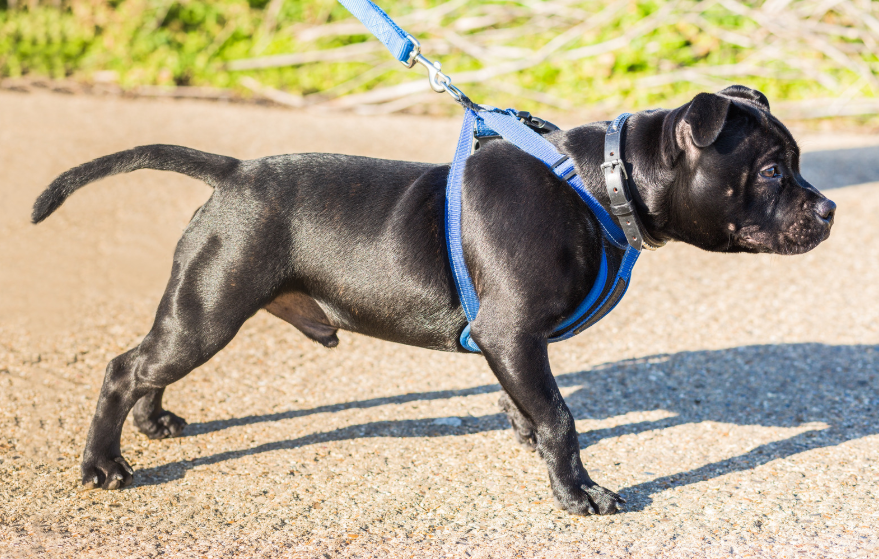
The right equipment doesn’t fix aggression, but it creates the safety margin you need to train effectively. The wrong equipment actively makes the problem worse.
What helps:
- Front-clip harness: Redirects your dog’s forward momentum toward you when it lunges, giving you steering control without applying pressure to the neck or throat. This is the standard recommendation for dogs with any form of leash aggression.
- Six-foot fixed-length leash: Gives you enough slack for comfortable walking while keeping your dog close enough to redirect. Nylon or biothane, not chain.
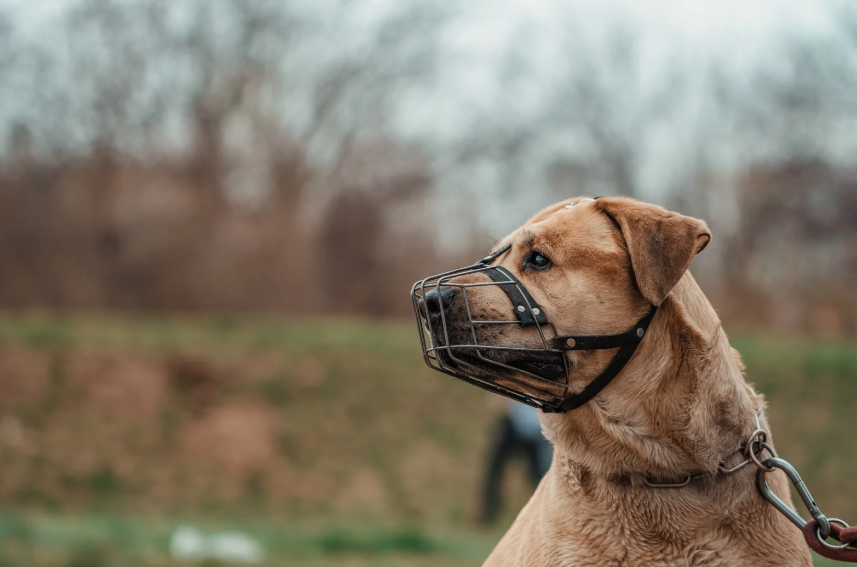
- Basket muzzle (properly conditioned): A basket muzzle allows your dog to pant, drink, and take treats while preventing a bite. It’s a safety tool, not a punishment. Conditioning your dog to wear a muzzle comfortably takes one to two weeks of short, positive sessions before you use it on walks. For dogs with a bite history or escalating intensity, a muzzle is non-negotiable for responsible public walking.
What makes things worse:
- Prong collars and choke chains: These tools create pain or discomfort at the exact moment your dog sees another dog, which strengthens the negative association. Your dog learns that other dogs predict pain, which increases fear and aggression over time. Our post on why fear-based training hurts more than it helps explains the mechanism in detail.
- Retractable leashes: These give you almost no control when your dog lunges, and the variable length means your dog is constantly guessing how much space it has. For an aggressive dog, a retractable leash is a liability.
- Head halters without conditioning: A head halter can be useful for some dogs, but applied without proper desensitization, it adds stress and discomfort that compounds the aggression problem.
Five Techniques to Manage and Reduce Dog-Directed Aggression on Walks
These techniques work in two layers. The first three are management tools that keep everyone safe in the short term. The last two are training protocols that change the dog’s emotional response over time.
1. Emergency U-Turn. When another dog appears and you don’t have enough distance to work, turn 180 degrees and walk away briskly. Don’t wait for a reaction. Don’t try to hold your ground. Just create distance. Practice the verbal cue (“let’s go” or “this way”) at home first so your dog already knows what it means before you need it under pressure.
2. Threshold Management. Every aggressive dog has a distance at which it can see another dog without reacting. That’s the threshold. Your job is to stay outside it. When you spot another dog, move laterally off the path, step behind a visual barrier (parked car, tree, building corner), or reverse direction. On Des Moines trails like the Neal Smith or Walnut Creek, wider paths and longer sightlines give you more time to spot triggers and adjust.
3. Structured Heel. A trained heel command puts your dog in a focused, controlled position at your side. When another dog is approaching at a manageable distance, calling your dog into a heel and walking past with focused attention can prevent the reaction entirely. This requires a dog that already has a solid heel with distractions, which means building the skill before you need it in a high-stakes moment.
4. Muzzle-Conditioned Exposure. Once your dog is comfortable wearing a basket muzzle, you can walk in environments with other dogs at a controlled distance knowing that even if the dog reacts, no bite can occur. This safety net reduces your own stress, which your dog reads, and allows you to focus on training rather than damage prevention. It also protects other dogs, their owners, and your dog’s legal standing.
5. Controlled Parallel Walking. This is a structured desensitization exercise best done with a second handler and a calm, neutral dog. Both dogs walk in the same direction on parallel paths with enough distance between them that neither reacts. Over multiple sessions, the distance between the paths gradually decreases. The aggressive dog learns that another dog walking nearby is not a threat, and the emotional response shifts from “danger” to “irrelevant.” This protocol is most effective when guided by a professional trainer who can read both dogs’ body language and adjust the distance in real time. Our guide to reading your dog’s body language covers the signals to watch for.
Building a Long-Term Rehabilitation Plan
Management keeps everyone safe. Rehabilitation changes the behavior. A long-term plan for dog aggression toward other dogs involves three components working together.
Desensitization gradually exposes your dog to the trigger (other dogs) at a distance and intensity that doesn’t provoke a reaction. You start far below threshold and increase exposure incrementally over weeks and months. Rushing this process, whether by closing distance too fast or exposing the dog to too many triggers at once, causes setbacks that can undo weeks of progress.
Counter-conditioning pairs the presence of the trigger with something the dog values. When your dog sees another dog at a safe distance, you immediately deliver a high-value reward. Over time, the dog’s emotional response shifts from “that dog is a threat” to “that dog means good things happen.” The key is that the reward must follow the sight of the trigger, not the other way around. If you show the treat first, the dog isn’t learning the association you want.
Structured socialization reintroduces your dog to other dogs in controlled, managed settings with professional supervision. This is not a dog park. It’s not an off-leash playdate. It’s a deliberate, staged process where every interaction is set up for success, and the dog builds positive experiences that gradually overwrite the aggressive response.
For some dogs, particularly those with severe or long-standing aggression, a veterinary behaviorist may recommend medication as part of the plan. Anti-anxiety medication doesn’t replace training, but it can lower the dog’s baseline arousal enough to make the training effective. This is a conversation to have with your veterinarian, ideally in coordination with your trainer.
When Professional Help Is Non-Negotiable
Some levels of dog aggression can be managed and improved by a dedicated owner with the right guidance. But there are clear indicators that professional intervention isn’t optional:
- Your dog has bitten or attempted to bite another dog and made contact
- The aggression is escalating in intensity, frequency, or target range
- Your dog redirects aggression toward you or other family members when prevented from reaching the trigger
- You feel unsafe walking your dog, even with management tools in place
- The behavior has not improved after four to six weeks of consistent, structured effort
A professional trainer who specializes in aggression cases will assess your dog’s specific triggers, severity level, and history, then build a rehabilitation plan that’s safe for everyone involved. In-home dog training is often the best starting point because the trainer can observe how your dog responds to triggers in the real environment and coach you on handling techniques that carry over to walks.
For dogs with deeply entrenched aggression, a board and train program provides daily, professional-level work in a controlled environment where the dog can practice calm behavior around other dogs under expert supervision. Explore all available dog training programs at All Dogs Unleashed in Des Moines to find the right fit for your dog’s situation.
Frequently Asked Questions
Can dog aggression toward other dogs be fully eliminated?
In many cases, dog-directed aggression can be reduced to the point where the dog walks calmly past other dogs without reacting. However, most professionals describe the goal as reliable management rather than a cure. A dog with a history of aggression may always need thoughtful handling around triggers, even after significant improvement. The goal is a dog that can navigate the real world safely and calmly, not one that’s expected to love every dog it meets.
Is my dog aggressive or just reactive?
The key difference is intent. A reactive dog is emotionally overwhelmed and reacting out of fear or frustration. An aggressive dog has moved past that emotional threshold into behavior aimed at causing harm. Reactive dogs typically display high-pitched barking, lunging, and spinning. Aggressive dogs show hard stares, stiff body posture, low growling, and snapping or biting. If you’re unsure, a professional assessment is the safest way to determine which you’re dealing with.
Should I let my aggressive dog meet other dogs to “work it out”?
No. Forcing an aggressive dog into an uncontrolled interaction is dangerous for both dogs and both owners. Dogs do not resolve aggression through exposure without structure. Unmanaged encounters reinforce the aggression and increase the risk of a bite. All exposure to other dogs should be controlled, gradual, and ideally supervised by a professional.
Does neutering or spaying reduce dog-directed aggression?
It can reduce certain hormone-influenced behaviors, including some forms of inter-male aggression and roaming. But neutering does not address aggression caused by fear, frustration, poor socialization, or trauma. If the aggression has a learned or emotional component, behavioral training is necessary regardless of the dog’s reproductive status.
Is it safe to use a muzzle on my dog during walks?
Yes, when properly conditioned. A basket muzzle allows your dog to pant, drink water, and accept treats while preventing a bite. The conditioning process, which takes one to two weeks of short, positive sessions, ensures the dog associates the muzzle with rewards rather than punishment. A muzzle is a responsible safety tool for any dog with a bite history or escalating aggression, and it protects your dog legally as well as physically.
How long does it take to see improvement with an aggressive dog?
Most owners see measurable progress within six to eight weeks of consistent daily work, though the timeline varies significantly depending on the severity, duration, and root cause of the aggression. Dogs with mild, recently developed aggression may improve faster. Dogs with severe, long-standing aggression or a bite history typically require several months of structured rehabilitation, and some benefit from ongoing maintenance work indefinitely.
Contact All Dogs Unleashed in Des Moines
If your dog’s aggression toward other dogs has made walks stressful or unsafe, waiting won’t make it better. The team at All Dogs Unleashed in Des Moines works with aggressive dogs every day, building the management skills and behavioral rehabilitation that turn dangerous walks into controlled ones. Contact us today to talk about what your dog needs.
About All Dogs Unleashed
All Dogs Unleashed has spent decades helping owners work through the most challenging dog behavior problems, including dog-directed aggression, fear-based reactivity, and complex behavioral cases that other trainers turn away. With locations across the country, including Des Moines, ADU’s trainers bring hands-on experience with every breed and severity level, building results that hold up on the leash, on the trail, and in the real world.