
A dog that’s comfortable around unfamiliar people is a dog that can go more places, handle more situations, and live a fuller life. But socialization doesn’t happen by accident, and doing it wrong can make a nervous dog significantly worse.
Des Moines offers plenty of opportunities to socialize a dog, from the Downtown Farmers’ Market on Saturday mornings to busy trail parking lots and dog-friendly patios along Ingersoll Avenue. The question isn’t whether the opportunities exist. It’s how to use them in a way that actually builds your dog’s confidence rather than flooding it with more than it can handle. Here’s how to socialize a fearful dog with strangers the right way, whether you’re starting with a puppy or working with an adult dog that never got the exposure it needed.
Key Takeaways
- Most dogs that struggle with strangers are fearful or under-socialized, not aggressive
- The critical socialization window closes around 14 weeks of age, but adult dogs can still learn to be comfortable around people with the right approach
- Forcing a fearful dog into interactions with strangers makes the fear worse, not better
- Effective socialization is gradual, starting with observation at distance and progressing to controlled greetings only when the dog is ready
- Teaching strangers how to interact with your dog is just as important as training the dog itself
- Rescue dogs and adult dogs with limited socialization history need a slower timeline and more patience, but the process works
Why Some Dogs Struggle With Strangers
A dog that barks at visitors, hides behind your legs on a walk, or growls when someone reaches toward it isn’t being difficult. It’s communicating that unfamiliar people feel threatening. Understanding why helps you choose the right approach.
The most common reasons dogs struggle with strangers include:
- Missed socialization window: Puppies that weren’t exposed to a variety of people during the critical development period (roughly 3 to 14 weeks) often grow into adults that view unfamiliar humans with suspicion or fear
- Limited exposure history: Dogs raised in rural settings, single-person households, or kennels may have met very few people outside their immediate circle
- Past negative experiences: A dog that was grabbed, cornered, yelled at, or hurt by a stranger may generalize that experience to all unfamiliar people
- Breed tendencies: Some breeds are naturally more reserved or wary around strangers. This doesn’t mean they can’t be socialized, but the baseline temperament affects the timeline and approach
- Pain or medical issues: A dog dealing with chronic pain may become defensive around unfamiliar people because it anticipates being touched in a way that hurts
For dogs whose wariness has tipped into protective or guarding behavior around their owner, our post on socializing an overprotective dog addresses that specific pattern.
The Socialization Window: What It Means and What Happens When It Closes
Puppies go through a critical socialization period between approximately 3 and 14 weeks of age. During this window, the brain is wired to absorb new experiences rapidly and file them as “normal.” A puppy that meets a wide variety of people during this period, including men, women, children, people in hats, people with beards, people in uniforms, people using wheelchairs or walkers, tends to grow into an adult dog that takes unfamiliar humans in stride.
When that window closes, the brain shifts from “new things are interesting” to “new things might be dangerous.” A dog that missed early socialization doesn’t process unfamiliar people the same way. Every new person triggers a cautious or defensive response rather than a curious one.
The good news is that socialization is still possible after the window closes. It just takes more time, more structure, and more patience. Adult dogs can absolutely learn to be comfortable around strangers, but the process is measured in weeks and months rather than days. Expecting an under-socialized adult dog to become a social butterfly overnight is unrealistic and sets both the dog and the owner up for frustration. For puppy owners still inside the window, getting it right from the start is one of the most valuable things you can do. Our guide on puppy training what not to do covers the early mistakes that undermine socialization efforts.
Signs Your Dog Is Uncomfortable Around People
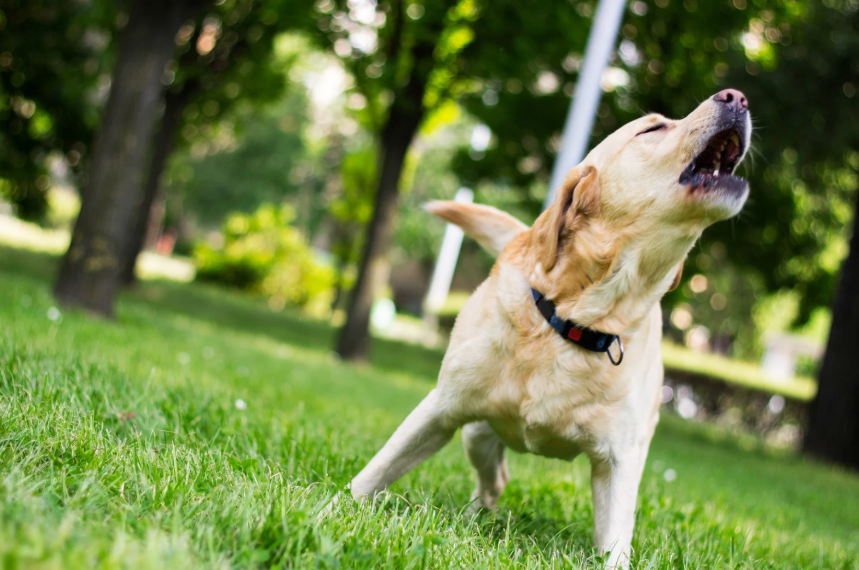
Dogs communicate discomfort long before they bark or growl. Most owners miss the early signals and only notice the problem when the behavior has already escalated.
| Signal Type | What You May See |
|---|---|
| Subtle (early warning) | Lip licking, yawning when not tired, turning the head away, showing the whites of the eyes (whale eye), moving behind the owner, ears pinned back, tucked tail |
| Moderate (increasing stress) | Freezing in place, refusing treats, panting without physical exertion, lowered body posture, hypervigilance (scanning constantly), attempting to retreat |
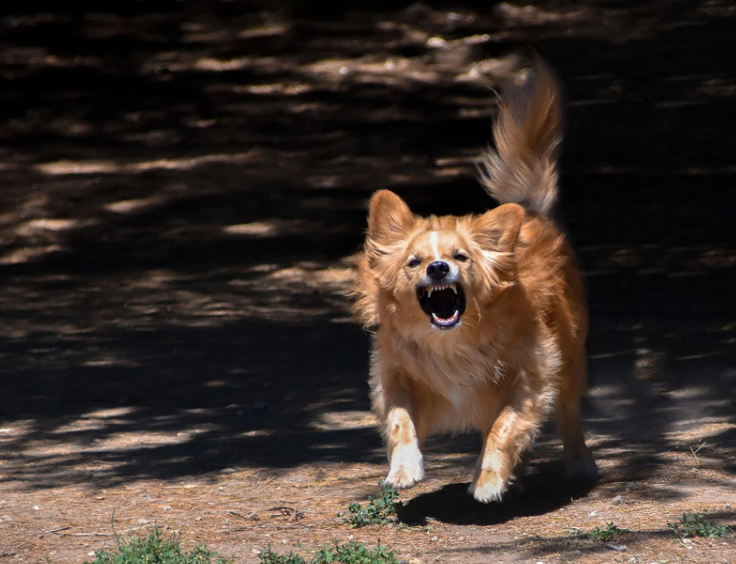
| Overt (approaching threshold) | Barking, growling, lunging, snapping, hackling, baring teeth, hard stare directed at the approaching person |
The subtle signals are where you want to intervene. If your dog is licking its lips and turning away from an approaching stranger, that’s the moment to create distance, not the moment to push for an introduction. Every time you respond to the early signals by giving your dog space, you build trust. Every time you ignore them and let the interaction continue, you push the dog closer to the overt responses.
Our guide to reading your dog’s body language breaks down each of these signals in detail and will help you spot stress before it becomes a behavioral event.
What Not to Do When Socializing Your Dog
The most common socialization mistakes come from good intentions applied with the wrong approach. Each of these makes the problem worse:
Flooding. Bringing a fearful dog to a crowded environment and hoping it “gets used to it” is flooding, and it’s the fastest way to intensify fear. A dog that’s overwhelmed by too many strangers at once doesn’t learn that people are safe. It learns that its owner puts it in situations it can’t escape.
Forcing interactions. Holding your dog still while a stranger pets it, or dragging it toward someone it’s trying to avoid, teaches the dog that its communication signals don’t work. When a dog learns that backing away and showing stress doesn’t create distance, it escalates to growling and snapping because those are the only tools left.
Punishing fear responses. Correcting a dog for growling at a stranger removes the warning signal without addressing the underlying fear. The dog is still scared. It just stops telling you about it, which makes future interactions less predictable and more dangerous.
Letting strangers rush the greeting. Well-meaning people who approach quickly, lean over the dog, reach for the head, or make direct eye contact are doing everything that triggers a fearful dog. The dog needs to control the pace of the interaction, not the stranger.
Treating every situation the same. A dog that’s fine with women but nervous around men, or comfortable with adults but fearful of children, needs targeted socialization for the specific category it struggles with. Blanket exposure doesn’t address specific gaps.
A Step-by-Step Approach to Socializing Your Dog With Strangers
Effective dog socialization training follows a structured progression from passive observation to active interaction. Skipping steps causes setbacks. Here’s how to build it:
Step 1: Observation at distance. Find a location where your dog can see people moving around without being approached. A bench near the Downtown Farmers’ Market, a parking lot at Gray’s Lake before the trail gets busy, or a quiet corner of an outdoor patio all work well. Sit with your dog, reward calm behavior, and let your dog watch. The goal is for your dog to see strangers and feel neutral, not excited or scared. Start at whatever distance keeps your dog below threshold.
Step 2: Decrease distance gradually. Over multiple sessions, move closer to the activity. If your dog was comfortable at fifty feet, try forty. Then thirty. Each decrease in distance should happen only after your dog has demonstrated consistent calm at the previous distance. If stress signals reappear, move back and rebuild.
Step 3: Passive proximity. Position yourself and your dog in a space where strangers walk past without interacting. A sidewalk bench on Ingersoll Avenue or a trail-side rest area works well. People pass by, your dog notices and stays calm, and you reward. The dog is learning that strangers can exist nearby without anything bad happening.
Step 4: Controlled greetings. Only after your dog is consistently calm in proximity should you introduce direct interaction. Use a helper, someone you’ve briefed on the rules, rather than a random stranger. The helper ignores the dog completely, stands at an angle rather than facing head-on, avoids eye contact, and lets the dog approach on its own terms. If the dog chooses to investigate, the helper can offer a treat from an open palm held low. If the dog doesn’t approach, the greeting is over. No pressure.
Step 5: Expand the variety. Once your dog is comfortable greeting one type of person, introduce variety gradually. Men with deep voices, children with unpredictable movements, people wearing hats or sunglasses, delivery workers in uniforms. Each new category starts back at a comfortable distance and progresses through the same steps.
How to Coach Strangers on Meeting Your Dog
Half of successful socialization is managing the humans. Most people approach dogs the wrong way, not out of malice but because they don’t know what a fearful dog needs. You’ll need to advocate for your dog clearly and without apology.
What to tell people before they interact with your dog:
- Don’t approach directly. Stand at an angle and let the dog come to you
- No direct eye contact. Look slightly away or at the ground
- Don’t reach over the dog’s head. If the dog approaches, offer a hand low and to the side
- Stay quiet. No high-pitched baby talk, no sudden exclamations, no loud greetings
- If the dog moves away, let it go. Don’t follow, don’t coax, don’t try again immediately
A simple phrase like “my dog is in training, can you ignore him for a moment?” gives most people enough direction to cooperate. The majority of strangers are happy to help once they understand what’s needed. The few who insist on petting your dog anyway need a firmer boundary, and you should feel no obligation to accommodate them.
Socializing Adult and Rescue Dogs: Adjusting the Timeline
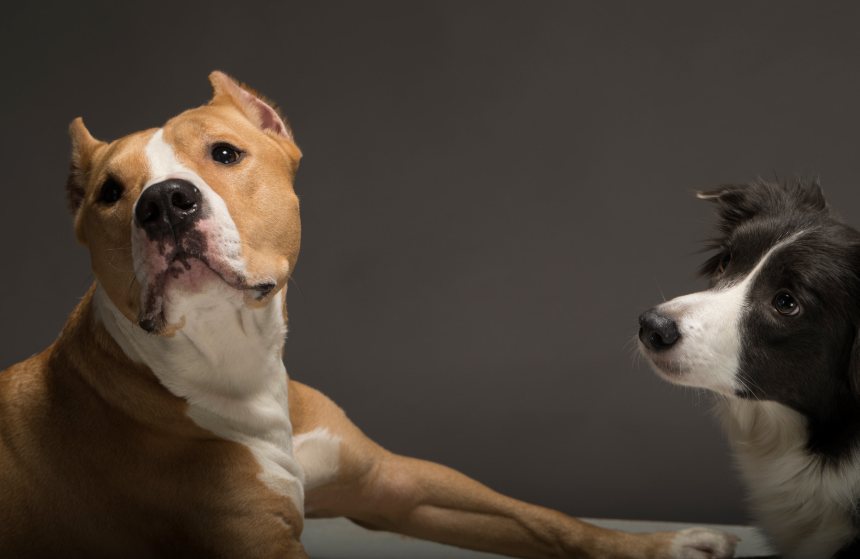
Adult dogs that missed early socialization and rescue dogs with unknown histories require a modified approach. The principles are the same, but the timeline stretches and the margin for error shrinks.
Rescue dogs often arrive with experiences their new owner knows nothing about. A dog that flinches when a man raises his hand, or panics at the sound of a belt unbuckling, is telling you something happened. You may never know exactly what, but you don’t need to. What matters is meeting the dog where it is now and building trust through consistent, pressure-free exposure. Our post on working with a traumatized dog covers the rehabilitation framework for dogs with this kind of history.
Adult dogs also go through a secondary fear period during adolescence, typically between 6 and 14 months, where previously confident dogs may suddenly become wary of things they were fine with before. If your adolescent puppy has suddenly become nervous around strangers after months of being social, this is likely the cause. The key is not to push through it. Continue gentle exposure, avoid flooding, and wait for the phase to pass while maintaining positive associations.
For adult dogs with significant fear or aggression toward strangers, professional guidance accelerates the process and keeps it safe. In-home dog training allows a trainer to work with your dog in the environment where guest-related behaviors actually occur, and a board and train program gives your dog daily, structured exposure to new people in a controlled, professional setting. Explore all available dog training programs at All Dogs Unleashed in Des Moines to find the right fit.
Frequently Asked Questions
How long does it take to socialize a fearful dog with strangers?
It depends on the severity of the fear, the dog’s history, and how consistently the socialization plan is followed. Mildly fearful dogs may show significant improvement within four to six weeks. Dogs with deep-seated fear or trauma histories typically require three to six months of structured work, and some benefit from ongoing maintenance to keep progress stable.
Can I socialize my dog at a dog park?
Dog parks are not ideal socialization environments for fearful dogs. They’re uncontrolled, unpredictable, and can overwhelm a nervous dog quickly. A better option is a controlled, low-traffic environment where you can manage distance and exposure. Save dog parks for after your dog has built a solid foundation of confidence around people and other dogs.
Is it too late to socialize my adult dog?
No. Adult dogs can learn to be comfortable around strangers at any age. The process is slower than puppy socialization because the brain is less plastic after the critical window closes, but consistent, positive exposure produces real results. Many adult dogs that were previously fearful of strangers become reliably calm in public with structured training.
Should I use treats during socialization?
Yes. High-value treats are one of the most effective tools for building positive associations with strangers. The key is timing: the treat should follow the dog noticing the stranger, not precede it. You want the dog’s brain to connect “stranger appears” with “good things happen,” not “treat appears” with “oh no, a stranger is coming.”
What if my dog growls at a stranger during socialization?
A growl is communication, not disobedience. It means your dog hit its threshold and the situation is too much. Do not correct the growl. Instead, calmly increase distance from the stranger, let your dog decompress, and take note of the distance and context that triggered the response. Your next session should start farther away from that threshold. Punishing a growl removes the warning without reducing the fear, which makes future interactions less predictable.
How do I socialize my dog with children specifically?
Children move unpredictably, make high-pitched sounds, and often approach dogs at face level, all of which can be intensely triggering for a fearful dog. Start with observation at a safe distance, like watching children play at a park from across the field. Progress to closer proximity only after your dog is consistently calm. When introducing direct interaction, use only children who can follow instructions, and supervise every second of the encounter. Never leave a fearful dog alone with a child.
Contact All Dogs Unleashed in Des Moines
If your dog struggles around unfamiliar people, structured socialization can change that. The team at All Dogs Unleashed in Des Moines works with fearful, under-socialized, and reactive dogs every day, building the confidence and skills that make public outings calm instead of stressful. Contact us today to get started.
About All Dogs Unleashed
All Dogs Unleashed has spent decades helping dog owners work through the behavioral challenges that limit where their dogs can go and what they can do. With locations across the country, including Des Moines, ADU’s trainers bring hands-on experience with every breed, every temperament, and every level of socialization need. From puppies getting their first exposure to the world to adult rescues learning to trust people for the first time, the goal is always a more confident, more comfortable dog.