
Separation anxiety is one of the most misunderstood and undertreated behavioral conditions in dogs. Austin dog owners frequently describe their dog as “misbehaving” when left alone, pointing to destroyed furniture, howling that bothers neighbors, or house soiling that only happens during the owner’s absence. What they are describing is almost always separation anxiety, a genuine psychological condition rooted in panic rather than defiance.
Understanding what separation anxiety actually is, what it looks like, and why it develops empowers Austin dog owners to respond to it effectively. More importantly, it clarifies why punishment-based approaches make the condition dramatically worse rather than better.
At All Dogs Unleashed, we work with separation anxiety in Austin dogs regularly. It is treatable, often significantly so, with the right approach applied consistently over time.
What Separation Anxiety Actually Is
Separation anxiety is not a dog choosing to be destructive or attention-seeking when left alone. It is a state of genuine panic that occurs when the dog’s attachment figure, most often the primary owner, leaves. From the dog’s perspective, it is experiencing something approximating abandonment, and its behavioral responses are rooted in distress rather than intention.
The distinction matters enormously for how the problem should be addressed. A dog that is bored and understimulated while alone may chew furniture as a self-entertainment behavior. A dog with true separation anxiety is experiencing an anxiety attack that happens to involve destructive behavior as a byproduct. These two problems look similar from the outside but require completely different interventions.
True separation anxiety is characterized by:
- Behaviors that occur exclusively or primarily in the owner’s absence, not during the owner’s presence.
- An anticipatory anxiety response that begins before the owner actually leaves, triggered by pre-departure cues such as picking up keys, putting on shoes, or reaching for a bag.
- Intensity that does not diminish over time the way boredom-based behavior might.
Signs of Separation Anxiety in Dogs
The behavioral profile of separation anxiety is fairly consistent across dogs, though the specific manifestations and severity vary. Common signs include:
- Destructive chewing: Particularly of items near exits such as doors, window frames, and door moulding. This behavior reflects the dog’s attempts to escape and find the owner rather than simple destructive tendencies.
- Vocalization: Prolonged howling, whining, or barking that begins shortly after the owner leaves and continues throughout the absence. Neighbors in Austin apartments or townhomes often report this behavior before the owner is even aware it is happening.
- House soiling: Urinating or defecating in the house despite being fully house-trained, specifically when left alone. This is a physiological stress response and is not within the dog’s control during a severe anxiety episode.
- Pacing and restlessness: Video footage of dogs with separation anxiety often shows them circling the same path repeatedly, unable to settle anywhere in the home.
- Excessive greeting behavior: Dogs with separation anxiety often greet returning owners with extreme intensity, jumping, spinning, and vocalizing in a way that reflects the depth of their distress during the absence rather than simple excitement.
- Self-injurious behavior: In severe cases, dogs will scratch at exits until their paws bleed or attempt to chew through barriers with enough force to damage their teeth. This level of panic requires urgent professional intervention.
- Pre-departure anxiety: Shadowing the owner through the house in the morning, trembling when departure cues appear, or refusing to eat because the owner is about to leave are all signs that the dog has learned to read departure cues and begins panicking before the owner even exits the home.
Why Separation Anxiety Develops in Austin Dogs
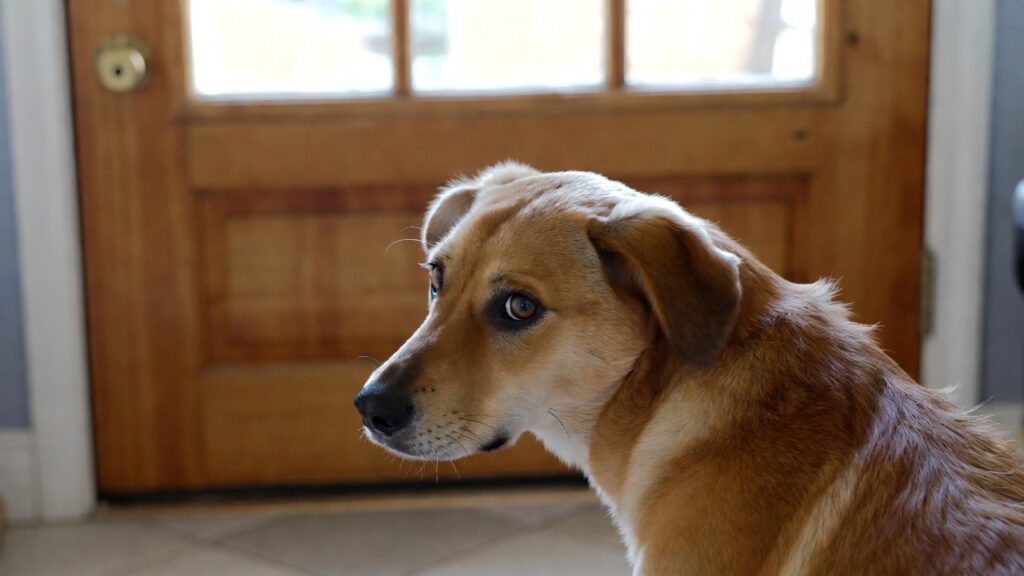
Separation anxiety does not have a single cause, but several factors commonly contribute to its development:
- Abrupt schedule changes: The pandemic created a spike in separation anxiety cases across the country as dogs that had been home with owners 24 hours a day suddenly had to manage 8-hour workday absences when offices reopened. This pattern appears regularly in Austin, a city with a large remote and hybrid workforce.
- Adoption from shelters or rescue: Dogs that experienced abandonment, rehoming, or unstable living situations before adoption are at elevated risk for separation anxiety. This is why proactive training shortly after adoption is so valuable.
- Over-attachment fostered unintentionally: Dogs whose owners encourage constant physical contact, rarely leave the dog alone for any period, and always console anxious behavior inadvertently reinforce the dog’s belief that being alone is genuinely dangerous.
- Genetics and temperament: Certain breeds and individual dogs have higher baseline anxiety levels that make them more susceptible to developing separation anxiety. This is not a training failure by the owner. It is a neurological predisposition that training can address but that also sometimes requires veterinary input.
- Traumatic events: A single traumatic experience during an owner’s absence, such as a loud thunderstorm, break-in, or injury, can trigger or significantly worsen separation anxiety even in dogs that were previously stable when alone.
What Does Not Work for Separation Anxiety
Before discussing effective approaches, it is important to address what consistently fails when Austin dog owners attempt to manage separation anxiety on their own:
- Crating a dog with untreated separation anxiety: A dog in full panic cannot be contained by a crate without significant risk of self-injury. Crating is a useful tool for dogs with mild anxiety or boredom-based behaviors but can cause serious harm in dogs with true separation anxiety.
- Punishing the dog after returning to a mess: Punishment after the fact does not connect in the dog’s mind to behavior that occurred earlier. It adds fear to an already anxious dog’s experience and increases anxiety rather than reducing it.
- Getting a second dog: A companion dog can sometimes reduce the intensity of separation anxiety, but it is not a reliable solution and often fails to address the core issue, which is the primary attachment dog’s specific anxiety about its owner’s absence rather than being alone in general.
- Ignoring the dog before departure: The advice to avoid goodbyes is partially supported by research but is frequently misapplied. Departure routines affect pre-departure anxiety but do not treat the underlying panic disorder.
Effective Approaches to Separation Anxiety Treatment
Separation anxiety treatment requires systematic desensitization, the gradual exposure to absences at sub-threshold levels, combined with a deliberate effort to change the dog’s emotional association with departures from panic to neutrality or even positive anticipation.
- Departure cue desensitization: Repeatedly performing departure-associated behaviors, such as picking up keys, putting on a coat, and opening the door, without actually leaving. Over time, these cues lose their predictive power and cease to trigger anticipatory anxiety.
- Sub-threshold duration training: Beginning with absences that are so short the dog does not have time to become anxious, typically seconds to minutes, and systematically extending those durations as the dog demonstrates calm. Progress must be driven by the dog’s actual response rather than a predetermined schedule.
- Building independence: Teaching the dog to spend time on its mat or in another room while the owner is home begins to establish the concept of separation as neutral. Dogs with severe separation anxiety often cannot be in a separate room from their owner without anxiety, making home-based independence exercises an important starting point.
- In-home dog training in Austin: Separation anxiety treatment is most effectively done in the environment where the problem occurs. Working with a professional trainer at home allows the trainer to observe the dog’s specific responses, assess the severity accurately, and build a customized treatment protocol.
- Veterinary collaboration: For dogs with moderate to severe separation anxiety, a combination of behavioral training and veterinary intervention often produces the best outcomes. Medications that reduce baseline anxiety levels can make the dog more receptive to behavioral training. This is not a substitute for training but a tool that works alongside it.
- Dog daycare in Austin: For dogs whose owners cannot reduce their own absence schedules, daycare provides a structured alternative to being alone. Dogs with separation anxiety often do significantly better in a supervised social environment than in an empty home. Daycare is a management strategy rather than a treatment, but it meaningfully improves quality of life while treatment progresses.
How All Dogs Unleashed Approaches Separation Anxiety in Austin

Our Austin trainers assess separation anxiety carefully before recommending a program. For dogs with mild to moderate anxiety, our in-home training program provides structured guidance for owners to implement the desensitization protocol at home with professional coaching. For dogs with significant anxiety, our board and train program builds the foundational independence and obedience skills that make the full separation anxiety treatment protocol more effective.
We also work with owners to establish the daily routines, independence exercises, and management strategies that support progress between professional sessions.
Your Austin Dog Does Not Have to Struggle Alone
Separation anxiety is painful for dogs and exhausting for owners. But it is treatable, and Austin dog owners do not have to figure it out alone. All Dogs Unleashed has the experience and the programs to help your dog build the confidence and independence to handle time alone without distress.
Call (512) 963-6017 to talk with our Austin team about your dog’s specific situation. We will help you understand what you are dealing with and build a plan that works.
Frequently Asked Questions
How do I know if my dog has true separation anxiety or is just bored when I leave?
The key distinction is whether the behaviors occur exclusively when you are absent or also when you are home. Boredom-based behaviors like chewing furniture may occur even with the owner present. True separation anxiety behaviors are specifically triggered by the owner’s departure. Setting up a camera to observe your dog during the first 20-30 minutes after you leave is an effective diagnostic step.
Can separation anxiety be fully cured?
Many dogs with separation anxiety improve dramatically with treatment to the point where the problem no longer affects daily life in a significant way. Whether this constitutes a “cure” depends on the individual dog. Some dogs require ongoing management strategies even after significant improvement. Others become genuinely stable once the anxiety is addressed at its root.
How long does treatment take?
Treatment timelines vary widely based on severity. Mild cases may show meaningful improvement within 4-8 weeks of consistent treatment. Moderate to severe cases can take several months of structured work. Progress is rarely linear, and setbacks are a normal part of the process rather than a sign that treatment is failing.
Will my dog grow out of separation anxiety?
Separation anxiety does not typically resolve on its own without intervention. Without treatment, many cases worsen over time as anxiety becomes more deeply conditioned. Early intervention produces the best outcomes.
Is medication always necessary for separation anxiety?
No. Many dogs with mild to moderate separation anxiety respond well to behavioral treatment alone. Medication is most commonly recommended for dogs with severe anxiety that makes them unable to begin making progress on behavioral protocols, or for dogs whose owners cannot adjust their absence schedules enough to allow sub-threshold training.
My dog does fine at doggie daycare but panics when left at home alone. What does this mean?
This pattern is consistent with separation anxiety rather than a general fear of being alone. Your dog is anxious specifically about your absence, not about being alone. Social environments like daycare provide stimulation and companionship that reduce anxiety even in the owner’s absence. This is useful management information and confirms that the treatment target is the dog’s emotional response to your specific departures.
About All Dogs Unleashed
All Dogs Unleashed is a professional dog training company located at 111 Congress Ave. #201, Austin, TX 78701 serving the Austin, TX area. We offer a full range of services including dog boarding, daycare, grooming, in-home training, and structured board and train programs.
Business Name: All Dogs Unleashed
Address: 111 Congress Ave. #201, Austin, TX 78701
Phone: (512) 963-6017
Website: https://www.alldogsunleashed.com/austin/